-
ABOUT US
-
ACADEMICS
Curriculum Program
Departments
- English
- High School Chinese
- Primary and Junior School Chinese.
- High School Mathematics
- Middle School Mathematics
- Primary School Mathematics
- Music and Fine Arts
- Physical Education
- Physics
- Chemistry
- History and Geography
- Physical Science and Optional courses Department
- Middle School Biology
- High School Biology
- Social Sciences
- Computer Science
- Courses in Primary School
Achievements and Matriculations
College Counseling
Science & Technology Innovation Contest
Subject Competition
-
ARTS
-
ATHLETICS
-
AT SHSID
SHSID ∣ TIMES
PTSA
Club Exhibition
- 龙吟社
- Live 2 Drama
- Choir
- Hip-pop Dance Club
- The Primary School Dance Troupe
- Symposiums Club
- Biology Workshop
- You Shan
- VEX Robotic
- Peking Opera Club
- Baseball Club
- Model United Nations
- The World Scholar’s Cup
- Future Problem Solving Club
- OM Club
- AMC Club
- Music for Patients
- Smile Charity
- Stem Doge Alliance
- Chinese Debate Club
- IAA
- Mock Trial Club
- Zhengming Club
- Furry Friends
- GT-Racing
- Village Radio
- IMMC Club
- Creative Design and Intelligent Fabrication
- Future City Research Project
- ECOCAP
- AdvocaSEA
- SPDC
- Floorball Club
- Animusic MTC
- Wings Up
- Cyano
- Birding Community
Health and Wellness
Campus Safety
Cafeteria Service
-
ADMINISTRATION
-
ADMISSIONS
-
ALUMNI
Alumni Information
Honors Students
- Class of 2026
- Class of 2025
- Class of 2024
- Class of 2023
- Class of 2022
- Class of 2021
- Class of 2020
- Class of 2019
- Class of 2018
- Class of 2017
- Class of 2016
- Class of 2015
- Class of 2014
- Class of 2013
- Class of 2012
- Class of 2011
- Class of 2010
- Class of 2009
- Class of 2008
- Class of 2007
- Class of 2006
Who Studied at SHSID
SHS Foundation
-
DOCUMENTS
Puxi Campus G6: Turning “I Can” into Action: Explore, Persist, Speak Up, Take Action
Walk along the Grade 6 corridors in October, and you will often hear students utter two simple words: "I Can." In September, they learned what it means to act responsibly. This month, they have come to understand that responsibility is more than an attitude— it must turn into tangible action. The grade has woven this belief into daily life through four types of practice: exploring beyond campus, persisting through challenges, communicating with care, and taking the initiative.
Step Outside School, Discover the World
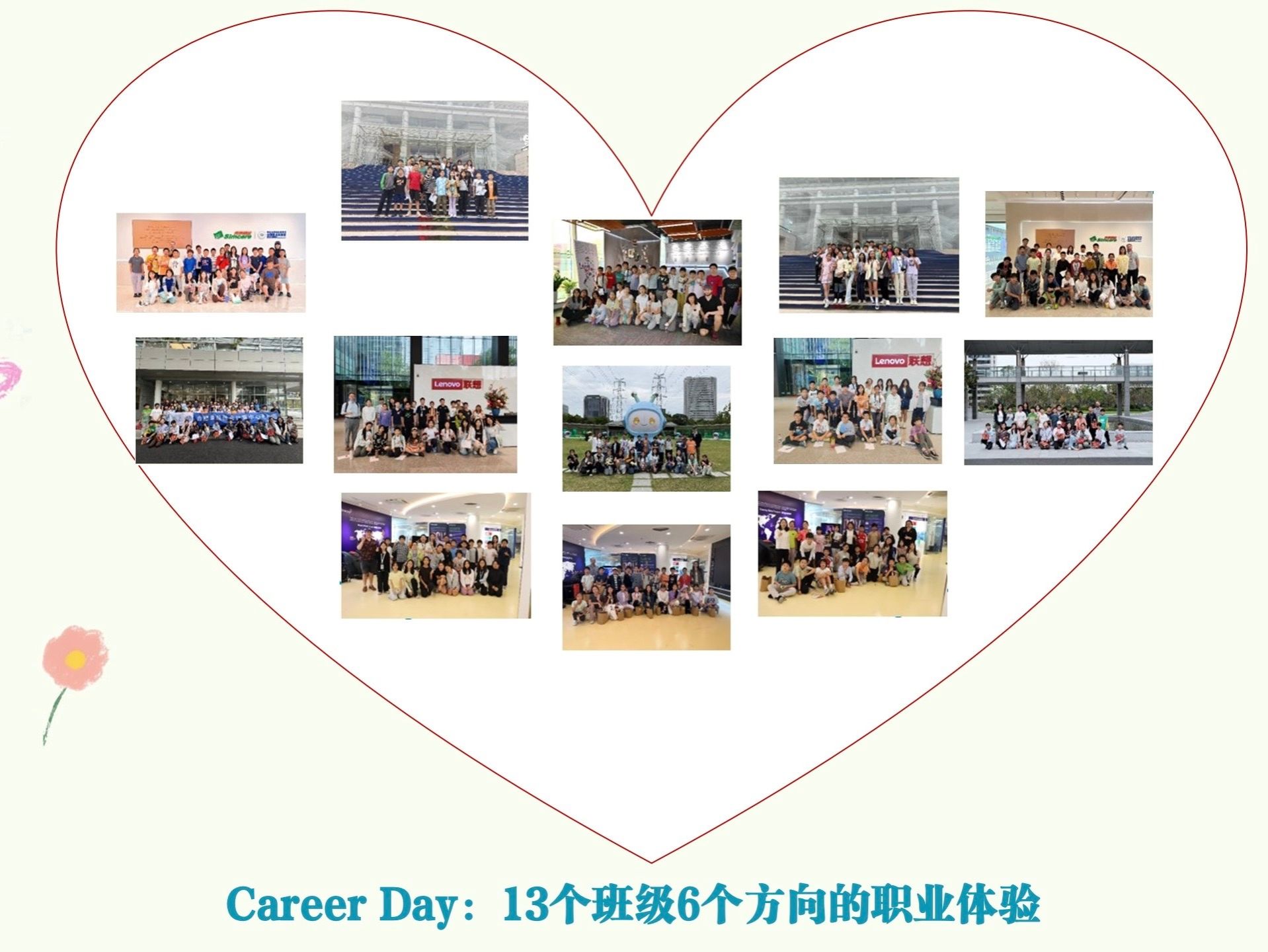
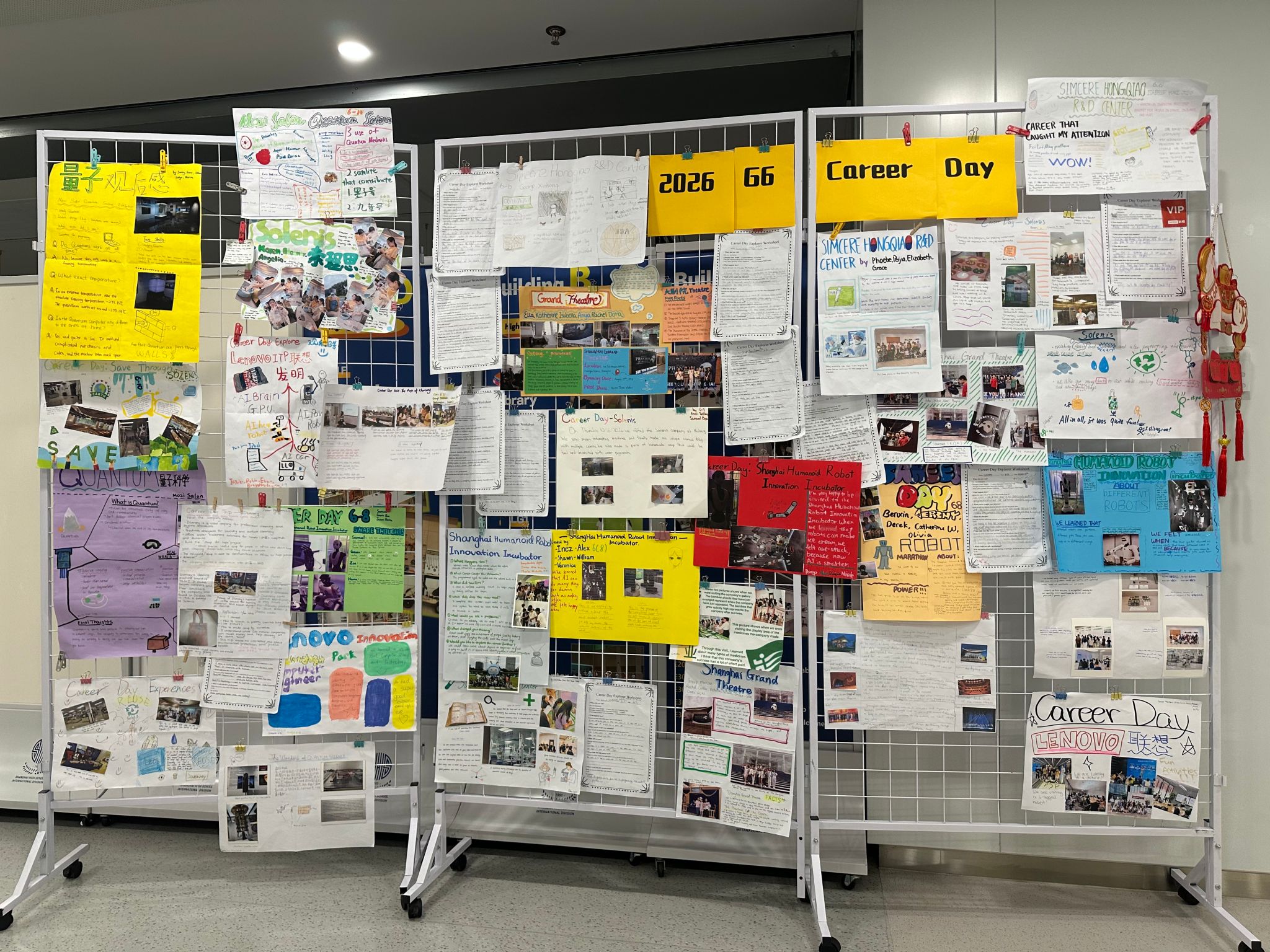
On Career Day, October 15, Grade 6 students visited six industry sites. At the Shanghai Grand Theatre, they witnessed the full journey of a performance from rehearsal to stage. At the Lenovo Future Center and the exhibition hall of the Shanghai Humanoid Robot Innovation Incubator, they observed sophisticated computers and robots up close. At the Mozi Salon Quantum Science Exhibition Hall, abstract textbook concepts became tangible. At the Solenis R&D Center and Simcere Hongqiao R&D Center, they explored waste recycling, experienced intangible heritage tie-dye, and stepped into real laboratories to trace how medicines are developed.
Stepping out of classrooms and into professional frontlines, students felt vividly that only one brave step separates textbook knowledge from the wider world. "There are so many different roles backstage," one student reflected simply— this quiet realization is their first precious gain from the exploration.
Pick the Rope Up,Jump Together
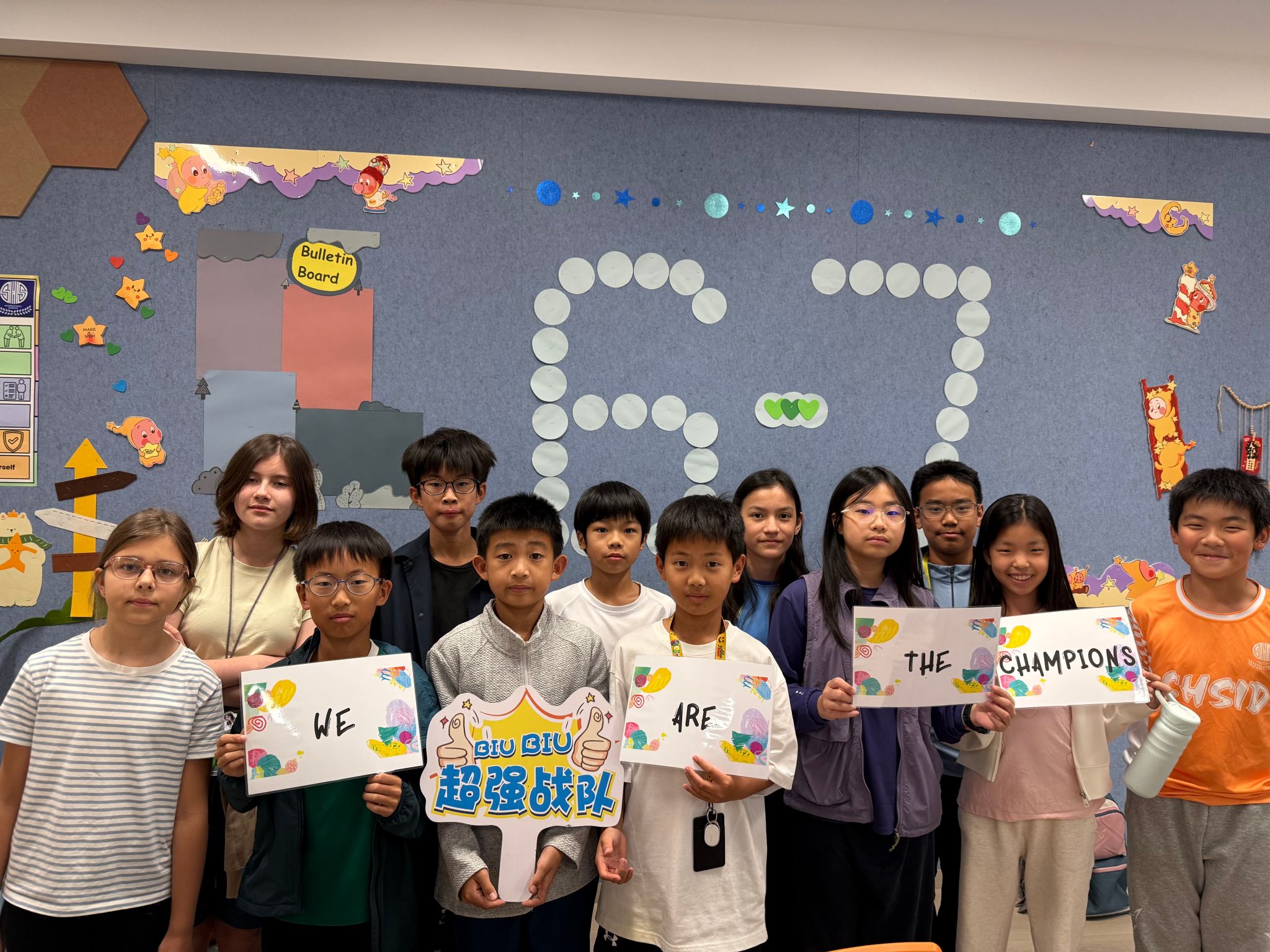
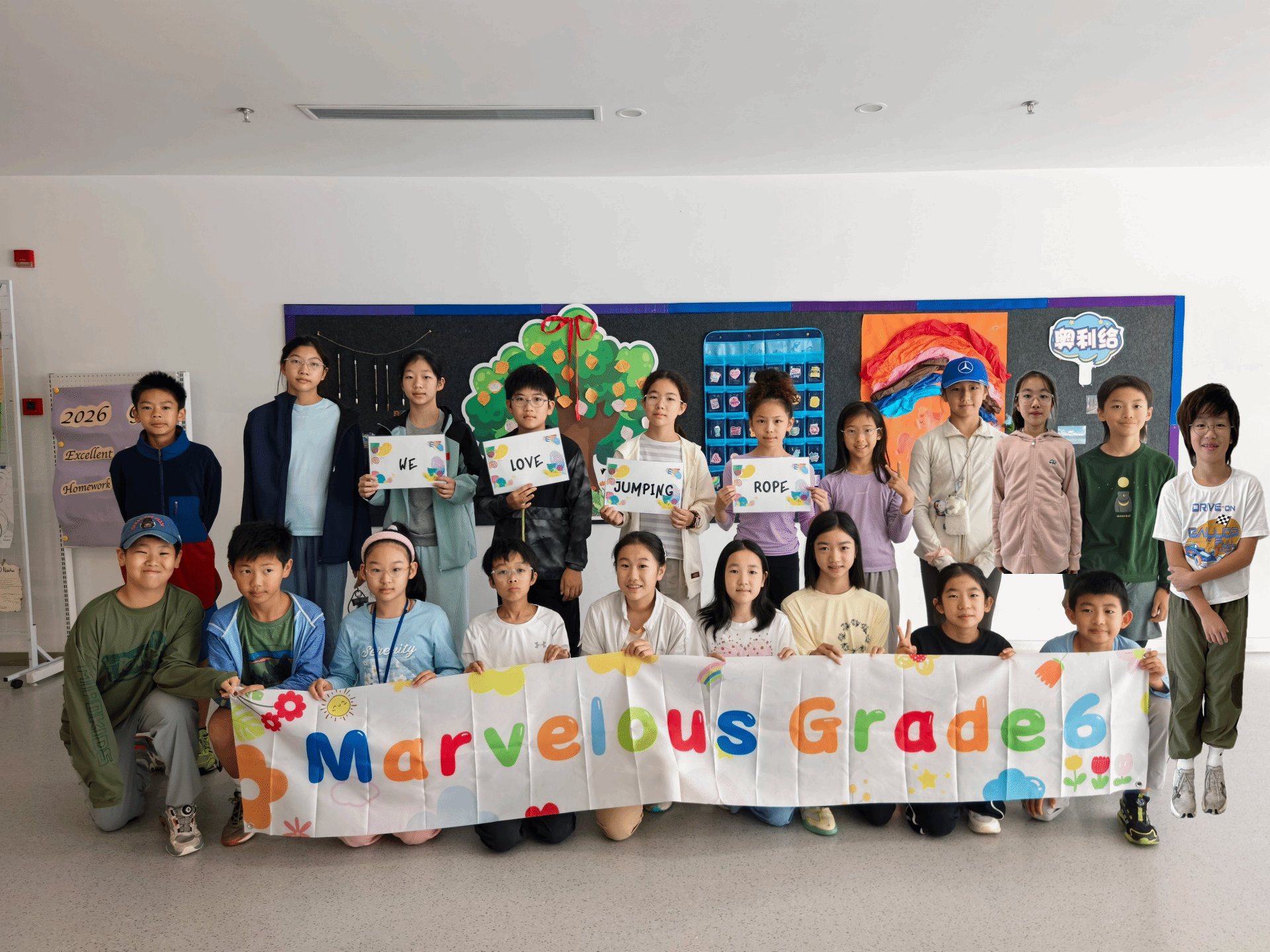
After exploring the world outside, back on campus, students learned about perseverance through skipping rope. In the group long-rope competition, the whole class counted in rhythm and coordinated as one, striving toward the target of 80 jumps. When someone tripped and broke the rhythm, they did not give up. They caught their breath, rejoined the line, and kept going alongside teammates.
The short-rope events were an individual challenge: single skips tested steady endurance, double unders demanded precise lift timing, and triple skips needed repeated practice. Many students tripped time and again, yet kept trying. Whether collaborating as a team or chasing personal bests, they discovered between every rise and fall of the rope: hold your rhythm, and you can keep outdoing yourself.
Share How You Feel,Listen to One Another
Beyond striving and competing, "I Can" also lives in gentle human connection. This month's character education lessons focused on communication. One break time, two close friends fell out over an offhand joke; neither was ready to speak first. This small, real incident became perfect classroom material.
Instead of rushing to judge who was right or wrong, teachers guided the class to unpack the conflict. Through interactive games, students stepped out of their own perspective. They practiced stating their feelings clearly by describing what made them uncomfortable about the joke. They also learned to set aside assumptions, pause, and read the unspoken thoughts behind others' words to better understand each other's intentions. Students began to see that many conflicts grow from misunderstanding and silence.
Disagreement is not the end of a relationship. Honest expression and attentive listening are where true communication begins. Learning to speak thoughtfully and listen well is a vital part of "I Can": I can share my feelings, and I can understand others.
Take Action, Light Up Small Sparks
With broader vision, resilience and empathy, students no longer wait passively for instructions. They choose to create change themselves. Instead of thinking "I wish someone would do this," they say: "I'll try."
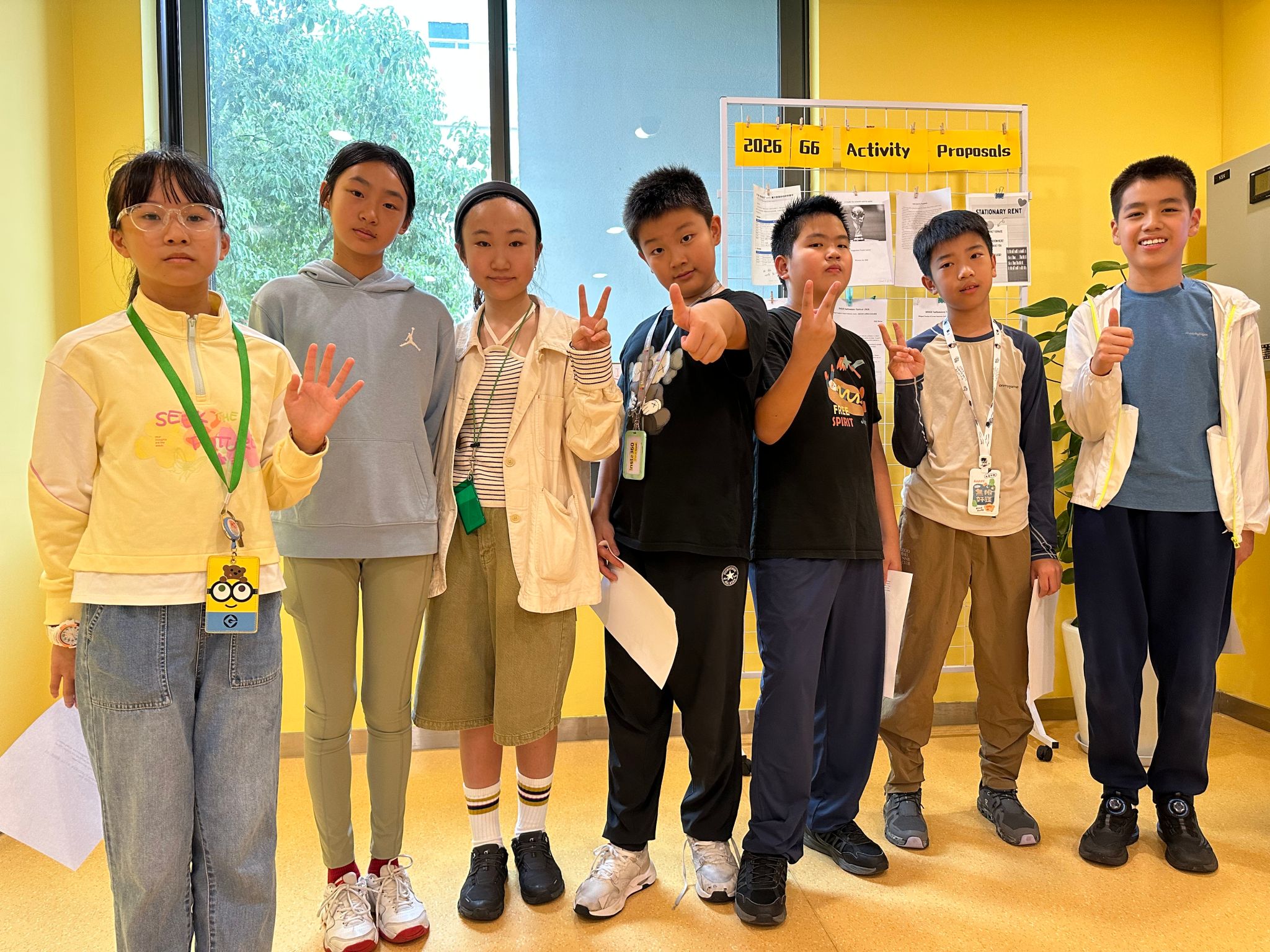
McKinley (6-1) proposed a grade-wide Rubik's Cube speed contest; Vincent (6-12) designed a football league framework; Lee On and Nicole (6-2) planned all-grade festival celebrations; Keelia (6-12) set up a stationery sharing shelf in the hallway; Alvin (6-13) built a lost-and-found mini-program; Leonard (6-6) connected external guests to organize a wildlife conservation talk; Elliot (6-9) refined his mountain bike stunts into something wonderful, and encouraged peers not to give up on what they love; Matthew (6-10) made an idea box to collect all kinds of creative thoughts from classmates.
These ideas are diverse yet share one core idea: noticing needs around you and stepping forward to solve them. Grand gestures are not required. One small creative idea, one brave attempt, can light a spark and bring people closer.
From "I Can" in words to "I Can" in practice, this month the phrase is no longer just a slogan. It is the courage to explore outward, to stand up after a fall, the kindness of listening and empathizing, and the determination to take charge when no one else leads. What will Grade 6 students say "I Can" to next month? Stay tuned for our journey ahead!
(Written by Linyu Qiu
Pictures by All Grade 6 Teachers
Reviewed by Lu Chen, Shiyu Wu, Christian Saroza)