-
ABOUT US
-
ACADEMICS
Curriculum Program
Departments
- English
- High School Chinese
- Primary and Junior School Chinese.
- High School Mathematics
- Middle School Mathematics
- Primary School Mathematics
- Music and Fine Arts
- Physical Education
- Physics
- Chemistry
- History and Geography
- Physical Science and Optional courses Department
- Middle School Biology
- High School Biology
- Social Sciences
- Computer Science
- Courses in Primary School
Achievements and Matriculations
College Counseling
Science & Technology Innovation Contest
Subject Competition
-
ARTS
-
ATHLETICS
-
AT SHSID
SHSID ∣ TIMES
PTSA
Club Exhibition
- 龙吟社
- Live 2 Drama
- Choir
- Hip-pop Dance Club
- The Primary School Dance Troupe
- Symposiums Club
- Biology Workshop
- You Shan
- VEX Robotic
- Peking Opera Club
- Baseball Club
- Model United Nations
- The World Scholar’s Cup
- Future Problem Solving Club
- United States Academic Pentathlon
- OM Club
- AMC Club
- Music for Patients
- SHSID Gazette
- Smile Charity
- Cultural Moments
- SciAcademy
- Stem Doge Alliance
- Chinese Debate Club
- IAA
- Mock Trial Club
- Zhengming Club
- Furry Friends
- GT-Racing
- Village Radio
- IMMC Club
- Creative Design and Intelligent Fabrication
- Future City Research Project
- ECOCAP
- AdvocaSEA
- SPDC
- Medishine
- Floorball Club
- Animusic MTC
- Wings Up
- All Booked
- Cyano
- Birding Community
Health and Wellness
Campus Safety
Cafeteria Service
-
ADMINISTRATION
-
ADMISSIONS
-
ALUMNI
Alumni Information
Honors Students
- Class of 2025
- Class of 2024
- Class of 2023
- Class of 2022
- Class of 2021
- Class of 2020
- Class of 2019
- Class of 2018
- Class of 2017
- Class of 2016
- Class of 2015
- Class of 2014
- Class of 2013
- Class of 2012
- Class of 2011
- Class of 2010
- Class of 2009
- Class of 2008
- Class of 2007
- Class of 2006
Who Studied at SHSID
SHS Foundation
-
DOCUMENTS
G1: STEAM Week — Play with Multi-Disciplines and Build Architecture Skillfully
The annual highlight — STEAM Week is coming in the spring breeze! STEAM is an educational activity with the themes of Science, Technology, Engineering, Art and Math, aiming to cultivate students' comprehensive quality and innovative thinking. This week, let us visit a grand architectural exhibition with the "little architects" of SHSID’s Puxi, Pudong and Lingang first graders!
In this week's STEAM week activities for the first grade, the "little architects" used various self-provided materials to build a one-foot-high building, fully demonstrating their creativity and hands-on ability.
To become an excellent architect, architectural knowledge is the foundation. It teaches us how to make a building so stable that the wind cannot blow it over, and the rain will not ruin it. World-renowned buildings are role models to learn from, teaching us the experience of considering stability and beauty at the same time. On Monday, under the guidance of teachers, the grade one "architects" "visited" the wonders of the world, such as the majestic Taj Mahal, the romantic Eiffel Tower, and the fantastic Leaning Tower of Pisa... While reading these architectural introductions, students explored the structure and principles of the building, accumulating knowledge and inspiration for future building.
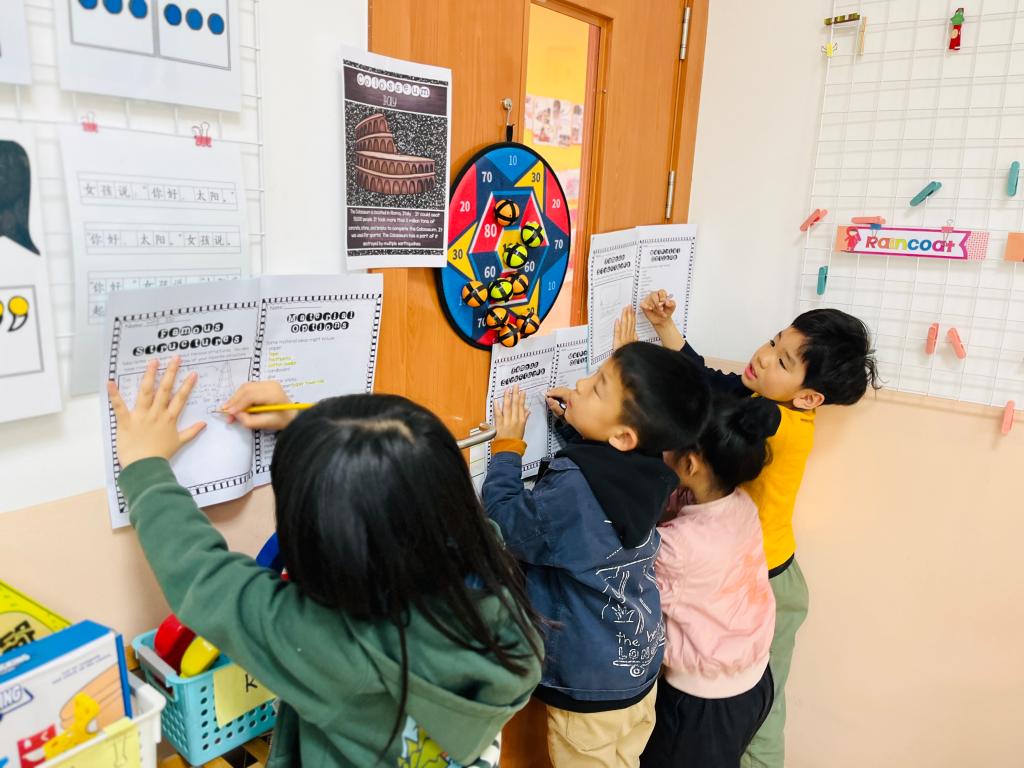
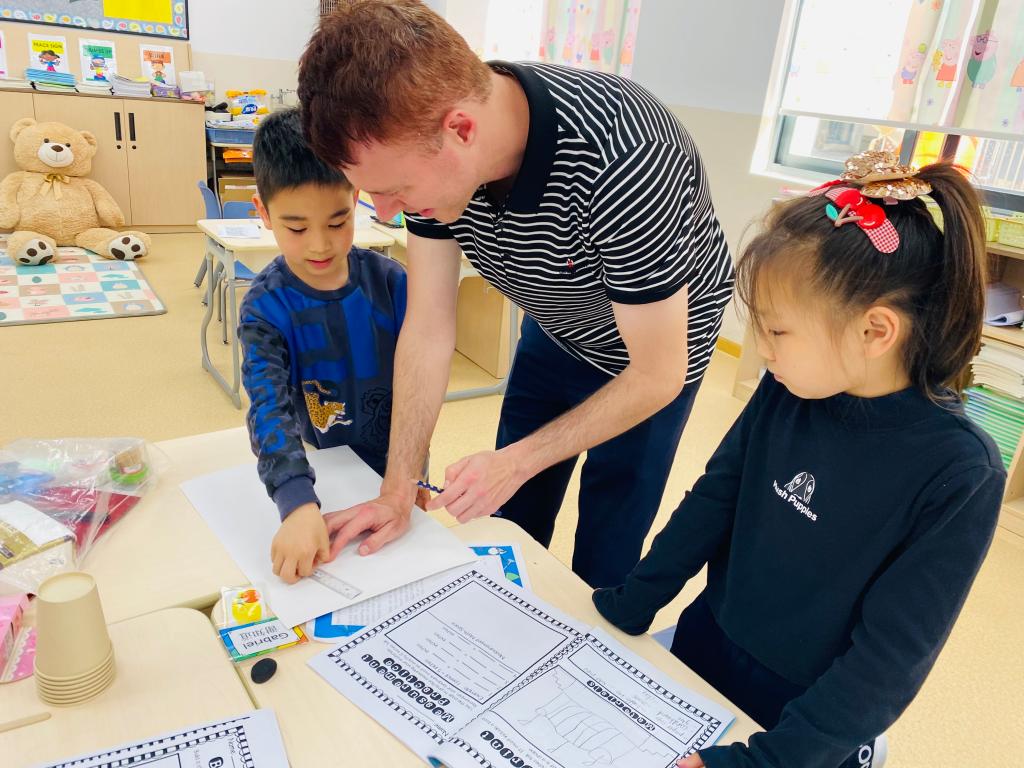
Precise measurement is also one of the key abilities that architects need. After drawing blueprints of their buildings on Tuesday, "little architects" made use of what they learned about length and perimeter in math class. They used a ruler to measure the length of the material, calculated the perimeter of the shapes, and tried to build a 12-inch-high building out of their own materials.
With these necessary qualities, "architects" can't wait to show their talents. They built a variety of buildings with materials such as cardboard, wooden sticks, cotton swabs, and straws. Some imitated famous landmarks in the world, such as London Bridge and Oriental Pearl Tower. The box of facial cleanser was used as the body of the tower, and the cardboard was used to make a triangular spire, and small rainbow-colored sticks were inserted into the body of the tower, turning into a rainbow-colored bridge deck. After a while, a "London Bridge" was officially declared open. The "little architects" have learned that a triangle is the most stable, so they used three toothpicks as pillars, rubbed the colored mud into a ball and inserted it into the toothpicks, and then set two toothpicks on top to fix a small ball. The "Bund" stood up. Some "architects" used their imagination to create their own unique buildings, such as rocket towers and windmill houses. "Little Architects" put the clay underneath as a base, plugged with lots of cotton swabs to support the cardboard, and used three straws to form a hollow roof on the cardboard. A delicious cake house was completed. These simple materials have become "ingenious" buildings in the dexterous hands of the "architects", and a little architectural dream has been built in their hearts.
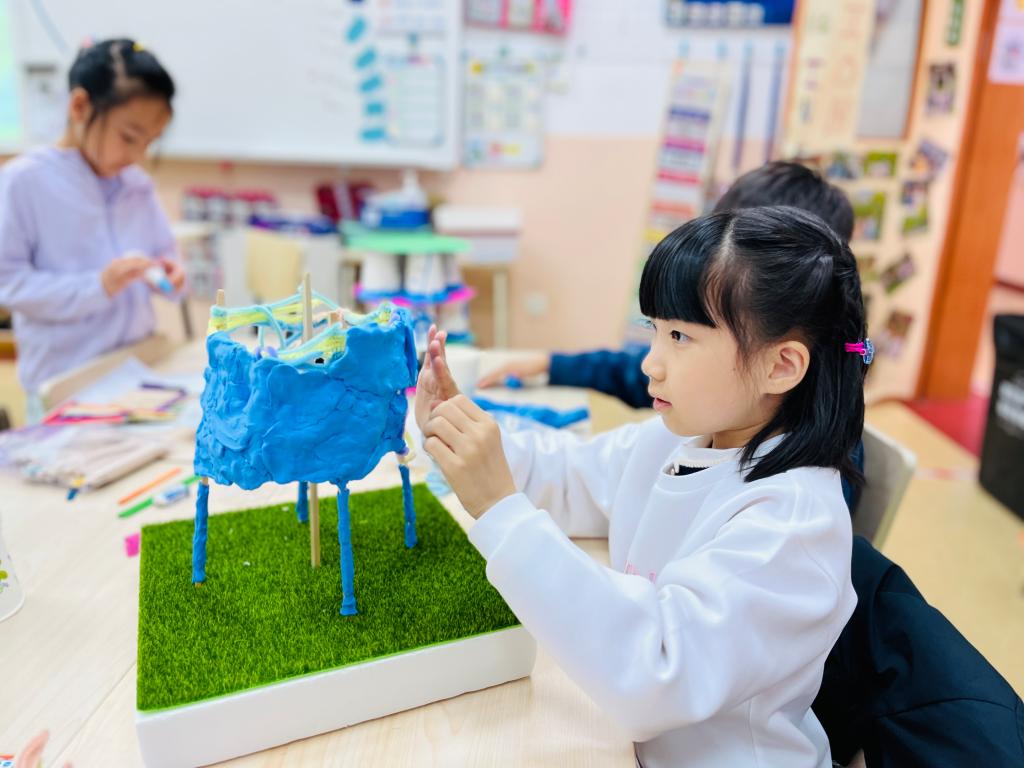
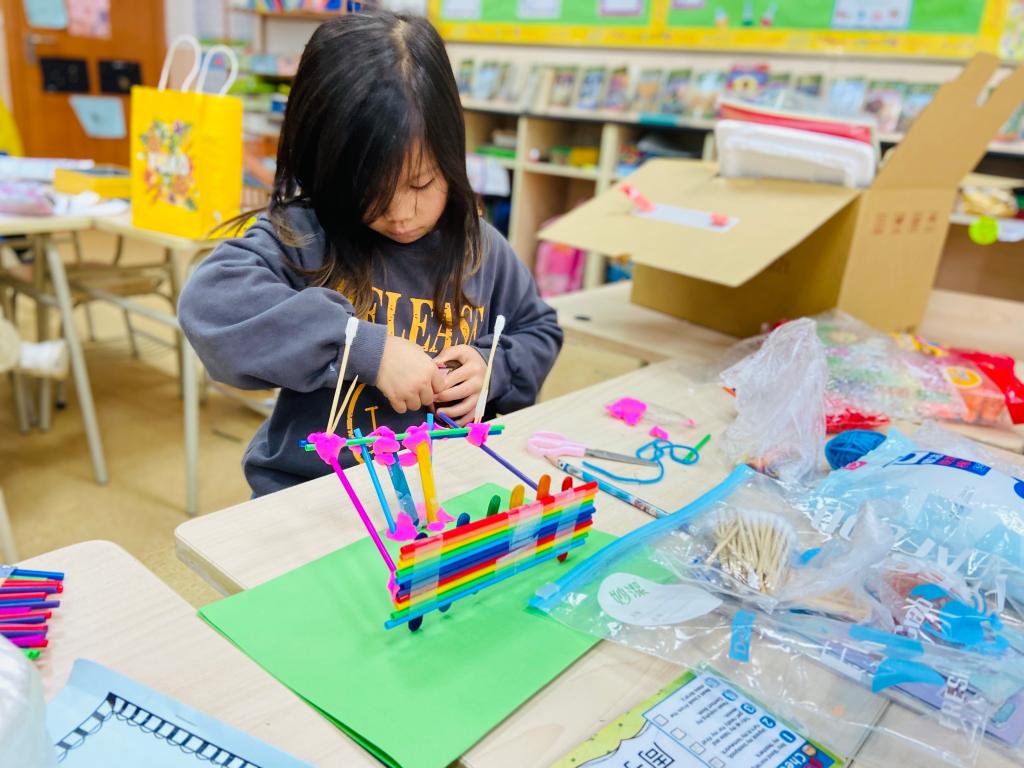
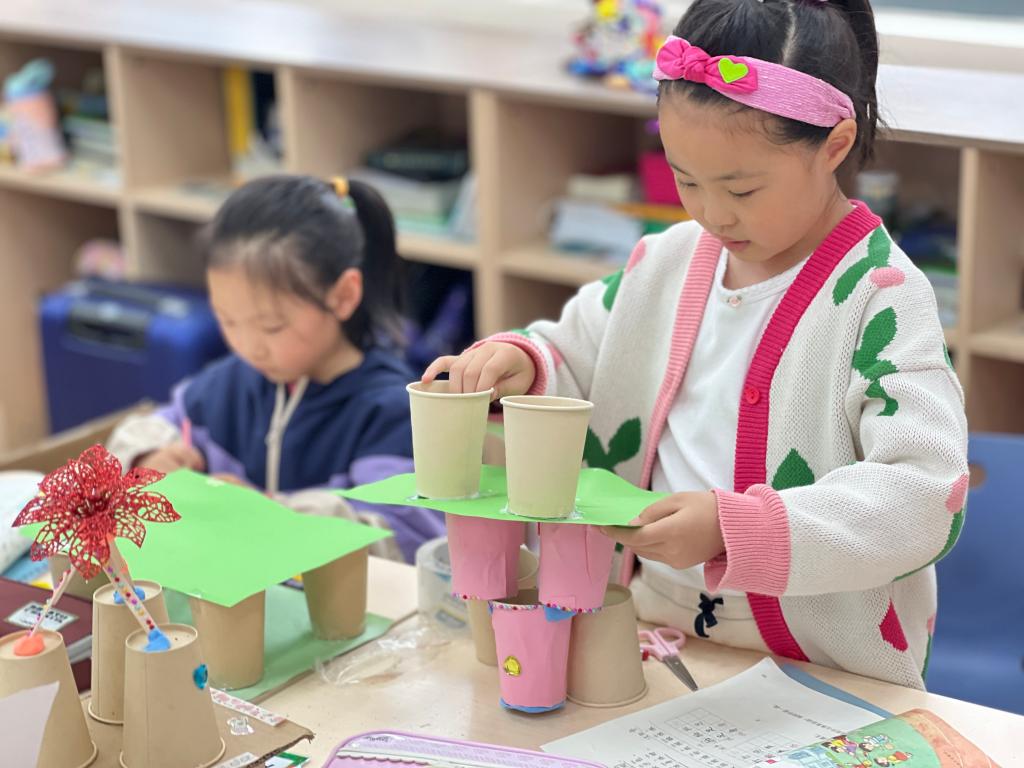
After the construction was completed, the grand architectural exhibition began. "Architects" browsed the works of their peers and accepted comments and suggestions from classmates. They also reflected on their own works, and summed up their strengths and weaknesses, as well as what can be improved in the future.
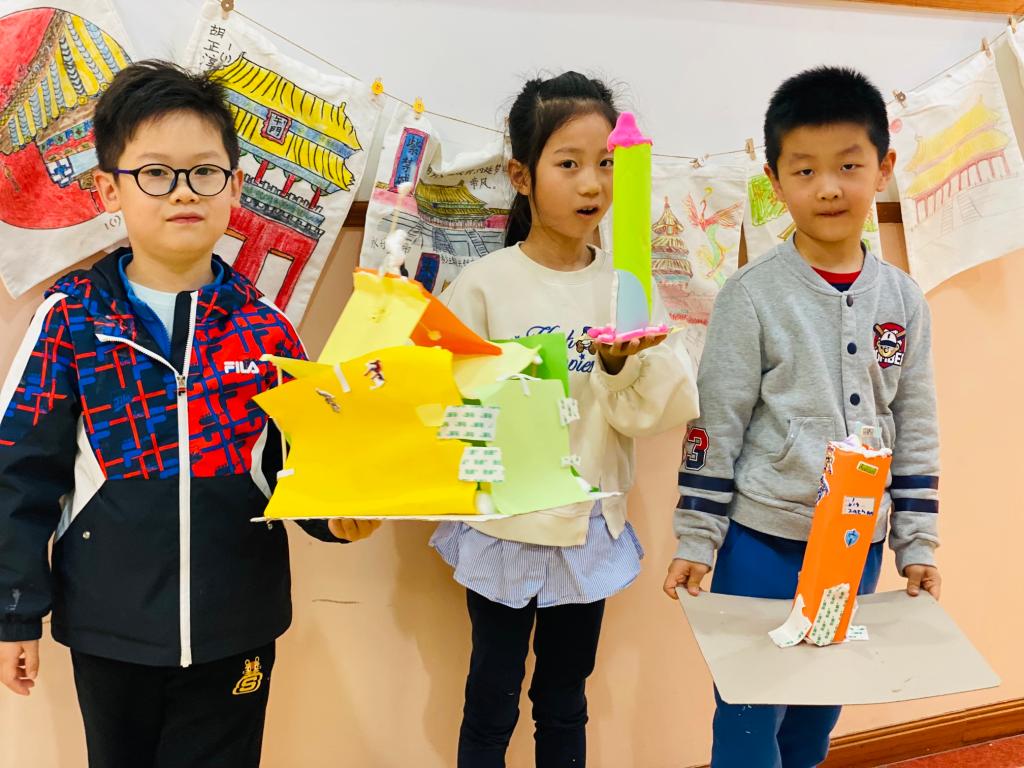
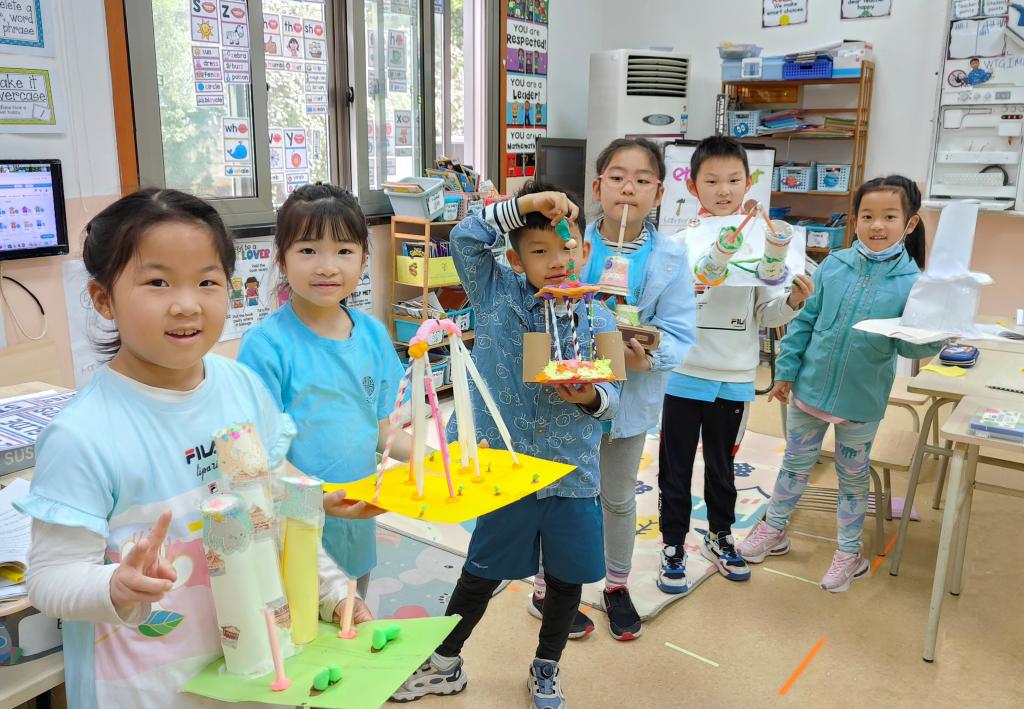
The activity combined the skills of different subjects, which not only exercised the students' hands-on ability and aesthetic intuition, but also improved their mathematical literacy and communication skills. Let us look forward to the outstanding performance of the Grade 2 next week!
Written by Thea Chen
Pictures by G1 Teachers
Edited by Serene Yang, Elaine Zhu (Intern), Niall Keenan