-
ABOUT US
-
ACADEMICS
Curriculum Program
Departments
- English
- High School Chinese
- Primary and Junior School Chinese.
- High School Mathematics
- Middle School Mathematics
- Primary School Mathematics
- Music and Fine Arts
- Physical Education
- Physics
- Chemistry
- History and Geography
- Physical Science and Optional courses Department
- Middle School Biology
- High School Biology
- Social Sciences
- Computer Science
- Courses in Primary School
Achievements and Matriculations
College Counseling
Science & Technology Innovation Contest
Subject Competition
-
ARTS
-
ATHLETICS
-
AT SHSID
SHSID ∣ TIMES
PTSA
Club Exhibition
- 龙吟社
- Live 2 Drama
- Choir
- Hip-pop Dance Club
- The Primary School Dance Troupe
- Symposiums Club
- Biology Workshop
- You Shan
- VEX Robotic
- Peking Opera Club
- Baseball Club
- Model United Nations
- The World Scholar’s Cup
- Future Problem Solving Club
- United States Academic Pentathlon
- OM Club
- AMC Club
- Music for Patients
- SHSID Gazette
- Smile Charity
- Cultural Moments
- SciAcademy
- Stem Doge Alliance
- Chinese Debate Club
- IAA
- Mock Trial Club
- Zhengming Club
- Furry Friends
- GT-Racing
- Village Radio
- IMMC Club
- Creative Design and Intelligent Fabrication
- Future City Research Project
- ECOCAP
- AdvocaSEA
- SPDC
- Medishine
- Floorball Club
- Animusic MTC
- Wings Up
- All Booked
- Cyano
- Birding Community
Health and Wellness
Campus Safety
Cafeteria Service
-
ADMINISTRATION
-
ADMISSIONS
-
ALUMNI
Alumni Information
Honors Students
- Class of 2025
- Class of 2024
- Class of 2023
- Class of 2022
- Class of 2021
- Class of 2020
- Class of 2019
- Class of 2018
- Class of 2017
- Class of 2016
- Class of 2015
- Class of 2014
- Class of 2013
- Class of 2012
- Class of 2011
- Class of 2010
- Class of 2009
- Class of 2008
- Class of 2007
- Class of 2006
Who Studied at SHSID
SHS Foundation
-
DOCUMENTS
Middle and Primary School Math Department: G7 Project “Discover the Math in Daily Life”
Math is present everywhere in our lives—from a small blossom or leaf to the vast skies and deep oceans. Math is not just about boring and confusing equations, but it is every smallest part of our daily lives. Over the past few weeks, 7th-grade students have been working hard on their math projects, carefully observing the world around them and discovering the fun of math.
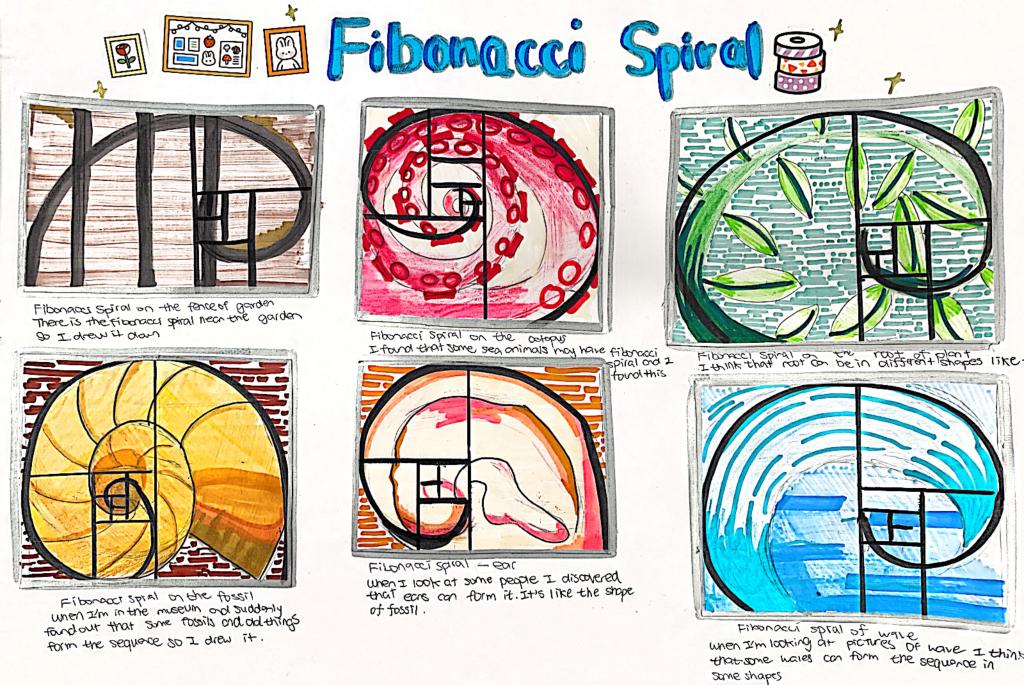
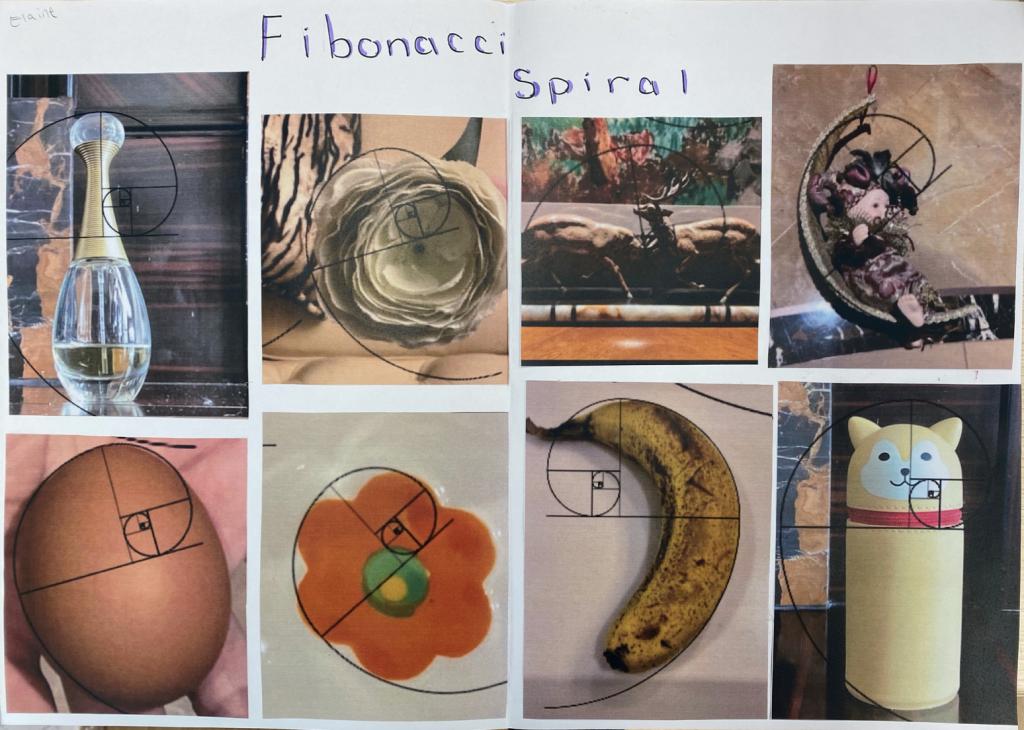
In Part I, students need to observe the floras and faunas they see every day and identify the Fibonacci sequence spiral in those objects. At the same time, the students also need to use the given patterns and data to complete the following questions, making sure that they have grasped the knowledge tightly. The most common Fibonacci sequence spiral is hidden in the numerous flowers seen daily. From the number of petals to the layers of petals, students can trace a spiral around the contour of the flower. Change the direction of the spiral in numbers, and that is the Fibonacci Sequence.
In Part II, students got an idea of the Golden Ratio. From Ancient Greece and Egypt, to present philosophers and politicians, even the members of a famous idol group, all of their faces hold a diverse range of math knowledge. Using the given pictures, students used the measurements of the people’s facial features, chin, forehead, etc. to calculate their facial ratios and compared the numbers with the ratio most people believe is the most beautiful—the Golden Ratio (~1.618). Students also got a chance to choose their favorite person to measure—for example, idols, movie characters, historical figures, etc. Throughout the process, students slowly sought their interest in math, as they constantly made discoveries.
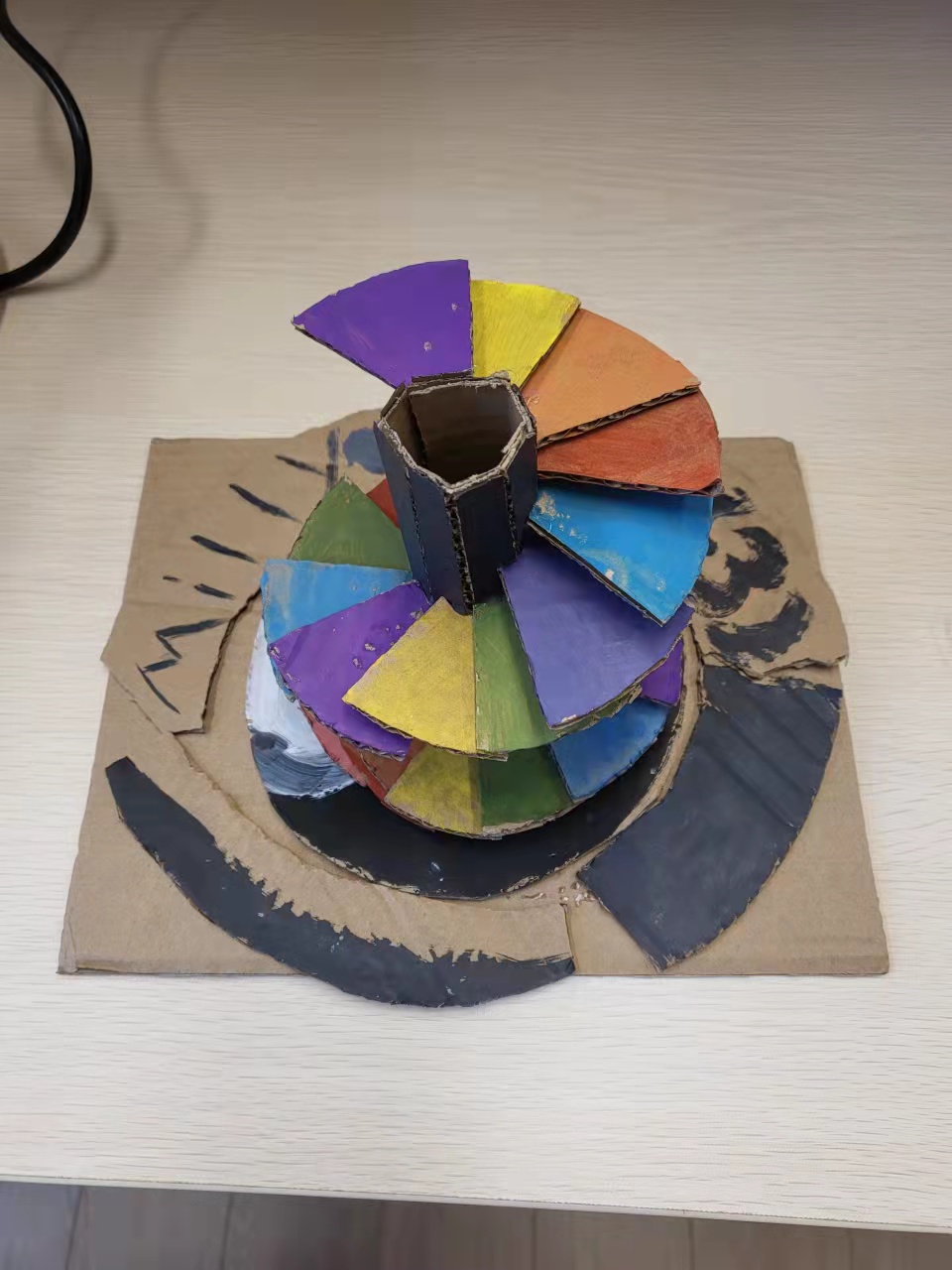
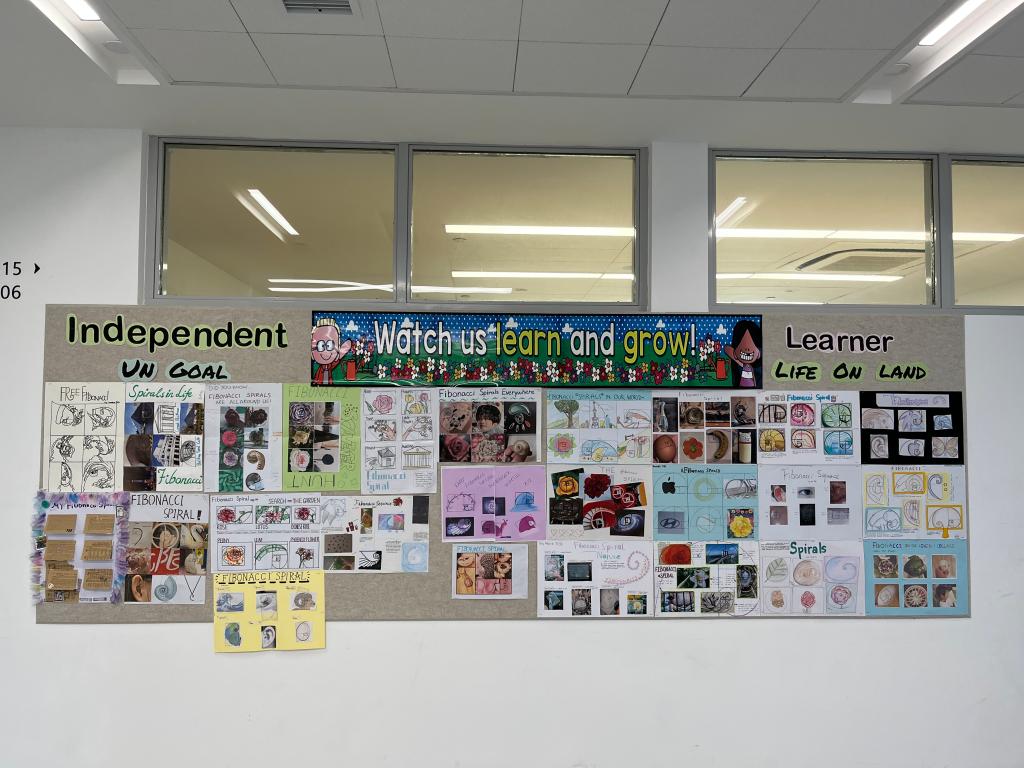
In the last part, Part III, students summarized and concluded the knowledge they had learned in the previous sections. In the form of a poster and presentation, students shared the math in their own lives, recording each bit of the world around them. With help of the teachers’ guidance, students looked back on the entire project’s process and reflected on places of improvement and places worth of praise.
This math project portrayed the diversity of math, not only testing the students’ ability to become independent learners but also actively leading students to observe the countless places in daily life where math knowledge is hidden, inspiring students’ interest and ambition in discovering the true beauty of mathematics.
(Written by Teresa 7(1) Supervised by Wei Xu Pictures by Wei Xu Edited by Huang Shiyuan, Brie Polette)