-
ABOUT US
-
ACADEMICS
Curriculum Program
Departments
- English
- High School Chinese
- Primary and Junior School Chinese.
- High School Mathematics
- Middle School Mathematics
- Primary School Mathematics
- Music and Fine Arts
- Physical Education
- Physics
- Chemistry
- History and Geography
- Physical Science and Optional courses Department
- Middle School Biology
- High School Biology
- Social Sciences
- Computer Science
- Courses in Primary School
Achievements and Matriculations
College Counseling
Science & Technology Innovation Contest
Subject Competition
-
ARTS
-
ATHLETICS
-
AT SHSID
SHSID ∣ TIMES
PTSA
Club Exhibition
- 龙吟社
- Live 2 Drama
- Choir
- Hip-pop Dance Club
- The Primary School Dance Troupe
- Symposiums Club
- Biology Workshop
- You Shan
- VEX Robotic
- Peking Opera Club
- Baseball Club
- Model United Nations
- The World Scholar’s Cup
- Future Problem Solving Club
- United States Academic Pentathlon
- OM Club
- AMC Club
- Music for Patients
- SHSID Gazette
- Smile Charity
- Cultural Moments
- SciAcademy
- Stem Doge Alliance
- Chinese Debate Club
- IAA
- Mock Trial Club
- Zhengming Club
- Furry Friends
- GT-Racing
- Village Radio
- IMMC Club
- Creative Design and Intelligent Fabrication
- Future City Research Project
- ECOCAP
- AdvocaSEA
- SPDC
- Medishine
- Floorball Club
- Animusic MTC
- Wings Up
- All Booked
- Cyano
- Birding Community
Health and Wellness
Campus Safety
Cafeteria Service
-
ADMINISTRATION
-
ADMISSIONS
-
ALUMNI
Alumni Information
Honors Students
- Class of 2025
- Class of 2024
- Class of 2023
- Class of 2022
- Class of 2021
- Class of 2020
- Class of 2019
- Class of 2018
- Class of 2017
- Class of 2016
- Class of 2015
- Class of 2014
- Class of 2013
- Class of 2012
- Class of 2011
- Class of 2010
- Class of 2009
- Class of 2008
- Class of 2007
- Class of 2006
Who Studied at SHSID
SHS Foundation
-
DOCUMENTS
Grade 6: Youth Development Class—Puberty Lecture
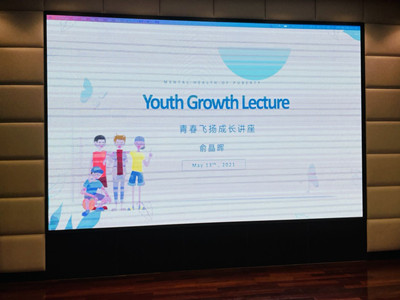
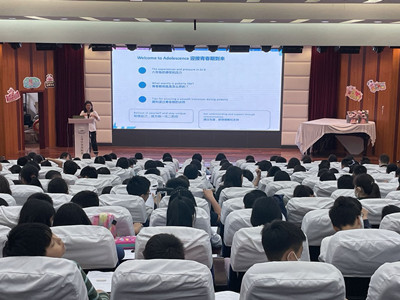
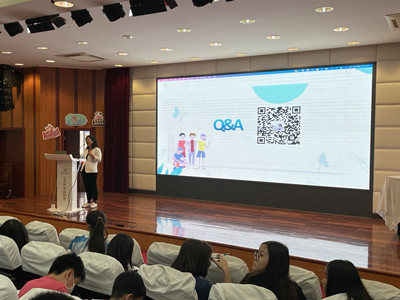
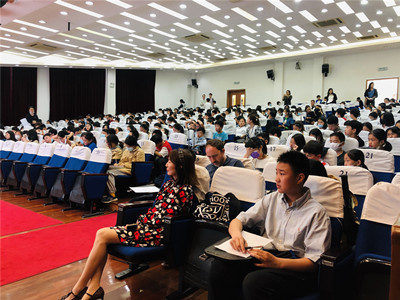
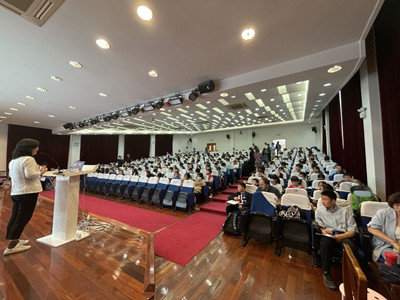
In the grade 6 youth development class on May 13th, the senior psychological counselor Ms. Yu Jinghui was invited to give a lecture on puberty psychology for the students.
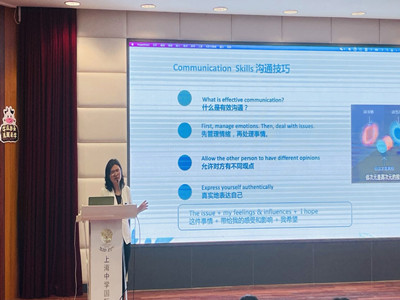
Ms. Yu’s lecture focused on the feelings and pressures of grade 6 students, the characteristics of adolescence, how to get through adolescence smoothly, and the skills of effective communication.
Ms. Yu mentioned that because of the development of the brain in adolescence, the mind is also improving. Because of the idea of gradually becoming independent of the things around them, teenagers begin to feel societal pressure. This is a good sign of growth because the students are no longer young children, but at the same time, adolescent children also need to learn to listen to and accept other people’s different ideas to form a better self.
Adolescent rebellion is often a headache for parents. How can parents and children communicate effectively so that they can understand each other? Merging with practical cases, Ms. Yu vividly introduced to the students several skills of effective communication. First, manage emotions well and then deal with things. If people speak in an angry or accusing tone, others will notice the tone rather than the things they need to deal with. Therefore, when communicating, you must calm down first, and then express yourself clearly. The second is to allow the other party to have different opinions. When they look at the same issue from different positions, they will have different ideas. Sometimes they are not right or wrong, but just different positions, and they can have different opinions and views. Third, learn to truly express themselves, make things clear, and let the other party know the impact of this matter on themselves, as well as how they want to deal with it so that the other party will more clearly understand their ideas.
At the end of the session, students raised their hands in the hope that Ms. Yu could help them answer their doubts. For example, some students asked, “Why do parents not accept our ideas all the time?” Ms. Yu said that parents may not realize that their children have grown up. If the child can tell them the exact plan, they will be aware of it and agree with the child. However, sometimes they just look at the problem from different angles and need to understand each other.
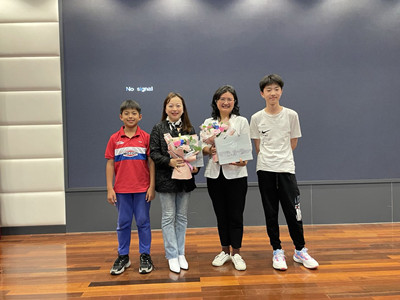
The 40-minute lecture came to an end. Ms. Yu’s lecture not only let students have a better understanding of adolescent psychology, but also taught practical communication skills. There are still many problems in the minds of the students. Ms. Yu left her contact information. If the students or parents have problems, they can contact her. She is willing to provide professional help. Finally, the students expressed their thanks to Ms. Yu with warm applause.
(Written by 6(7) Kristen Supervised by Mrs. Portillo Pictures by Ms. Fei Edited by Huang Shiyuan, Mikah Jimenez)