-
ABOUT US
-
ACADEMICS
Curriculum Program
Departments
- English
- High School Chinese
- Primary and Junior School Chinese.
- High School Mathematics
- Middle School Mathematics
- Primary School Mathematics
- Music and Fine Arts
- Physical Education
- Physics
- Chemistry
- History and Geography
- Physical Science and Optional courses Department
- Middle School Biology
- High School Biology
- Social Sciences
- Computer Science
- Courses in Primary School
Achievements and Matriculations
College Counseling
Science & Technology Innovation Contest
Subject Competition
-
ARTS
-
ATHLETICS
-
AT SHSID
SHSID ∣ TIMES
PTSA
Club Exhibition
- 龙吟社
- Live 2 Drama
- Choir
- Hip-pop Dance Club
- The Primary School Dance Troupe
- Symposiums Club
- Biology Workshop
- You Shan
- VEX Robotic
- Peking Opera Club
- Baseball Club
- Model United Nations
- The World Scholar’s Cup
- Future Problem Solving Club
- United States Academic Pentathlon
- OM Club
- AMC Club
- Music for Patients
- SHSID Gazette
- Smile Charity
- Cultural Moments
- SciAcademy
- Stem Doge Alliance
- Chinese Debate Club
- IAA
- Mock Trial Club
- Zhengming Club
- Furry Friends
- GT-Racing
- Village Radio
- IMMC Club
- Creative Design and Intelligent Fabrication
- Future City Research Project
- ECOCAP
- AdvocaSEA
- SPDC
- Medishine
- Floorball Club
- Animusic MTC
- Wings Up
- All Booked
- Cyano
- Birding Community
Health and Wellness
Campus Safety
Cafeteria Service
-
ADMINISTRATION
-
ADMISSIONS
-
ALUMNI
Alumni Information
Honors Students
- Class of 2025
- Class of 2024
- Class of 2023
- Class of 2022
- Class of 2021
- Class of 2020
- Class of 2019
- Class of 2018
- Class of 2017
- Class of 2016
- Class of 2015
- Class of 2014
- Class of 2013
- Class of 2012
- Class of 2011
- Class of 2010
- Class of 2009
- Class of 2008
- Class of 2007
- Class of 2006
Who Studied at SHSID
SHS Foundation
-
DOCUMENTS
IBDP Grade 11 TOK Exhibition Successfully Held
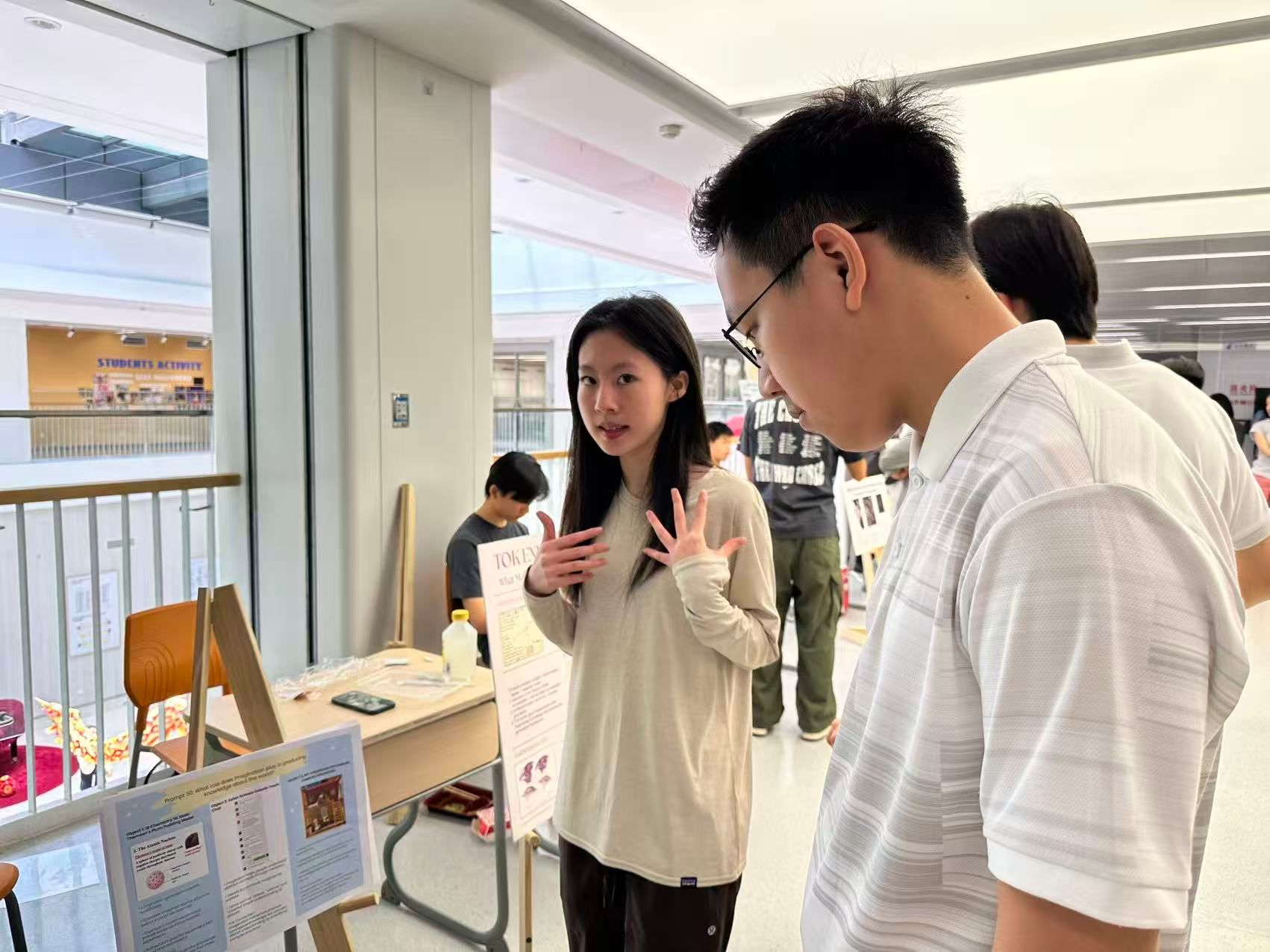
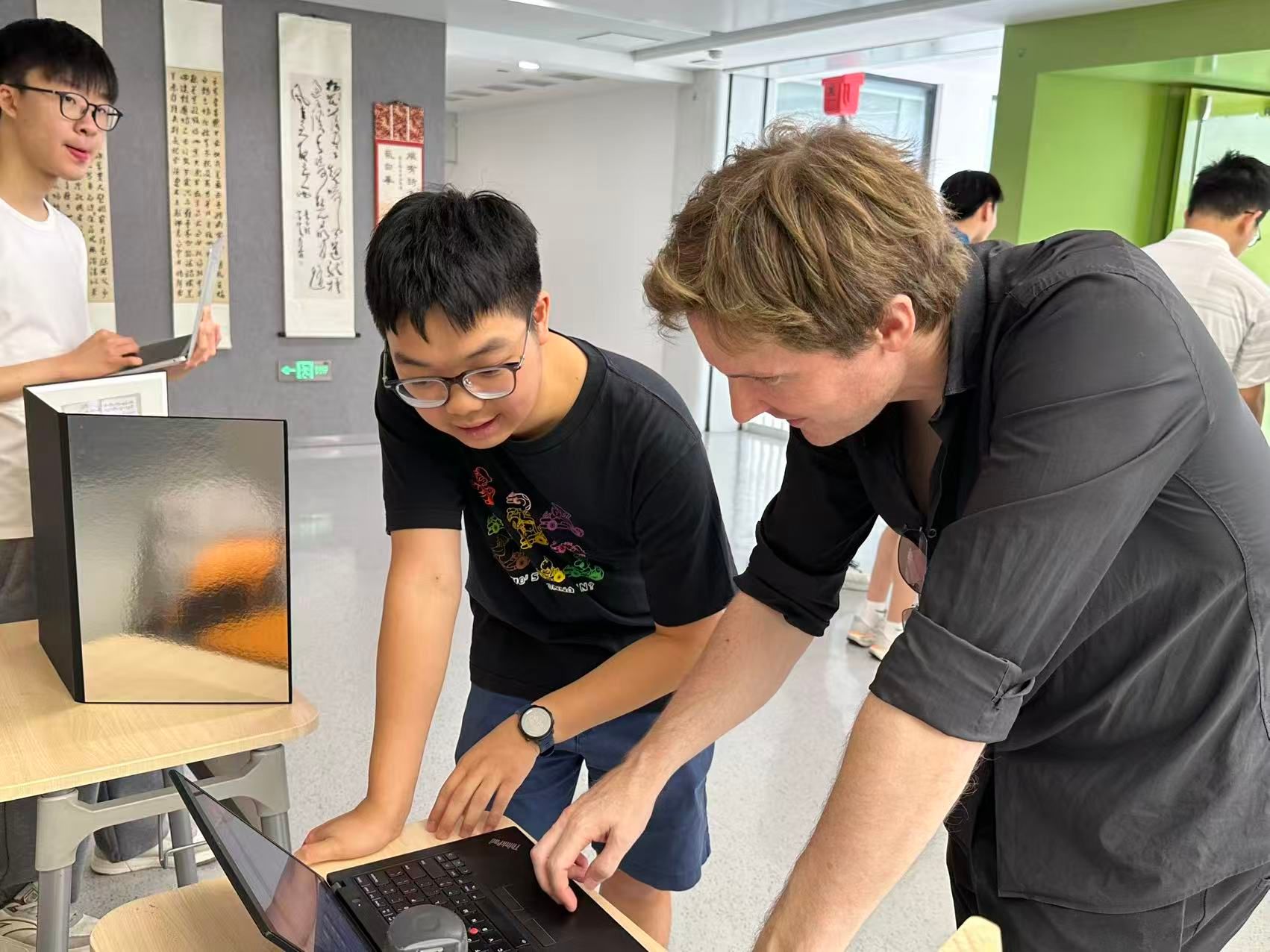
During lunchtime on June 8 and 9, Grade 11 IBDP students hosted the Theory of Knowledge (TOK) Exhibition on campus, showcasing the learning outcomes and reflections they had developed throughout a year of TOK study. Through exhibition booths and face-to-face discussions, students brought classroom inquiries into the public space by presenting carefully selected real-world examples and artifacts, creating an academic exhibition that combined intellectual depth with meaningful engagement with contemporary issues.
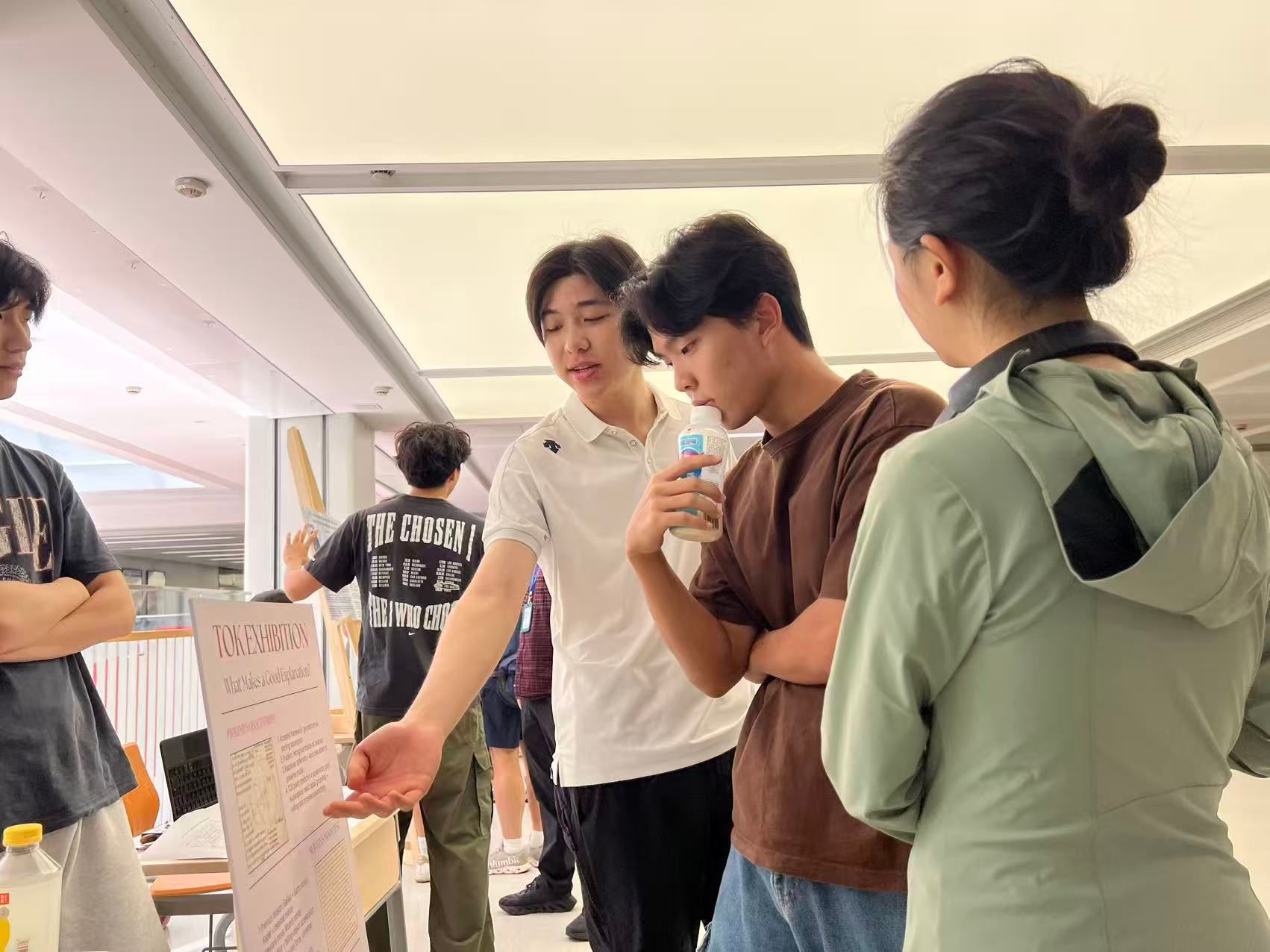
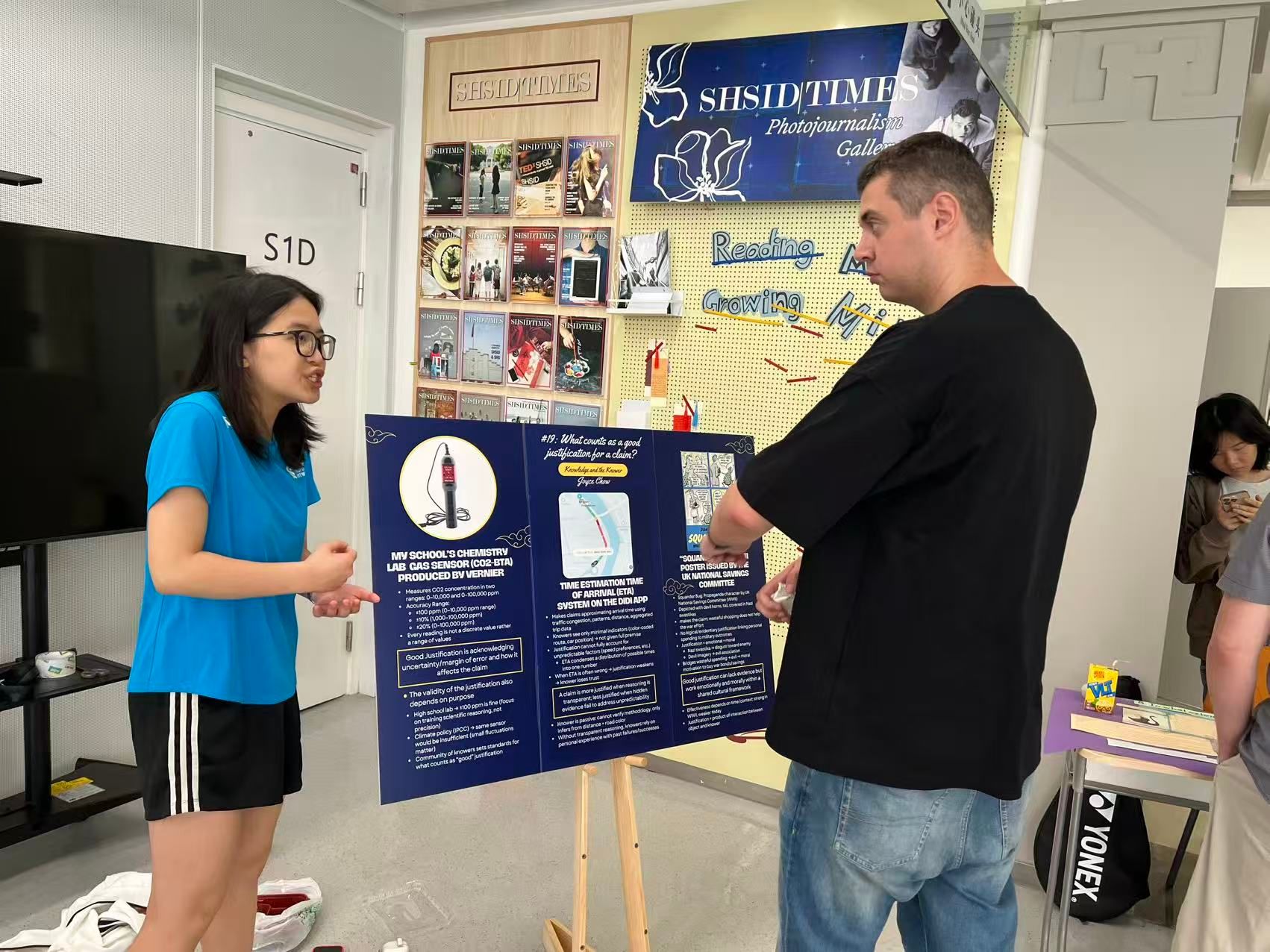
As one of the core components of the IB Diploma Programme, TOK encourages students to explore the theme of “Knowledge and the Knower” from a variety of perspectives, including technology, language, religion, and politics, while examining the role and limitations of knowledge in the real world. Some exhibitions used health warnings on cigarette packaging as a starting point to investigate why the public places trust in information provided by scientific institutions. Others focused on misinformation, misconceptions, and cognitive bias in digital media, analyzing how knowledge can be distorted during the process of dissemination, etc.
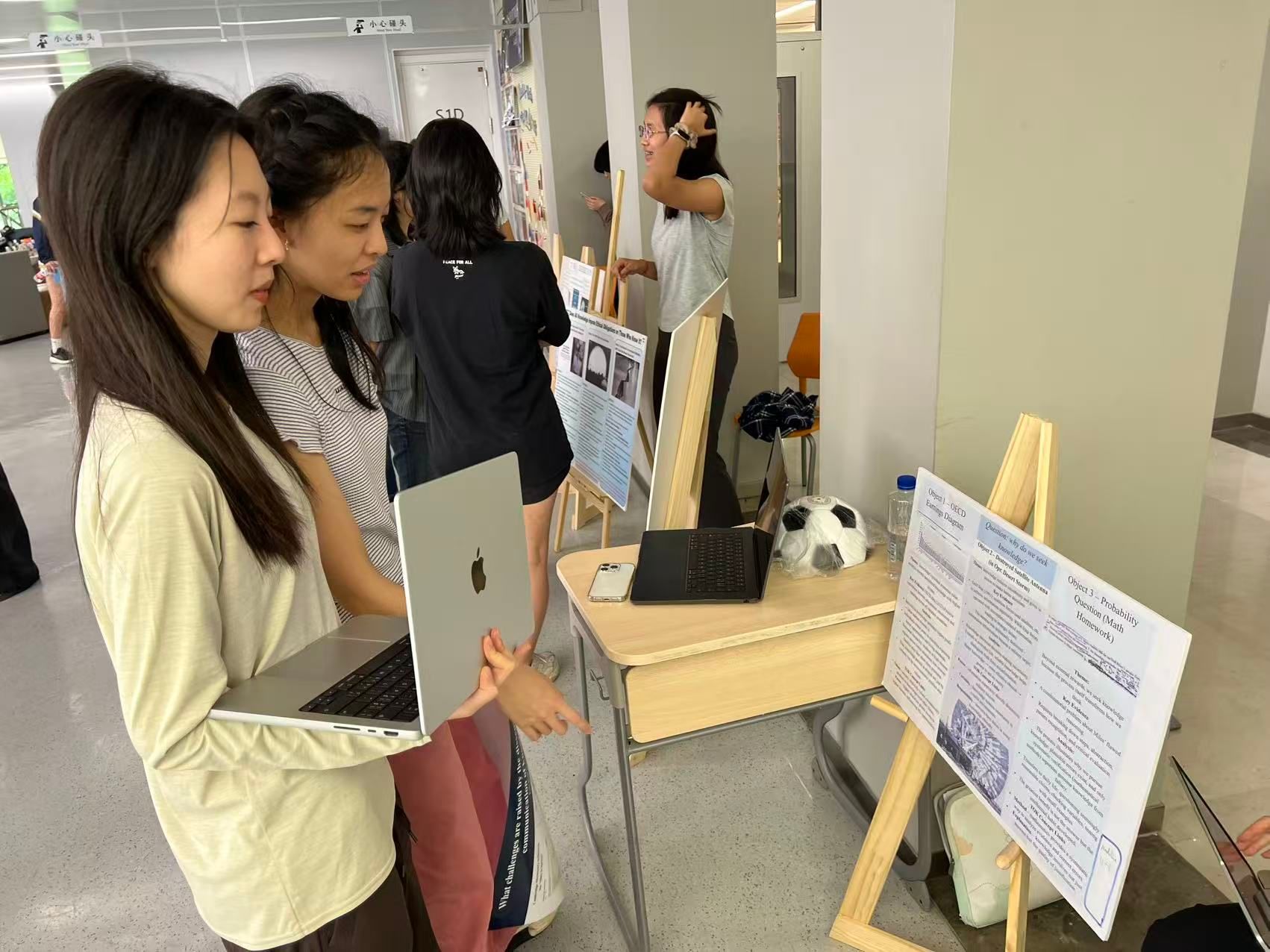
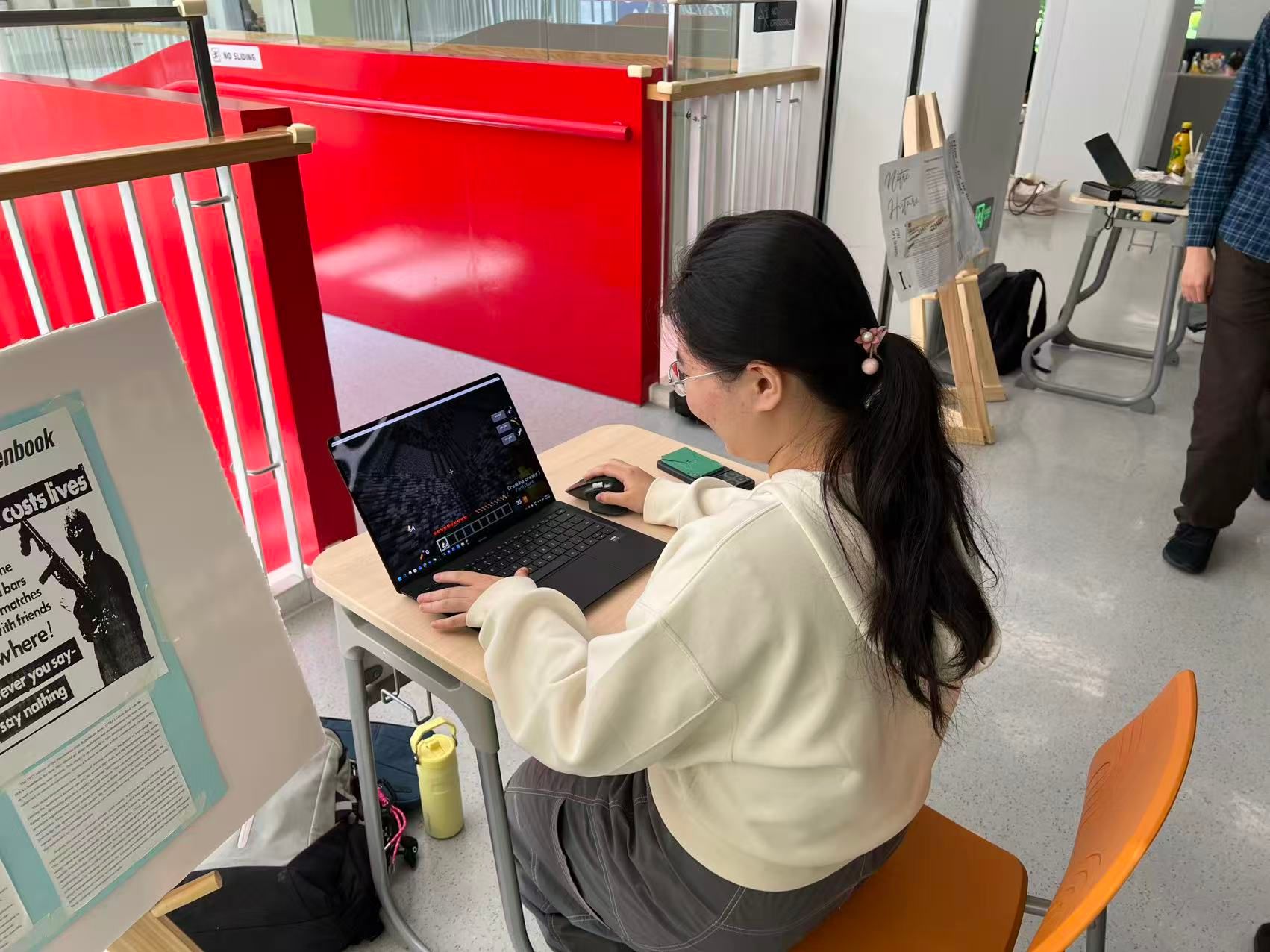
Unlike traditional academic exhibitions, the TOK Exhibition does not seek definitive answers. Instead, it emphasizes the process of raising questions, evaluating perspectives, and reflecting on how knowledge is constructed. Through the case studies presented on their display boards, students shared their interpretations and invited visitors to engage in discussion. Questions such as “To what extent is knowledge influenced by cultural background?”, “Why do we seek knowledge?”, “Why do we trust certain information?”, and “How can we distinguish between knowledge, belief, and opinion?” sparked thoughtful conversations throughout the event. Many younger students also actively participated in these exchanges, gaining insight into the distinctive way of thinking cultivated by the TOK course.
More than a showcase of Grade 11 students’ year-long learning, the TOK Exhibition served as a platform for intellectual exchange across different year groups. By connecting abstract questions about knowledge with concrete real-world objects and experiences, students demonstrated critical thinking, analytical skills, and a willingness to engage with multiple perspectives. The exhibition also allowed more members of the school community to experience the value of TOK: knowledge is not only about finding answers, but also about understanding how we come to know, interpret, and continuously reflect upon the world around us.
(Written by JaoJao Huang Pictures by Anderson Zhang Supervised by Dongsheng Zhang Reviewed by Qian Zuo)