-
ABOUT US
-
ACADEMICS
Curriculum Program
Departments
- English
- High School Chinese
- Primary and Junior School Chinese.
- High School Mathematics
- Middle School Mathematics
- Primary School Mathematics
- Music and Fine Arts
- Physical Education
- Physics
- Chemistry
- History and Geography
- Physical Science and Optional courses Department
- Middle School Biology
- High School Biology
- Social Sciences
- Computer Science
- Courses in Primary School
Achievements and Matriculations
College Counseling
Science & Technology Innovation Contest
Subject Competition
-
ARTS
-
ATHLETICS
-
AT SHSID
SHSID ∣ TIMES
PTSA
Club Exhibition
- 龙吟社
- Live 2 Drama
- Choir
- Hip-pop Dance Club
- The Primary School Dance Troupe
- Symposiums Club
- Biology Workshop
- You Shan
- VEX Robotic
- Peking Opera Club
- Baseball Club
- Model United Nations
- The World Scholar’s Cup
- Future Problem Solving Club
- United States Academic Pentathlon
- OM Club
- AMC Club
- Music for Patients
- SHSID Gazette
- Smile Charity
- Cultural Moments
- SciAcademy
- Stem Doge Alliance
- Chinese Debate Club
- IAA
- Mock Trial Club
- Zhengming Club
- Furry Friends
- GT-Racing
- Village Radio
- IMMC Club
- Creative Design and Intelligent Fabrication
- Future City Research Project
- ECOCAP
- AdvocaSEA
- SPDC
- Medishine
- Floorball Club
- Animusic MTC
- Wings Up
- All Booked
- Cyano
- Birding Community
Health and Wellness
Campus Safety
Cafeteria Service
-
ADMINISTRATION
-
ADMISSIONS
-
ALUMNI
Alumni Information
Honors Students
- Class of 2026
- Class of 2025
- Class of 2024
- Class of 2023
- Class of 2022
- Class of 2021
- Class of 2020
- Class of 2019
- Class of 2018
- Class of 2017
- Class of 2016
- Class of 2015
- Class of 2014
- Class of 2013
- Class of 2012
- Class of 2011
- Class of 2010
- Class of 2009
- Class of 2008
- Class of 2007
- Class of 2006
Who Studied at SHSID
SHS Foundation
-
DOCUMENTS
Puxi Campus G1-3: Parent-Teacher Conferences
To further strengthen home-school communication and unite educational efforts, the Puxi Campus of Shanghai High School International Division recently held class parent-teacher conferences for Grades 1 through 3.
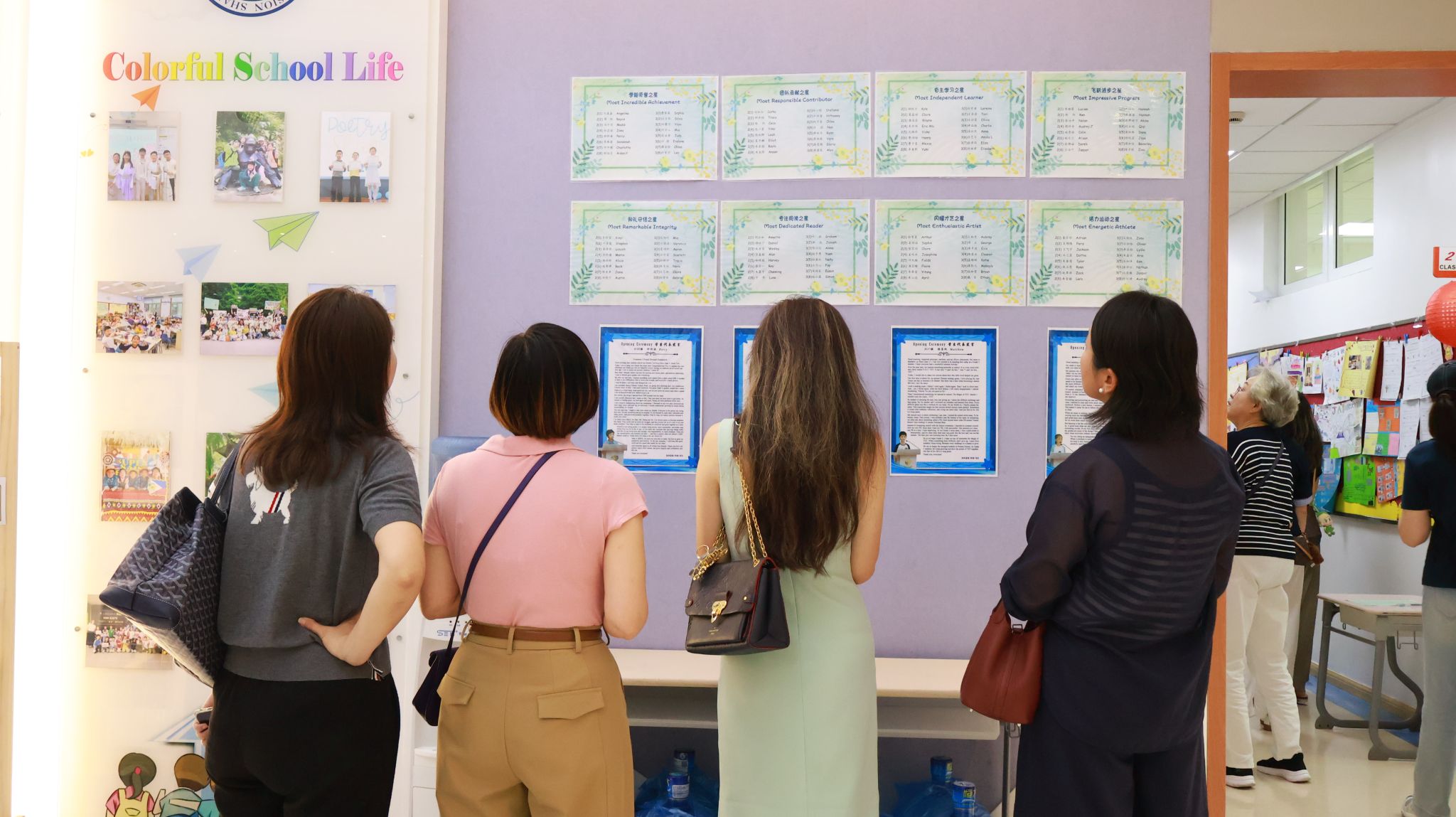
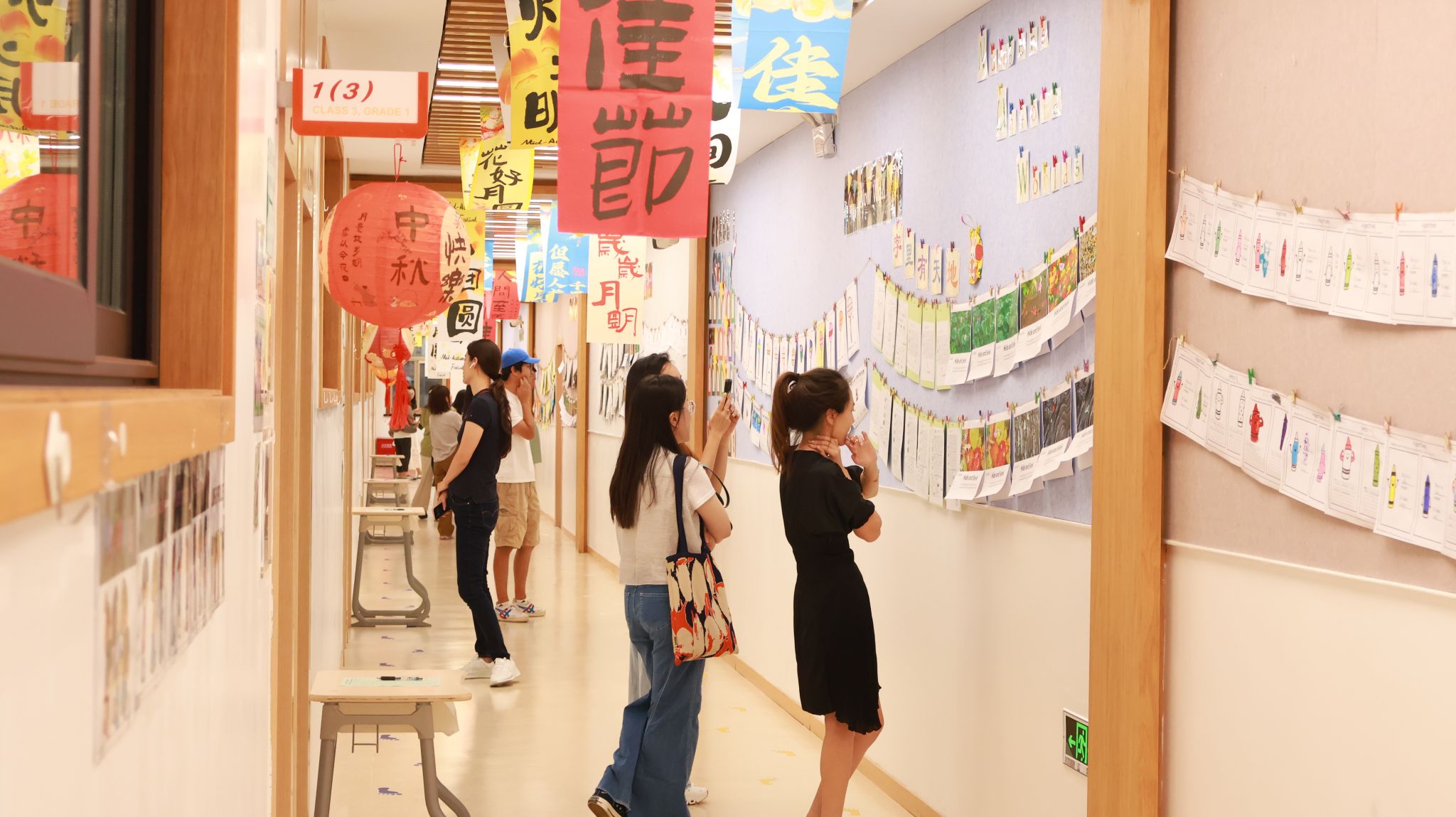
Home-School Collaboration: Building the Foundation for Growth
During the conferences, Chinese and English co-teachers, grounded in the physical and mental characteristics of students at each grade level, engaged in in-depth exchanges with parents across multiple dimensions, including class routines, character and moral education, cultivation of learning habits, development of independence, subject class introductions, and scientific companionship at home. Their presentations helped parents understand what their children are learning at school and their pace of growth, as well as the goals and key requirements of each subject. Teachers also emphasized the importance of home-school collaborative education, suggesting that parents create a positive home learning environment, strengthen parent-child communication, and lead by example to jointly support children in developing various habits and enhancing various abilities.
Grade 1: Growing Together, Guiding Bright Futures — Laying the Foundation and Adapting
The Grade 1 conference, under the theme "Growing Together, Guiding Bright Futures," focused on building a home-school collaborative education platform to help new students smoothly transition from kindergarten to primary school.
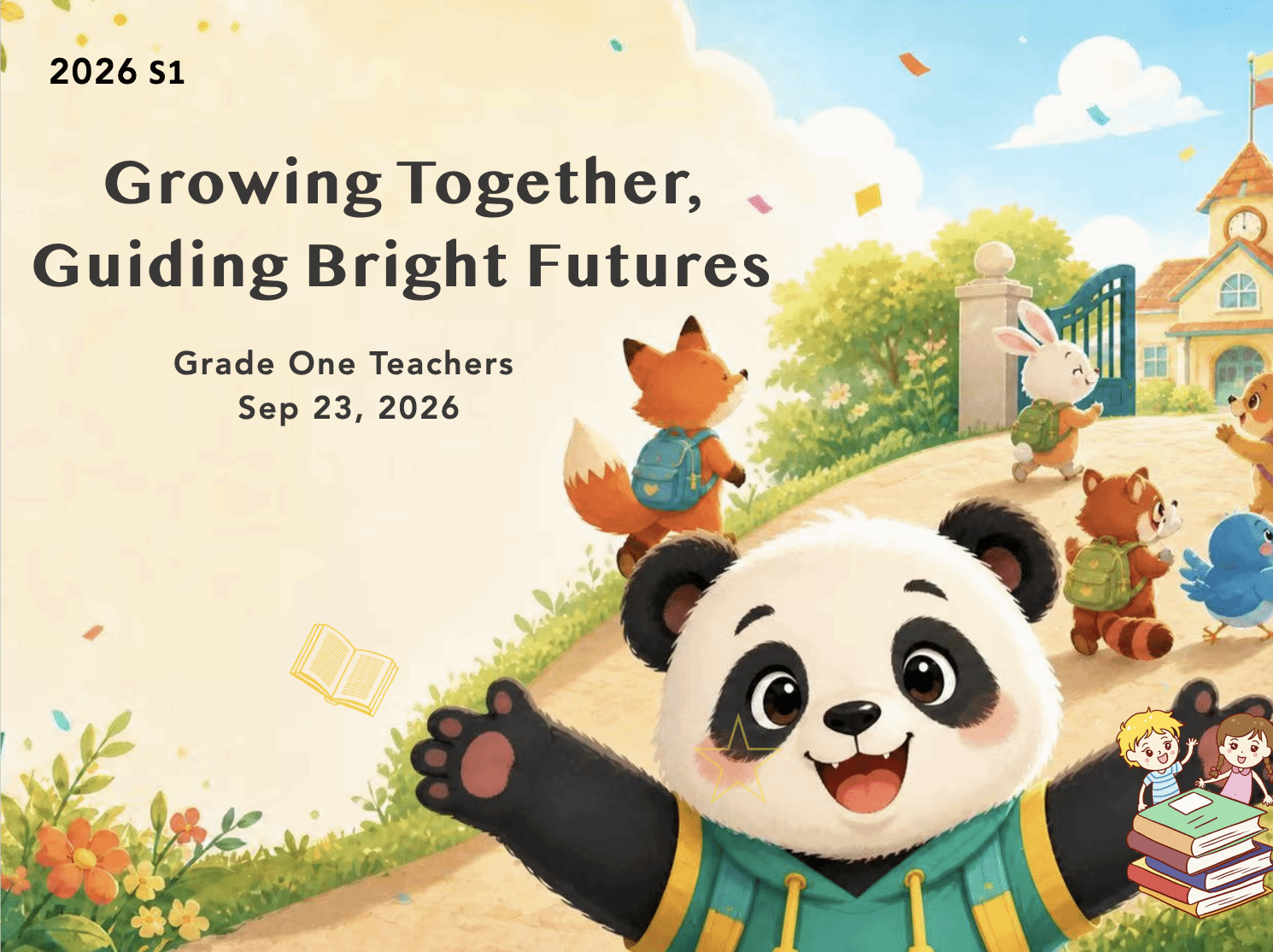
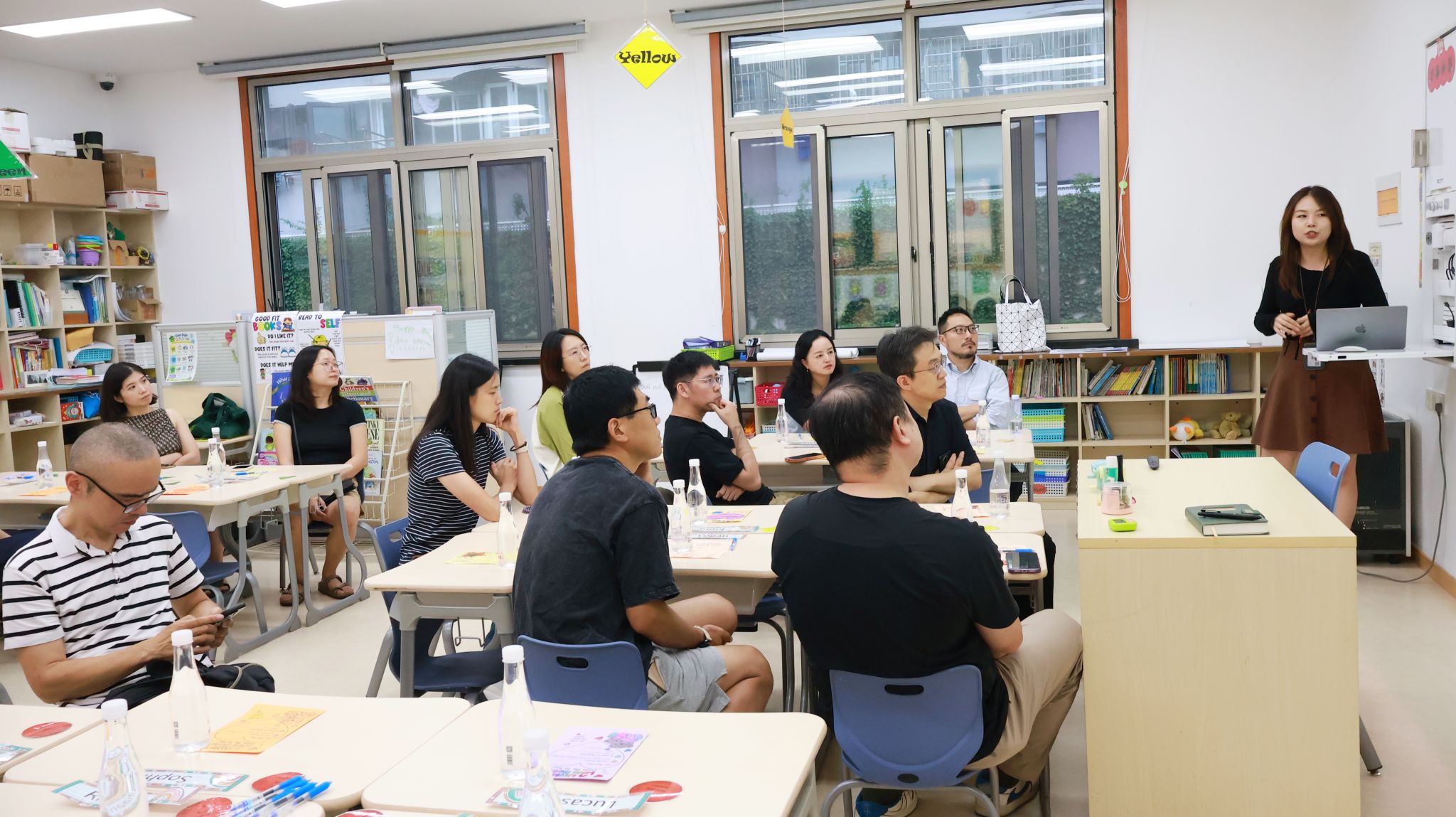
Chinese and international co-teachers first shared with parents the results of the kindergarten-to-primary transition: after three weeks of school adaptation, Grade 1 students are already able to follow classroom rules, complete tasks such as recording in the communication book and serving in class roles, and have gradually established a sense of campus order.
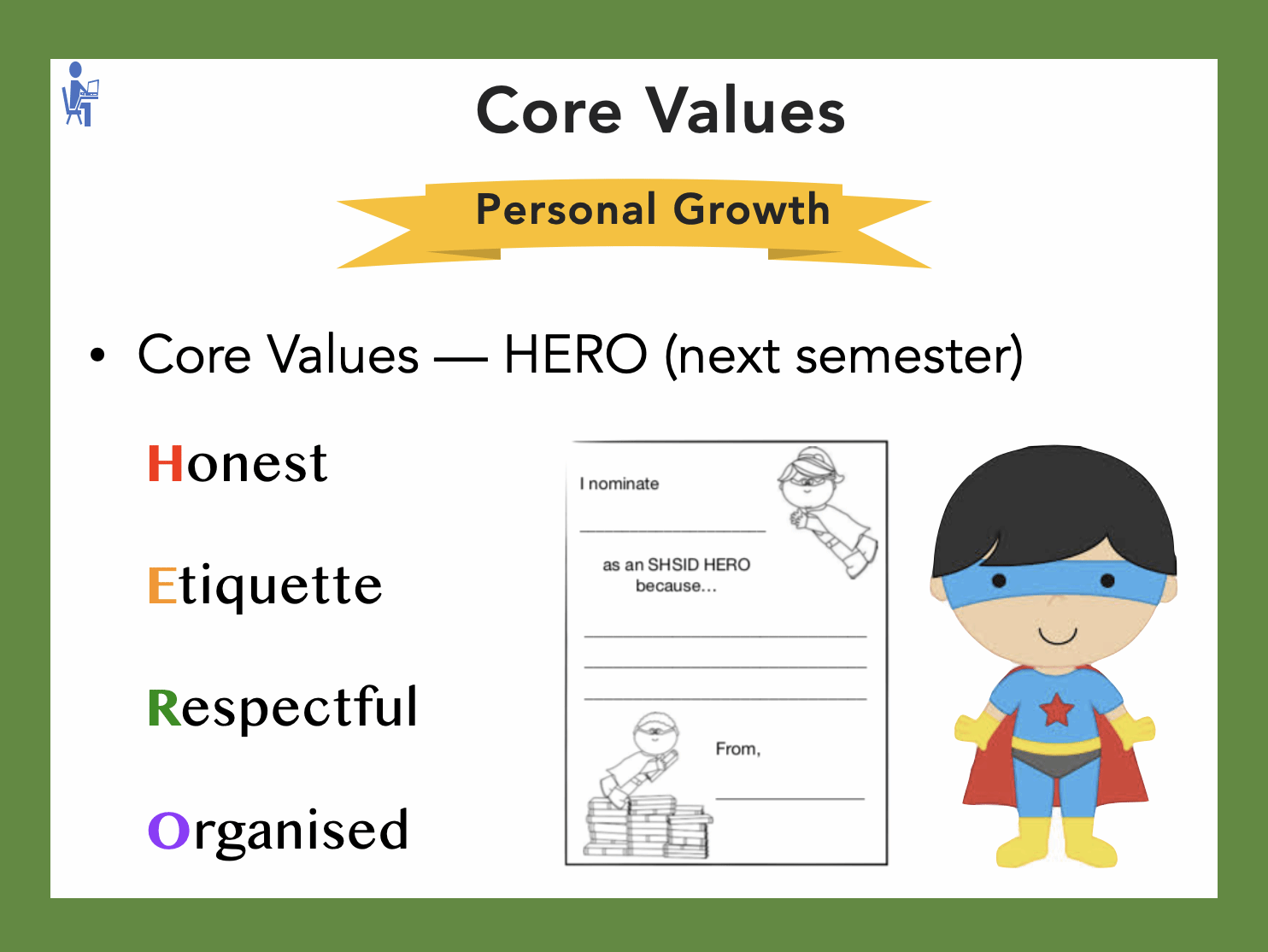
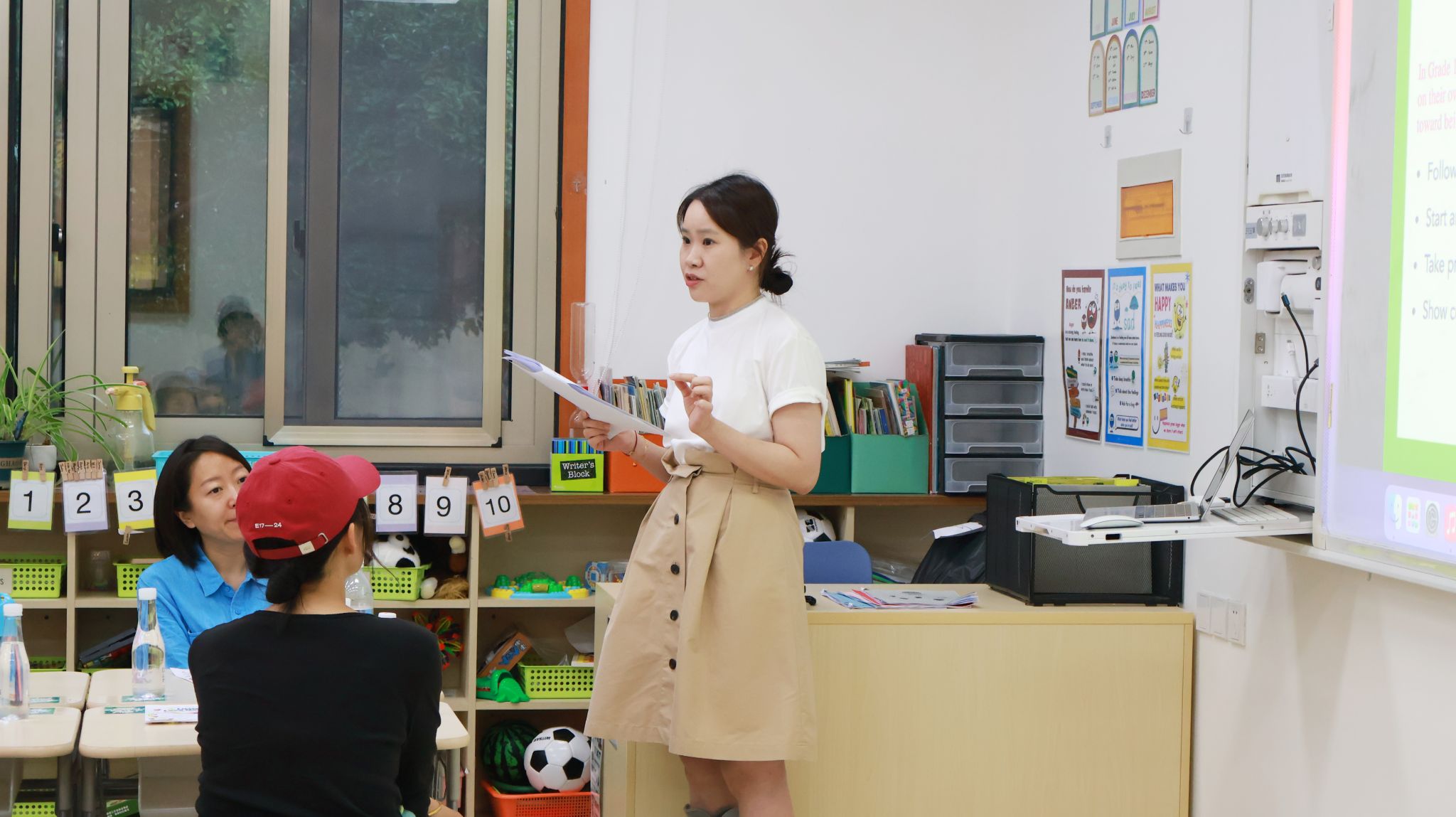
Next, teachers introduced the curriculum. The Grade 1 curriculum uses character and moral education and subject teaching as its two pillars, with a focus on cultivating students' independent learning abilities. Character and moral education features a dedicated growth theme each month. Through emotion picture books, teachers guide children in social-emotional learning. While shaping good character and guiding children to learn emotional management and self-responsibility, this also supports them in gradually building an independent learning mindset of active thinking and self-reliance. Teachers also interpreted the core goals of each course. They emphasized that Grade 1 focuses on accumulating foundational knowledge and developing learning habits. In the classroom, fun and interactive activities suited to young children's cognitive levels will be used to help students enjoy learning and learn well. Regarding home-school co-education of independent learners, teachers suggested that parents use the "5C Homework Guidance Method" to create a positive home learning environment and help children develop regular daily routines.
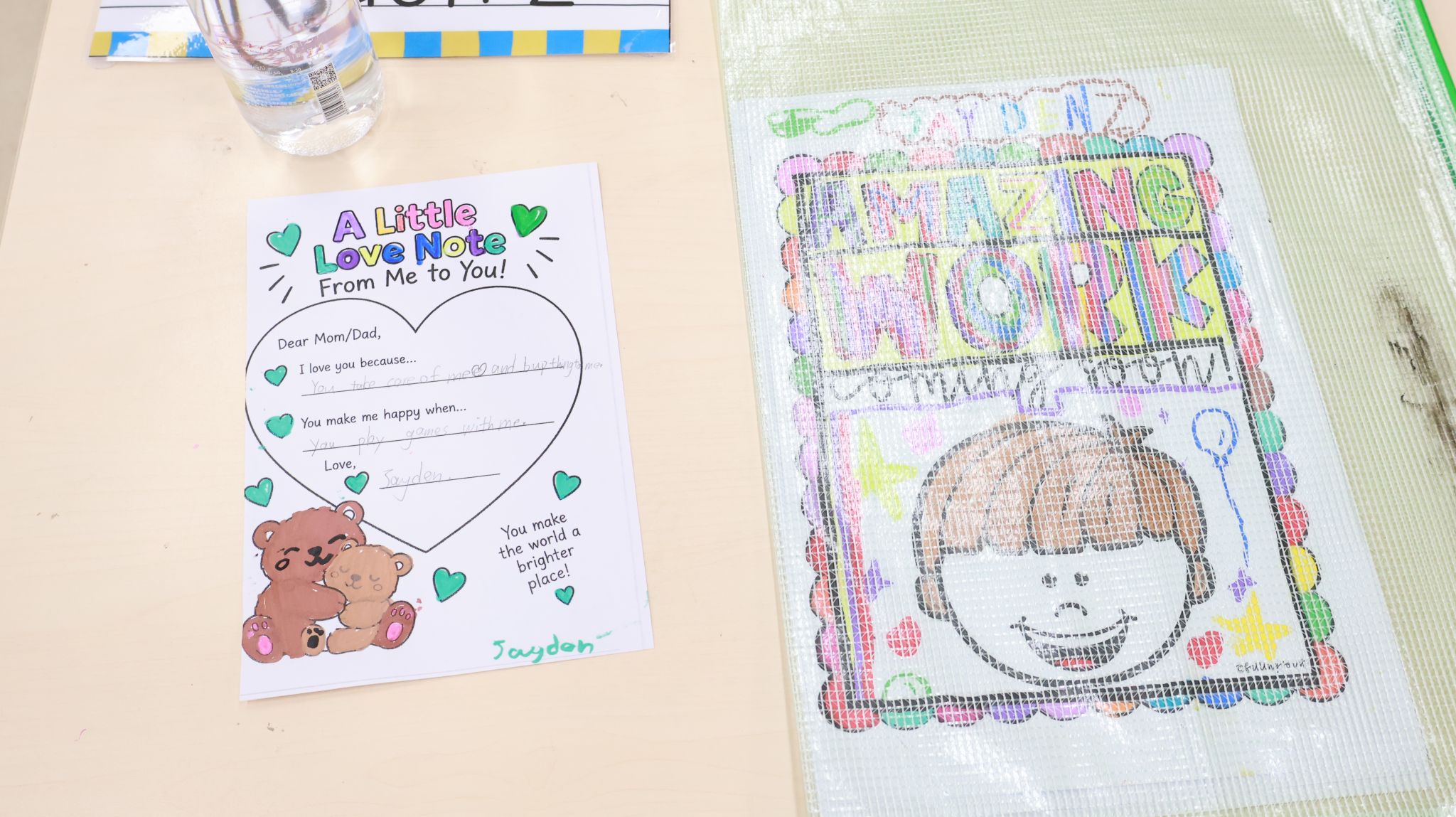
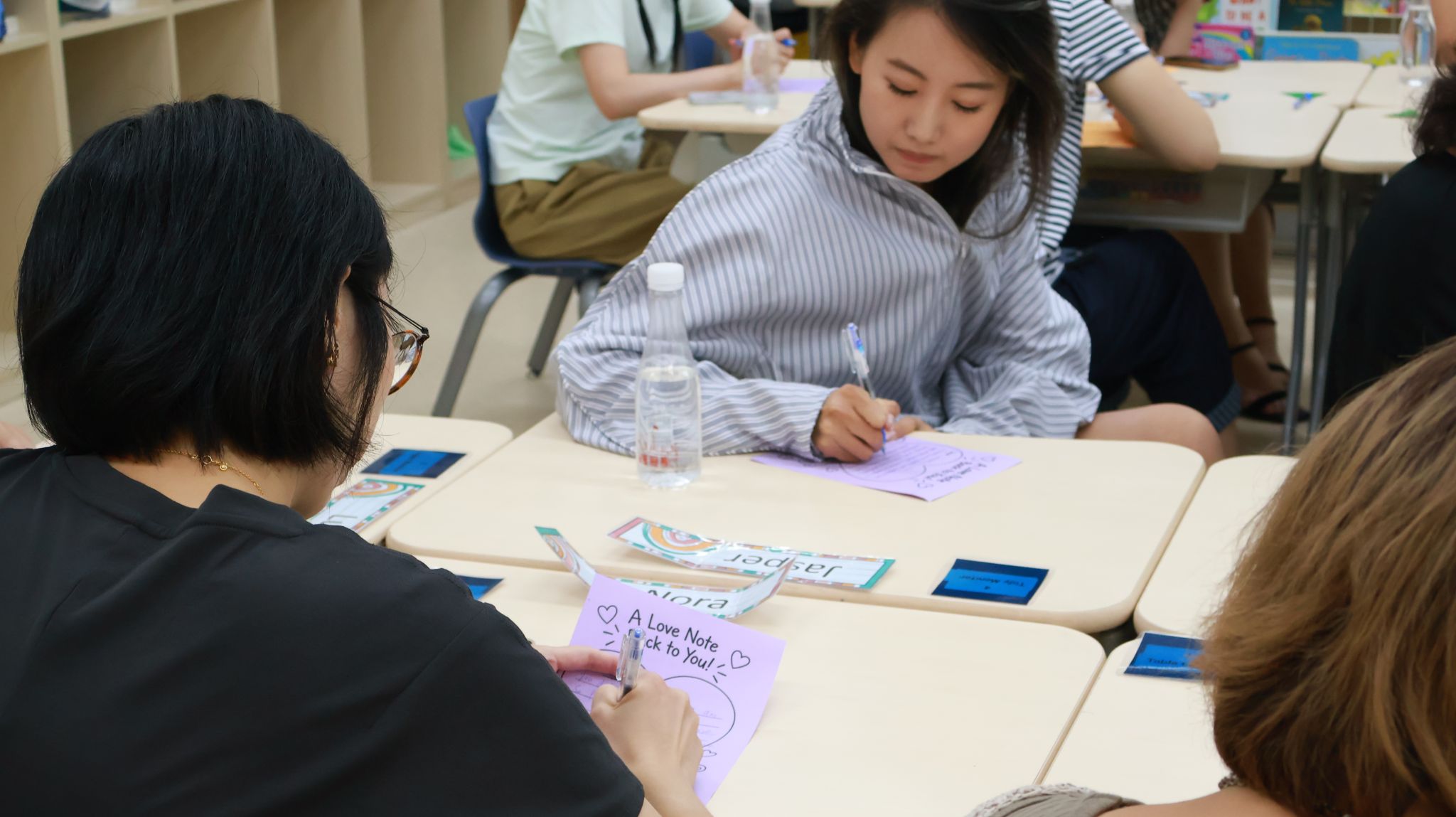
Each class also specially designed a warm interactive session, inviting parents and children to write heartfelt notes to each other, conveying parent-child affection through words, and accompanying children as they take every solid step in their early primary school years.
Grade 2: Nurturing Curiosity, Culturing Confidence — Transition and Expansion
The Grade 2 conference opened with a special "Growth Exhibition." A child's first fallen baby tooth, a beloved picture book that is now no longer suitable, a baking creation independently completed, the certificate from a first "Unaccompanied Minor Service" flight… These growth objects brought in by the children record one precious moment after another in their growth and witness the subtle changes happening to them all the time. Together, these small objects formed a special "Growth Exhibition," which also marked the opening of the Grade 2 conference.
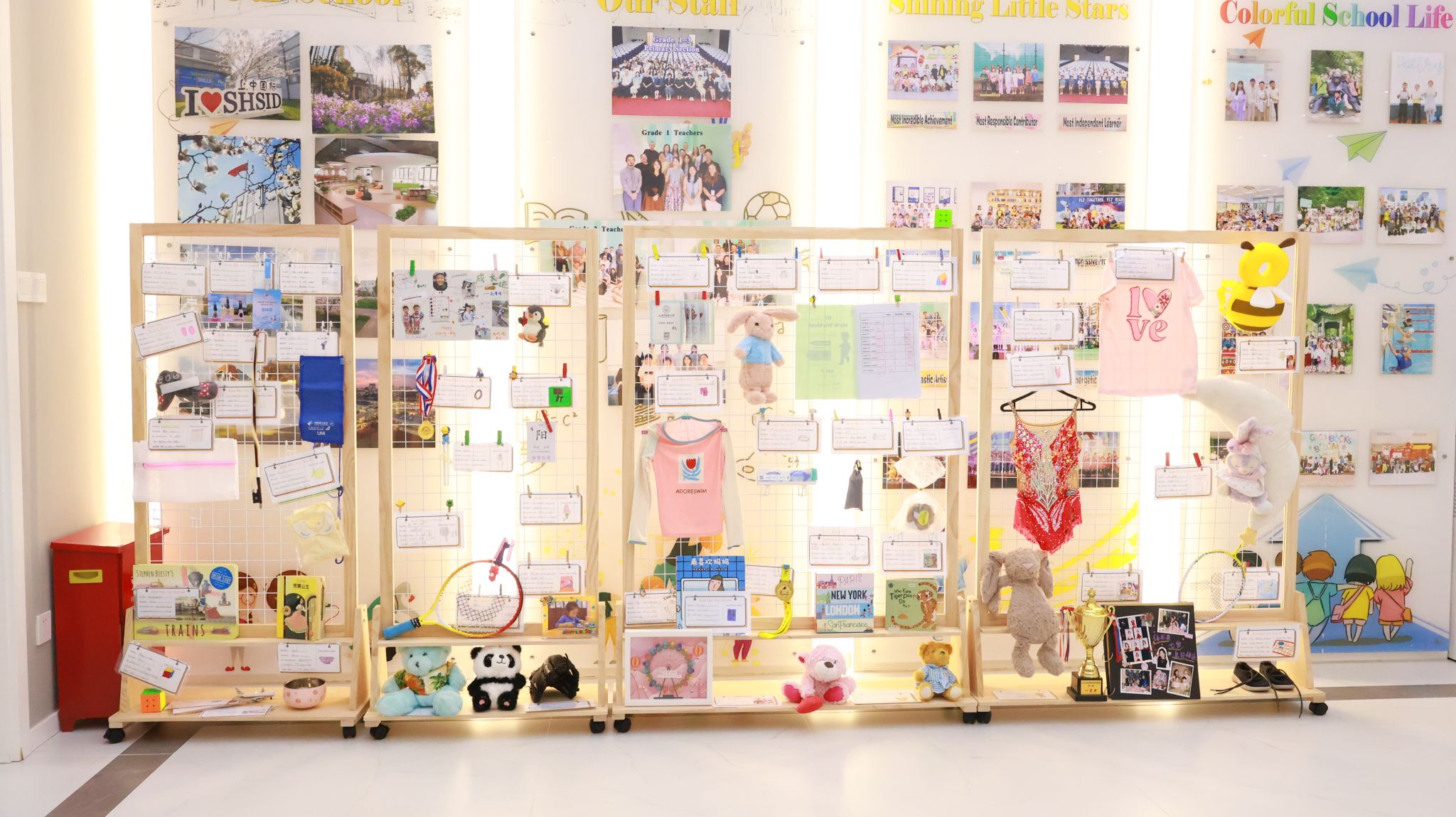
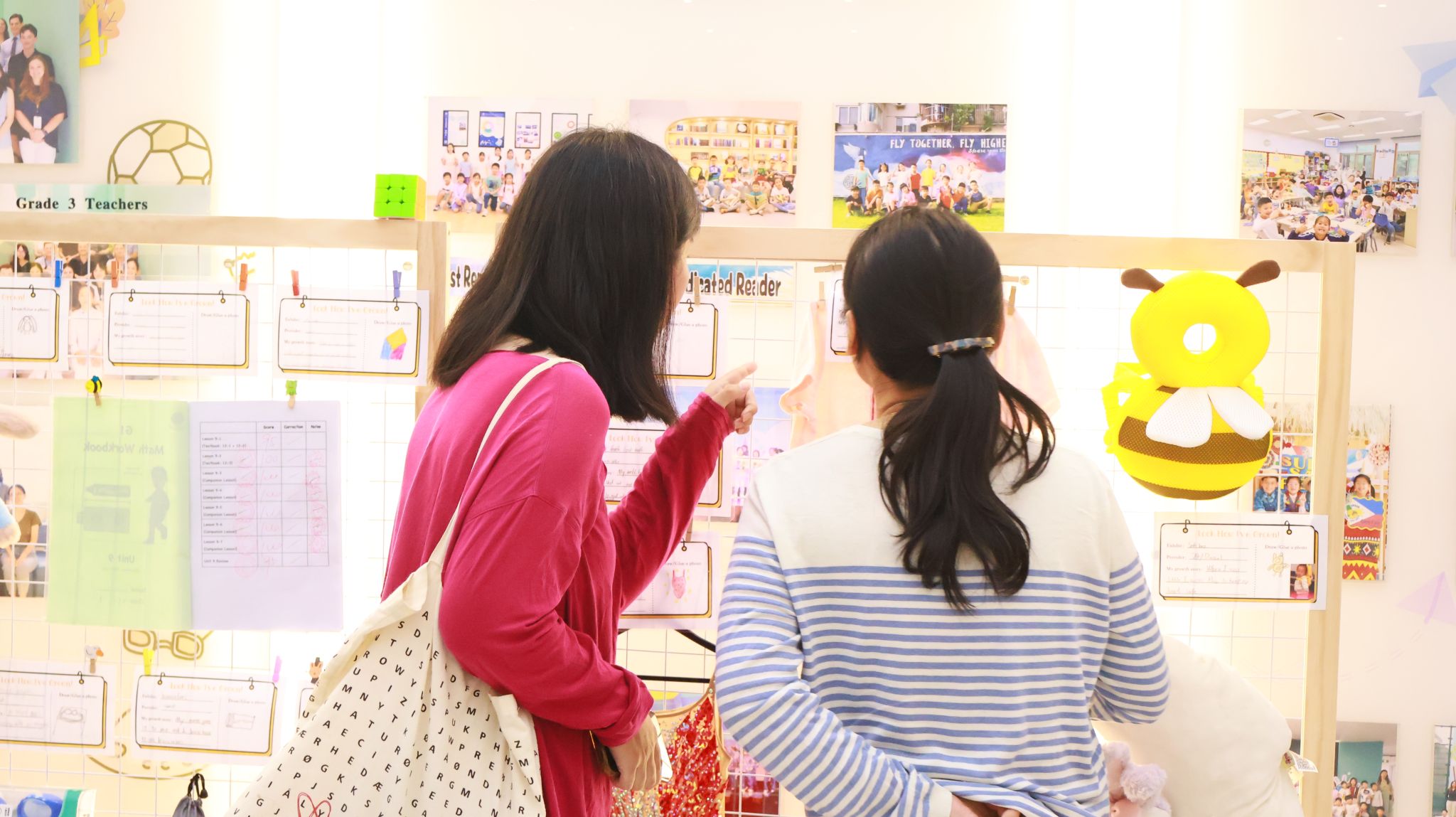
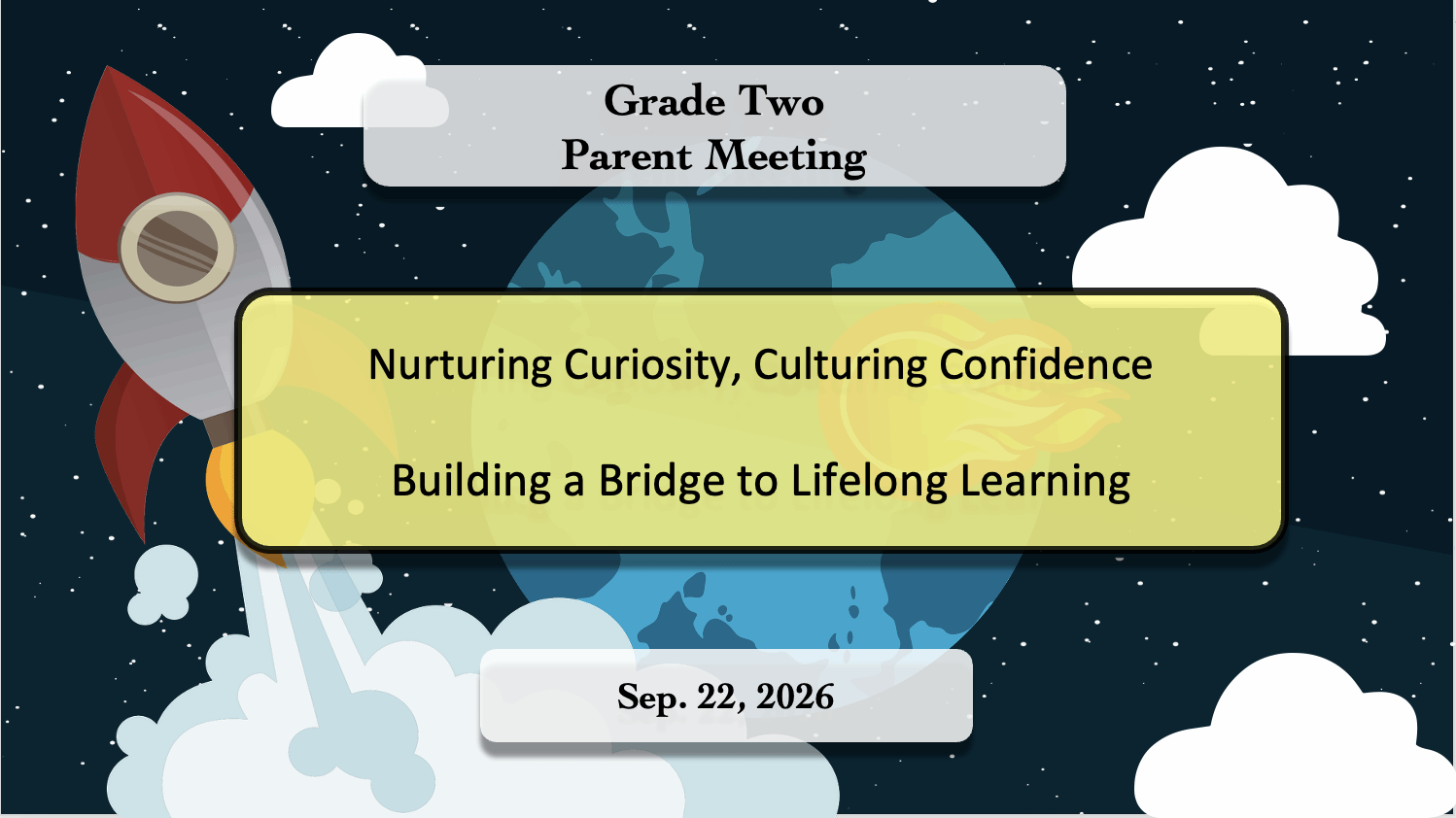
At the beginning of the meeting, homeroom teachers systematically explained the educational goals for the school year—hoping that children will be "more eager to explore, more independent and efficient, and more confident and happy," and through diverse successful experiences again and again, helping every child find their own pace of growth.
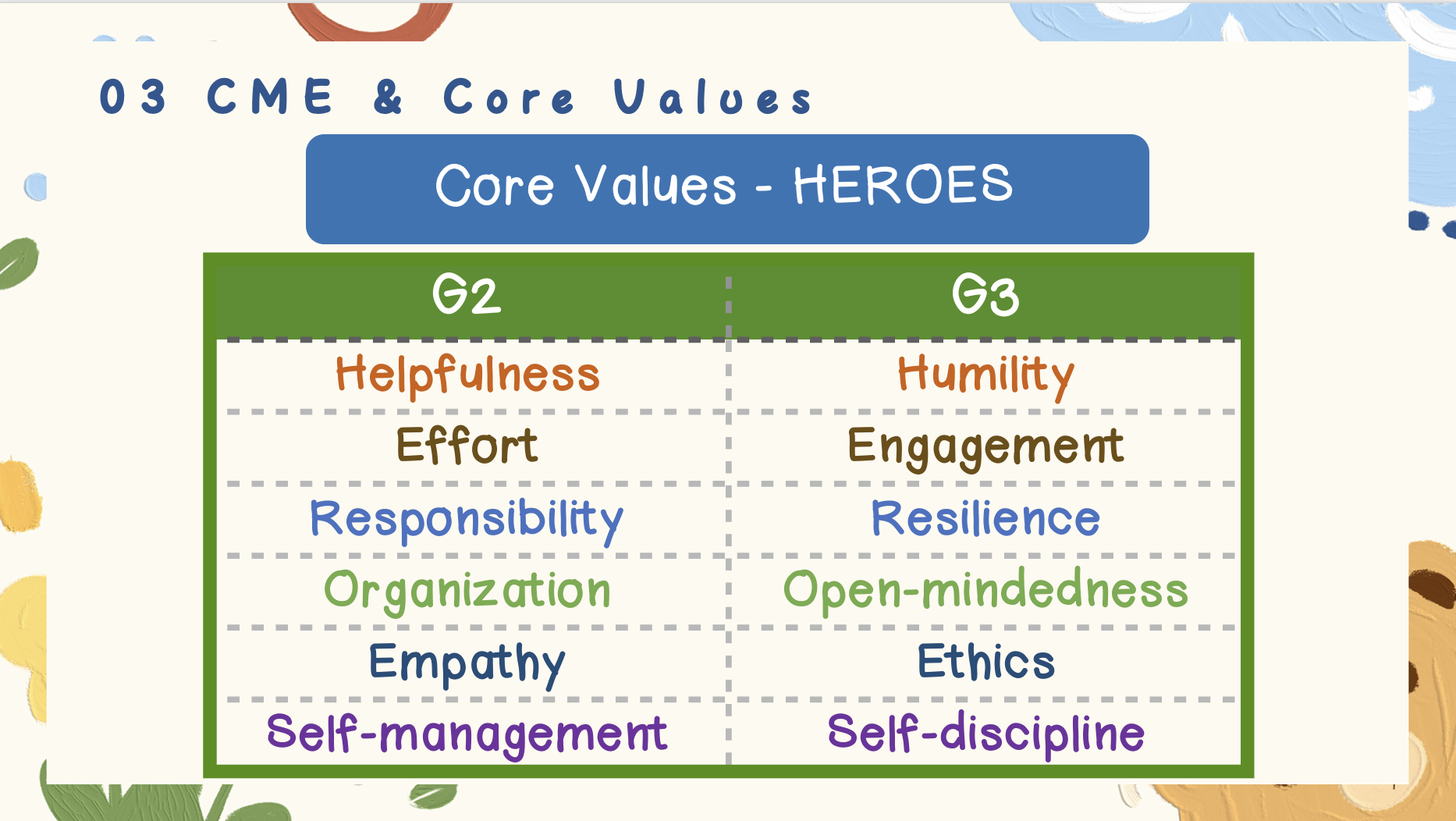
Teachers explained that in terms of character and moral education, monthly CME lessons continue, helping students consolidate their value cognition through ongoing thematic immersion. From Grade 1 to Grade 2, the curriculum has also upgraded from HERO to HEROES, cultivating students' behavior and learning abilities from different dimensions, making character development more comprehensive. This semester, IL Goal Tracking has been newly introduced. Students will learn how to set SMART goals for their learning and daily life, and in regular reflections, with teacher guidance, review their goals, reflect on progress, and record growth, gradually becoming more independent learners.
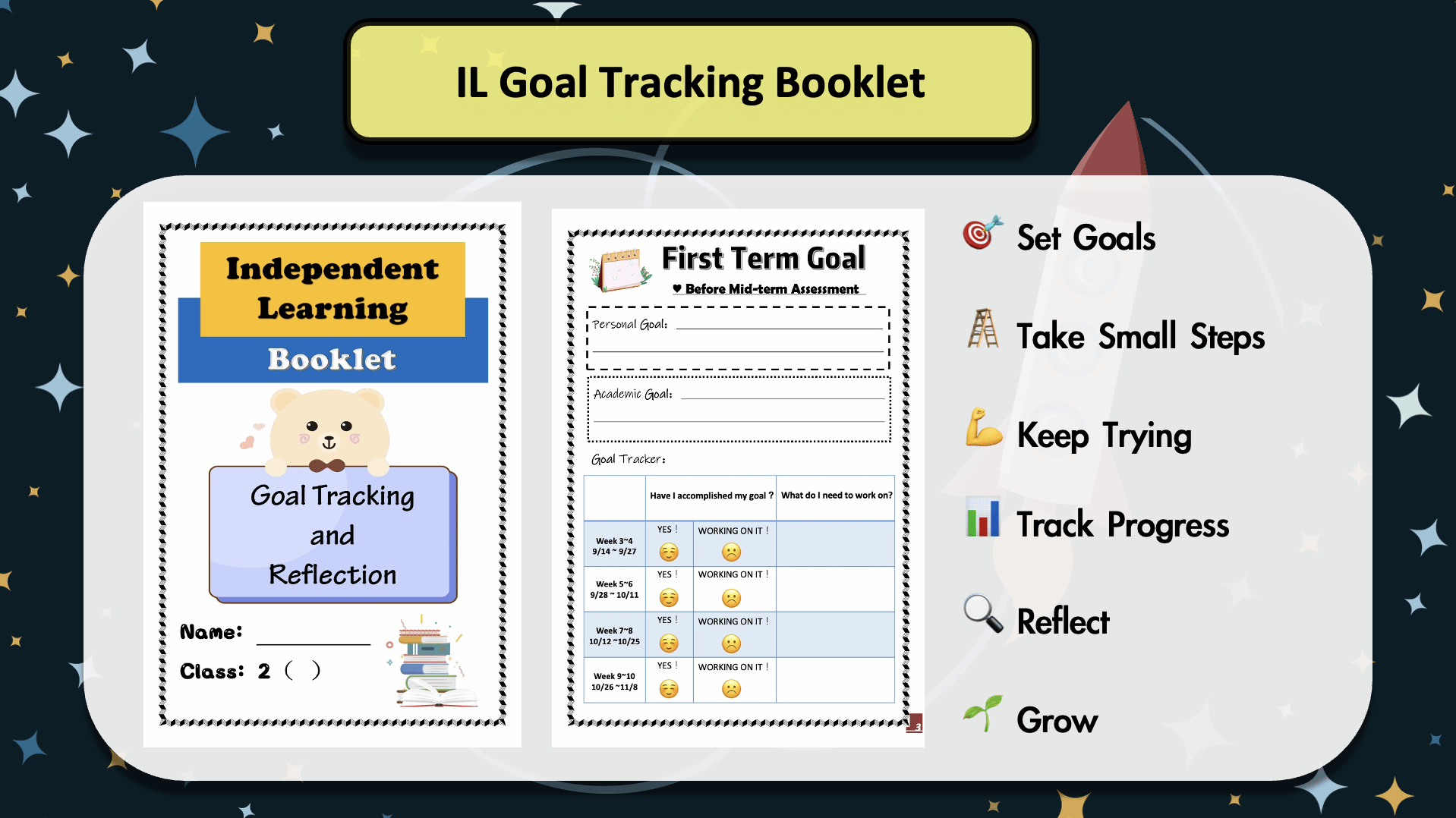
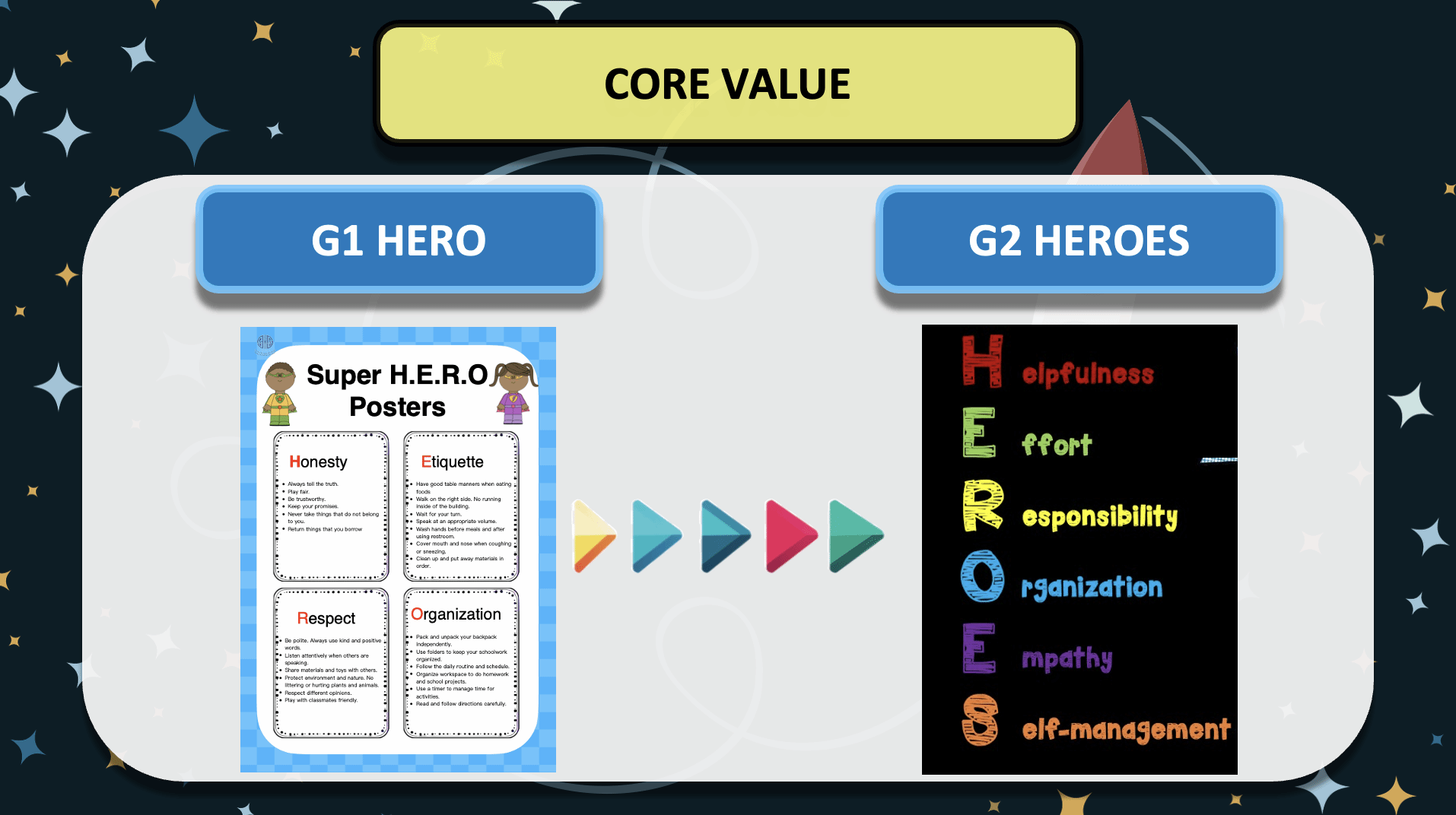
In character and moral education, teachers also encourage parents to actively participate. For example, in CME activities, parents and children discuss and draw a family escape route together; in HEROES activities, teachers encourage children to help family members with small tasks within their ability and have parents sign to confirm; in the IL Checklist, parents are invited to jointly track their children's goal progress.
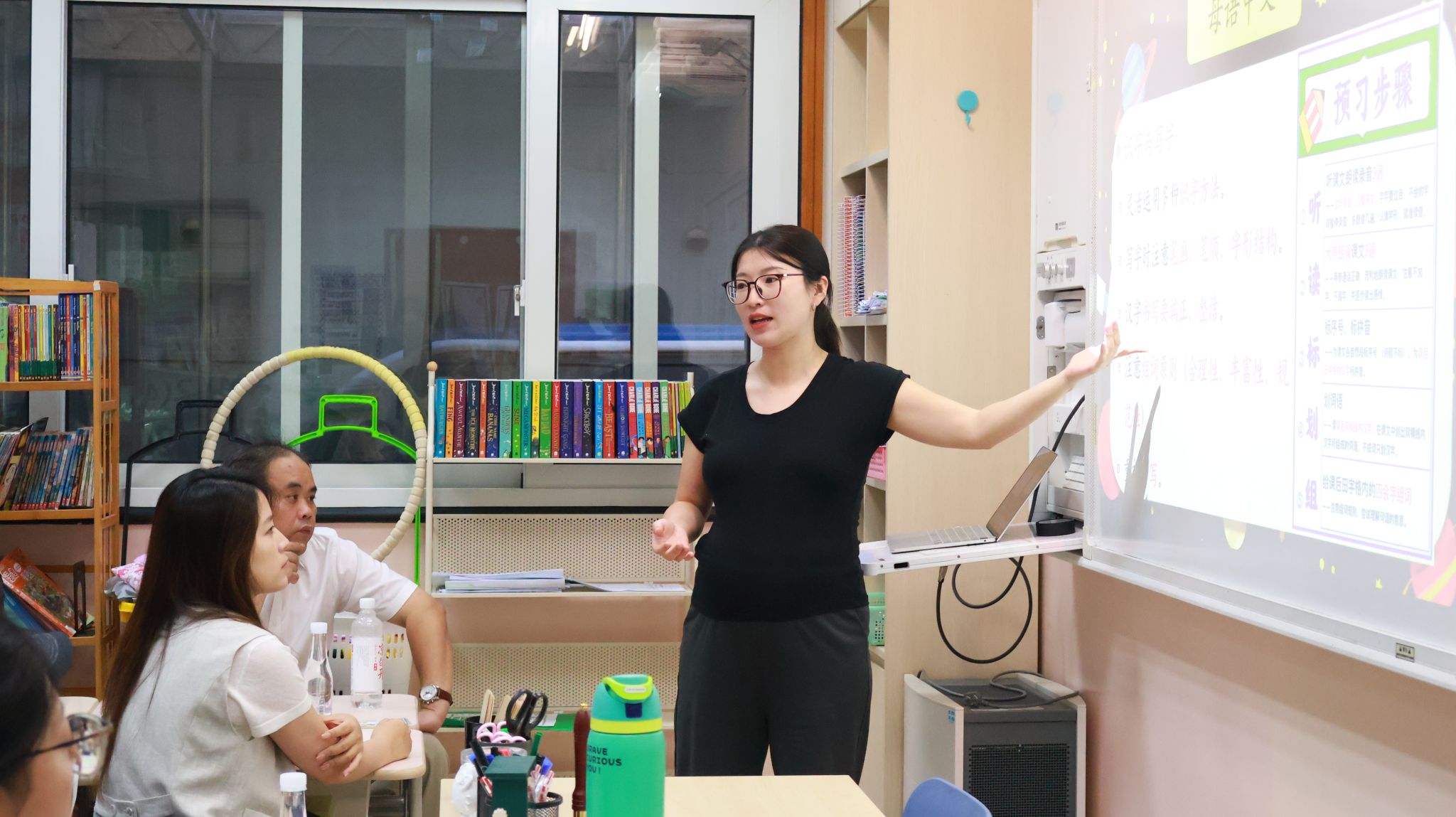
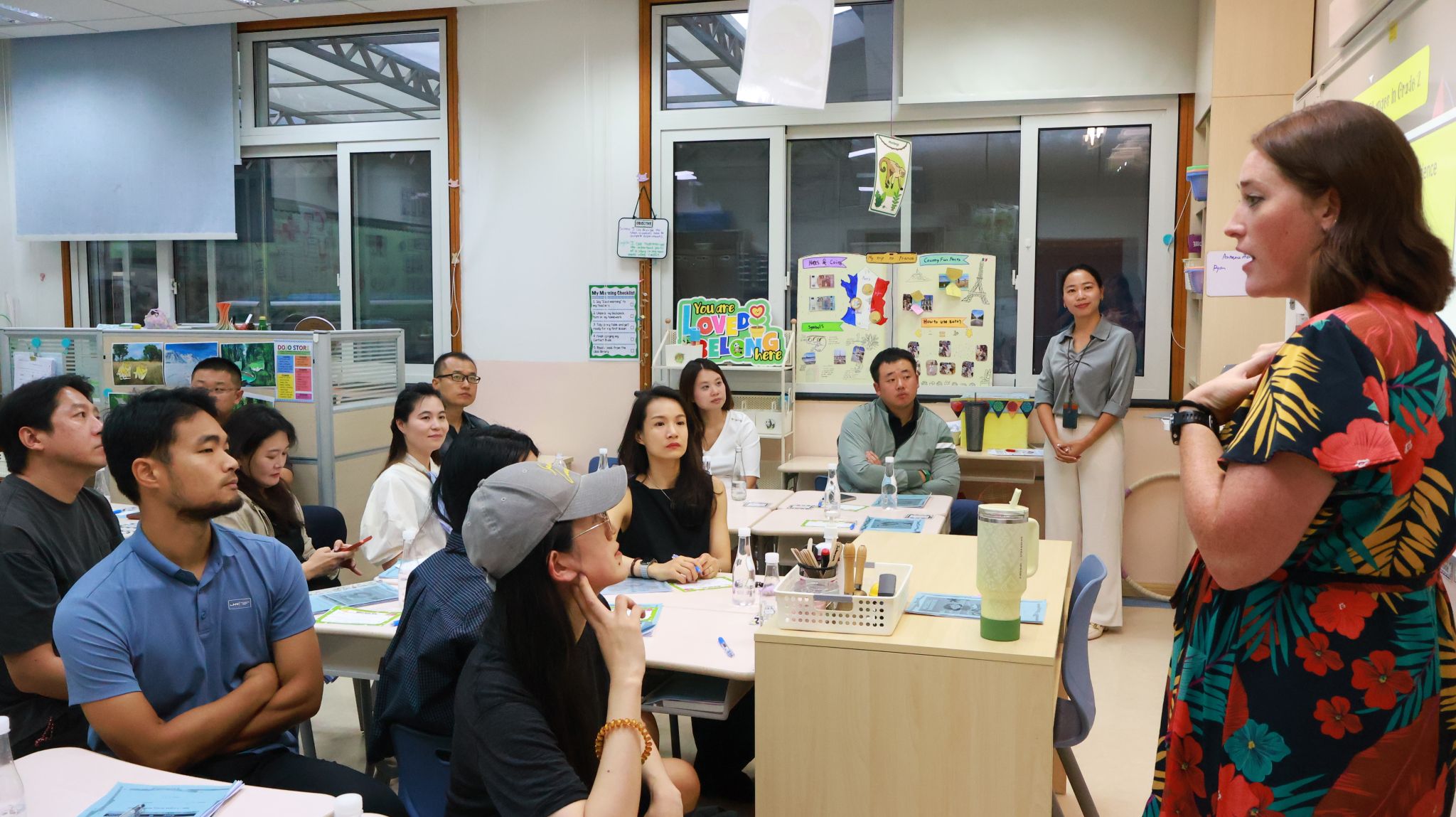
During the subject introduction session, Chinese and international teachers introduced in detail the teaching characteristics and content of different subjects, encouraging parents to listen to their children's different voices in learning and to "guard curiosity" and "enhance confidence" together. Each class also introduced its unique class management model and methods, showcasing different classes' distinctive explorations and practices in routine management, culture building, and student self-management.
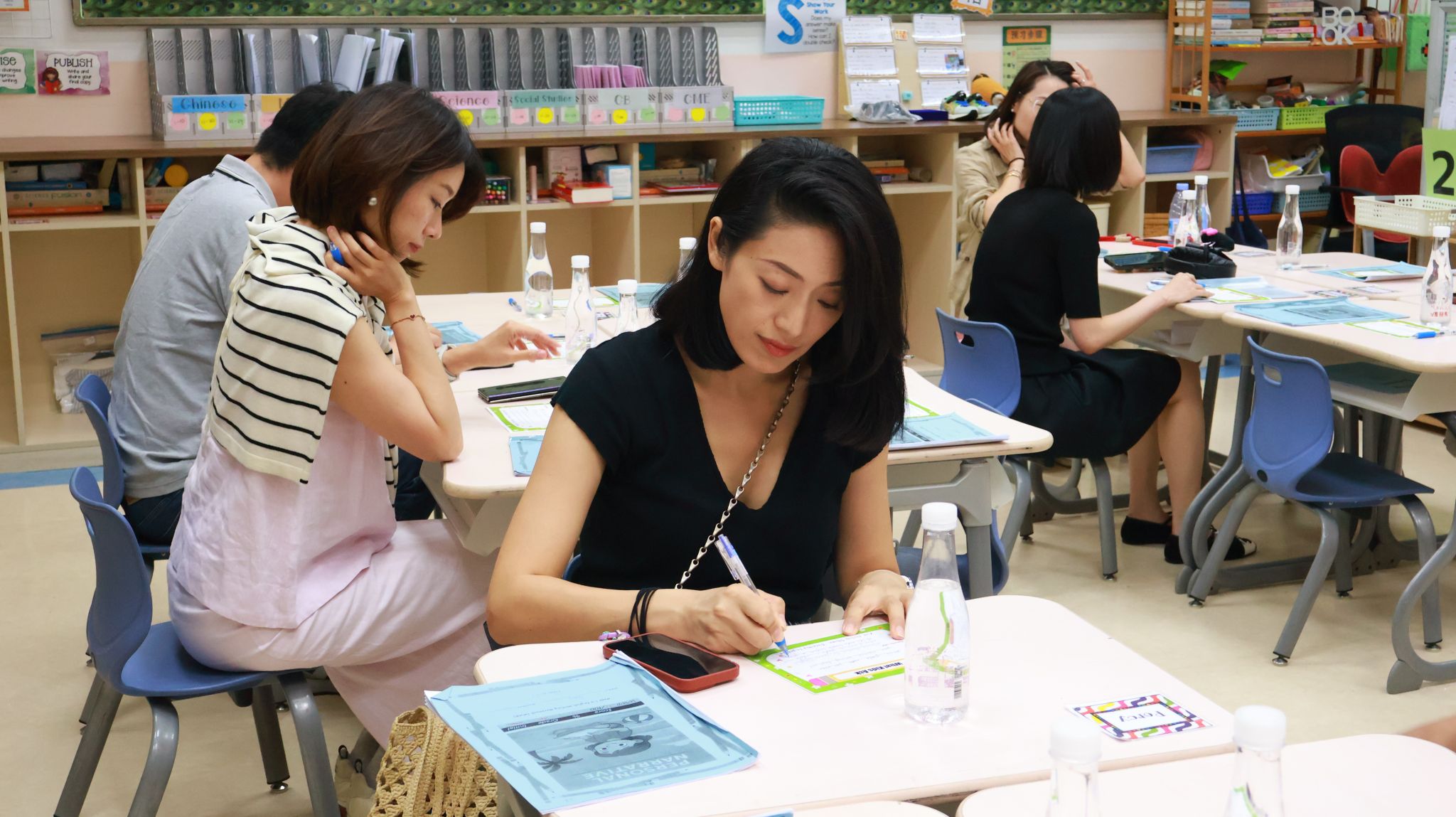
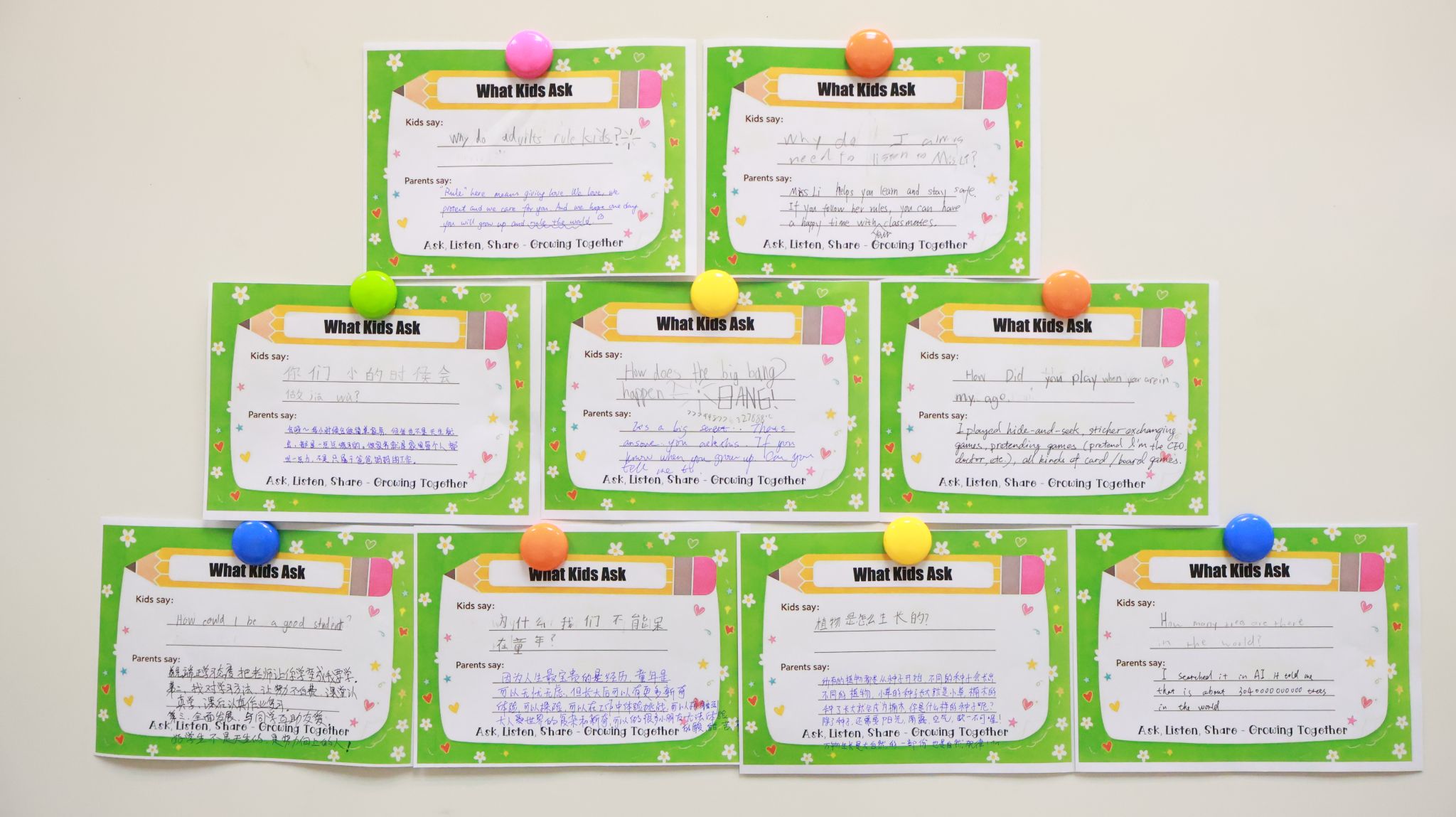
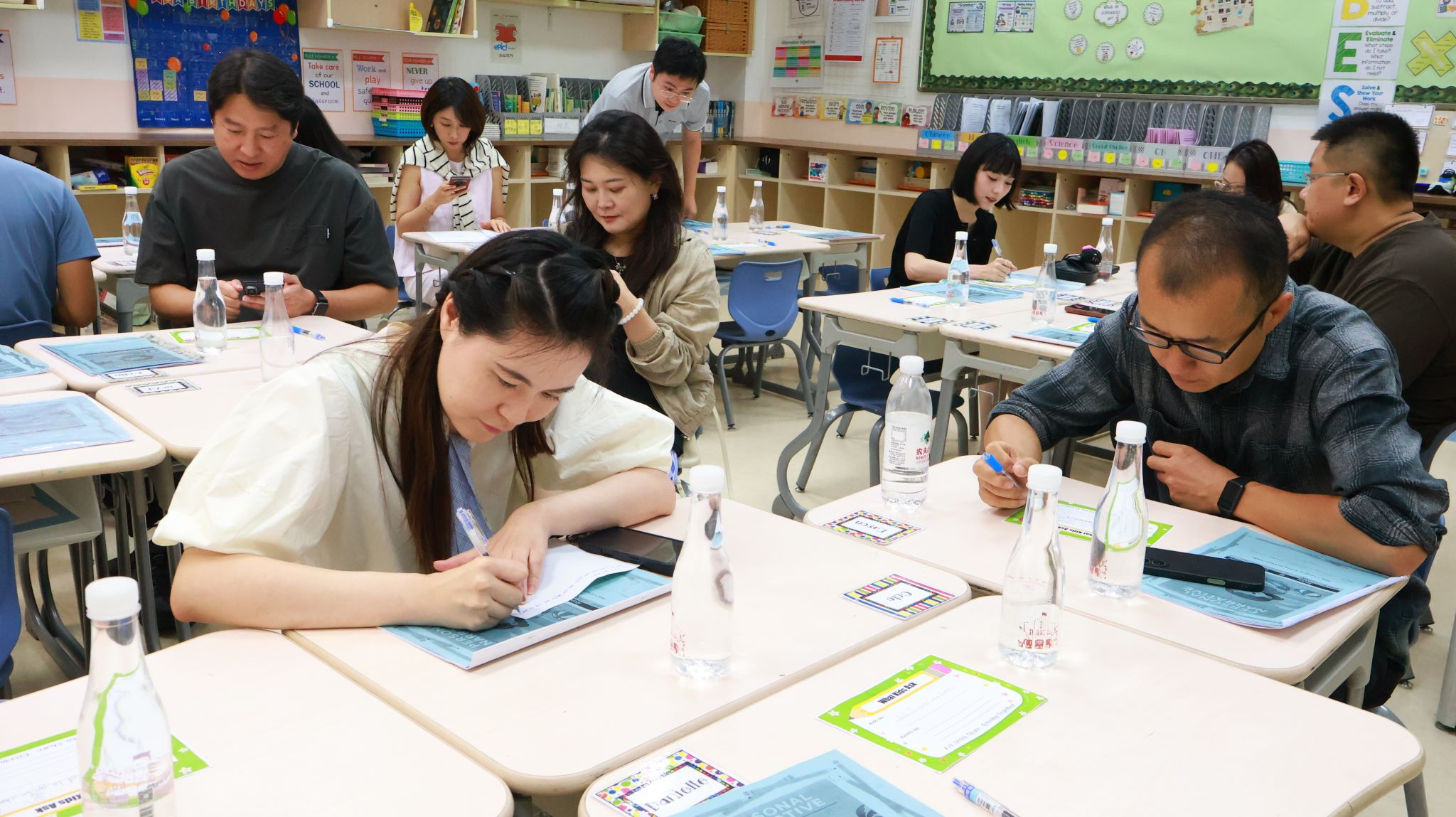
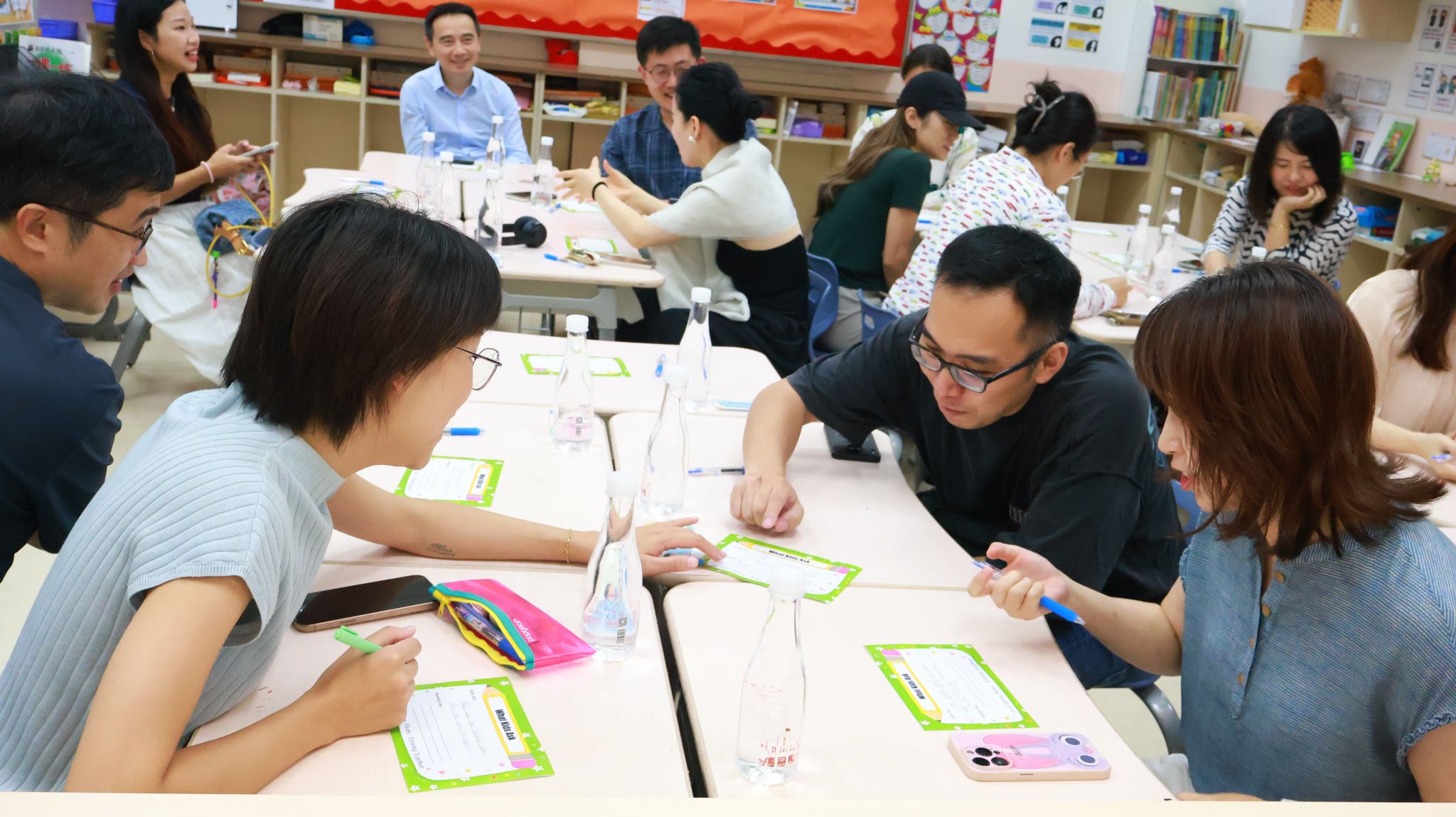
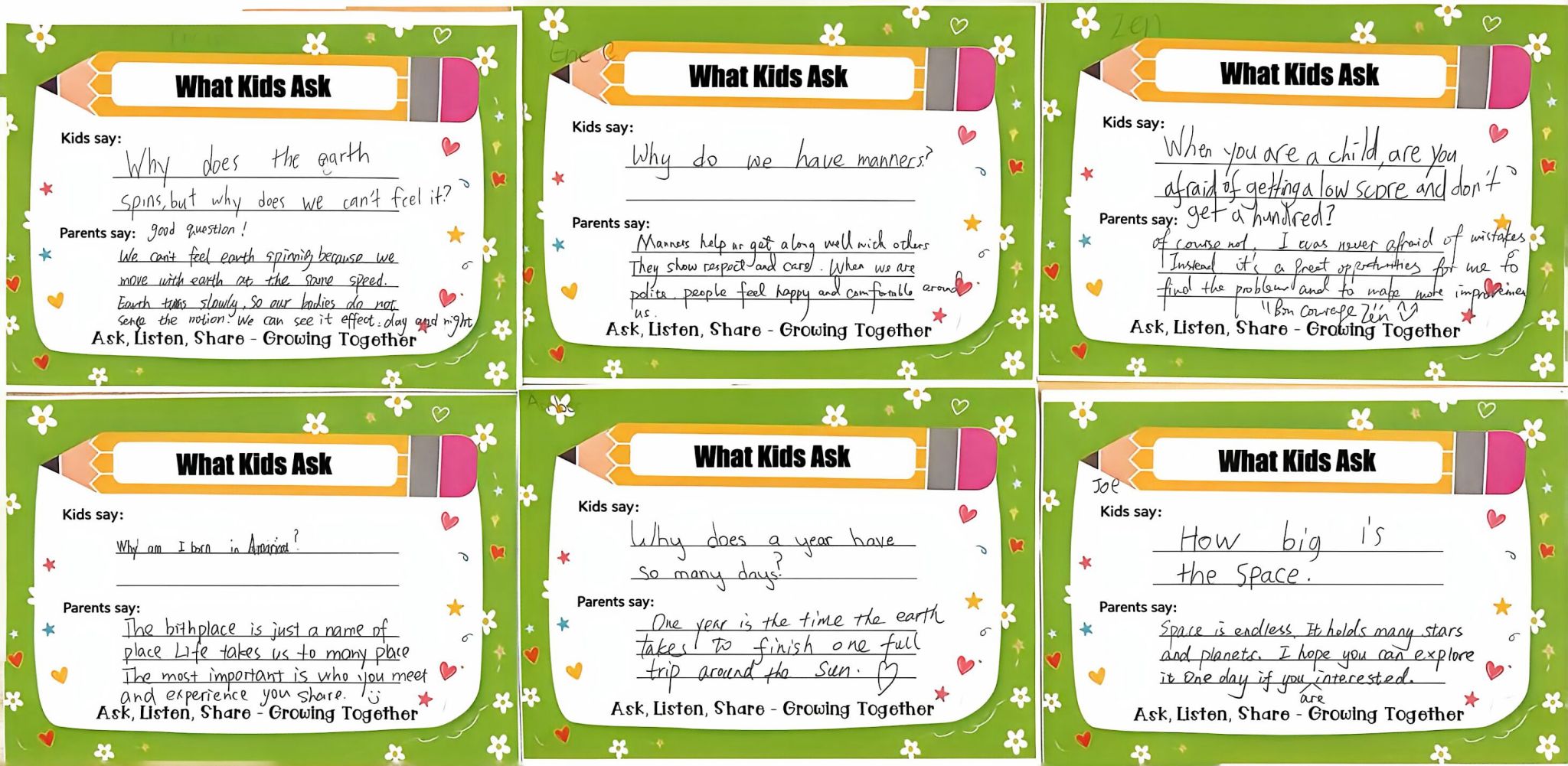
In addition, Grade 2 teachers designed a "Kids Ask, Parents Answer" session. One fun question after another from the children—whether wildly imaginative or drawn from real life—landed at parents' fingertips, and parents answered one by one based on their own experience and wisdom, making the event both fun and thought-provoking. One child asked, "Why does the world become so different when we grow up?" A parent replied warmly, "When you grow up, many things will indeed change, but our love for you will always remain the same." Another child worried, "Why am I not the best dancer in the class?" A parent comforted, "It's too early to decide who the best dancer is! Keep practicing! Maybe one day it will be you!" In these written notes, the wisdom and love of those who have gone before flowed between the lines.
Grade 3: Building Independence, Growing Confidence Together — Transformation and Independence
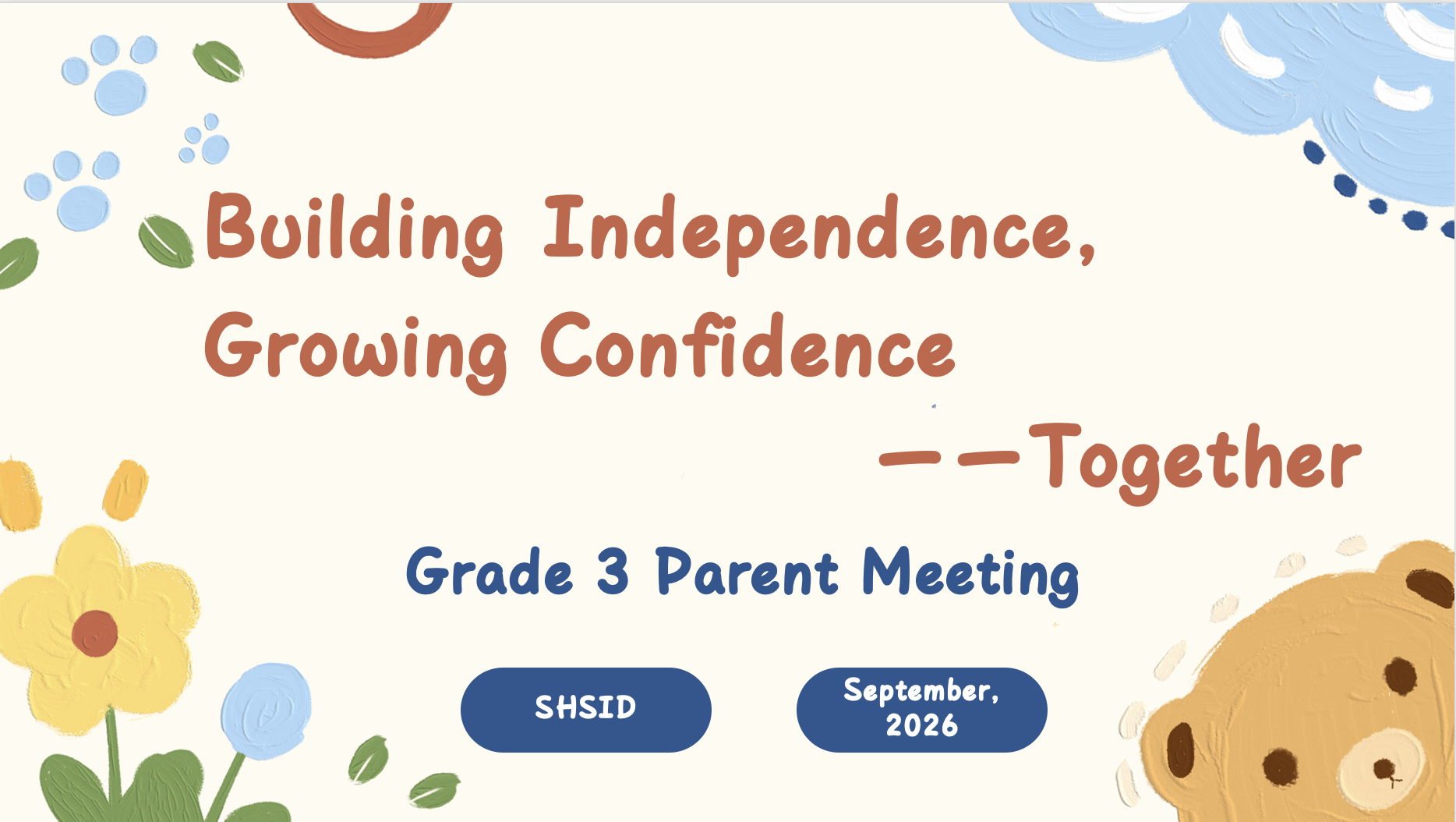
Grade 3 is an important turning point in primary school. The Grade 3 conference, under the theme "Building Independence, Growing Confidence Together," focused on discussing how to help children meet the upcoming challenges of upper primary school learning.
In terms of core values, each letter in Grade 3's HEROES represents a new quality, setting higher expectations for students' character development. Grade 3 teachers used practical case studies to share how to integrate character education into daily classroom teaching, cultivating children's sense of responsibility and intrinsic motivation.
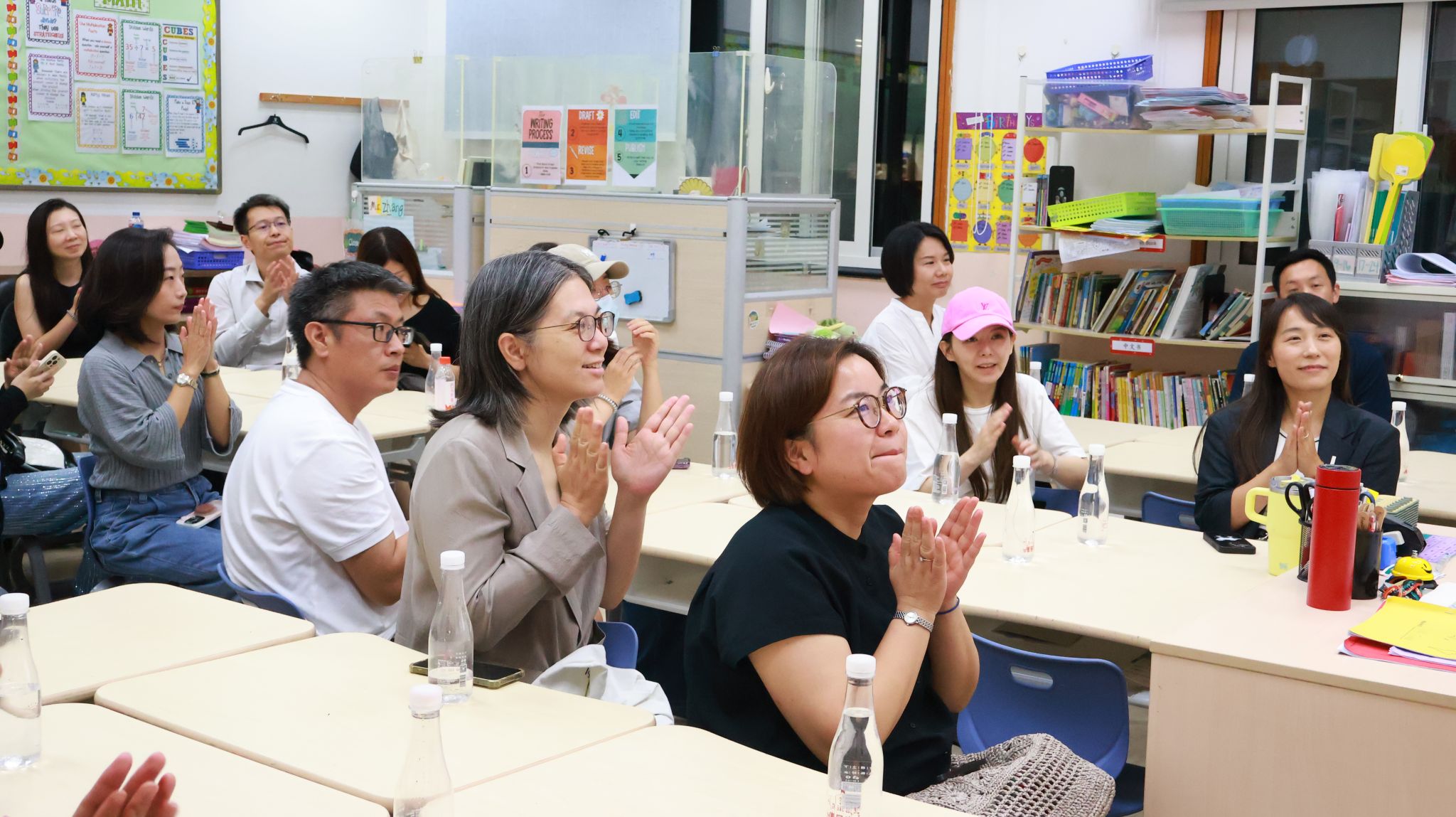
Teachers provided detailed interpretations of the learning requirements for each Grade 3 subject, helping children adapt to the learning pace of this new stage. For example, mathematics emphasizes the shift from concrete to abstract thinking, as well as the analytical skills for mixed operations and complex word problems; Chinese language arts has increased reading volume and introduced whole-book reading (such as Hans Christian Andersen's Fairy Tales), emphasizing the cultivation of critical, creative, and logical thinking; English has introduced novel reading (such as Frindle) and more systematic writing process guidance. In addition, the social studies curriculum has specially designed practical activities such as the "Family Heritage Project" and "Mini Market," allowing students to deepen their understanding of community and economics through hands-on practice.
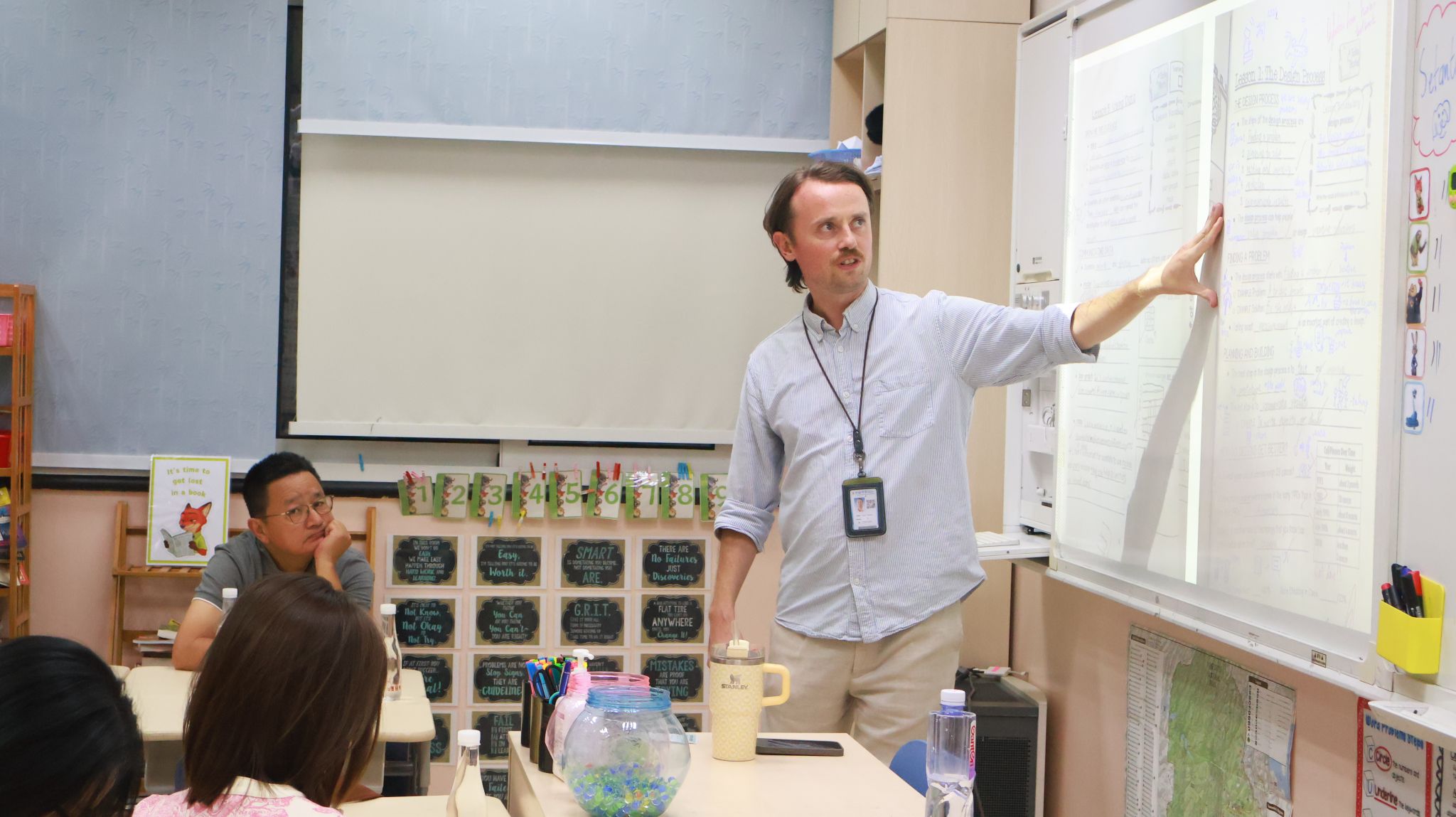
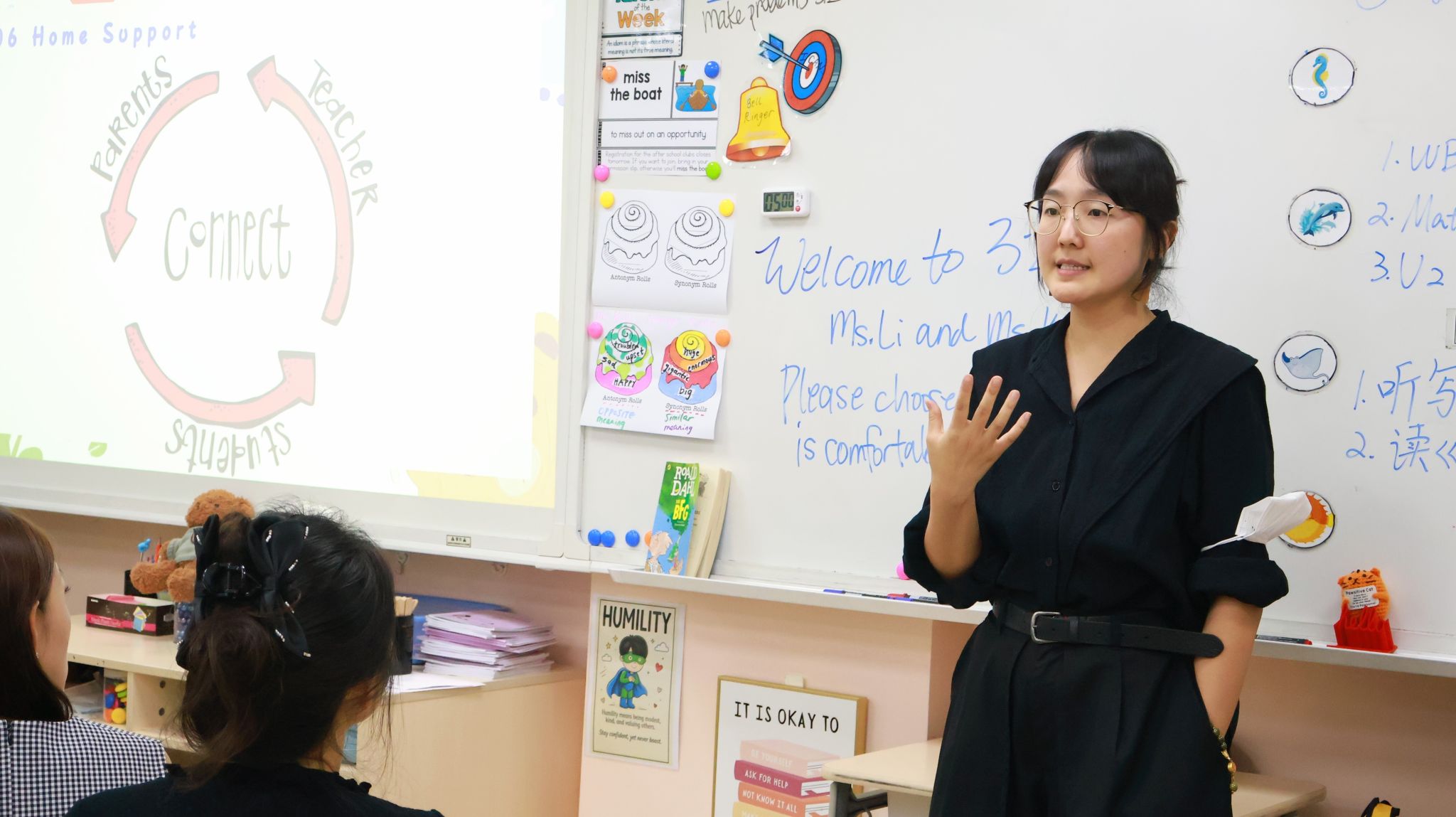
In addition, Grade 3 teachers offered practical home-school co-education suggestions for parents, such as guiding children to set small achievable goals at home and regularly review and reflect on them, establishing a family reward and consequence system based primarily on positive reinforcement, and gradually helping children develop healthy financial literacy. These techniques will support home-school co-education and jointly support children's steady growth.
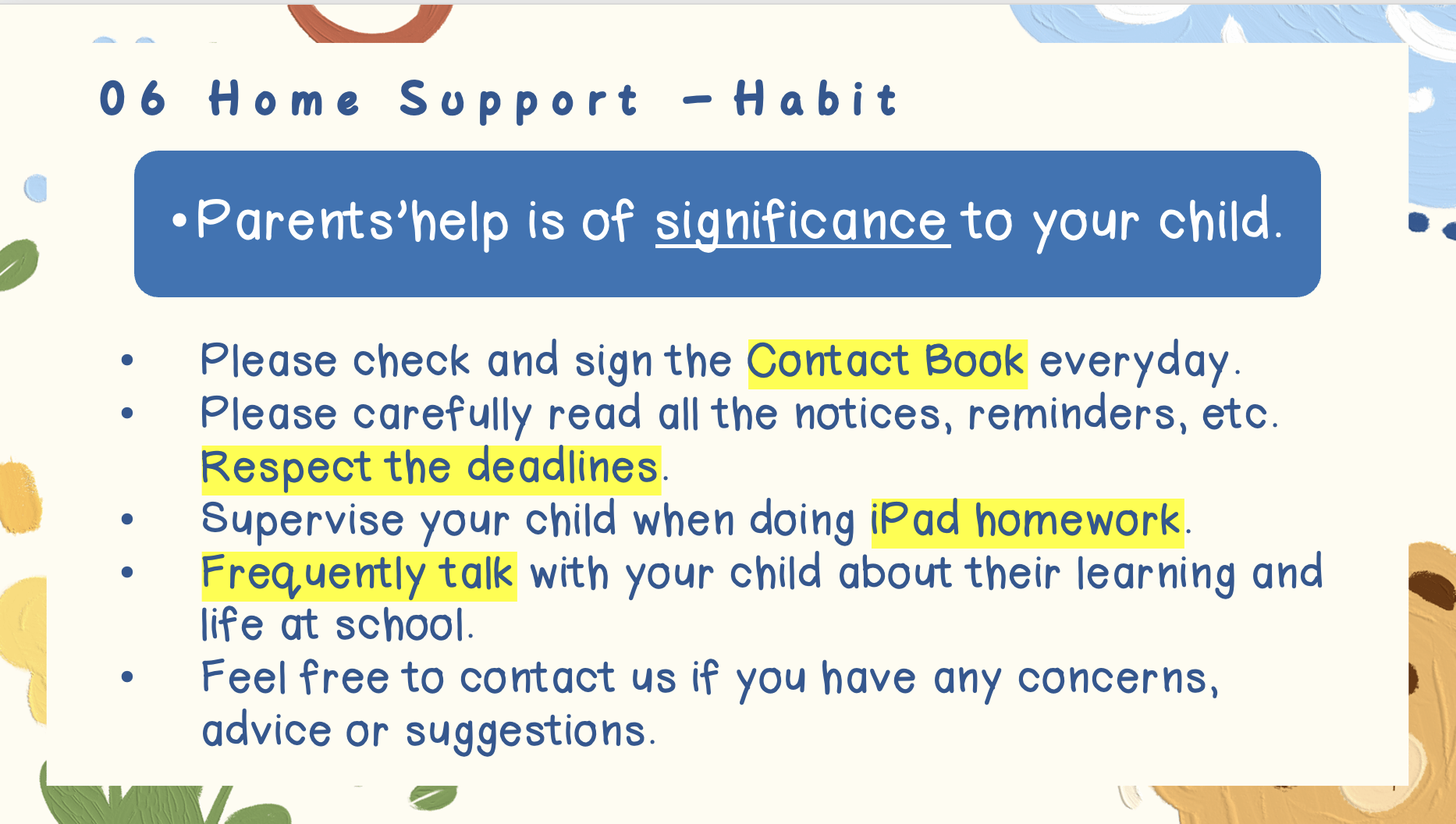
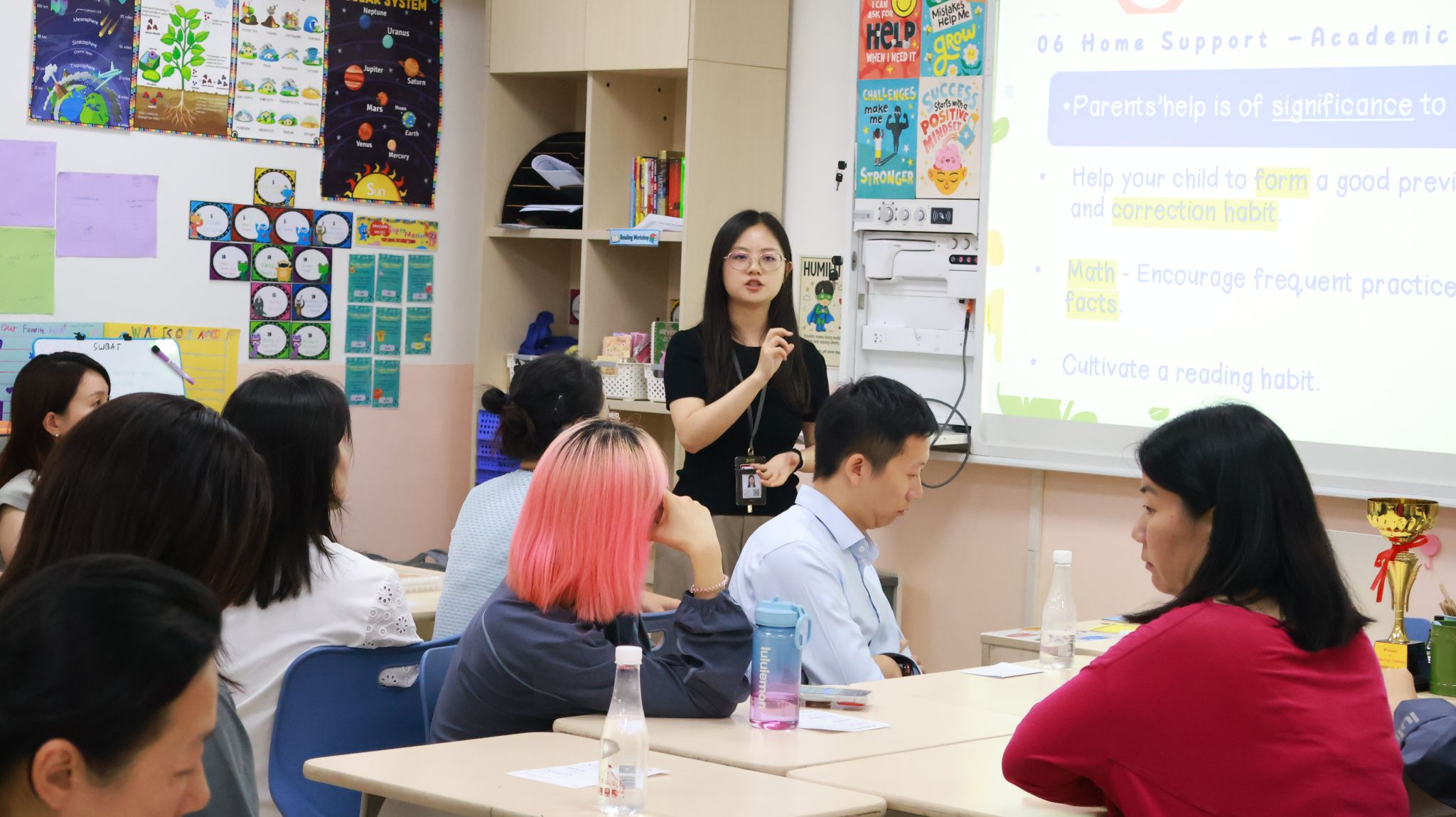
From Grade 1's "adaptation and foundation," to Grade 2's "expansion and confidence," to Grade 3's "independence and transformation," the three grade-level conferences each had their own emphases while also demonstrating the continuity and progression of the school's education. Education is a two-way journey between home and school. Respecting each child's pace of growth and guiding them with care is the shared expectation of both home and school.
The conferences concluded successfully in a warm and practical atmosphere. We firmly believe that if families and schools walk hand in hand, trust each other, and empower each other, our children will surely grow confidently, calmly, and vibrantly in their future learning journey.
(Written by Yuanjing Zhang Pictures by Siying Li Reviewed by Yi Zhang, Shiyi Wu)