-
ABOUT US
-
ACADEMICS
Curriculum Program
Departments
- English
- High School Chinese
- Primary and Junior School Chinese.
- High School Mathematics
- Middle School Mathematics
- Primary School Mathematics
- Music and Fine Arts
- Physical Education
- Physics
- Chemistry
- History and Geography
- Physical Science and Optional courses Department
- Middle School Biology
- High School Biology
- Social Sciences
- Computer Science
- Courses in Primary School
Achievements and Matriculations
College Counseling
Science & Technology Innovation Contest
Subject Competition
-
ARTS
-
ATHLETICS
-
AT SHSID
SHSID ∣ TIMES
PTSA
Club Exhibition
- 龙吟社
- Live 2 Drama
- Choir
- Hip-pop Dance Club
- The Primary School Dance Troupe
- Symposiums Club
- Biology Workshop
- You Shan
- VEX Robotic
- Peking Opera Club
- Baseball Club
- Model United Nations
- The World Scholar’s Cup
- Future Problem Solving Club
- United States Academic Pentathlon
- OM Club
- AMC Club
- Music for Patients
- SHSID Gazette
- Smile Charity
- Cultural Moments
- SciAcademy
- Stem Doge Alliance
- Chinese Debate Club
- IAA
- Mock Trial Club
- Zhengming Club
- Furry Friends
- GT-Racing
- Village Radio
- IMMC Club
- Creative Design and Intelligent Fabrication
- Future City Research Project
- ECOCAP
- AdvocaSEA
- SPDC
- Medishine
- Floorball Club
- Animusic MTC
- Wings Up
- All Booked
- Cyano
- Birding Community
Health and Wellness
Campus Safety
Cafeteria Service
-
ADMINISTRATION
-
ADMISSIONS
-
ALUMNI
Alumni Information
Honors Students
- Class of 2026
- Class of 2025
- Class of 2024
- Class of 2023
- Class of 2022
- Class of 2021
- Class of 2020
- Class of 2019
- Class of 2018
- Class of 2017
- Class of 2016
- Class of 2015
- Class of 2014
- Class of 2013
- Class of 2012
- Class of 2011
- Class of 2010
- Class of 2009
- Class of 2008
- Class of 2007
- Class of 2006
Who Studied at SHSID
SHS Foundation
-
DOCUMENTS
Lin'gang Campus: Growing with Confidence: A Month of Growth for Our First Graders
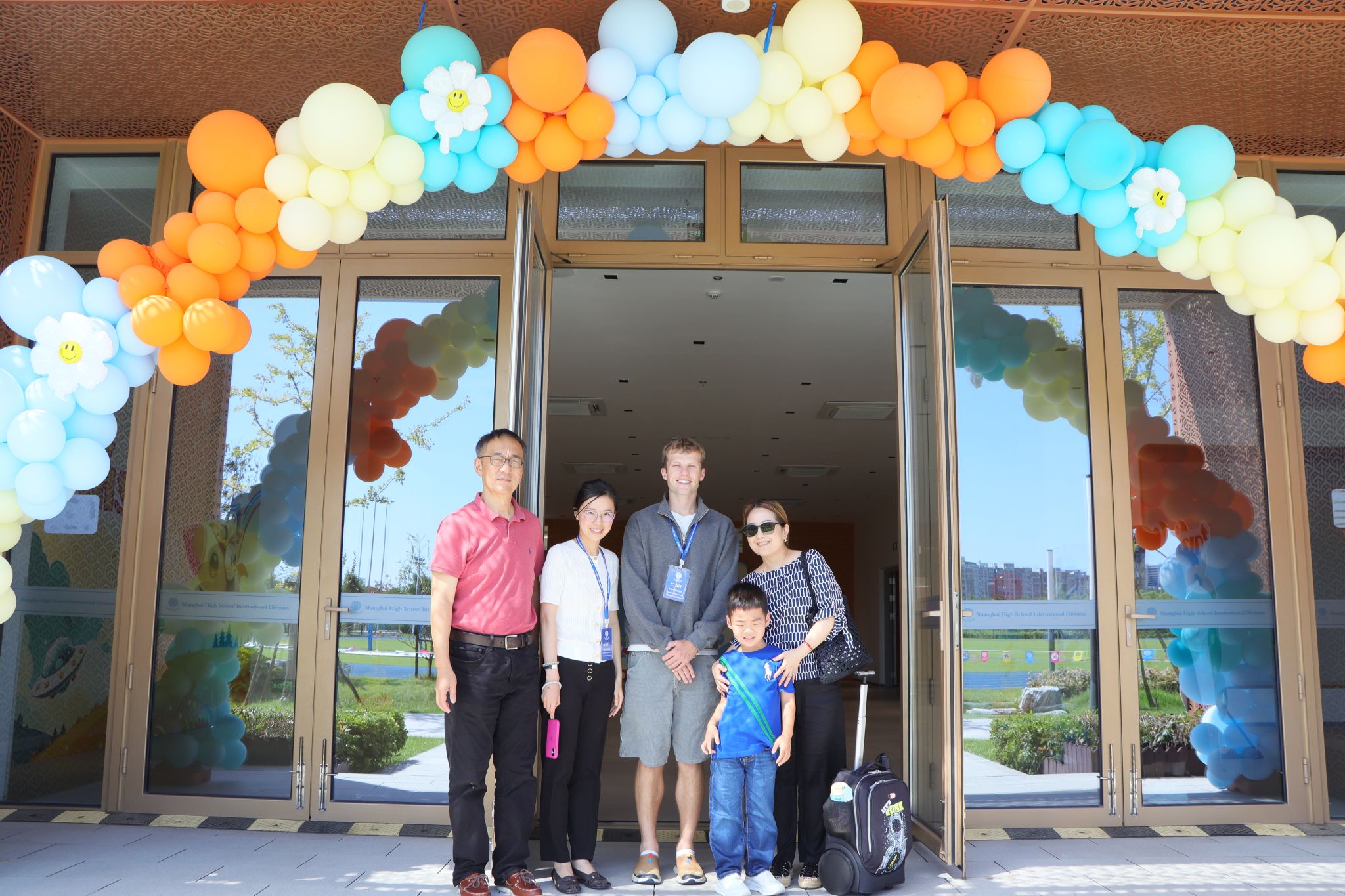
September brought a new group of young, eager learners to the SHSID Lingang Campus. For our first graders, starting elementary school meant much more than stepping into a new classroom or carrying a schoolbag. It marked the beginning of a new chapter in their lives. With new teachers, new classmates, new routines, and a whole new school experience, our students have spent their first month finding their way around campus, learning how to navigate daily routines, and becoming more independent. Through the many small challenges and successes of each day, they are discovering that growing up often happens in the simplest of moments.
1. From “What Should I Do?” to “I Can Do It Myself!”
For our new first graders, adapting to school life was the first lesson. How do I organize my backpack? What should I do during break time? How do I line up, use the restroom, and take care of my personal hygiene? These may seem like simple everyday tasks, but for children just beginning elementary school, they are all new skills to learn.
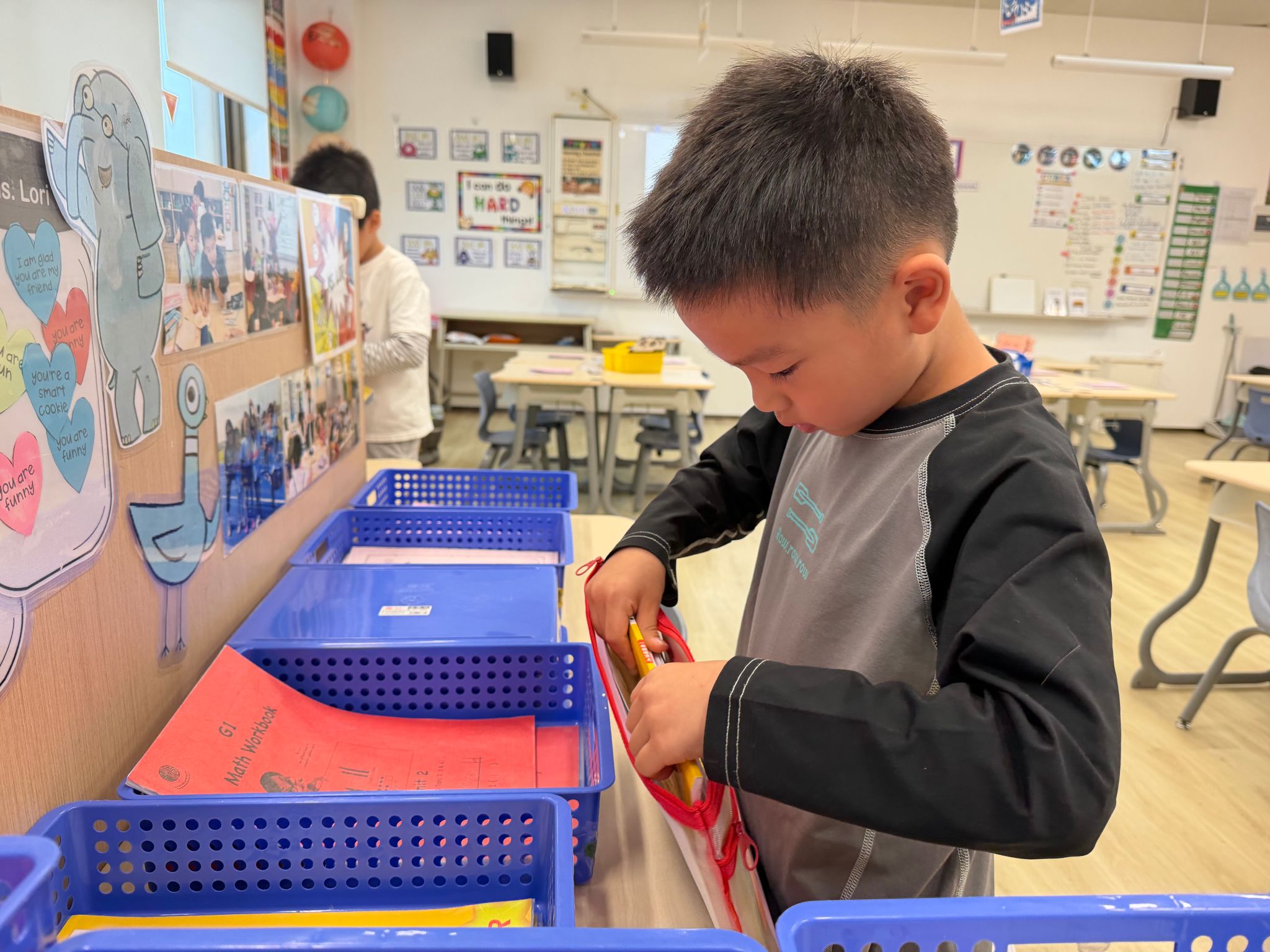
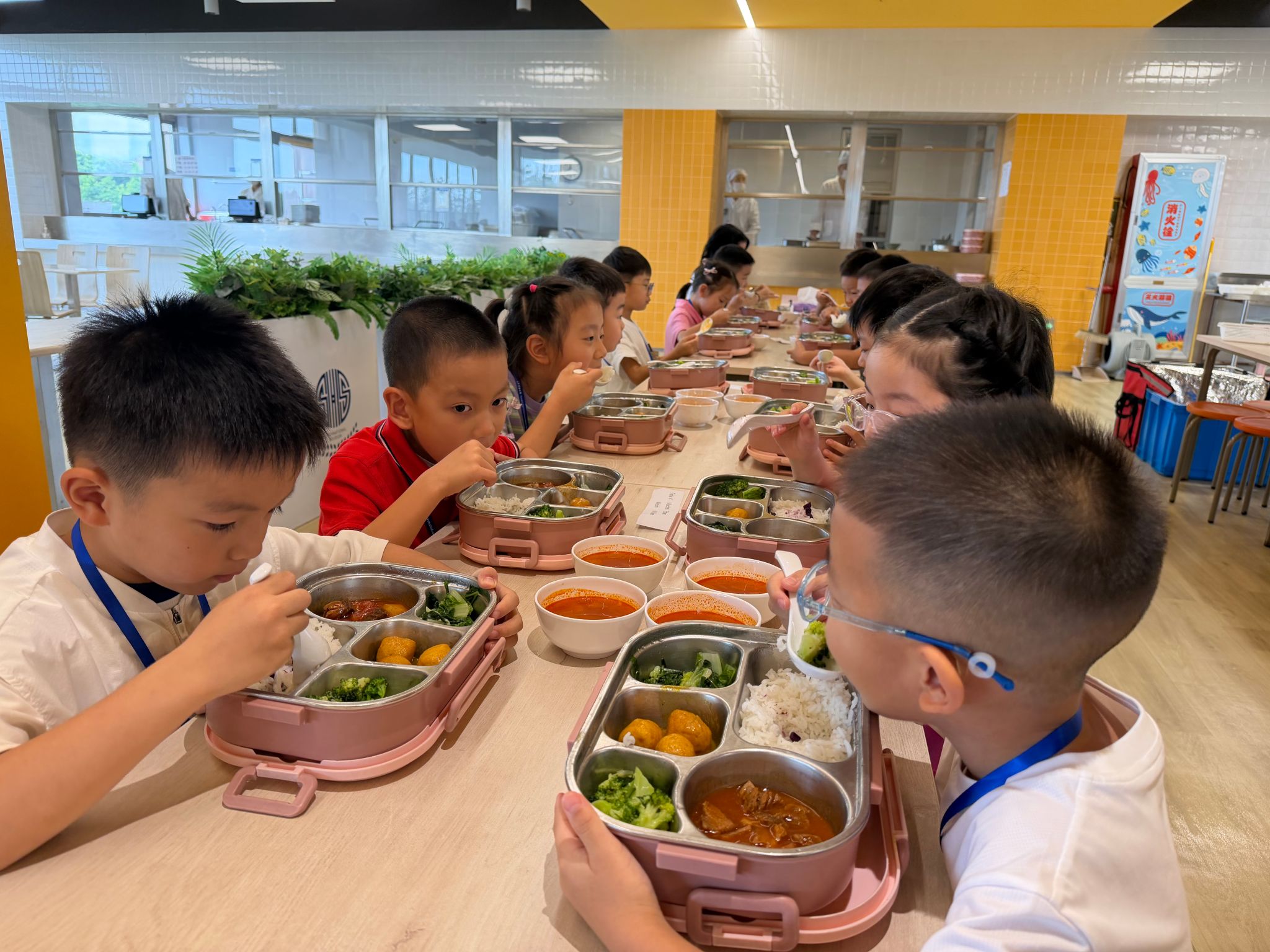
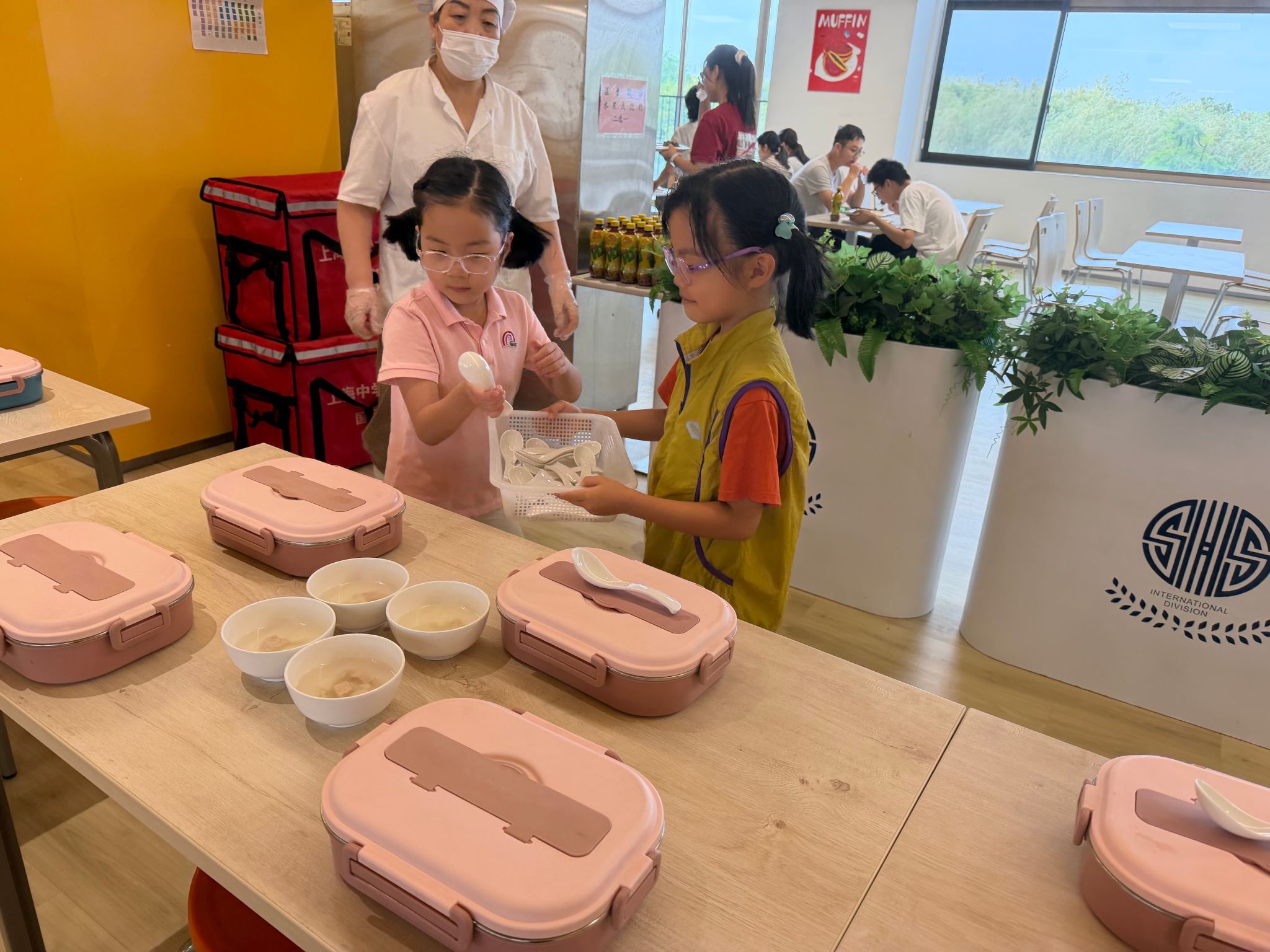
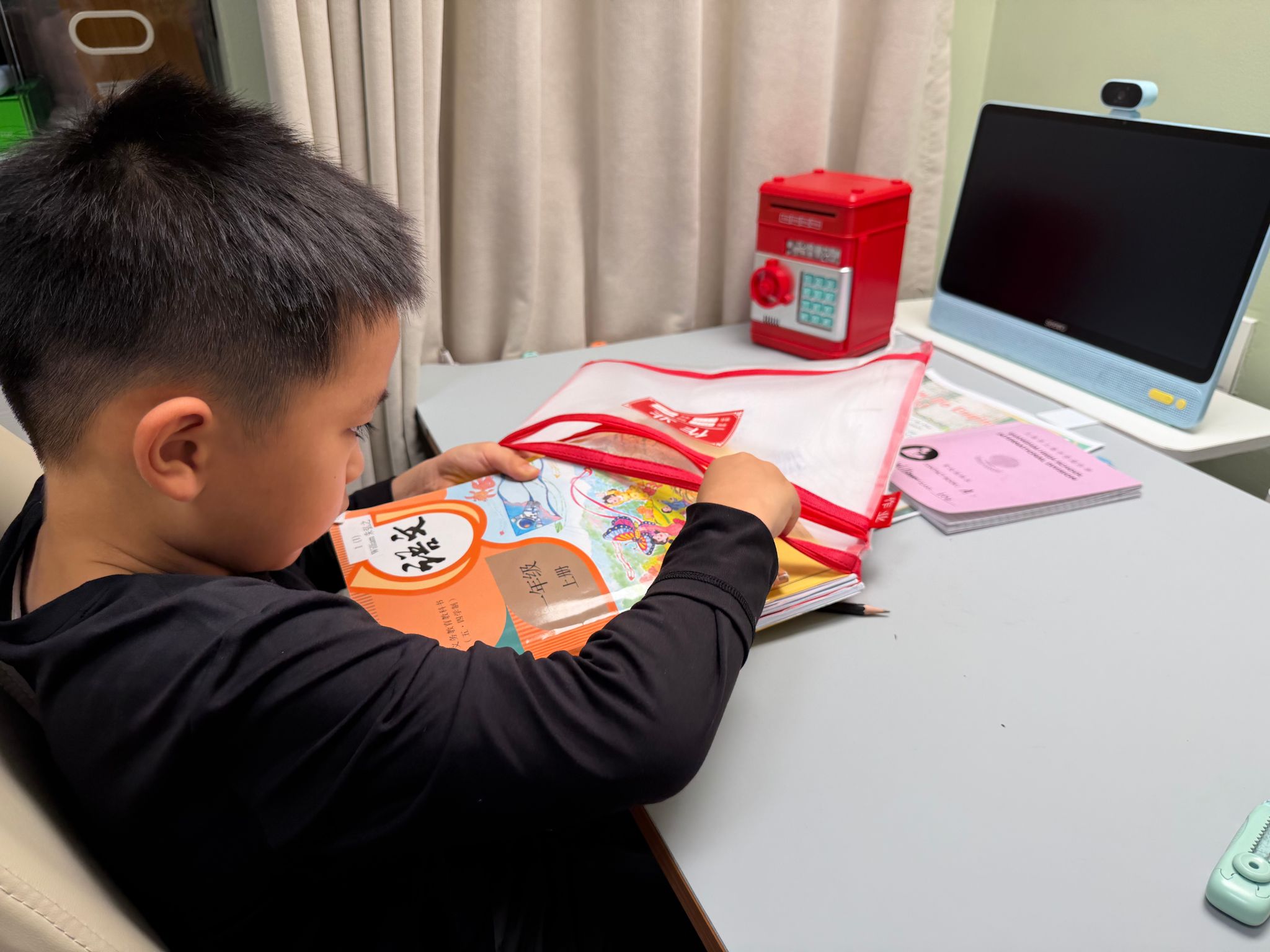
It is through these small, everyday routines that independence gradually takes root. From using subject folders and practicing good lunch manners to organizing personal belongings and developing healthy hygiene habits, teachers have provided clear routines and consistent guidance to help students build a sense of structure and familiarity. With practice, children are gradually learning to take care of their own responsibilities and become more independent in their daily lives.
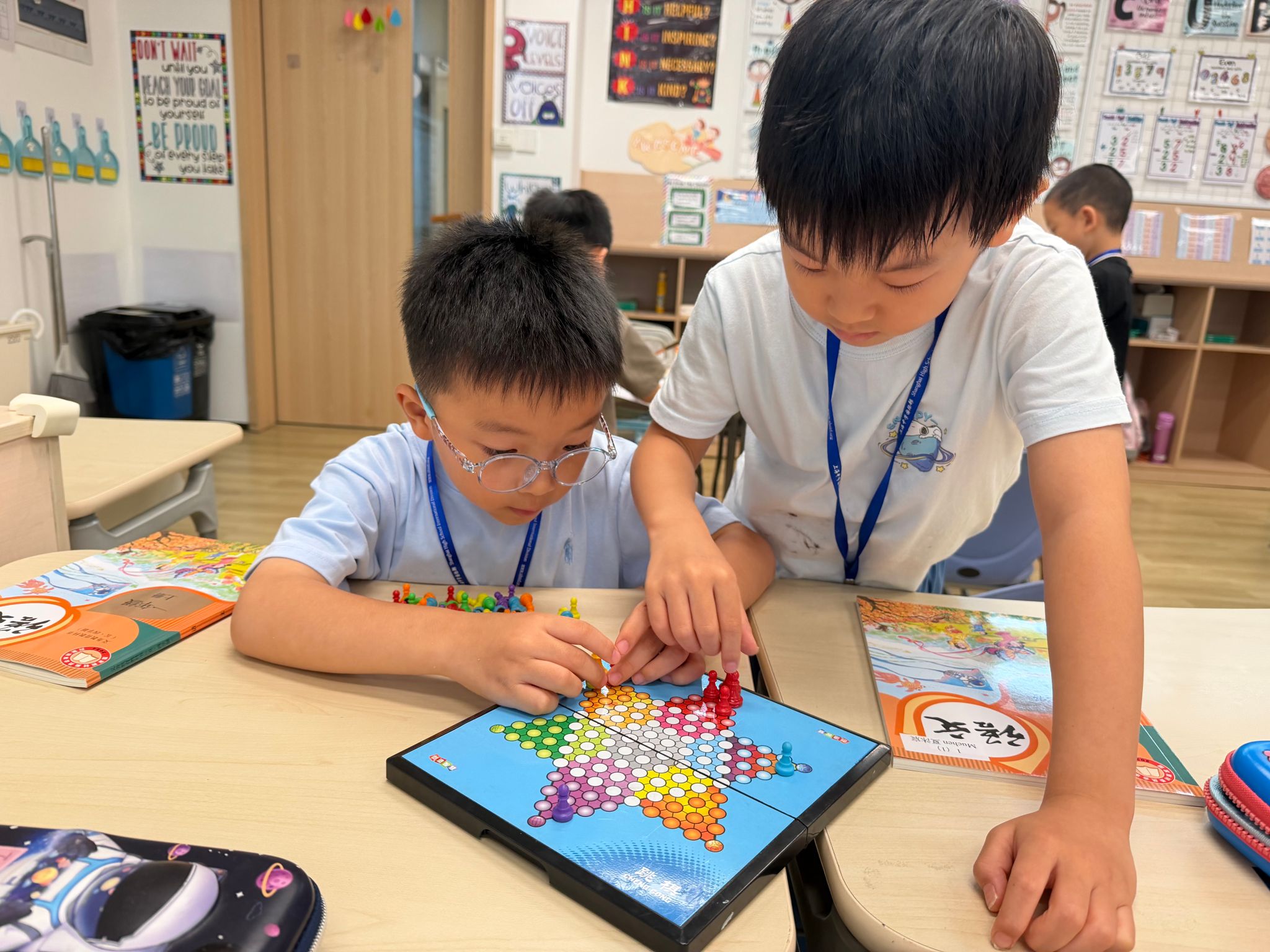
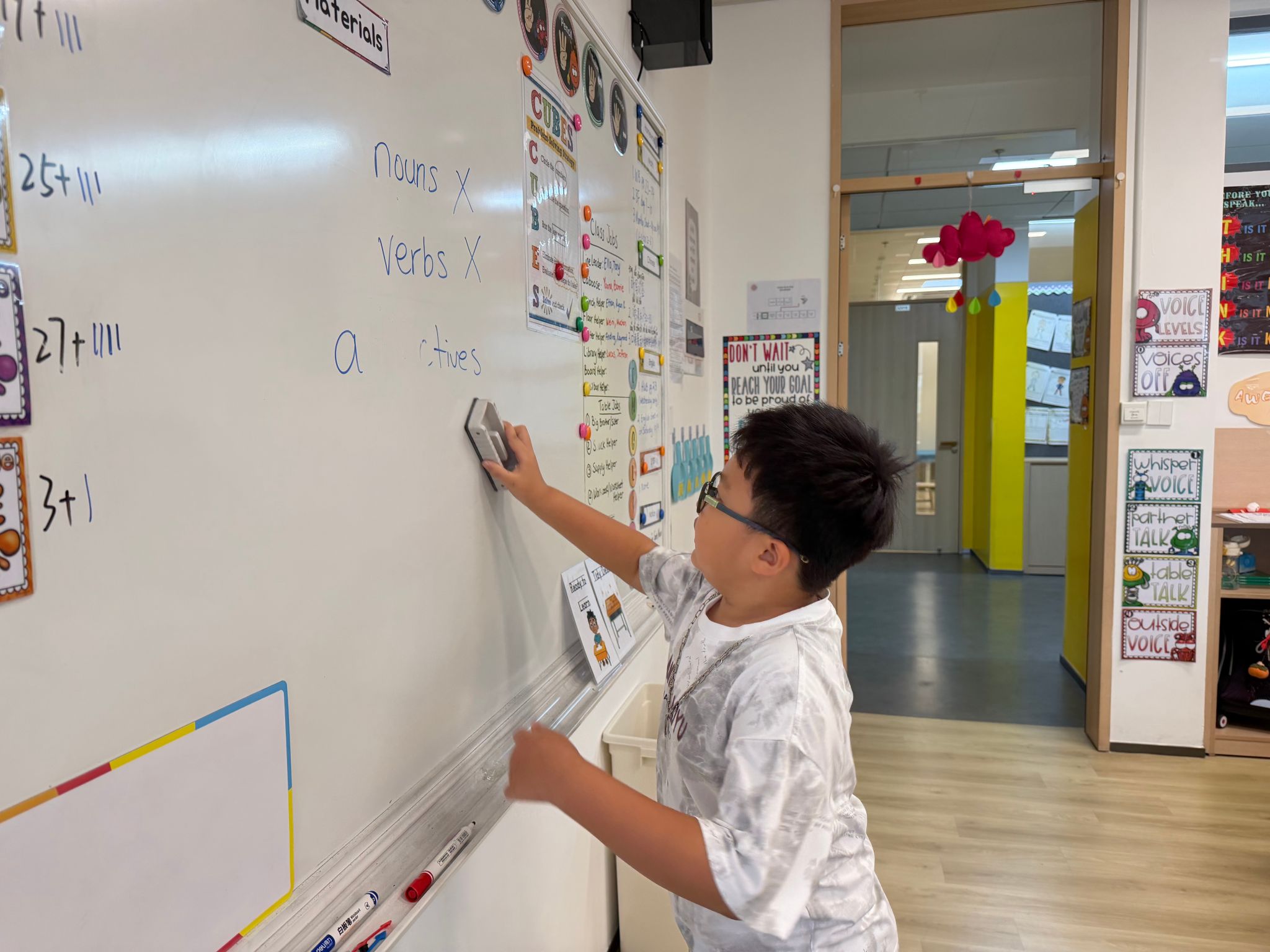
The class has also introduced a variety of classroom jobs, with each student taking on a different responsibility each week. Whether they are tidying the floor, organizing the classroom library, handing out learning materials, or helping the teacher clean the whiteboard, students are beginning to understand that the classroom belongs not only to their teachers, but to all of them. As they move from waiting for a teacher's reminder to taking the initiative to complete their responsibilities, our first graders are learning to take ownership of their actions while developing a growing sense of responsibility and belonging to their classroom community.
2. From “My First Try…” to “I Can Make It!”
The classroom is another important setting in which our new students are learning to navigate elementary school life. In the beginning, many children needed reminders about when to prepare their materials and how to approach different tasks. But as they take part in more and more classroom activities, they are gradually finding their own rhythm as learners.
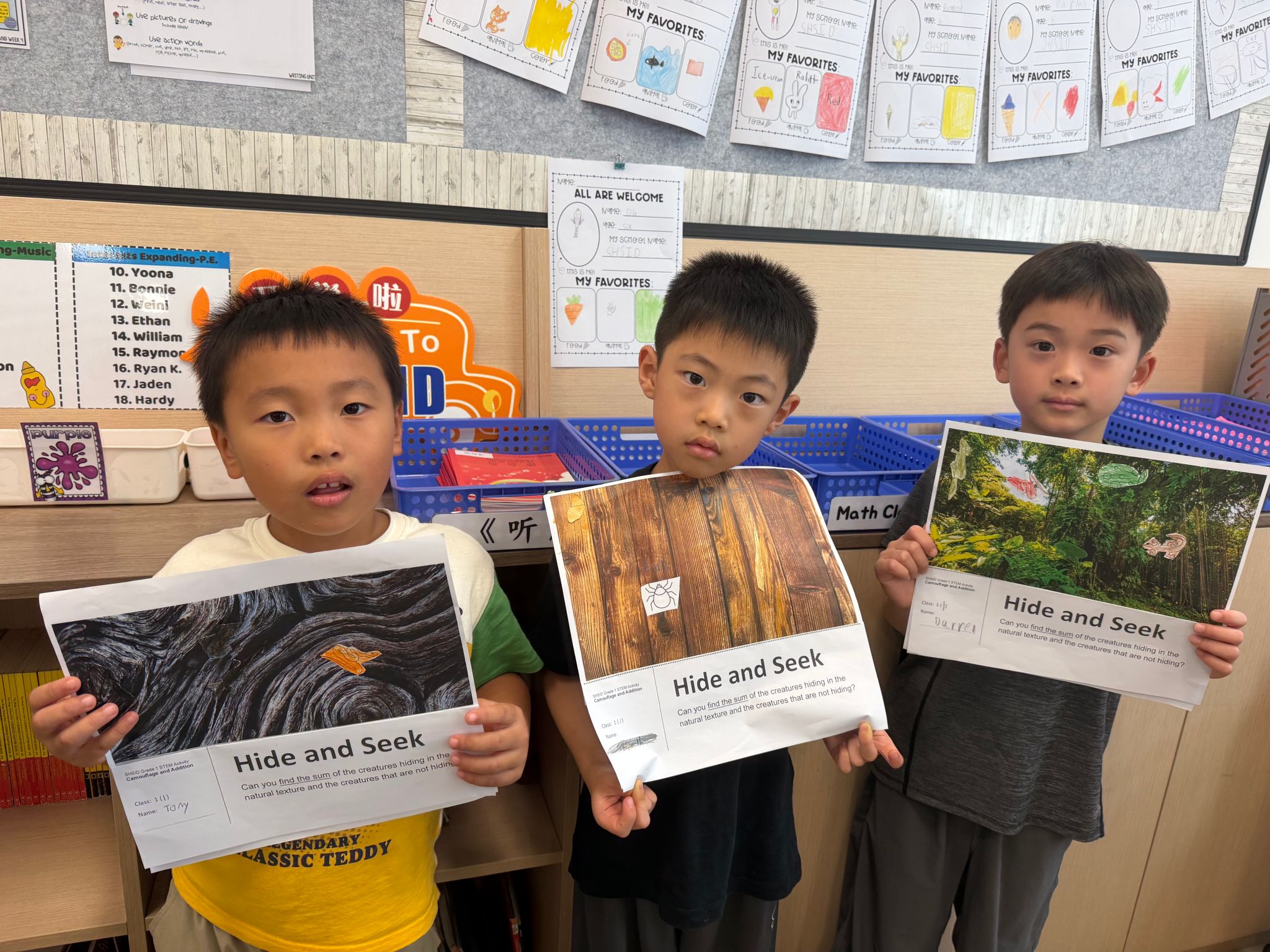
In Math, students are not only practicing calculation; they are also learning how to think mathematically and solve problems. Using strategies such as CUBES, they circle key numbers, underline questions and box key words, and begin to develop the habit of asking themselves, “What other way could I solve this?” when they encounter a challenge. In Chinese, learning progresses from reading aloud, recognizing characters, and practicing handwriting to expressing ideas and developing reading skills. Students are paying attention not only to strokes, stroke order, and character structure, but also practicing how to express their thoughts in complete sentences. Through reading aloud and independent reading, they are steadily building their language skills and vocabulary.
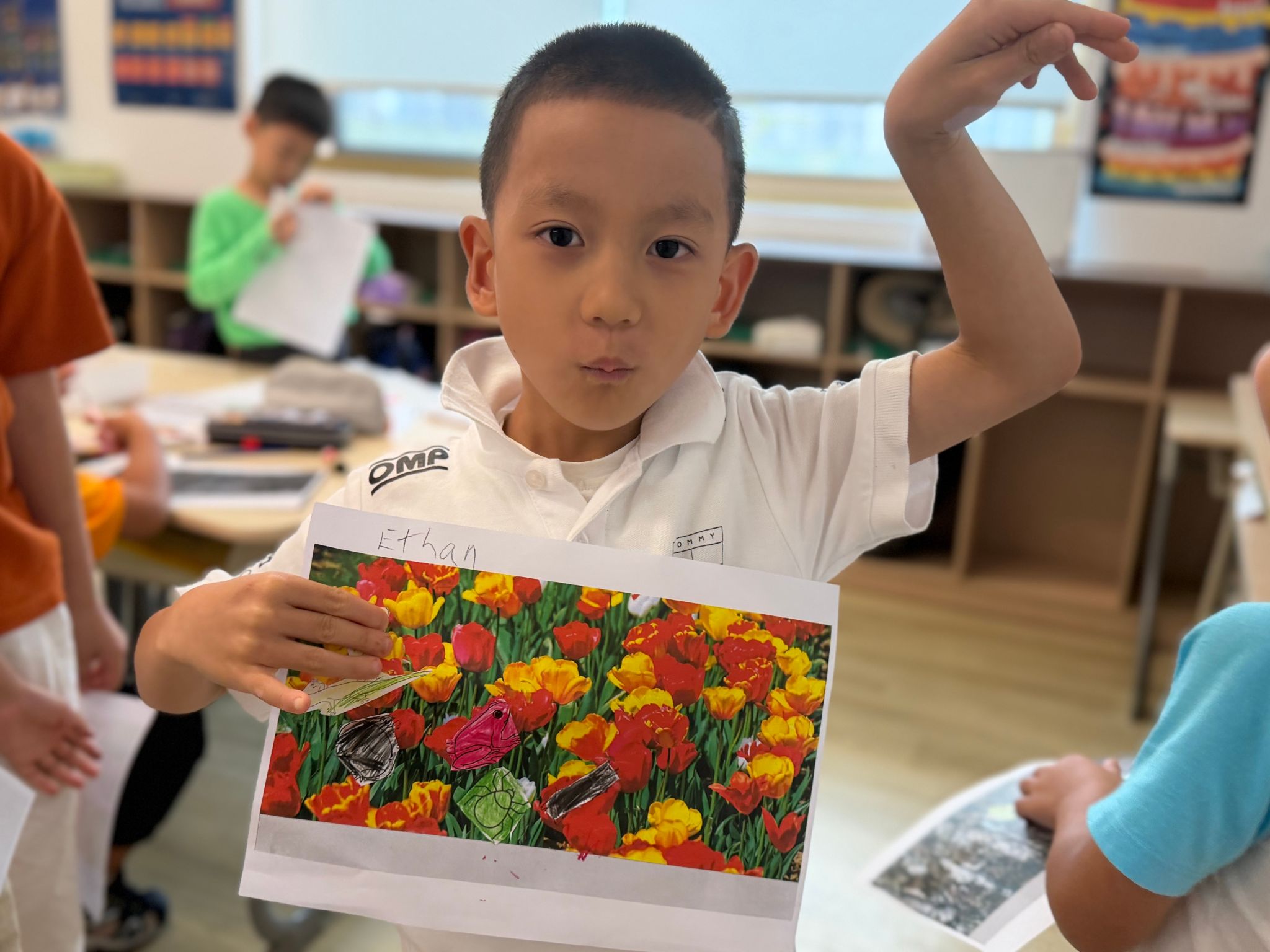
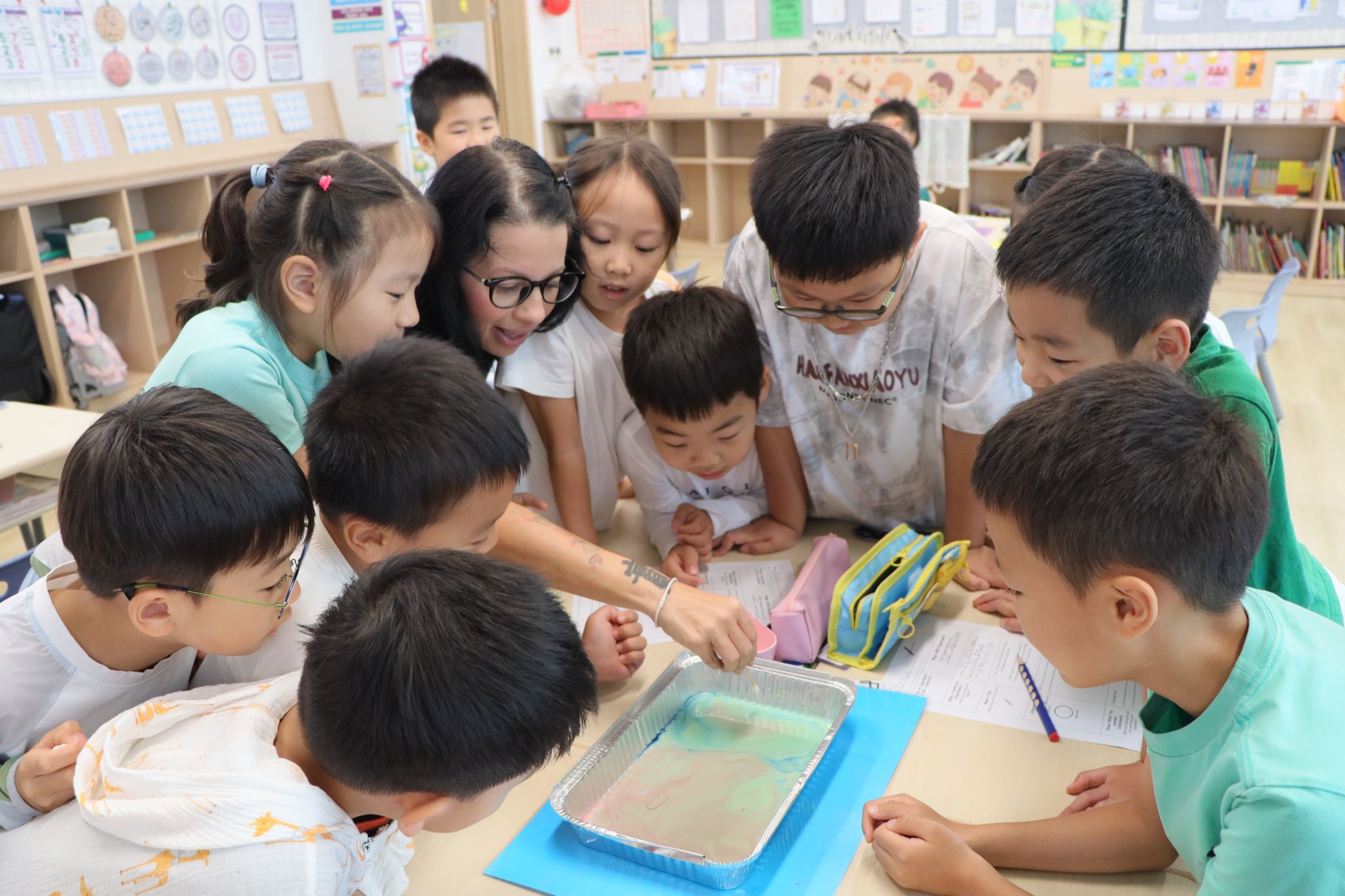
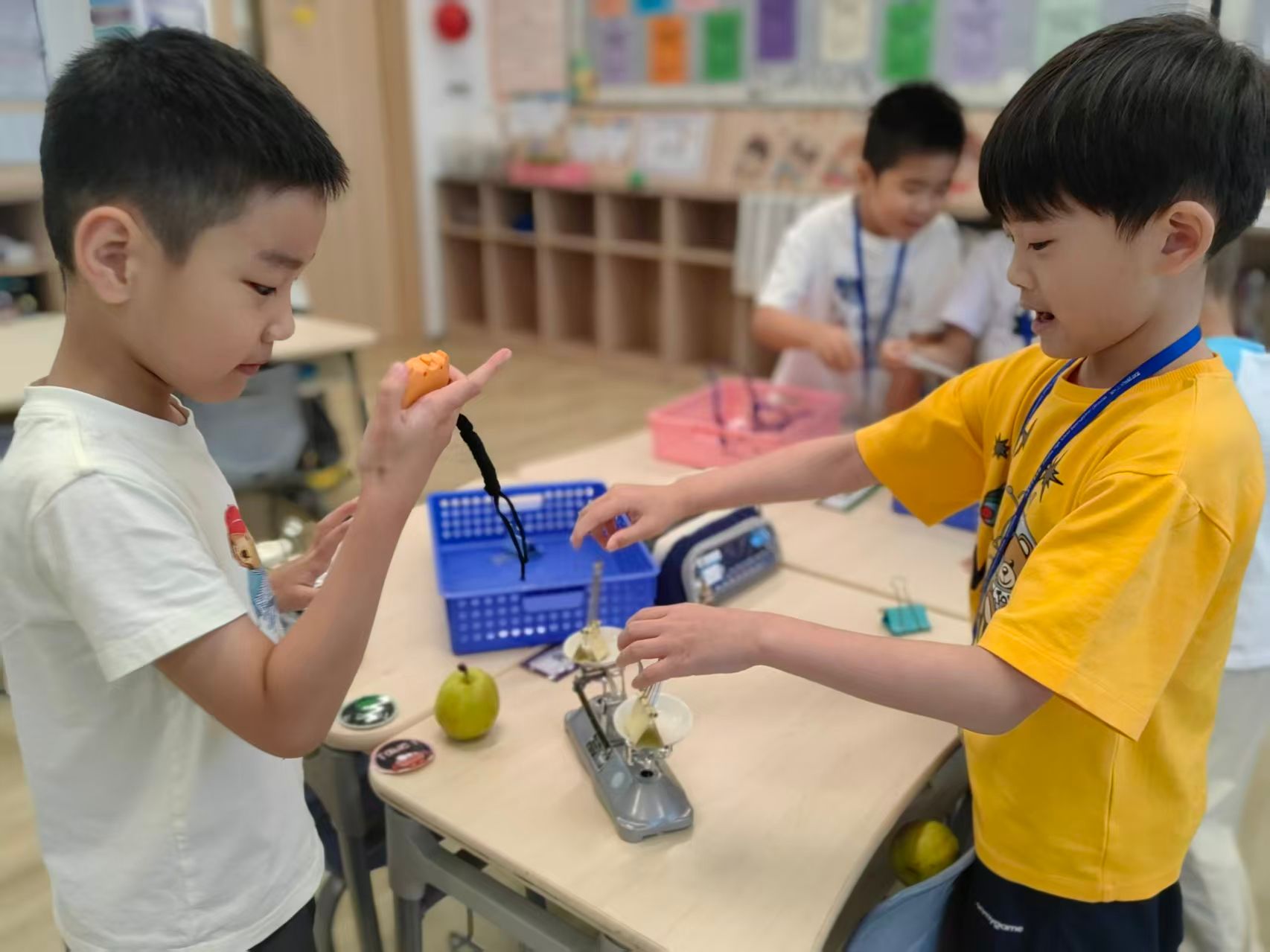
English lessons similarly focus on developing students’ listening, speaking, reading, and writing skills. Through classroom discussions, group interactions, and a variety of reading and writing activities, students have more opportunities to express themselves in meaningful language-learning situations. Science lessons are filled with curiosity and discovery. Students use scientific inquiry skills to conduct engaging experiments, ask questions, make observations, and explore the world around them through hands-on activities. Through questioning and exploration, they are gaining new knowledge while discovering the excitement of science.
3. From “I Need Help!” to “I’m Growing Up!”
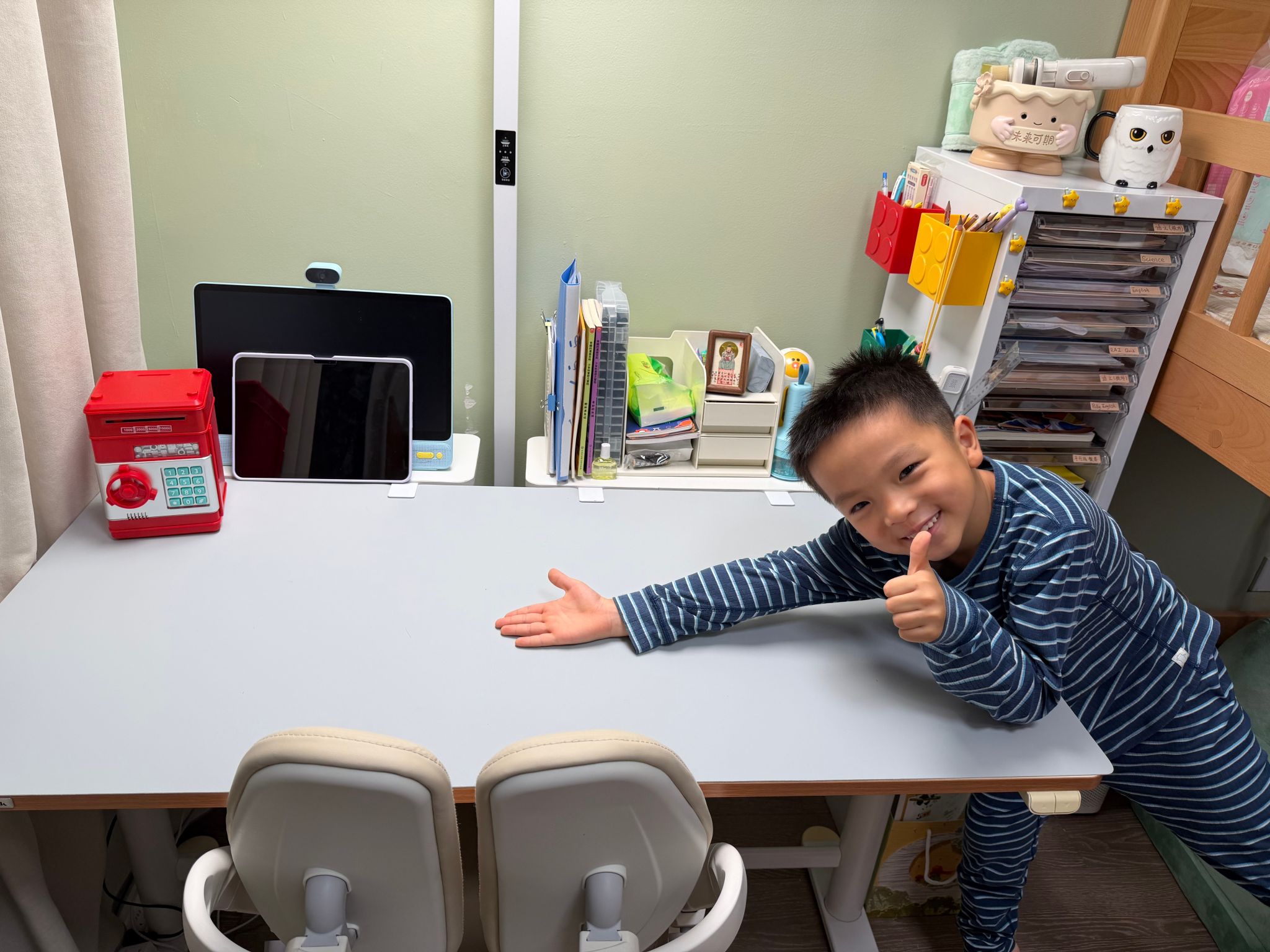
At the beginning of the school year, many children were still accustomed to having their parents pack their backpacks and organize their school supplies for them. After several weeks of school, however, parents are beginning to notice encouraging changes. Children are checking what they need for the next day, packing their own backpacks, organizing their stationery, and remembering to complete tasks assigned by their teachers. Some children have even started reminding their parents, “Don’t forget to bring this tomorrow!” These may seem like small changes, but they are meaningful signs of growth. Little by little, children are moving from being young learners who need to be looked after to becoming more independent and responsible elementary school students.
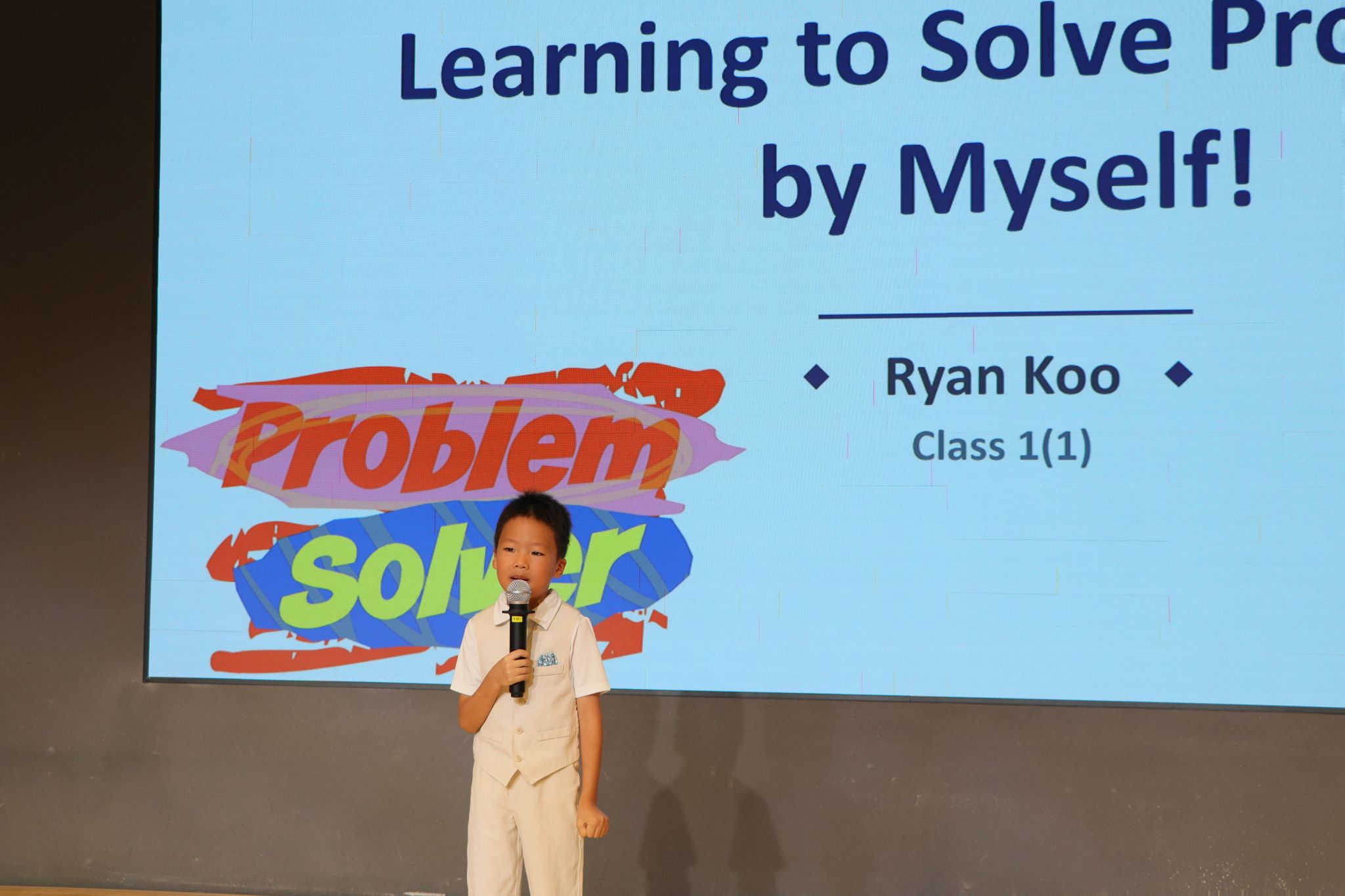
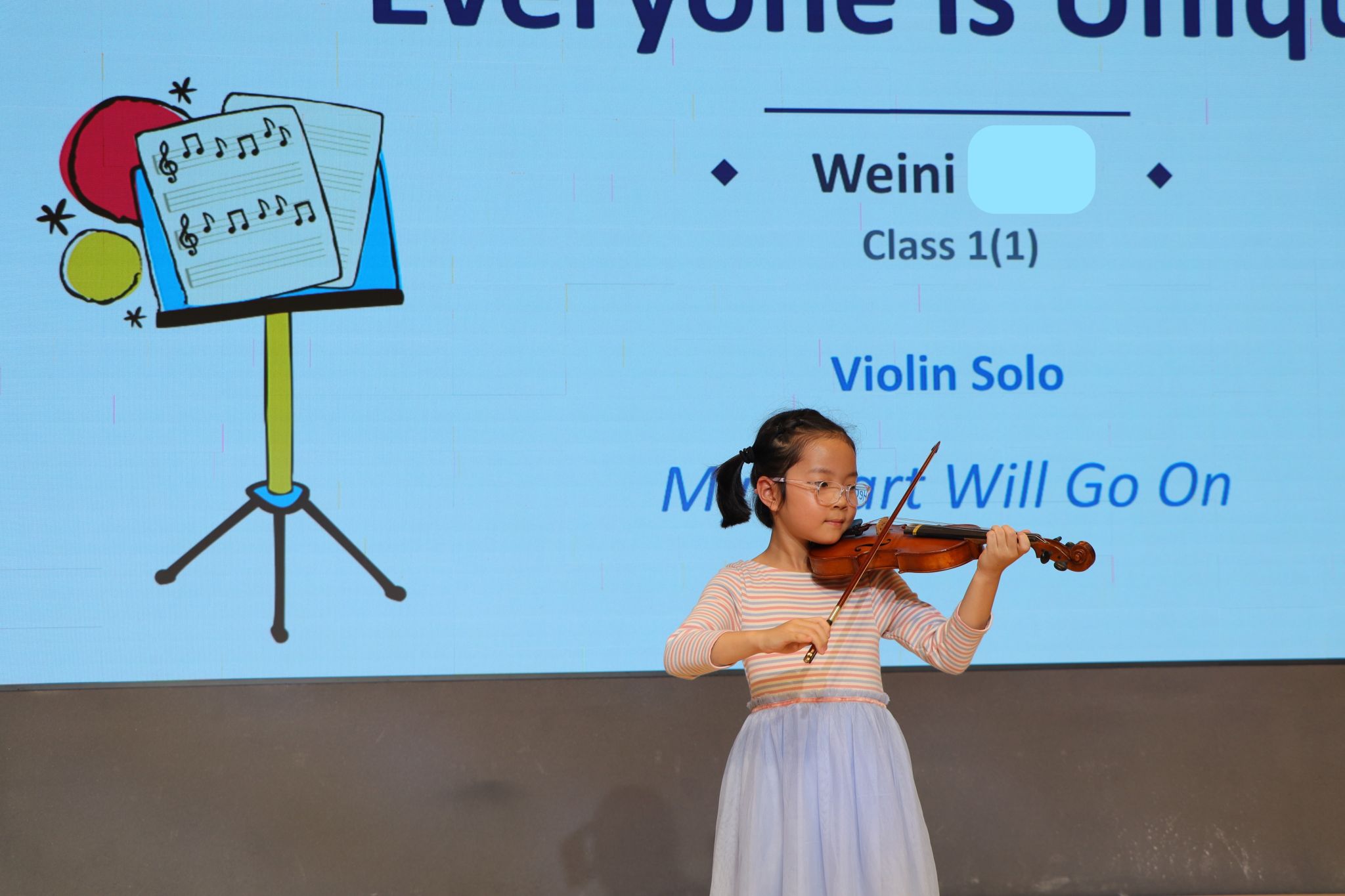
This growth is not only taking place at home. It is also being expressed with confidence on the school stage. At a recent grade assembly, Ryan K. from Class 1-1 shared his experience of “learning to solve problems by myself” and reflected on how he has changed during his first month of school. Completing and checking his own homework, organizing his school supplies, and trying to solve problems when he gets stuck may seem like ordinary everyday tasks, but they represent important steps on his journey toward independence. His classmate Weini shared her own perspective on growth. She talked about how she had come to appreciate the unique strengths of the people around her: some classmates are good at Math, some speak multiple languages, while others love sports or music. She realized that everyone is unique and that no one needs to be perfect at everything - we can all learn from one another. To conclude her sharing, Weini confidently performed a violin solo, My Heart Will Go On, bringing her message of confidence and appreciation for individuality to the entire first-grade community.
4. September: A Beginning, and the Prelude to Growth
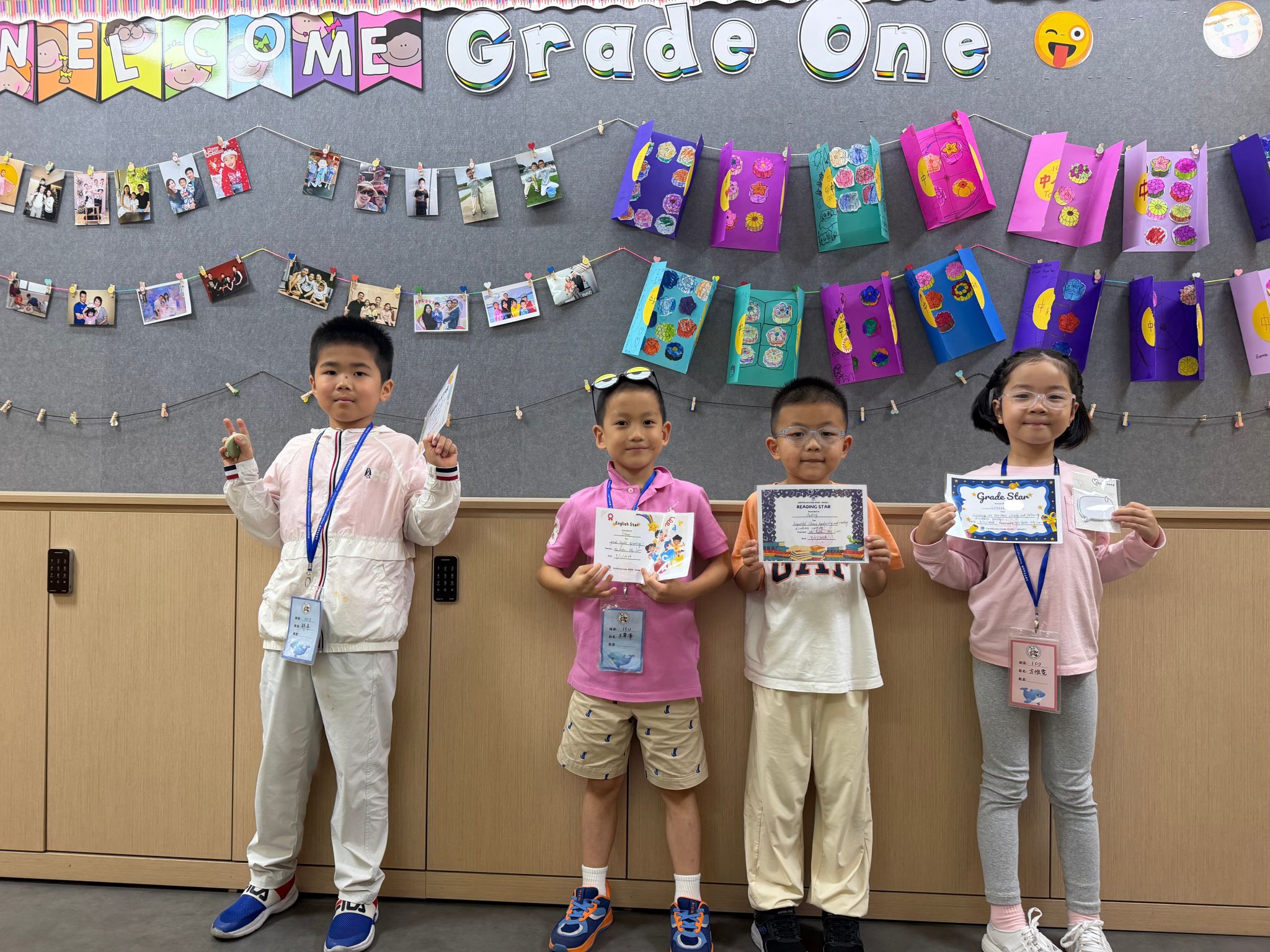
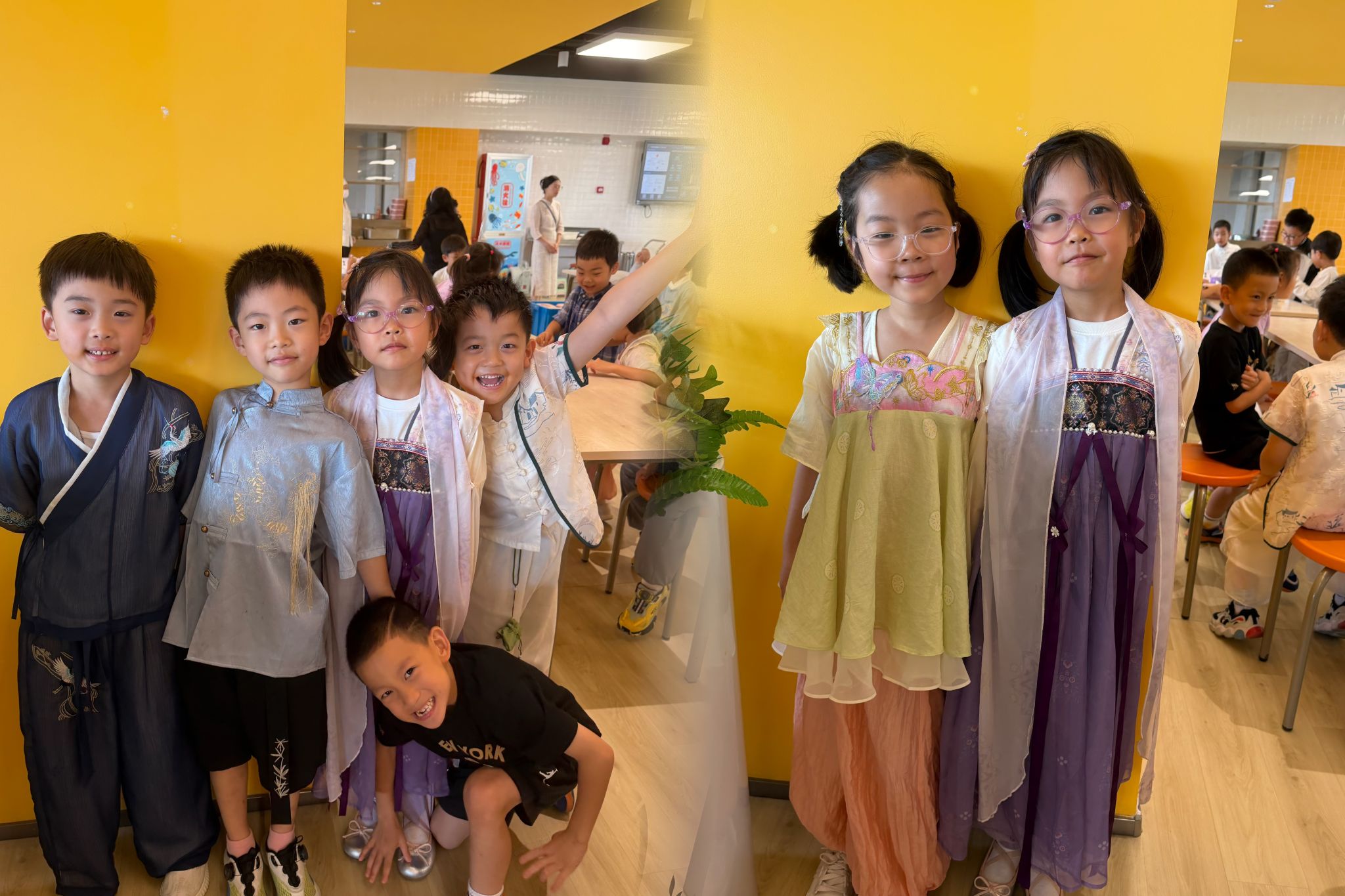
Every hand raised in class, every task completed independently, every act of kindness toward a classmate, and every moment of courage on stage represents a small but meaningful step for our first graders. At SHSID Lingang Campus, our youngest students are gradually making the transition from kindergarteners to elementary school learners in their own unique ways. Their journey has only just begun. Through continued exploration, collaboration, practice, and reflection, they will develop the skills they need to learn, discover how to build positive relationships with others, and gradually grow into confident, independent, and responsible learners.
(Written by Isabella Wang
Pictures by Chun'ai Xu, Isabella Wang
Reviewed by Xiaoting Shi, Shiyu Wu)