-
ABOUT US
-
ACADEMICS
Curriculum Program
Departments
- English
- High School Chinese
- Primary and Junior School Chinese.
- High School Mathematics
- Middle School Mathematics
- Primary School Mathematics
- Music and Fine Arts
- Physical Education
- Physics
- Chemistry
- History and Geography
- Physical Science and Optional courses Department
- Middle School Biology
- High School Biology
- Social Sciences
- Computer Science
- Courses in Primary School
Achievements and Matriculations
College Counseling
Science & Technology Innovation Contest
Subject Competition
-
ARTS
-
ATHLETICS
-
AT SHSID
SHSID ∣ TIMES
PTSA
Club Exhibition
- 龙吟社
- Live 2 Drama
- Choir
- Hip-pop Dance Club
- The Primary School Dance Troupe
- Symposiums Club
- Biology Workshop
- You Shan
- VEX Robotic
- Peking Opera Club
- Baseball Club
- Model United Nations
- The World Scholar’s Cup
- Future Problem Solving Club
- United States Academic Pentathlon
- OM Club
- AMC Club
- Music for Patients
- SHSID Gazette
- Smile Charity
- Cultural Moments
- SciAcademy
- Stem Doge Alliance
- Chinese Debate Club
- IAA
- Mock Trial Club
- Zhengming Club
- Furry Friends
- GT-Racing
- Village Radio
- IMMC Club
- Creative Design and Intelligent Fabrication
- Future City Research Project
- ECOCAP
- AdvocaSEA
- SPDC
- Medishine
- Floorball Club
- Animusic MTC
- Wings Up
- All Booked
- Cyano
- Birding Community
Health and Wellness
Campus Safety
Cafeteria Service
-
ADMINISTRATION
-
ADMISSIONS
-
ALUMNI
Alumni Information
Honors Students
- Class of 2025
- Class of 2024
- Class of 2023
- Class of 2022
- Class of 2021
- Class of 2020
- Class of 2019
- Class of 2018
- Class of 2017
- Class of 2016
- Class of 2015
- Class of 2014
- Class of 2013
- Class of 2012
- Class of 2011
- Class of 2010
- Class of 2009
- Class of 2008
- Class of 2007
- Class of 2006
Who Studied at SHSID
SHS Foundation
-
DOCUMENTS
Puxi Campus G4-5 | Spring Field Study Trip
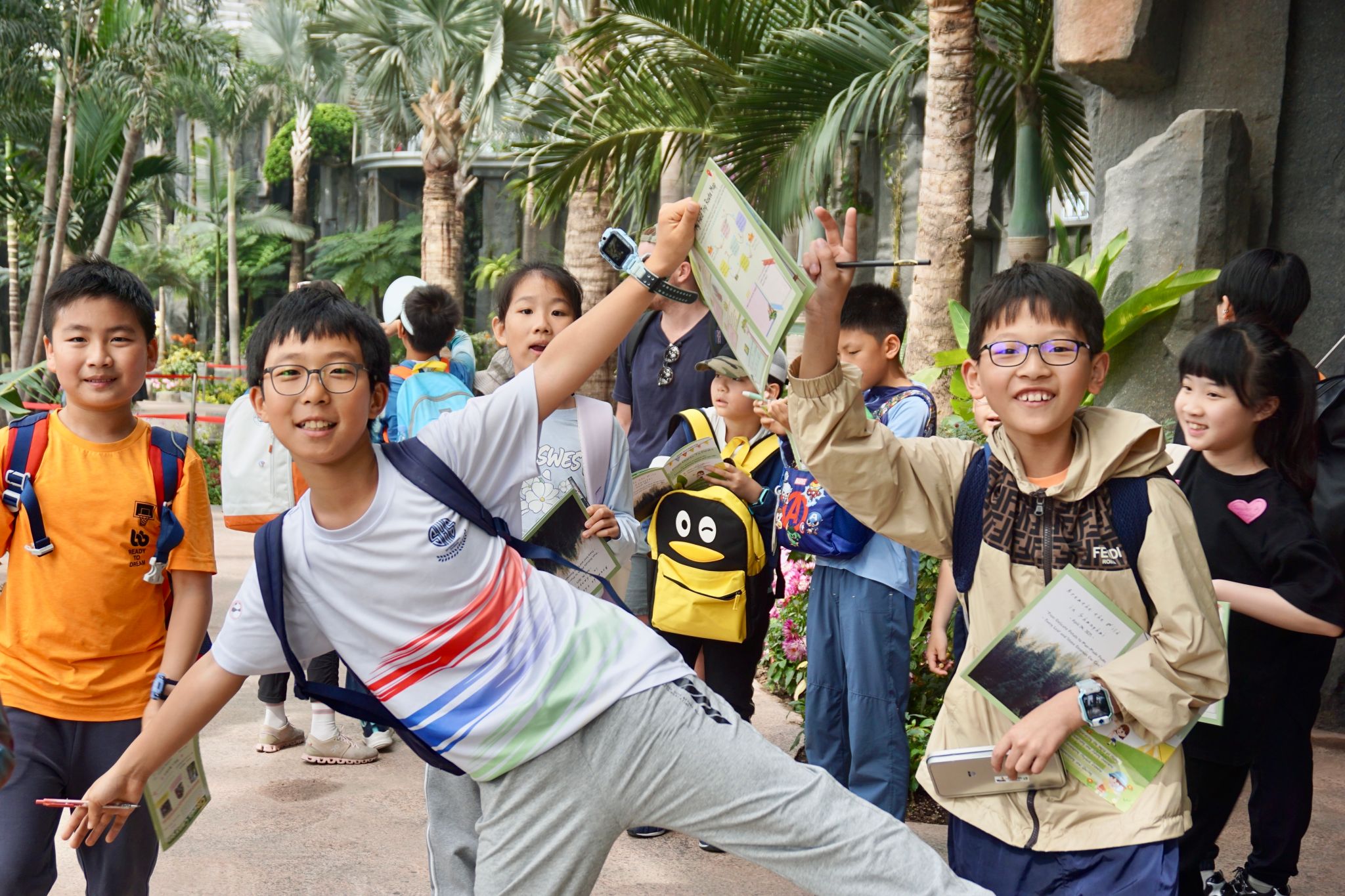
On April 24, students and teachers from Grades 4 and 5 at the Puxi Campus of Shanghai High School International Division embarked on an immersive field study at the Shanghai Expo Culture Park. The day unfolded across two rich landscapes—the Greenhouse Garden and Twin Hills—offering students a dynamic, hands-on experience that integrated botany, ecology, and environmental engineering. Far more than a simple eaxcursion, this interdisciplinary journey deepened students’ understanding of the natural world while reinforcing the principle of harmonious coexistence between humans and nature.
Preparation with Purpose: Cultivating Curiosity and Scientific Thinking
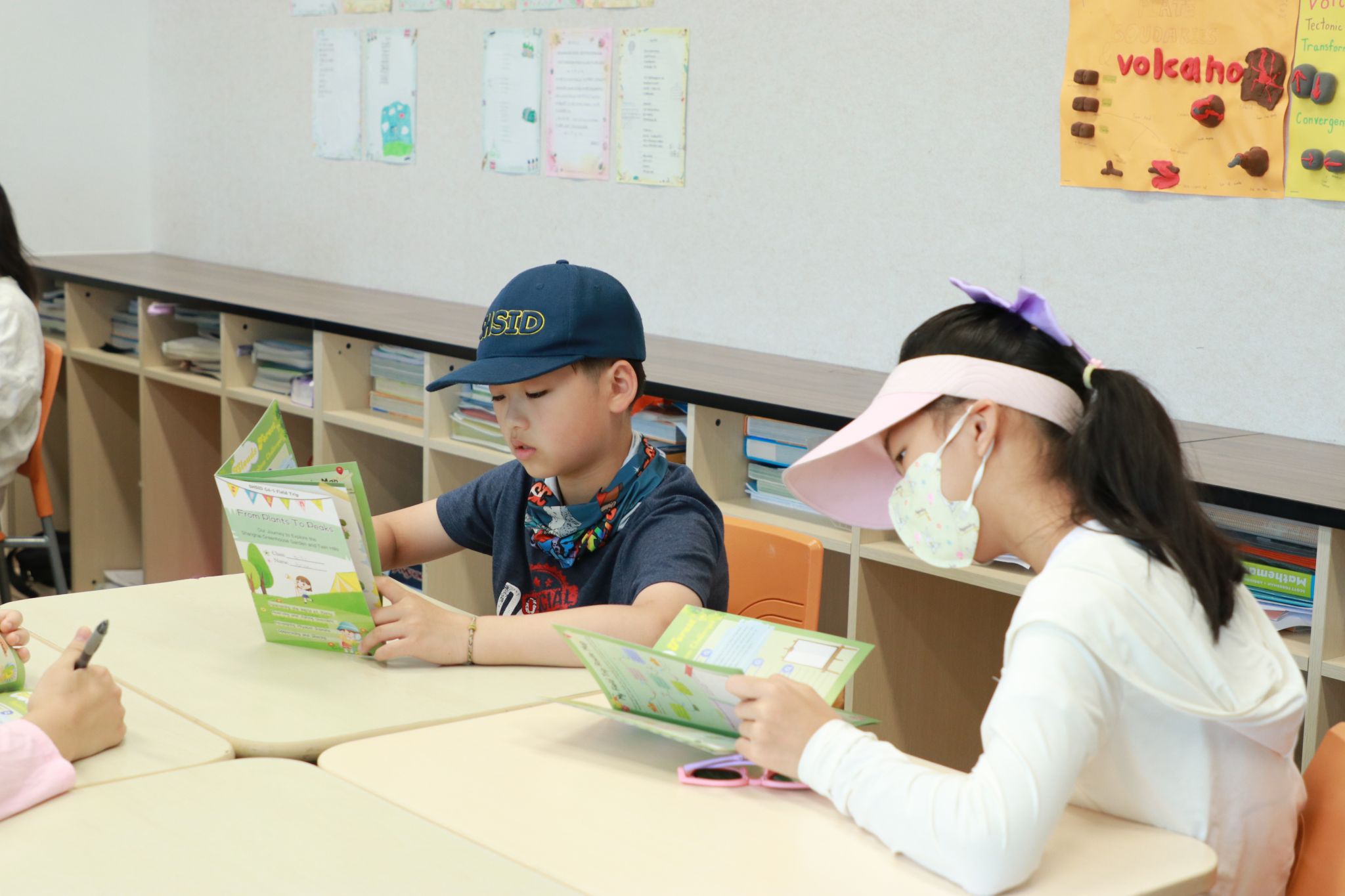
In the days leading up to the trip, teachers worked closely with students to lay a strong foundation for inquiry-based learning. During morning meetings, homeroom teachers introduced essential safety guidelines and emphasized responsible, respectful engagement with the environment. Rather than simply providing answers, teachers sparked curiosity with guiding questions like “Why do cacti have spines?” and “How do tropical trees support themselves in wet soils?” Each student received a customized field study booklet afterwards. It featured an overview of the garden’s thematic zones and inquiry-driven tasks such as plant adaptation challenges and matching games. These resources empowered students to take charge of their learning, turning observation into investigation and reflection.
Through the Conservatories: Experiencing the Science of Living Systems
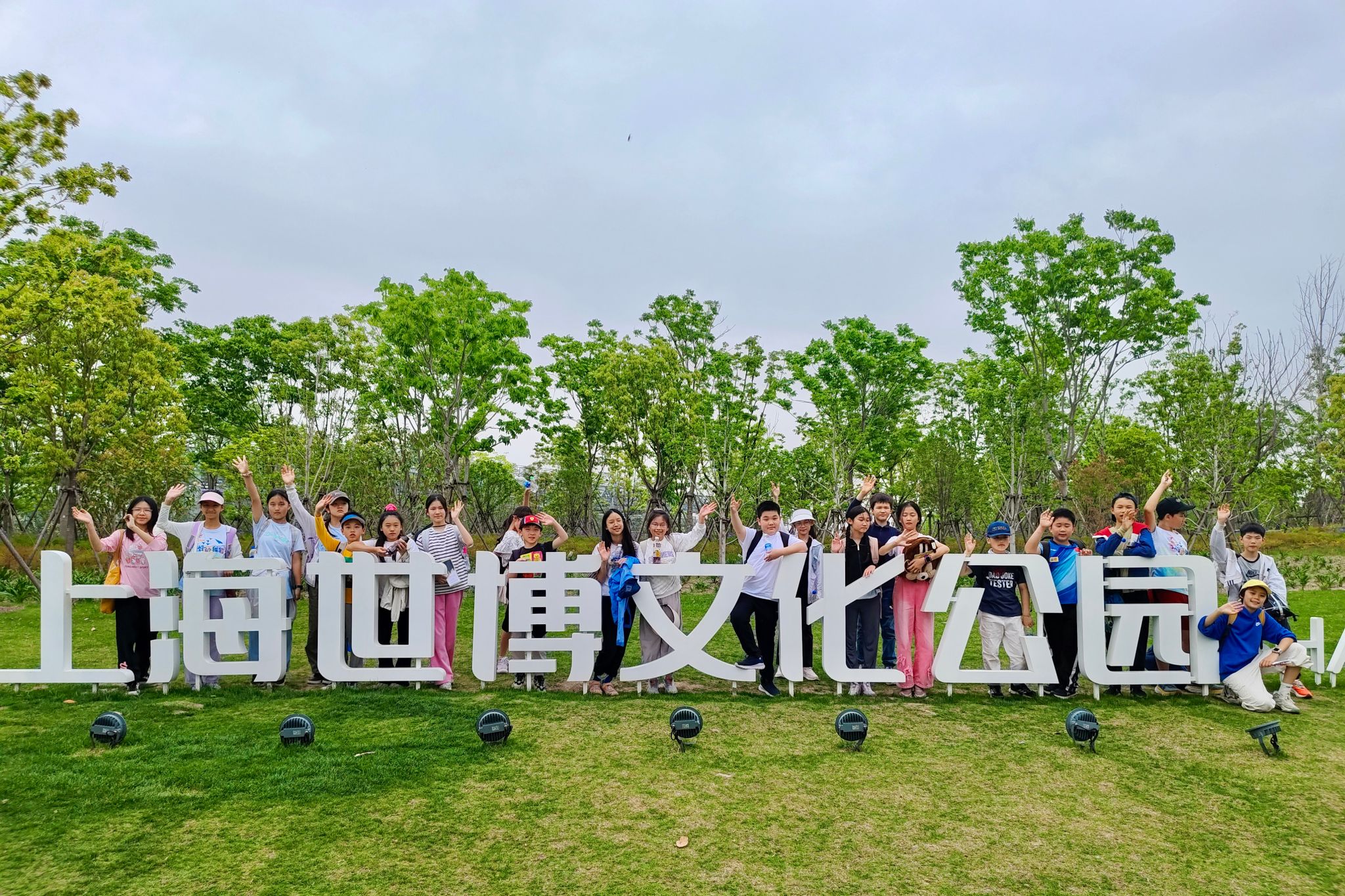
The first stop was the expansive Greenhouse Garden, home to three immersive climate zones: Desert Mirage, Clouds Forest, and Clouds Canyon. Each space recreated a distinct ecosystem and provided a living classroom filled with opportunities for exploration.
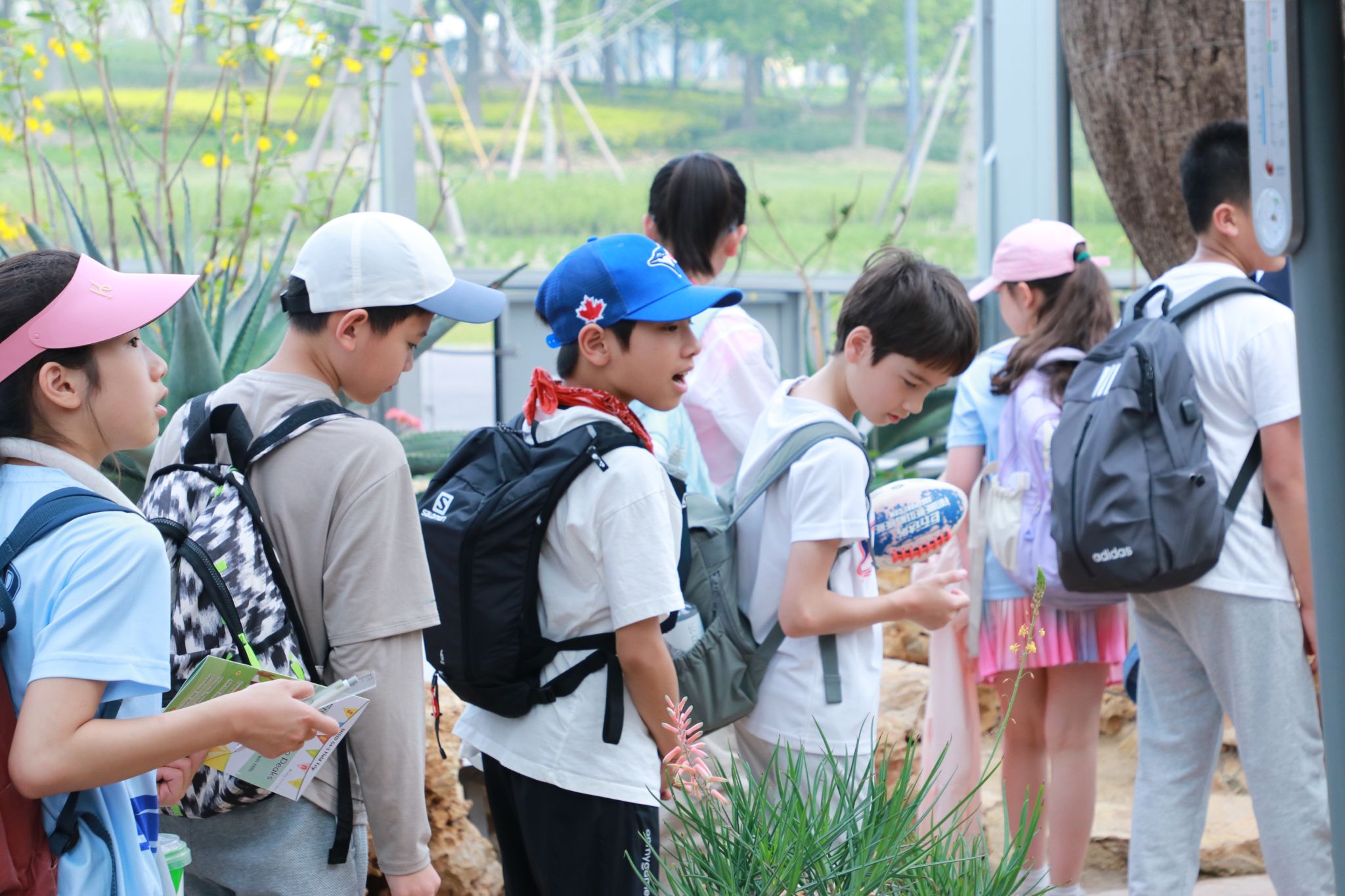
In the Desert Mirage, students were immediately struck by the dry heat and rocky terrain. As they navigated the arid landscape, they took on the role of “plant detectives,” observing giant columnar cacti and spherical golden barrel cacti up close. Through careful study, they uncovered how specific adaptations—like ribbed stems and reduced leaves—help plants conserve water in extreme environments. The term “desert water tower” became a memorable metaphor for understanding plant survival strategies in dry climates.
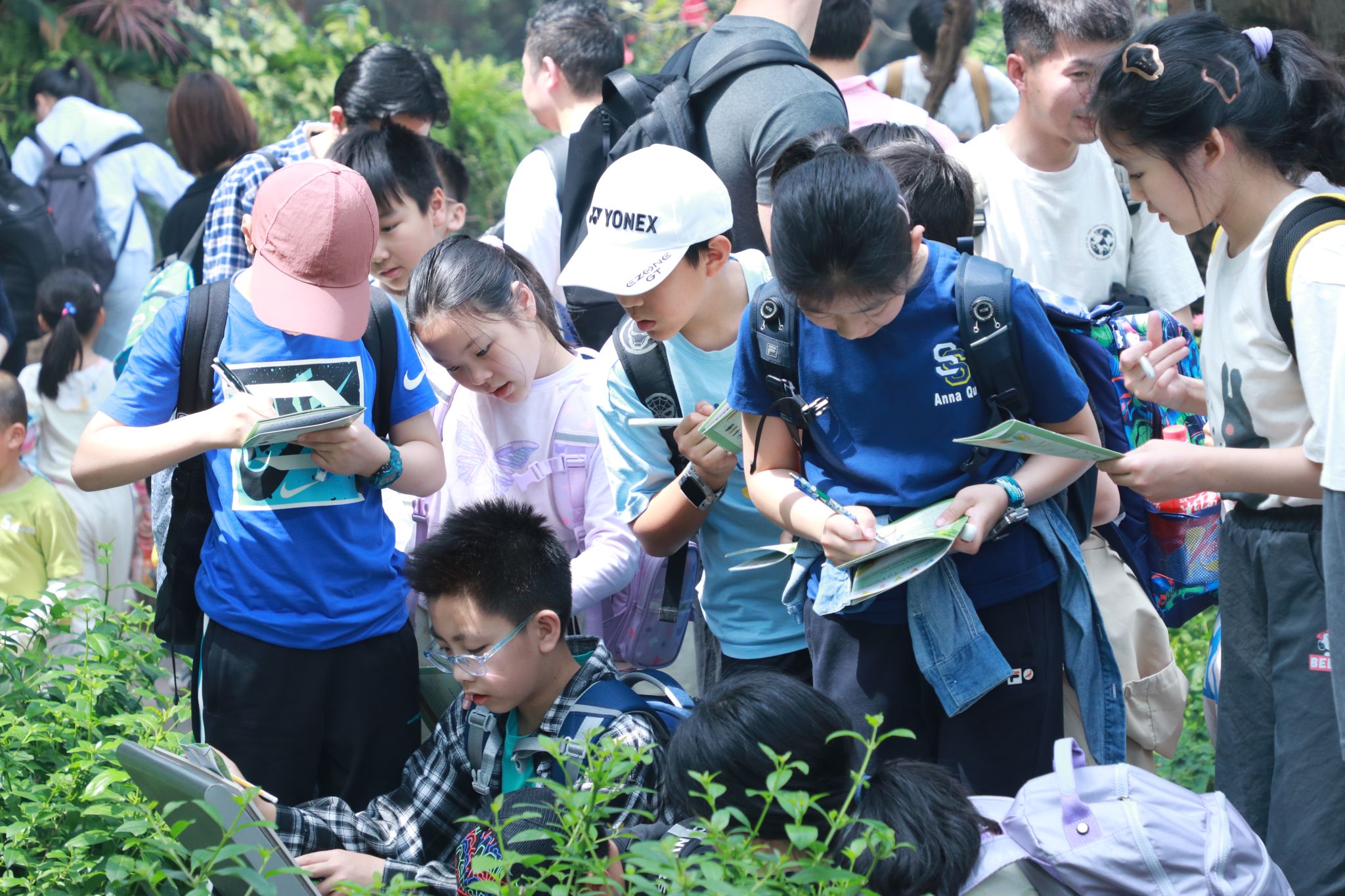
Inside the Clouds Forest, a world of high humidity and towering buttress-rooted trees awaited. Students marveled at how stilt-like roots stabilized massive trunks and how aerial roots absorbed moisture from the air. The realization that a banyan’s dangling roots served as “breathing organs” was a moment of wonder. From low-lying ferns to canopy plants stretching meters into the air, students encountered the concept of vertical stratification firsthand—no longer an abstract ecological term, but a living reality.
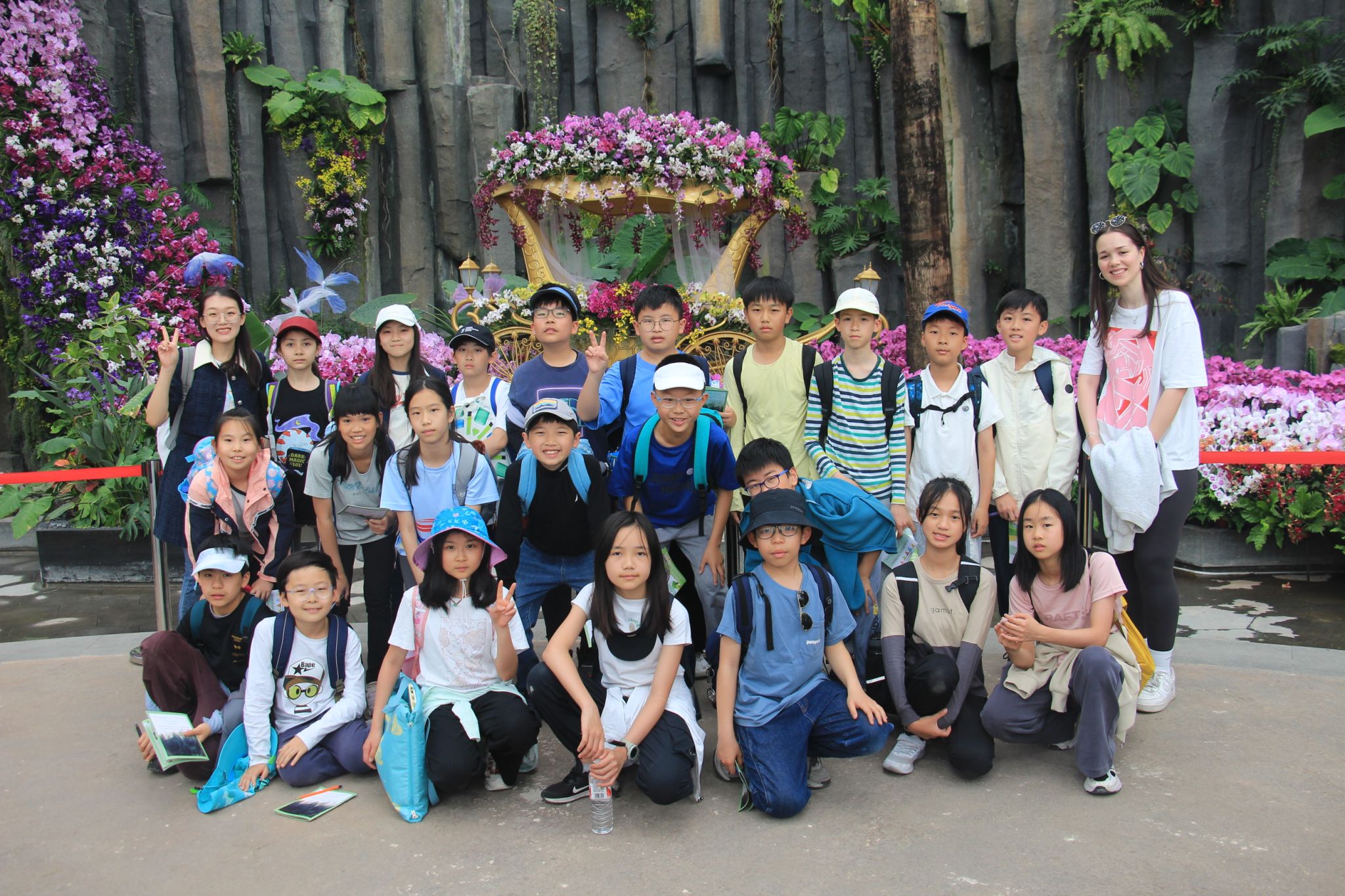
The Clouds Canyon, bursting with color and fragrance, offered a more poetic experience. With orchids cascading from trellises and daffodils blooming in carefully arranged floral beds, the conservatory became a multisensory lesson in springtime beauty. Coinciding with the school’s Chinese Culture Week, the space became a setting for classical poetry. Teachers invited students to pair their observations with verses. This unique blend of science and literature transformed the field trip into a living lesson in both natural science and cultural heritage.
Scaling Twin Hills: Engineering Meets Ecology
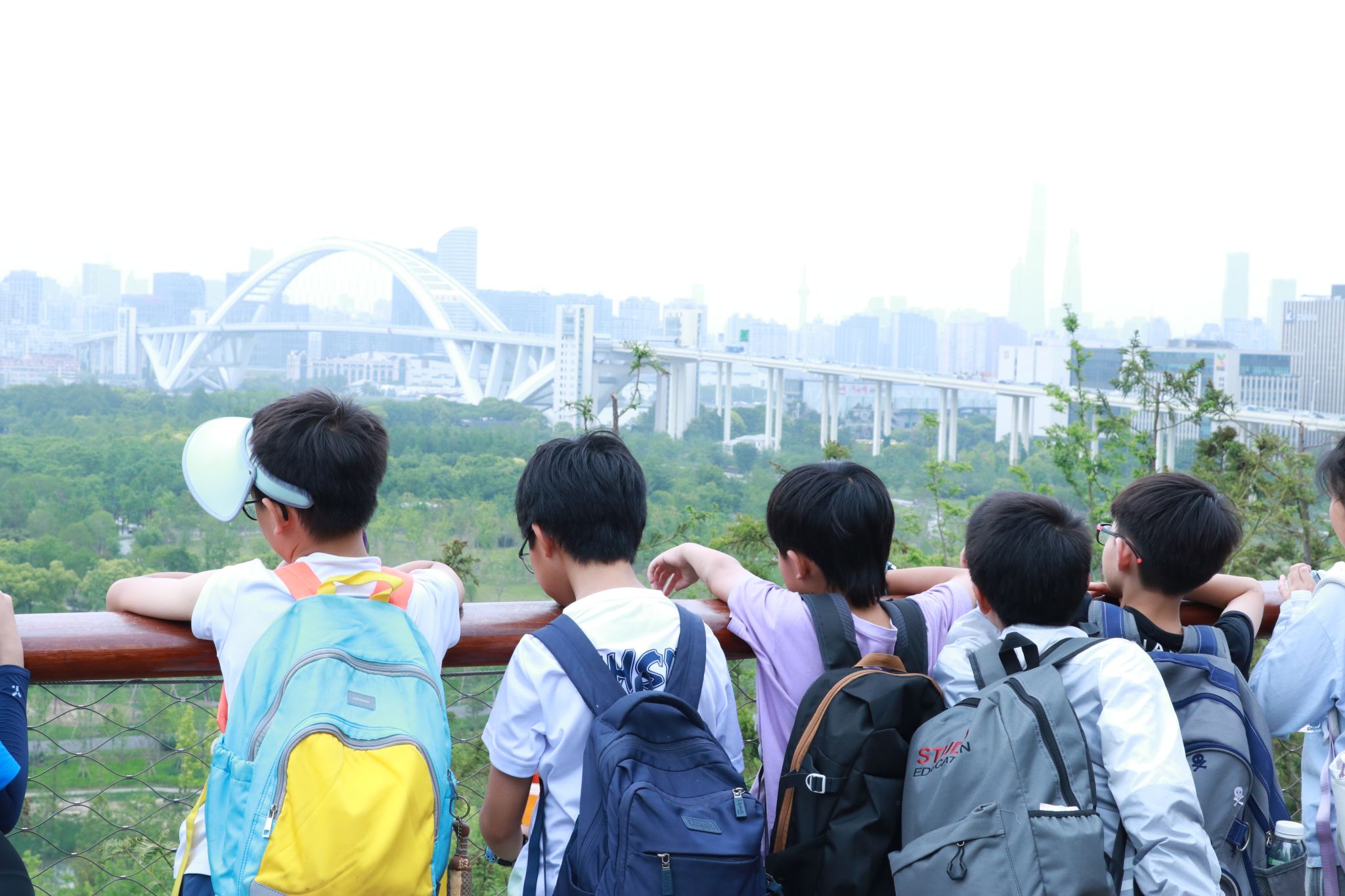
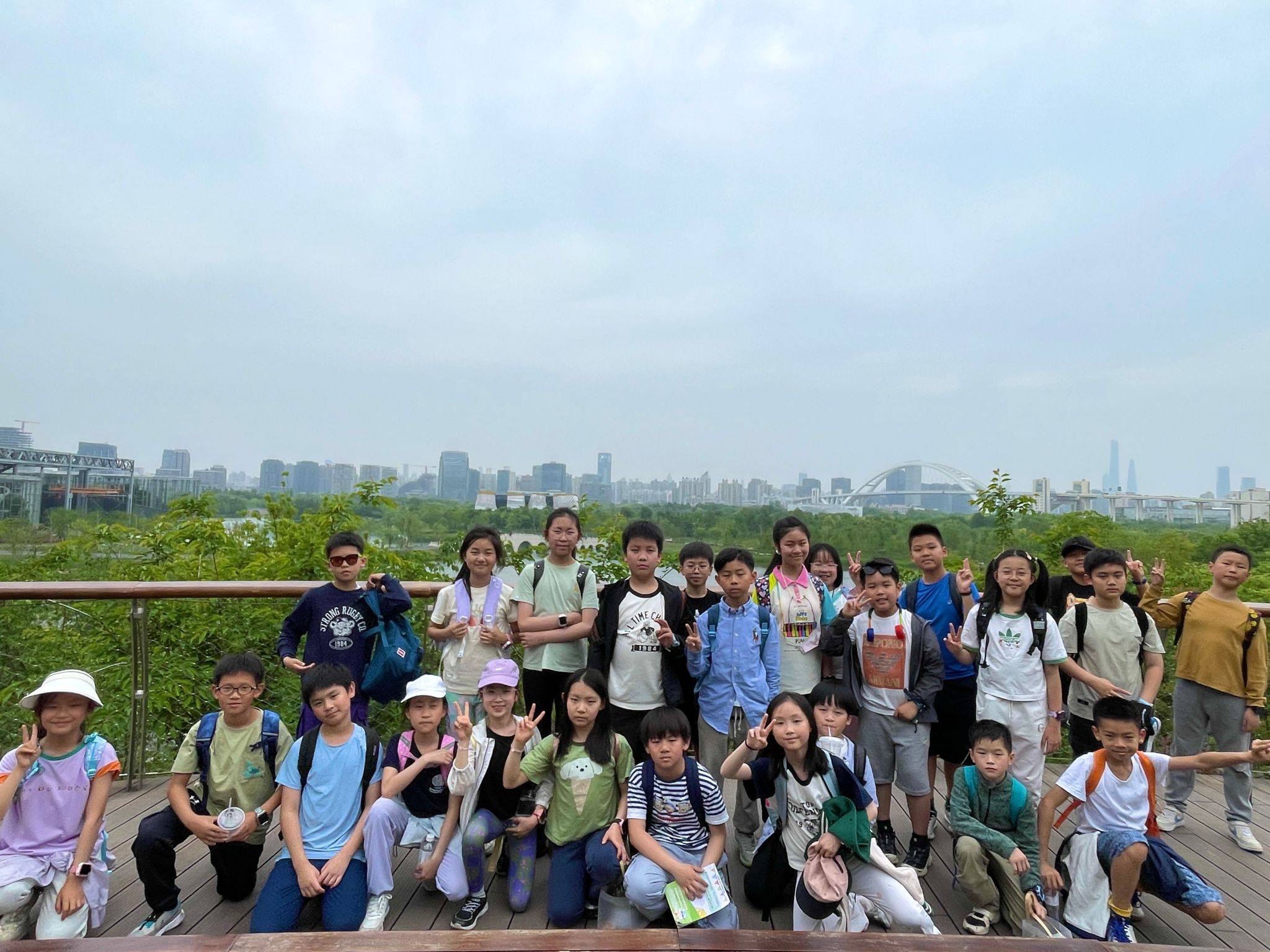
In the afternoon, students hiked Twin Hills, China’s first artificial hollow-core mountain structure. But how can modern technology mimic the structure and function of natural landscapes? Students made keen observations about the design of the hills as they climbed. They noticed the layered stonework, integrated drainage systems, and strategically planted vegetation—features that were not merely aesthetic, but engineered to replicate natural geological and ecological systems. The realization that porous stone supported both structural integrity and plant growth revealed the sophistication of ecological design. At the summit, the view opened to the lush expanse of Expo Culture Park, framed by the winding Huangpu River and Shanghai’s skyline beyond. It was here that students truly grasped how Twin Hills, by integrating biological insight with engineering innovation, reimagined the possibilities for ecological restoration in dense urban environments.
The field study may have ended at sundown, but its impact lingered. Back in the classroom, students continued to reflect and create. Some meticulously illustrated the fine structures of plants in their nature journals, while others proposed designs for future eco-cities, suggesting vertical gardens for overpasses or sustainable rooftop ecosystems. A few even imagined life as a plant… In these reflections, we see the true power of experiential learning. When a cactus’s survival strategy moves a student, or a conversation about urban greening sparks a new idea, education becomes not just the transfer of knowledge, but the awakening of empathy, creativity, and responsibility.
Written by Teng Chen
Pictures/Video by Minxuan Cao, G4-5 Homeroom Teachers
Edited by Cong Luo
Reviewed by Luting Lu, Chenli Shen, Cong Luo