-
ABOUT US
-
ACADEMICS
Curriculum Program
Departments
- English
- High School Chinese
- Primary and Junior School Chinese.
- High School Mathematics
- Middle School Mathematics
- Primary School Mathematics
- Music and Fine Arts
- Physical Education
- Physics
- Chemistry
- History and Geography
- Physical Science and Optional courses Department
- Middle School Biology
- High School Biology
- Social Sciences
- Computer Science
- Courses in Primary School
Achievements and Matriculations
College Counseling
Science & Technology Innovation Contest
Subject Competition
-
ARTS
-
ATHLETICS
-
AT SHSID
SHSID ∣ TIMES
PTSA
Club Exhibition
- 龙吟社
- Live 2 Drama
- Choir
- Hip-pop Dance Club
- The Primary School Dance Troupe
- Symposiums Club
- Biology Workshop
- You Shan
- VEX Robotic
- Peking Opera Club
- Baseball Club
- Model United Nations
- The World Scholar’s Cup
- Future Problem Solving Club
- United States Academic Pentathlon
- OM Club
- AMC Club
- Music for Patients
- SHSID Gazette
- Smile Charity
- Cultural Moments
- SciAcademy
- Stem Doge Alliance
- Chinese Debate Club
- IAA
- Mock Trial Club
- Zhengming Club
- Furry Friends
- GT-Racing
- Village Radio
- IMMC Club
- Creative Design and Intelligent Fabrication
- Future City Research Project
- ECOCAP
- AdvocaSEA
- SPDC
- Medishine
- Floorball Club
- Animusic MTC
- Wings Up
- All Booked
- Cyano
- Birding Community
Health and Wellness
Campus Safety
Cafeteria Service
-
ADMINISTRATION
-
ADMISSIONS
-
ALUMNI
Alumni Information
Honors Students
- Class of 2025
- Class of 2024
- Class of 2023
- Class of 2022
- Class of 2021
- Class of 2020
- Class of 2019
- Class of 2018
- Class of 2017
- Class of 2016
- Class of 2015
- Class of 2014
- Class of 2013
- Class of 2012
- Class of 2011
- Class of 2010
- Class of 2009
- Class of 2008
- Class of 2007
- Class of 2006
Who Studied at SHSID
SHS Foundation
-
DOCUMENTS
History and Geography Department: Witnessing the Turmoil at the Fall of the Byzantine Empire : History Demo Class during the Open Week
On the morning of November 24, Mr. Cody Turner gave a demo class titled “The Fall of the Byzantine Empire.” This student-centered session featured integrated artificial intelligence for historical role- interview and event reconstruction, followed by reflective discussions. Through vivid historical reenactments and multi-perspective character analyses, the lesson aimed to help students grasp the far-reaching implications and consequences of Byzantium's demise.
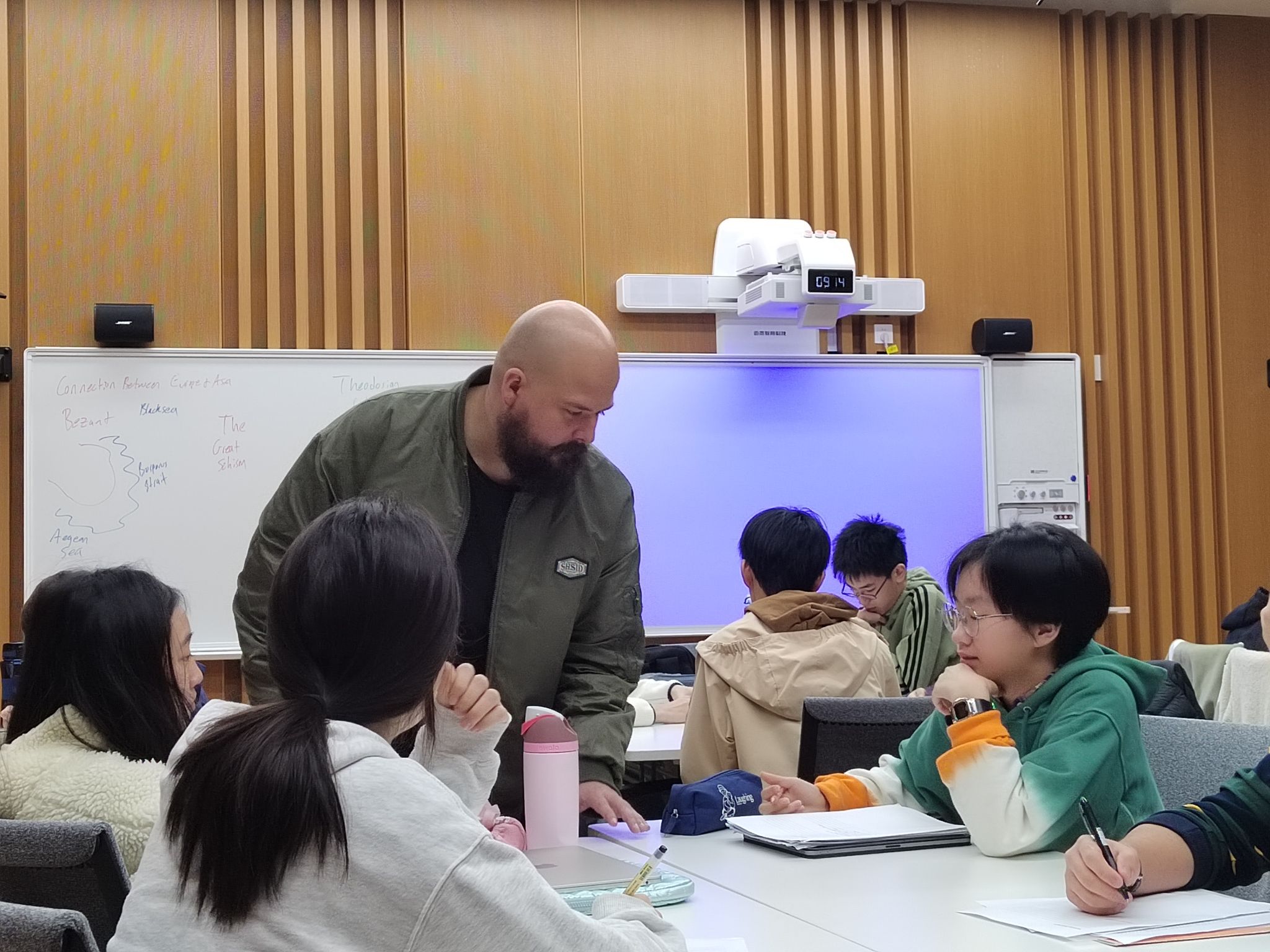
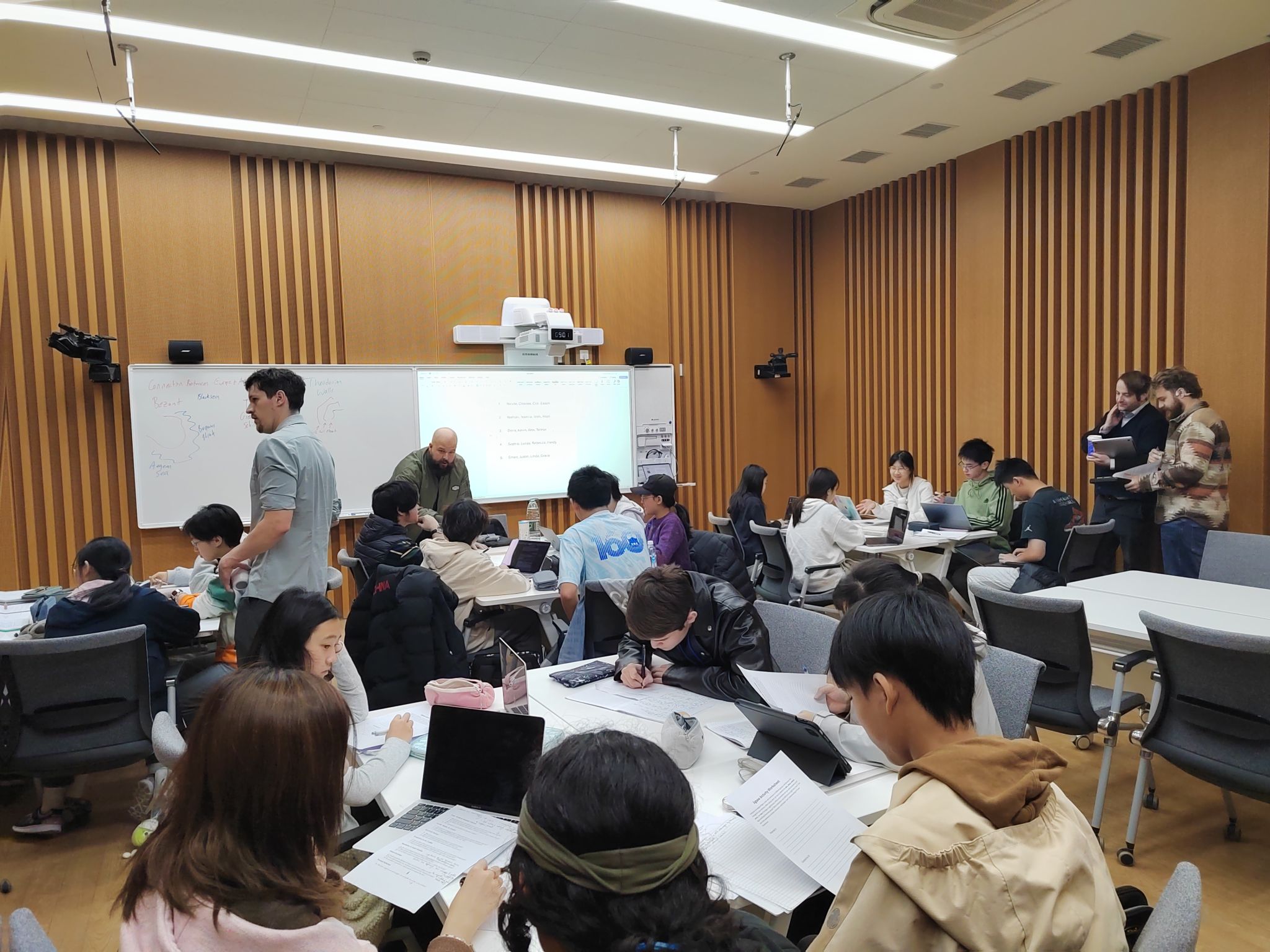
Before class, Mr. Turner had assigned group tasks, requiring each group of students to conduct preliminary simulated interviews using AI based on their assigned historical figures (Mehmet II, Constantine XI, a Venetian merchant, and an Ottoman Janissary). They were asked to imagine themselves on May 28, 1453, reflecting on their feelings and the reasons behind them. During class, students reorganized their discussions based on their pre-class research. Each mixed group exchanged perspectives from four distinct viewpoints, gaining a comprehensive understanding of the historical event. During discussions, it became evident that while students obtained numerous answers from AI interviews, they did not passively accept these results. Instead, they questioned the accuracy of the material and traced the sources of the information. Sharing diverse perspectives further intensified the tangible impact of the historical event, transforming the fall of the Byzantine Empire from a dry marker of medieval history into a vivid narrative woven from living individuals. Students gained profound insights through these exchanges.
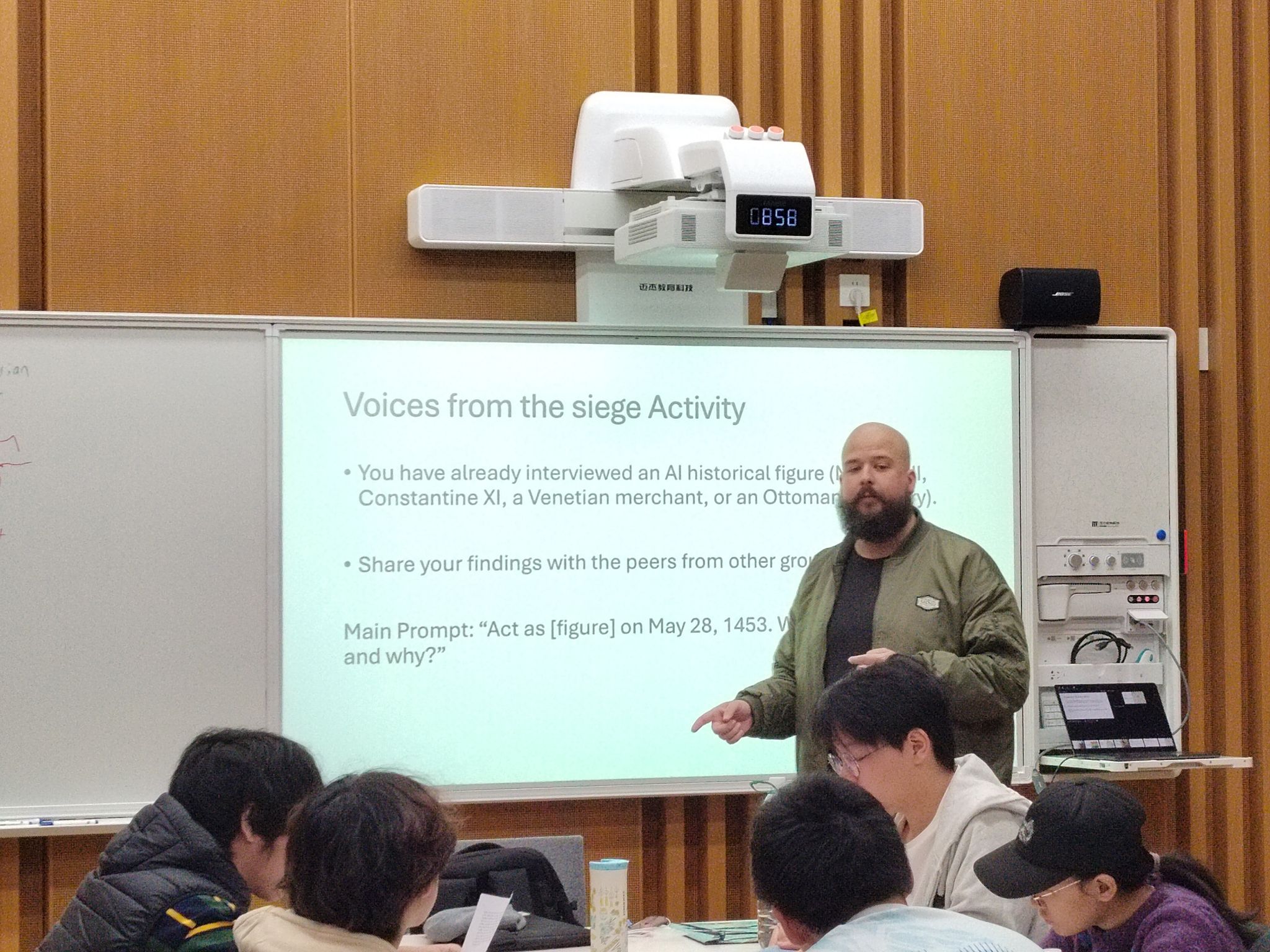
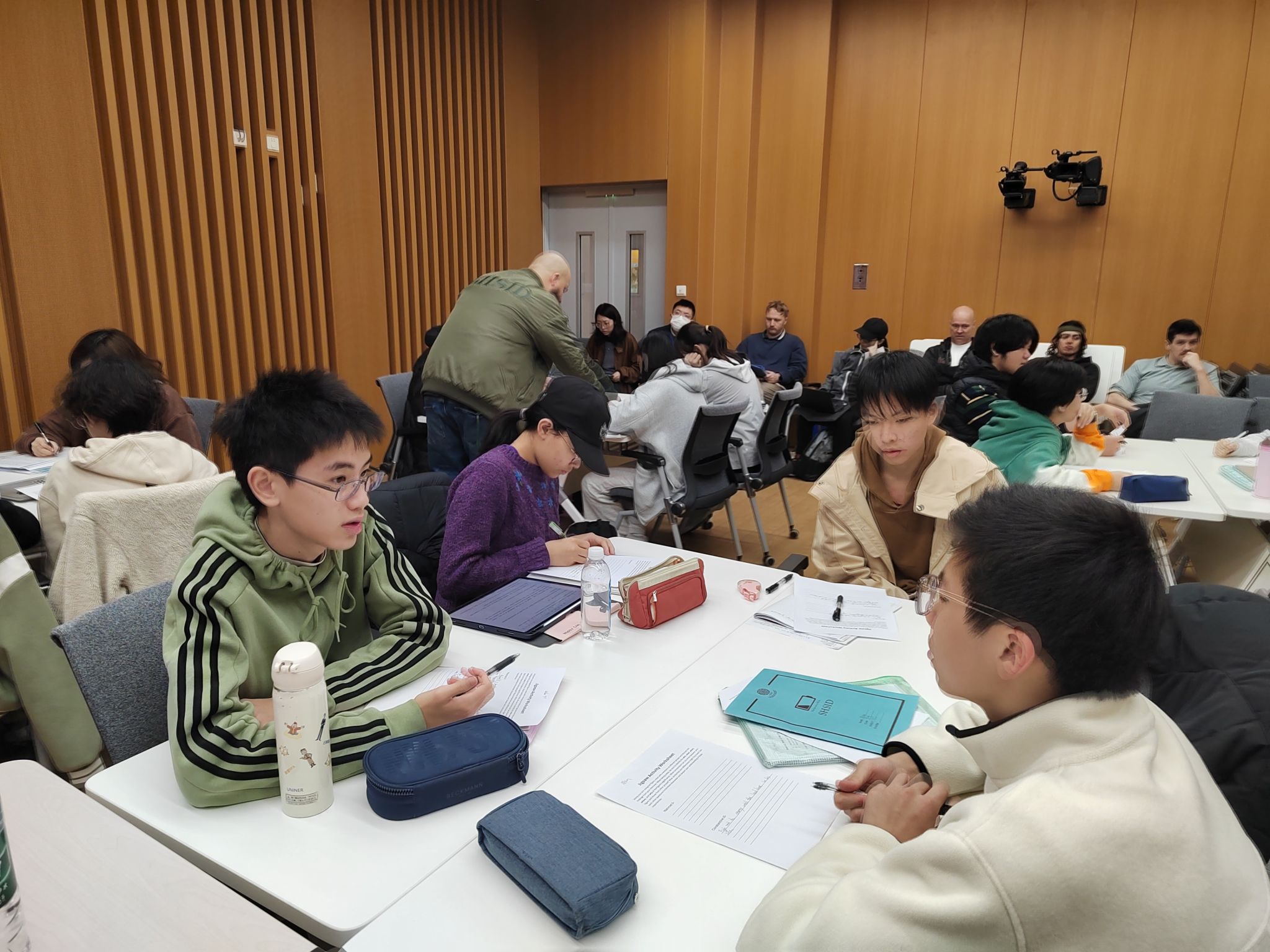
This open history class for Grade 9 students, underwent multiple rounds of refinement through discussions among the teaching group and the entire History and Geography Department. The final class presentation represents the culmination of collective wisdom. This history open class also saw Mr. Turner fully harnessing students' initiative. By integrating AI technology to stimulate learning enthusiasm and critical thinking, and using role-playing and event reconstruction to enhance inquiry engagement, he maximized the creation of a beneficial learning environment. This approach helped students understand, reflect on, and share new knowledge, making it a successful experiment filled with both challenges and surprises.
(Written by Shen Zhou Pictures by Yunuo Li Reviewed by Qian Zuo)