-
ABOUT US
-
ACADEMICS
Curriculum Program
Departments
- English
- High School Chinese
- Primary and Junior School Chinese.
- High School Mathematics
- Middle School Mathematics
- Primary School Mathematics
- Music and Fine Arts
- Physical Education
- Physics
- Chemistry
- History and Geography
- Physical Science and Optional courses Department
- Middle School Biology
- High School Biology
- Social Sciences
- Computer Science
- Courses in Primary School
Achievements and Matriculations
College Counseling
Science & Technology Innovation Contest
Subject Competition
-
ARTS
-
ATHLETICS
-
AT SHSID
SHSID ∣ TIMES
PTSA
Club Exhibition
- 龙吟社
- Live 2 Drama
- Choir
- Hip-pop Dance Club
- The Primary School Dance Troupe
- Symposiums Club
- Biology Workshop
- You Shan
- VEX Robotic
- Peking Opera Club
- Baseball Club
- Model United Nations
- The World Scholar’s Cup
- Future Problem Solving Club
- United States Academic Pentathlon
- OM Club
- AMC Club
- Music for Patients
- SHSID Gazette
- Smile Charity
- Cultural Moments
- SciAcademy
- Stem Doge Alliance
- Chinese Debate Club
- IAA
- Mock Trial Club
- Zhengming Club
- Furry Friends
- GT-Racing
- Village Radio
- IMMC Club
- Creative Design and Intelligent Fabrication
- Future City Research Project
- ECOCAP
- AdvocaSEA
- SPDC
- Medishine
- Floorball Club
- Animusic MTC
- Wings Up
- All Booked
- Cyano
- Birding Community
Health and Wellness
Campus Safety
Cafeteria Service
-
ADMINISTRATION
-
ADMISSIONS
-
ALUMNI
Alumni Information
Honors Students
- Class of 2025
- Class of 2024
- Class of 2023
- Class of 2022
- Class of 2021
- Class of 2020
- Class of 2019
- Class of 2018
- Class of 2017
- Class of 2016
- Class of 2015
- Class of 2014
- Class of 2013
- Class of 2012
- Class of 2011
- Class of 2010
- Class of 2009
- Class of 2008
- Class of 2007
- Class of 2006
Who Studied at SHSID
SHS Foundation
-
DOCUMENTS
Lin'gang Campus: Science Fair
From November 26 to 27, SHSID Lin'gang Campus hosted its annual Science Fair. Centered on the theme "Explore · Innovate · Practice," the event featured three major components: a student science exhibition, a showcase of the bipedal bionic robot "Xueba 01," and a hands-on workshop in sailor's knot weaving. The festival buzzed with excitement as students immersed themselves in activities that brought together science, technology, and traditional craftsmanship— highlighting the rich possibilities of interdisciplinary learning.
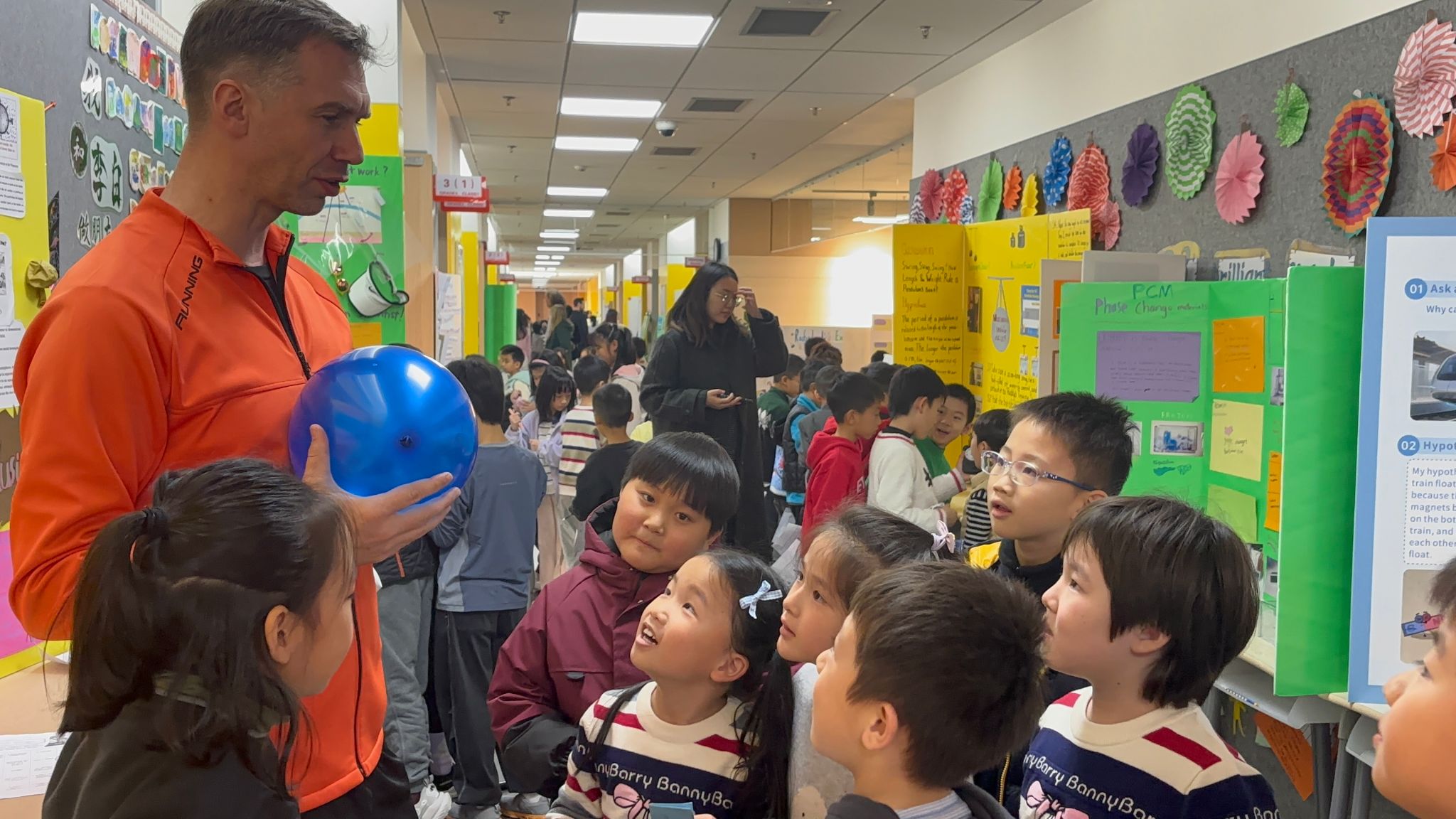
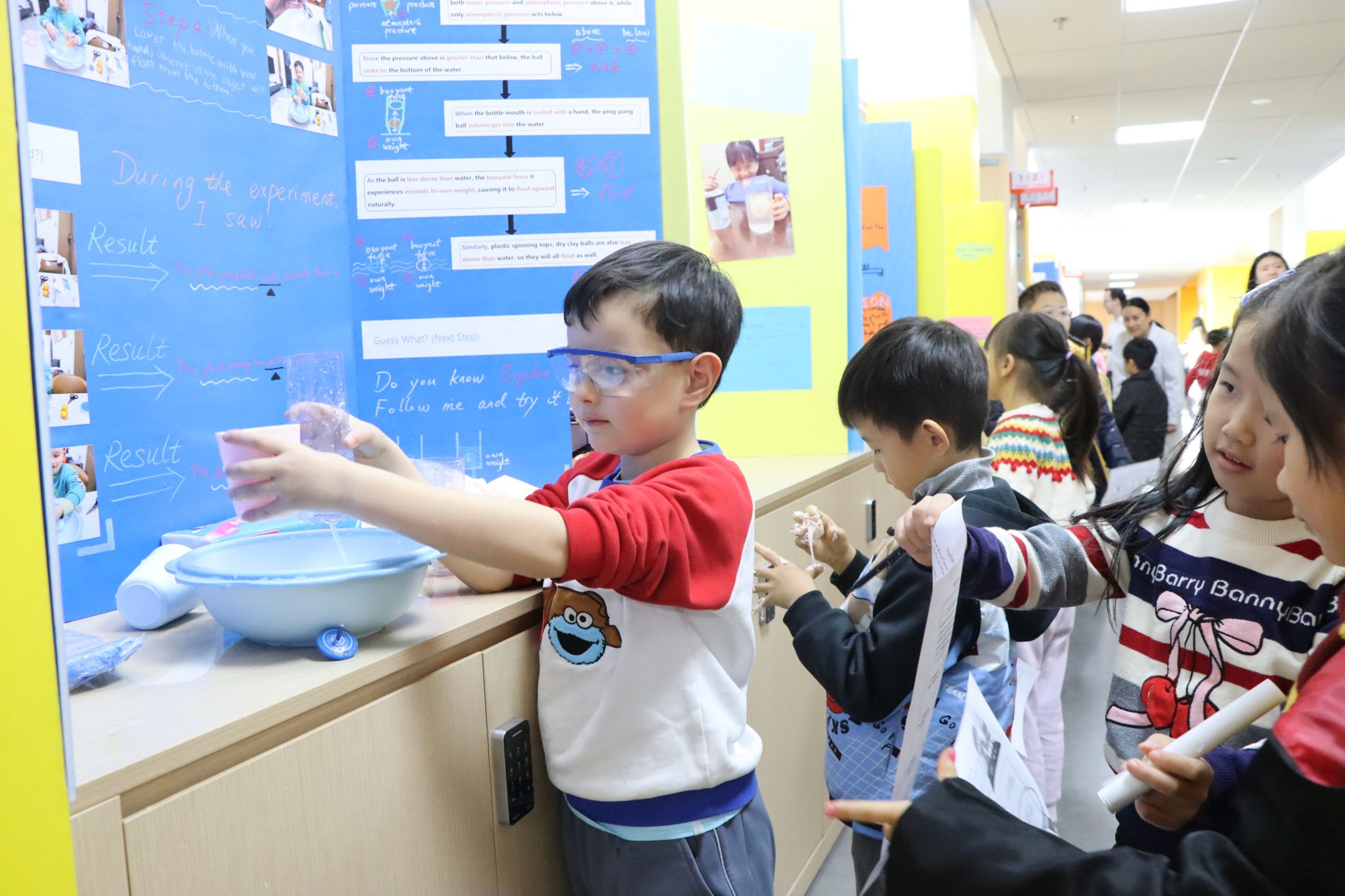
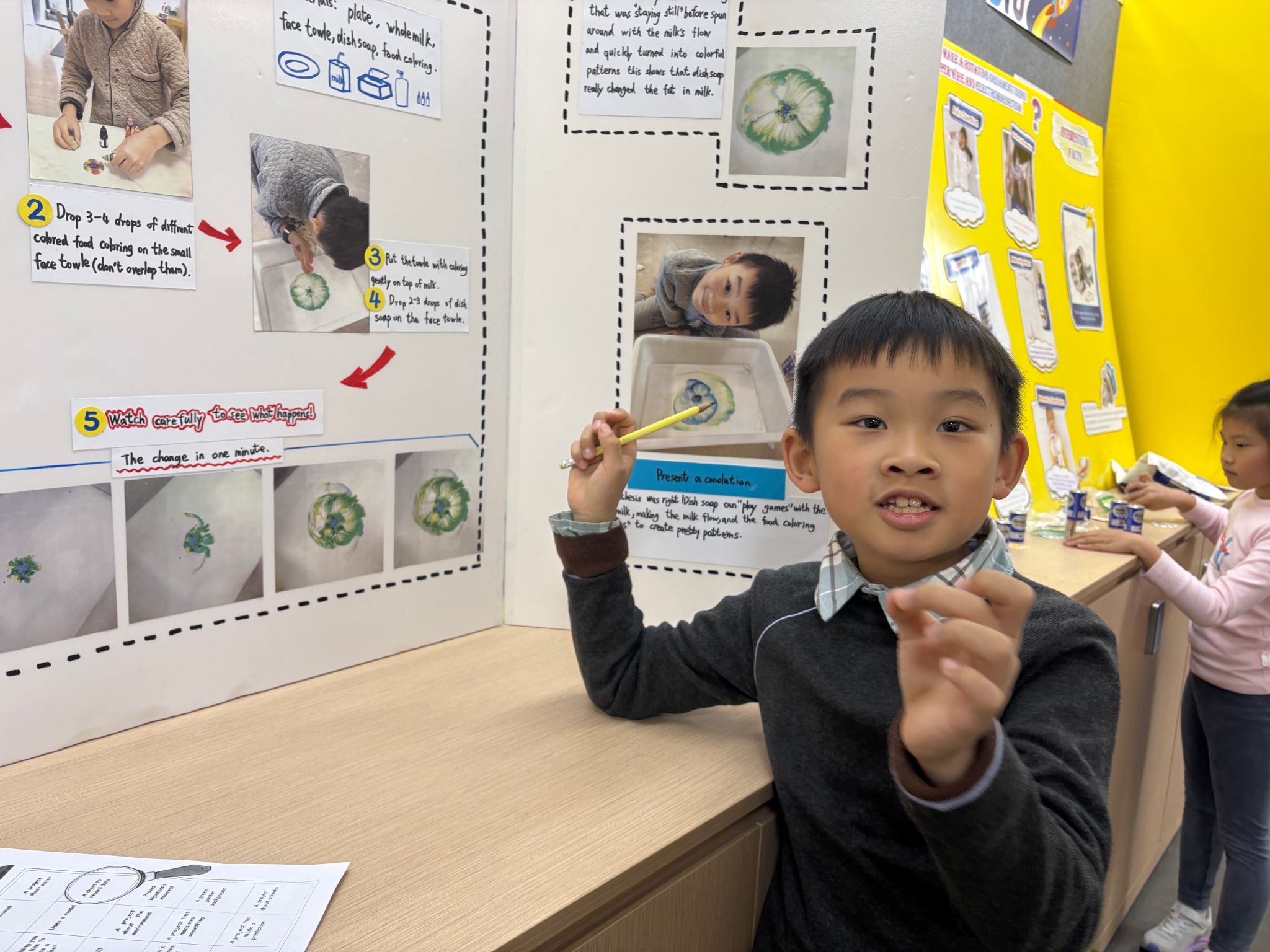
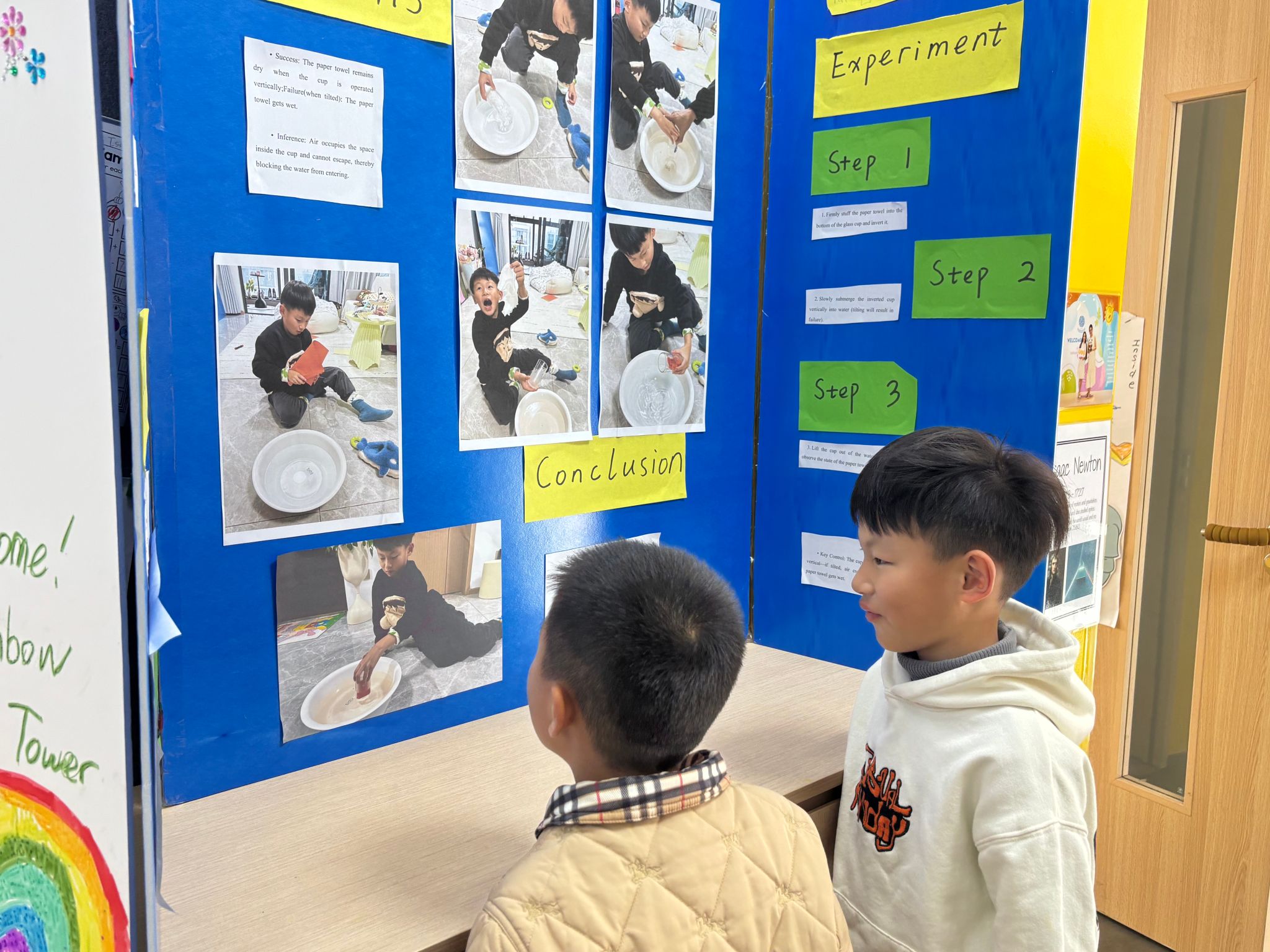
Young Scientists Take the Stage: Letting Questions "Bloom" Through Experiments
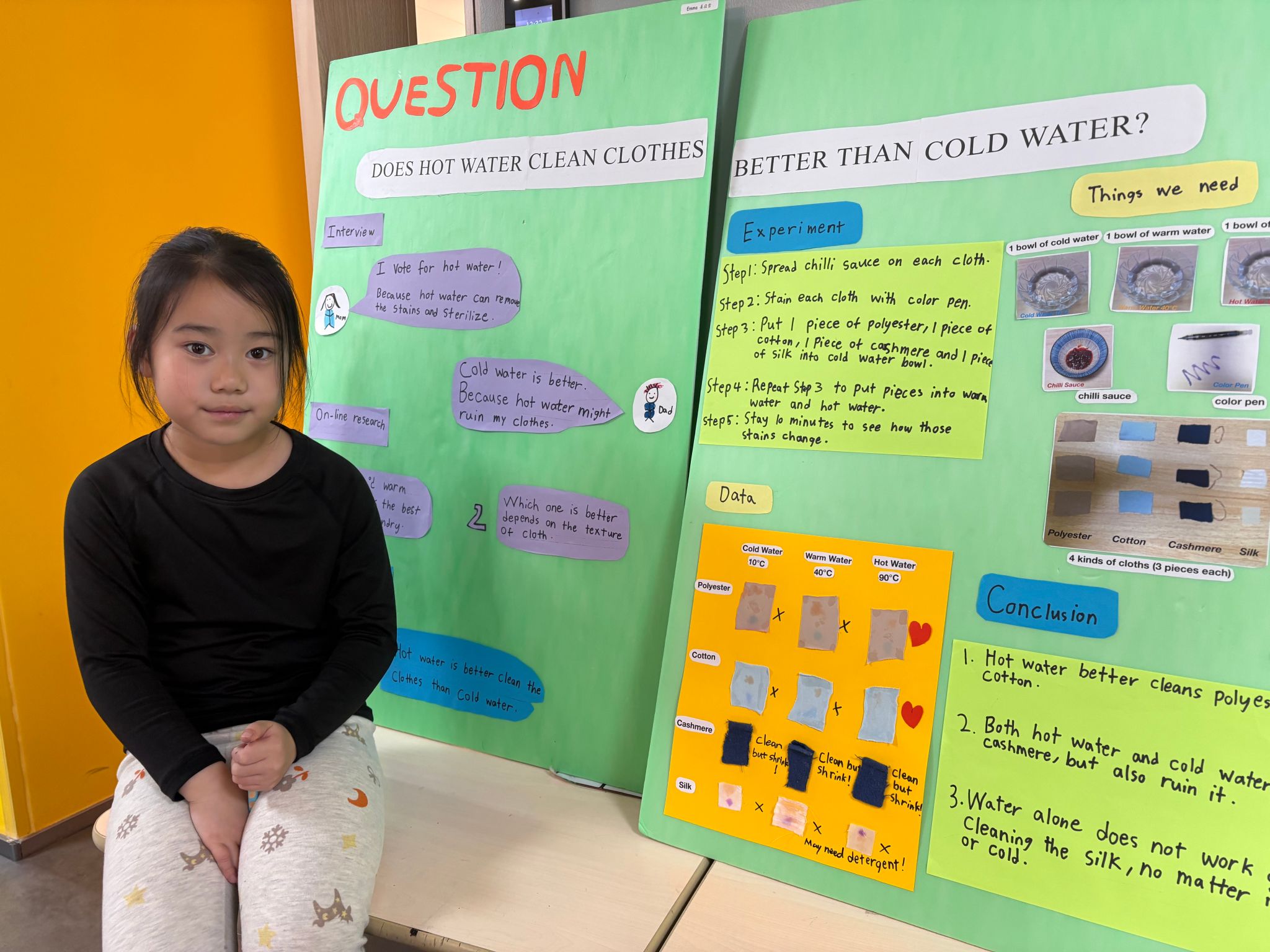
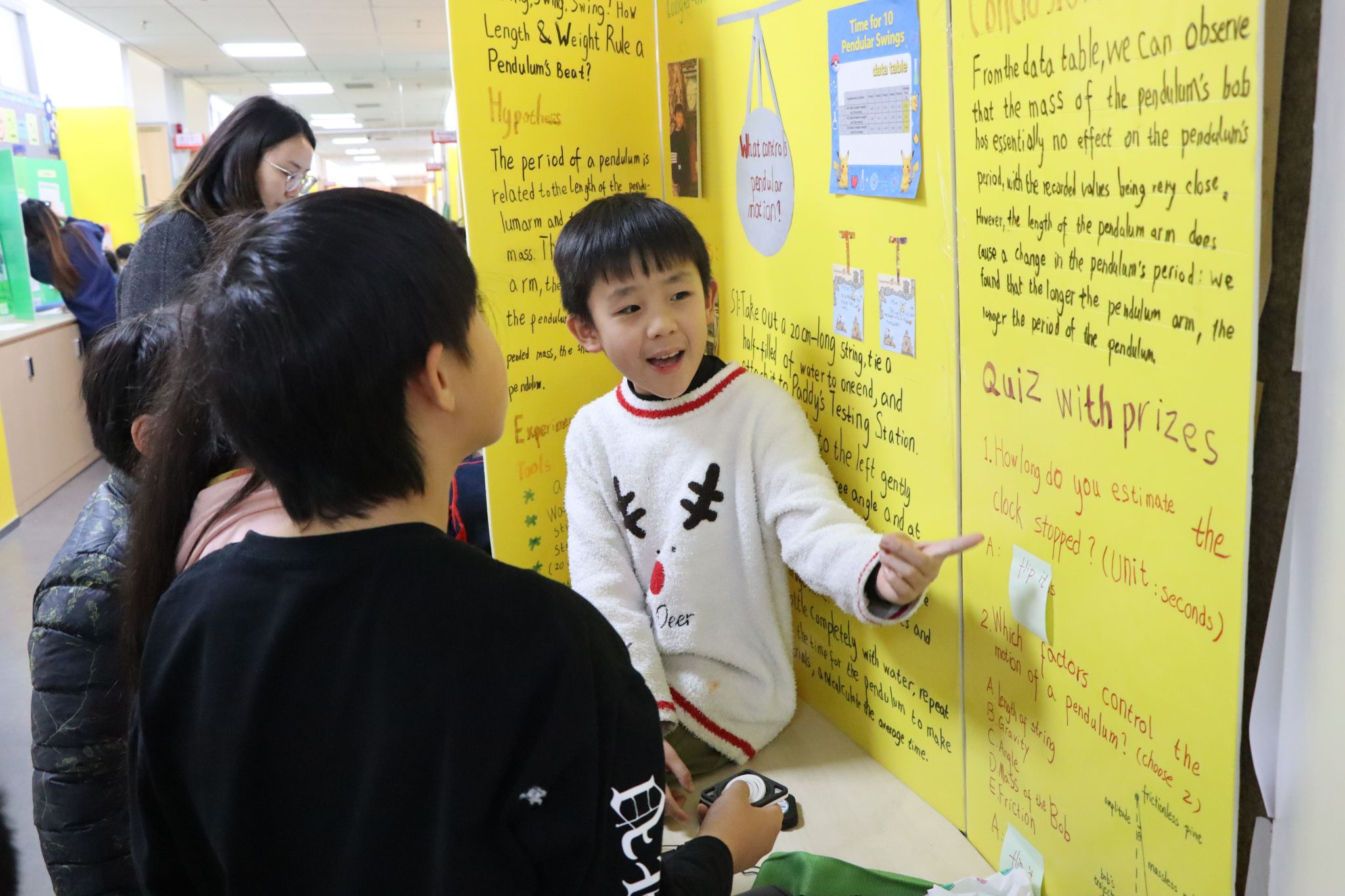
On the afternoon of November 26, students from Grades 1 to 3 arrived with meticulously prepared experiment posters to present the results of their scientific inquiries. From "Do plants need light to grow?" to "Which material absorbs water the fastest?" the students designed experiments grounded in everyday observations and closely followed each step of the scientific method— generating questions, conducting research, forming hypotheses, and analyzing experiments to draw insightful conclusions. Their posters were filled with photos, charts, and data tables; some even added 3D models to bring their findings to life. One second-grade student proudly explained her results to visiting classmates: "I thought the plant in sugar water would grow fastest, but the one in plain water grew best. Too much sugar makes it hard for the roots to take in water." Her earnest explanation earned warm applause. Mr. Tansey, the main organizer of Lin'gang Campus Science Fair, noted, "Through scientific experimentation, students not only learn how science works, but also strengthen their communication and logical reasoning skills." Each class selected two "Most Popular Experiments," and three students received the campus-wide "Best Science Experiment Award."
Future Technology, Here and Now: A Close-Up Encounter With a Bionic Robot
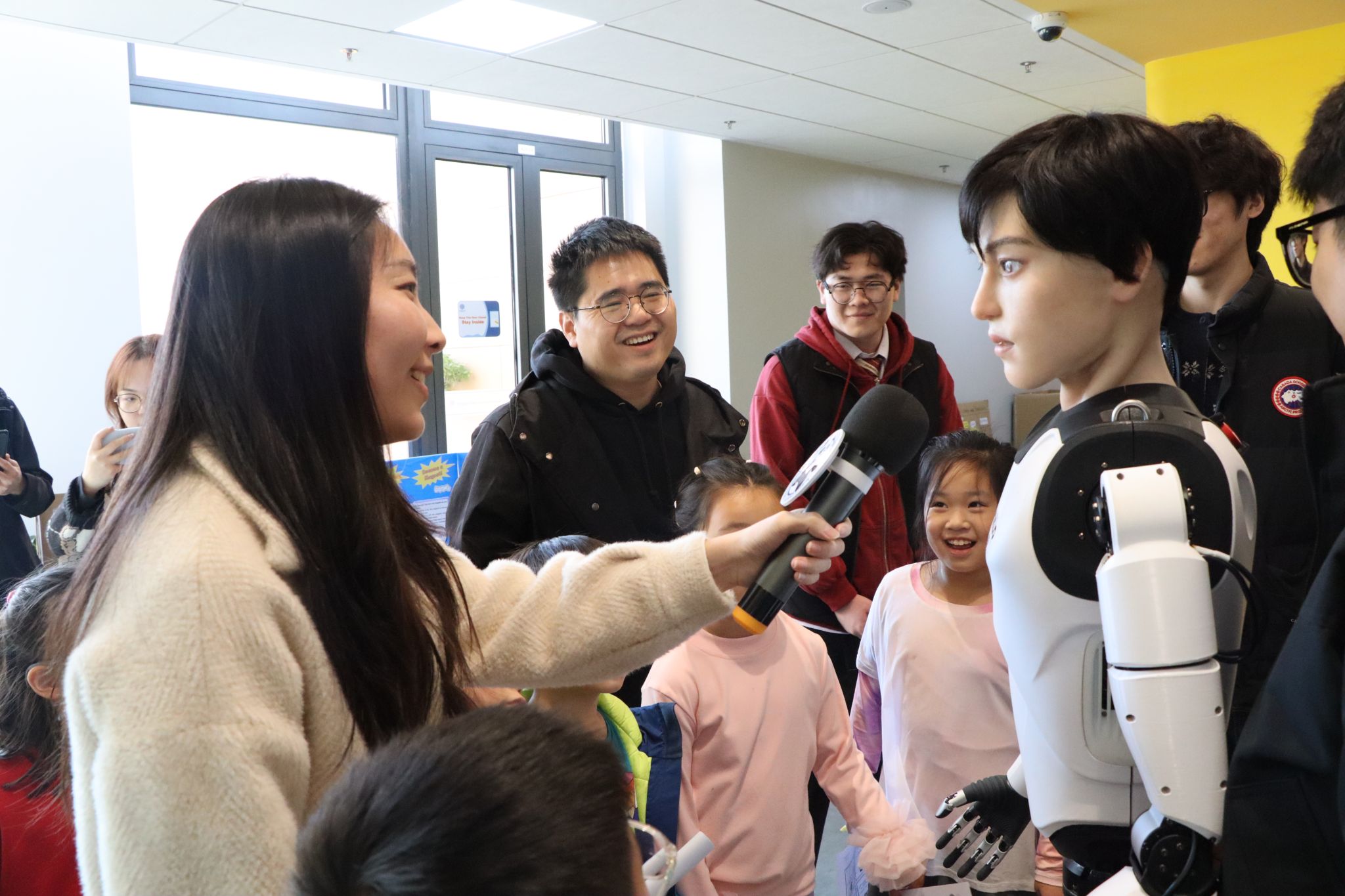
One of the Science Fair's biggest highlights was the appearance of "Xueba 01," a bipedal bionic humanoid robot developed by the joint Bionic Robotics Lab of SHS and University of Shanghai for Science and Technology. Recognized as China's first robot "doctoral student," "Xueba 01" "enrolled" at the Shanghai Theatre Academy this September and made its first visit to a K-12 campus during this event. Equipped with silicone skin, tendon-mimicking structures, and cameras embedded in its eyes, the robot can simulate human expressions and interact with observers. During the demonstration, "Xueba 01" performed a series of actions— including weaving through cones, squatting, and waving— and engaged in simple voice-based interactions through a preset system. When a student asked, "Can you do homework?" "Xueba 01" responded, "I practice walking and facial expressions every day— does that count as homework?" triggering laughter across the room. A member of the robotics team explained in an interview, "We want students to see that technology isn't distant or cold. It has the potential to enrich education, art, and daily life. The future belongs to young innovators who are willing to imagine boldly and act courageously."
Bringing Maritime Culture to Campus: Weaving Traditions With Young Hands
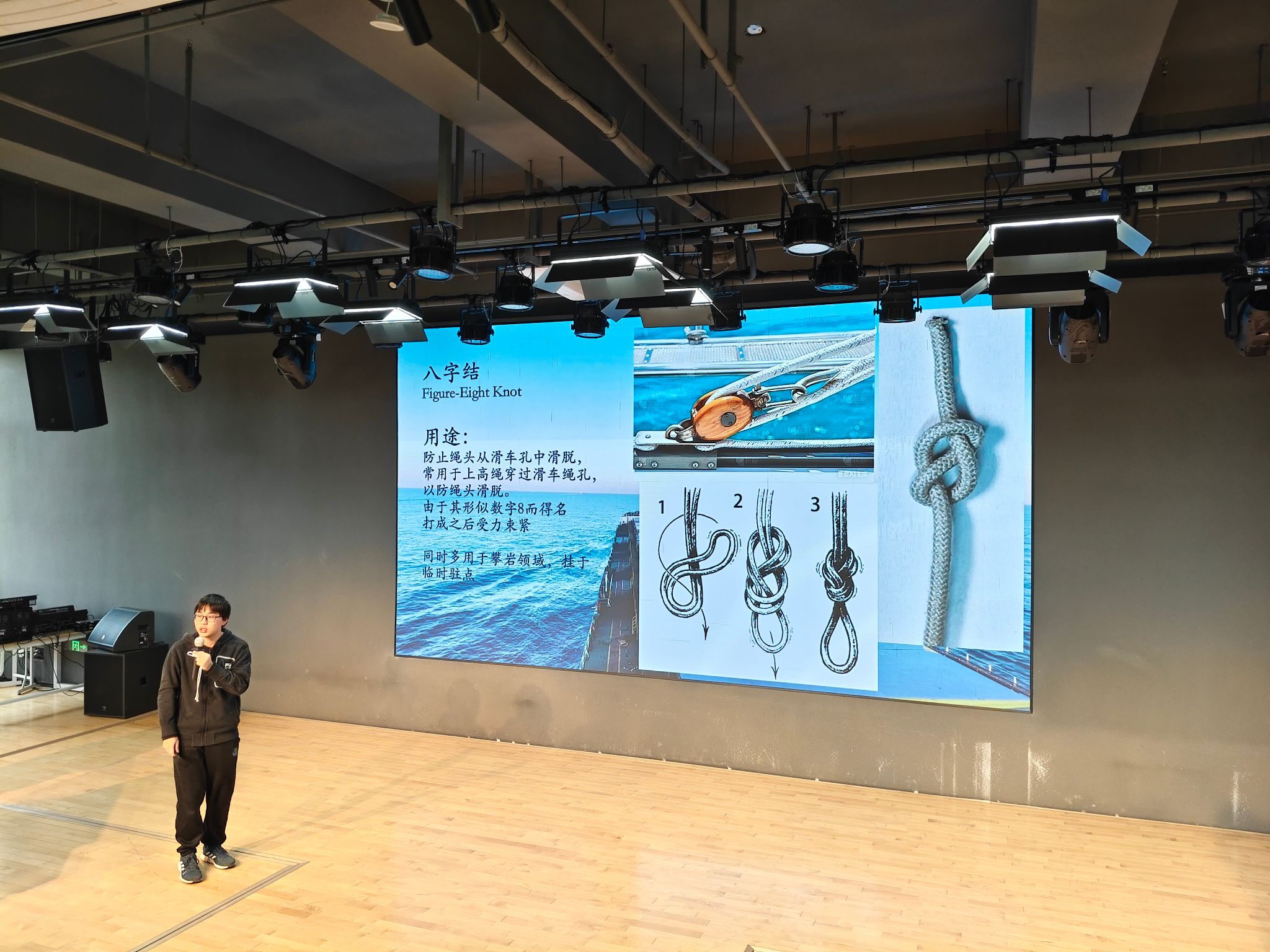
On the afternoon of November 27, the Science Fair continued with a special workshop for Grade 3 students— a sailor's knot weaving activity presented by 8 members of the Sailor Craft Club from the Merchant Marine College of Shanghai Maritime University. The workshop featured three parts: an introduction to the history and uses of sailor's knots, a group demonstration of basic techniques, and hands-on practice. With guidance from the club members, students learned to tie foundational knots such as the figure-eight knot and the reef knot. "I did it!" one third-grader cheered as she held up the knot she had finally mastered, drawing admiration from her peers. Another student exclaimed, "I can use this when I go camping!" At the end of the session, the club leader shared, "Maritime culture is an important part of China's heritage. We hope that through these hands-on activities, children can understand why exploration and practical skills matter so much at sea."
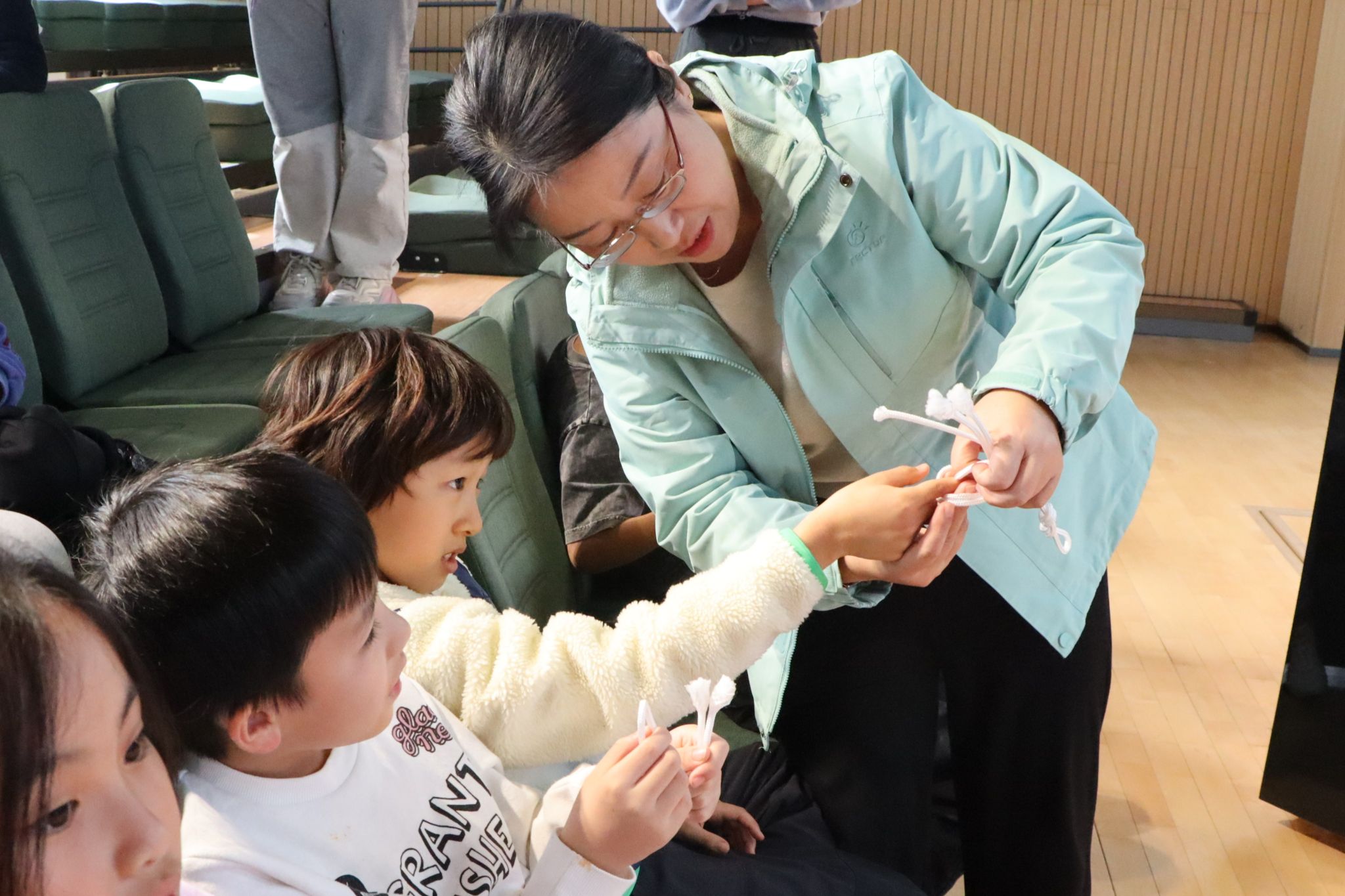
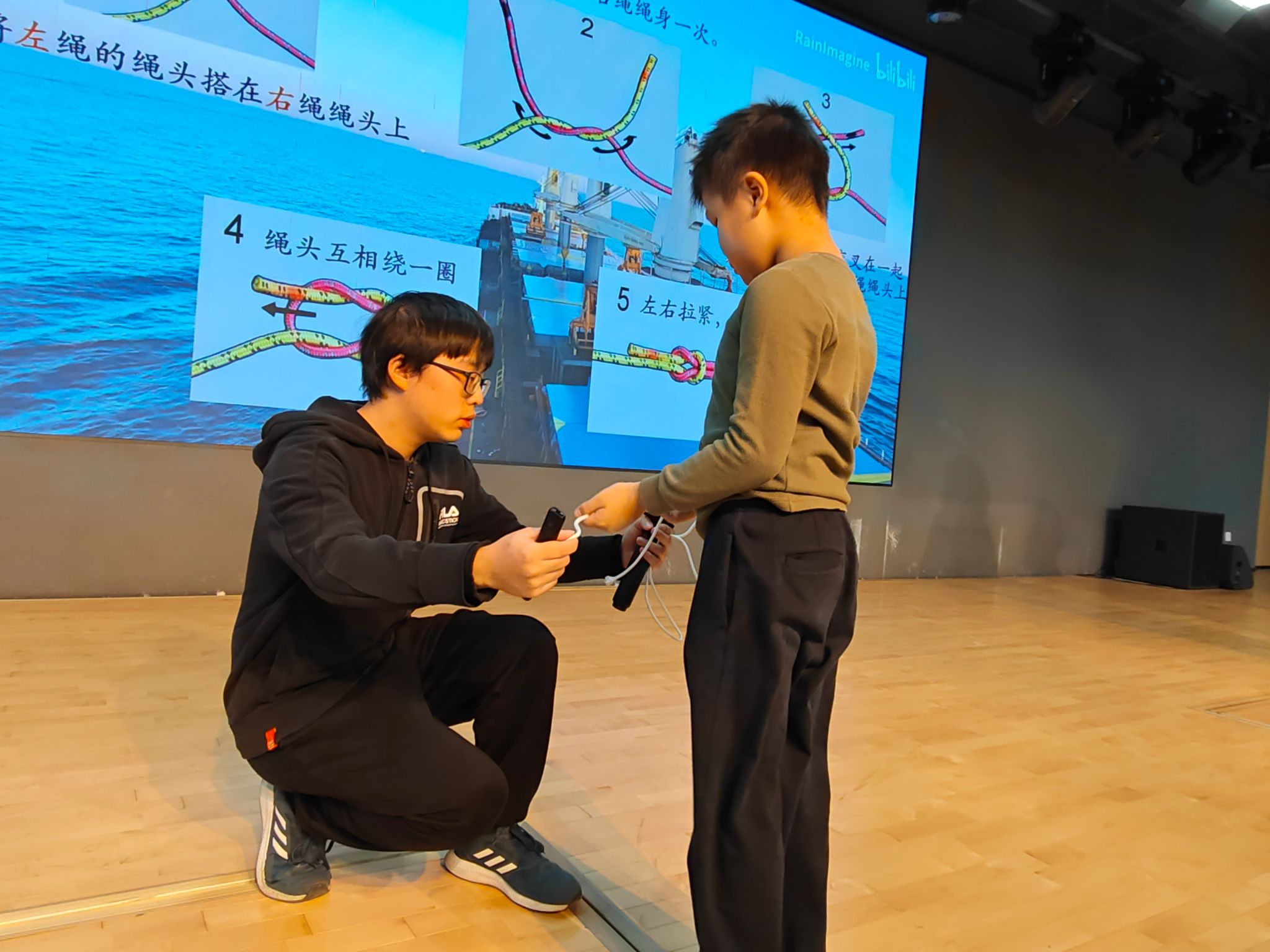
This year's Science Fair not only offered students a platform to showcase their scientific creativity, but also allowed them to experience cutting-edge technology and traditional crafts up close. They learned to think critically through experiments, glimpsed the future through interactions with a bionic robot, and connected with tradition through knot-tying. This, in essence, is what education should be: inspiring, experiential, and transformative. Looking ahead, SHSID Lin'gang Campus will continue to foster curiosity, ignite innovation, and strengthen scientific literacy through diverse, open, and interdisciplinary learning opportunities.
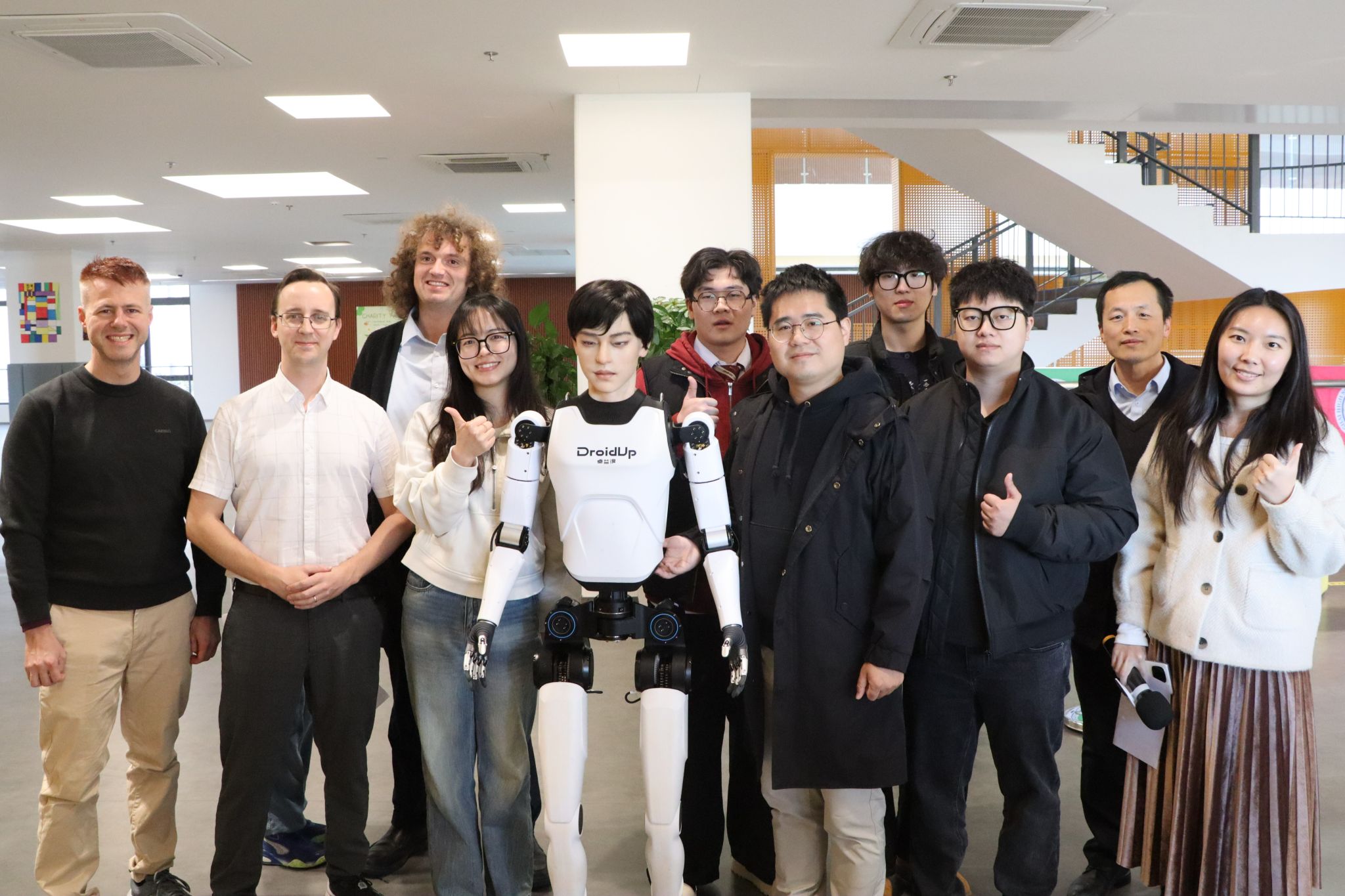
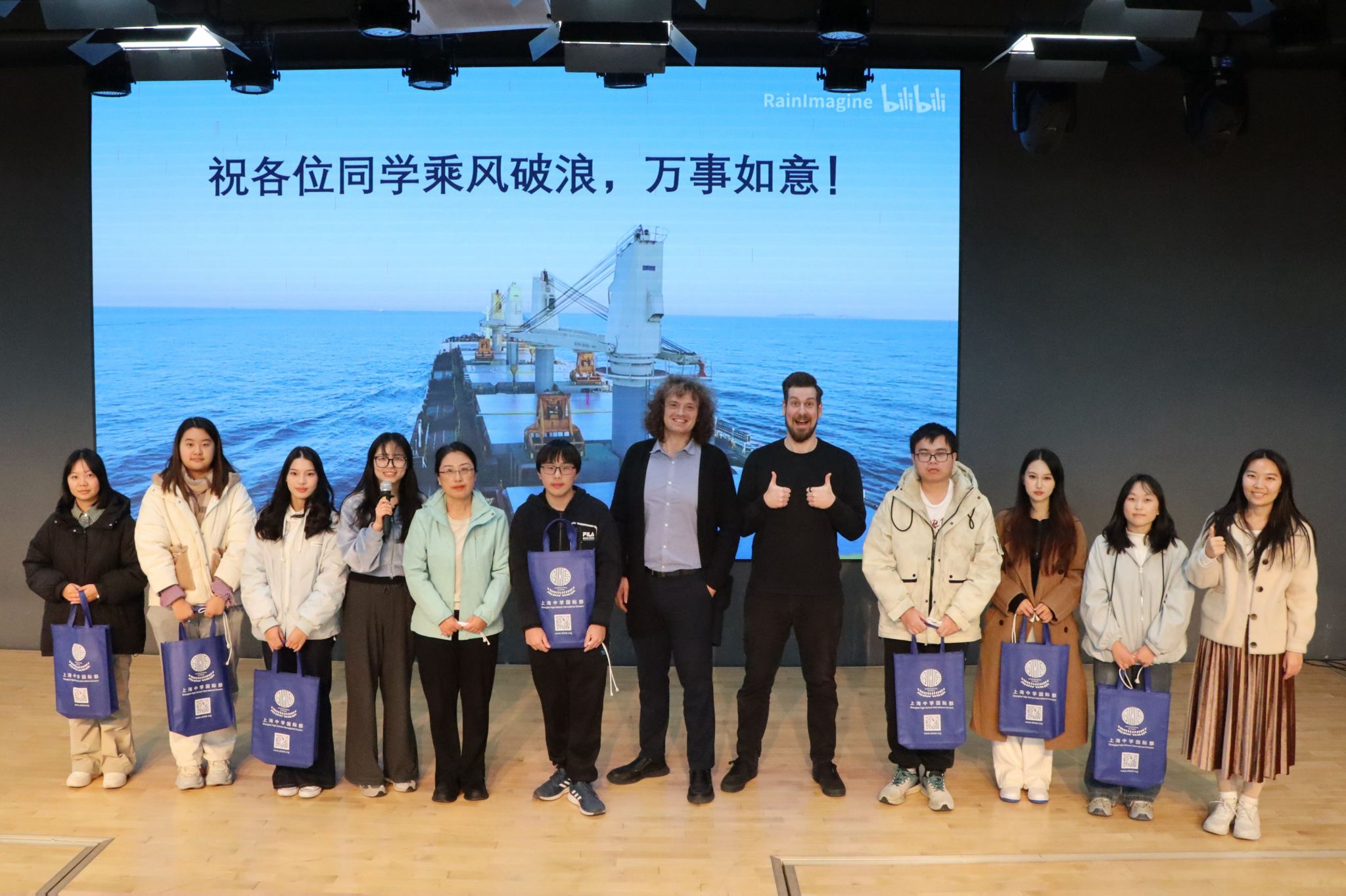
(Written by Izabela Wang
Pictures by Chun'ai Xu, homeroom teachers
Reviewed by Ms. Fu Bing, Shiyu Wu, Louie Parker)