-
ABOUT US
-
ACADEMICS
Curriculum Program
Departments
- English
- High School Chinese
- Primary and Junior School Chinese.
- High School Mathematics
- Middle School Mathematics
- Primary School Mathematics
- Music and Fine Arts
- Physical Education
- Physics
- Chemistry
- History and Geography
- Physical Science and Optional courses Department
- Middle School Biology
- High School Biology
- Social Sciences
- Computer Science
- Courses in Primary School
Achievements and Matriculations
College Counseling
Science & Technology Innovation Contest
Subject Competition
-
ARTS
-
ATHLETICS
-
AT SHSID
SHSID ∣ TIMES
PTSA
Club Exhibition
- 龙吟社
- Live 2 Drama
- Choir
- Hip-pop Dance Club
- The Primary School Dance Troupe
- Symposiums Club
- Biology Workshop
- You Shan
- VEX Robotic
- Peking Opera Club
- Baseball Club
- Model United Nations
- The World Scholar’s Cup
- Future Problem Solving Club
- United States Academic Pentathlon
- OM Club
- AMC Club
- Music for Patients
- SHSID Gazette
- Smile Charity
- Cultural Moments
- SciAcademy
- Stem Doge Alliance
- Chinese Debate Club
- IAA
- Mock Trial Club
- Zhengming Club
- Furry Friends
- GT-Racing
- Village Radio
- IMMC Club
- Creative Design and Intelligent Fabrication
- Future City Research Project
- ECOCAP
- AdvocaSEA
- SPDC
- Medishine
- Floorball Club
- Animusic MTC
- Wings Up
- All Booked
- Cyano
- Birding Community
Health and Wellness
Campus Safety
Cafeteria Service
-
ADMINISTRATION
-
ADMISSIONS
-
ALUMNI
Alumni Information
Honors Students
- Class of 2025
- Class of 2024
- Class of 2023
- Class of 2022
- Class of 2021
- Class of 2020
- Class of 2019
- Class of 2018
- Class of 2017
- Class of 2016
- Class of 2015
- Class of 2014
- Class of 2013
- Class of 2012
- Class of 2011
- Class of 2010
- Class of 2009
- Class of 2008
- Class of 2007
- Class of 2006
Who Studied at SHSID
SHS Foundation
-
DOCUMENTS
Middle School Science Department: Scientific Exercise, Knowing Your "Heart" — Grade 7 Hosts Thematic Lecture on Adolescent Sports Management
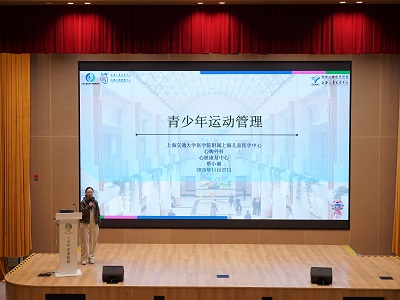
The human body is a precise instrument, and scientific exercise is the key to unlocking its potential. To complement the Grade 7 science study on "Human Body Systems," the Science Department invited Dr. Cai Xiaoman from the Cardiac Rehabilitation Center of the Department of Cardiothoracic Surgery at Shanghai Children's Medical Center (affiliated with Shanghai Jiao Tong University School of Medicine) to campus on November 27th. Dr. Cai delivered a science lecture titled Adolescent Sports Management. This was not only a vivid medical lesson but also a healthy exercise guide tailored specifically for adolescent growth.
The Mystery of the Body: When "Red Muscle" Meets "White Muscle"
At the beginning of the lecture, Dr. Cai instantly captivated the audience by contrasting sprinter Usain Bolt with marathon legend Eliud Kipchoge. She vividly revealed that different sports actually engage different muscle types: "White Muscle," responsible for explosive power, and "Red Muscle," which excels in endurance.
For adolescents in their golden period of growth, Dr. Cai emphasized that aerobic exercise is the top choice. It not only strengthens the heart and lungs but also improves blood and oxygen supply to the brain, effectively helping students maintain focus and vitality in their studies.
The Wisdom of Data: Listening to the Rhythm of the Heart
"How do you determine if your exercise intensity is appropriate?" Dr. Cai provided a scientific answer: monitor your heart rate. She introduced the formula for estimating maximum heart rate suitable for adolescents and taught everyone a simple, practical tool: the Talk Test. If you can sing easily while exercising, the intensity is too low. If you can only speak in short sentences, the intensity is moderate. If you cannot carry on a conversation at all, the intensity may be too high. This taught students how to quantitatively manage their exercise load.
Prevention is Better than Cure: Identifying the Body's "Warning Signals"
While exercise is beneficial, safety comes first. Dr. Cai specifically reminded students to be wary of environmental risks (such as high heat and humidity) and to learn to recognize danger signals from the body, such as chest pain or dizziness. She also displayed the Physical Activity Pyramid, urging everyone to break the curse of a sedentary lifestyle by suggesting that for every hour of sitting, one should get up and move for 5-10 minutes.
Sparks of Interaction: From Questioning to Understanding
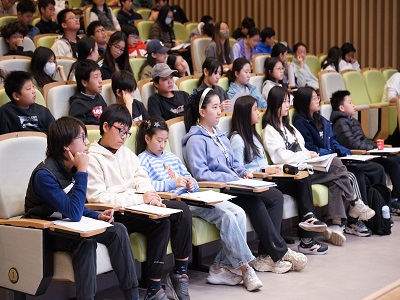
During the Q&A session, students were intellectually active and eager to ask questions. From "Is it harmful if my heart rate briefly hits 200 bpm during exercise?" to "Is dancing for 5 hours a week excessive?", Dr. Cai provided professional and patient answers to all inquiries, guiding everyone to develop personalized scientific exercise plans based on their own conditions.
This lecture not only connected the knowledge points of the Circulatory System and Respiratory System found in textbooks but also made abstract scientific principles tangible in every breath and heartbeat. We believe students will transform this scientific exercise prescription into an action guide. In the long-distance run of future growth, they will learn to listen to their bodies, running with rhythm, running for health, and running toward a farther horizon.
(Written by Rongzhang Hu
Pictures by Ginger Xu
Reviewed by Jiani Du, Judah Kuhn, Shiyu Wu)