-
ABOUT US
-
ACADEMICS
Curriculum Program
Departments
- English
- High School Chinese
- Primary and Junior School Chinese.
- High School Mathematics
- Middle School Mathematics
- Primary School Mathematics
- Music and Fine Arts
- Physical Education
- Physics
- Chemistry
- History and Geography
- Physical Science and Optional courses Department
- Middle School Biology
- High School Biology
- Social Sciences
- Computer Science
- Courses in Primary School
Achievements and Matriculations
College Counseling
Science & Technology Innovation Contest
Subject Competition
-
ARTS
-
ATHLETICS
-
AT SHSID
SHSID ∣ TIMES
PTSA
Club Exhibition
- 龙吟社
- Live 2 Drama
- Choir
- Hip-pop Dance Club
- The Primary School Dance Troupe
- Symposiums Club
- Biology Workshop
- You Shan
- VEX Robotic
- Peking Opera Club
- Baseball Club
- Model United Nations
- The World Scholar’s Cup
- Future Problem Solving Club
- United States Academic Pentathlon
- OM Club
- AMC Club
- Music for Patients
- SHSID Gazette
- Smile Charity
- Cultural Moments
- SciAcademy
- Stem Doge Alliance
- Chinese Debate Club
- IAA
- Mock Trial Club
- Zhengming Club
- Furry Friends
- GT-Racing
- Village Radio
- IMMC Club
- Creative Design and Intelligent Fabrication
- Future City Research Project
- ECOCAP
- AdvocaSEA
- SPDC
- Medishine
- Floorball Club
- Animusic MTC
- Wings Up
- All Booked
- Cyano
- Birding Community
Health and Wellness
Campus Safety
Cafeteria Service
-
ADMINISTRATION
-
ADMISSIONS
-
ALUMNI
Alumni Information
Honors Students
- Class of 2025
- Class of 2024
- Class of 2023
- Class of 2022
- Class of 2021
- Class of 2020
- Class of 2019
- Class of 2018
- Class of 2017
- Class of 2016
- Class of 2015
- Class of 2014
- Class of 2013
- Class of 2012
- Class of 2011
- Class of 2010
- Class of 2009
- Class of 2008
- Class of 2007
- Class of 2006
Who Studied at SHSID
SHS Foundation
-
DOCUMENTS
Puxi & Pudong Campus G4-5: Ancient Poetry Week
From November 18 to 21, Grade 4 and Grade 5 Chinese classes at the Shanghai High School International Division (Puxi Campus) carried out a series of engaging, poetry-themed activities. Over the course of four days, students transformed into little poetry experts, exploring the timeless charm of classical verse through interactive games, poetry recitation, singing, and traditional fan painting.
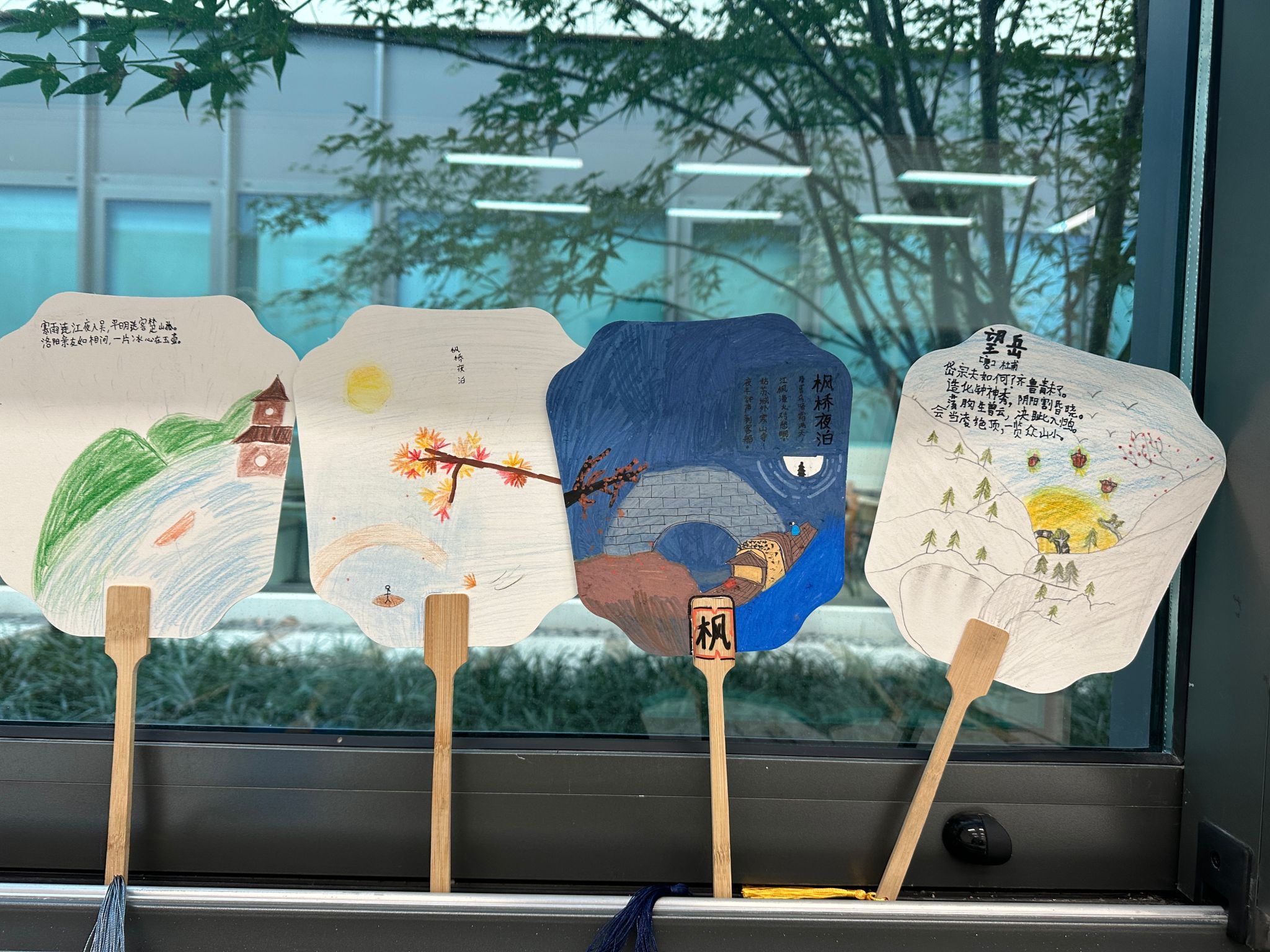
Learning Poets, Painting Poetry
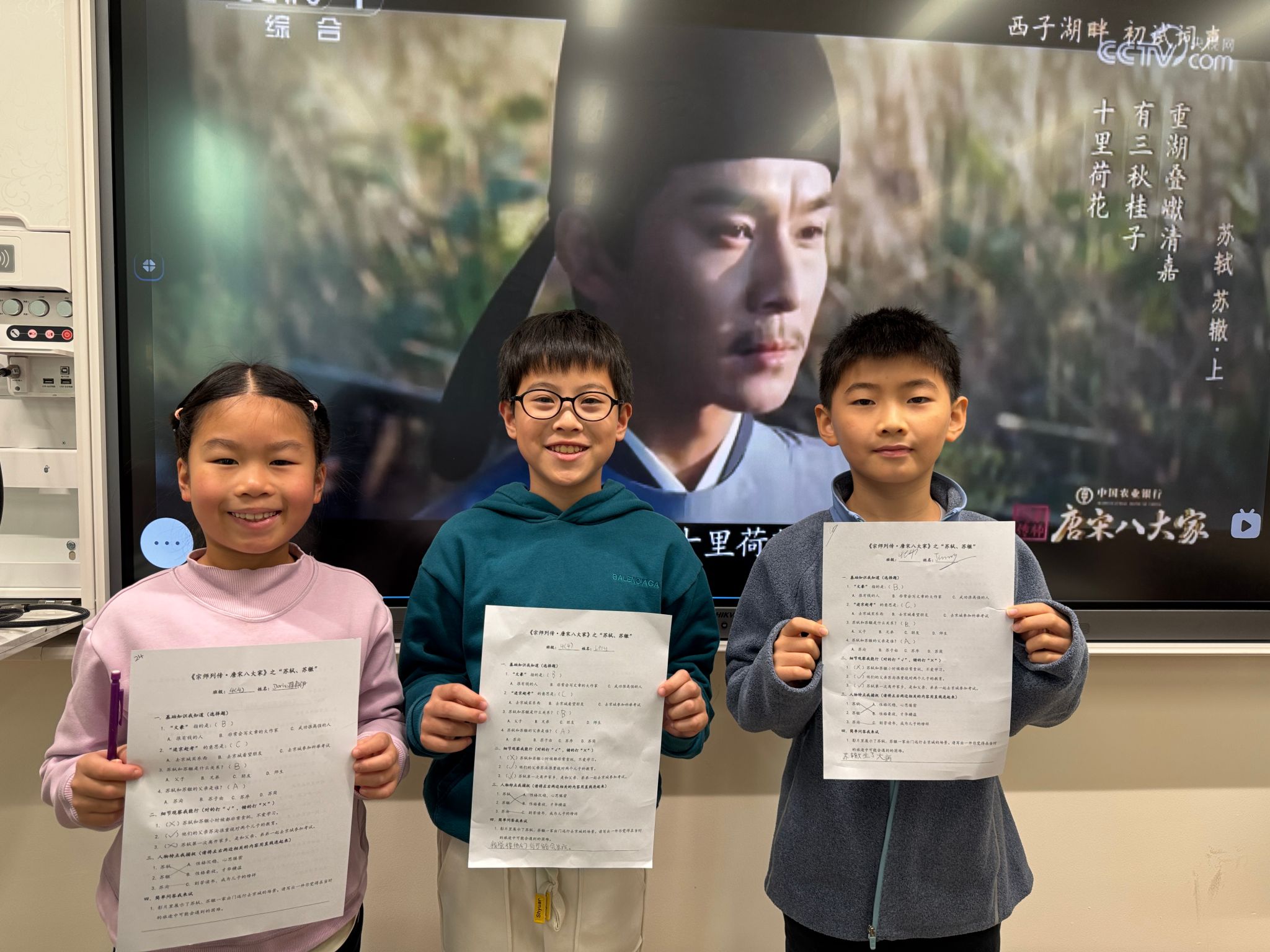
“Wow! I didn’t know Su Shi was not only a poet but also a foodie!” On the first day of Ancient Poetry Week, exclamations echoed through the Grade 4 classrooms. Students attentively watched Masters’ Chronicles: Su Shi Special Edition. As each scene shifedt, they felt as if they had traveled back in time to experience the multifaceted life of this literary giant. During the interactive quiz that followed, students eagerly participated, demonstrating a deeper understanding of the great writer. With a comprehensive grasp of Su Shi’s life stories, they found his poetry even more resonant – characterized by his bold, carefree attitude towards life which shines through each line.
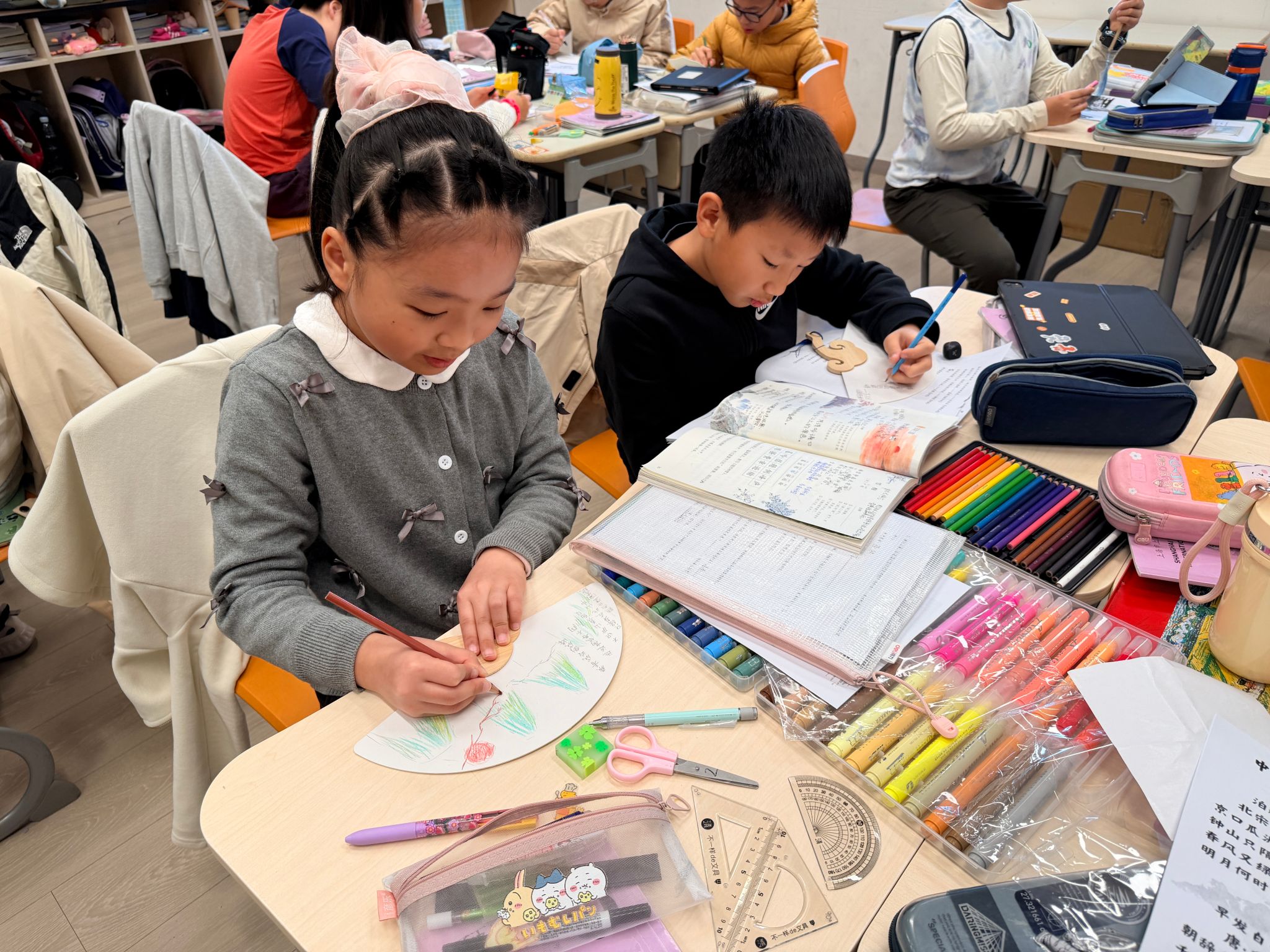
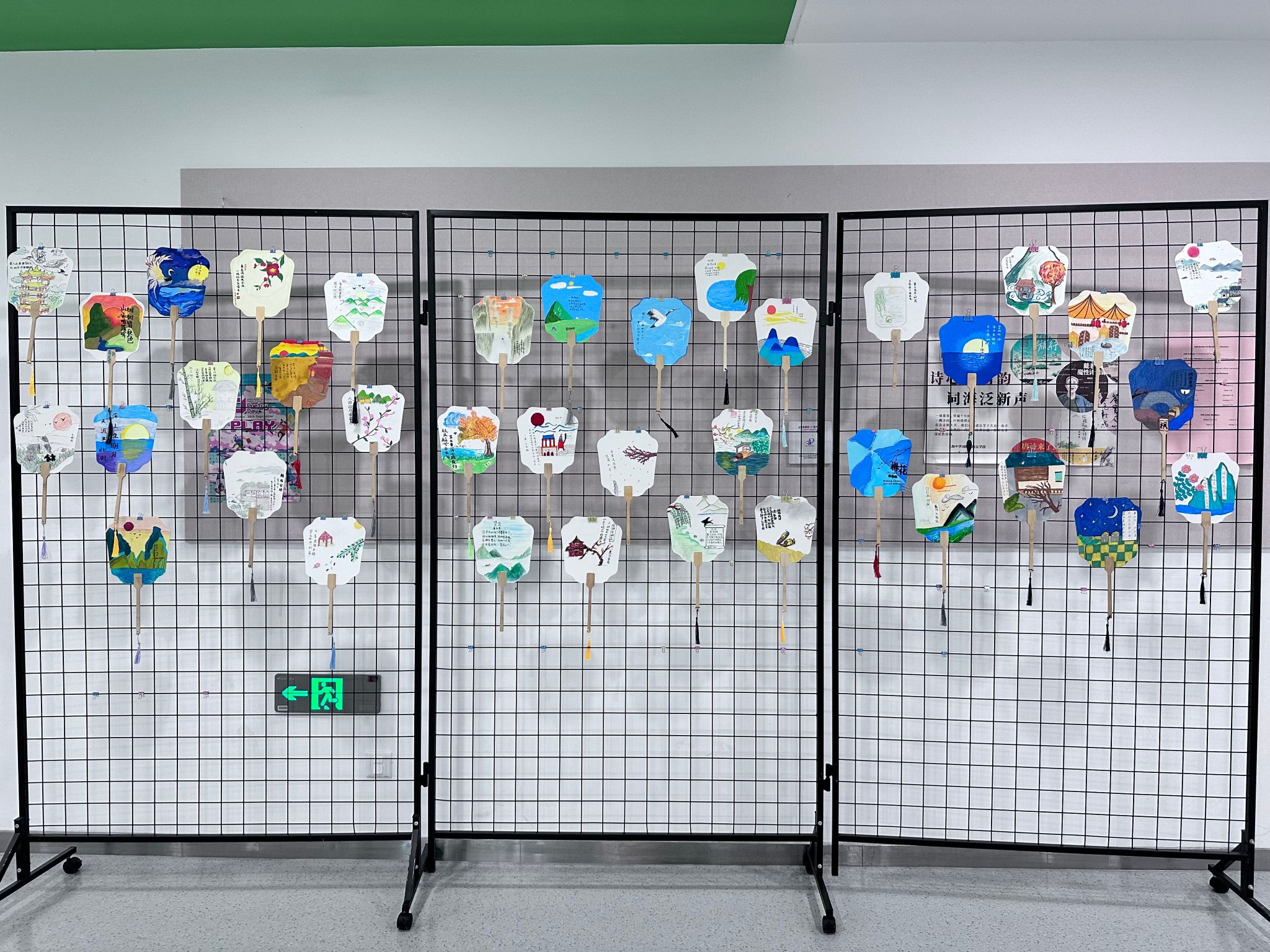
In addition, Grade 4 and Grade 5 students used their brushes to merge poetic emotion with visual art on traditional round fans. Some sketched plum blossoms standing proudly against the snow to accompany Wang Mian’s Ink Plum Blossom; others used watercolor to depict a mighty waterfall in response to Li Bai’s famous line, “Its torrent drops three thousand feet.” Each fan reflected creativity and personal interpretation, showcasing the students’ appreciation and love of classical poetry.
Linking Lines, Solving Riddles
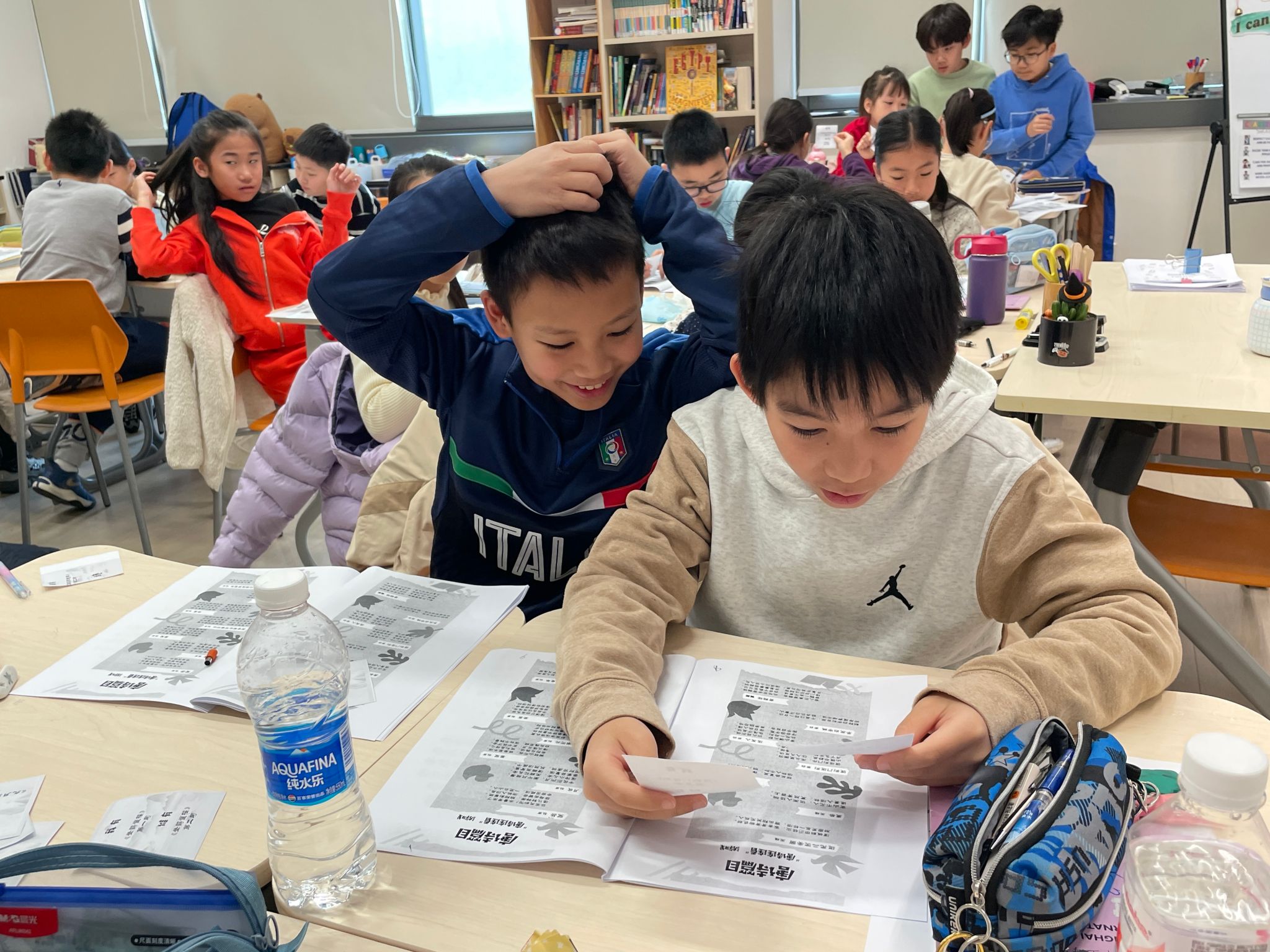
On the second day, the classrooms transformed into lively “poetry arenas.” Students in Grades 4 and 5, each holding a randomly distributed poetry card, enthusiastically participated in a unique poem-linking relay. “I have the second line of Climbing the Stork Tower. Who has the next line?”
When the familiar “I Have, Who Has” game from English class was infused with classical literature, poetry memorization instantly became far more enjoyable. Every student joined in with excitement, reciting lines back and forth as the sound of poetry flowed through the room.
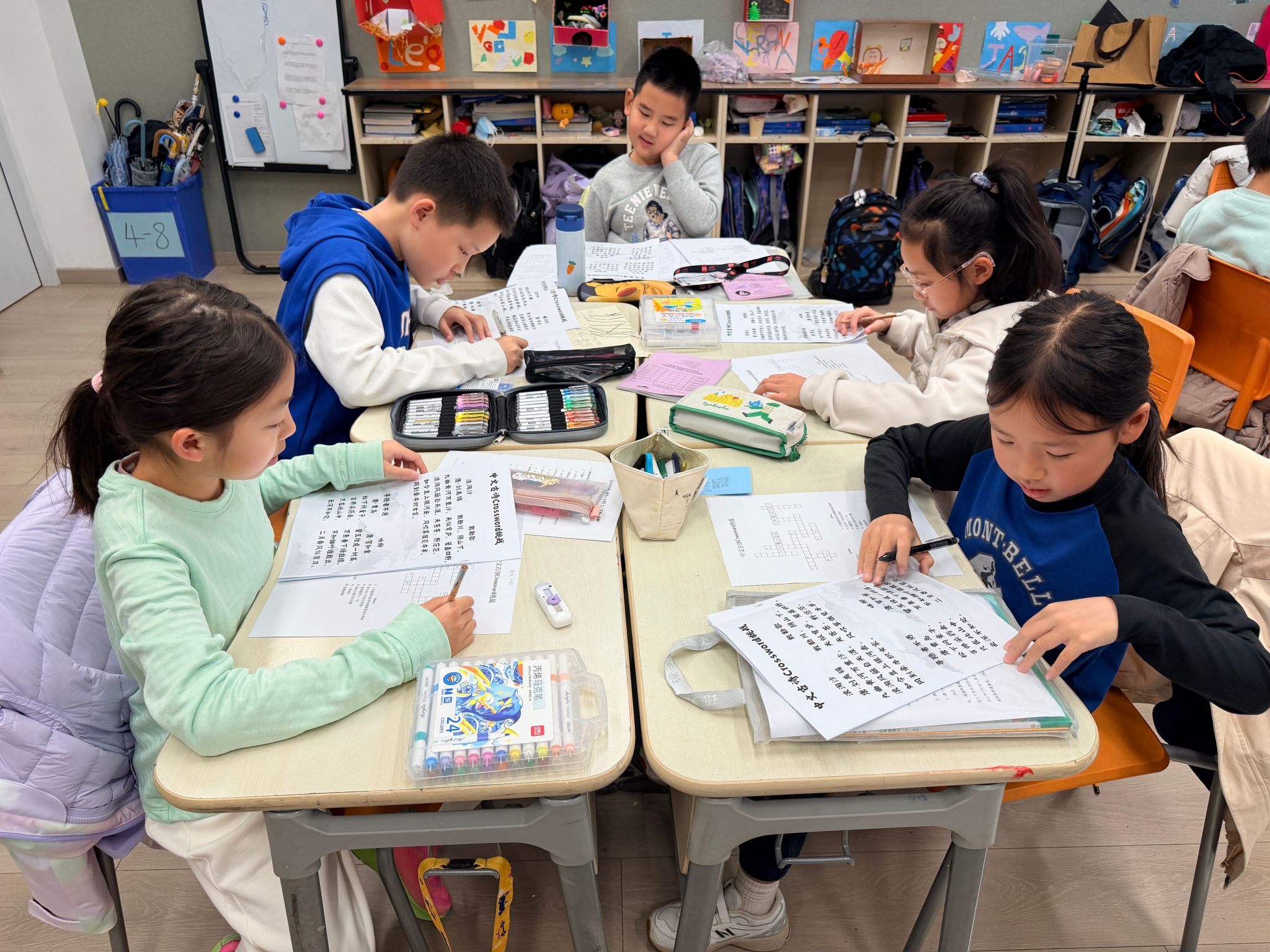
The subsequent “Ancient Poetry Crossword Challenge” seamlessly combined the classic crossword framework with the elegance of Chinese verse—where the intersecting horizontal and vertical grids no longer held simple letters, but timeless poetic lines that continue to shine brightly across the vast currents of history. What did Li Bai hear just as he boarded the boat to set off? Which verse describes “the warm spring breeze of February”? Students bent over their clues in deep concentration or discussed animatedly with teammates. Drawing upon their reading experience and poetry reference book, they successfully unraveled each riddle one by one.
Showcasing Talent, Singing Tradition
“Three, two, one—begin!” Day three’s Flying Flower Game brought an atmosphere of excitement and tension. Students competed by presenting verses containing designated characters such as “spring,” “moon,” and “flower,” discovering how a single image can be expressed in countless ways through poetry. Hands shot up as lines flowed freely; some students recited fluently after only a brief moment of thought, earning rounds of applause, while others impressed the class with more unique yet equally beautiful verses. If someone momentarily struggled, group members quietly offered hints, overcoming challenges together.
Afterward, everyone enjoyed modern musical adaptations of classic poems. With a lively pop rhythm, Liangzhou Ci filled the room with energy, while Moonlit Night on the Spring River(Chunjiang Hua Yue Ye) offered a gentle and enchanting melody. Students hummed along, and under the teacher’s guidance, compared the original poems with the adapted lyrics, analyzing how music can help convey poetic emotion. The fusion of tradition and contemporary sound gave classical culture a refreshing new spark.
Understanding and Appreciating Poetry
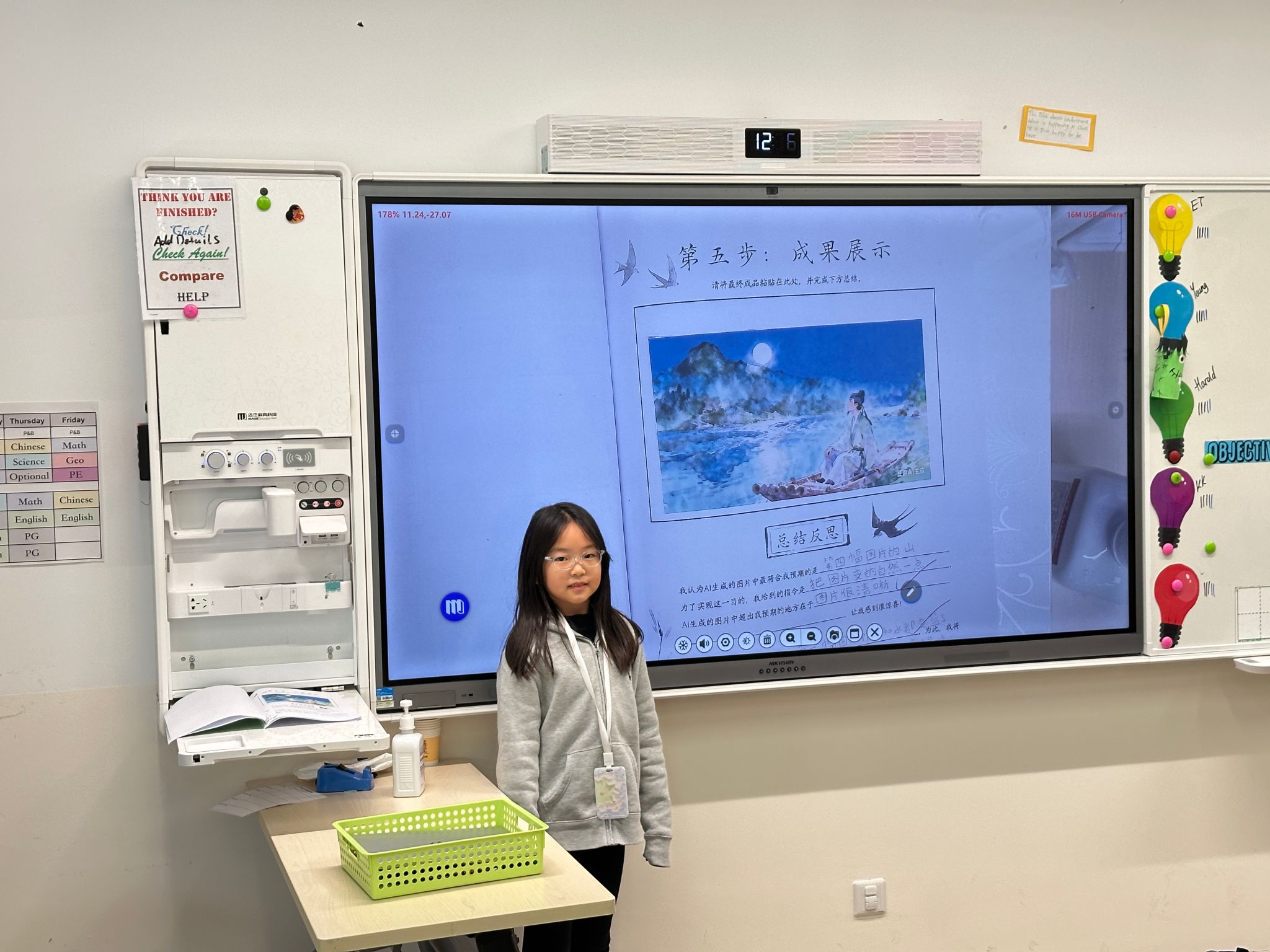
On the final day of Poetry Week, Grade 4 students held a creative project showcase—an intellectual stage where ideas collided. Student presenters shared their “Reimagining Poetry Through Art” projects, while classmates guessed the corresponding poem titles based on the visual details presented. This interactive display allowed everyone to deepen their understanding of poetry through observation and interpretation. After one presentation, a student remarked, “I didn’t realize every poem has a story behind it. Reading poetry is like flipping through the diaries of our ancestors.” This heartfelt reflection captured the shared experience of the entire class and highlighted how modern technology helped students engage meaningfully with classical literature.
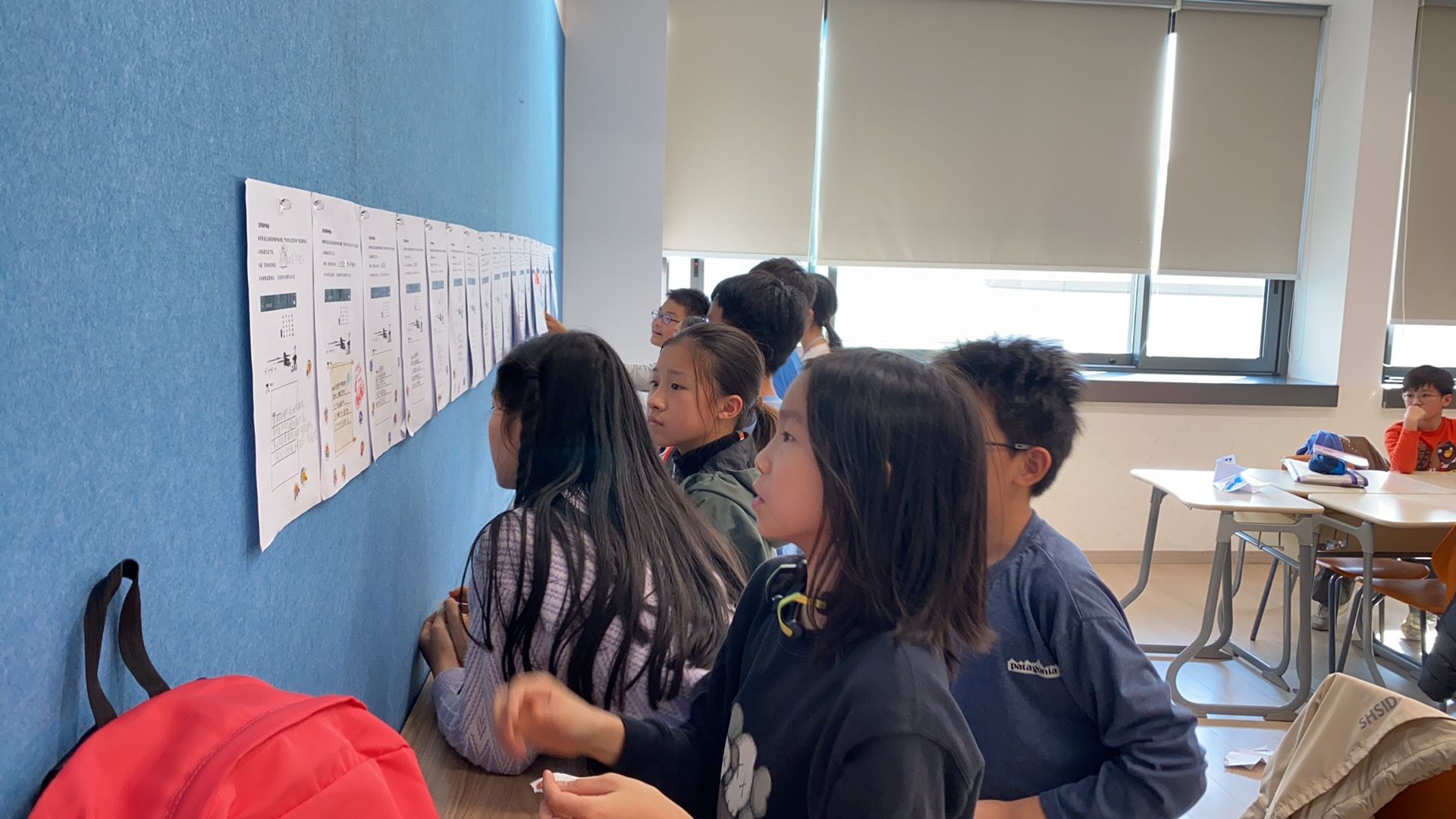
Grade 5 students participated in “Giving Likes to the Immortal Poet’s Moment.” Previously, students had stepped into the role of Li Bai, using AI tools to compose response poems to works posted by their “poetry friends.” During the event, these imaginative creations were displayed across classrooms, and students began their “liking journey” with sticker dots. They read attentively, sometimes pausing in contemplation, sometimes discussing with peers, and rewarded their favorite pieces with stickers. Through presenting, reading, and exchanging ideas, students not only deepened their understanding of classical poetry but also discovered new ways to engage creatively with traditional culture—bringing Ancient Poetry Week to a perfect close.
A Week of Poetry, A Seed of Culture
Ancient Poetry Week successfully shifted students from “passive memorization” to “active exploration.” They discovered that poetry is not a rigid textbook task—it can be played, sung, painted, enjoyed through a range of mediums. More importantly, this experience planted a cultural seed in students hearts, one that will take root, grow, and eventually blossom into the poetic brilliance of a new generation.
(Written by Bing Xue
Pictures by Teachers of Grade 4 and 5
Reviewed by Ms. Lu Luting, Mr. Wu Xiaodong, Lei Liu, Shiyu Wu, Grace Gilmore)