-
ABOUT US
-
ACADEMICS
Curriculum Program
Departments
- English
- High School Chinese
- Primary and Junior School Chinese.
- High School Mathematics
- Middle School Mathematics
- Primary School Mathematics
- Music and Fine Arts
- Physical Education
- Physics
- Chemistry
- History and Geography
- Physical Science and Optional courses Department
- Middle School Biology
- High School Biology
- Social Sciences
- Computer Science
- Courses in Primary School
Achievements and Matriculations
College Counseling
Science & Technology Innovation Contest
Subject Competition
-
ARTS
-
ATHLETICS
-
AT SHSID
SHSID ∣ TIMES
PTSA
Club Exhibition
- 龙吟社
- Live 2 Drama
- Choir
- Hip-pop Dance Club
- The Primary School Dance Troupe
- Symposiums Club
- Biology Workshop
- You Shan
- VEX Robotic
- Peking Opera Club
- Baseball Club
- Model United Nations
- The World Scholar’s Cup
- Future Problem Solving Club
- United States Academic Pentathlon
- OM Club
- AMC Club
- Music for Patients
- SHSID Gazette
- Smile Charity
- Cultural Moments
- SciAcademy
- Stem Doge Alliance
- Chinese Debate Club
- IAA
- Mock Trial Club
- Zhengming Club
- Furry Friends
- GT-Racing
- Village Radio
- IMMC Club
- Creative Design and Intelligent Fabrication
- Future City Research Project
- ECOCAP
- AdvocaSEA
- SPDC
- Medishine
- Floorball Club
- Animusic MTC
- Wings Up
- All Booked
- Cyano
- Birding Community
Health and Wellness
Campus Safety
Cafeteria Service
-
ADMINISTRATION
-
ADMISSIONS
-
ALUMNI
Alumni Information
Honors Students
- Class of 2025
- Class of 2024
- Class of 2023
- Class of 2022
- Class of 2021
- Class of 2020
- Class of 2019
- Class of 2018
- Class of 2017
- Class of 2016
- Class of 2015
- Class of 2014
- Class of 2013
- Class of 2012
- Class of 2011
- Class of 2010
- Class of 2009
- Class of 2008
- Class of 2007
- Class of 2006
Who Studied at SHSID
SHS Foundation
-
DOCUMENTS
Puxi Campus G4-5: Poetry Inspires Imagination, AI Brings Visions to Life: A Creative Journey Across Time
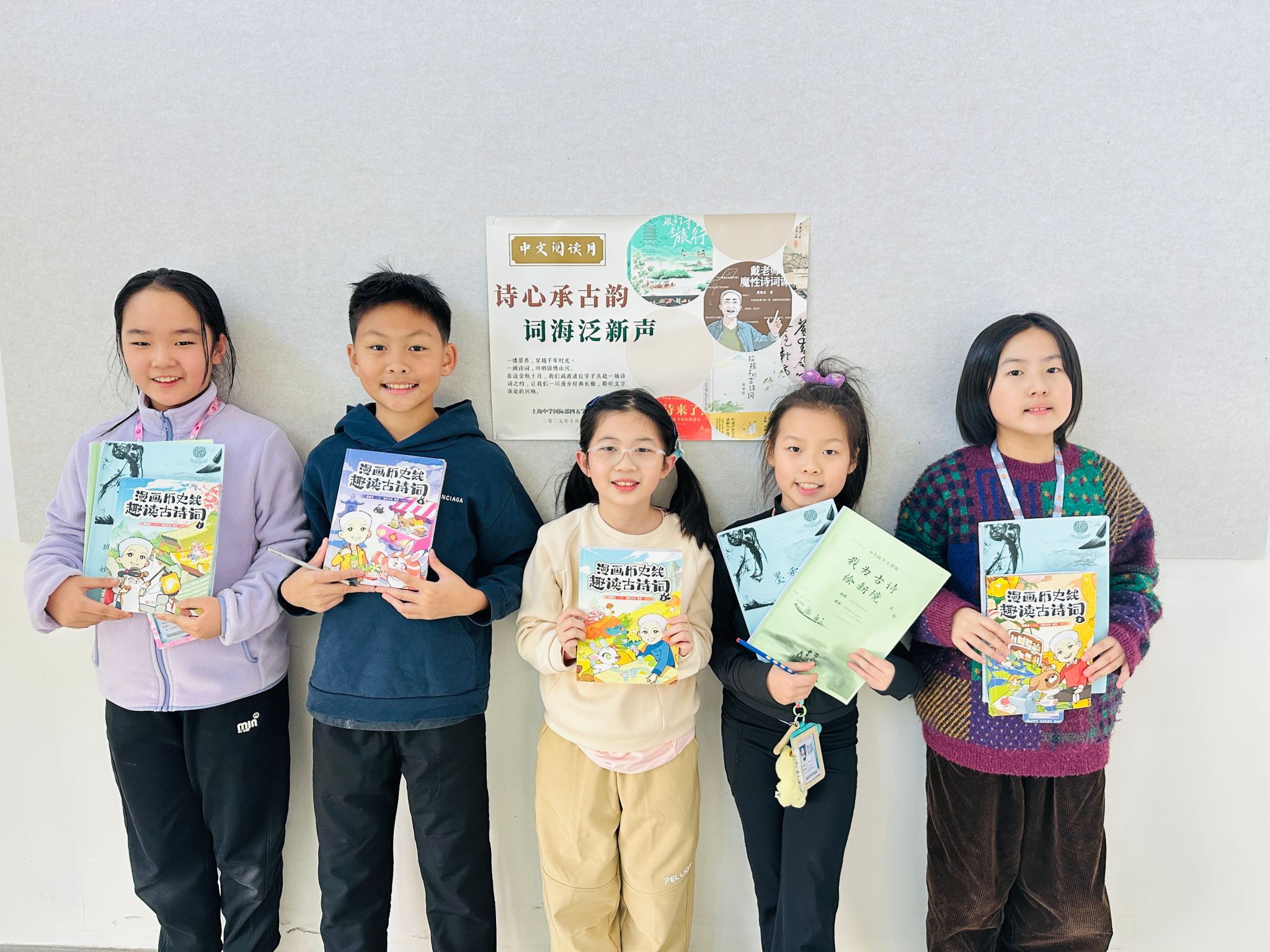
When the melodious rhythm of classical poetry meets the dynamic intelligence of modern AI technology, what kind of brilliant sparks will emerge? During the Ancient Poetry Culture Week for Grade 4 at the Shanghai High School International Division, a Chinese project titled “Reimagining Poetry Through Art” ignited waves of creativity in students' hearts and opened a fascinating journey that transcended time and space.
Exploring Poems and Imagery: Opening the Door to Creativity
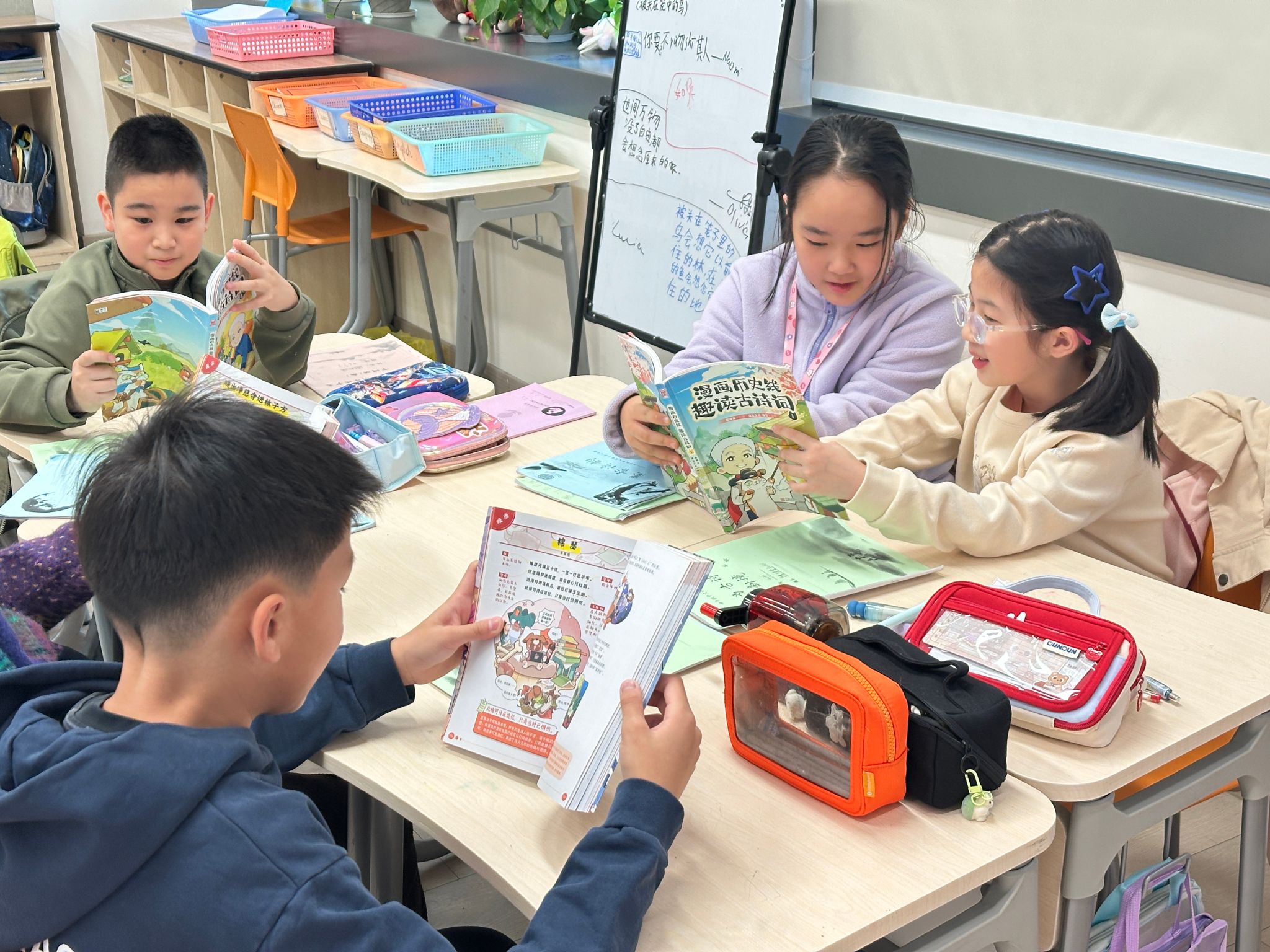
Throughout this semester's Chinese Reading Month, Grade 4 students have engaged in a series of reading and inquiry activities centered on classical poetry. Guided by the rich and engaging tasks in their reading booklet, students deepened their understanding of poetic expression and imagery while expanding their collection of memorized poems. Building on this foundation, each student selected a poem that resonated with them personally and conducted further investigation into it.
By reading and researching, students learned about the background of the poem, the circumstances of the poet, and the emotions behind the lines. They then connected these insights with the poem's content to gain a deeper appreciation of its meaning. This process laid a solid foundation for their later use of AI.
Crafting Precise Prompts: Painting the Poetry in Their Minds
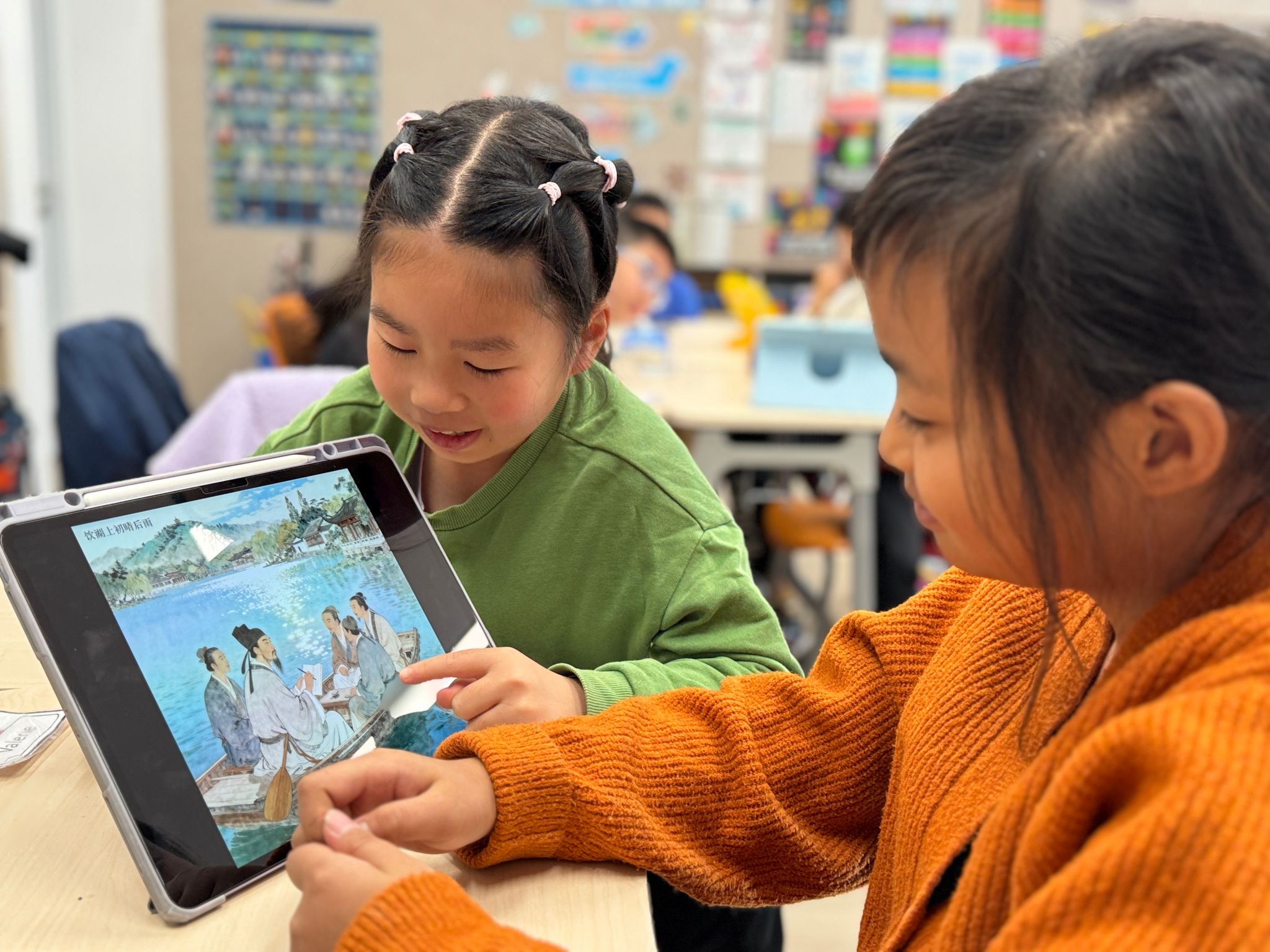
Next, students used a teacher-provided prompt structure to transform their understanding of the poem into concrete instructions for the AI system, enabling the AI to accurately capture the poetic scene they envisioned. This process not only tested their comprehension of the poem but also strengthened their expressive language skills.
When entering prompts into the AI, students did more than simply restate the poem's lines—they placed themselves in the poet's perspective, striving to recreate the intended imagery as closely as possible. At the same time, they exercised creativity by adding suitable actions and expressions to the characters in the poem, bringing the classical verses to life.

After the AI generated the images, students eagerly picked up their “magnifying glasses,” carefully examining the position, color, and size of every element to refine the picture so it better matched the poetic world in their minds. For example, some students corrected AI misunderstandings of “yanhua” (“misty blossoms”) in the line “In the misty third month, I travel down to Yangzhou,” by providing clear guidance: “‘Yanhua’ refers to the mist rising above the river, not fireworks.” Others added elements such as wild geese, a whistling north wind, or an old zither to emphasize the melancholic tone of farewell poems. Through repeated revisions, students not only deepened their understanding of classical poetry but also strengthened their ability to think independently. They learned that critical thinking is essential, even when using AI.
Showcasing Achievements: Growing Through Reflection and Feedback
After completing the final versions of their poetry-inspired artworks, students reflected on the strengths and weaknesses of their pieces. Some marveled at the delicate and intricate styles AI was able to produce; some realized that the clarity and specificity of their prompts directly shaped the AI's output; others, though slightly disappointed that the AI's images did not fully match their expectations, still gained valuable experience in using AI creatively.
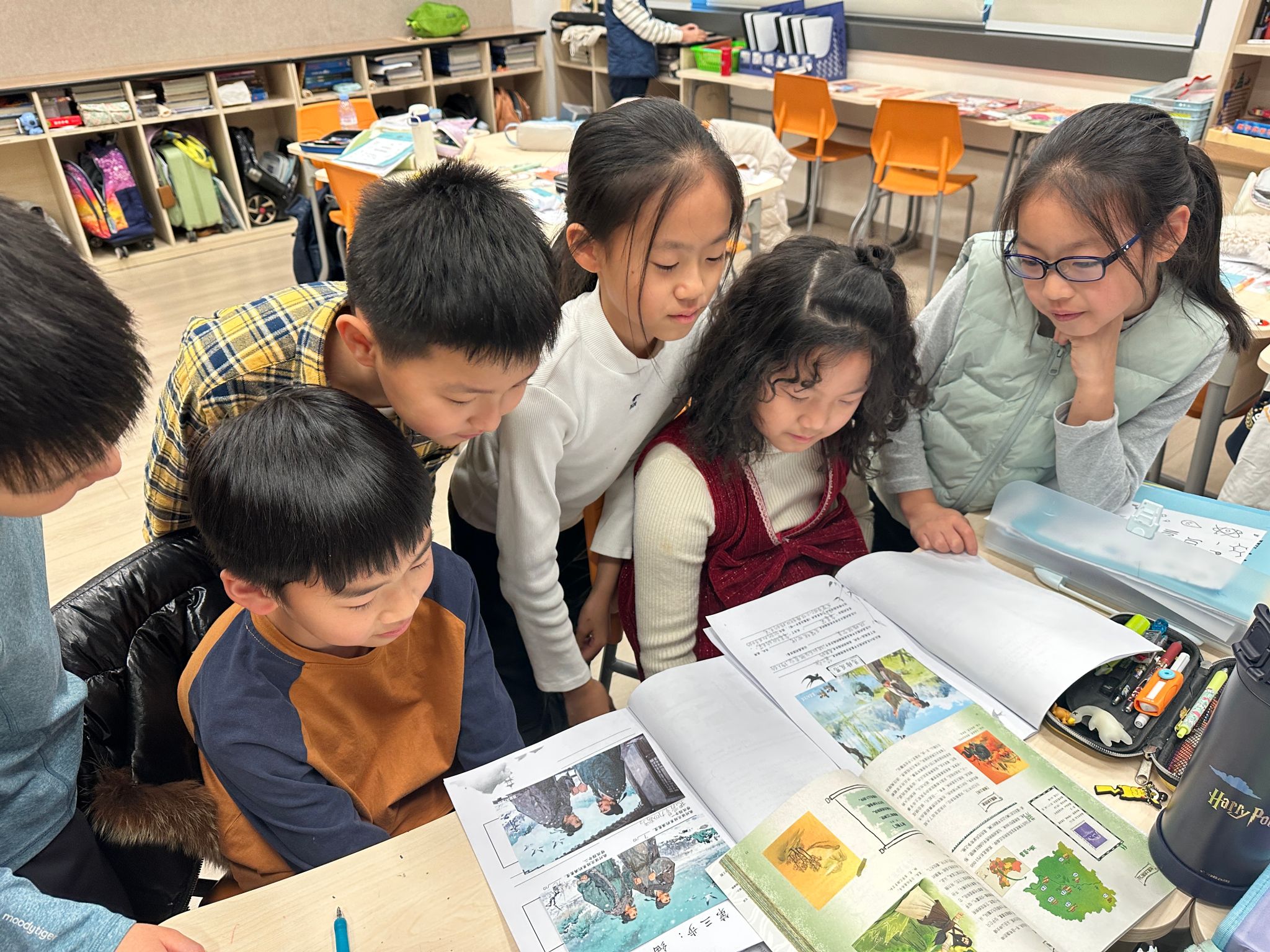
Following their efforts, students finally arrived at the moment of presenting their work. On the last day of Ancient Poetry Week, they took turns sharing their carefully crafted poetry posters—each poster like a miniature world embodying their unique interpretations and creative expressions. Meanwhile, their classmates enthusiastically participated in guessing the poems based on the images, experiencing firsthand how classical poetry can radiate new charm when empowered by modern technology.
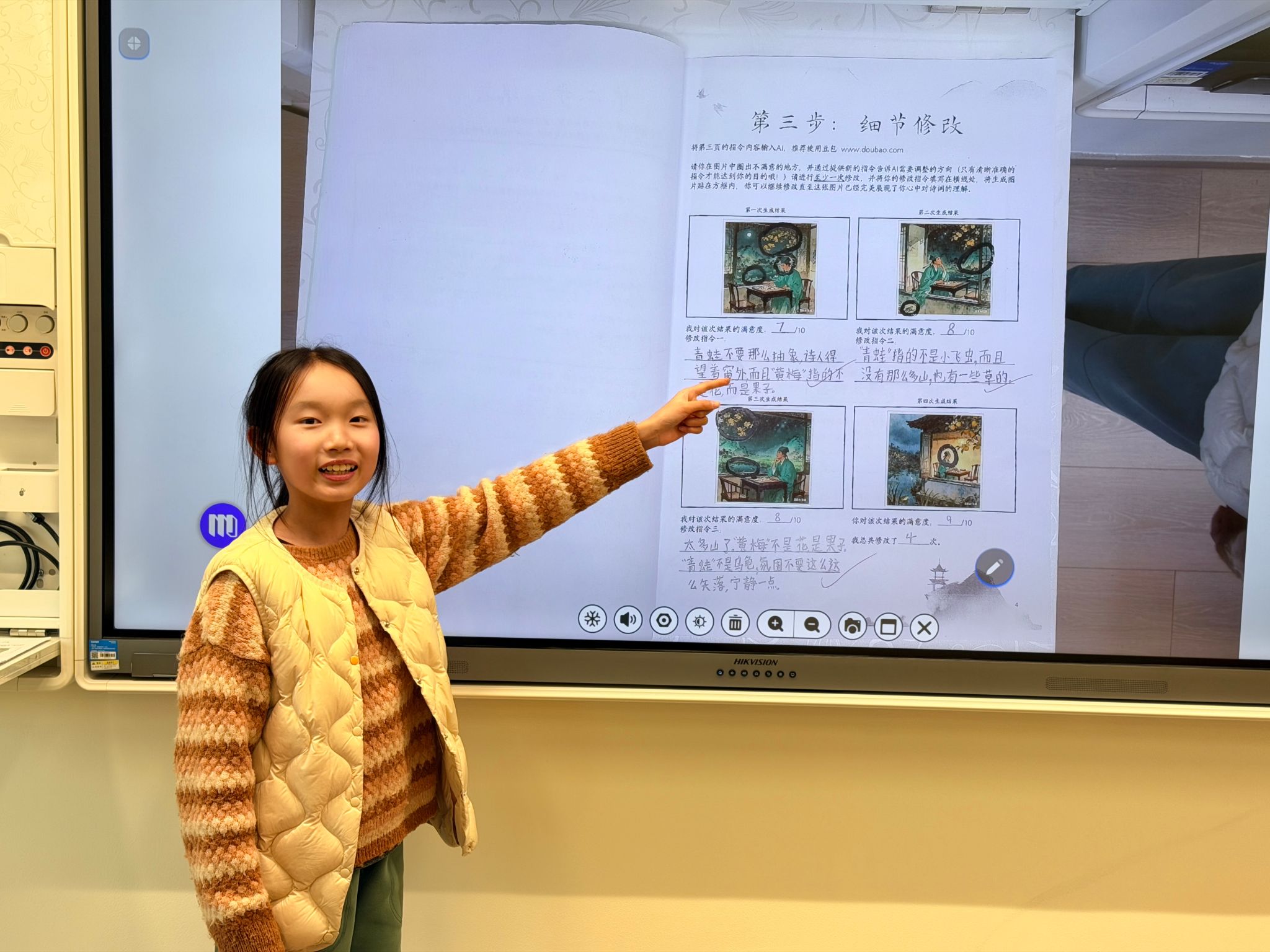
This innovative project revealed the powerful synergy between traditional culture and modern technology. It not only served as a meaningful attempt to integrate AI into teaching and learning, but also strengthened students' Chinese language comprehension and expressive abilities, striving to cultivate independent thinkers prepared for the possibilities of future education.
(Written by Bing Xue
Pictures by Teachers of Grade 4, Minxuan Cao
Reviewed by Ms. Lu Luting, Shiyu Wu, Grace Gilmore)