-
ABOUT US
-
ACADEMICS
Curriculum Program
Departments
- English
- High School Chinese
- Primary and Junior School Chinese.
- High School Mathematics
- Middle School Mathematics
- Primary School Mathematics
- Music and Fine Arts
- Physical Education
- Physics
- Chemistry
- History and Geography
- Physical Science and Optional courses Department
- Middle School Biology
- High School Biology
- Social Sciences
- Computer Science
- Courses in Primary School
Achievements and Matriculations
College Counseling
Science & Technology Innovation Contest
Subject Competition
-
ARTS
-
ATHLETICS
-
AT SHSID
SHSID ∣ TIMES
PTSA
Club Exhibition
- 龙吟社
- Live 2 Drama
- Choir
- Hip-pop Dance Club
- The Primary School Dance Troupe
- Symposiums Club
- Biology Workshop
- You Shan
- VEX Robotic
- Peking Opera Club
- Baseball Club
- Model United Nations
- The World Scholar’s Cup
- Future Problem Solving Club
- United States Academic Pentathlon
- OM Club
- AMC Club
- Music for Patients
- SHSID Gazette
- Smile Charity
- Cultural Moments
- SciAcademy
- Stem Doge Alliance
- Chinese Debate Club
- IAA
- Mock Trial Club
- Zhengming Club
- Furry Friends
- GT-Racing
- Village Radio
- IMMC Club
- Creative Design and Intelligent Fabrication
- Future City Research Project
- ECOCAP
- AdvocaSEA
- SPDC
- Medishine
- Floorball Club
- Animusic MTC
- Wings Up
- All Booked
- Cyano
- Birding Community
Health and Wellness
Campus Safety
Cafeteria Service
-
ADMINISTRATION
-
ADMISSIONS
-
ALUMNI
Alumni Information
Honors Students
- Class of 2025
- Class of 2024
- Class of 2023
- Class of 2022
- Class of 2021
- Class of 2020
- Class of 2019
- Class of 2018
- Class of 2017
- Class of 2016
- Class of 2015
- Class of 2014
- Class of 2013
- Class of 2012
- Class of 2011
- Class of 2010
- Class of 2009
- Class of 2008
- Class of 2007
- Class of 2006
Who Studied at SHSID
SHS Foundation
-
DOCUMENTS
High School Biology Department: Inquiry-Based Classes Showcase Subject Charm
At the end of November, four teachers from the High School Biology Department delivered a series of open classes to students in Grades 9 to 12. The curriculum design emphasized real-life scenarios, scientific inquiry, and thinking improvement, fully demonstrating the depth and vitality of biology classes. Through collective lesson refinement and teaching design discussions, the department polished the teaching plans. During the open classes, all teachers in the group actively participated in observation, forming a positive atmosphere of teaching and research mutual assistance.
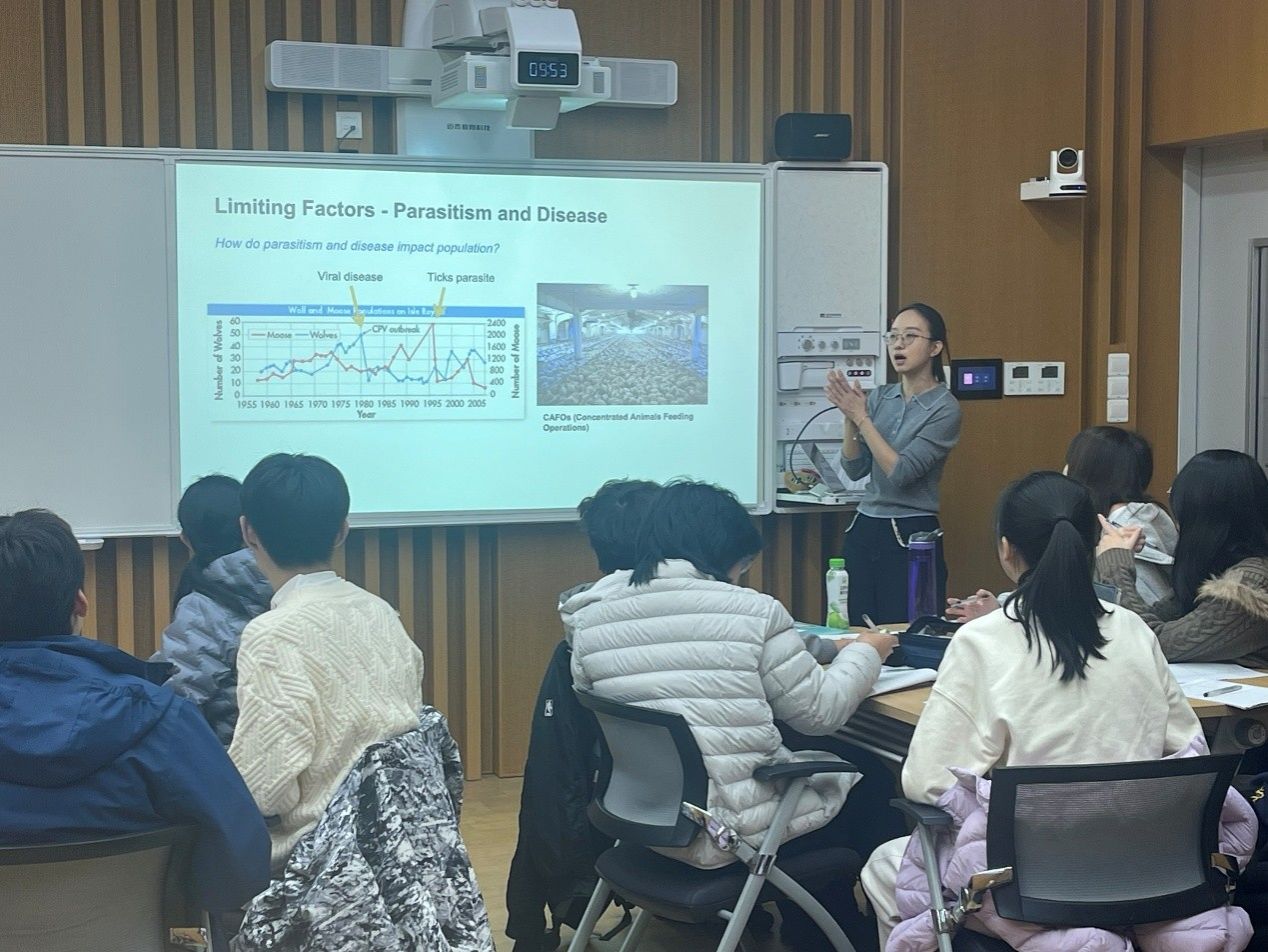
Grade 9: Analyzing "The Limits to Growth" Through Real Cases
On November 25th, Ms. Zhang Feifan presented the lesson The Limits to Growth to Grade 9 students. Centered on the core question "Can populations grow indefinitely?", the class guided students to review exponential growth and logistic growth models. Through rich ecological pictures and examples, students gradually identified key limiting factors such as competition, predation, parasitism, and disease. The highlight of the class was the case study "Spruce Budworms and Boreal Forests". By analyzing real data, drawing curves, and conducting group arguments, students clearly distinguished the mechanisms of different limiting factors. At the end of the course, combined with local ecological issues, students discussed the expansion strategies of the invasive species "Canada Goldenrod" (Solidago canadensis). A creative project titled "Design an Invasive Species" prompted students to comprehensively apply the knowledge learned, achieving a leap from theoretical understanding to innovative transfer.
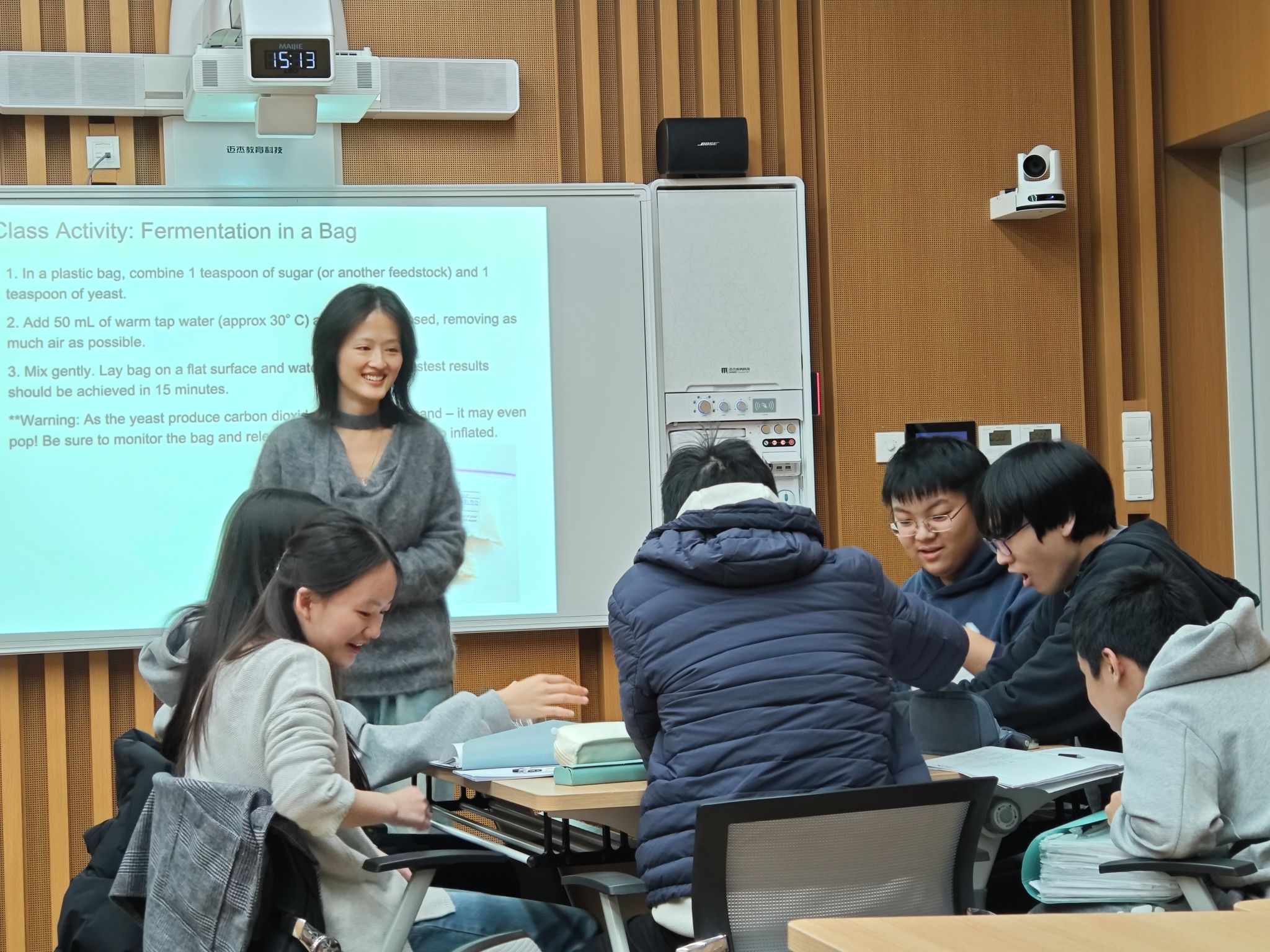
Grade 10: Hands-On Experiments Uncover the Mysteries of "Fermentation"
On November 25th, Ms. Chen Shijia offered the open class Fermentation to Grade 10 students. With yeast fermentation experiments as the main line, students operated hands-on to observe the anaerobic respiration process of yeast under different conditions, intuitively understanding the basic concepts, products, and influencing factors of anaerobic respiration. Through a chain of questions, Ms. Chen guided students to compare the similarities and differences between aerobic and anaerobic respiration. Combining daily life examples such as dough fermentation and winemaking technology, abstract principles were integrated into practical applications. During cooperative experiments, students recorded data and analyzed results, not only mastering knowledge but also experiencing the rigor and fun of scientific inquiry.
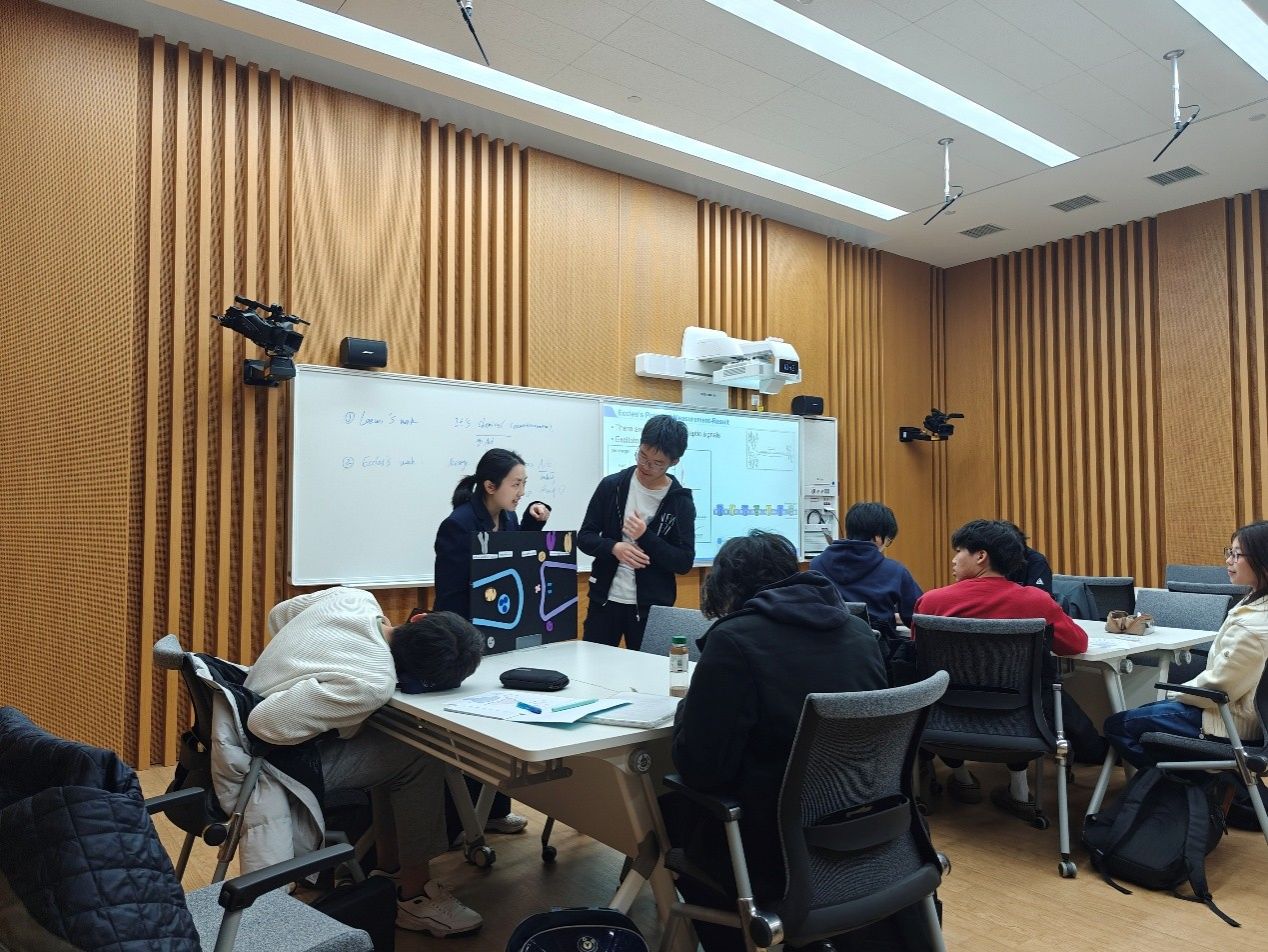
Grade 11: Decoding "Neural Signaling " with Nobel Prize Research
On November 27th, Ms. Wang Mengli brought the lesson Neural Signaling to Grade 11 IB students. Selecting three classic Nobel Prize research achievements, Ms. Wang guided students to gradually explore the structure and function of synapses, understanding the mechanism of neurotransmitters transmitting signals between neurons. Through AI experiment demonstrations, 3D model construction, and literature discussions, students gained an in-depth understanding of the synergistic effect of the presynaptic membrane, synaptic cleft, and postsynaptic membrane, and independently analyzed the differences between excitatory and inhibitory signals. The class focused on integrating the history of science with inquiry logic, helping students construct a comprehensive understanding of neural regulation mechanisms and enhancing their scientific argumentation and critical thinking skills.
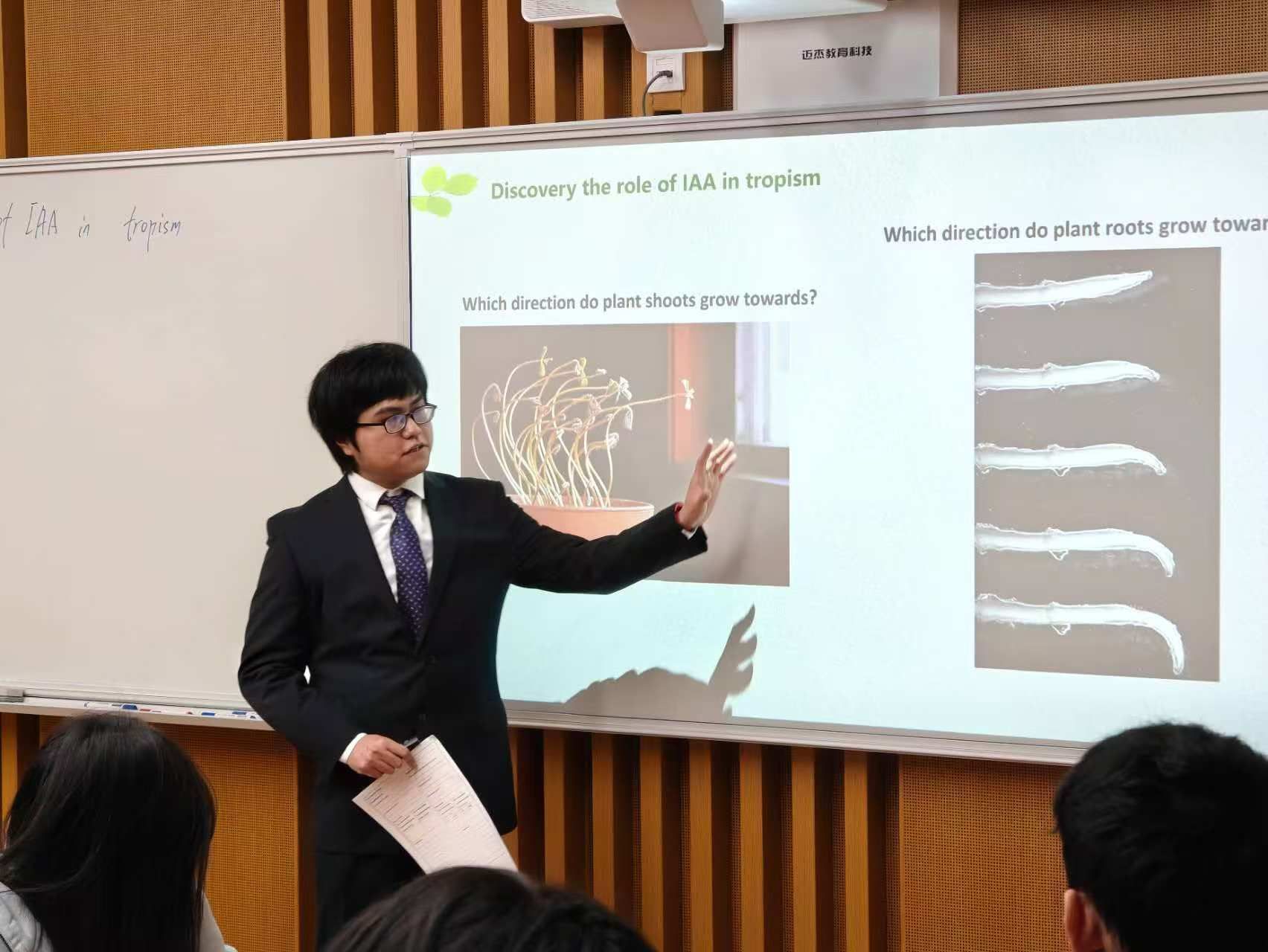
Grade 12: AI Technology Restores the Scientific Discovery Process of "Auxins"
On November 27th, Mr. Deng Xiao delivered the open class Plant Auxins to Grade 12 A-Level students. Centered on the classic question "Plant Phototropism", Ms. Deng used AI technology to transform the discovery process of auxins into interactive online simulation experiments. Following the path of scientists' exploration, students gradually analyzed the experimental designs of different scholars, operated virtual experiments to observe phenomena, process data, and draw conclusions. With the assistance of AI technology, students experienced the entire process of scientific inquiry firsthand, ultimately constructing a model of the relationship between auxin distribution and plant phototropic growth independently. This lesson not only deepened students' understanding of plant hormone regulation but also demonstrated the unique value of digital tools in restoring the essence of science and cultivating inquiry abilities.
Although the four open classes varied in teaching content and grade levels, they all reflected the Biology Group's student-centered teaching philosophy, emphasizing real problem inquiry and integrating technology with experiments. These classes provided vivid examples for the high-quality implementation of biology courses.
(Written/Pictures by High School Biology Department)