-
ABOUT US
-
ACADEMICS
Curriculum Program
Departments
- English
- High School Chinese
- Primary and Junior School Chinese.
- High School Mathematics
- Middle School Mathematics
- Primary School Mathematics
- Music and Fine Arts
- Physical Education
- Physics
- Chemistry
- History and Geography
- Physical Science and Optional courses Department
- Middle School Biology
- High School Biology
- Social Sciences
- Computer Science
- Courses in Primary School
Achievements and Matriculations
College Counseling
Science & Technology Innovation Contest
Subject Competition
-
ARTS
-
ATHLETICS
-
AT SHSID
SHSID ∣ TIMES
PTSA
Club Exhibition
- 龙吟社
- Live 2 Drama
- Choir
- Hip-pop Dance Club
- The Primary School Dance Troupe
- Symposiums Club
- Biology Workshop
- You Shan
- VEX Robotic
- Peking Opera Club
- Baseball Club
- Model United Nations
- The World Scholar’s Cup
- Future Problem Solving Club
- United States Academic Pentathlon
- OM Club
- AMC Club
- Music for Patients
- SHSID Gazette
- Smile Charity
- Cultural Moments
- SciAcademy
- Stem Doge Alliance
- Chinese Debate Club
- IAA
- Mock Trial Club
- Zhengming Club
- Furry Friends
- GT-Racing
- Village Radio
- IMMC Club
- Creative Design and Intelligent Fabrication
- Future City Research Project
- ECOCAP
- AdvocaSEA
- SPDC
- Medishine
- Floorball Club
- Animusic MTC
- Wings Up
- All Booked
- Cyano
- Birding Community
Health and Wellness
Campus Safety
Cafeteria Service
-
ADMINISTRATION
-
ADMISSIONS
-
ALUMNI
Alumni Information
Honors Students
- Class of 2025
- Class of 2024
- Class of 2023
- Class of 2022
- Class of 2021
- Class of 2020
- Class of 2019
- Class of 2018
- Class of 2017
- Class of 2016
- Class of 2015
- Class of 2014
- Class of 2013
- Class of 2012
- Class of 2011
- Class of 2010
- Class of 2009
- Class of 2008
- Class of 2007
- Class of 2006
Who Studied at SHSID
SHS Foundation
-
DOCUMENTS
Puxi Campus G8: Kindness & Altruism: Becoming 5% Kinder
On December 11, Grade 8 students at Shanghai High School International Division participated in a CME Character Education Day themed “Kindness & Altruism.” Through reflective thinking, experiential activities, creative expression, and cross-class, students revisited the meaning of kindness, explored the power of altruism, and developed practical, sustainable action plans for becoming 5% kinder in their daily lives—starting with small steps to make the world a warmer place.
I. A Starting Point for Reflection: What Does Kindness Mean to Me?
The CME lesson began with a period of quiet reflection known as Think-in Time, inviting students to engage in a meaningful dialogue with themselves around the familiar yet often overlooked concept of kindness. Guided by a worksheet, students responded to four reflective questions:
What does kindness mean to me? Which kind act best represents who I am? Why am I willing to be kind? What prevents me from expressing kindness?
Although seemingly simple, these questions closely connected to students’ real-life experiences. As reflections unfolded, students came to recognize that kindness is not a grand slogan, but something rooted in self-awareness and honesty. The lesson thus began with “seeing oneself,” laying a gentle yet solid foundation for deeper discussion.
II. Four Corners: Understanding Kindness Through Movement and Dialogue (continued)
The second part of the lesson featured a highly participatory activity known as Four Corners. For each kindness-related question, the teacher provided four different options. Students physically moved to the corner that best represented their choice and then shared their reasoning with peers in the same group.
The questions explored multiple dimensions of kindness, such as:
Which word best represents kindness in your understanding? (e.g. Compassion, Respect, Helpfulness, Empathy)
Which type of kind action most closely reflects your daily behavior?
What motivates you to choose kindness?
What tends to stop you from acting kindly?
As the activity progressed, students transitioned from quiet thinkers to active participants. Through listening and sharing, many realized that their motivations for kindness—and the hesitations that hold them back—were often similar to those of their peers. This process fostered emotional resonance and mutual understanding, encouraging students to view others’ behaviors with greater empathy and openness. The classroom atmosphere gradually became more trusting and reflective, setting the stage for deeper conceptual learning.
III. Understanding Kindness and Altruism: Grounding Character in Concepts
Building on reflection and interaction, teachers guided students into a structured exploration of the core concepts of Kindness and Altruism. The lesson clarified that Kindness is a quality characterized by consideration, compassion, and generosity, expressed through intentional words and actions that aim to improve the lives of others. Altruism, by contrast, refers to a behavioral choice—placing others’ well-being at the center of one’s actions without expecting direct returns.
Through discussion, students were encouraged to recognize that kindness is not abstract or distant, but embedded in everyday choices. Seemingly small actions—offering help, listening patiently, expressing oneself respectfully—carry real power to improve relationships and shape environments. In this way, character education was grounded not only in definitions, but in lived practice.
IV. Gallery Walk: Learning from the Kindness of Others
Following the completion of the “5% Kinder Wall,” students took part in a Gallery Walk, visiting classrooms on the same floor to view other homerooms’ kindness displays. As they read peers’ suggestions and observed different interpretations of kindness, students gained insight into the diverse ways kindness can be understood and expressed.
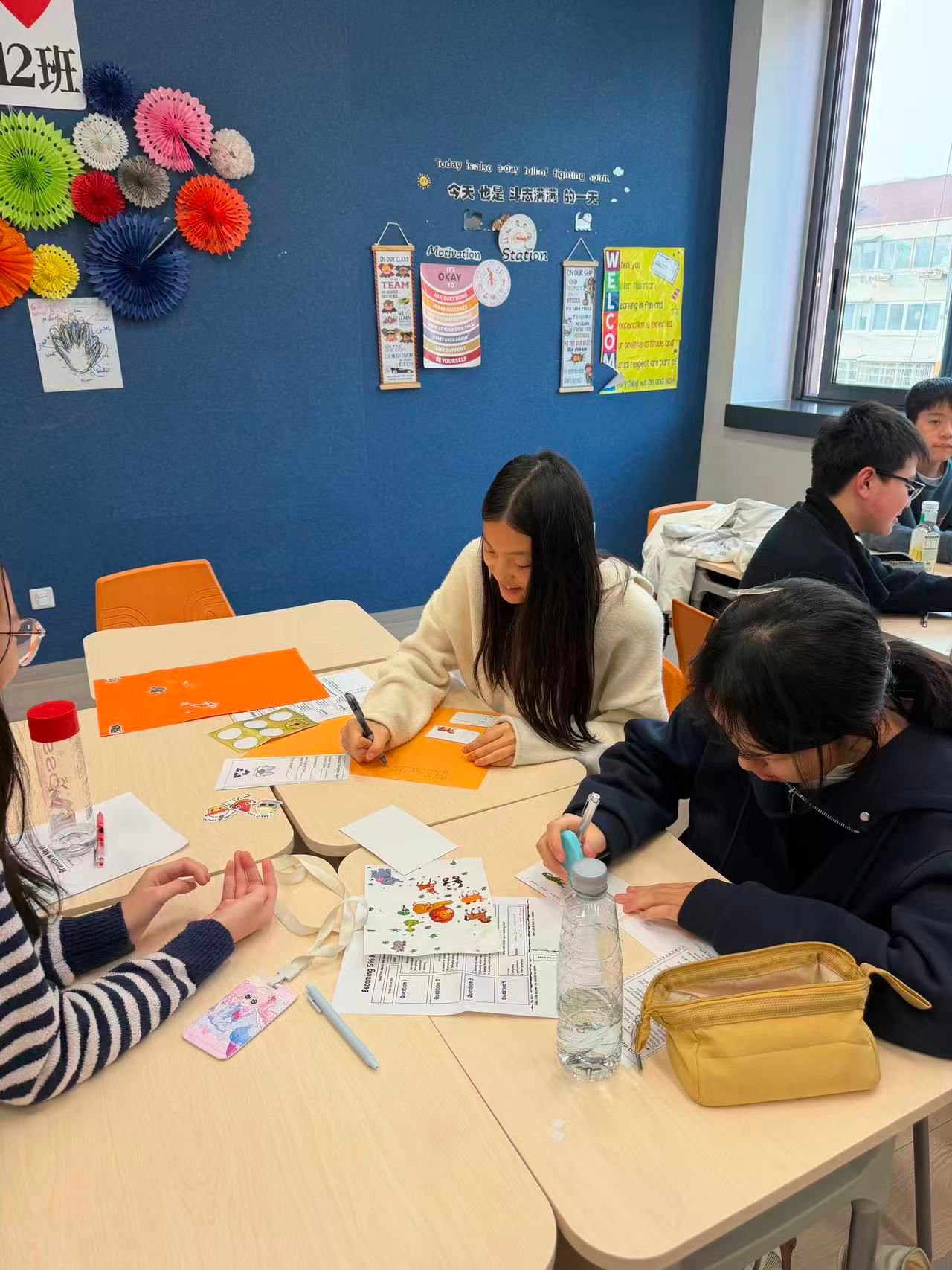
During the walk, each student selected one suggestion they committed to practicing within the coming week. They then wrote down one to three kind actions they planned to carry out and exchanged these reflections with students from other classes. This cross-class interaction highlighted a shared commitment: despite differences in personality or perspective, every group was actively seeking ways to make the learning environment more supportive and inclusive.
V. The “5% Kinder Wall”: Turning Reflection into Action
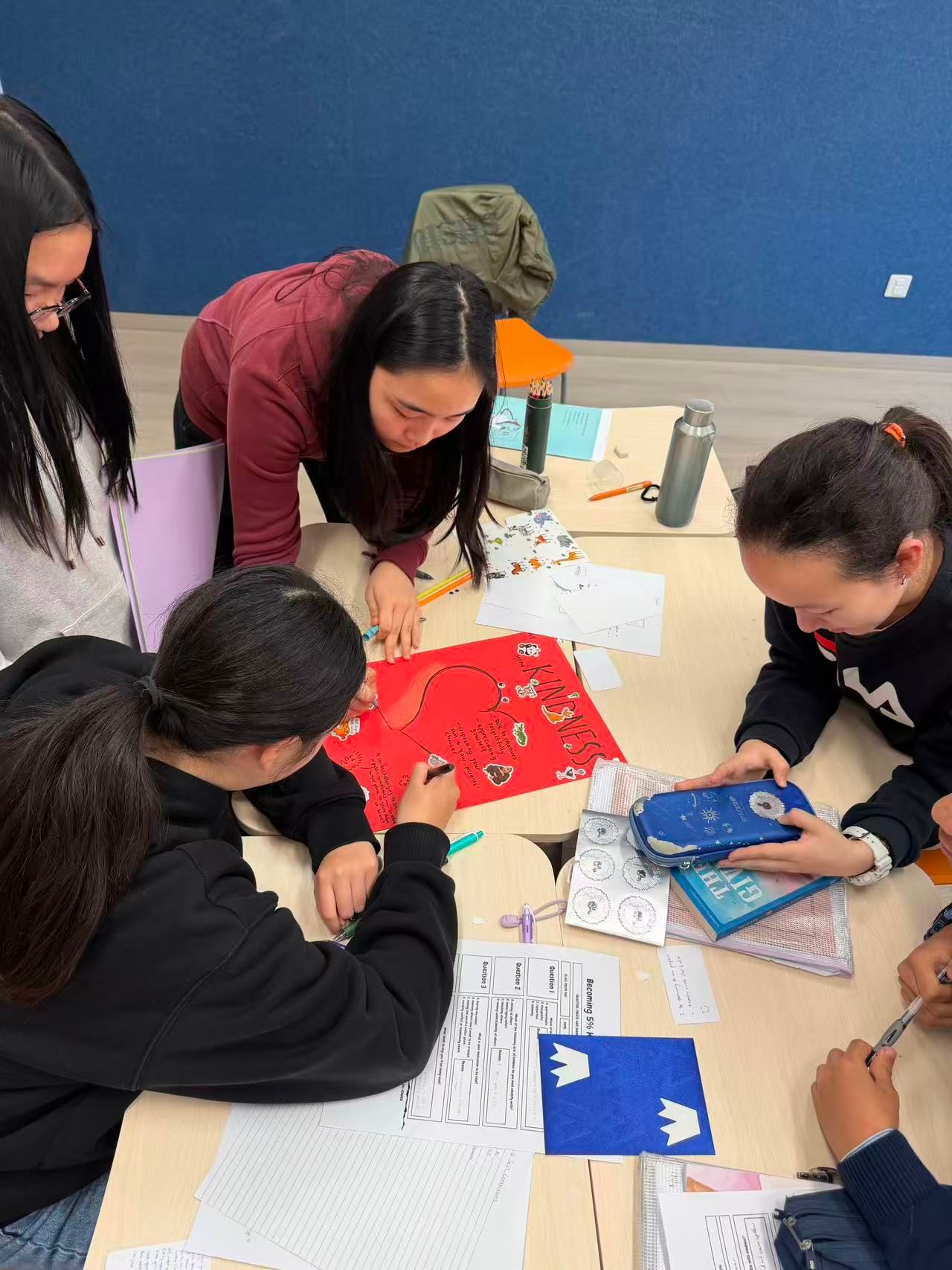
After conceptual learning, the lesson moved into a hands-on application through the “5% Kinder Wall” activity. Centered on the question “How can I become 5% kinder?”, students were guided to translate personal reflection into concrete, achievable actions.
Each student wrote at least two kindness suggestions on colorful note cards, emphasizing clarity, practicality, and sustainability. The class then collaboratively discussed how to arrange the notes, transforming them into a shared visual display at the back of the classroom. This collective creation not only strengthened student ownership, but also made kindness visible within the learning space—serving as an ongoing reminder of shared values and commitments.
VI. Conclusion: Making Kindness a Habit
Through this CME lesson, Grade 8 students deepened their understanding of kindness and altruism through reflection, dialogue, and practice. More importantly, they experienced character education as something lived and actionable rather than abstract.
It is hoped that the reflections and commitments formed during this lesson will extend beyond the classroom, allowing kindness to evolve from a moment of learning into a lasting habit—one capable of gently shaping relationships and contributing to a more caring school community.

(Written by Liwen Pan
Pictures by Grade 8 Teachers
Reviewed by Ms. Shen Ying, Shiyu Wu, Grace Gilmore)