-
ABOUT US
-
ACADEMICS
Curriculum Program
Departments
- English
- High School Chinese
- Primary and Junior School Chinese.
- High School Mathematics
- Middle School Mathematics
- Primary School Mathematics
- Music and Fine Arts
- Physical Education
- Physics
- Chemistry
- History and Geography
- Physical Science and Optional courses Department
- Middle School Biology
- High School Biology
- Social Sciences
- Computer Science
- Courses in Primary School
Achievements and Matriculations
College Counseling
Science & Technology Innovation Contest
Subject Competition
-
ARTS
-
ATHLETICS
-
AT SHSID
SHSID ∣ TIMES
PTSA
Club Exhibition
- 龙吟社
- Live 2 Drama
- Choir
- Hip-pop Dance Club
- The Primary School Dance Troupe
- Symposiums Club
- Biology Workshop
- You Shan
- VEX Robotic
- Peking Opera Club
- Baseball Club
- Model United Nations
- The World Scholar’s Cup
- Future Problem Solving Club
- United States Academic Pentathlon
- OM Club
- AMC Club
- Music for Patients
- SHSID Gazette
- Smile Charity
- Cultural Moments
- SciAcademy
- Stem Doge Alliance
- Chinese Debate Club
- IAA
- Mock Trial Club
- Zhengming Club
- Furry Friends
- GT-Racing
- Village Radio
- IMMC Club
- Creative Design and Intelligent Fabrication
- Future City Research Project
- ECOCAP
- AdvocaSEA
- SPDC
- Medishine
- Floorball Club
- Animusic MTC
- Wings Up
- All Booked
- Cyano
- Birding Community
Health and Wellness
Campus Safety
Cafeteria Service
-
ADMINISTRATION
-
ADMISSIONS
-
ALUMNI
Alumni Information
Honors Students
- Class of 2025
- Class of 2024
- Class of 2023
- Class of 2022
- Class of 2021
- Class of 2020
- Class of 2019
- Class of 2018
- Class of 2017
- Class of 2016
- Class of 2015
- Class of 2014
- Class of 2013
- Class of 2012
- Class of 2011
- Class of 2010
- Class of 2009
- Class of 2008
- Class of 2007
- Class of 2006
Who Studied at SHSID
SHS Foundation
-
DOCUMENTS
Middle School Math Department: The Algorithm of Life: How Math Lights Up Everyday Scenes
How far is mathematics from our daily lives? Is it a light-year away, or just a millimeter? Recently, to help students experience the charm of mathematics, the 8th-grade math teachers designed a unique project. Through inquiry-based, participatory, and interactive learning methods, they helped students understand the practical applications of mathematics. The teachers presented challenging problems in real-life contexts, encouraging students to actively explore and develop problem-solving skills. This activity, titled “The Algorithm of Life”, seeks not just answers, but a new way of seeing the world itself.
In this inspiring project, students began with two real-life scenarios: The use of the Galton Board to predict traffic patterns and the application of the Pythagorean Theorem in measurement. These examples highlight the critical role that probability and the Pythagorean theorem play in everyday life and spark students' curiosity to explore how math can unlock broader real-life solutions.
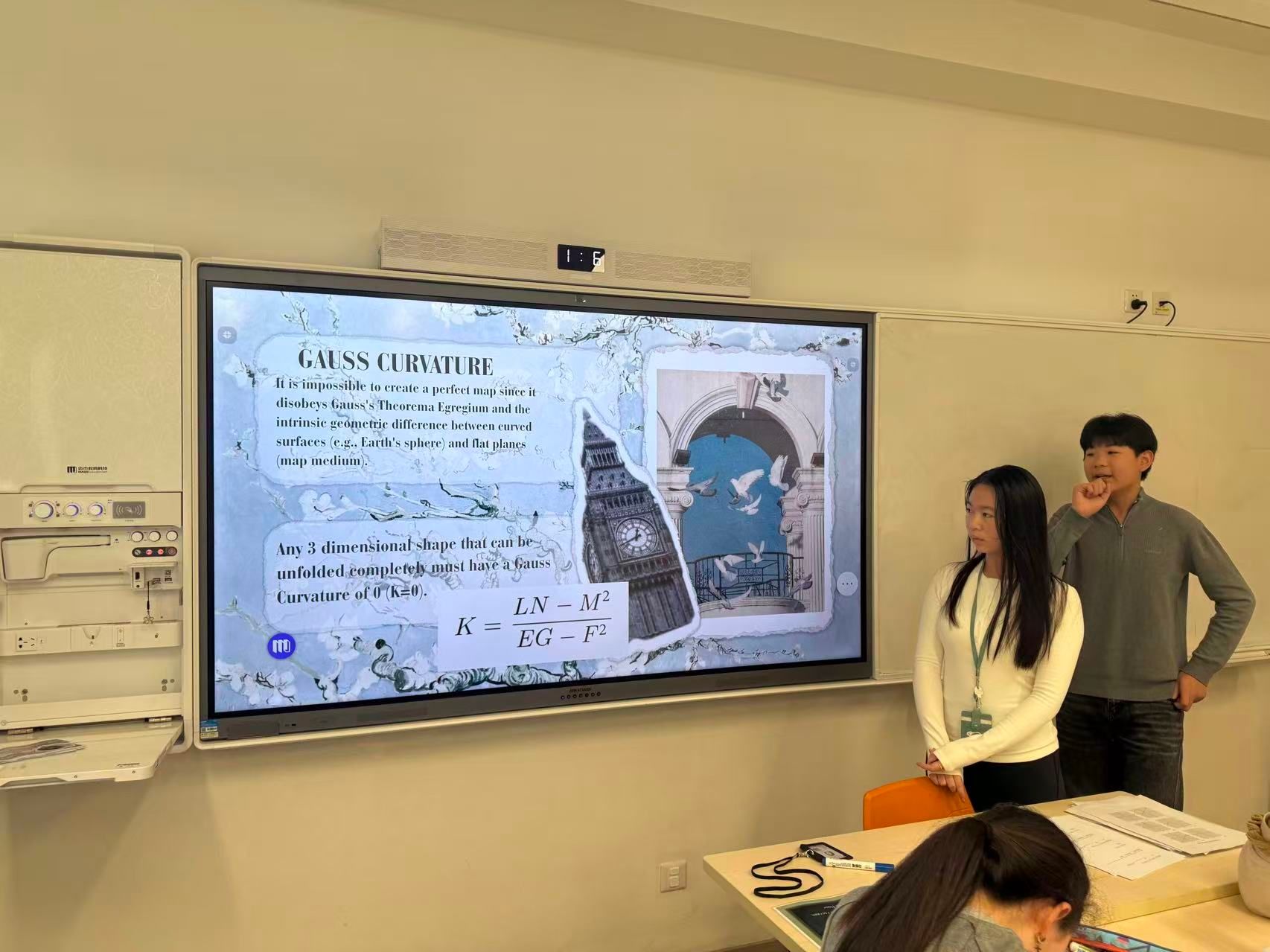
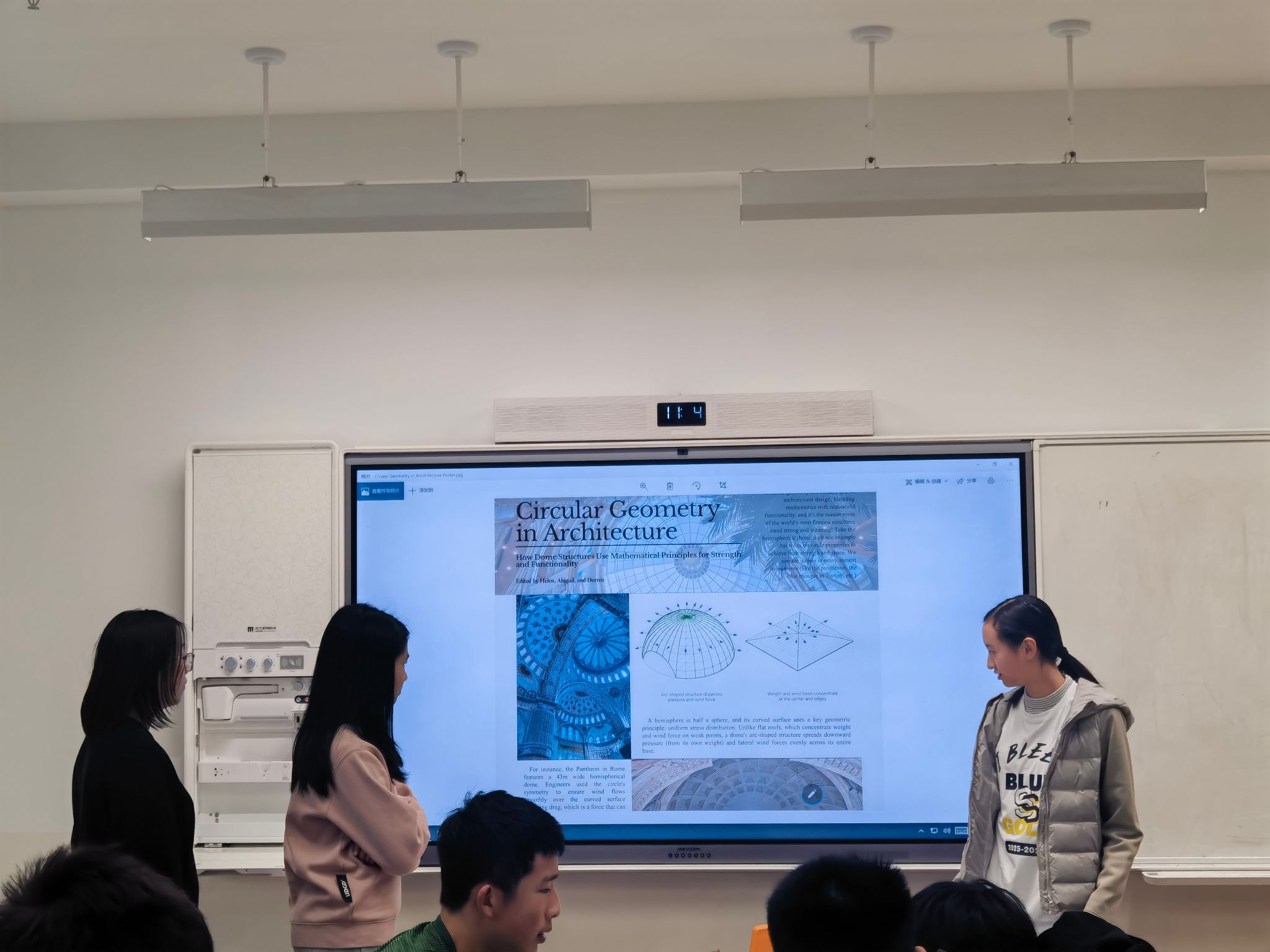
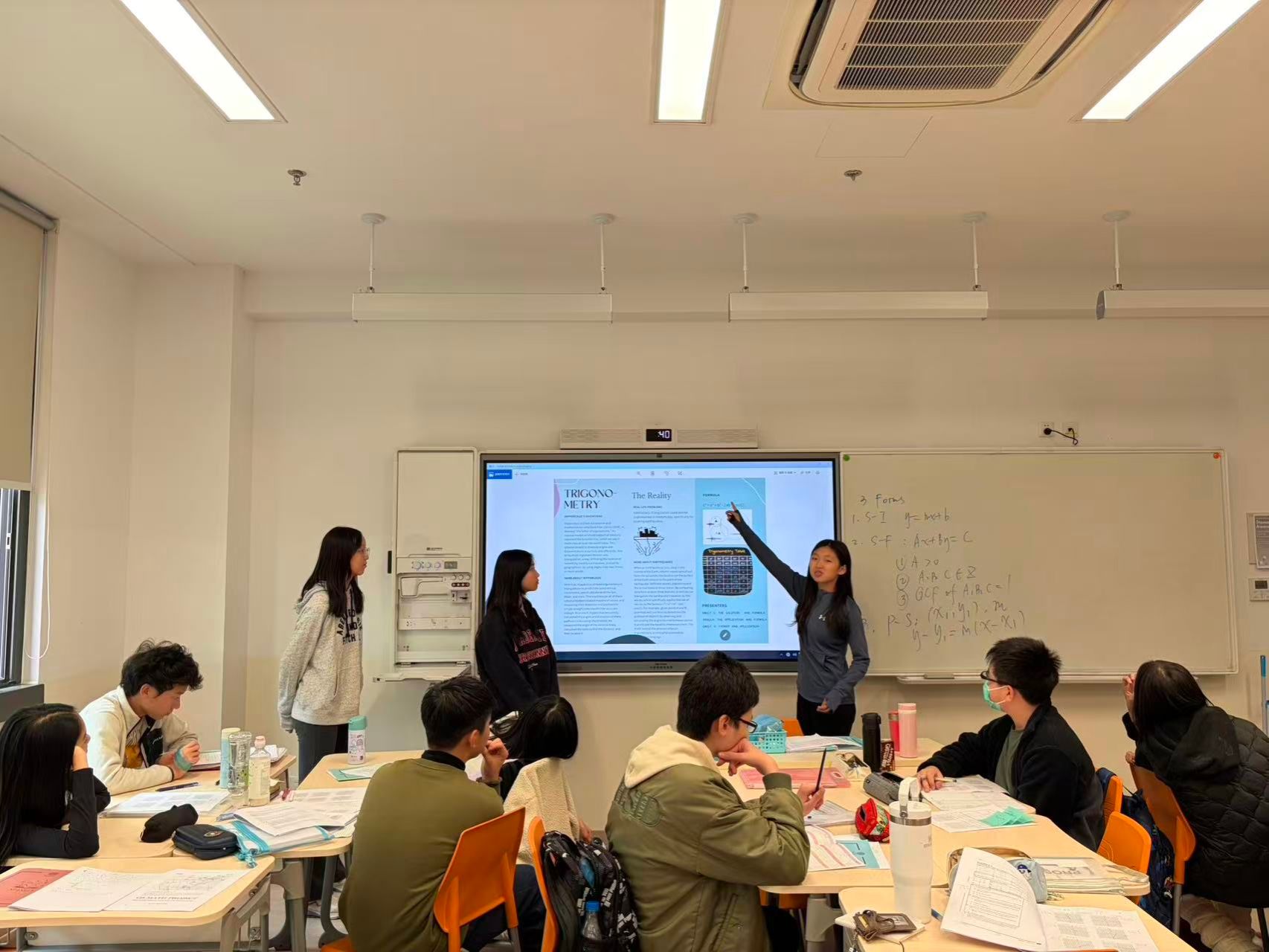
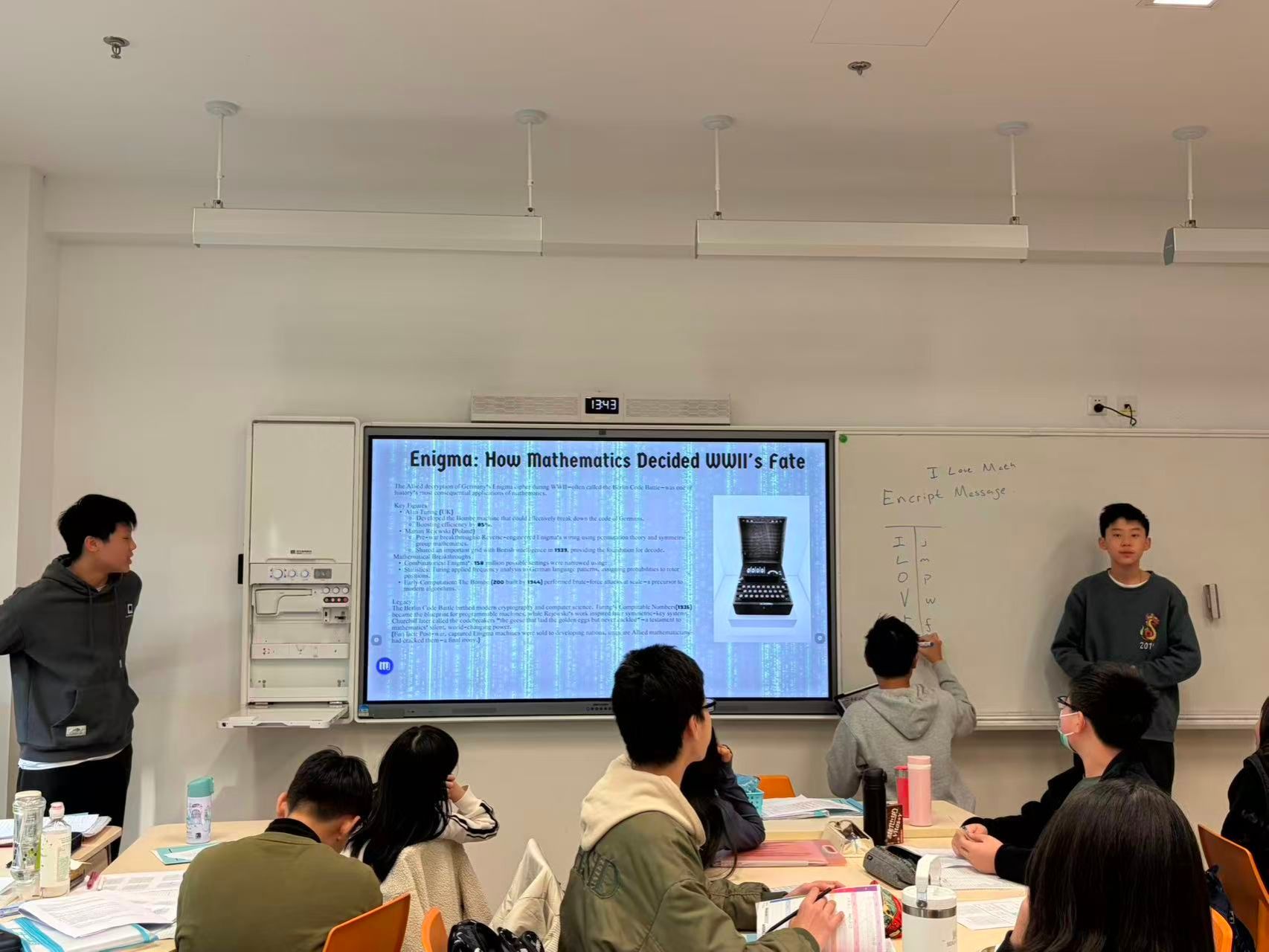
However, the students' explorations were not limited to the topics themselves. 8th-grade math teachers not only guided students to understand the mathematical principles behind daily life, but also encouraged them to think about how these principles can be applied to other areas.
These discussions allowed students to see the practical applications of mathematics across various fields. Moreover, they inspired deeper reflection and innovative exploration of the subject.
As the project progressed, students worked collaboratively in teams, gathering information, analyzing data, and presenting their findings in creative ways. They honed in on their logical thinking, communication skills, and developed a greater sense of self-management and innovation. In the end, each group presented their research results through PowerPoint presentations and posters, showcasing how mathematics shapes our everyday lives and transforms the world around us. Outstanding teams were awarded beautifully crafted certificates, but the true reward was in the profound insights students gained into the power of mathematics and its real-world applications.
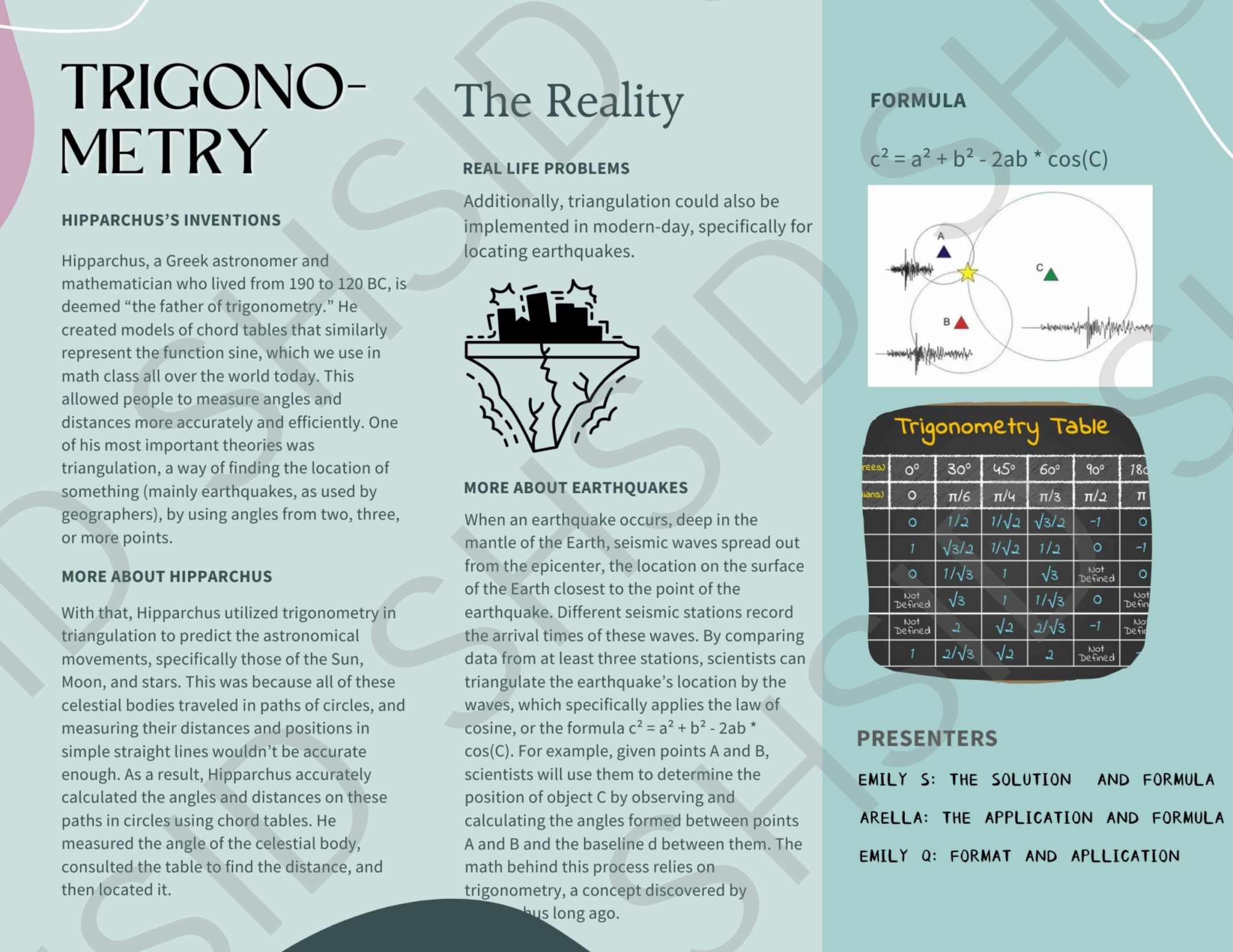
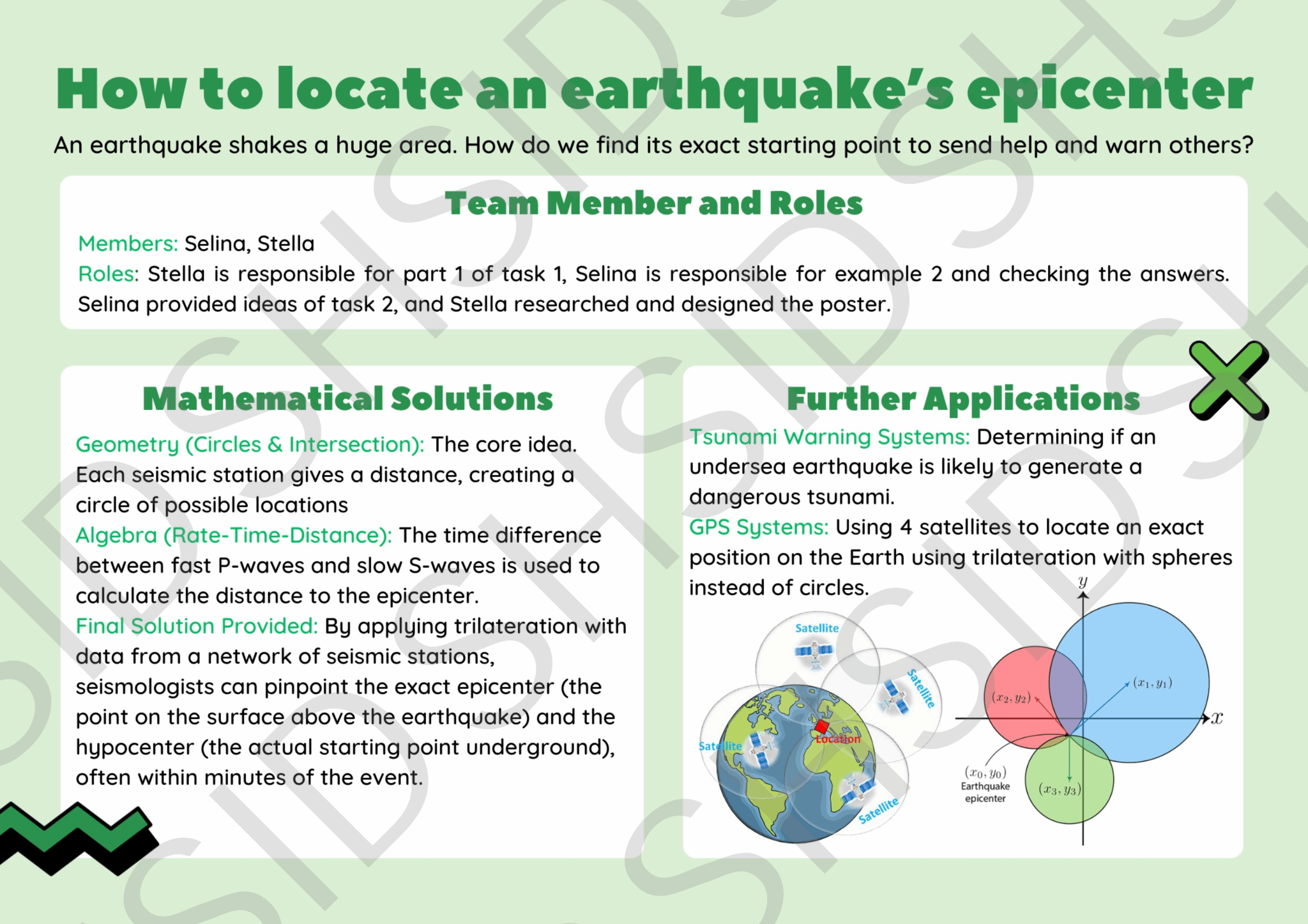
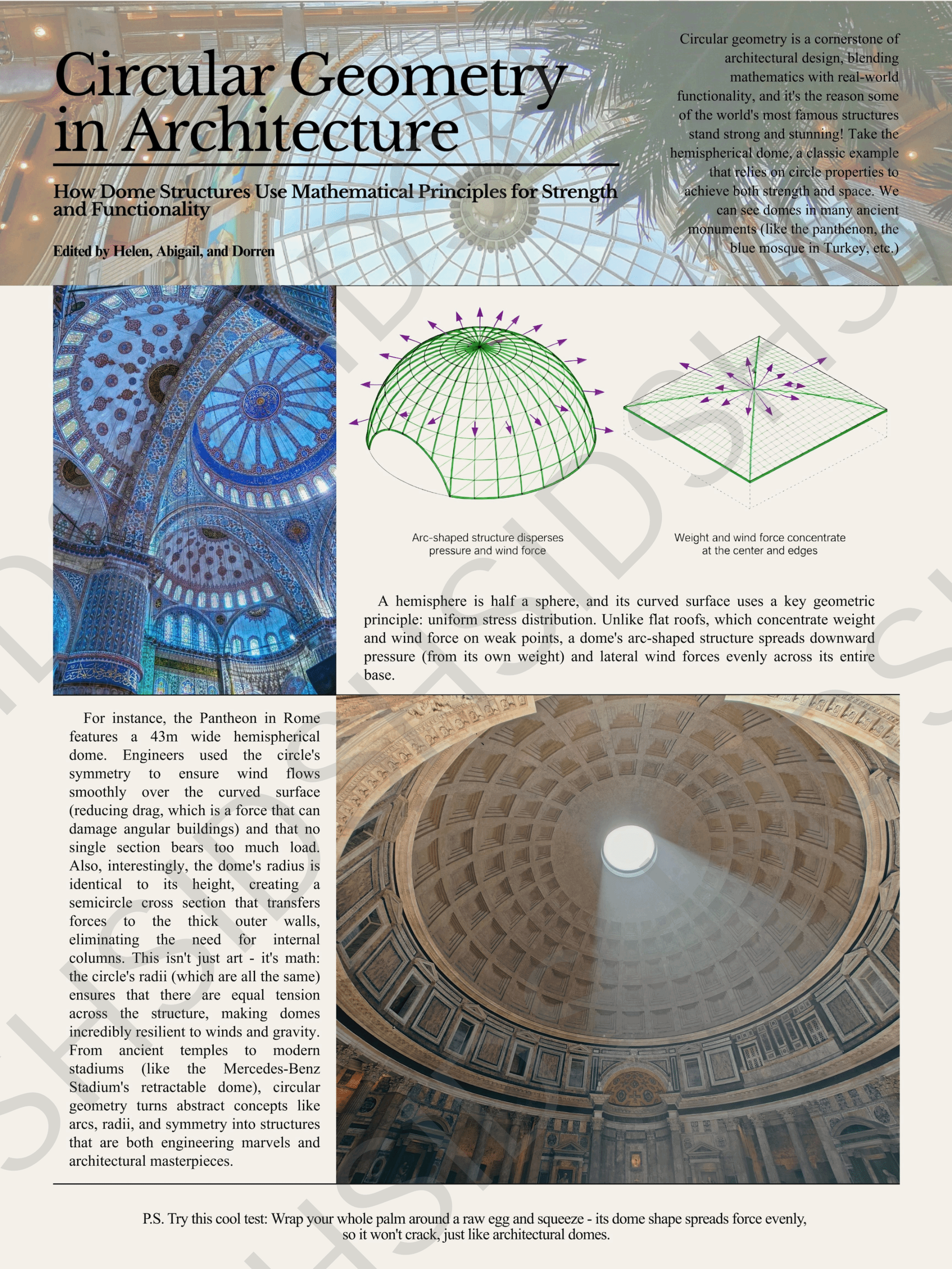
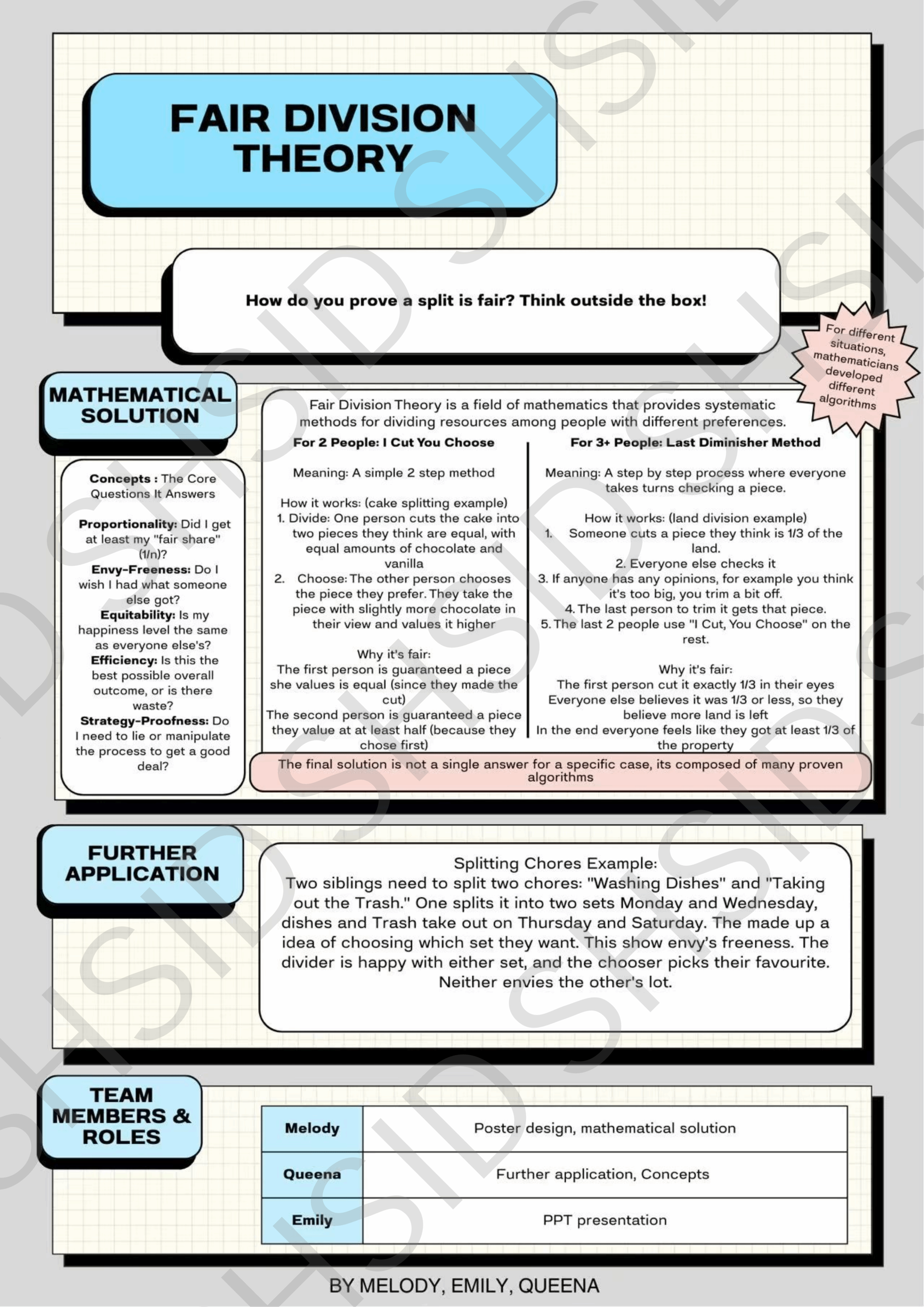
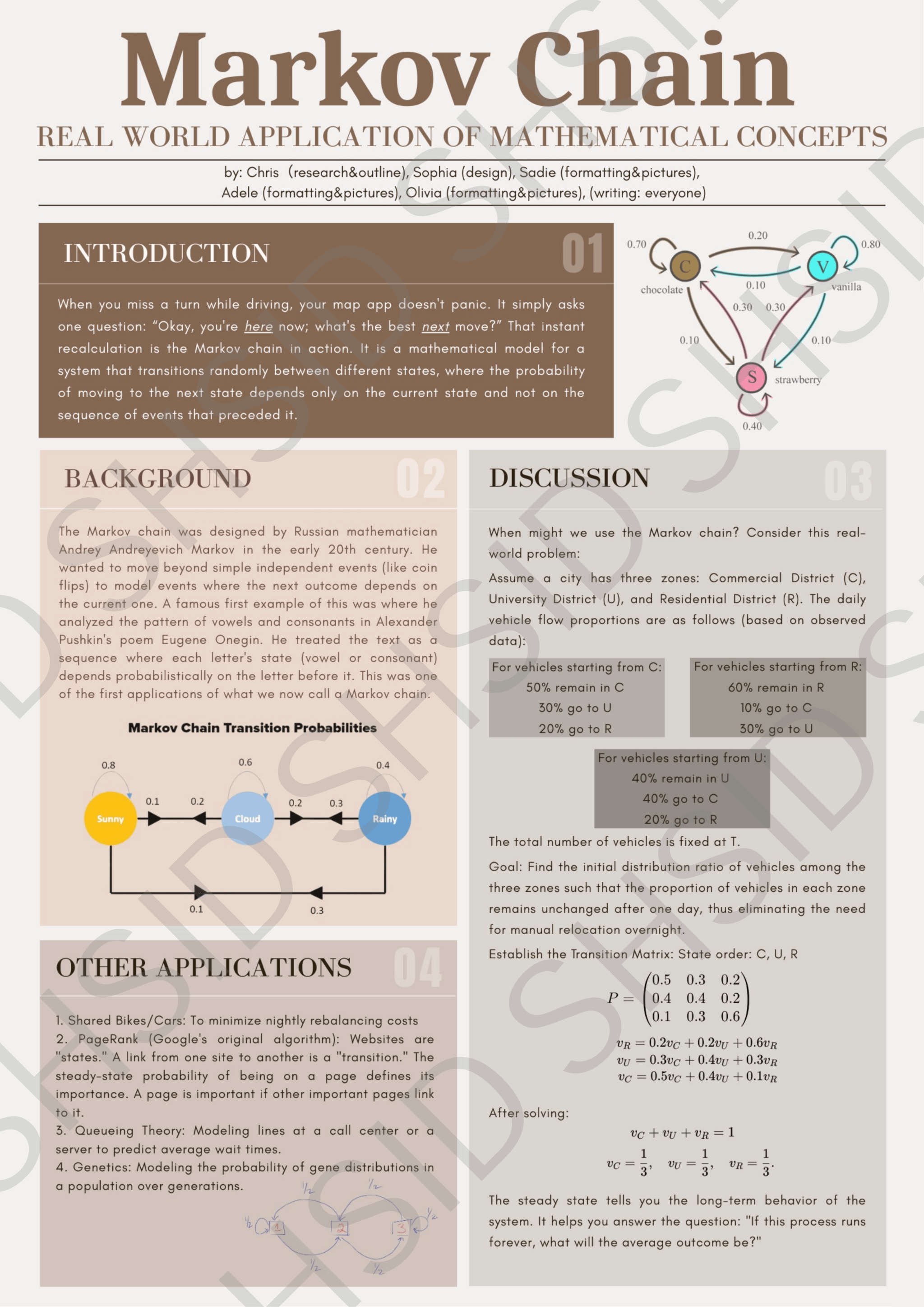
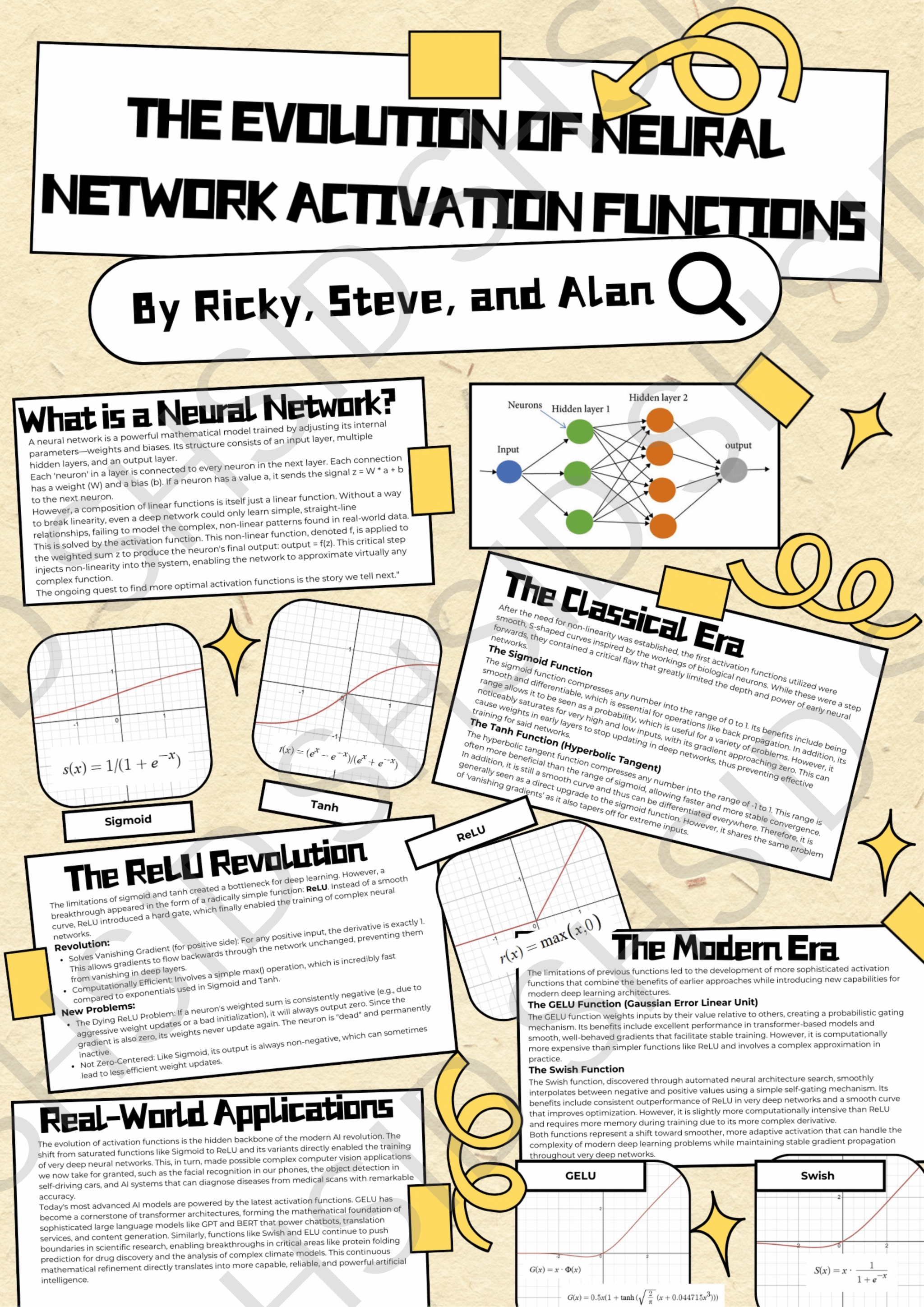
Through this activity, the students deeply appreciated that mathematics is not an abstract symbol detached from their lives, but the skeleton of the real world. When they learn to observe the world through the lens of mathematics, they will obtain a key to understanding the logic of all things. After turning the key, what lies after the door is the reality people live in— a reality that can be understood and shaped.
(Written by Jiayi Chen
Pictures by Grade 8 Math Teachers
Reviewed by Wenyin Zheng, Shiyu Wu, Grace Gilmore)