-
ABOUT US
-
ACADEMICS
Curriculum Program
Departments
- English
- High School Chinese
- Primary and Junior School Chinese.
- High School Mathematics
- Middle School Mathematics
- Primary School Mathematics
- Music and Fine Arts
- Physical Education
- Physics
- Chemistry
- History and Geography
- Physical Science and Optional courses Department
- Middle School Biology
- High School Biology
- Social Sciences
- Computer Science
- Courses in Primary School
Achievements and Matriculations
College Counseling
Science & Technology Innovation Contest
Subject Competition
-
ARTS
-
ATHLETICS
-
AT SHSID
SHSID ∣ TIMES
PTSA
Club Exhibition
- 龙吟社
- Live 2 Drama
- Choir
- Hip-pop Dance Club
- The Primary School Dance Troupe
- Symposiums Club
- Biology Workshop
- You Shan
- VEX Robotic
- Peking Opera Club
- Baseball Club
- Model United Nations
- The World Scholar’s Cup
- Future Problem Solving Club
- United States Academic Pentathlon
- OM Club
- AMC Club
- Music for Patients
- SHSID Gazette
- Smile Charity
- Cultural Moments
- SciAcademy
- Stem Doge Alliance
- Chinese Debate Club
- IAA
- Mock Trial Club
- Zhengming Club
- Furry Friends
- GT-Racing
- Village Radio
- IMMC Club
- Creative Design and Intelligent Fabrication
- Future City Research Project
- ECOCAP
- AdvocaSEA
- SPDC
- Medishine
- Floorball Club
- Animusic MTC
- Wings Up
- All Booked
- Cyano
- Birding Community
Health and Wellness
Campus Safety
Cafeteria Service
-
ADMINISTRATION
-
ADMISSIONS
-
ALUMNI
Alumni Information
Honors Students
- Class of 2025
- Class of 2024
- Class of 2023
- Class of 2022
- Class of 2021
- Class of 2020
- Class of 2019
- Class of 2018
- Class of 2017
- Class of 2016
- Class of 2015
- Class of 2014
- Class of 2013
- Class of 2012
- Class of 2011
- Class of 2010
- Class of 2009
- Class of 2008
- Class of 2007
- Class of 2006
Who Studied at SHSID
SHS Foundation
-
DOCUMENTS
Primary School Math Department: G4-5 Math Week
Last week, SHSID hosted its annual Math Week for students in Grades 4 and 5. Designed as a project-based learning experience rather than a series of isolated classroom activities, Math Week invited students to engage with mathematical ideas through hands-on exploration, collaborative problem-solving, and thoughtful use of technology. Across the week, abstract concepts were transformed into concrete experiences. Students applied mathematics to real situations, worked closely with peers, and reflected critically on both their methods and results. Math Week once again demonstrated that mathematics education is not solely about mastering procedures, but about developing ways of thinking— observing patterns, testing ideas, and making sense of the world through logic and reason.
Grade 4: Geometry in Action— From Concepts to Creation
For Grade 4 students, Math Week centered on the theme of geometry. Activities were carefully designed to connect geometric knowledge with hands-on construction, allowing students to explore shapes, structures, and spatial relationships through direct experience. Daily logic games such as 24 Points and Sudoku complemented the main tasks, reinforcing computational fluency, reasoning skills, and strategic thinking. A stamp-collection system encouraged sustained engagement and active participation throughout the week.
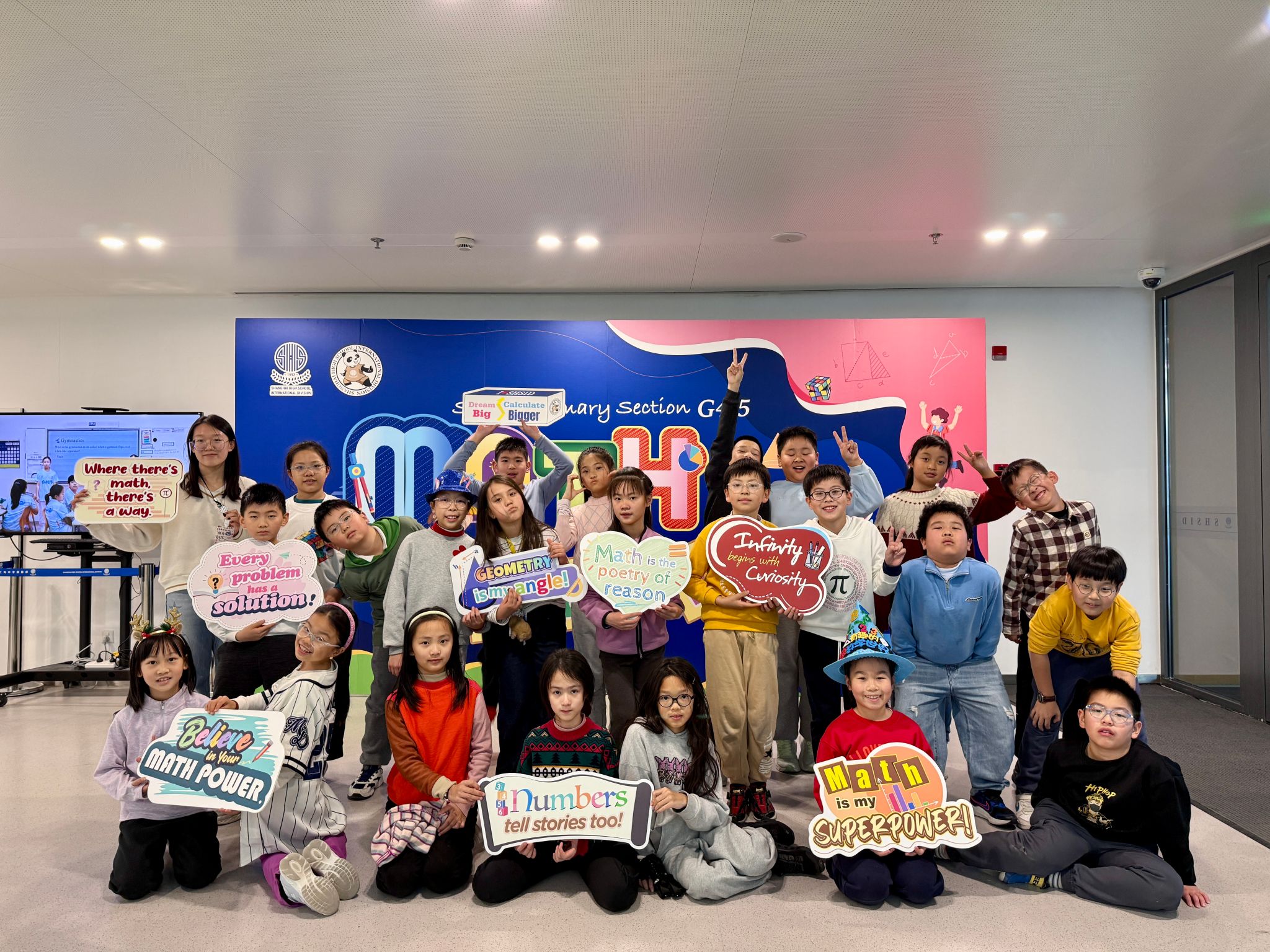
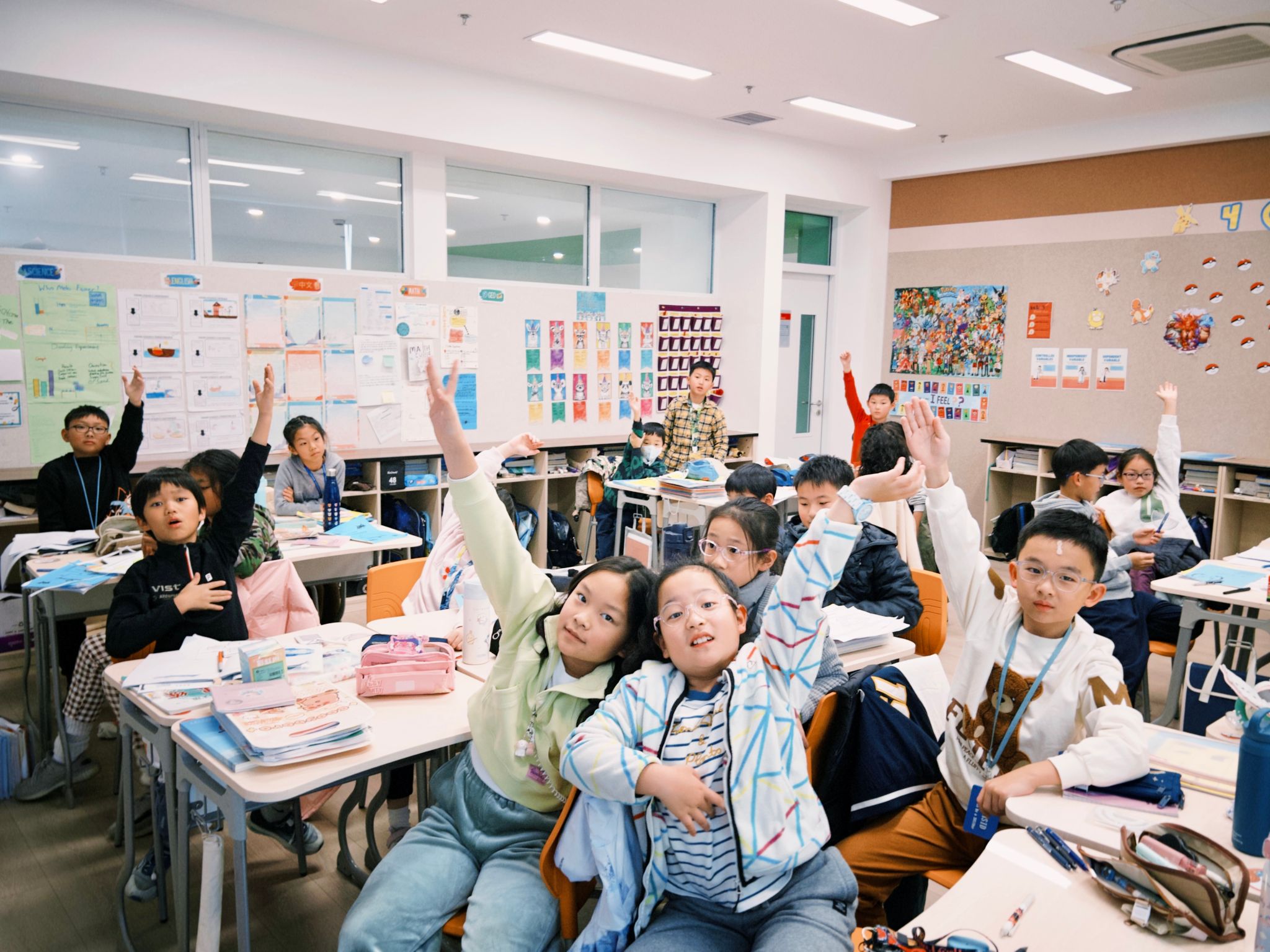
The first day focused on revisiting key geometric concepts and building a shared foundation for learning. Students then took part in a "Geometry Detective" activity, using clues related to properties and theorems to identify unknown shapes through logical deduction. An innovative element was the introduction of AI-generated geometry puzzles. Students analyzed the information provided, discussed its accuracy and usefulness, and made their own judgments. This activity sparked curiosity while helping students begin to see AI as a tool that supports learning rather than replaces thinking.
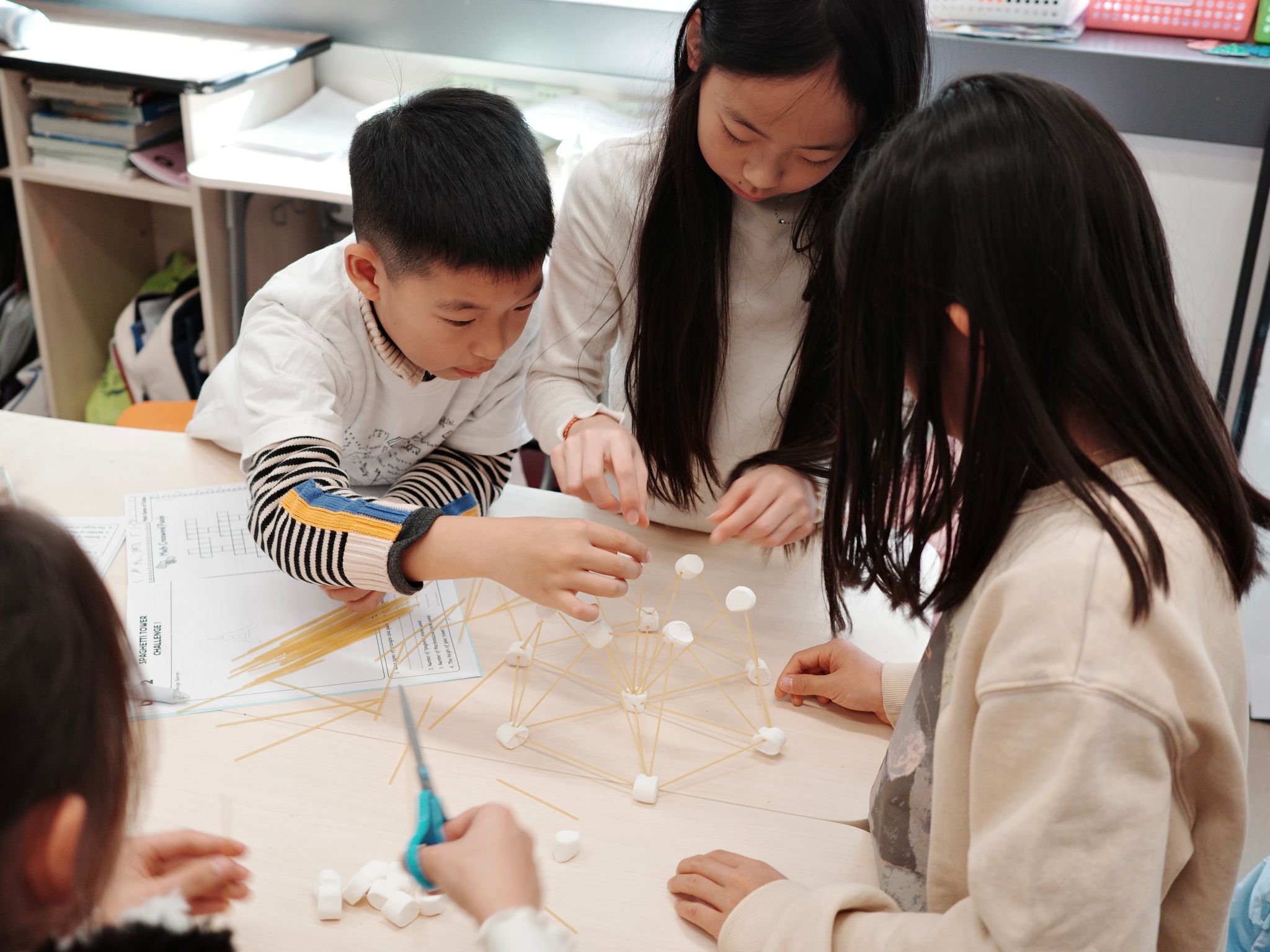
On the second day, students became structural engineers, challenged to build the tallest stable structure using spaghetti and marshmallows. Through experimentation, they discovered how geometric principles— such as the stability of triangles and the flexibility of quadrilaterals— directly affected the strength of their designs. Trial and error played an essential role, helping students understand that failure is often a necessary step toward improvement. The tallest spaghetti tower that the students made reached 1.04 meters.
The third day shifted the focus from application to creation. For the last three weeks, students have worked in groups to design and construct a "Geometric City", incorporating points, lines, planes, solids, symmetry, parallelism, and perpendicularity into buildings and city layouts. During a gallery walk, students examined one another's designs, exchanged ideas, and reflected on how geometry could serve both functional and aesthetic purposes. Peer learning played a key role, encouraging students to learn from different approaches and perspectives.
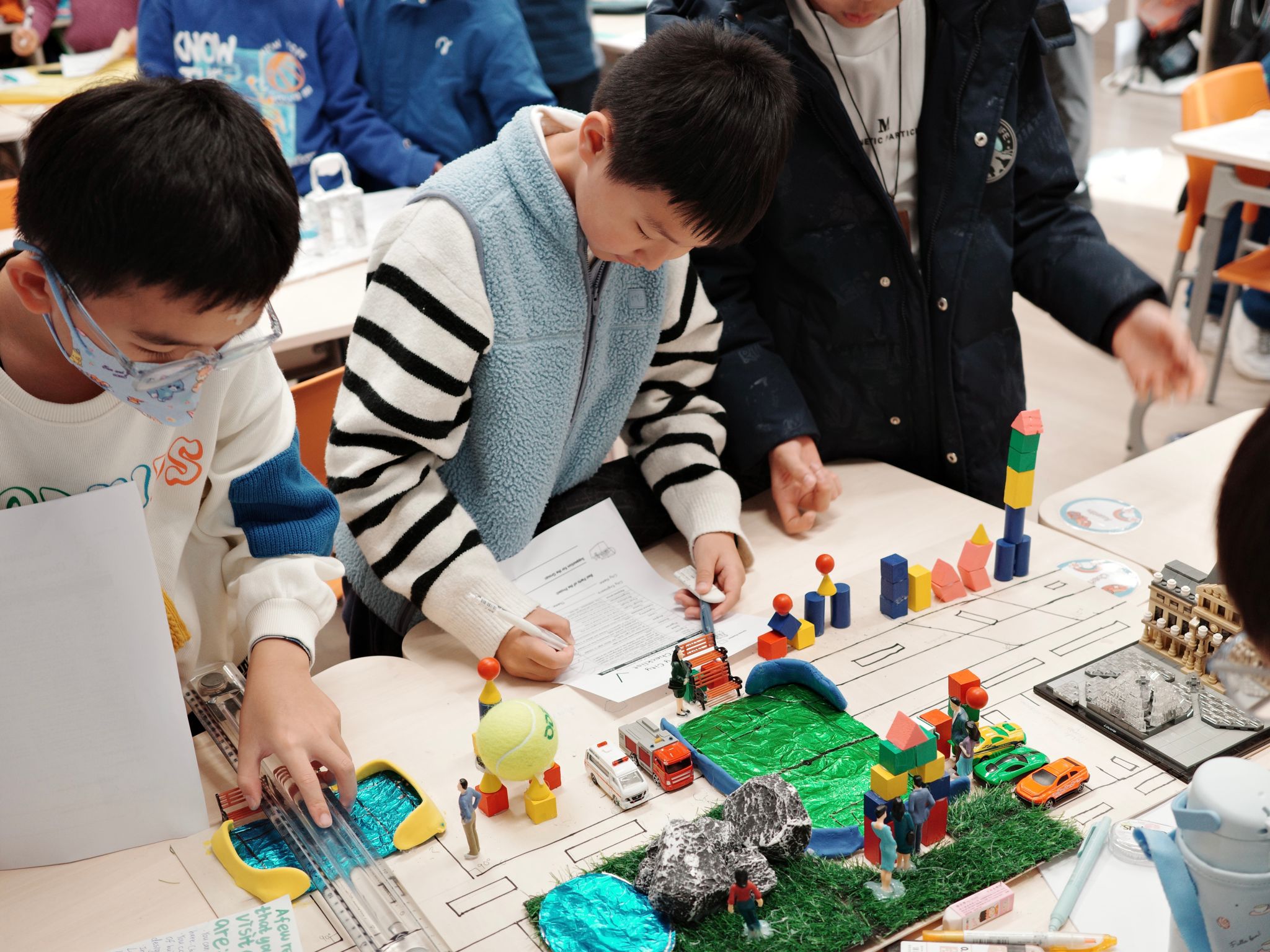
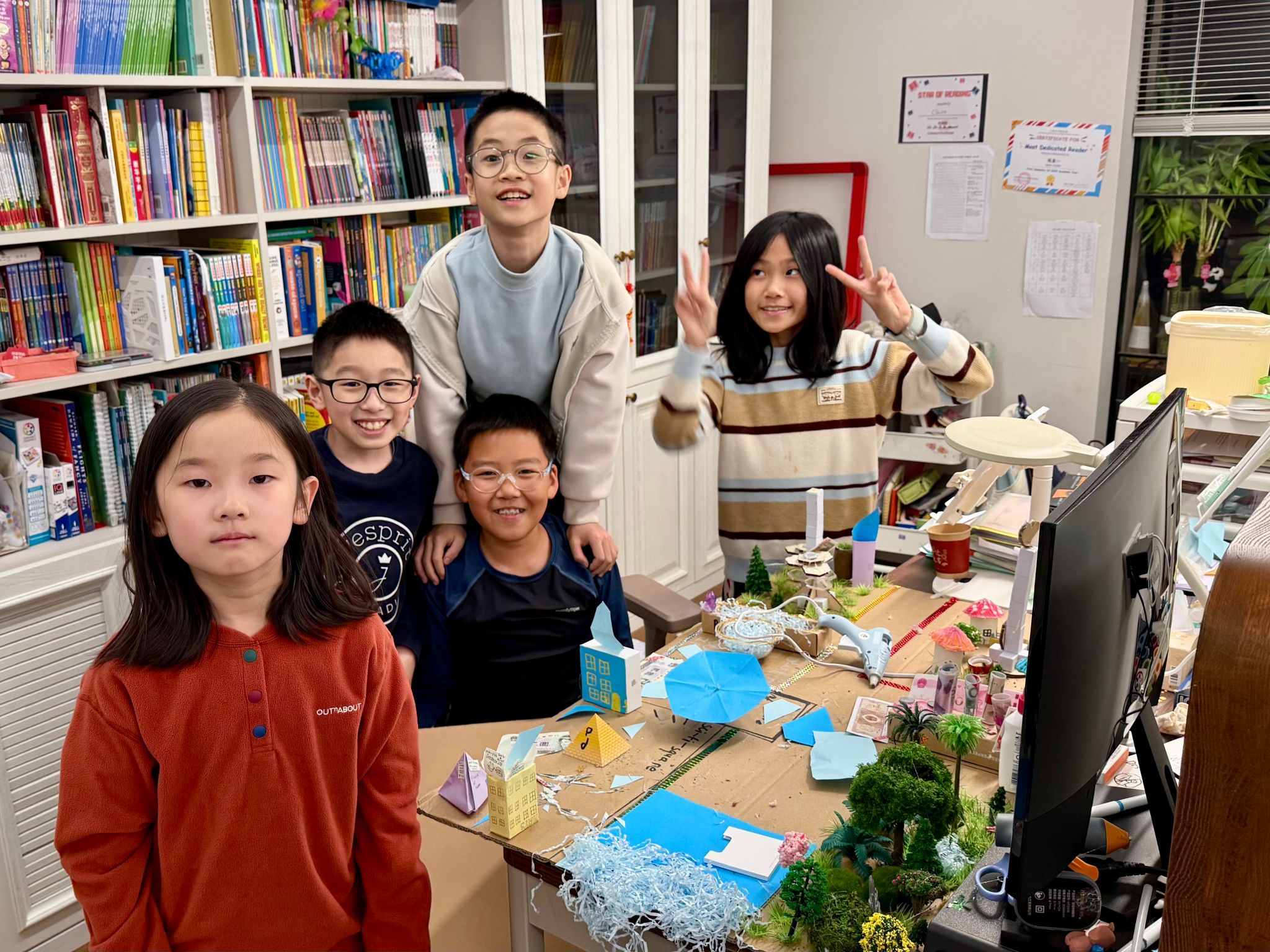
On the final day, each group presented its city, explaining the design choices, geometric features, and underlying ideas. From modern cityscapes to designs inspired by traditional culture, the presentations revealed both creativity and thoughtful application of mathematical concepts.
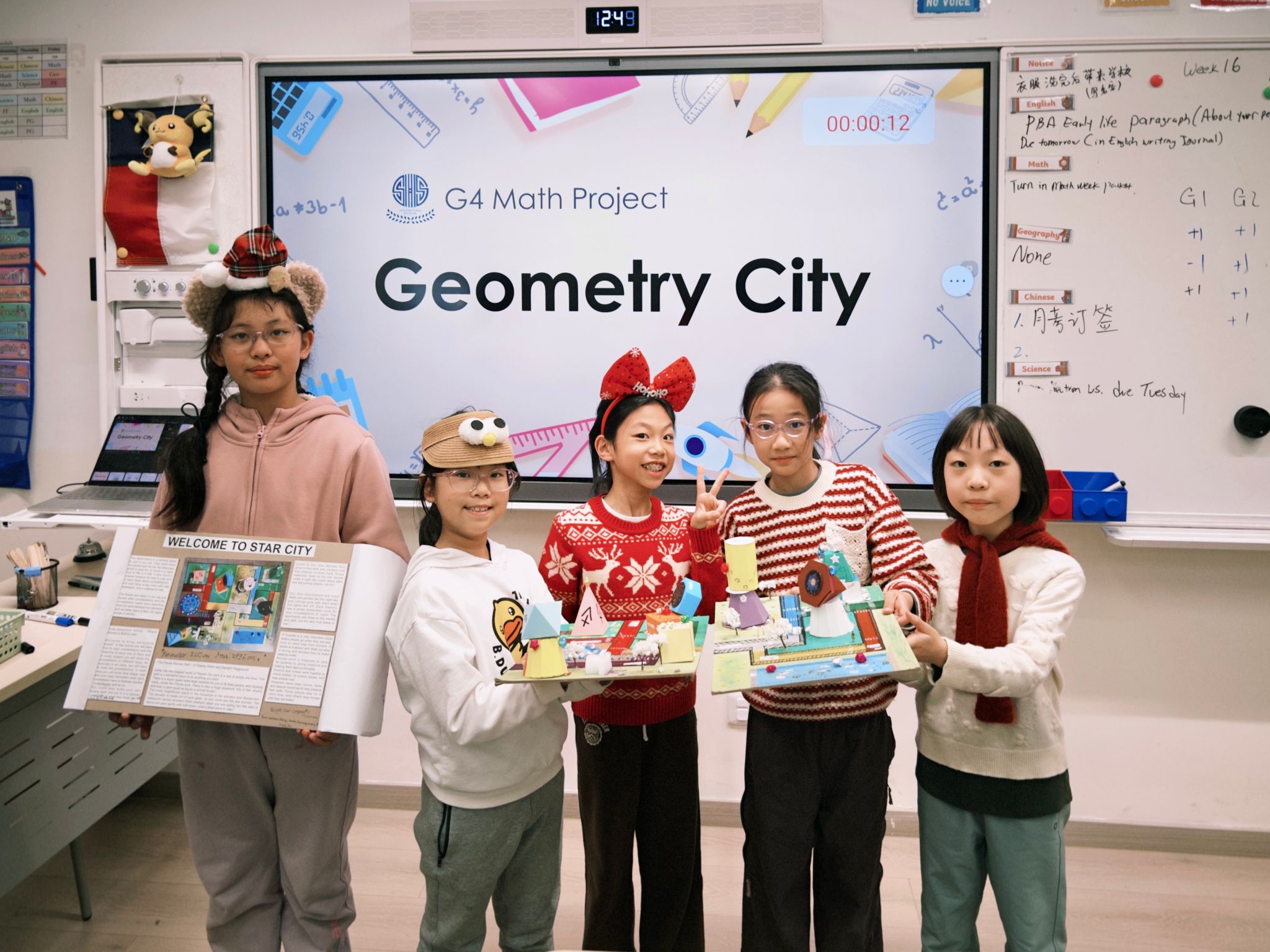
Through this complete learning cycle— review, application, creation, and presentation— Grade 4 students developed a deeper and more meaningful understanding of geometry, while also strengthening collaboration, communication, and creative thinking skills.
Grade 5: Measuring the World— Thinking Beyond the Ruler
Grade 5 Math Week focused on indirect measurement, challenging students to estimate lengths, areas, and heights using non-standard units, proportional reasoning, and mathematical models. Activities progressed from simple to complex, guiding students from personal measurement to large-scale campus exploration. Throughout the week, AI tools were integrated with clear guidelines. Students were encouraged not only to use AI, but also to question its suggestions, evaluate feasibility, and make informed decisions— an important step in developing digital literacy and critical thinking.
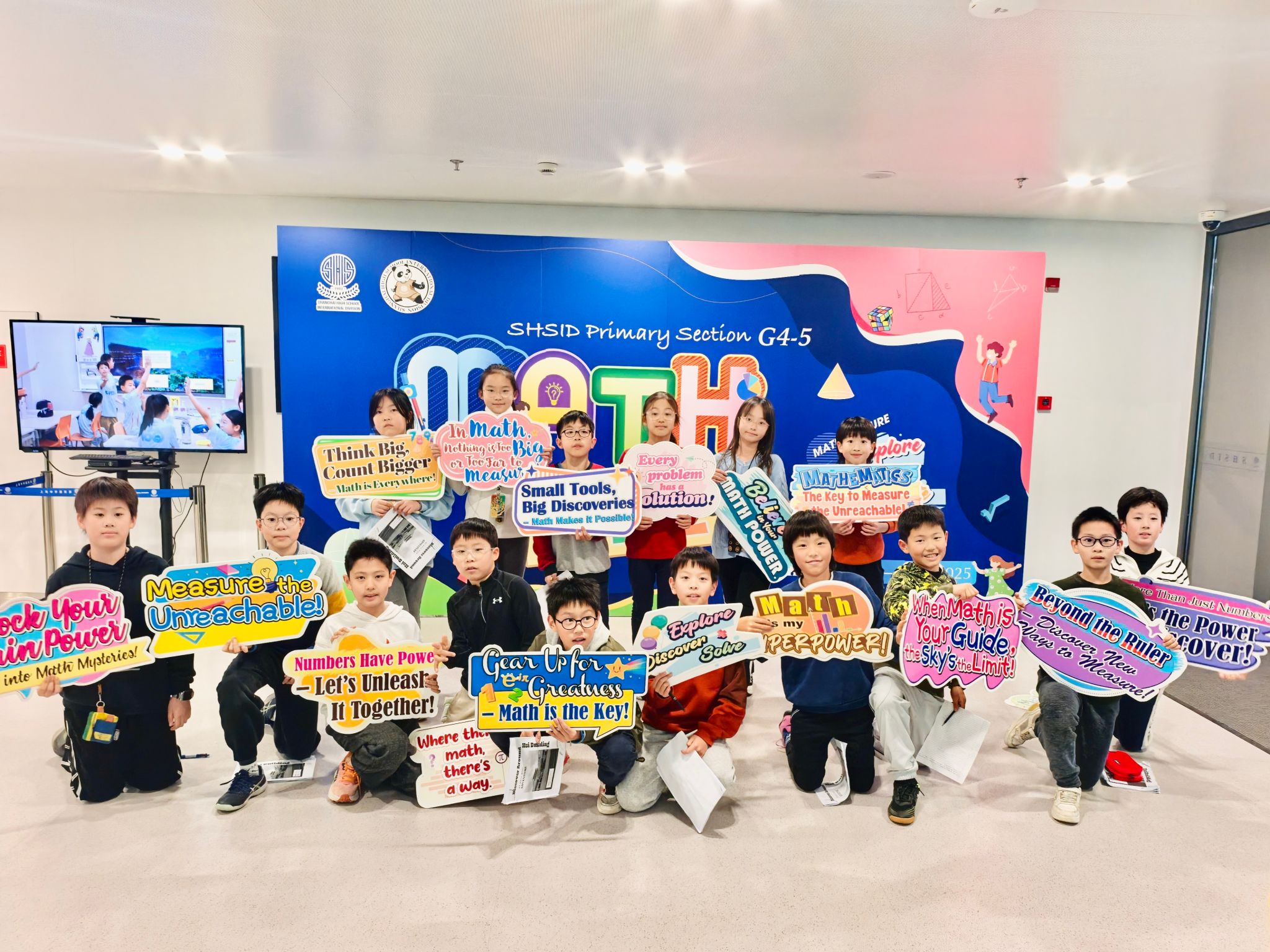
Before the week began, students used AI to explore the concept of indirect measurement. In class, they discussed the strengths and limitations of AI-generated methods and proposed their own strategies. These included using hand spans, arm spans, shadows, and step length as measurement tools. Students first calibrated their personal "body rulers" and tested them on classroom objects, learning how accuracy and consistency affect results.
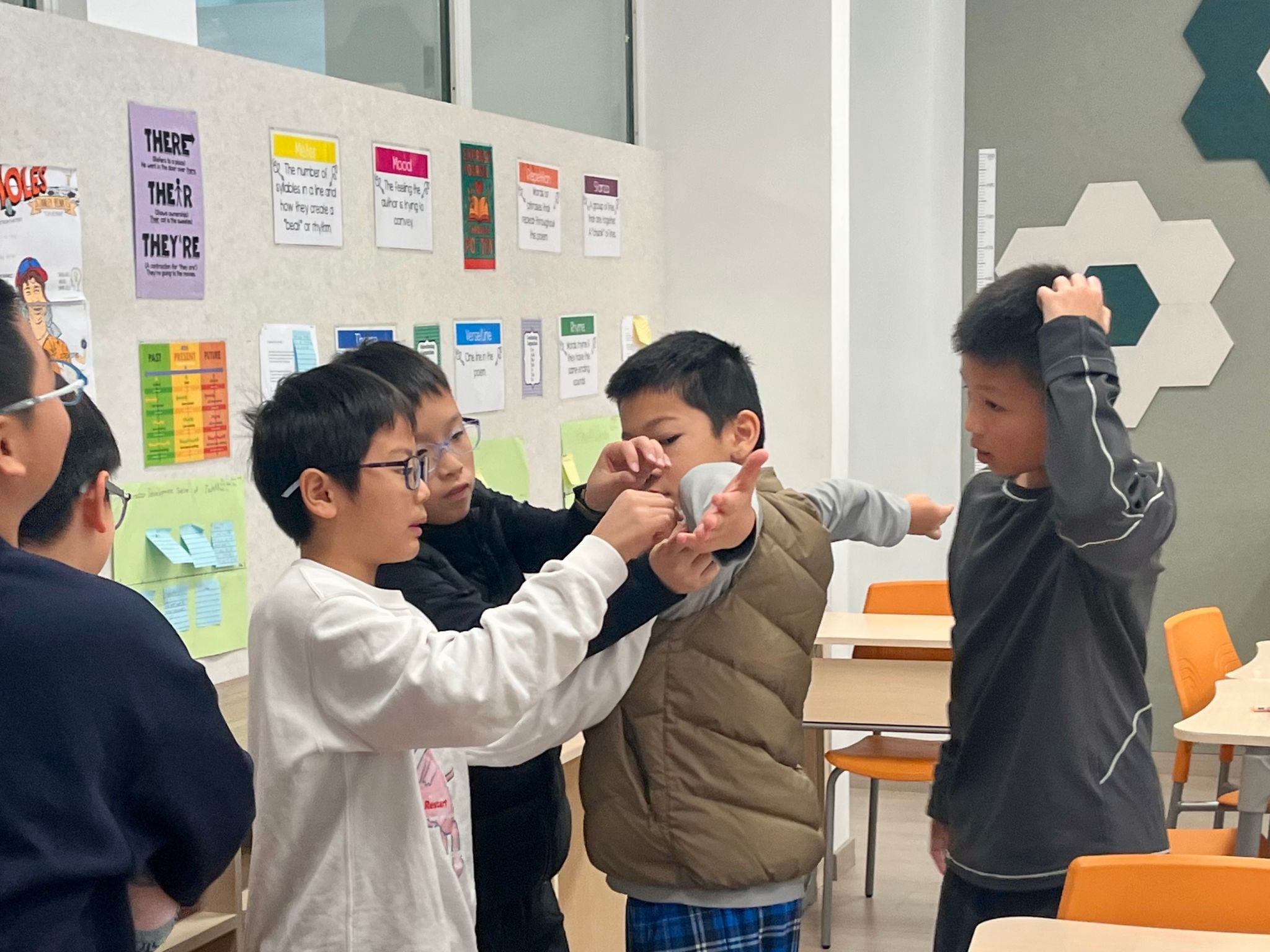
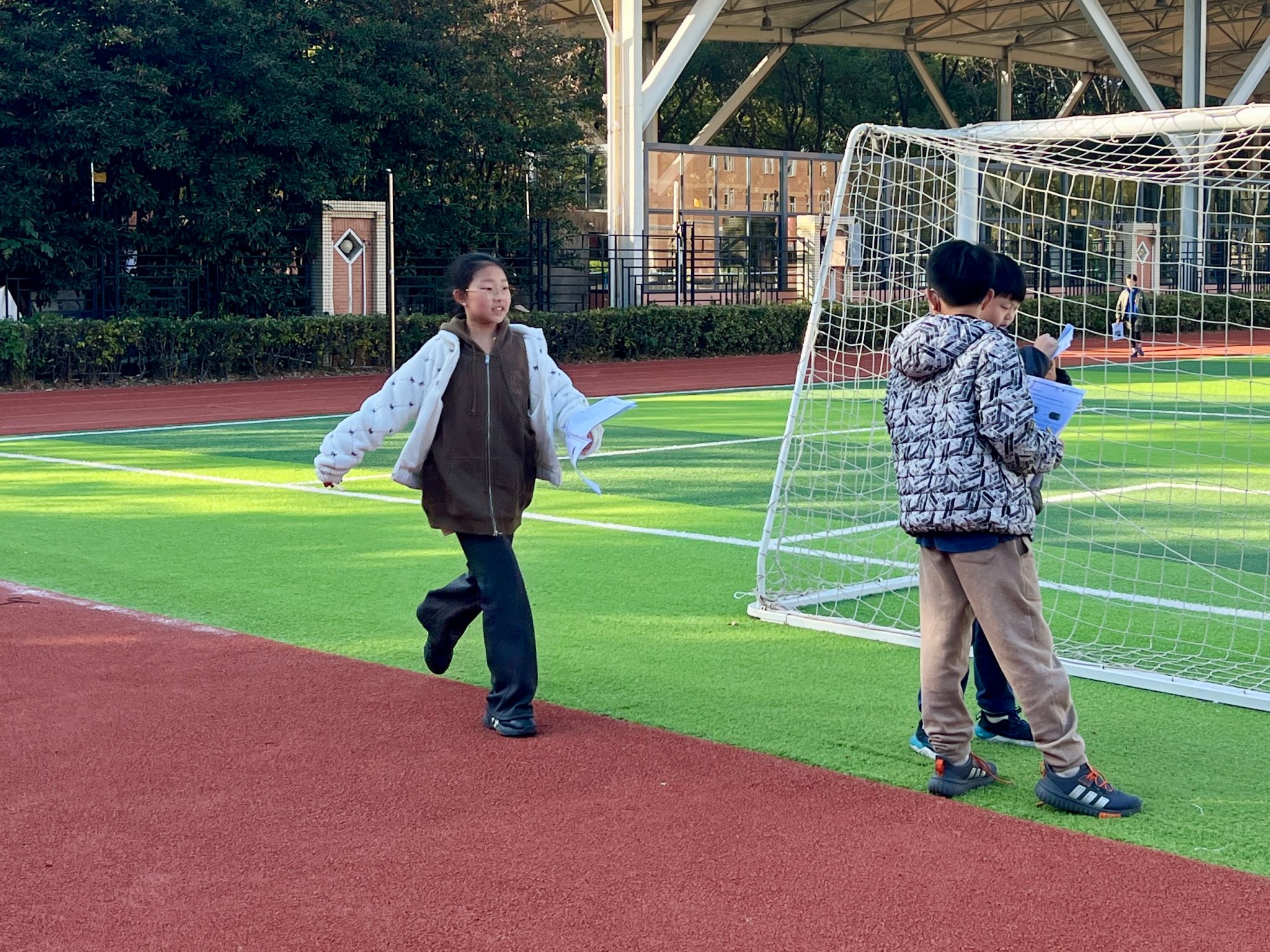
On the second day, students applied their methods outdoors, measuring the playground using step lengths and estimating area through scaled drawings and grid methods. Reflection discussions focused on standardizing procedures, handling inconsistent data, and reducing error through repeated measurements and averaging.
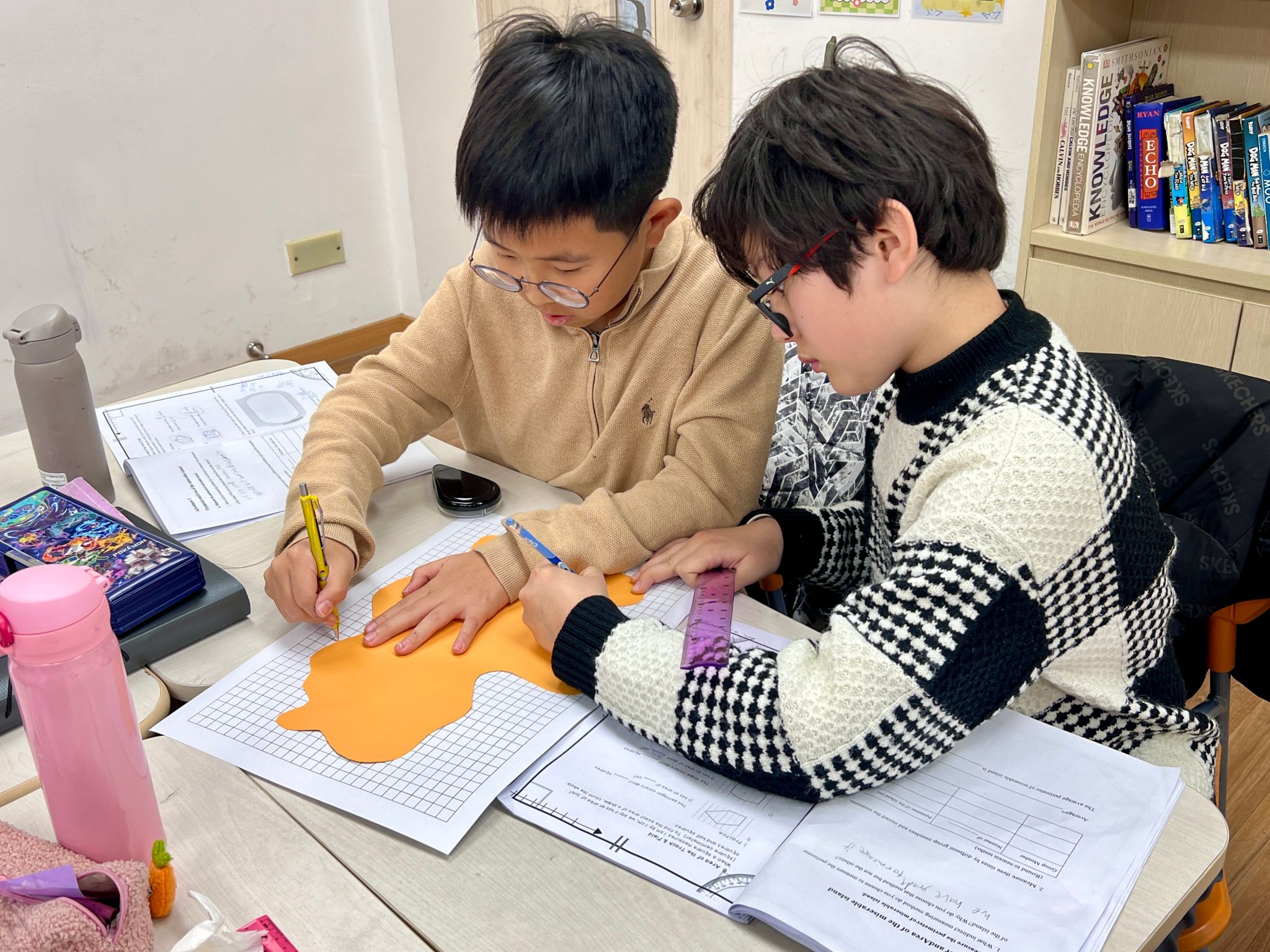
The third day introduced irregular shapes, such as the campus lake and mysterious island. Students adapted previous strategies to estimate curved perimeters and irregular areas, demonstrating flexibility and problem-solving skills. These tasks required students to combine multiple methods and make reasonable approximations--key skills in real-world mathematics.
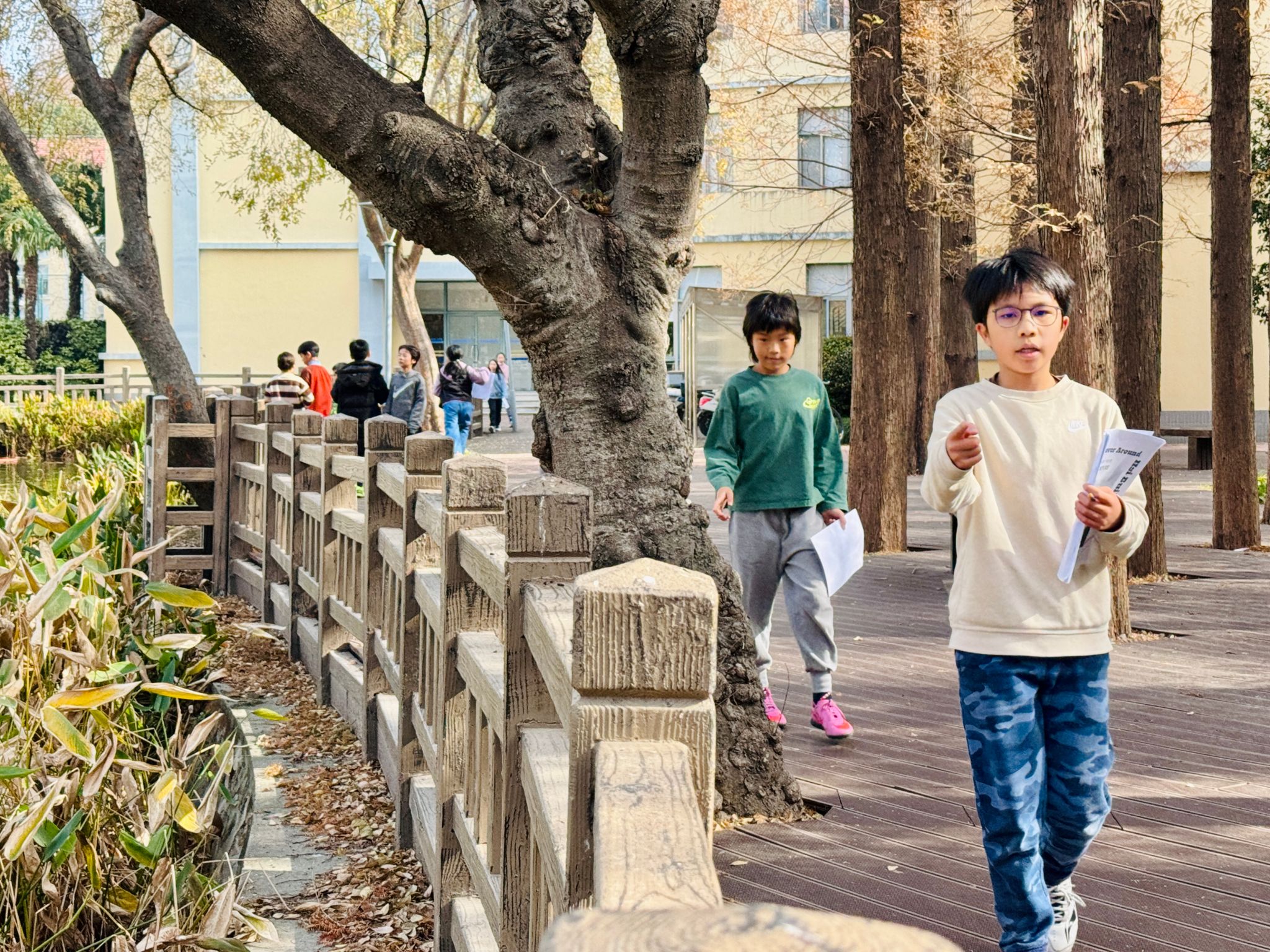
On the fourth day, students explored how to measure the height of a school building. With teacher's guidance, they refined AI prompts, compared multiple suggestions, and evaluated safety and practicality. Ultimately, students applied geometric reasoning using similar triangles to complete the task. This process highlighted how AI can support learning when used thoughtfully and critically.
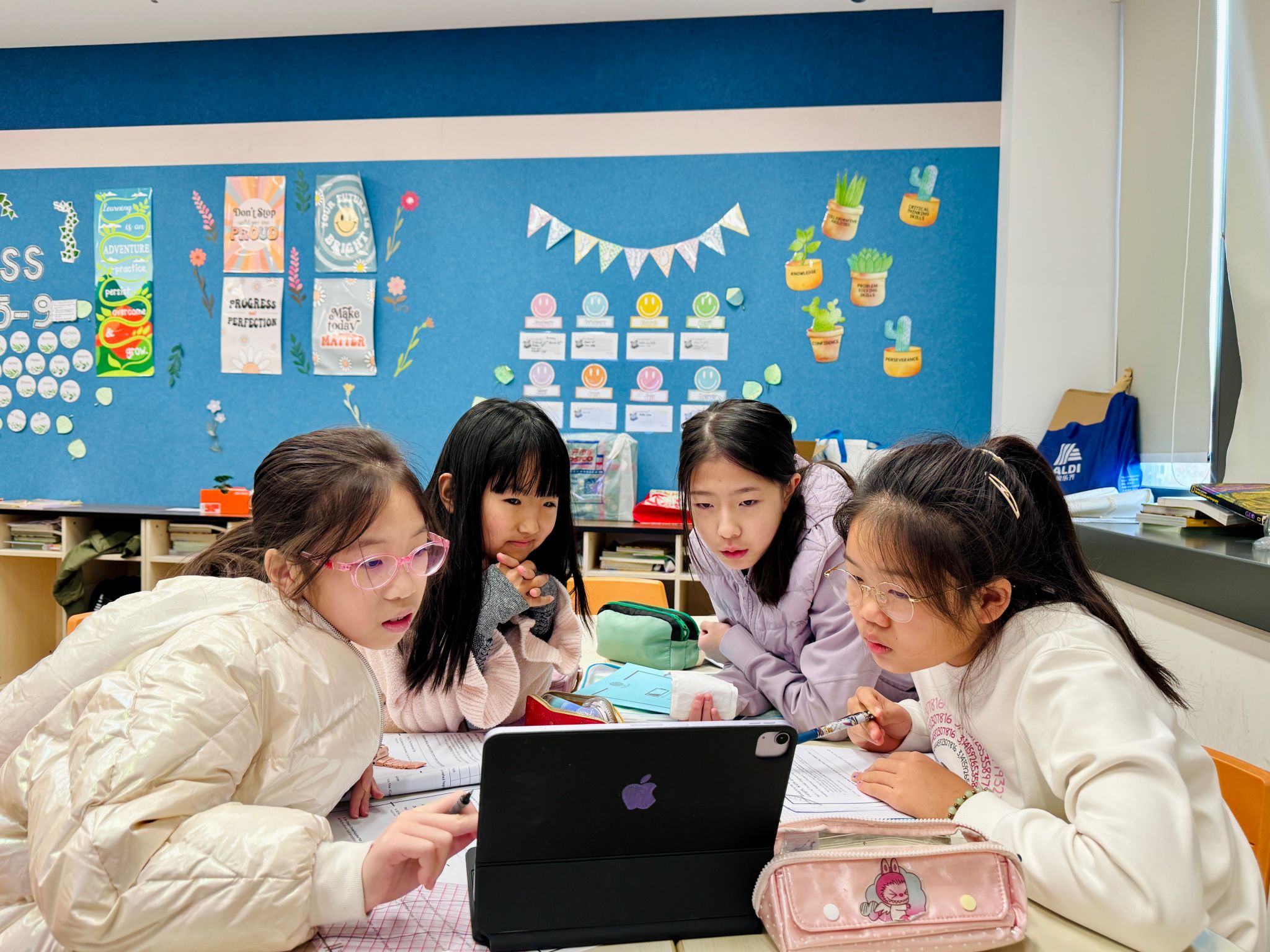
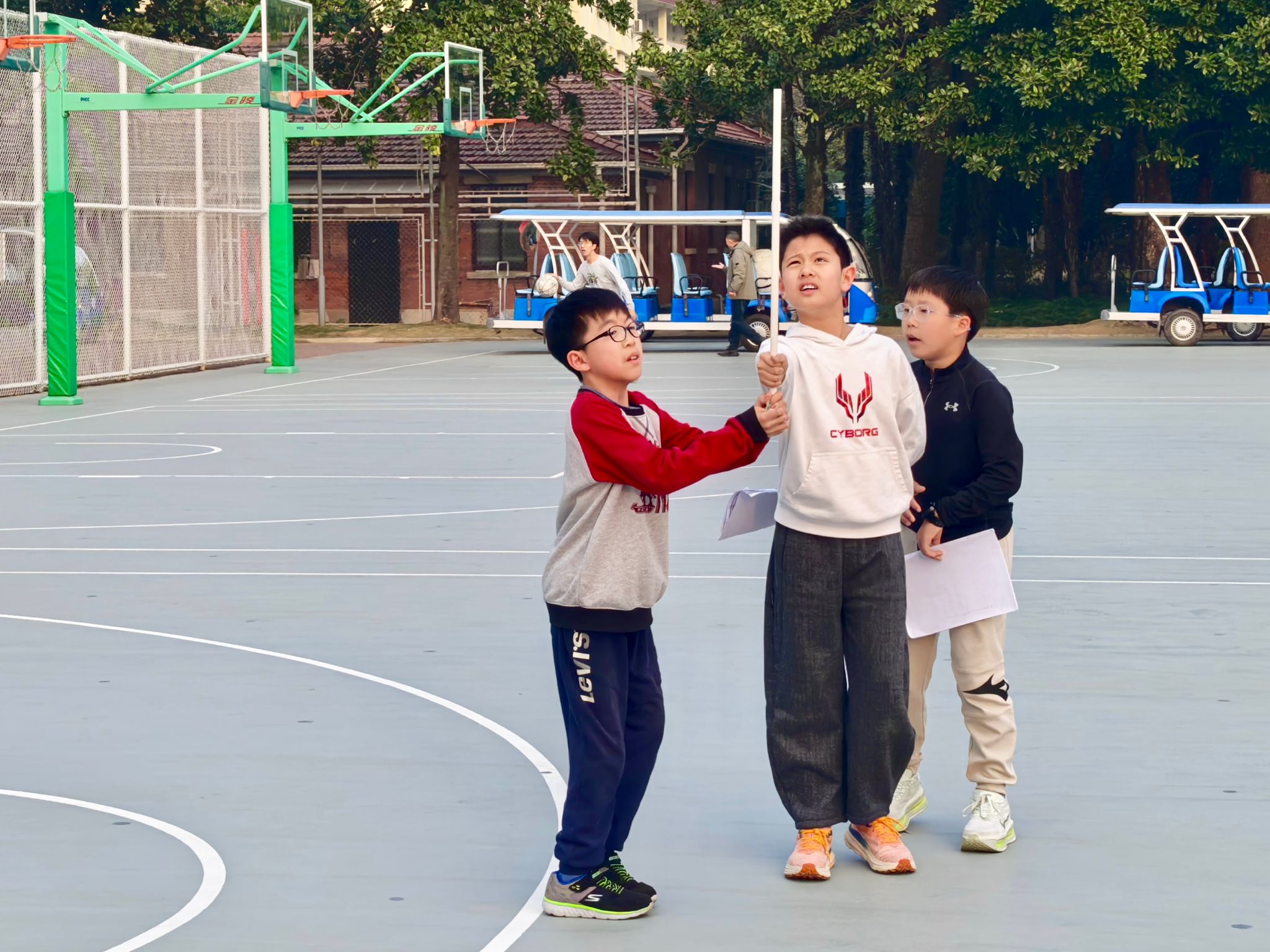
The final day focused on organizing and visualizing collected data. Students used AI tools to create maps and simple models of the campus, then reflected on both indirect measurement and AI use. Discussions emphasized real-world applications, limitations, and the importance of human judgment in mathematical problem-solving.
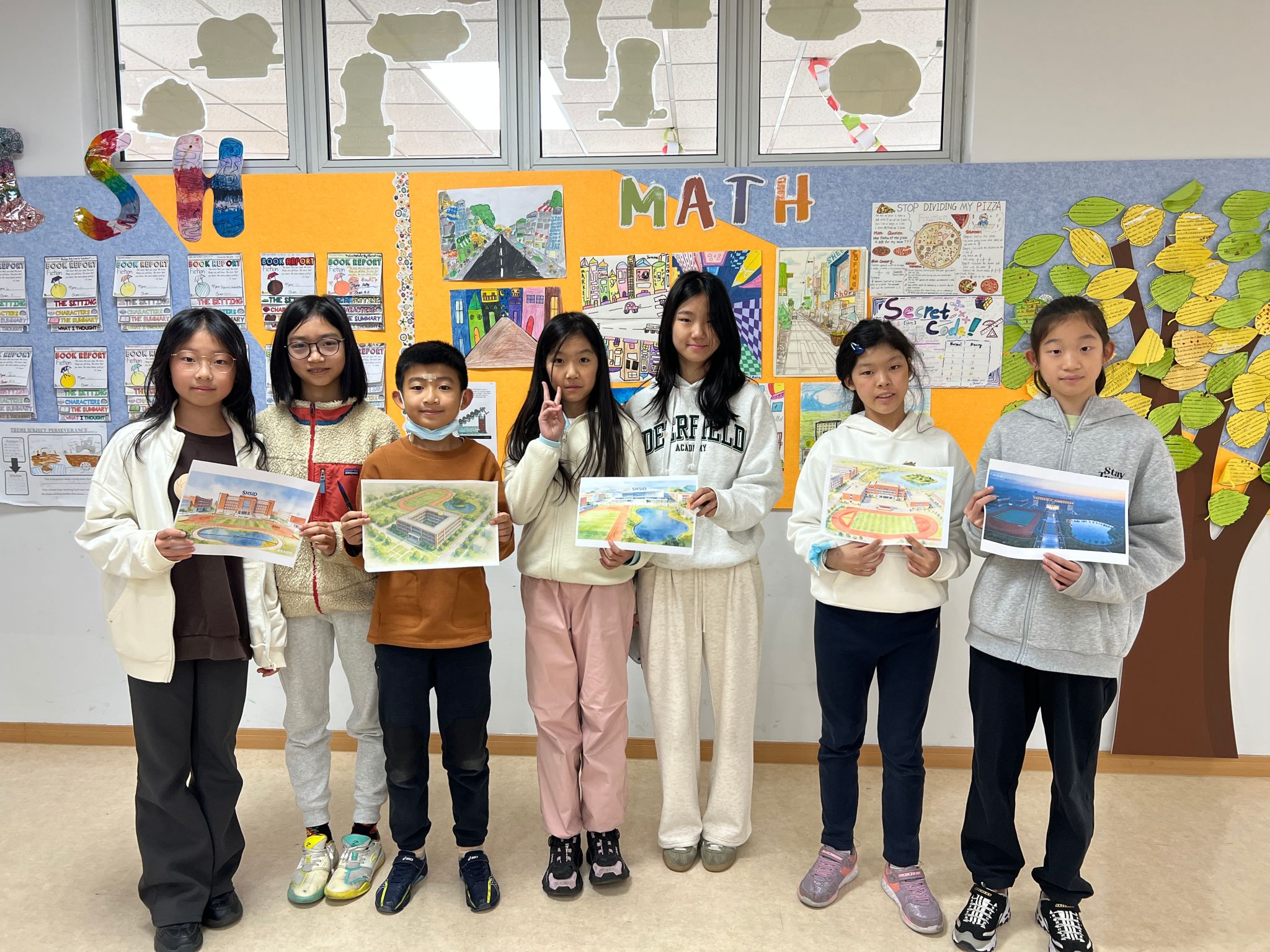
The Grade 4-5 Math Week at SHSID successfully transformed mathematics into an active, meaningful, and interdisciplinary experience. Students demonstrated creativity, collaboration, and resilience, while developing a deeper understanding of mathematical concepts and their applications. More importantly, the week encouraged students to think critically, work collaboratively, and engage responsibly with emerging technologies. Mathematics was no longer confined to textbooks or worksheets— it became a way of exploring the world, asking questions, and seeking solutions. Through experiences like Math Week, students are building not only mathematical knowledge, but also the curiosity, confidence, and habits of mind that will support them as lifelong learners.
(Written by Teng Chen
Pictures by G4-5 Math Department
Reviewed by Xumei Ge, Shiyu Wu)