-
ABOUT US
-
ACADEMICS
Curriculum Program
Departments
- English
- High School Chinese
- Primary and Junior School Chinese.
- High School Mathematics
- Middle School Mathematics
- Primary School Mathematics
- Music and Fine Arts
- Physical Education
- Physics
- Chemistry
- History and Geography
- Physical Science and Optional courses Department
- Middle School Biology
- High School Biology
- Social Sciences
- Computer Science
- Courses in Primary School
Achievements and Matriculations
College Counseling
Science & Technology Innovation Contest
Subject Competition
-
ARTS
-
ATHLETICS
-
AT SHSID
SHSID ∣ TIMES
PTSA
Club Exhibition
- 龙吟社
- Live 2 Drama
- Choir
- Hip-pop Dance Club
- The Primary School Dance Troupe
- Symposiums Club
- Biology Workshop
- You Shan
- VEX Robotic
- Peking Opera Club
- Baseball Club
- Model United Nations
- The World Scholar’s Cup
- Future Problem Solving Club
- United States Academic Pentathlon
- OM Club
- AMC Club
- Music for Patients
- SHSID Gazette
- Smile Charity
- Cultural Moments
- SciAcademy
- Stem Doge Alliance
- Chinese Debate Club
- IAA
- Mock Trial Club
- Zhengming Club
- Furry Friends
- GT-Racing
- Village Radio
- IMMC Club
- Creative Design and Intelligent Fabrication
- Future City Research Project
- ECOCAP
- AdvocaSEA
- SPDC
- Medishine
- Floorball Club
- Animusic MTC
- Wings Up
- All Booked
- Cyano
- Birding Community
Health and Wellness
Campus Safety
Cafeteria Service
-
ADMINISTRATION
-
ADMISSIONS
-
ALUMNI
Alumni Information
Honors Students
- Class of 2025
- Class of 2024
- Class of 2023
- Class of 2022
- Class of 2021
- Class of 2020
- Class of 2019
- Class of 2018
- Class of 2017
- Class of 2016
- Class of 2015
- Class of 2014
- Class of 2013
- Class of 2012
- Class of 2011
- Class of 2010
- Class of 2009
- Class of 2008
- Class of 2007
- Class of 2006
Who Studied at SHSID
SHS Foundation
-
DOCUMENTS
SHSID IB Arts Students’ Visit to the 15th Shanghai Biennale — “Does the Flower Hear the Bee?”
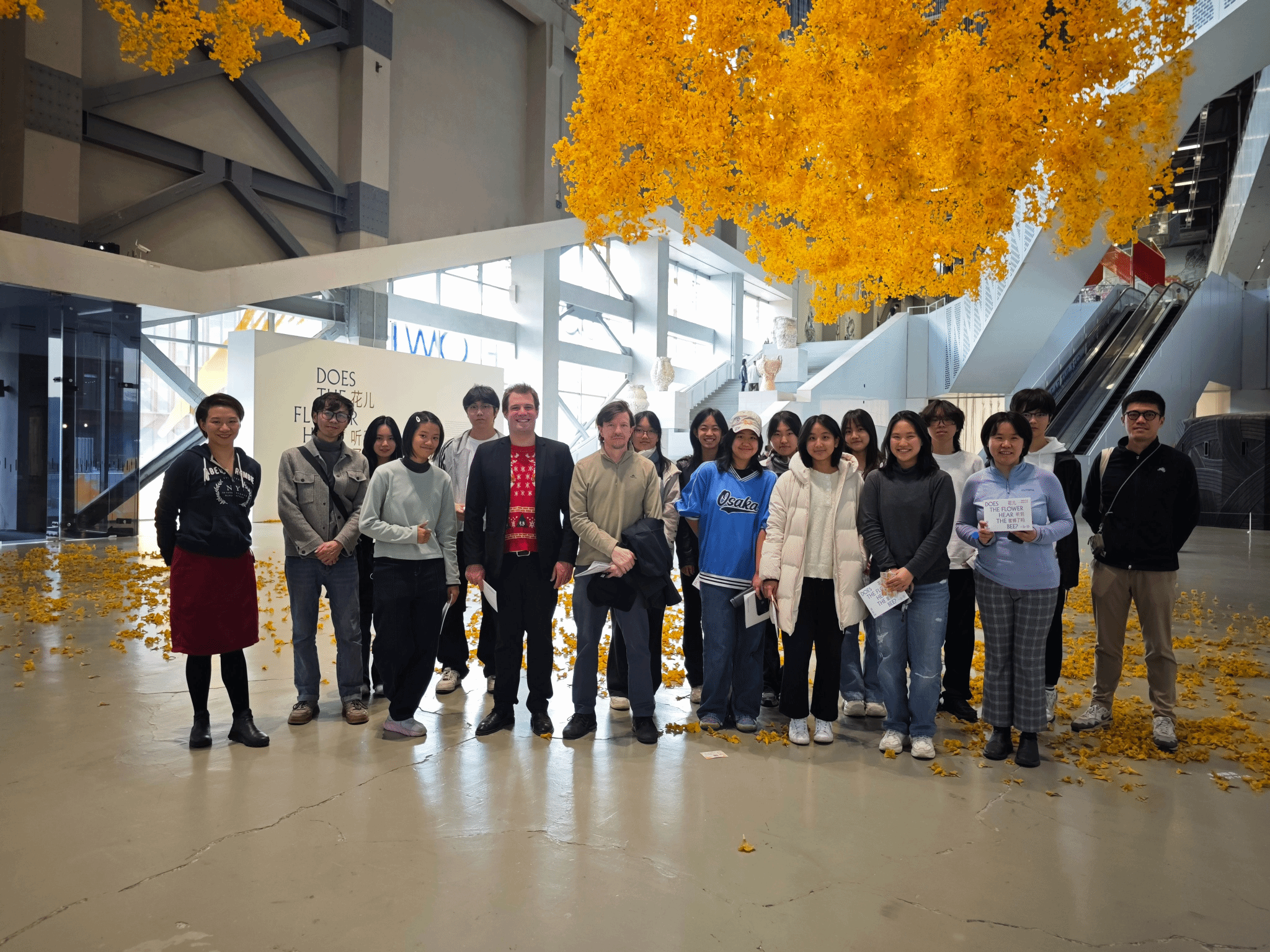
On December 19, 2025, Students from the IB Arts programme (Visual Arts, Music, and Theatre) at SHSID, accompanied by teachers, visited the 15th Shanghai Biennale, embarking on an artistic journey centered on perception, coexistence, and future imagination. With its poetic title—“Does the Flower Hear the Bee?”—the Biennale invited audience to reconsider the relationships between humanity, nature, technology, and non-human forms of intelligence.

The Biennale was built around the core concept of the intersection between human and non-human intelligence, emphasizing art not merely as a final expression but as an ongoing process of exploration and dialogue. Featuring interactive installations, video works, sound art, generative art, and multidisciplinary experimental practices, the exhibition responded to global uncertainty and ecological urgency by positioning art as a form of “sensory practice”—encouraging us to relearn how to listen, observe, and coexist. Within the curatorial framework, perspectives from artists, curators, scientists, writers, and musicians intertwined, transforming the exhibition into a site of cross-disciplinary exchange and revealing art’s potential to imagine future possibilities.
As students moved through the exhibition spaces, they felt as though they had entered a constantly shifting “sensory garden.” Installation works by artists from around the world created immersive environments through image and sound, translating the rhythms of plant growth, the perceptual worlds of animals, and subtle environmental changes into artistic languages that could be both “seen” and “heard.” Some works focused on human behavior and social structures, reflecting the complex relationship between humanity and the environment—one that is at once intimate and tense.
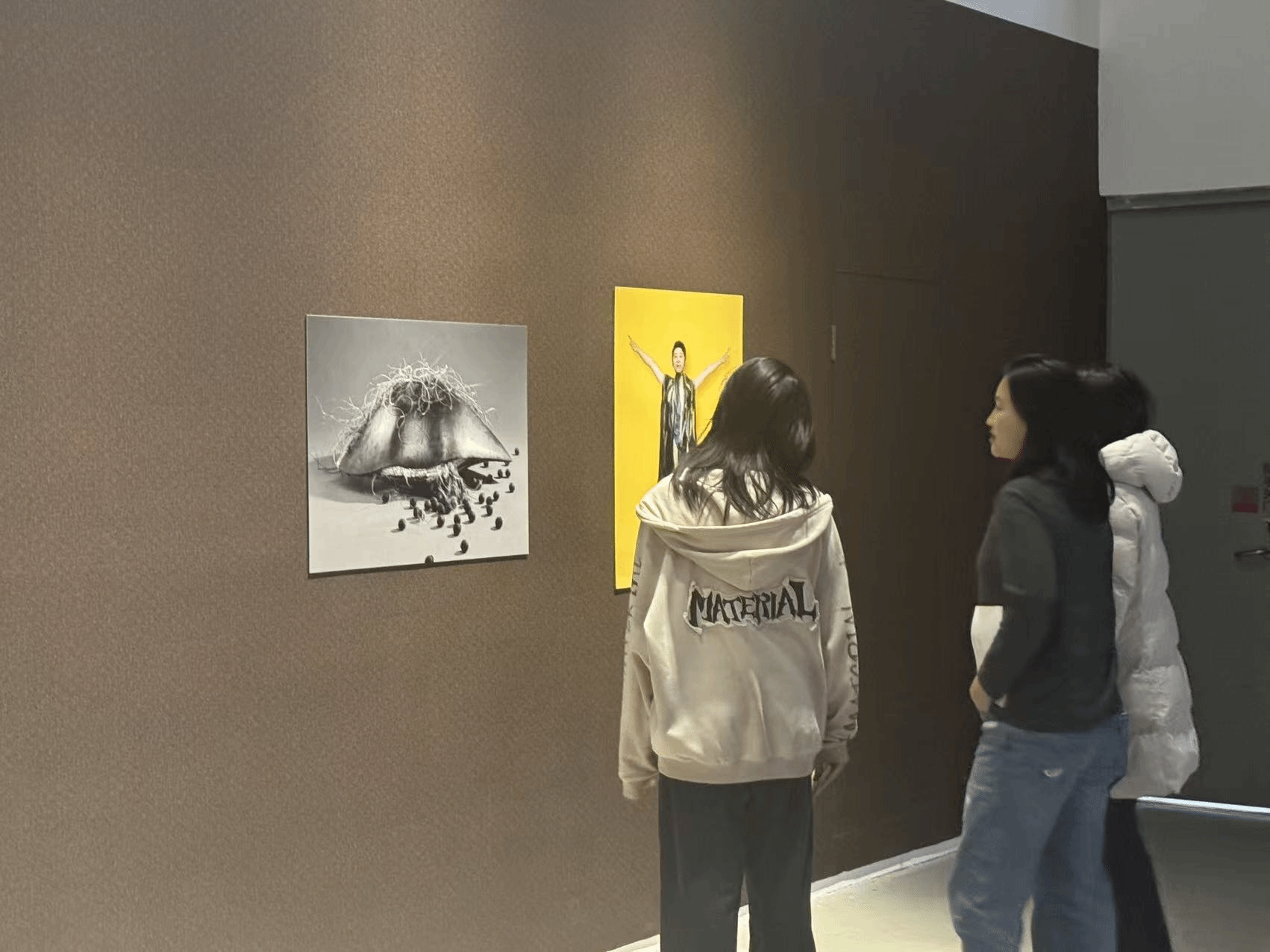
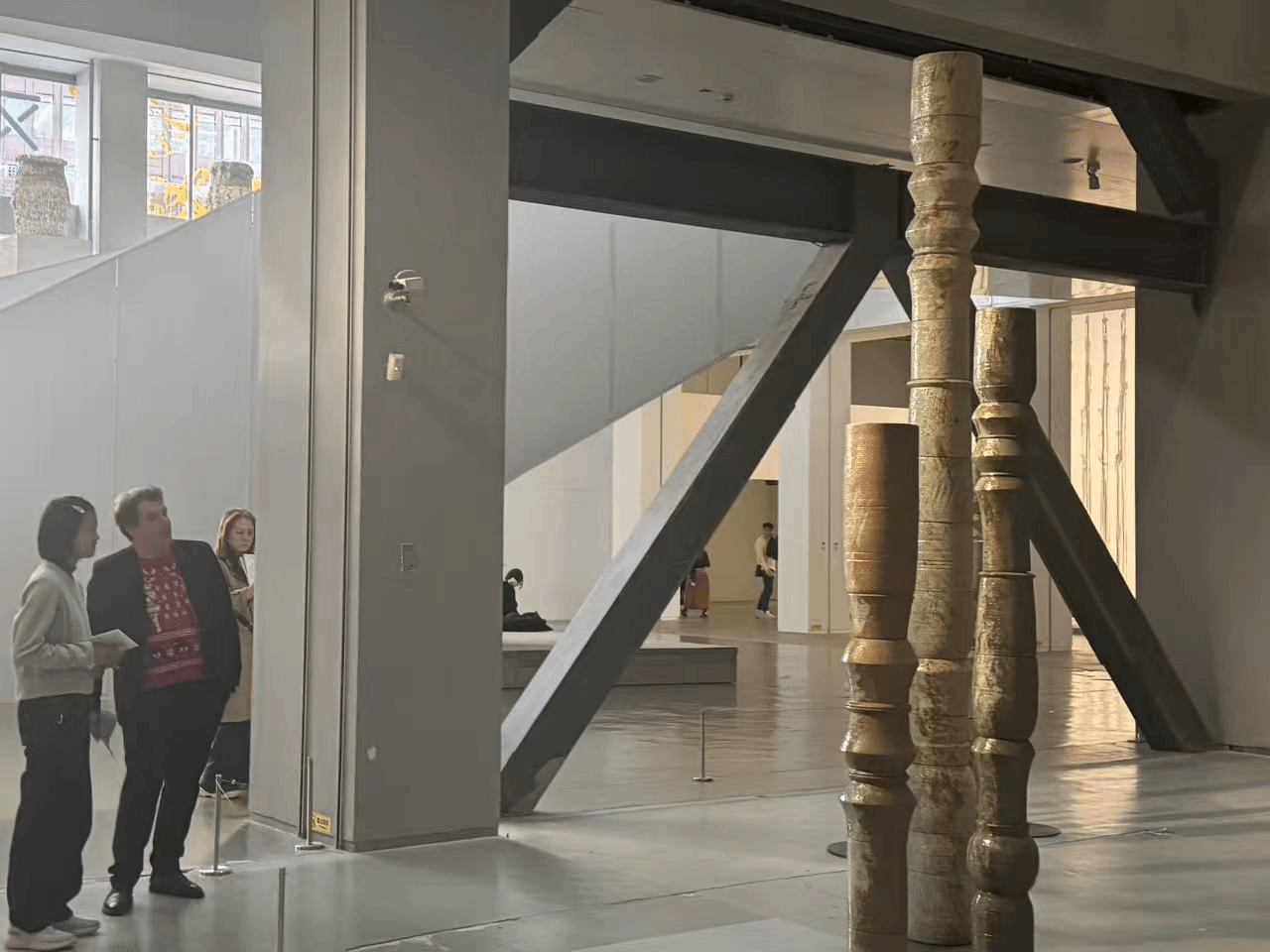
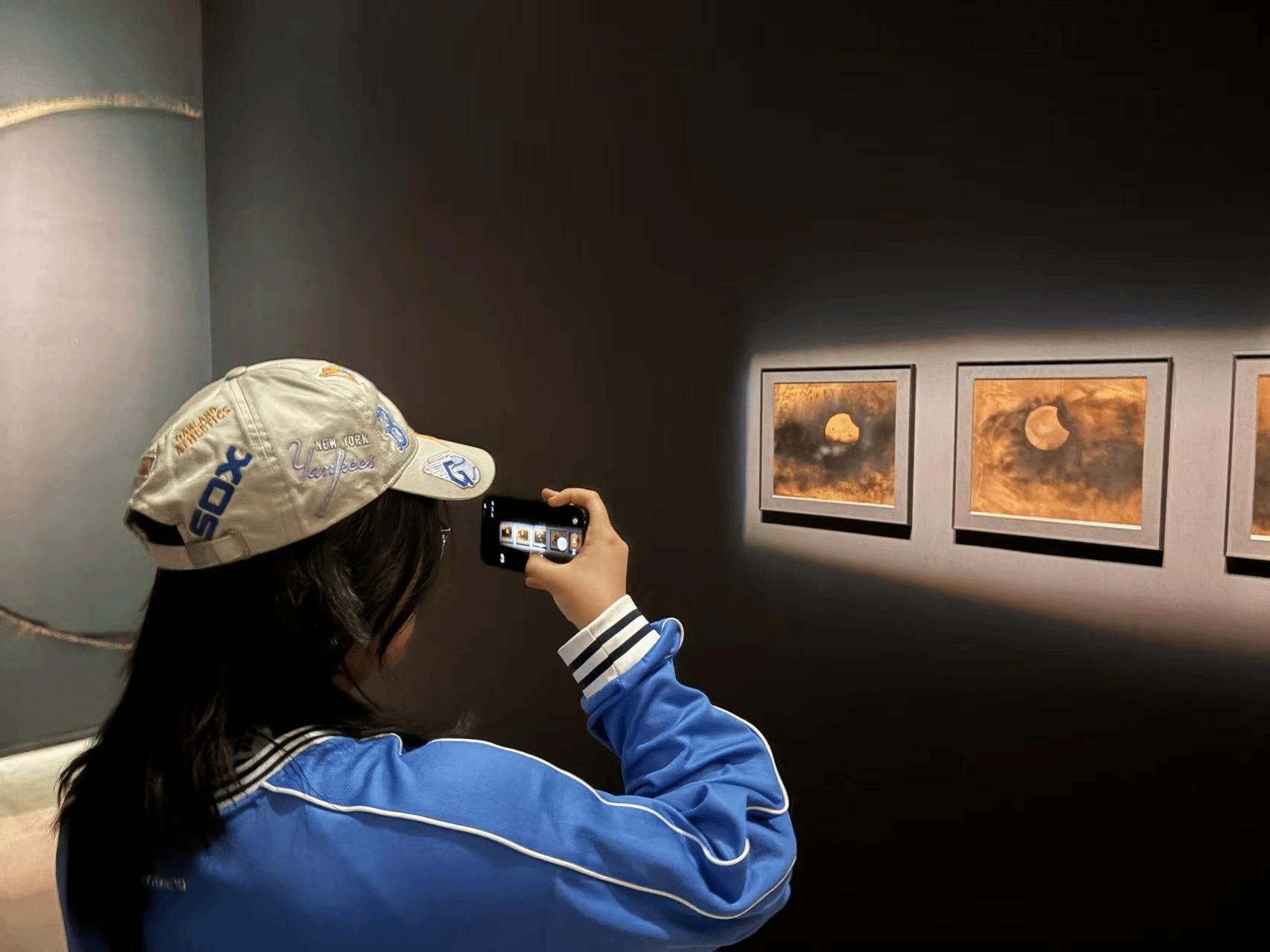
The exhibition adopted an open, garden-like spatial design that encouraged free movement and exploration. With each step, students encountered new visual and sonic experiences, allowing dialogues between artworks to unfold organically. Enclosed exhibition rooms, by contrast, offered moments of heightened focus and immersion, enabling students to experience shifts in rhythm between movement and stillness and to gradually realize that they themselves were part of the ecosystem being explored.

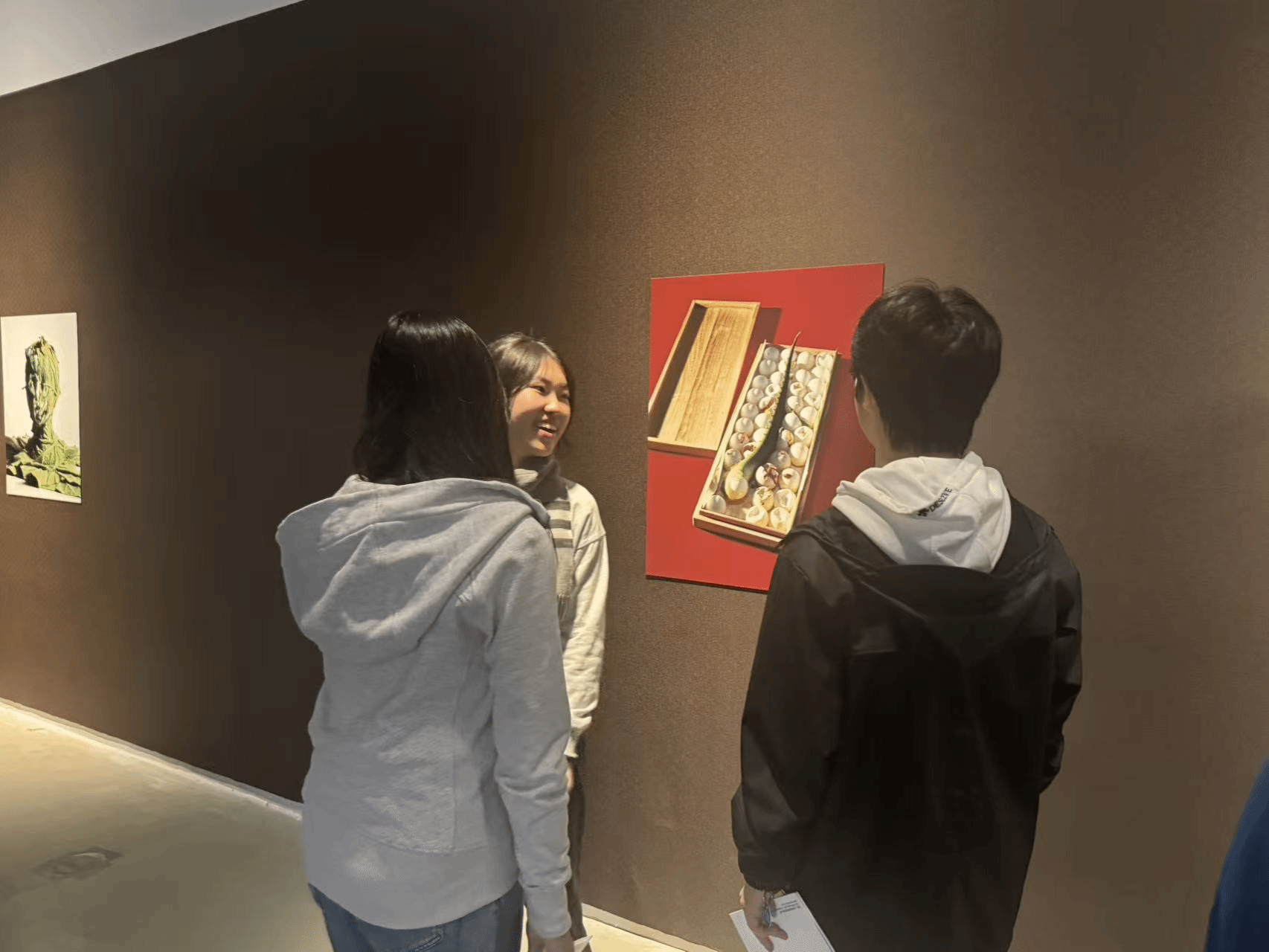
Following the visit, students analyzed the works from multiple perspectives, including conceptual origins, media choices, spatial organization, and underlying social metaphors. They also connected their observations to their own artistic practices and researches. Many students noted that first-hand engagement with interactive installations, sound-based works, and generative art deepened their understanding of how contemporary art responds to global ecological and technological issues, while also highlighting art’s unique role in cross-cultural dialogue, social engagement, and future-oriented imagination.
This visit to the Shanghai Biennale was not only an art lesson beyond the classroom, but also a meaningful interdisciplinary and cross-cultural learning experience. The activity significantly enhanced students’ observational skills, analytical abilities, and depth of artistic thinking, laying a vivid and solid practical foundation for their IB Arts studies. Here, art was no longer merely something to be observed—it became something truly experienced.
Students’ Reflection:
During this visit to the exhibition, I deeply realized the irreplaceable position of art in society. In this era filled with uncertainties and global crises, art provides us with a way to escape the confusion and anxiety brought about by the times. Among these, various media include sound installations, weaving, and images, which break the boundaries of the senses and enable me to recognize the diverse forms of wisdom in the world, and to feel the core curatorial concept of perceiving the world and adjusting oneself.
—— Eva (IBDP Visual Arts)
Our trip helped frame how I think about making and exhibiting art. The experience for the viewer shouldn't just be about looking at objects; they should feel connections. I saw photographs, digital art, sound, and installations speaking the same language. The curation felt like setting up a space where artworks could talk to each other, not just sit side-by-side, creating a whole that's far greater than the sum of its parts. It also taught me that a good piece tunes people in to the quiet conversations happening all around us, in nature and in materials. Therefore, my own art cannot just be seen. It can be something you feel or resonate with. Only then will we expand society's perception and allow them to sense connections they would normally overlook.
—— Andrea (IBDP Visual Arts)
The first floor of the museum was surprisingly captivating, split into intimate little rooms themed around time and sandstorms. Each space was designed to amplify your senses, you could almost feel the grit of sand and the slow crawl of seconds. By the time I stepped out, my head was spinning a little from the immersive rush. Still, it was one of the most interesting museum experiences I’ve had in ages.
—— Dawnica (IBDP Visual Arts)
This visit led me to the realization that art is more than a mode of aesthetic expression—it serves as a bridge linking human and non-human perspectives, reshaping our senses to perceive the world beyond anthropocentric confines. My personal experience during the visit illustrated this well: the sound installations heightened my awareness of the "invisible" acoustic landscapes that surround us (such as the faint hum of insects I normally overlook). They taught me to engage with the world through listening, rather than merely observing it with my eyes.
—— Cheer (IBDP Visual Arts)
What strikes me the most from this exhibition was the great variety of mediums artists take to present their works. There are traditional forms like sculptures paintings and music, but there are also forms I’ve never encountered in an exhibit such as video-recorded arts, animations and paper-folding. Traditional forms of art such as painting also take on modern technology, such as the case with Sara Cwynar, who incorporated AI into her works, and Lin Tianmiao who uses 3D printing to aid with her presentation of sculptures. This exhibit presented me with the infinite possibilities of artistic expression, and demonstrated how new technology like AI may not hinder or replace human artist, but instead become a helpful tool in the creation of new forms of art.
—— Alex (IBDP Music)
I really enjoyed the Arts Group journey to Biennale. As someone who doesn't often go to galleries, this experience gave me a more insightful view on the question "what is the purpose of art". After navigating through a multitude of art mediums, I realized that different artworks serve different roles. Some address political or sociocultural problems, while others are enlightening through their context or message. Art can also be purely visually pleasing, or it can combine small objects and everyday experiences to create something imaginative and thought-provoking.
—— Enos (IBDP Music)
I felt as though the museum was bridging subjects with art – all the installations had purpose, and many of them had meaningful, substantial impact for the world (bringing in eco-friendly ways of life). Overall, it was a wonderful experience that was fully immersive into the progress of humanity. The role of art is always expression, making sense of life, finding purpose.
—— Maegan (IBDP Music)
Many of the works in the museum carry a strong sense of dramatic tension, and they resonate with the kinds of stage images I often build in my own theatrical thinking. In some image, the complementary colors evoke a feeling of “Suffering is followed by reward.” The long nights of confusion and pain will eventually be met by an early morning breeze. Some image taught me how tension can be built through form rather than plot. That contradiction, motion without progress, creates a suffocating atmosphere. Some image feels perfectly suited to a black box theatre because it shows how sound, lighting, and projection can work together to create mood and foreshadowing. I can imagine using it in the rising action just before a climax: a continuous, sharp buzzing sound layered under visuals that seem normal at first glance but are slightly “wrong” on closer attention. Nothing overtly dramatic happens, yet the audience’s body starts to tense. That is his approach: it plants a fine, persistent unease and prepares the audience emotionally before the turning point arrives.
—— Carina (IBDP Theatre)
Written by IB Arts Teachers and Students Photos by IB Arts Teachers and Students