-
ABOUT US
-
ACADEMICS
Curriculum Program
Departments
- English
- High School Chinese
- Primary and Junior School Chinese.
- High School Mathematics
- Middle School Mathematics
- Primary School Mathematics
- Music and Fine Arts
- Physical Education
- Physics
- Chemistry
- History and Geography
- Physical Science and Optional courses Department
- Middle School Biology
- High School Biology
- Social Sciences
- Computer Science
- Courses in Primary School
Achievements and Matriculations
College Counseling
Science & Technology Innovation Contest
Subject Competition
-
ARTS
-
ATHLETICS
-
AT SHSID
SHSID ∣ TIMES
PTSA
Club Exhibition
- 龙吟社
- Live 2 Drama
- Choir
- Hip-pop Dance Club
- The Primary School Dance Troupe
- Symposiums Club
- Biology Workshop
- You Shan
- VEX Robotic
- Peking Opera Club
- Baseball Club
- Model United Nations
- The World Scholar’s Cup
- Future Problem Solving Club
- United States Academic Pentathlon
- OM Club
- AMC Club
- Music for Patients
- SHSID Gazette
- Smile Charity
- Cultural Moments
- SciAcademy
- Stem Doge Alliance
- Chinese Debate Club
- IAA
- Mock Trial Club
- Zhengming Club
- Furry Friends
- GT-Racing
- Village Radio
- IMMC Club
- Creative Design and Intelligent Fabrication
- Future City Research Project
- ECOCAP
- AdvocaSEA
- SPDC
- Medishine
- Floorball Club
- Animusic MTC
- Wings Up
- All Booked
- Cyano
- Birding Community
Health and Wellness
Campus Safety
Cafeteria Service
-
ADMINISTRATION
-
ADMISSIONS
-
ALUMNI
Alumni Information
Honors Students
- Class of 2025
- Class of 2024
- Class of 2023
- Class of 2022
- Class of 2021
- Class of 2020
- Class of 2019
- Class of 2018
- Class of 2017
- Class of 2016
- Class of 2015
- Class of 2014
- Class of 2013
- Class of 2012
- Class of 2011
- Class of 2010
- Class of 2009
- Class of 2008
- Class of 2007
- Class of 2006
Who Studied at SHSID
SHS Foundation
-
DOCUMENTS
Middle School Physics Department: From the Principle of Levers to Parachute Design: An Exploration Journey in Physics Class
In eighth-grade physics class, learning extends beyond formulas and definitions to solving real-world problems and fostering innovative design. This semester, adhering to the teaching philosophy of "balancing theory and practice," the physics department has implemented project-based learning activities. The projects, titled "Exploring the Principle of Levers" and "Rescue the astronaut! Exploration of Dynamics", guide students to understand science through hands-on experience and enhance their scientific literacy through collaboration.
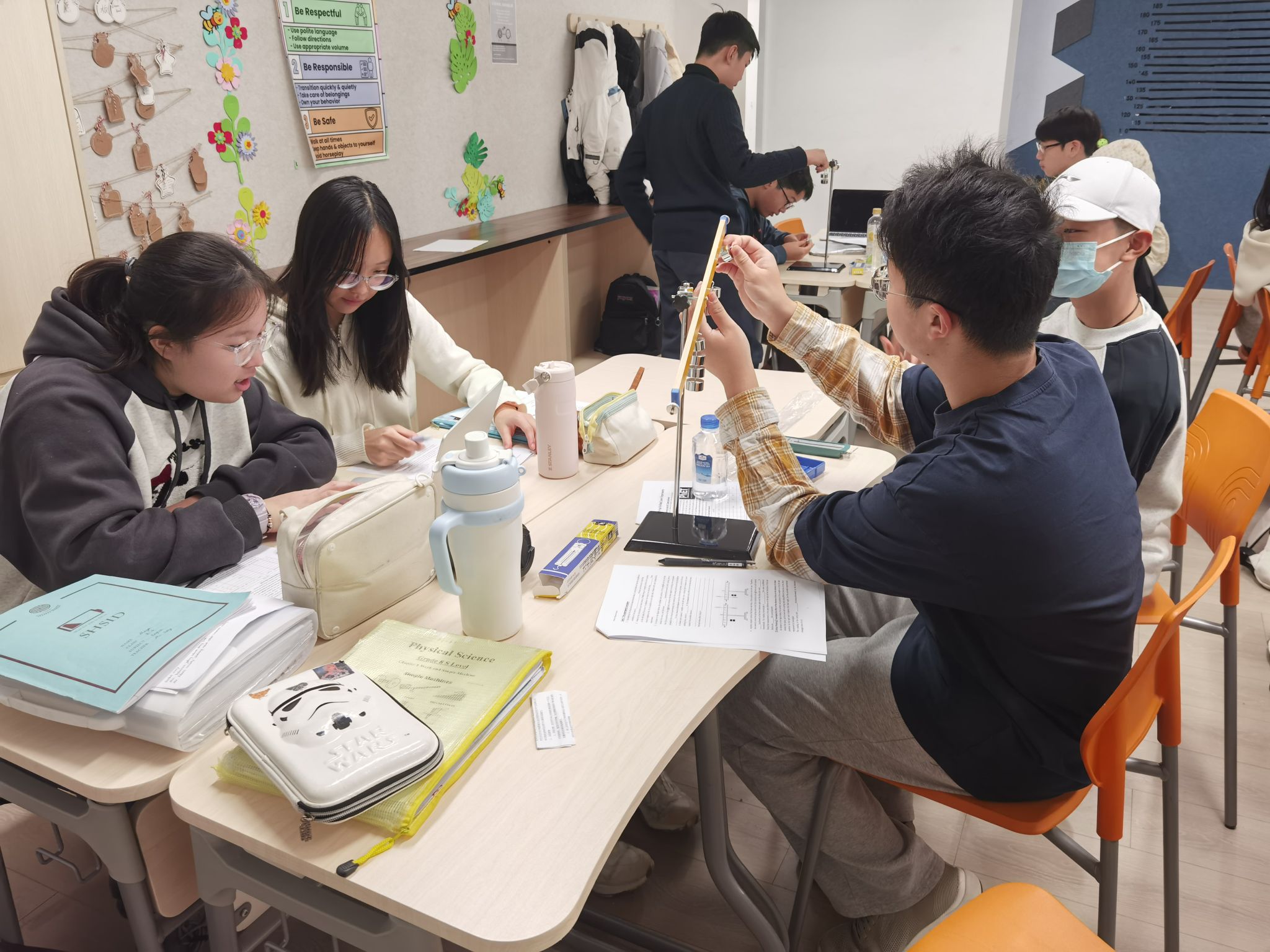
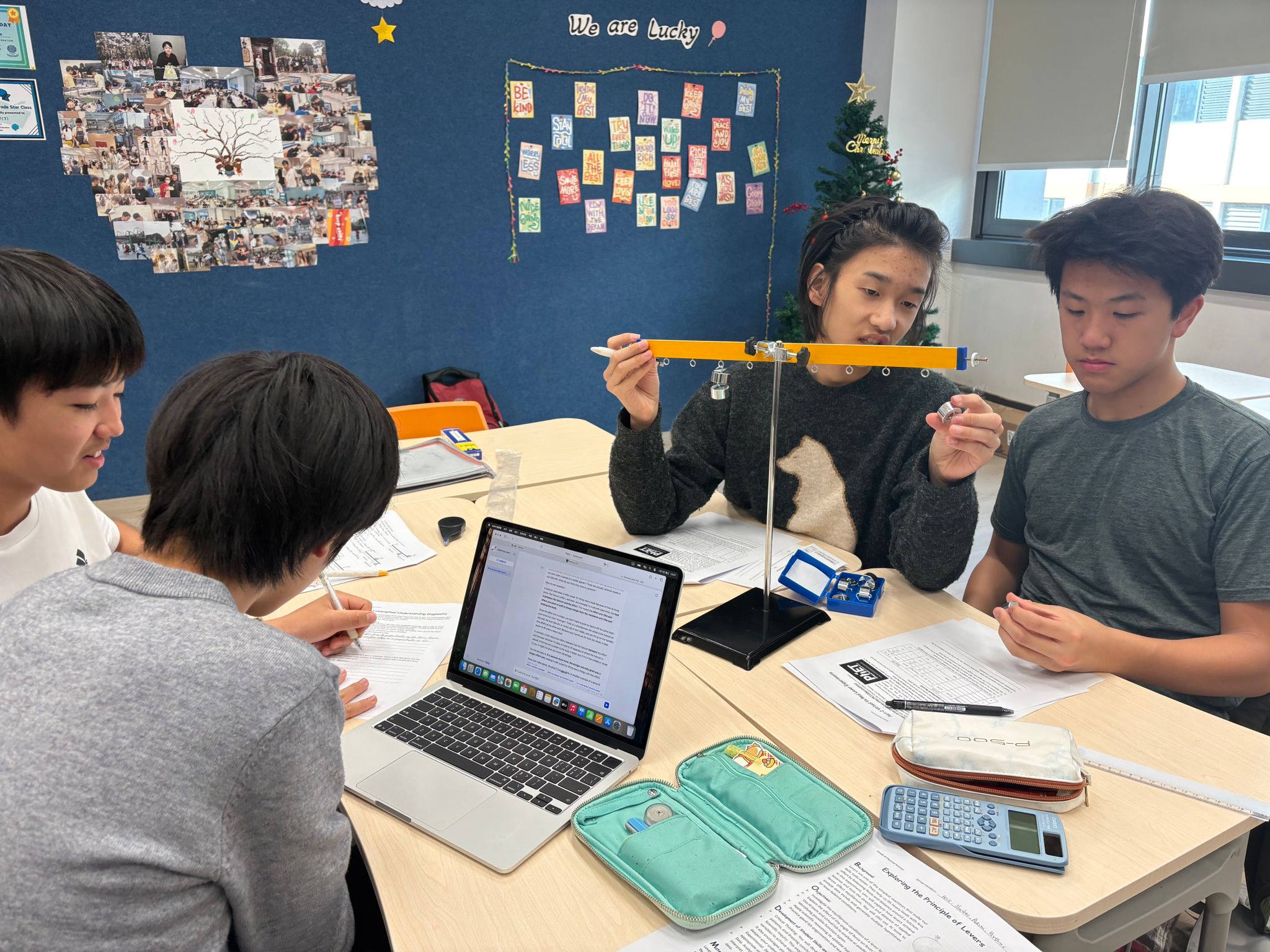
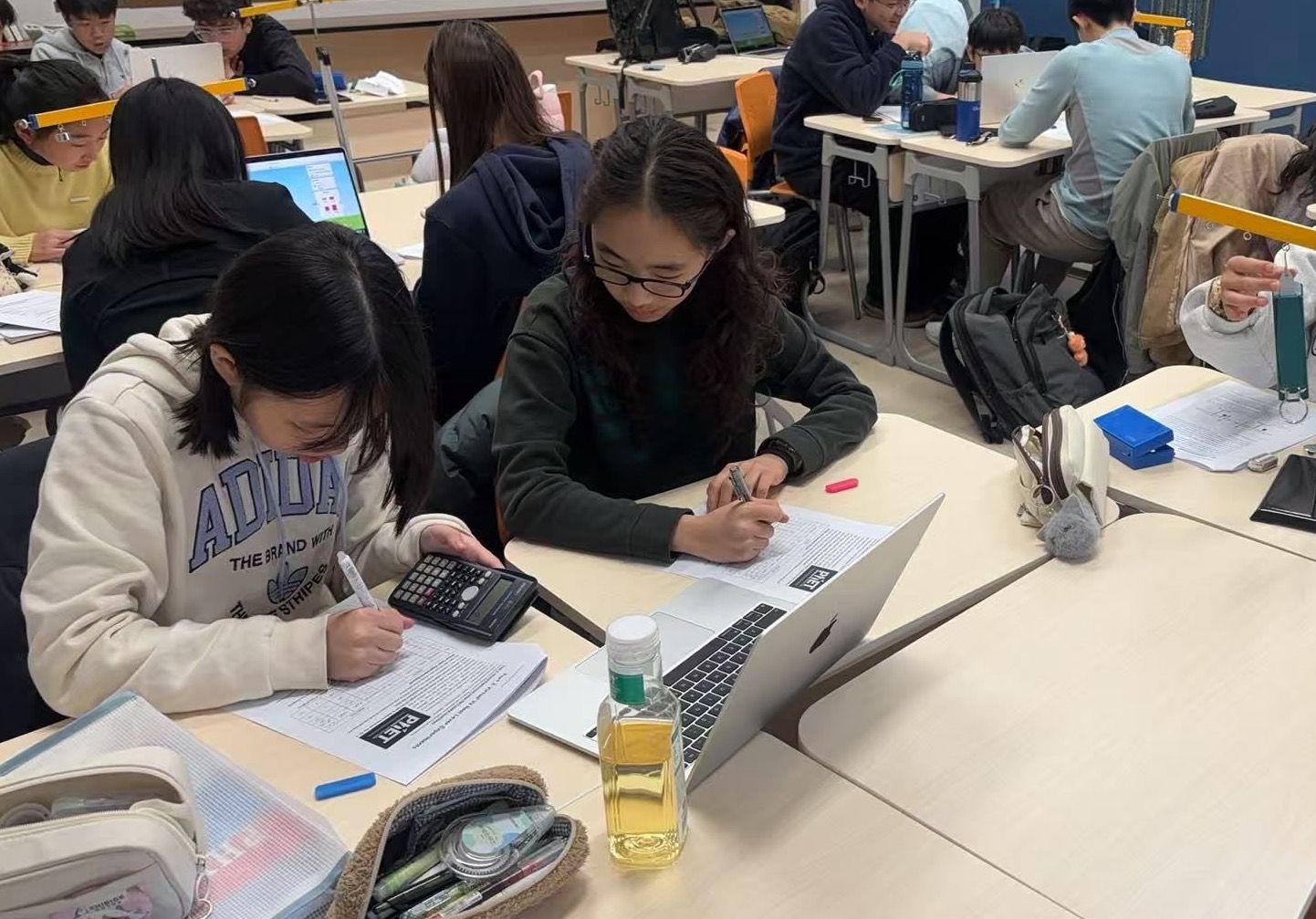
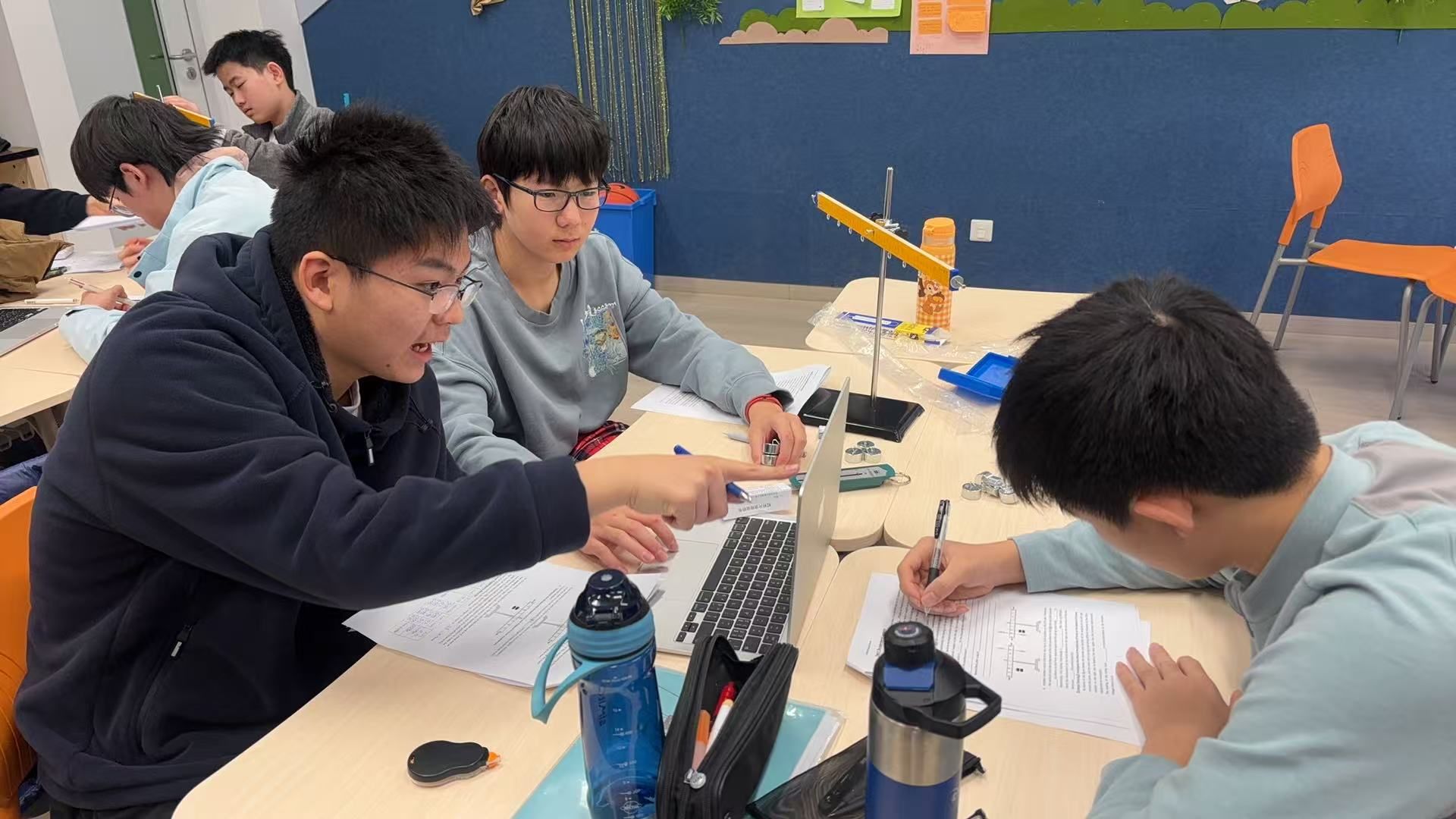
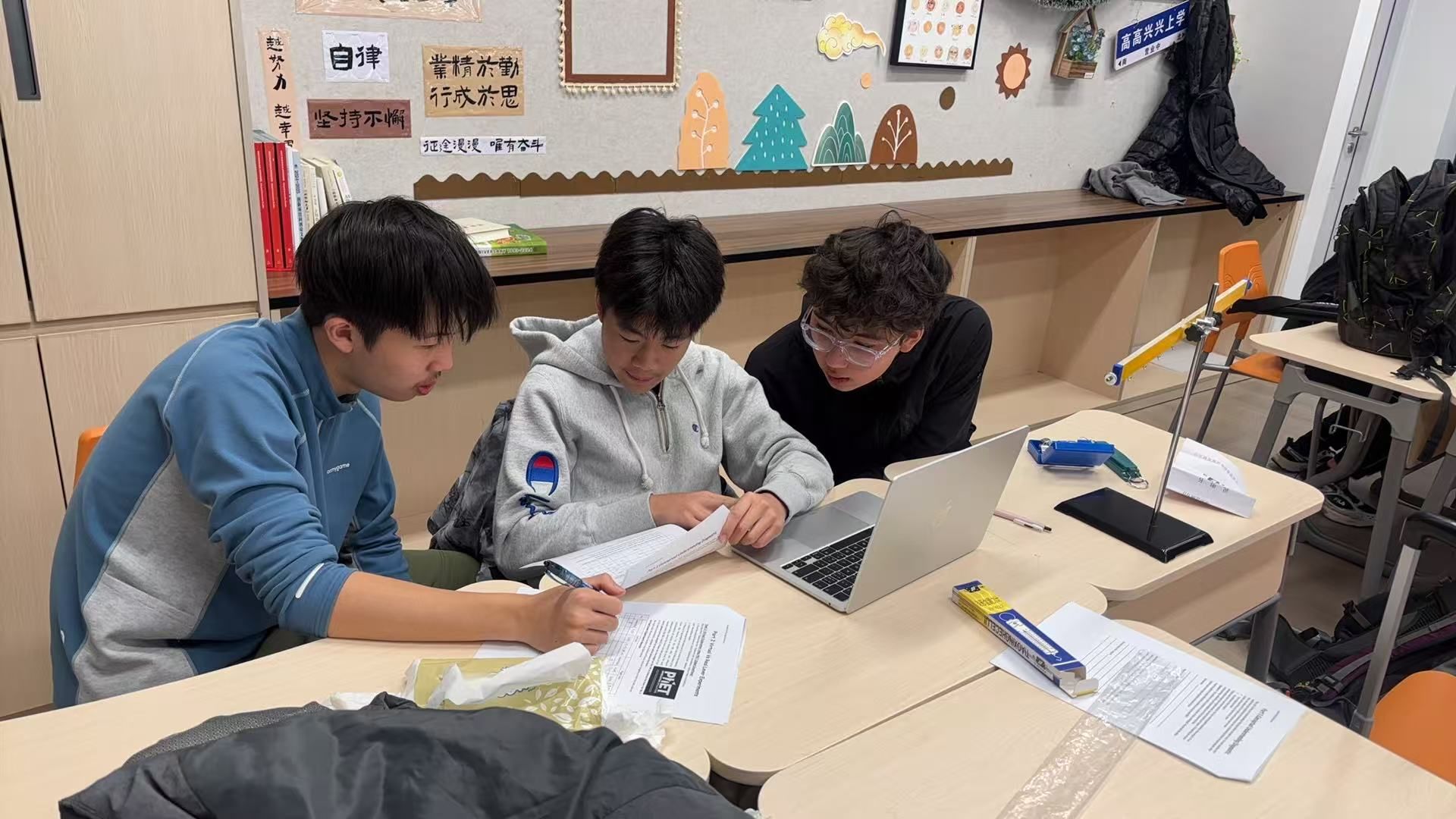
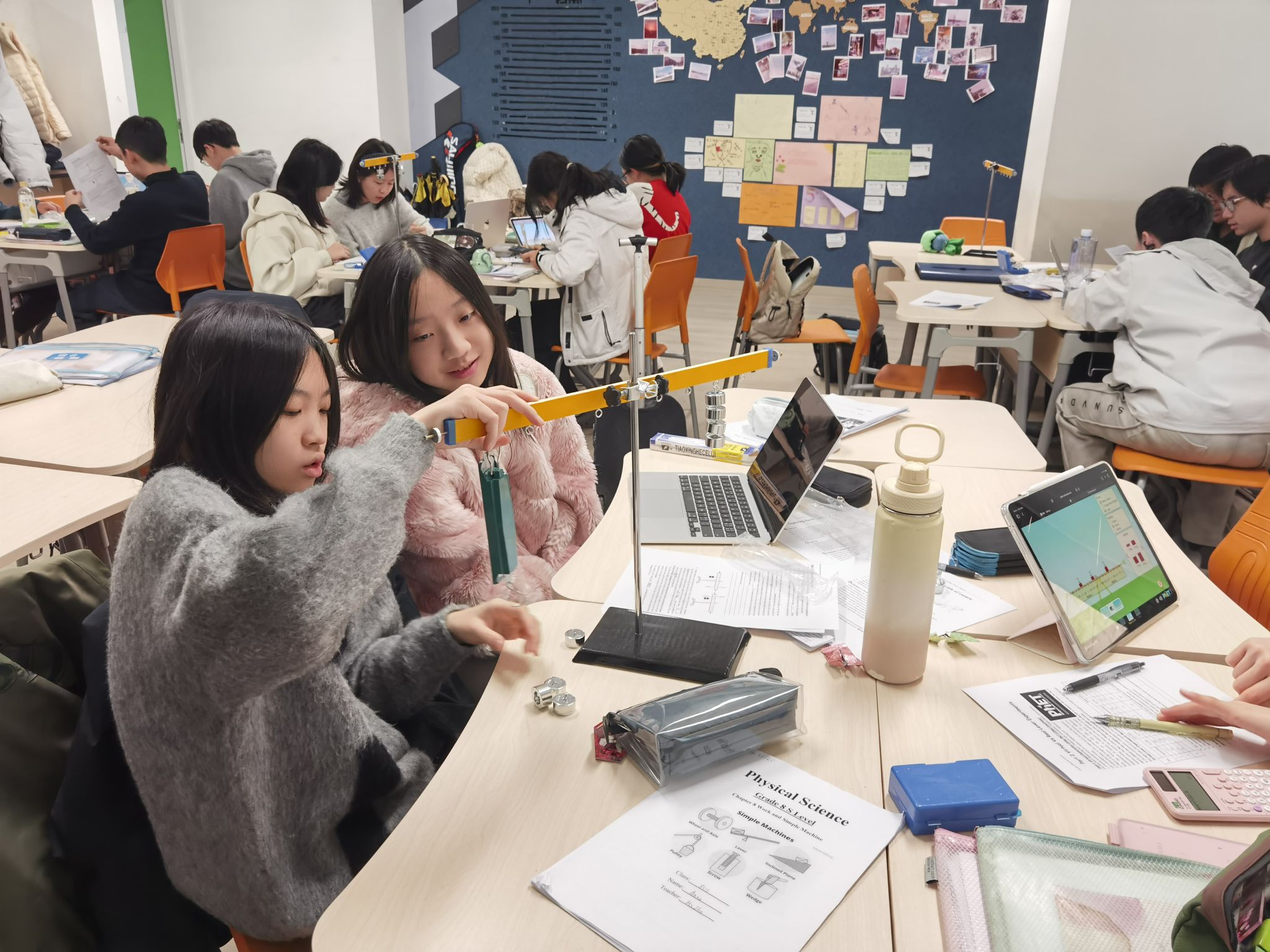
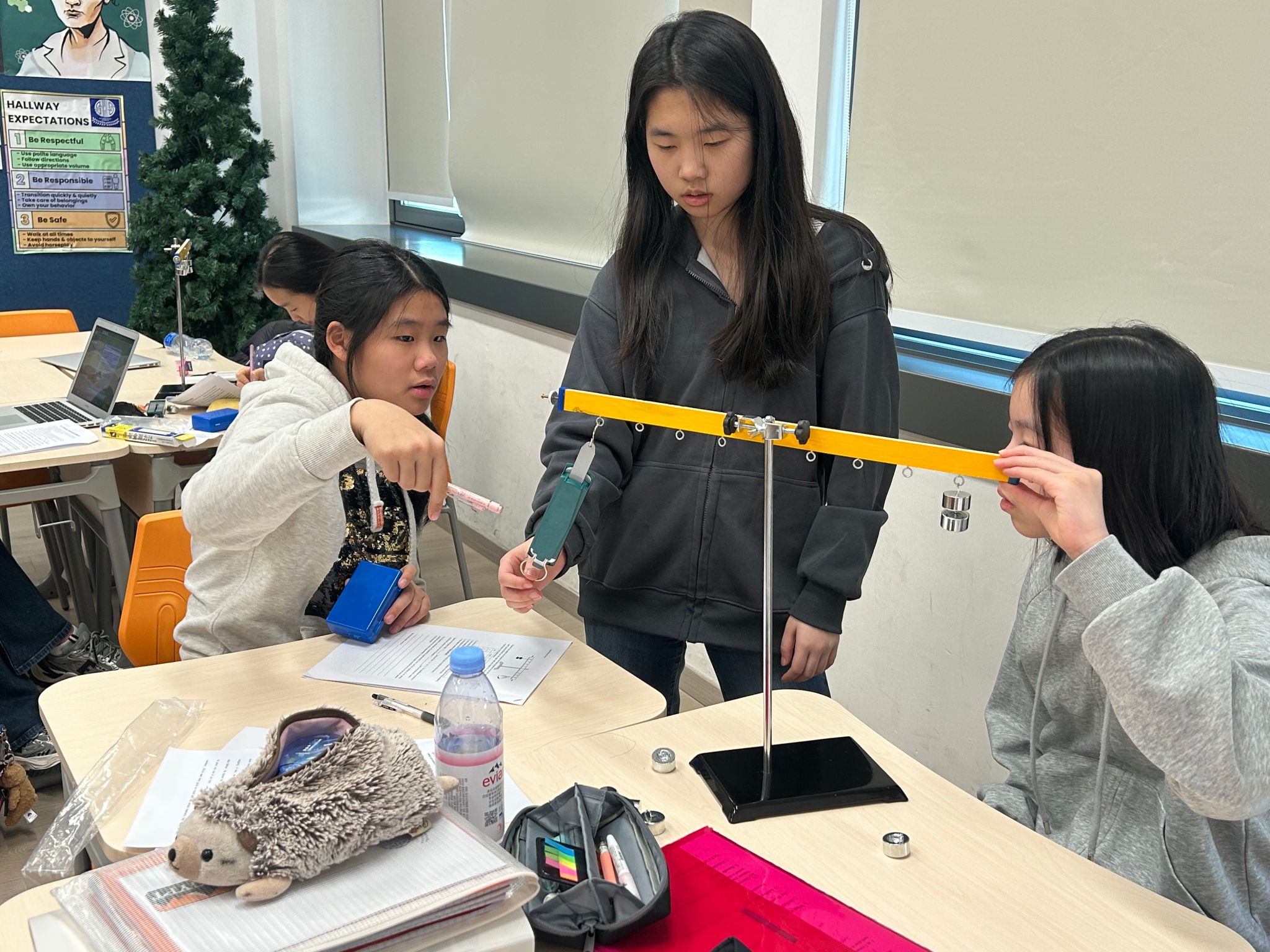
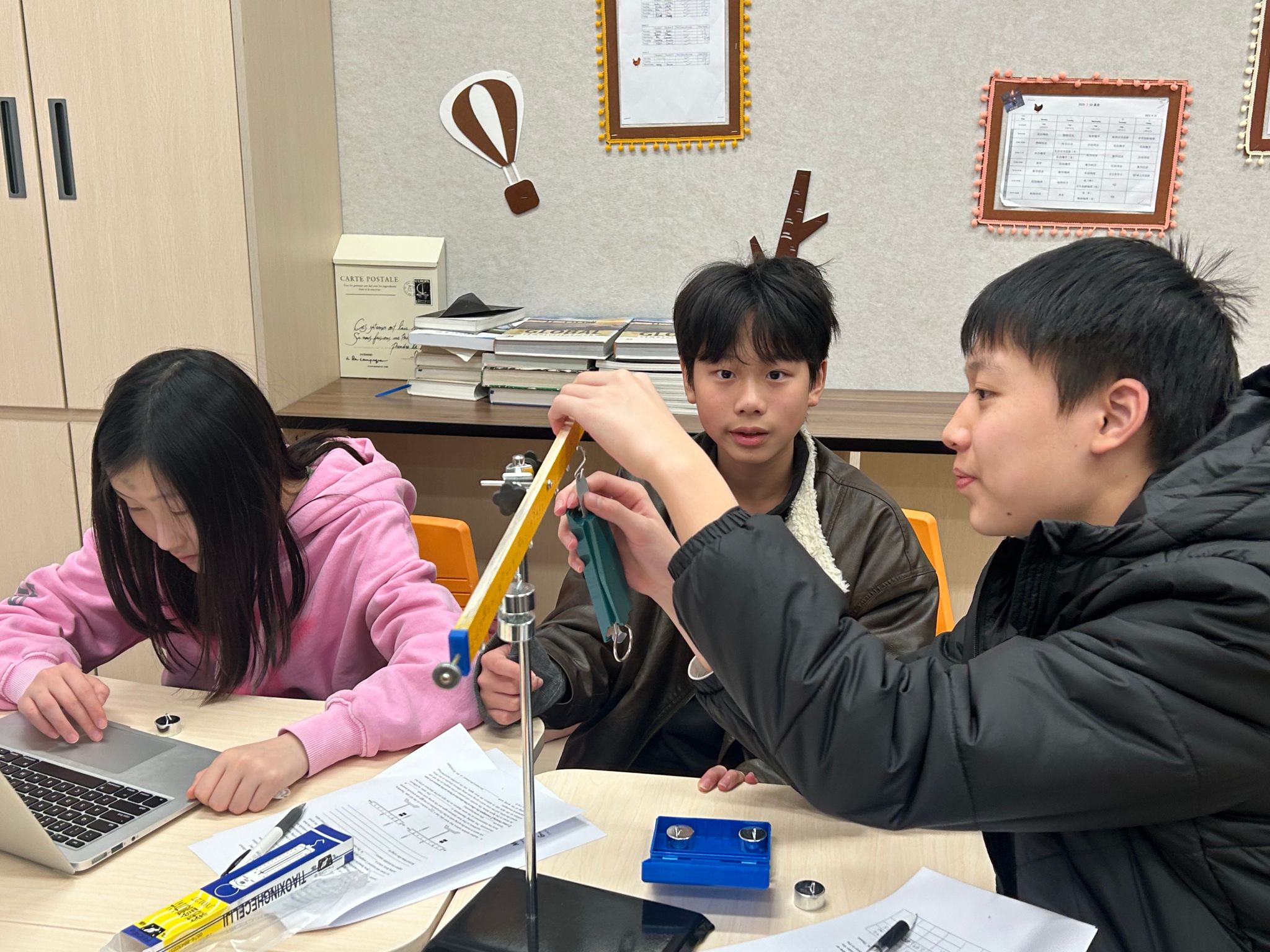
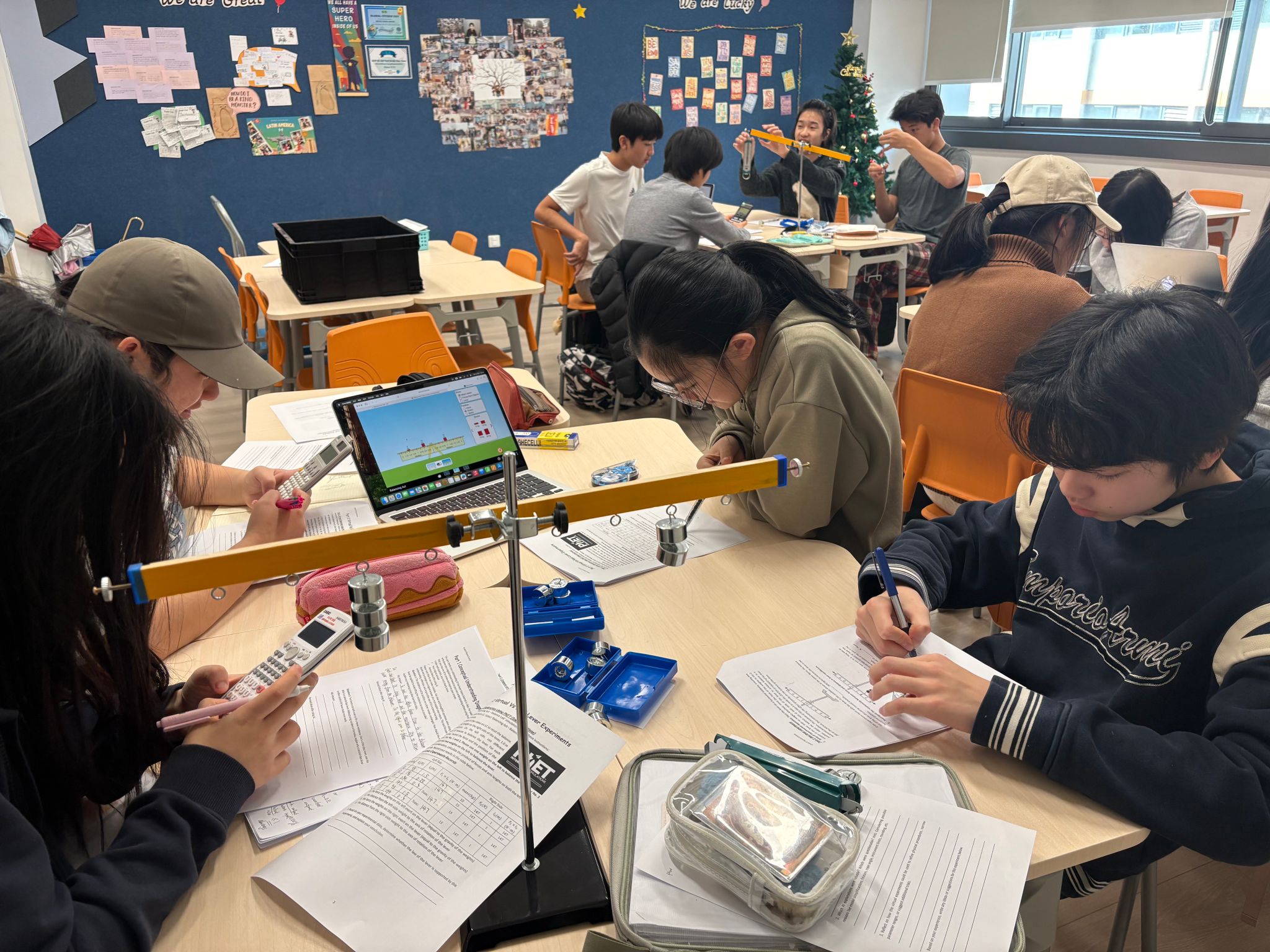
For S level, the "Exploring the Principle of Levers" project was not merely a verification of classic physical laws but a cultivation of scientific thinking and AI literacy. Students first used PhET virtual simulations to build an intuitive understanding of lever principles in an ideal environment. They then entered the actual laboratory, operating instruments and collecting data to compare the differences between "ideal" and "real" scenarios. Throughout the process, AI tools were introduced as "thinking partners." Students were encouraged to propose their own insights before engaging in dialogue with AI, analyzing the rationality and limitations of its responses. This approach fostered critical thinking, model-building skills, and a responsible attitude toward using technology, allowing knowledge to be truly internalized through questioning, verification, and reflection.
For H level, the "Rescue the astronaut! Exploration of Dynamics" project was a creative engineering challenge integrating mechanics and kinematics. Students had to apply their knowledge comprehensively to design a deceleration device for a "return capsule," optimizing the parachute's shape, materials, and structure under given constraints. This project served not only as a test of theoretical knowledge but also as practical training in problem-solving, teamwork, and engineering thinking. From sketching and material testing to repeated trial flights and data analysis, students experienced the complete creative process from concept to final product.
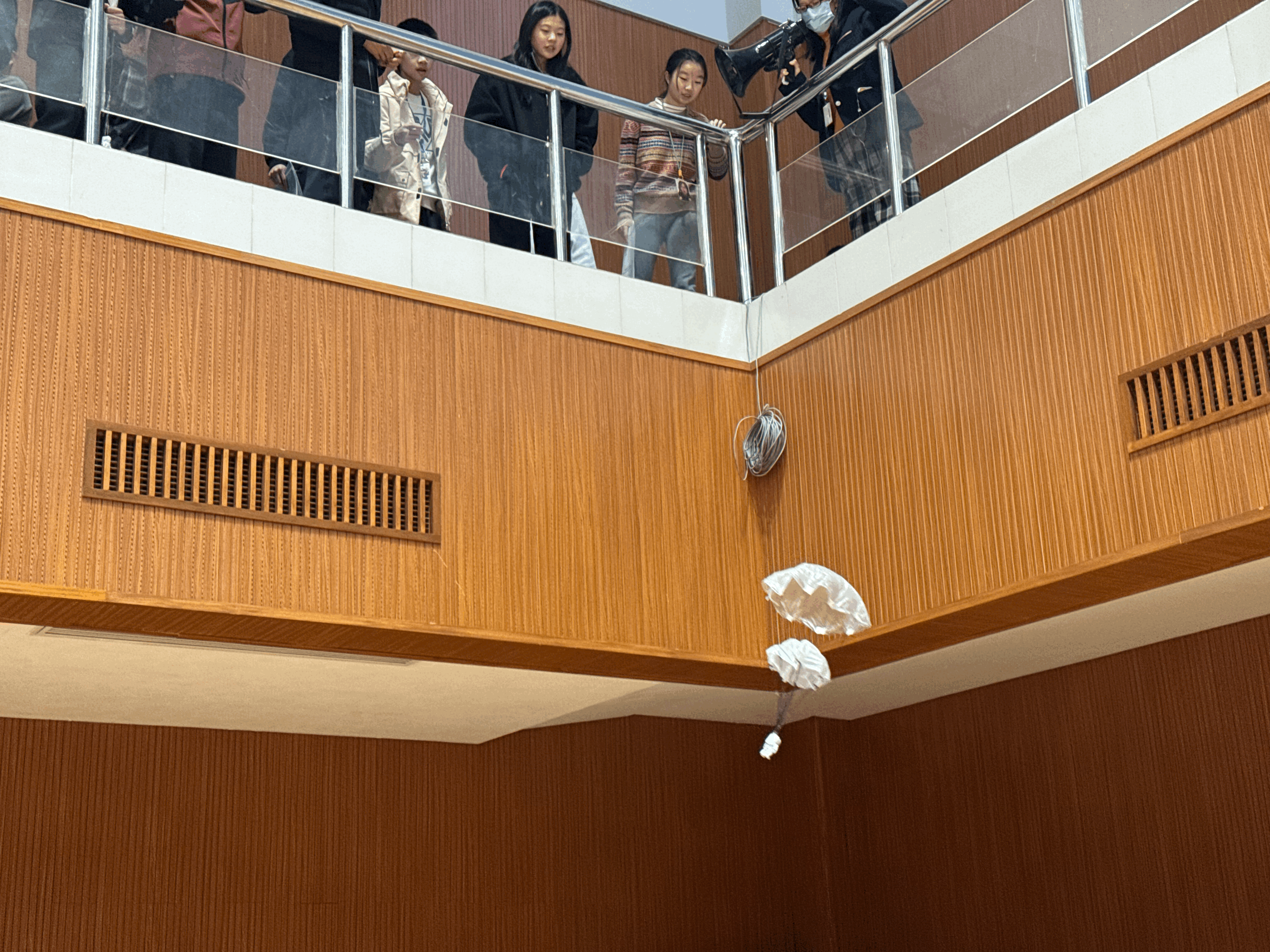
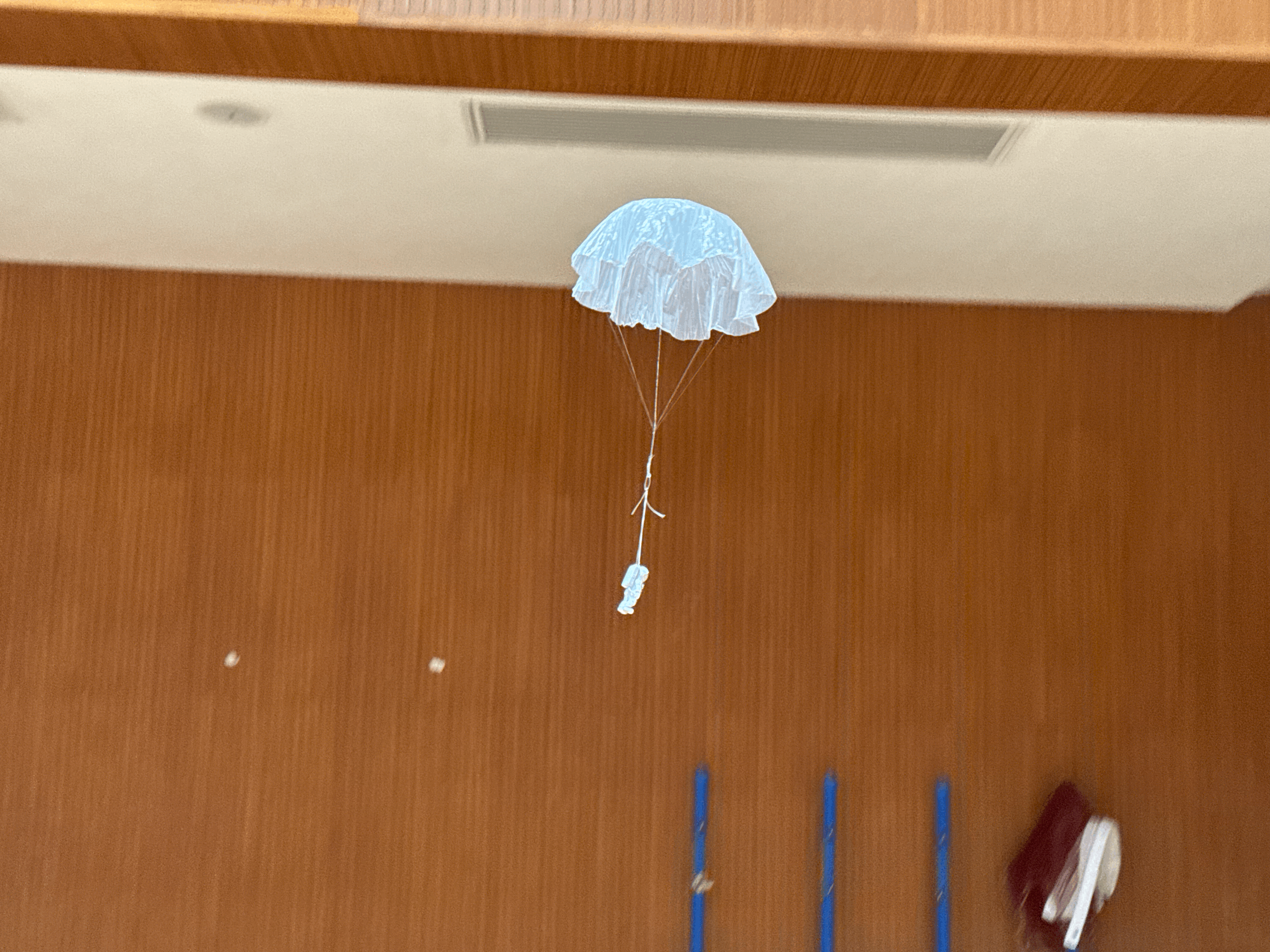
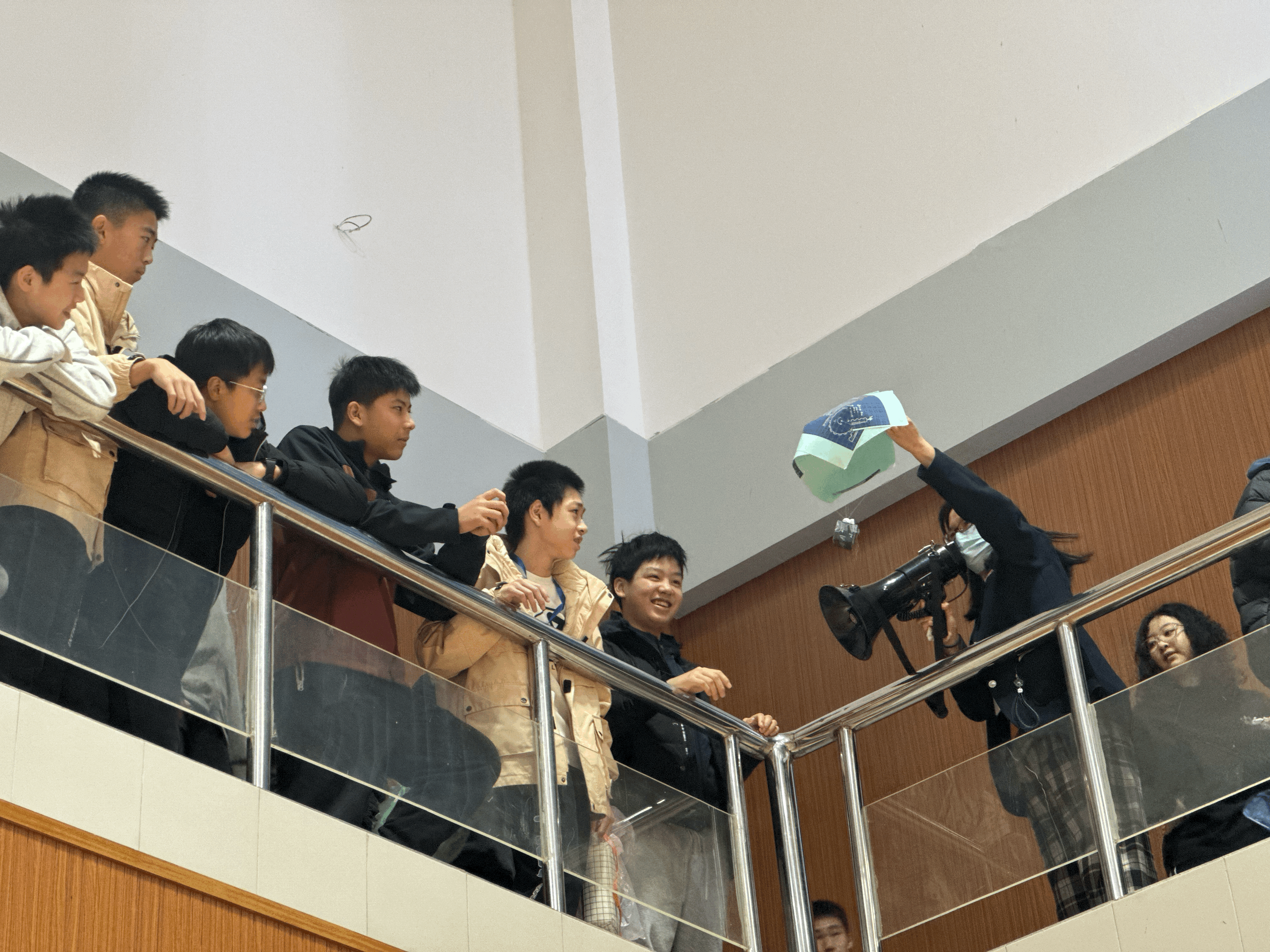
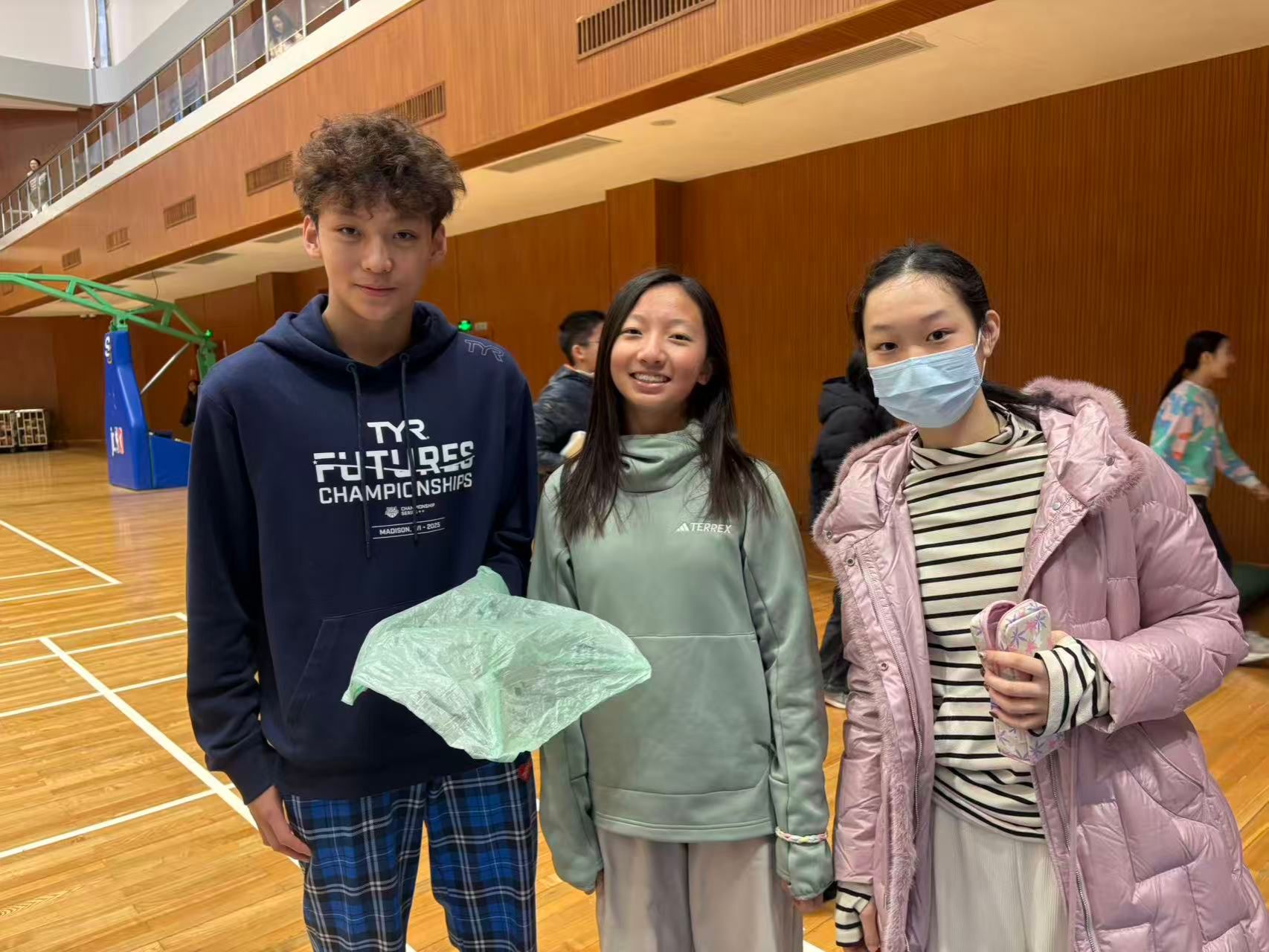

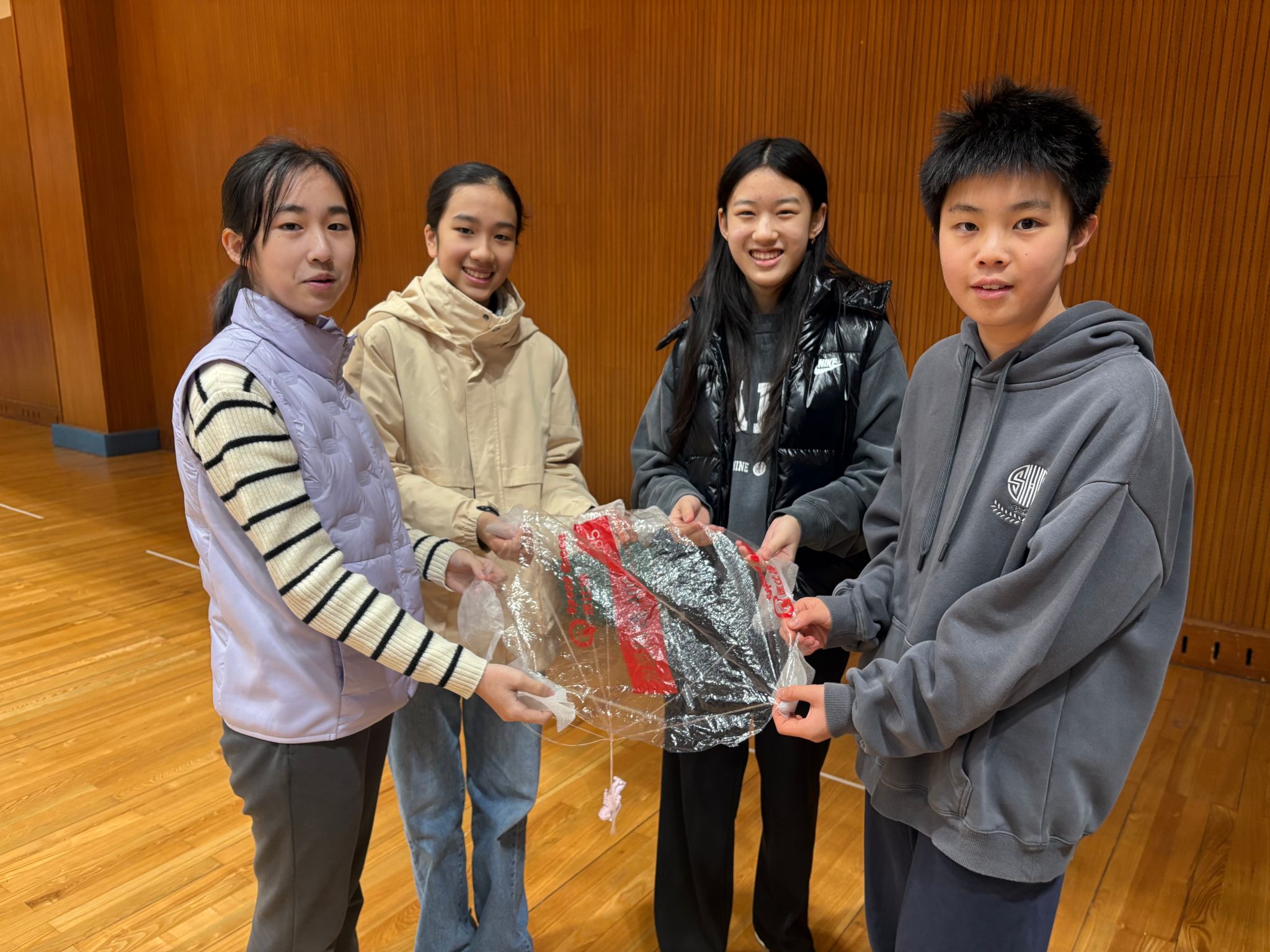
On the presentation day, each class conducted live tests and evaluations. Ultimately, the team composed of 8-2 Claire, 8-7 Jayden and 8-5 Anne stood out and won the championship. Their parachute, carrying a 26-gram astronaut model, descended slowly from a height of 4 meters, taking 4.33 seconds to reach the ground. This impressive feat drew enthusiastic applause and admiration from teachers and students present.
Though different in form, these two projects share the same teaching philosophy we uphold: physics learning is about understanding principles through doing, activating thinking through creating, and connecting with the real world through collaboration. By incorporating AI analysis, virtual experiment, and open-ended design, we aim not only to impart knowledge but also to cultivate students' future-ready key competencies— including scientific inquiry, digital literacy, creative problem-solving, and collaborative communication. Moving forward, the physics department will continue to advance such project-based learning initiatives that integrate technology, emphasize practice, and encourage innovation, making the classroom a starting point for students to explore science, connect with the world, and create bravely.
(Written by Xiaojing Ye
Pictures by Physics Department Teachers, 8-3 Joanna
Reviewed by Lei Guo, Shiyu Wu, Grace Gilmore)