-
ABOUT US
-
ACADEMICS
Curriculum Program
Departments
- English
- High School Chinese
- Primary and Junior School Chinese.
- High School Mathematics
- Middle School Mathematics
- Primary School Mathematics
- Music and Fine Arts
- Physical Education
- Physics
- Chemistry
- History and Geography
- Physical Science and Optional courses Department
- Middle School Biology
- High School Biology
- Social Sciences
- Computer Science
- Courses in Primary School
Achievements and Matriculations
College Counseling
Science & Technology Innovation Contest
Subject Competition
-
ARTS
-
ATHLETICS
-
AT SHSID
SHSID ∣ TIMES
PTSA
Club Exhibition
- 龙吟社
- Live 2 Drama
- Choir
- Hip-pop Dance Club
- The Primary School Dance Troupe
- Symposiums Club
- Biology Workshop
- You Shan
- VEX Robotic
- Peking Opera Club
- Baseball Club
- Model United Nations
- The World Scholar’s Cup
- Future Problem Solving Club
- United States Academic Pentathlon
- OM Club
- AMC Club
- Music for Patients
- SHSID Gazette
- Smile Charity
- Cultural Moments
- SciAcademy
- Stem Doge Alliance
- Chinese Debate Club
- IAA
- Mock Trial Club
- Zhengming Club
- Furry Friends
- GT-Racing
- Village Radio
- IMMC Club
- Creative Design and Intelligent Fabrication
- Future City Research Project
- ECOCAP
- AdvocaSEA
- SPDC
- Medishine
- Floorball Club
- Animusic MTC
- Wings Up
- All Booked
- Cyano
- Birding Community
Health and Wellness
Campus Safety
Cafeteria Service
-
ADMINISTRATION
-
ADMISSIONS
-
ALUMNI
Alumni Information
Honors Students
- Class of 2025
- Class of 2024
- Class of 2023
- Class of 2022
- Class of 2021
- Class of 2020
- Class of 2019
- Class of 2018
- Class of 2017
- Class of 2016
- Class of 2015
- Class of 2014
- Class of 2013
- Class of 2012
- Class of 2011
- Class of 2010
- Class of 2009
- Class of 2008
- Class of 2007
- Class of 2006
Who Studied at SHSID
SHS Foundation
-
DOCUMENTS
Delve into the New Computer Science Curriculum, Forge a New Ecology of Integrated Teaching for Two Divisions — The CS Department Launches a New Journey of Research and Collaboration
On February 27, the Computer Science Department convened a teaching seminar to kick off the new semester. The meeting aimed to deploy routine teaching tasks, deepen understanding of the new curriculum standards, and explore the innovative integration of artificial intelligence into subject teaching.
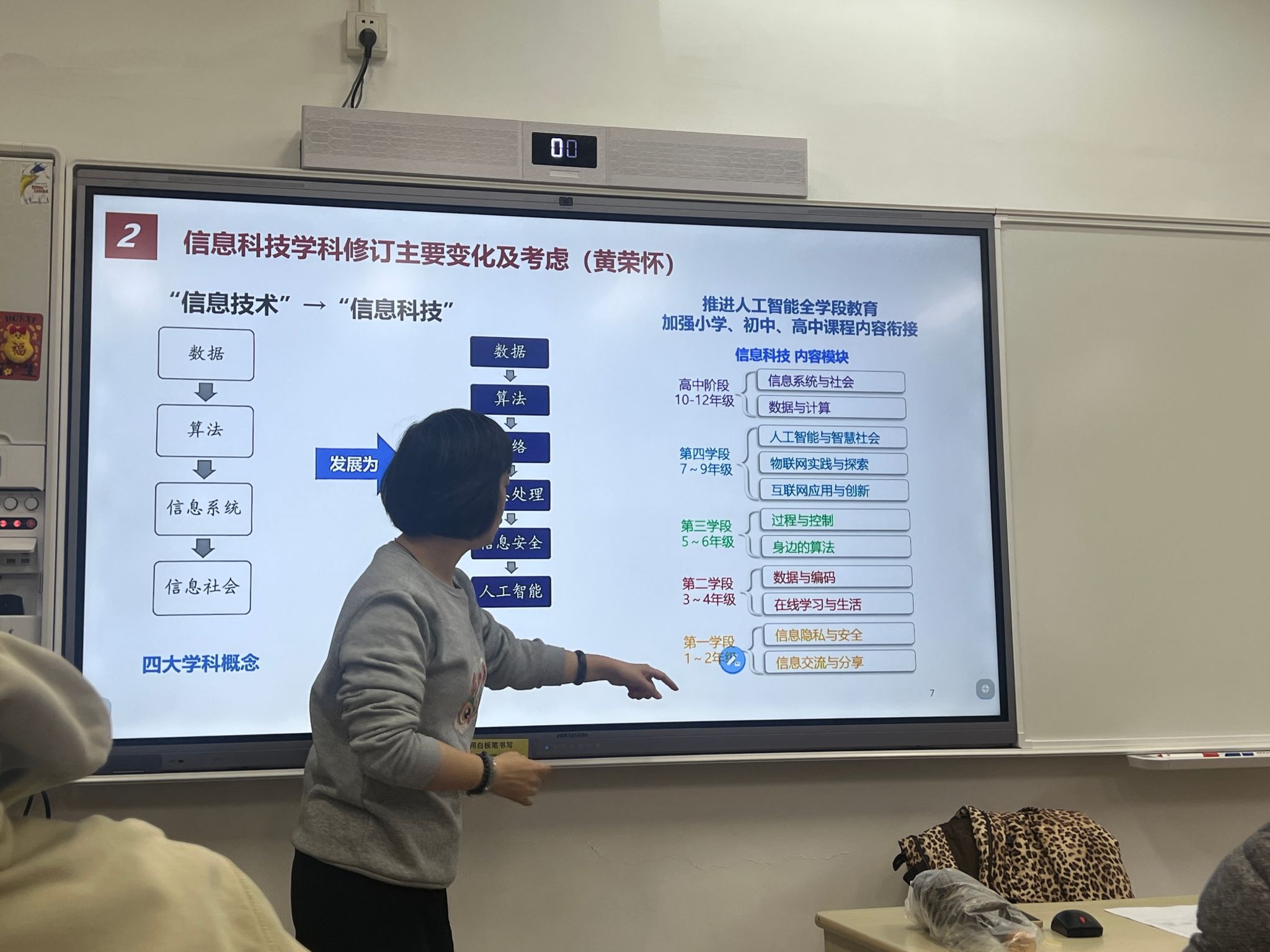
The session began with Ms. Mao. She delivered a keynote presentation, providing an in-depth interpretation of the core changes and directions for textbook revision in the revised National General High School Computer Science Curriculum Standards. She highlighted the conceptual upgrade from "Information Technology" to "Information Science and Technology," elaborated on the integrated design of the six core curriculum threads—including "Data," "Algorithms," and "Artificial Intelligence"—and outlined new requirements for the comprehensive coverage of AI education across all grade levels. This provided clear guidance for teachers to accurately grasp the essence of the curriculum standards and optimize the instructional designs. It is worth noting that studying and understanding China's national curriculum standards is significant for both the domestic curriculum and the international division's curriculum track. It serves as a vital reference for curriculum coherence, pedagogical innovation, and the cultivation of globally competent talent with strong foundational literacy in information science and technology.
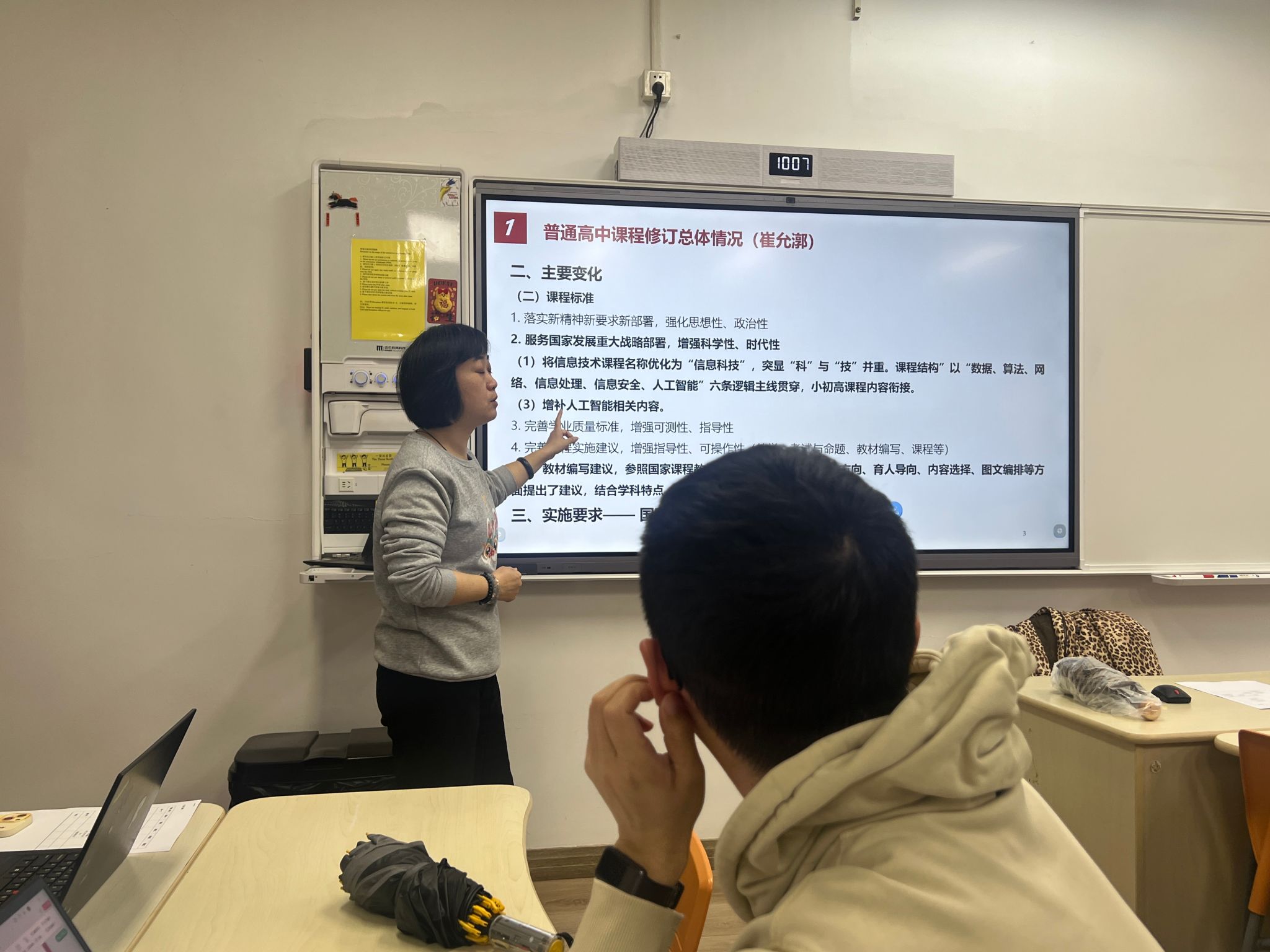
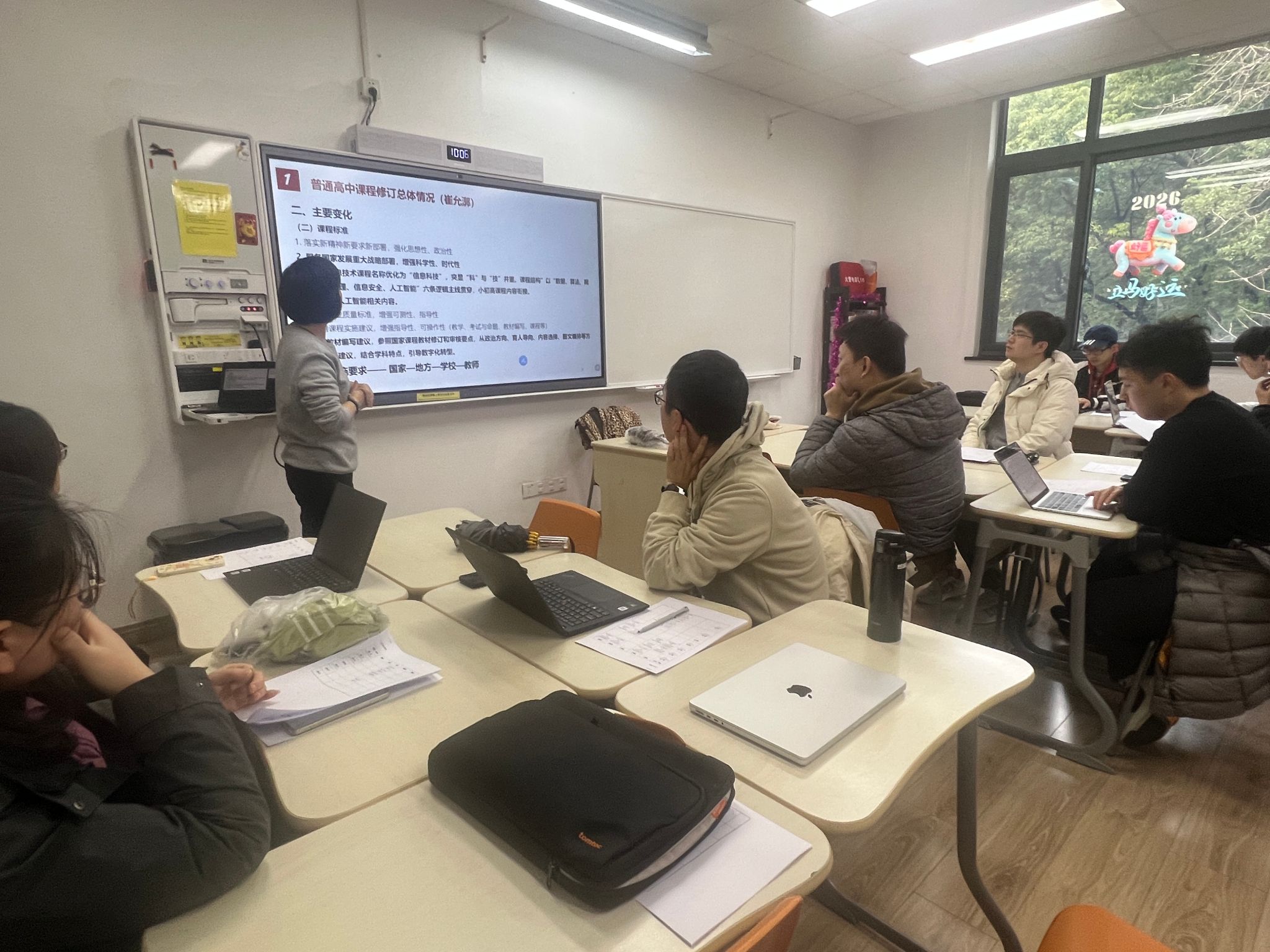
During the teaching case sharing session, the atmosphere was vibrant and engaging. Several teachers drew upon their practical experiences to showcase excellent cases of AI-empowered interdisciplinary teaching. These included cases integrating AI and data mining tools for interdisciplinary data analysis, aimed at cultivating students' transferable learning skills to solve practical problems across disciplines; projects utilizing the OpenInnoLab platform for AI classification practices, allowing students to grasp core AI principles through hands-on operation; classes integrating the Python Turtle library to create engaging lessons bridging mathematics and programming; and courses designing APP system development within an economics context, leveraging Figma AI tools. These vivid cases and diverse perspectives offered valuable practical references for interdisciplinary integration and AI classroom innovation.
This teaching meeting served as both a "mobilization conference" for the new semester's teaching work and an "exchange forum" for curriculum standard interpretation and teaching innovation. The integration and exchange of teaching between the two divisions are of great significance for improving the quality and efficiency of computer education. Looking ahead, the department will be guided by the new curriculum standards, continue to delve deep into classroom teaching, actively explore integration paths between Information Science and Technology and Artificial Intelligence, and continuously improve teaching quality. The goal is to empower students to grow into new-era talents equipped with both scientific literacy and innovative capabilities in the digital age.
(Written and Pictures by Computer Science Department Edited by Cody Turner Reviewed by Qian Zuo)