-
ABOUT US
-
ACADEMICS
Curriculum Program
Departments
- English
- High School Chinese
- Primary and Junior School Chinese.
- High School Mathematics
- Middle School Mathematics
- Primary School Mathematics
- Music and Fine Arts
- Physical Education
- Physics
- Chemistry
- History and Geography
- Physical Science and Optional courses Department
- Middle School Biology
- High School Biology
- Social Sciences
- Computer Science
- Courses in Primary School
Achievements and Matriculations
College Counseling
Science & Technology Innovation Contest
Subject Competition
-
ARTS
-
ATHLETICS
-
AT SHSID
SHSID ∣ TIMES
PTSA
Club Exhibition
- 龙吟社
- Live 2 Drama
- Choir
- Hip-pop Dance Club
- The Primary School Dance Troupe
- Symposiums Club
- Biology Workshop
- You Shan
- VEX Robotic
- Peking Opera Club
- Baseball Club
- Model United Nations
- The World Scholar’s Cup
- Future Problem Solving Club
- United States Academic Pentathlon
- OM Club
- AMC Club
- Music for Patients
- SHSID Gazette
- Smile Charity
- Cultural Moments
- SciAcademy
- Stem Doge Alliance
- Chinese Debate Club
- IAA
- Mock Trial Club
- Zhengming Club
- Furry Friends
- GT-Racing
- Village Radio
- IMMC Club
- Creative Design and Intelligent Fabrication
- Future City Research Project
- ECOCAP
- AdvocaSEA
- SPDC
- Medishine
- Floorball Club
- Animusic MTC
- Wings Up
- All Booked
- Cyano
- Birding Community
Health and Wellness
Campus Safety
Cafeteria Service
-
ADMINISTRATION
-
ADMISSIONS
-
ALUMNI
Alumni Information
Honors Students
- Class of 2025
- Class of 2024
- Class of 2023
- Class of 2022
- Class of 2021
- Class of 2020
- Class of 2019
- Class of 2018
- Class of 2017
- Class of 2016
- Class of 2015
- Class of 2014
- Class of 2013
- Class of 2012
- Class of 2011
- Class of 2010
- Class of 2009
- Class of 2008
- Class of 2007
- Class of 2006
Who Studied at SHSID
SHS Foundation
-
DOCUMENTS
History and Geography Department: Reconstructing the Mali Empire Through History and Narrative — An Interdisciplinary History-English Collaborative Class
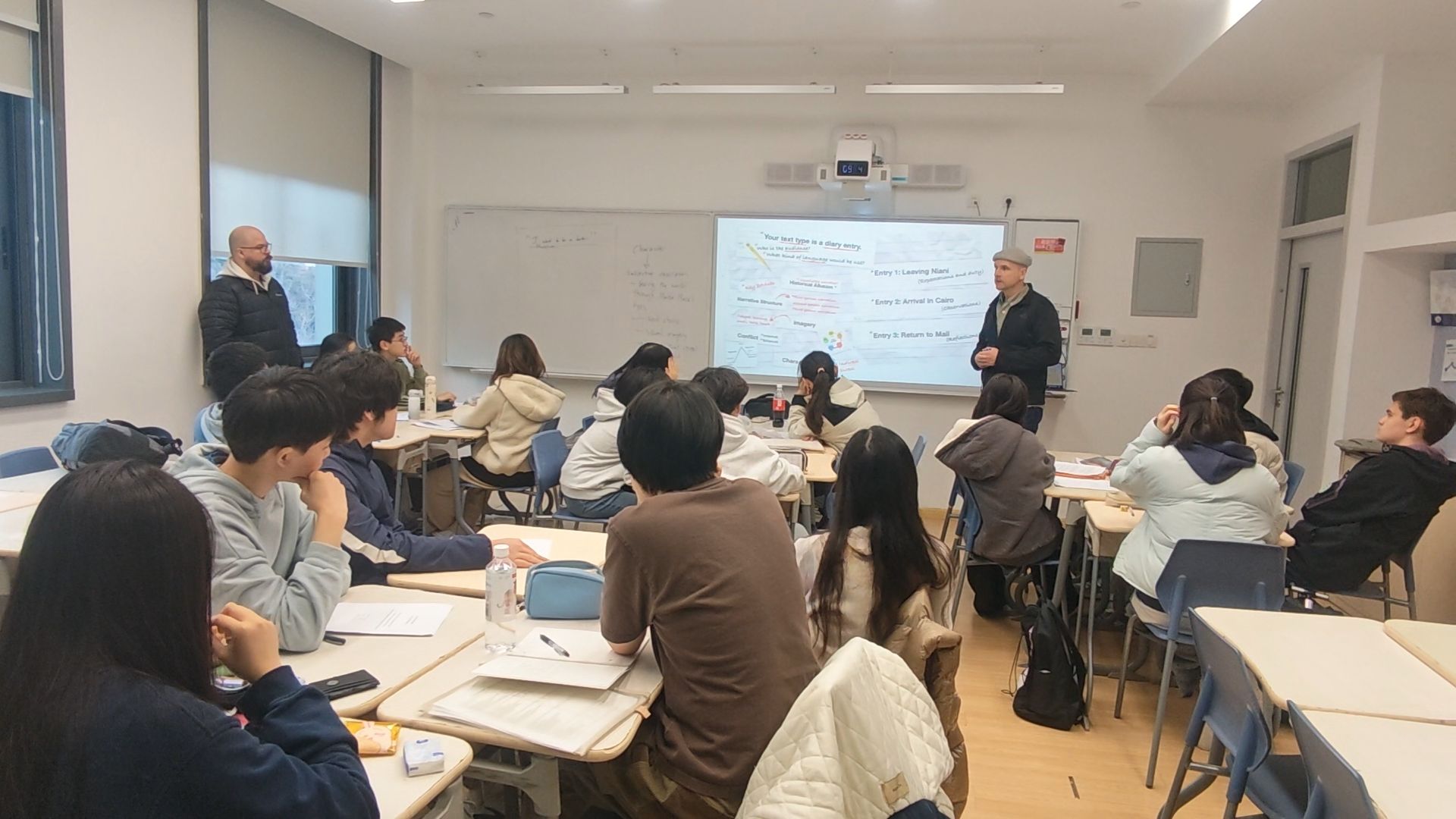
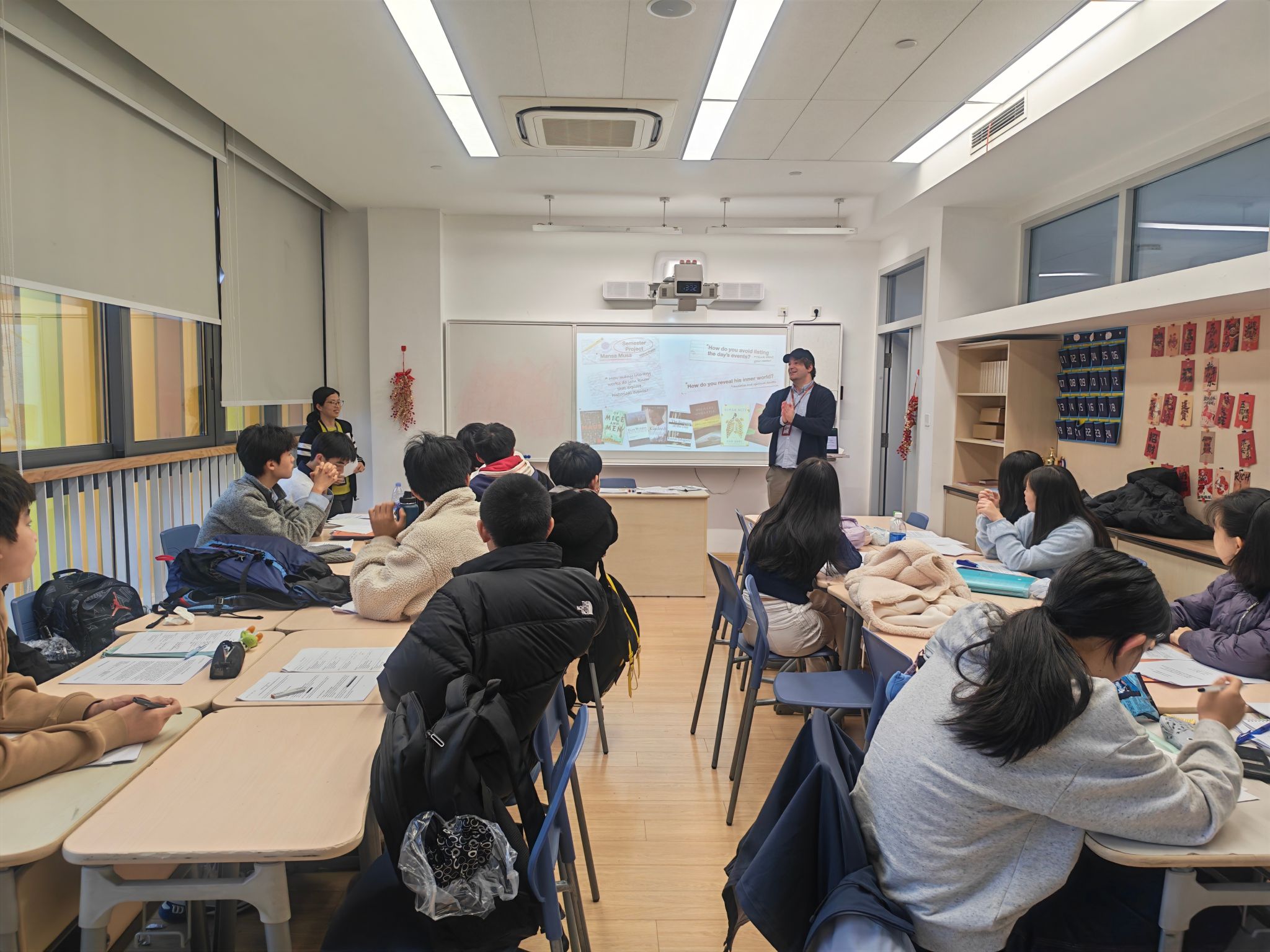
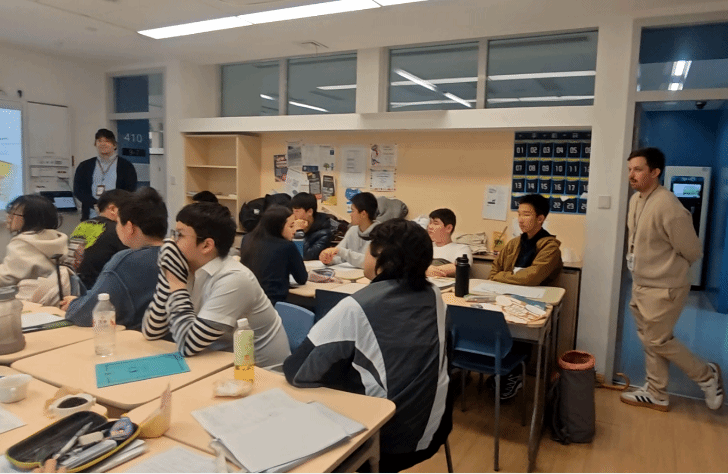
On March 17 and 18, “special guests” made an appearance in the Grade 9 history classes. To help students better complete the creative writing portion of their semester project, the History Department proactively invited the English Department to collaborate, providing students with professional guidance from both historical and literary perspectives.
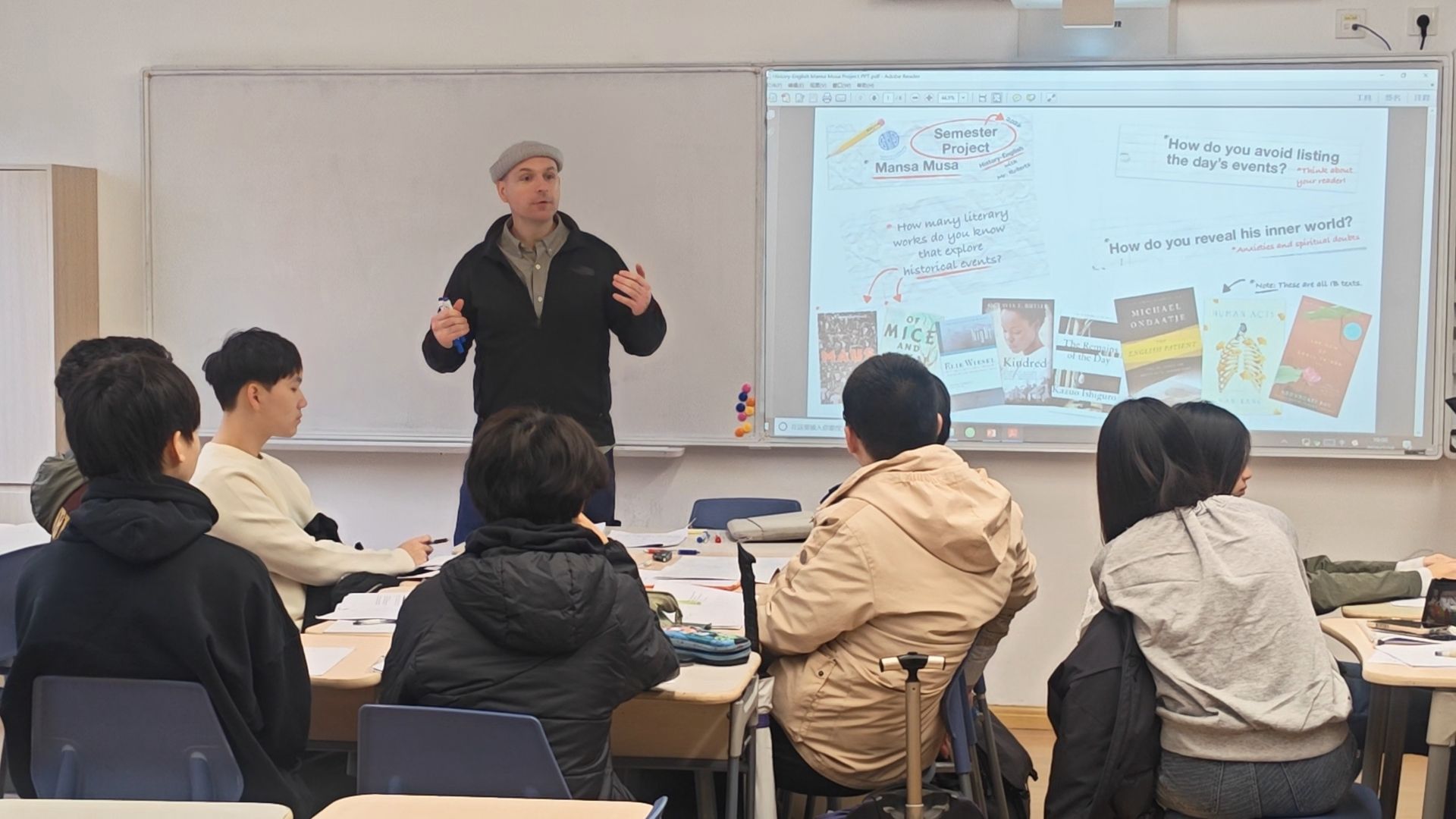
The theme of this collaboration centered on Mansa Musa, the king of the ancient West African Mali Kingdom. He is renowned worldwide for his immense wealth, devout pilgrimage, and strong support for infrastructure development as well as educational and cultural initiatives. History teachers have laid the groundwork through a series of progressive activities—including decision-making games, video-based Q&A sessions, in-depth case study reading & mind map making, and HIPP analysis—to help students establish a foundational understanding of the Mali Kingdom and Mansa Musa, while also expanding their knowledge. The final assignment for the project is to write three diary entries from Mansa Musa’s perspective, covering three distinct phases: before, during, and after his pilgrimage. The history teachers raised some questions from their own perspective, as well as potential challenges students might face, such as: What techniques do you suggest to prevent students from simply listing the day's events? How do we encourage them to reveal Mansa Musa’s private anxieties or spiritual doubts that wouldn't appear in a royal chronicle? How can we help students develop a tone that feels both “regal” and “pious”? How do we guide students to write about wealth without sounding "braggy"? How should the prose style evolve across the three entries?
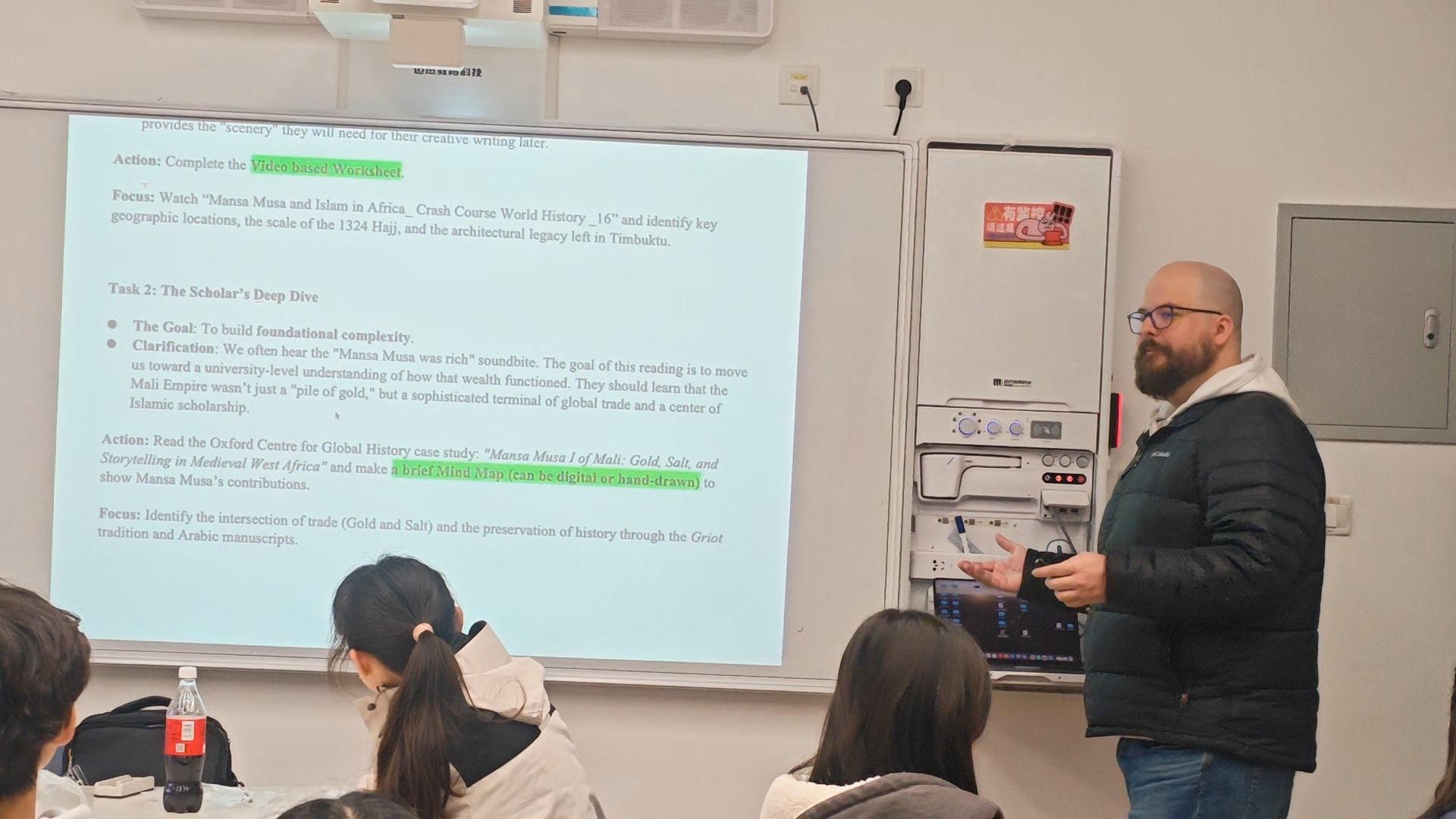
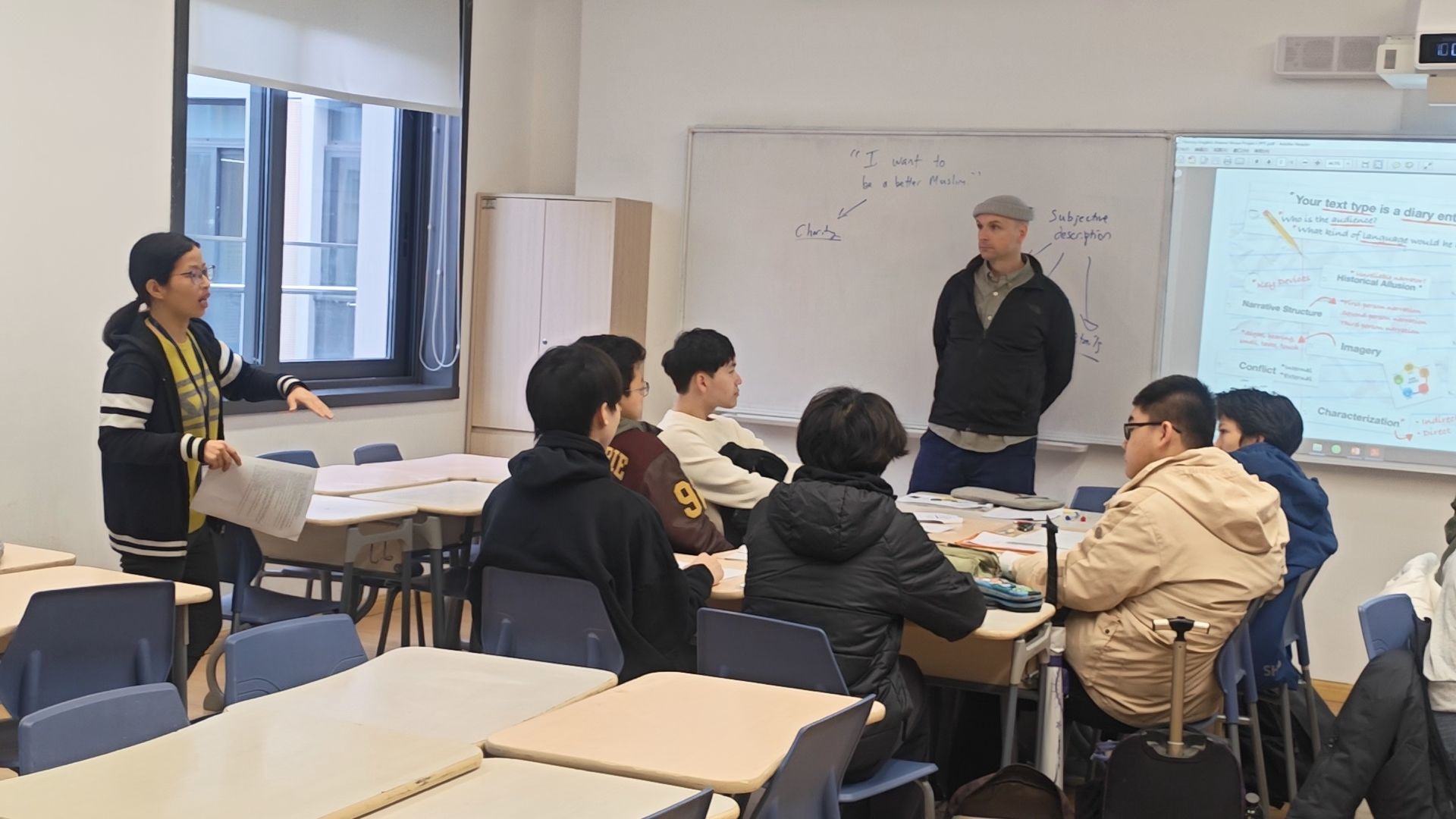
Mr. Paul Roberts and Mr. Justin Way from the English Department clearly addressed each of these questions one by one. They began by using literary works based on historical events—such as Maus and Of Mice and Men—that students are familiar with or are currently reading, demonstrating that this type of writing is actually not foreign to them, and provided additional reading recommendations. Next, they helped students clarify the concept of a diary by clarifying its audience and language; Subsequently, they offered specific suggestions based on the themes of the three diary entries: for instance, how to establish a setting and related conflicts in the opening entry; how to incorporate “contrastive” descriptions in the latter two entries to highlight changes between stages; and how to effectively use indirect characterization to emphasize a character’s key traits, among other points.
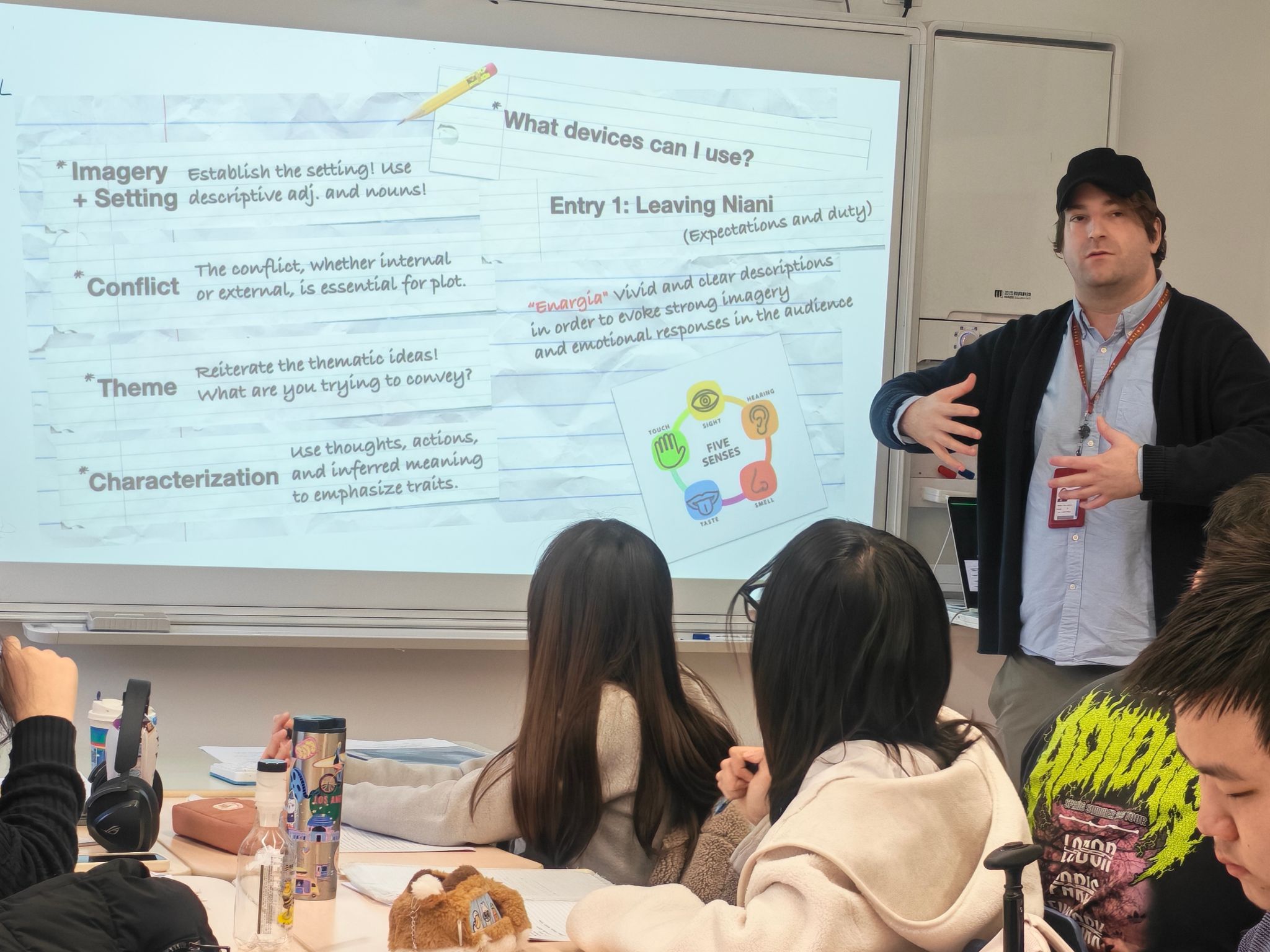
This interdisciplinary collaboration proved to be both enjoyable and successful. During class, students actively participated in discussions and raised thought-provoking questions; after class, they also provided enthusiastic feedback. Most of them endorsed this collaborative model, noting that the presence of an English teacher in a history class was both a pleasant surprise and highly meaningful, particularly as they learned various new vocabulary and practical writing techniques. At the same time, they felt the session could have been extended further, offering constructive suggestions such as incorporating more real dairy examples, increasing the duration of interactive segments, and exploring additional interdisciplinary approaches. Through the process of interdisciplinary collaboration and mutual learning, both teachers and students have gained a great deal.
(Written by: Shen Zhou Pictures by: Yunuo Li Reviewed by Qian Zuo)