-
ABOUT US
-
ACADEMICS
Curriculum Program
Departments
- English
- High School Chinese
- Primary and Junior School Chinese.
- High School Mathematics
- Middle School Mathematics
- Primary School Mathematics
- Music and Fine Arts
- Physical Education
- Physics
- Chemistry
- History and Geography
- Physical Science and Optional courses Department
- Middle School Biology
- High School Biology
- Social Sciences
- Computer Science
- Courses in Primary School
Achievements and Matriculations
College Counseling
Science & Technology Innovation Contest
Subject Competition
-
ARTS
-
ATHLETICS
-
AT SHSID
SHSID ∣ TIMES
PTSA
Club Exhibition
- 龙吟社
- Live 2 Drama
- Choir
- Hip-pop Dance Club
- The Primary School Dance Troupe
- Symposiums Club
- Biology Workshop
- You Shan
- VEX Robotic
- Peking Opera Club
- Baseball Club
- Model United Nations
- The World Scholar’s Cup
- Future Problem Solving Club
- United States Academic Pentathlon
- OM Club
- AMC Club
- Music for Patients
- SHSID Gazette
- Smile Charity
- Cultural Moments
- SciAcademy
- Stem Doge Alliance
- Chinese Debate Club
- IAA
- Mock Trial Club
- Zhengming Club
- Furry Friends
- GT-Racing
- Village Radio
- IMMC Club
- Creative Design and Intelligent Fabrication
- Future City Research Project
- ECOCAP
- AdvocaSEA
- SPDC
- Medishine
- Floorball Club
- Animusic MTC
- Wings Up
- All Booked
- Cyano
- Birding Community
Health and Wellness
Campus Safety
Cafeteria Service
-
ADMINISTRATION
-
ADMISSIONS
-
ALUMNI
Alumni Information
Honors Students
- Class of 2025
- Class of 2024
- Class of 2023
- Class of 2022
- Class of 2021
- Class of 2020
- Class of 2019
- Class of 2018
- Class of 2017
- Class of 2016
- Class of 2015
- Class of 2014
- Class of 2013
- Class of 2012
- Class of 2011
- Class of 2010
- Class of 2009
- Class of 2008
- Class of 2007
- Class of 2006
Who Studied at SHSID
SHS Foundation
-
DOCUMENTS
Middle School Math Department : Geometry as the Brush, Painting the World – "Math Kaleidoscope" Creative Activity
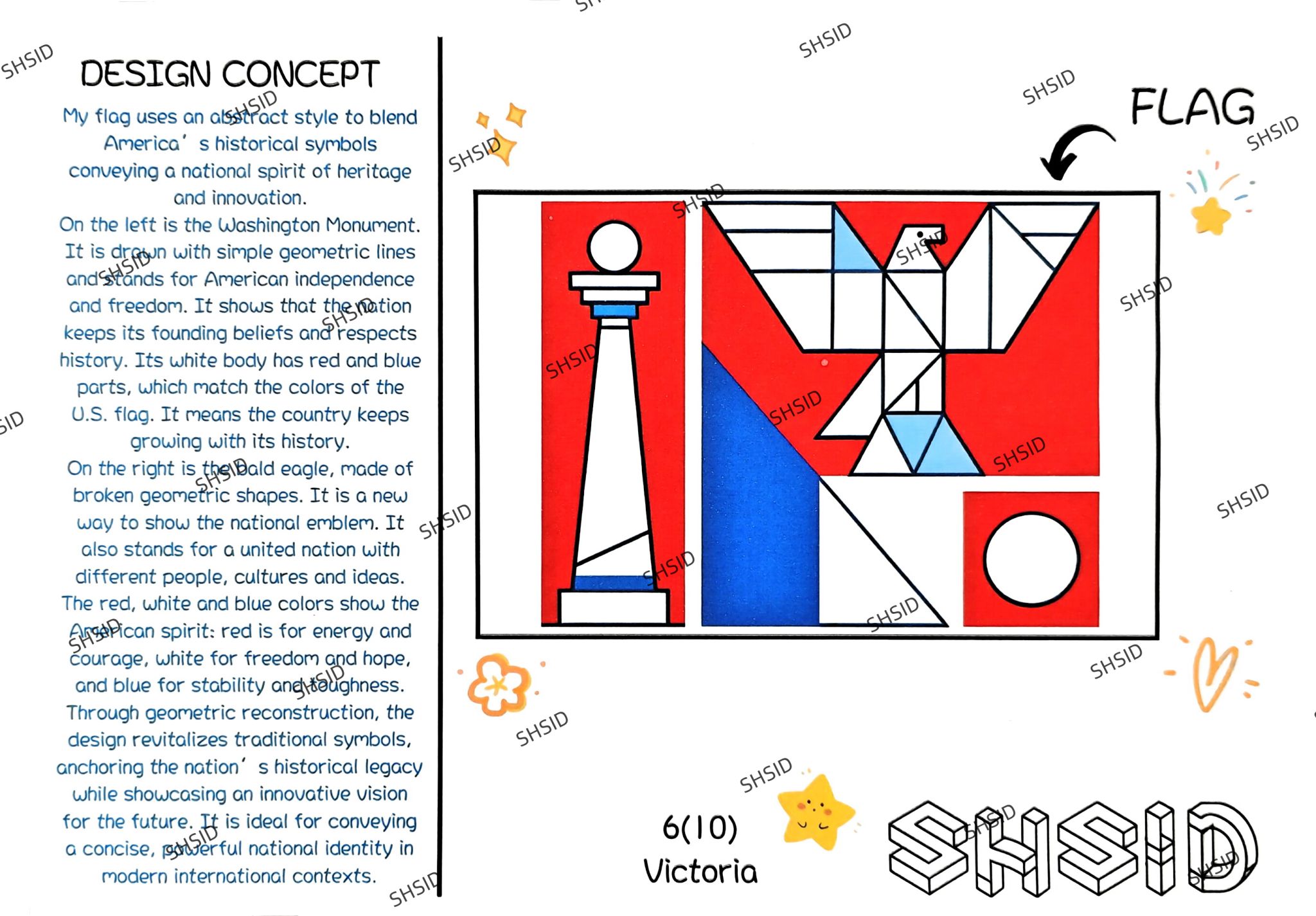
Mathematics is not just formulas and symbols; it is also a way of understanding the world. As Pi Day approaches, the middle school mathematics department organized the "Math Kaleidoscope" activity, guiding students to observe and explore the beauty of mathematics in the real world, and attempting to reinterpret architectural and cultural symbols using mathematical language. In this activity, students focused on countries participating in the International Mathematical Olympiad (IMO). By combining national characteristics and architectural features with mathematical principles, they created their own "mathematical cultural cards."
Inspired by the International Mathematical Olympiad (IMO)
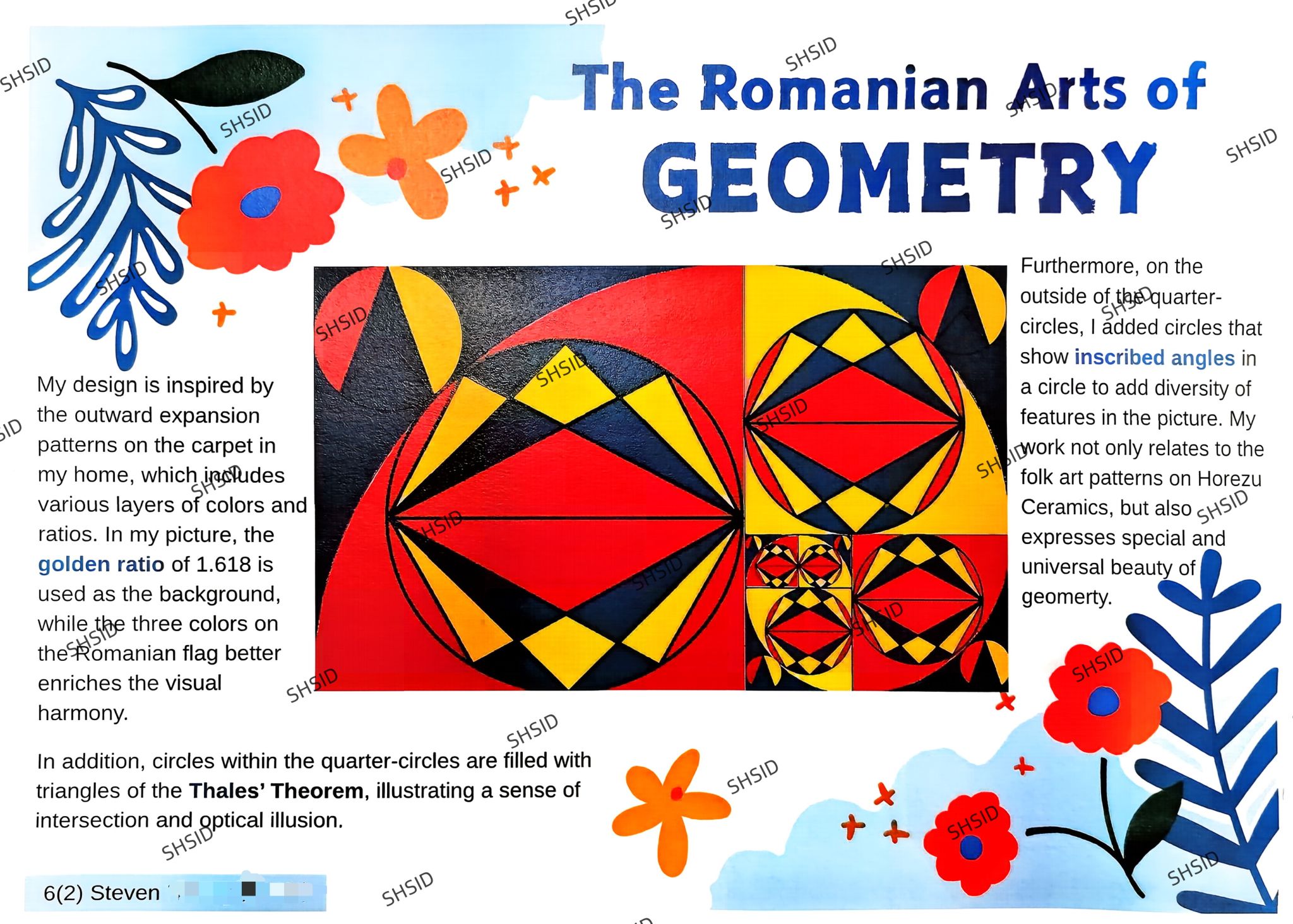
As our school is preparing to host the International Mathematical Olympiad, this math activity was ingeniously designed to incorporate strong elements of international mathematical culture. The goal was for students to further understand the IMO competition and the mathematical traditions of different countries through the creative process. For example, Romania has long been renowned for its profound tradition in mathematics education. Its Euclidean deductive system, emphasizing logical reasoning and rigorous proof, has significantly influenced the development of modern mathematical competitions. Against this backdrop, the "Math Kaleidoscope" activity uses artistic creation to integrate mathematics, culture, and an international perspective. Students selected an IMO participating country by drawing lots, researching its architectural features and cultural symbols, and applying their geometric knowledge to mathematically reconstruct and express real-world elements, experiencing the unique charm of the interplay between mathematics and culture during their creations.
Using Geometry as a Tool to Paint Cultural Portraits
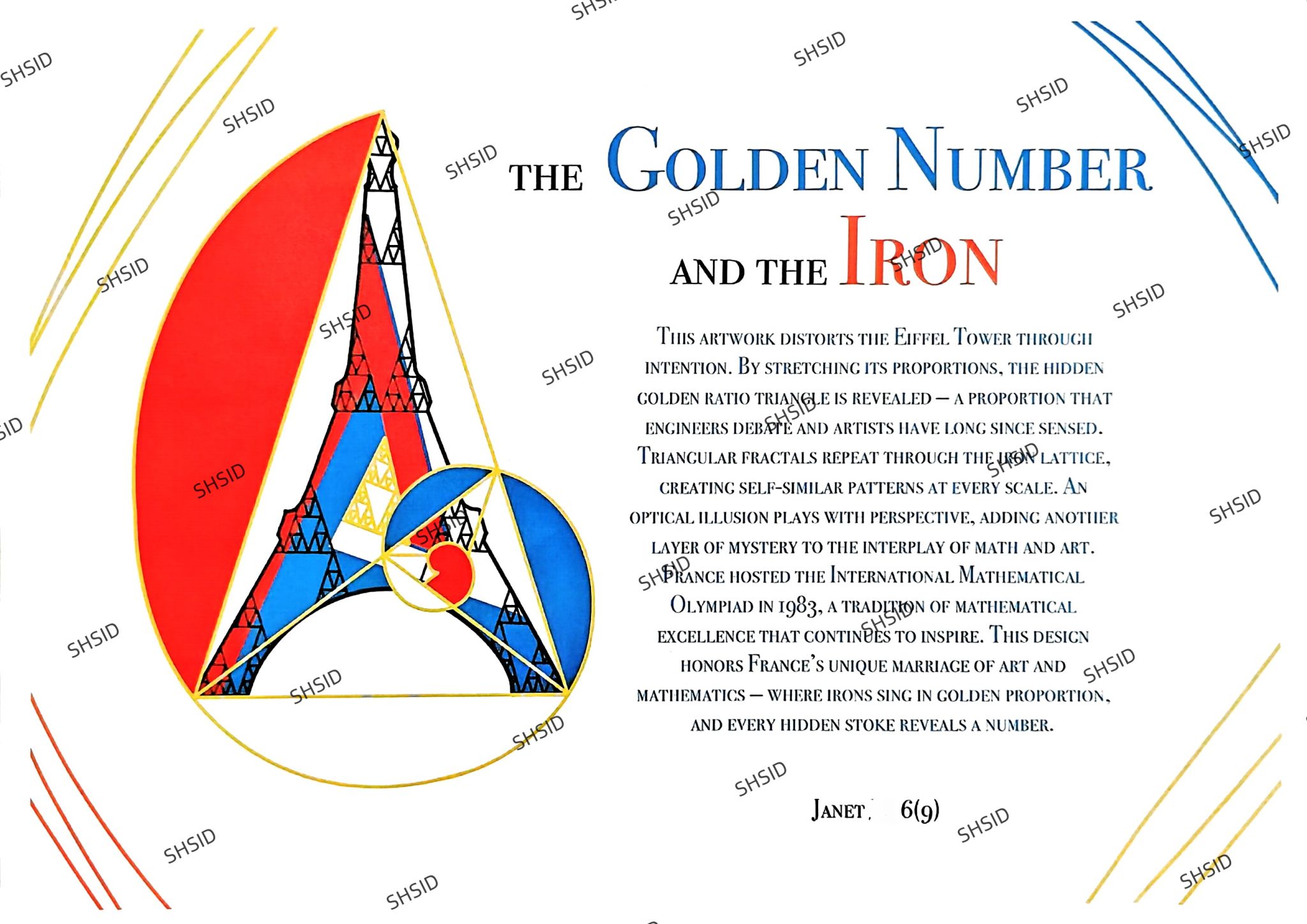
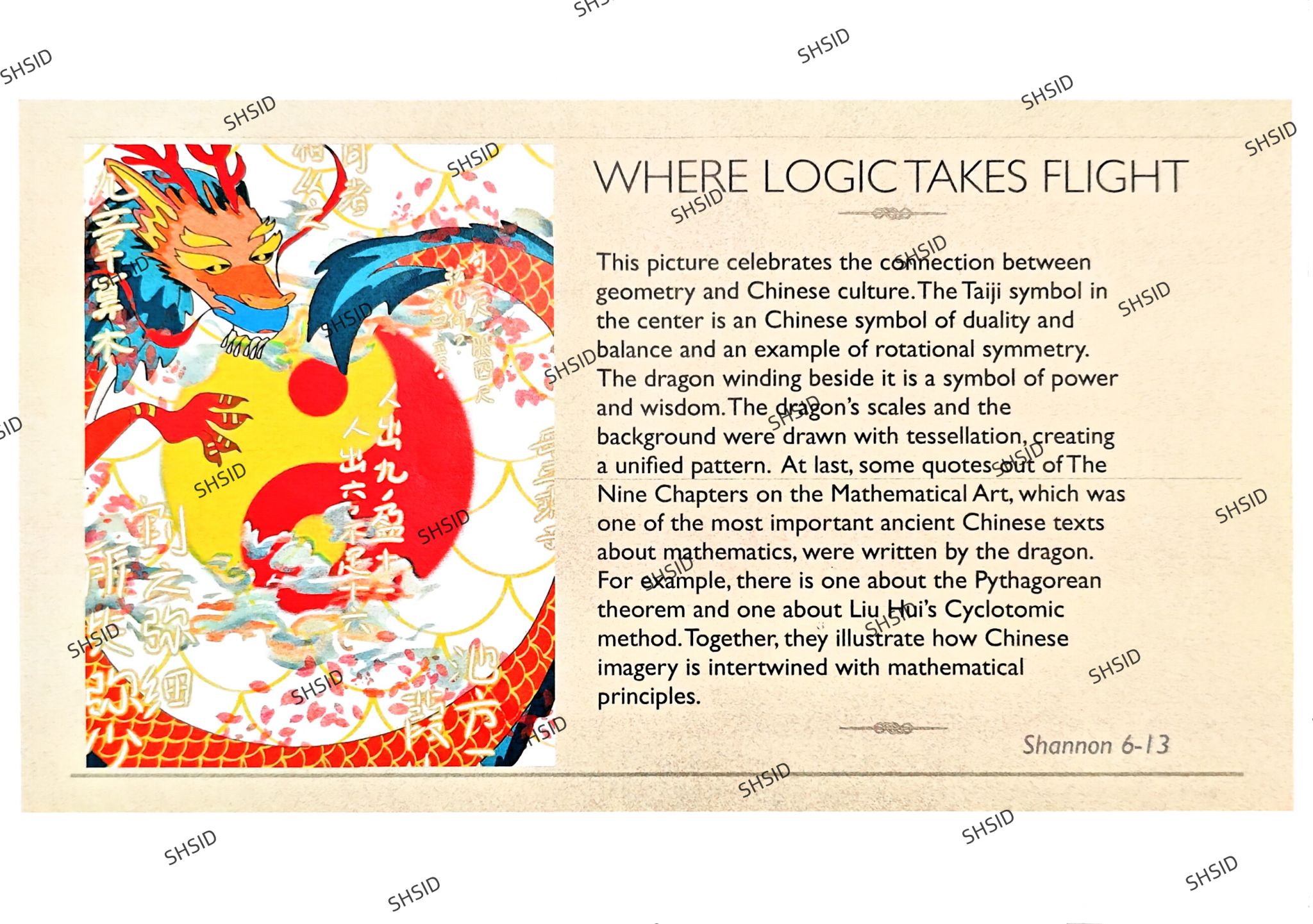
Through this in-depth mathematical exploration, students contemplated how to use geometric principles to explain and reconstruct the beauty of the real world. They drew inspiration from the repeating patterns of Romanian folk costumes and the diamond shapes on traditional carpets. They discovered the beauty of proportion and symmetry in French architecture and urban design. They also uncovered geometric rules hidden within the axial layout of China's Forbidden City and the "circle and square" spatial structure of the Temple of Heaven. During the process of researching materials with specific questions in mind, repeatedly sketching and making adjustments, students gradually grasped the connection between mathematics and culture. This process not only deepened their understanding of mathematical culture but also enhanced their logical reasoning and structural thinking abilities.
Employing Technology and Handicraft & Visualizing the Thought Process
This math activity encouraged various methods. Students expressed their creativity through the means in which they excel, producing a series of exquisite posters. There were artists using traditional hand-drawn methods, which involved using rulers, compasses, and colored pens. There were also precise and advanced digital artists using software like GeoGebra and other software. There were also the hybrid artists who combined the benefits of hand-drawing and digital refining.
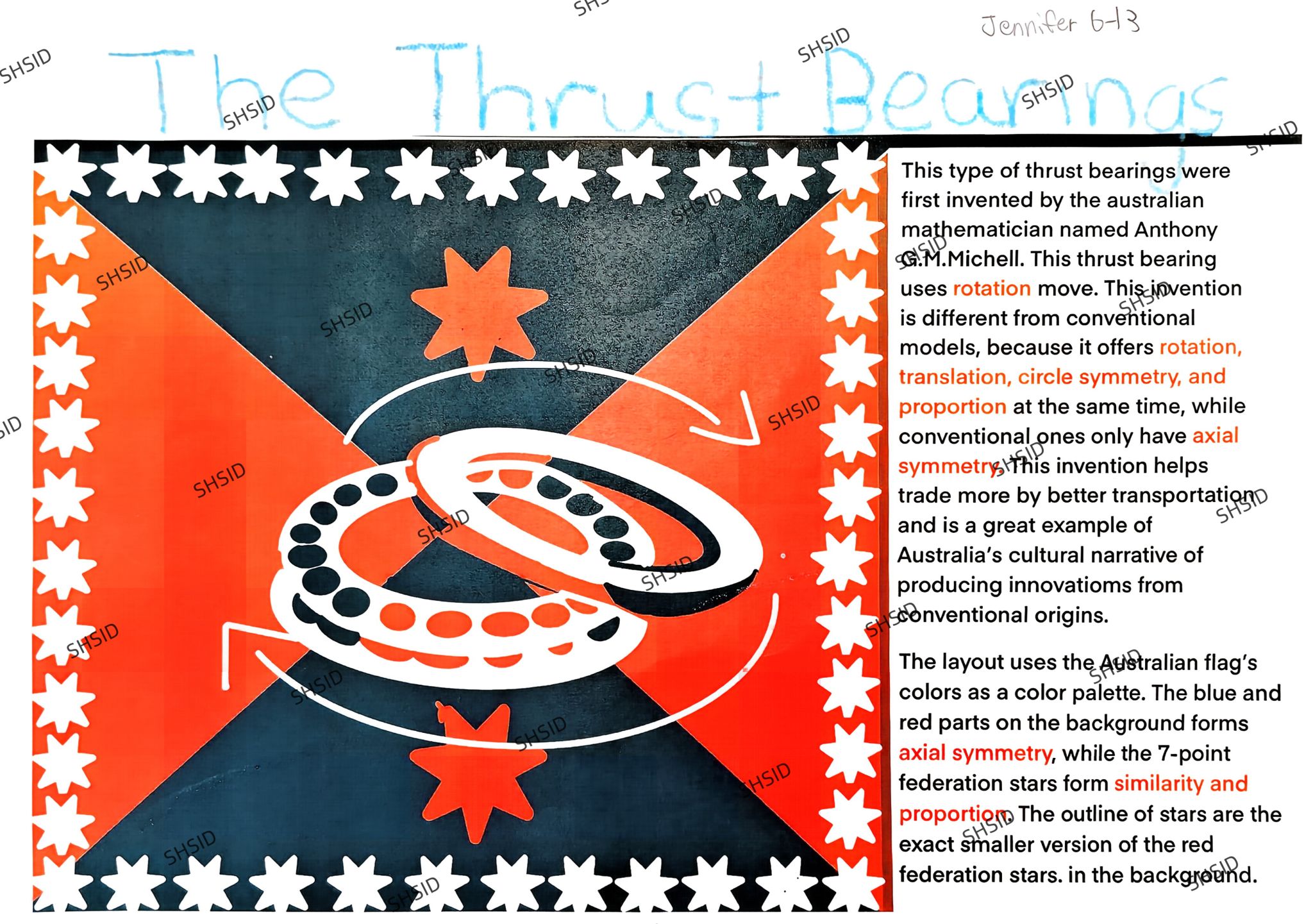
Mathematics exists not only within formulas and theorems but is also hidden in the details of architecture, culture, and daily life. When students use geometry to depict the world, they see not just shapes, but also the power of mathematics connecting different cultures. The middle school mathematics department will continue to guide students through diverse and enriching activities, helping them discover the beauty of mathematics through exploration and feel its power through practice.
(Written by Jiayi Chen
Pictures by Middle School Students
Reviewed by Wenyin Zheng, Shiyu Wu, Hannah Kloeber)