-
ABOUT US
-
ACADEMICS
Curriculum Program
Departments
- English
- High School Chinese
- Primary and Junior School Chinese.
- High School Mathematics
- Middle School Mathematics
- Primary School Mathematics
- Music and Fine Arts
- Physical Education
- Physics
- Chemistry
- History and Geography
- Physical Science and Optional courses Department
- Middle School Biology
- High School Biology
- Social Sciences
- Computer Science
- Courses in Primary School
Achievements and Matriculations
College Counseling
Science & Technology Innovation Contest
Subject Competition
-
ARTS
-
ATHLETICS
-
AT SHSID
SHSID ∣ TIMES
PTSA
Club Exhibition
- 龙吟社
- Live 2 Drama
- Choir
- Hip-pop Dance Club
- The Primary School Dance Troupe
- Symposiums Club
- Biology Workshop
- You Shan
- VEX Robotic
- Peking Opera Club
- Baseball Club
- Model United Nations
- The World Scholar’s Cup
- Future Problem Solving Club
- United States Academic Pentathlon
- OM Club
- AMC Club
- Music for Patients
- SHSID Gazette
- Smile Charity
- Cultural Moments
- SciAcademy
- Stem Doge Alliance
- Chinese Debate Club
- IAA
- Mock Trial Club
- Zhengming Club
- Furry Friends
- GT-Racing
- Village Radio
- IMMC Club
- Creative Design and Intelligent Fabrication
- Future City Research Project
- ECOCAP
- AdvocaSEA
- SPDC
- Medishine
- Floorball Club
- Animusic MTC
- Wings Up
- All Booked
- Cyano
- Birding Community
Health and Wellness
Campus Safety
Cafeteria Service
-
ADMINISTRATION
-
ADMISSIONS
-
ALUMNI
Alumni Information
Honors Students
- Class of 2025
- Class of 2024
- Class of 2023
- Class of 2022
- Class of 2021
- Class of 2020
- Class of 2019
- Class of 2018
- Class of 2017
- Class of 2016
- Class of 2015
- Class of 2014
- Class of 2013
- Class of 2012
- Class of 2011
- Class of 2010
- Class of 2009
- Class of 2008
- Class of 2007
- Class of 2006
Who Studied at SHSID
SHS Foundation
-
DOCUMENTS
Middle School Chinese Department: Yungang Embodies Ancient Charms, Study Tour Ignites New Insights Non-Native Chinese Language Study Tour: Appreciate the Charm of Art, Inherit Chinese Culture In the Spring Equinox season.
Following the Grade 8 non-native Chinese speakers' cultural Journey of Dehua Porcelain last semester, teachers from the Grade 8 Non-native Chinese Teaching Group of SHSID prepared another themed study tour for the students this semester – the Gazing Over the Clouds of Sea – The Yungang Grottoes Art Exhibition. In the Spring Equinox season, the students, led by teachers, visited Jinchao 8 Lane and Qukan Art Museum in Hongkou District, Shanghai.
Adopting the model of "pre-class preparation + on-site visit + interactive experience", this study tour allowed students to touch the millennial history through walking and comprehend the essence of art through observation, opening a time-transcending journey of traditional Chinese culture. The tour kicked off in the classroom. Before departure, teachers from the chinese department, with the help of customized study tour handbooks, systematically explained the basic knowledge of the Yungang Grottoes to the students: from its geographical location in Datong City, Shanxi Province, to its 1,500 years of historical accumulation, and then to its status as a UNESCO World Cultural Heritage site inscribed in 2001. This enabled students to understand in advance the value of the grottoes as a treasure of ancient Buddhist art, laying a solid knowledge foundation for the on-site visit. After browsing the vocabulary list in the study tour handbook, all the students headed for this artistic appointment with questions and curiosity.
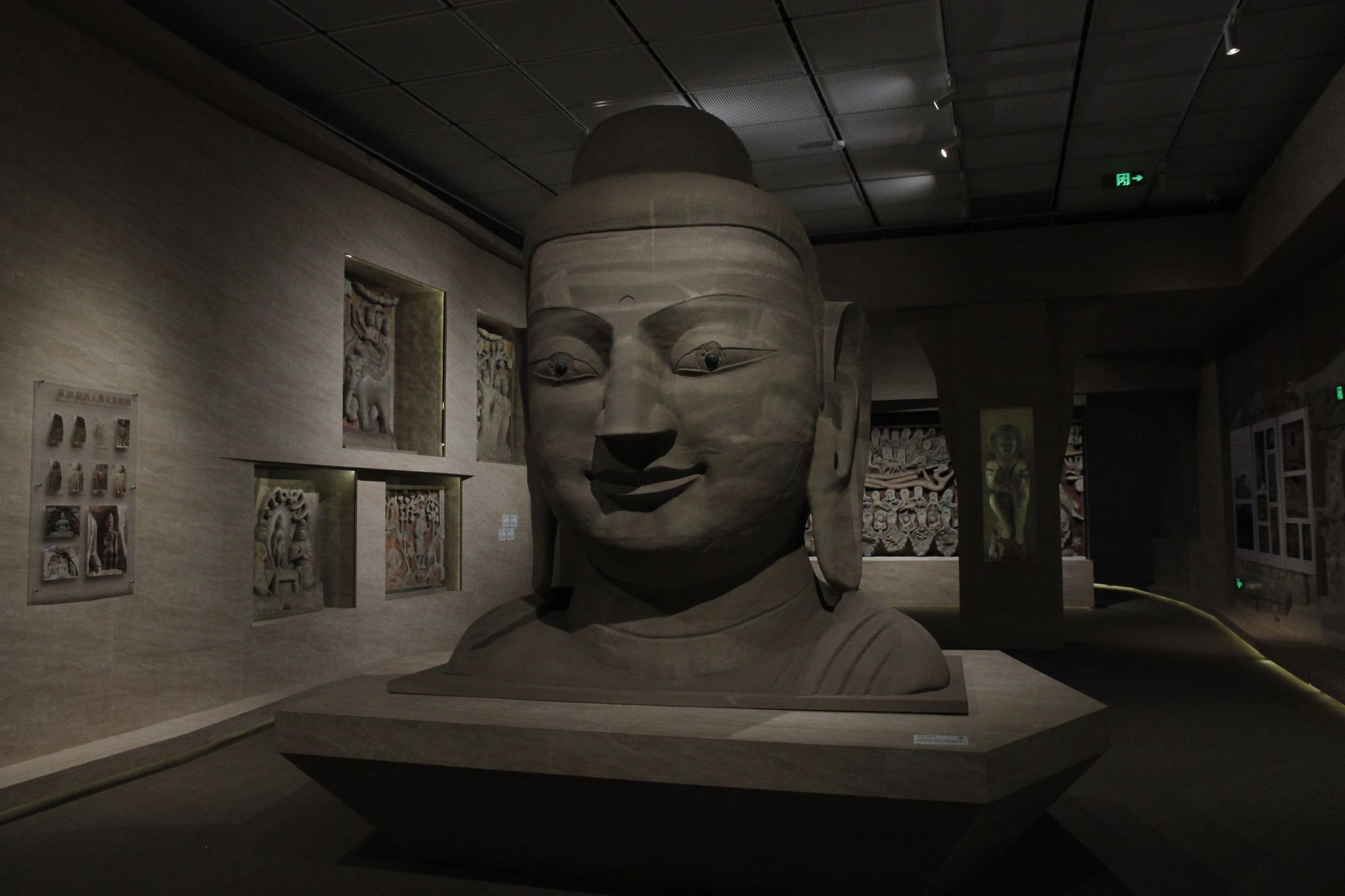
Upon arriving at the special exhibition venue, the students first walked into the outdoor exhibition area of Jinchao 8 Lane to visit the highlight of the exhibition – the 1:1 replica from Cave 12, the "Music Cave" of the Yungang Grottoes. As the world's first movable 3D-printed grotto replica, it restores the rock texture and the details of the stone carvings with millimeter-level precision. The musical apsaras on the inner walls, holding various Chinese and Western musical instruments such as the pipa and the bili, are vivid and lifelike. The students stood still gazing at the stone walls, listened to the restored court music of the Northern Wei Dynasty, and experienced the artistic charm of the "earliest imperial symphony orchestra in China" in an immersive way. Many students also referred to the study tour handbook and recorded the carving features and musical elements of the grotto. Subsequently, the students moved to the indoor exhibition area of Qukan Art Museum to start an in-depth visit of the second stop. In the exhibition hall, the most iconic Buddha head from Cave 20 of the Yungang Grottoes was on quiet display. The solemn and magnificent stone carving amazed the students, who combined the vocabulary challenge in the study tour handbook and described their impressions with Chinese words such as "solemn" and "exquisite".
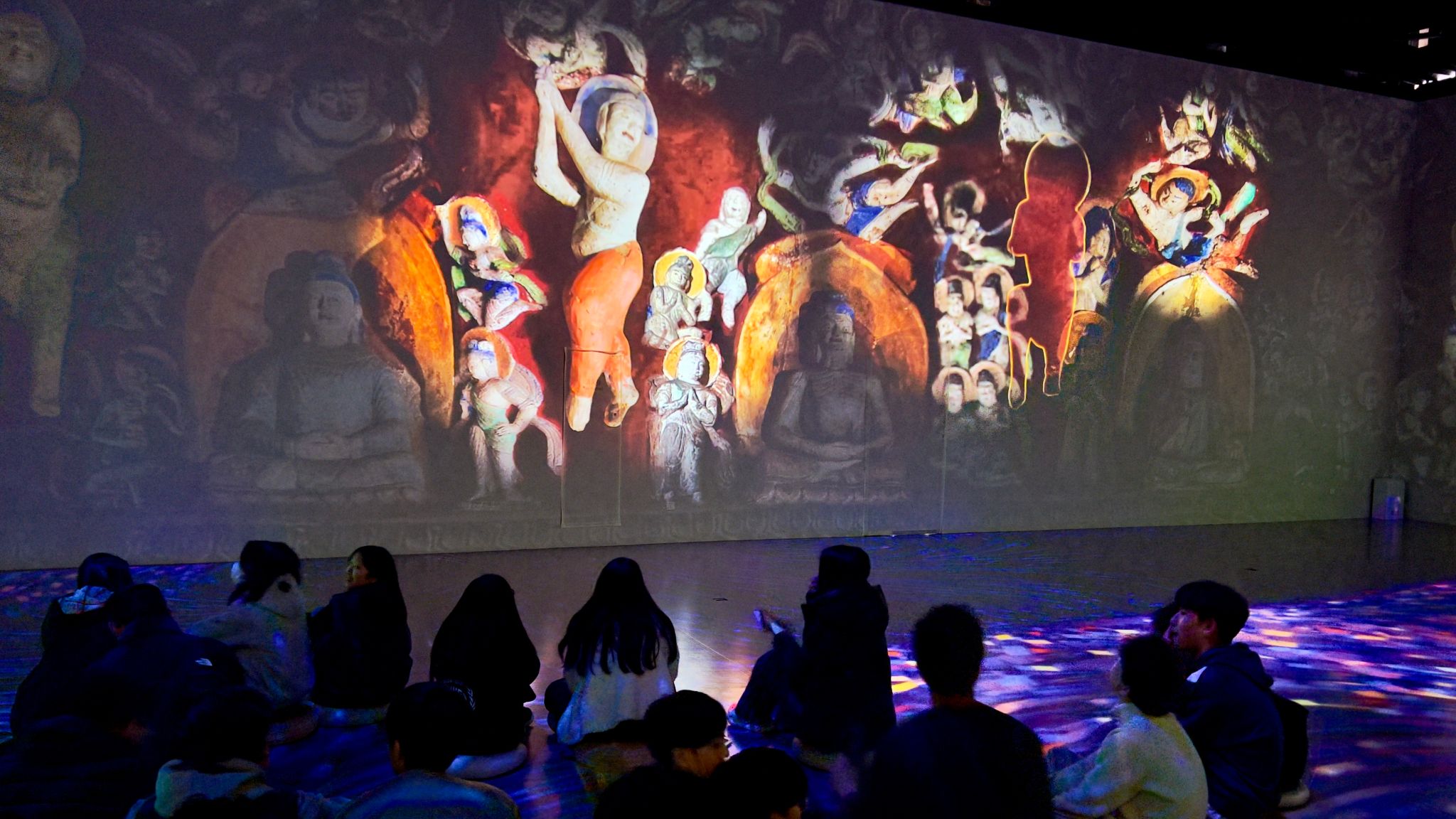
In the painting exhibition area, the classic images of flying apsaras and warrior attendants of the Yungang Grottoes were presented in contemporary artistic forms. As a featured section of the exhibition, the Light and Shadow Experience Zone fully brought the millennial historical context and exquisite patterns of the Yungang Grottoes to life through 4K panoramic light and shadow technology combined with laser carving performances. The ingenious integration of traditional optical principles and modern digital projection technology endows the static stone carvings with dynamic vitality. The students felt as if they had traveled back 1,500 years and were personally in the grottoes of the Northern Wei Dynasty. While enjoying the immersive viewing experience, they carefully recorded the historical knowledge and scientific principles behind the exhibits in their study tour handbooks, achieving a fascinating integration of interdisciplinary knowledge amid the visual shock.
A special cultural and creative design challenge was also set in the study tour handbook, requiring students to design a cultural and creative souvenir of the Yungang Grottoes based on their exhibition experience and write down the product's name and usage. With the thinking and expectation for the design task, the students started their visit to the Cultural and Creative Products Zone, the final stop of the study tour. The thoughtfully designed zone displayed a variety of cultural and creative souvenirs inspired by the Yungang Grottoes, including exquisite jewelry with flying apsaras patterns, creative ornaments of grotto statues, and stationery handcrafts integrating the aesthetic of the Northern Wei Dynasty.
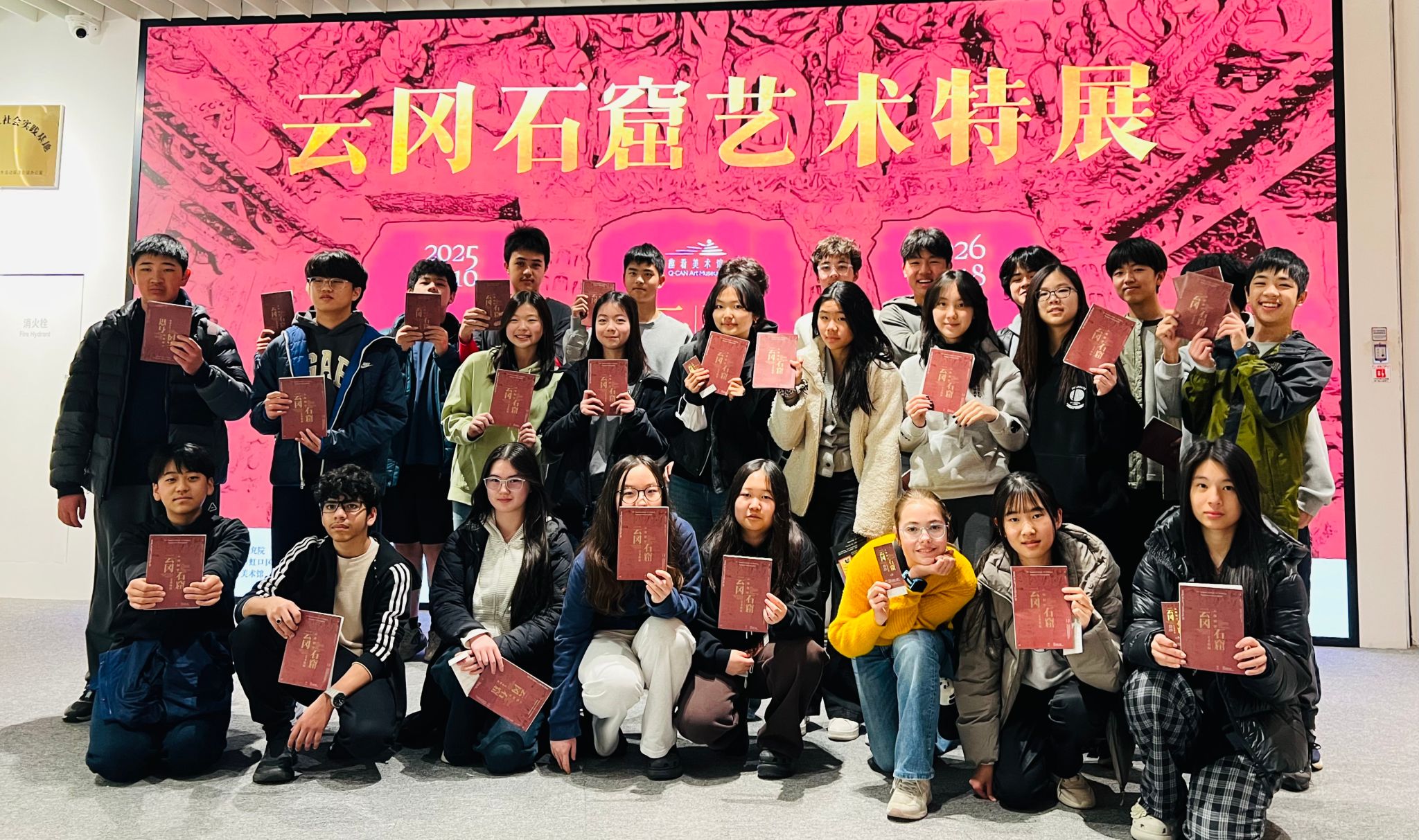
Each work perfectly combines the millennial grotto art with modern life. The students watched with great interest, communicated with each other, and carefully observed the design ingenuity and element application of the cultural and creative products. They took notes of their favorite design details while accumulating abundant inspiration for the cultural and creative design task in the handbook. In the process of experiencing the innovative expression of traditional art up close, they explored the modern interpretation of traditional culture. During the study tour, the students held their exclusive study tour handbooks and completed interesting tasks such as vocabulary challenges, interdisciplinary exploration, peer interviews, and cultural and creative design conception. In the peer interview session, the students communicated their exhibition viewing experiences in Chinese, closely integrating what they had learned in class with on-site experience. From being unfamiliar with Chinese words such as "grotto" and "heritage" to being able to fluently use adjectives to describe the scenes of flying apsaras and light and shadow effects; from knowing nothing about the Yungang Grottoes to being able to name the four great grottoes in China and talk freely about cultural and creative design ideas, the students not only improved their Chinese expression skills but also gained a more genuine and three-dimensional understanding of traditional Chinese culture through observation, recording and interaction.
The students spoke enthusiastically about their gains and feelings from the study tour. They marveled that the exquisite grottoes were actually 3D-printed, which made them can't help but admire the development of modern science and technology and the convenience it brings to life and study. All the students said that the visit deepened their understanding of ancient Chinese history and art culture, and they truly felt how science and technology facilitates learning. They also expressed that they were deeply shocked by the delicate details of the grotto stone carvings and the visual effects of the Light and Shadow Experience Zone throughout the visit. They truly appreciated the wisdom of the ancient people, felt the unique charm of the Yungang Grottoes as if traveling through history, and sowed the seeds of cherishing and protecting cultural heritage, as well as inheriting the excellent traditional Chinese culture in their hearts. The teachers also shared their feelings: "Taking the children to visit the Yungang Grottoes Exhibition in Shanghai, though it is a replica, we can see the great craftsmanship in every detail. As everyone stood gazing at the grottoes, from the mottled stone hues to the compassionate Buddha faces, it felt as if we could hear the whispers of the millennial years. This mobile classroom has turned culture from mere words on the page into a tangible and perceptible life imprint."
This study tour of The Yungang Grottoes Art Exhibition is an immersive cultural teaching practice designed by the chinese department of SHSID for non-native Chinese speaking students. Moving the Chinese classroom to the art exhibition venue allows students to learn Chinese and experience culture in a real cultural context, which not only enriches the Chinese teaching forms of the International Division but also makes the excellent traditional Chinese culture enter students' hearts in a more vivid and accessible way. In this mobile classroom, the students felt the innovative expression of traditional art through light and shadow technology and experienced the contemporary vitality of traditional culture through cultural and creative design. They not only gained knowledge but also cultivated tolerance and appreciation for diverse cultures, sowing the seeds for becoming teenagers with both international perspectives and cultural heritage.
(Written by Xinyi Zhang
Pictures by Teachers
Reviewed by Fan Chen, Liu Dong, Shiyu Wu, HannahKloeber)