-
ABOUT US
-
ACADEMICS
Curriculum Program
Departments
- English
- High School Chinese
- Primary and Junior School Chinese.
- High School Mathematics
- Middle School Mathematics
- Primary School Mathematics
- Music and Fine Arts
- Physical Education
- Physics
- Chemistry
- History and Geography
- Physical Science and Optional courses Department
- Middle School Biology
- High School Biology
- Social Sciences
- Computer Science
- Courses in Primary School
Achievements and Matriculations
College Counseling
Science & Technology Innovation Contest
Subject Competition
-
ARTS
-
ATHLETICS
-
AT SHSID
SHSID ∣ TIMES
PTSA
Club Exhibition
- 龙吟社
- Live 2 Drama
- Choir
- Hip-pop Dance Club
- The Primary School Dance Troupe
- Symposiums Club
- Biology Workshop
- You Shan
- VEX Robotic
- Peking Opera Club
- Baseball Club
- Model United Nations
- The World Scholar’s Cup
- Future Problem Solving Club
- United States Academic Pentathlon
- OM Club
- AMC Club
- Music for Patients
- SHSID Gazette
- Smile Charity
- Cultural Moments
- SciAcademy
- Stem Doge Alliance
- Chinese Debate Club
- IAA
- Mock Trial Club
- Zhengming Club
- Furry Friends
- GT-Racing
- Village Radio
- IMMC Club
- Creative Design and Intelligent Fabrication
- Future City Research Project
- ECOCAP
- AdvocaSEA
- SPDC
- Medishine
- Floorball Club
- Animusic MTC
- Wings Up
- All Booked
- Cyano
- Birding Community
Health and Wellness
Campus Safety
Cafeteria Service
-
ADMINISTRATION
-
ADMISSIONS
-
ALUMNI
Alumni Information
Honors Students
- Class of 2025
- Class of 2024
- Class of 2023
- Class of 2022
- Class of 2021
- Class of 2020
- Class of 2019
- Class of 2018
- Class of 2017
- Class of 2016
- Class of 2015
- Class of 2014
- Class of 2013
- Class of 2012
- Class of 2011
- Class of 2010
- Class of 2009
- Class of 2008
- Class of 2007
- Class of 2006
Who Studied at SHSID
SHS Foundation
-
DOCUMENTS
Primary School Math Department: Mathematics in Action at the Grade 5 Charity Fair
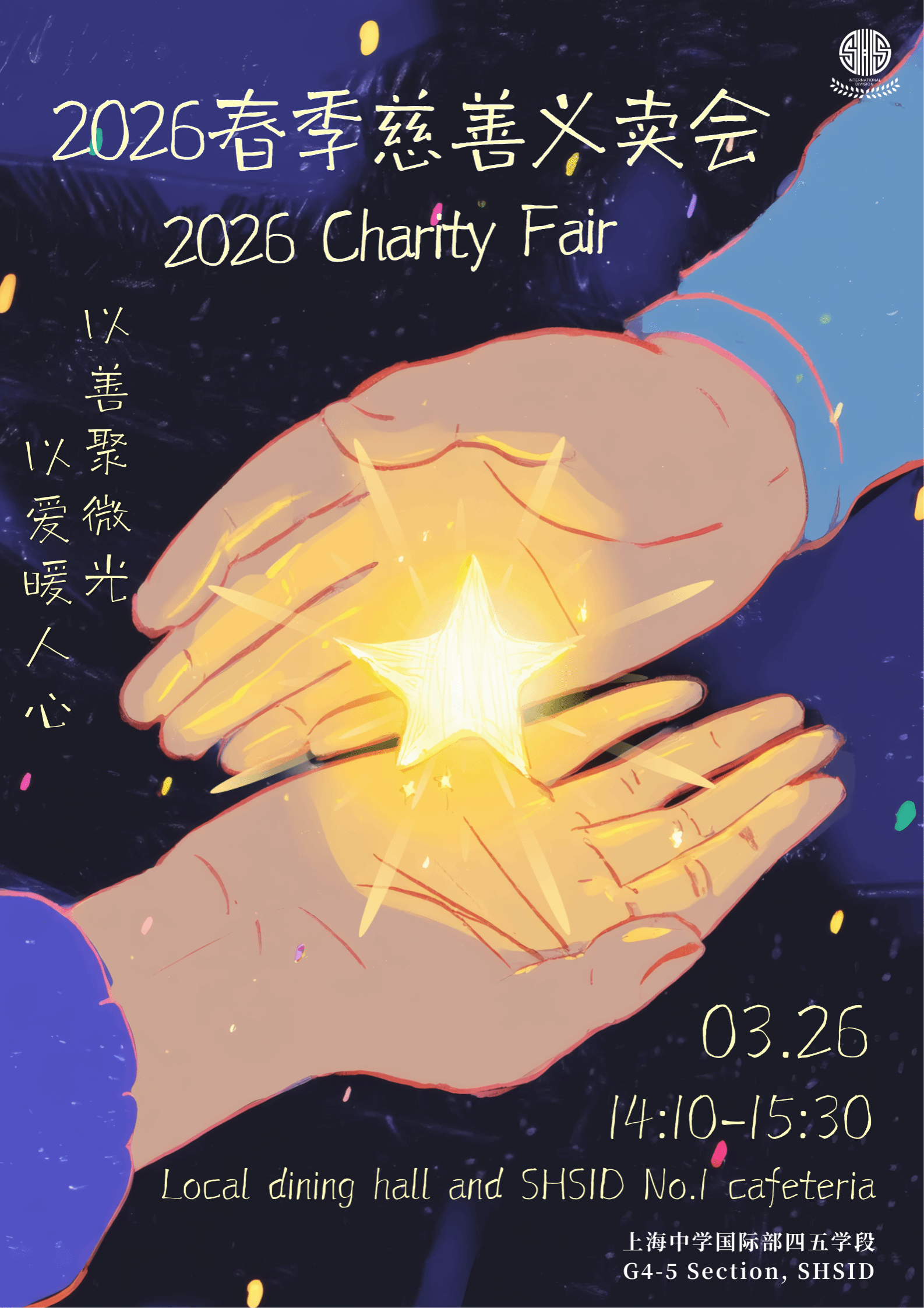
In late March, Grades 4 and 5 at Shanghai High School International Division hosted their annual charity fair—an event that has become a hallmark of the school’s commitment to service and experiential learning. While the fair continues to provide a meaningful platform for students, families, and staff to engage in charitable giving, this year it also served as the setting for an embedded mathematics project rooted in authentic, real-world application. From budgeting and pricing to sales tracking and profit analysis, Grade 5 students undertook a full cycle of data-driven decision-making. By situating mathematical learning within a tangible context, the project aimed to move beyond procedural knowledge, empowering students to recognize mathematics as a practical and transferable tool for navigating real-life situations.
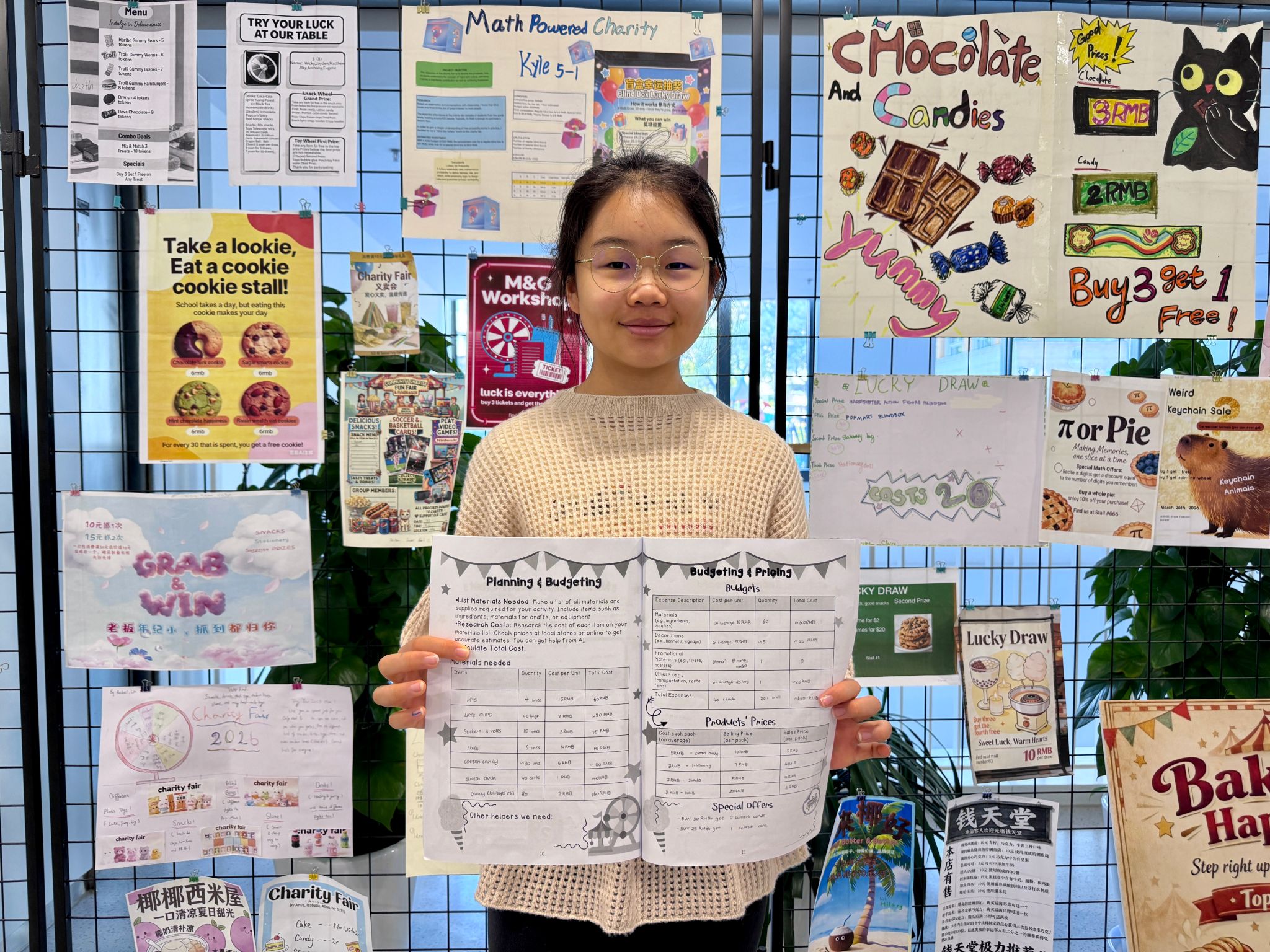
The project was introduced in early March, when Grade 5 mathematics teachers outlined three core tasks. First, students were required to manage the financial operations of their stalls throughout the entire process: calculating initial costs during procurement, recording each transaction accurately during the fair, and ultimately determining total revenue alongside profit or loss. Second, students designed promotional materials—either through traditional hand-drawing or with the assistance of AI tools—to attract potential customers. The third task invited students to identify and address mathematical challenges unique to their stalls. Some groups, for example, applied probability to determine the likelihood of winning various prizes in game booths, while others used fractions and ratios to refine recipes and ingredient proportions for food items. Working collaboratively in self-formed groups, students quickly moved into the planning phase. Their approach to budgeting was notably thorough. In addition to the cost of goods, students accounted for packaging, printing, decorative materials, and even transportation expenses for bulk items. These detailed cost breakdowns informed thoughtful pricing strategies and helped shape each group’s overall sales approach. Such careful planning laid a strong foundation for both financial accuracy and strategic thinking.
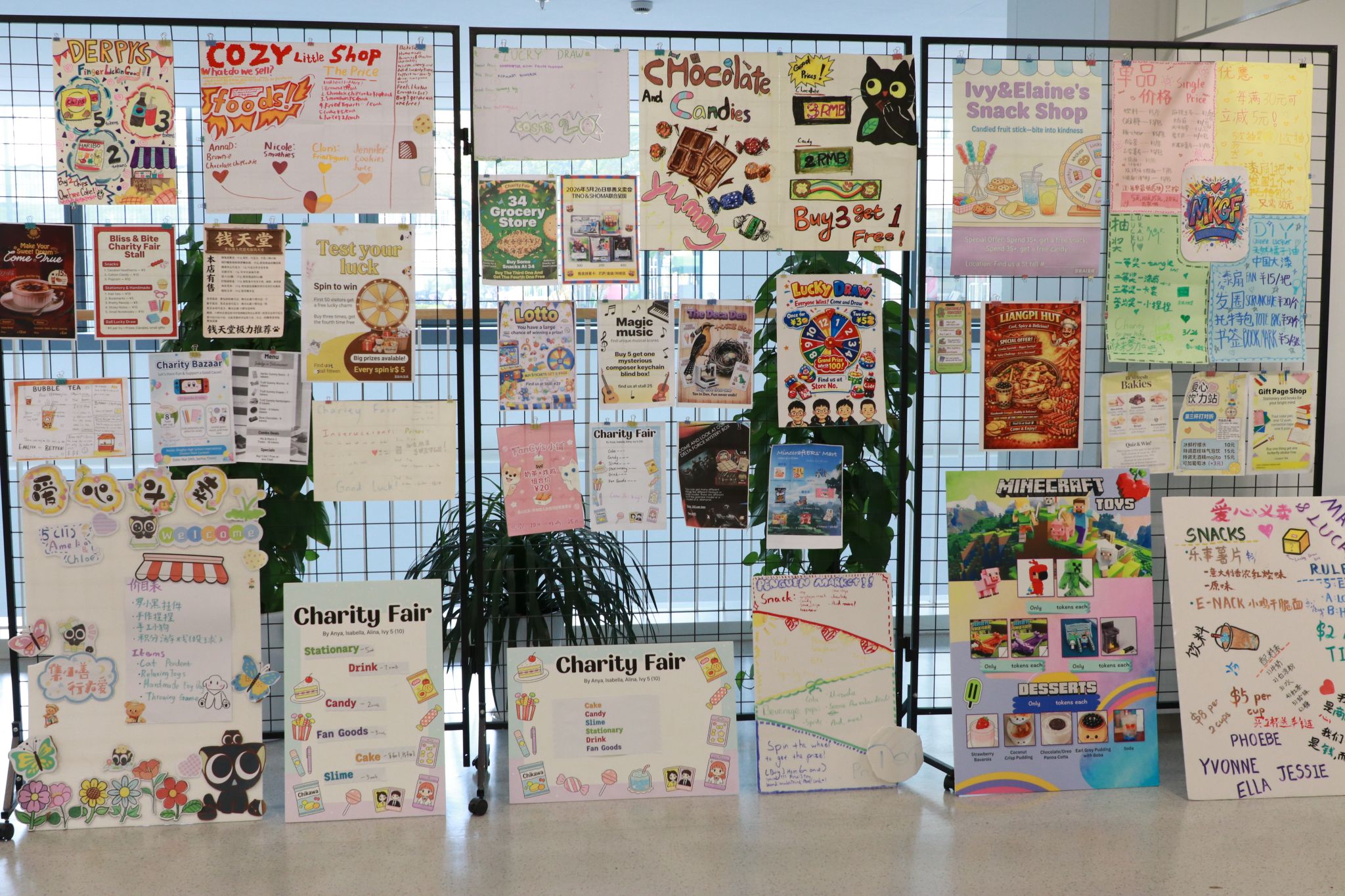
As preparations progressed, the school corridors transformed into vibrant exhibition spaces. A designated poster display area showcased a diverse array of student-created advertisements, blending hand-crafted designs with AI-generated visuals. The contrast was striking: hand-drawn posters conveyed warmth and personality, while digital designs offered polished layouts and vivid imagery. Stall names, product highlights, promotional offers, and charitable messages were all presented with creativity and intent, generating excitement and anticipation in the lead-up to the event. This fusion of traditional and digital methods not only enhanced visibility but also encouraged students to reflect on the strengths of different communication tools.
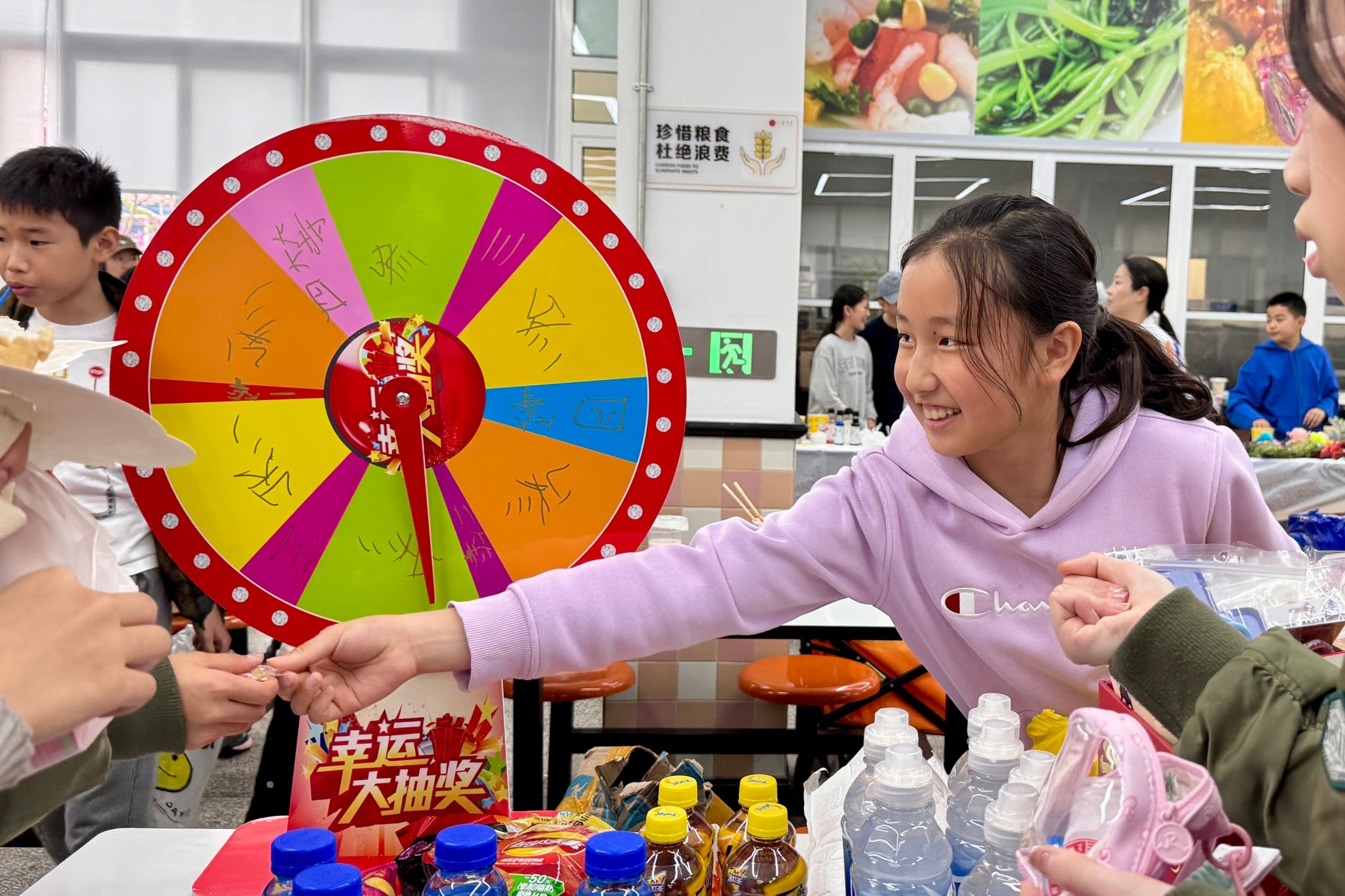
On the day of the fair, the campus came alive as a bustling marketplace. Each stall operated with clear role allocation—some students engaging customers and promoting products, others managing transactions and maintaining detailed financial records. Notably, many groups demonstrated strong organizational skills by categorizing items based on pricing strategies, such as regular versus discounted goods, and updating their records in real time. Across the fair, mathematical thinking was visibly embedded in practice. At game stalls, students calculated theoretical probabilities in advance, ensuring that their activities remained both engaging and financially sustainable. Handicraft stalls drew on combinatorial thinking to offer a wide variety of customizable products, increasing both appeal and sales potential. Meanwhile, food stalls presented ingredient ratios using fractions and percentages, allowing customers to better understand product composition. In this dynamic environment, mathematics was no longer abstract—it became an essential tool driving decision-making, efficiency, and creativity.
Following the event, students entered the final phase of analysis and reflection. Each group consolidated its data, calculated gross and net profits, and presented key findings through visual representations such as bar charts. These insights formed the basis of reflective reports, in which students critically evaluated their strategies. Some noted that while freshly prepared food attracted high demand, production limitations reduced profitability, suggesting a shift toward pre-packaged goods in future iterations. Others reflected on pricing miscalculations that led to unsold inventory, prompting discussions around demand elasticity and consumer behavior. Several groups also highlighted the effectiveness of proactive sales techniques, such as mobile selling and targeted marketing, demonstrating an emerging awareness of customer segmentation.
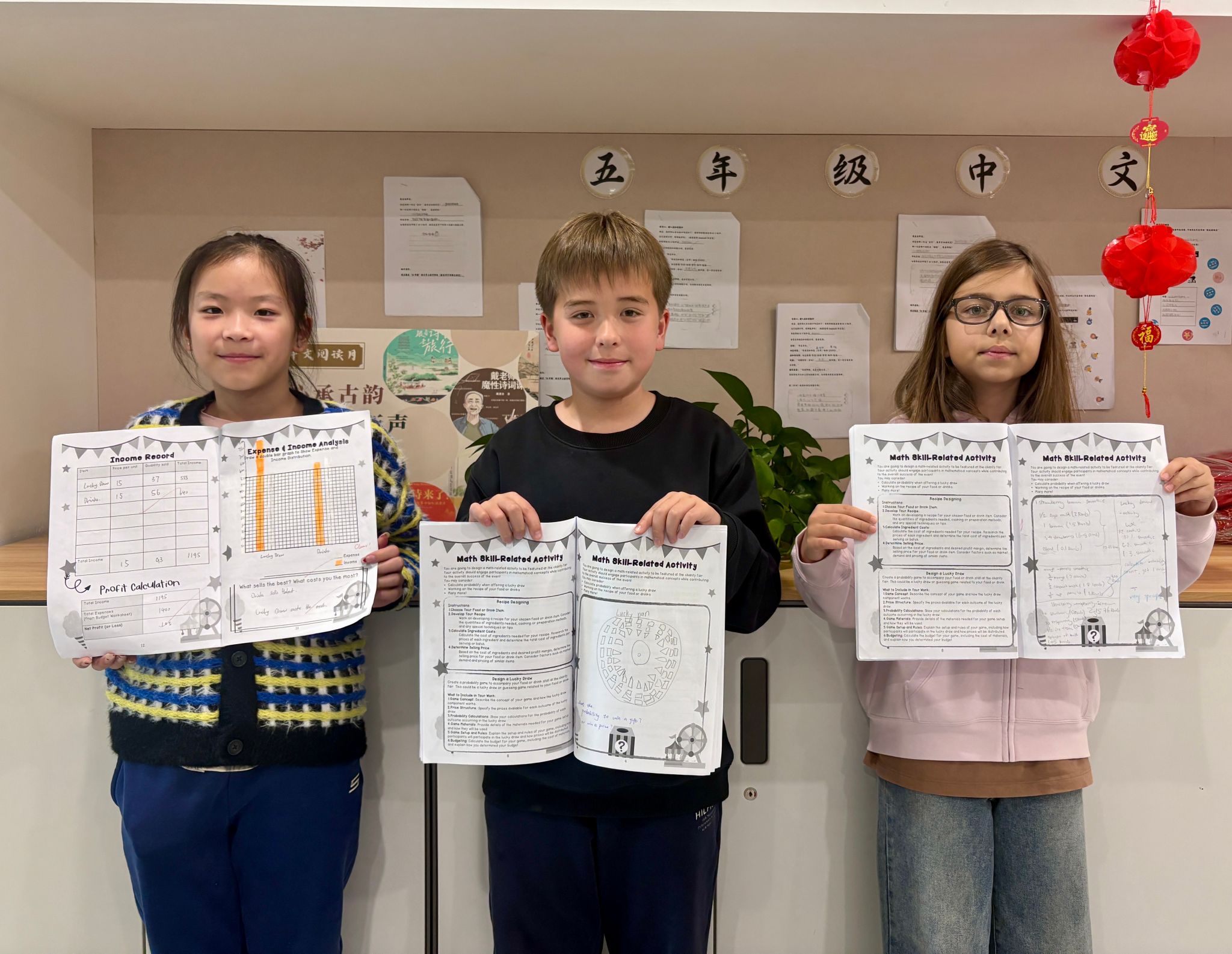
By embedding mathematics within the authentic context of a charity fair, this project extended learning far beyond the classroom. Students not only developed a deeper understanding of financial literacy and data analysis, but also cultivated critical thinking and strategic planning skills. More importantly, they experienced firsthand how knowledge can create a meaningful impact. Through careful calculation and collaboration, students contributed to a charitable cause, transforming mathematical insight into tangible support for others. In doing so, they came to understand that mathematics is not merely a subject to be studied, but a powerful language through which ideas, responsibility, and compassion can be expressed.
(Written by Teng Chen
Pictures by Minxuan Cao, G5 Math Department
Reviewed by Xumei Ge, Shiyu Wu, Hannah Kloeber)