-
ABOUT US
-
ACADEMICS
Curriculum Program
Departments
- English
- High School Chinese
- Primary and Junior School Chinese.
- High School Mathematics
- Middle School Mathematics
- Primary School Mathematics
- Music and Fine Arts
- Physical Education
- Physics
- Chemistry
- History and Geography
- Physical Science and Optional courses Department
- Middle School Biology
- High School Biology
- Social Sciences
- Computer Science
- Courses in Primary School
Achievements and Matriculations
College Counseling
Science & Technology Innovation Contest
Subject Competition
-
ARTS
-
ATHLETICS
-
AT SHSID
SHSID ∣ TIMES
PTSA
Club Exhibition
- 龙吟社
- Live 2 Drama
- Choir
- Hip-pop Dance Club
- The Primary School Dance Troupe
- Symposiums Club
- Biology Workshop
- You Shan
- VEX Robotic
- Peking Opera Club
- Baseball Club
- Model United Nations
- The World Scholar’s Cup
- Future Problem Solving Club
- United States Academic Pentathlon
- OM Club
- AMC Club
- Music for Patients
- SHSID Gazette
- Smile Charity
- Cultural Moments
- SciAcademy
- Stem Doge Alliance
- Chinese Debate Club
- IAA
- Mock Trial Club
- Zhengming Club
- Furry Friends
- GT-Racing
- Village Radio
- IMMC Club
- Creative Design and Intelligent Fabrication
- Future City Research Project
- ECOCAP
- AdvocaSEA
- SPDC
- Medishine
- Floorball Club
- Animusic MTC
- Wings Up
- All Booked
- Cyano
- Birding Community
Health and Wellness
Campus Safety
Cafeteria Service
-
ADMINISTRATION
-
ADMISSIONS
-
ALUMNI
Alumni Information
Honors Students
- Class of 2025
- Class of 2024
- Class of 2023
- Class of 2022
- Class of 2021
- Class of 2020
- Class of 2019
- Class of 2018
- Class of 2017
- Class of 2016
- Class of 2015
- Class of 2014
- Class of 2013
- Class of 2012
- Class of 2011
- Class of 2010
- Class of 2009
- Class of 2008
- Class of 2007
- Class of 2006
Who Studied at SHSID
SHS Foundation
-
DOCUMENTS
Middle School Physics Department:Physics Competition Shows Skills, Practical Learning Boosts Growth
At the start of the new semester, after completing the teaching of the units on Simple Machines and Work and Energy, the Eighth Grade Physics Group held a fun catapult design competition, guiding students to learn by doing and understand through competition. It turned the theoretical knowledge from physics classrooms into tangible, innovative, practical abilities, writing a vivid practical note for physics learning. This catapult-making project is another exploration by the Physics Group in practicing the teaching philosophy of "balancing theory with practice". It aims to enable students to deeply understand core physics knowledge, such as elastic potential energy, energy conversion, the lever principle, and projectile motion, while cultivating comprehensive competencies, including teamwork, engineering iterative design, and problem-solving.
The competition was carried out in groups, with provided materials including wooden sticks, rubber bands, and a plastic spoon for each group. All teams were required to build their catapults within the limit of these materials without any additional ones, which highlighted students' design ingenuity even more. The projectile for the competition was clay, and students could design the shape of the clay freely to explore how different shapes affect the launch distance and accuracy, making every design detail a practical carrier of physical principles.
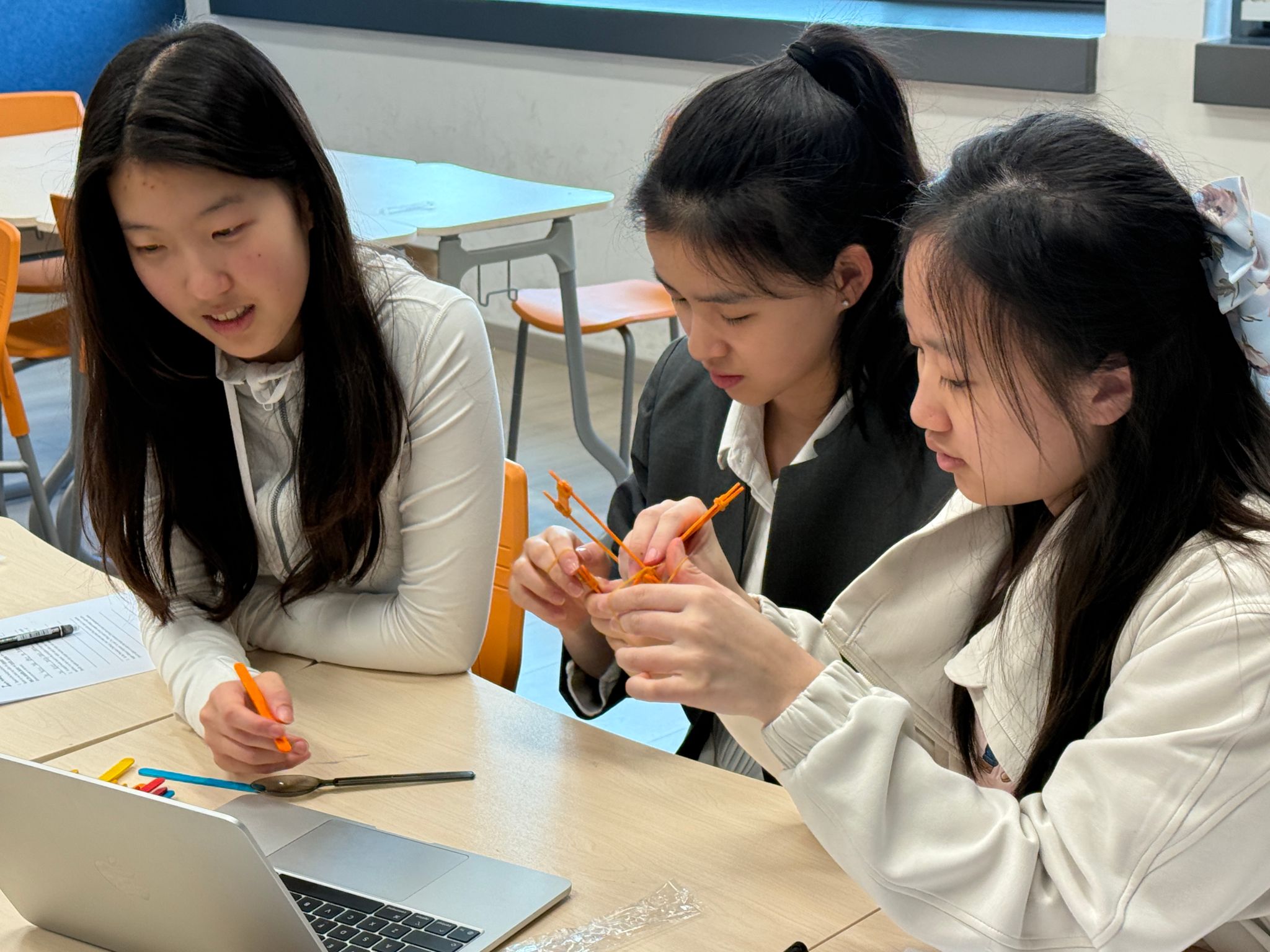
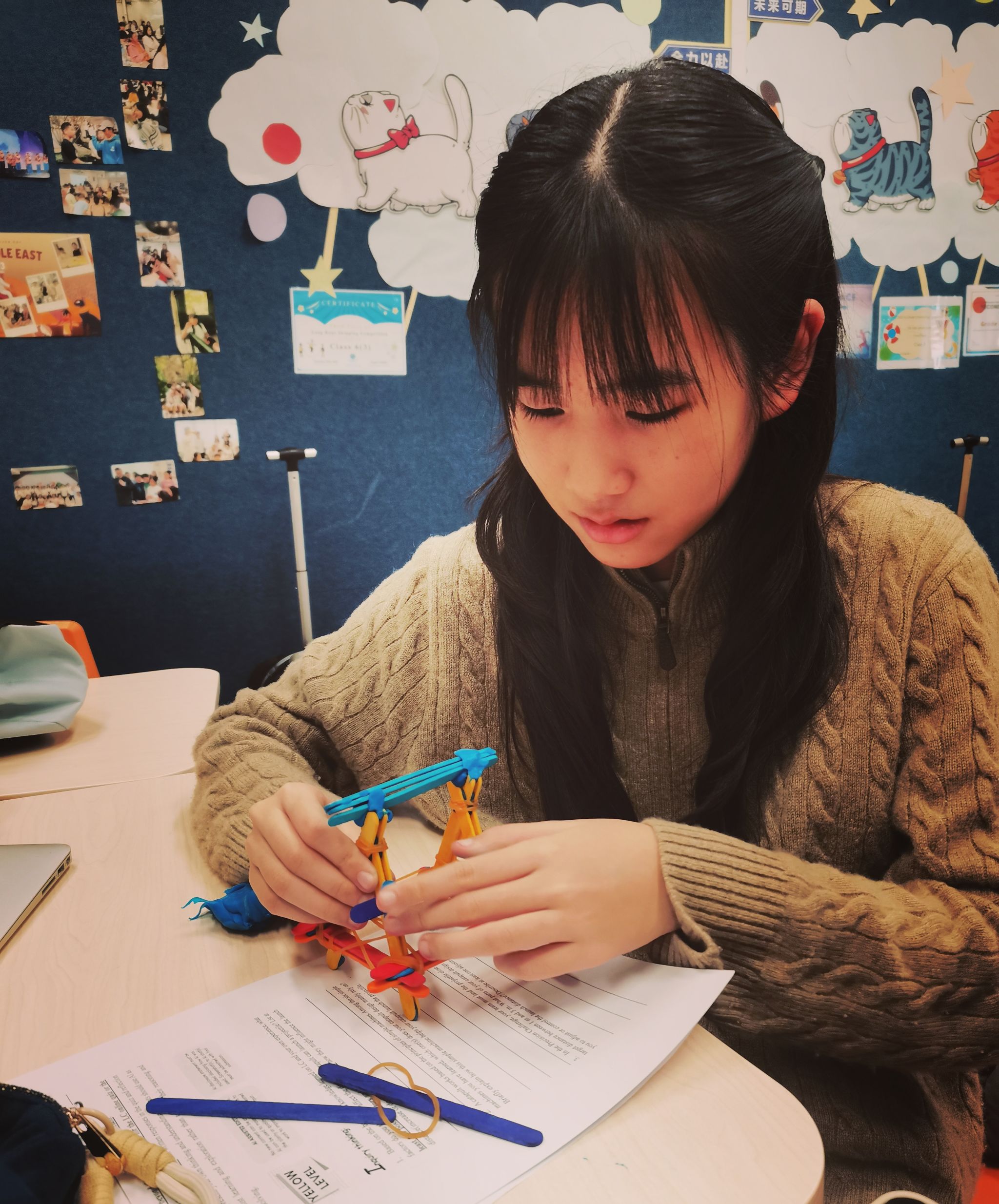
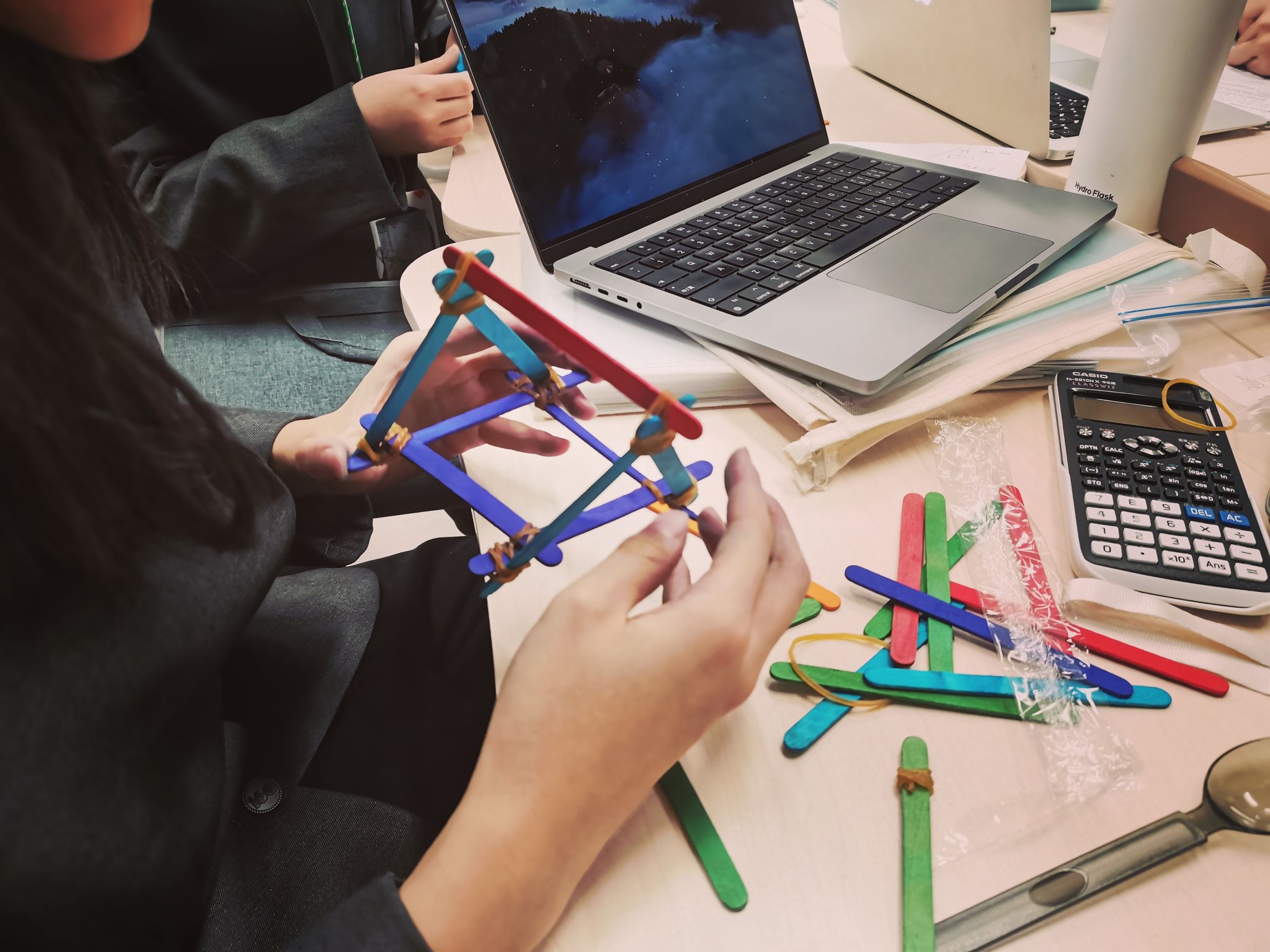
The catapult project and competition were conducted in three progressive stages, allowing students to experience the entire process of engineering design and practice completely. First came classroom research and design conception: students explored physical principles with online resources and drew catapult design sketches to determine key elements such as the fulcrum and the length of the launch arm. Next was collaborative production by division of labor: each group assembled and adjusted the catapult according to the design, solved practical problems such as poor balance and insufficient elasticity, and turned creative ideas into physical objects. The final stage was the class preliminary competition and the grade final competition, where students learned from each other and adjusted their designs to strive for better results.
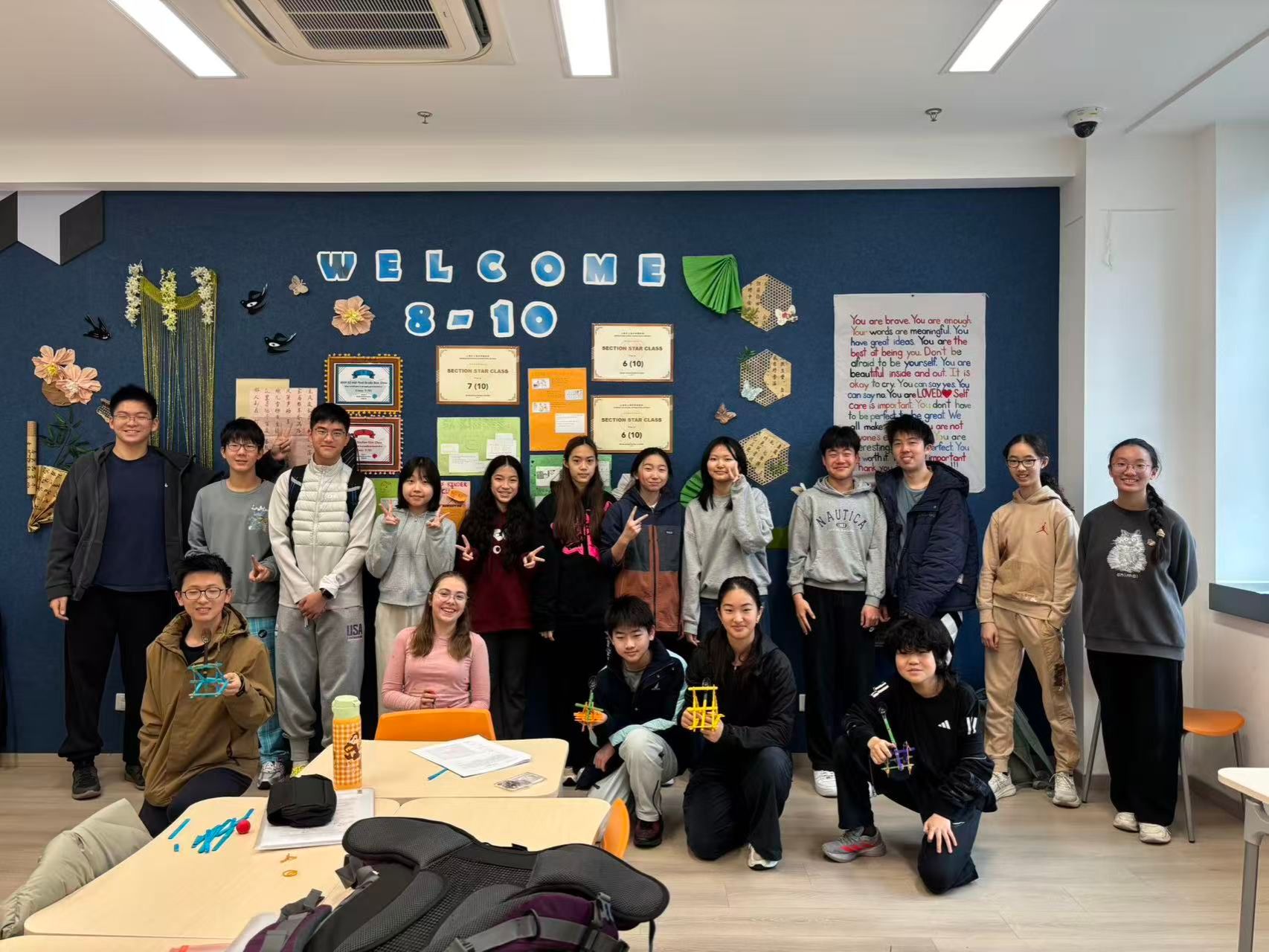
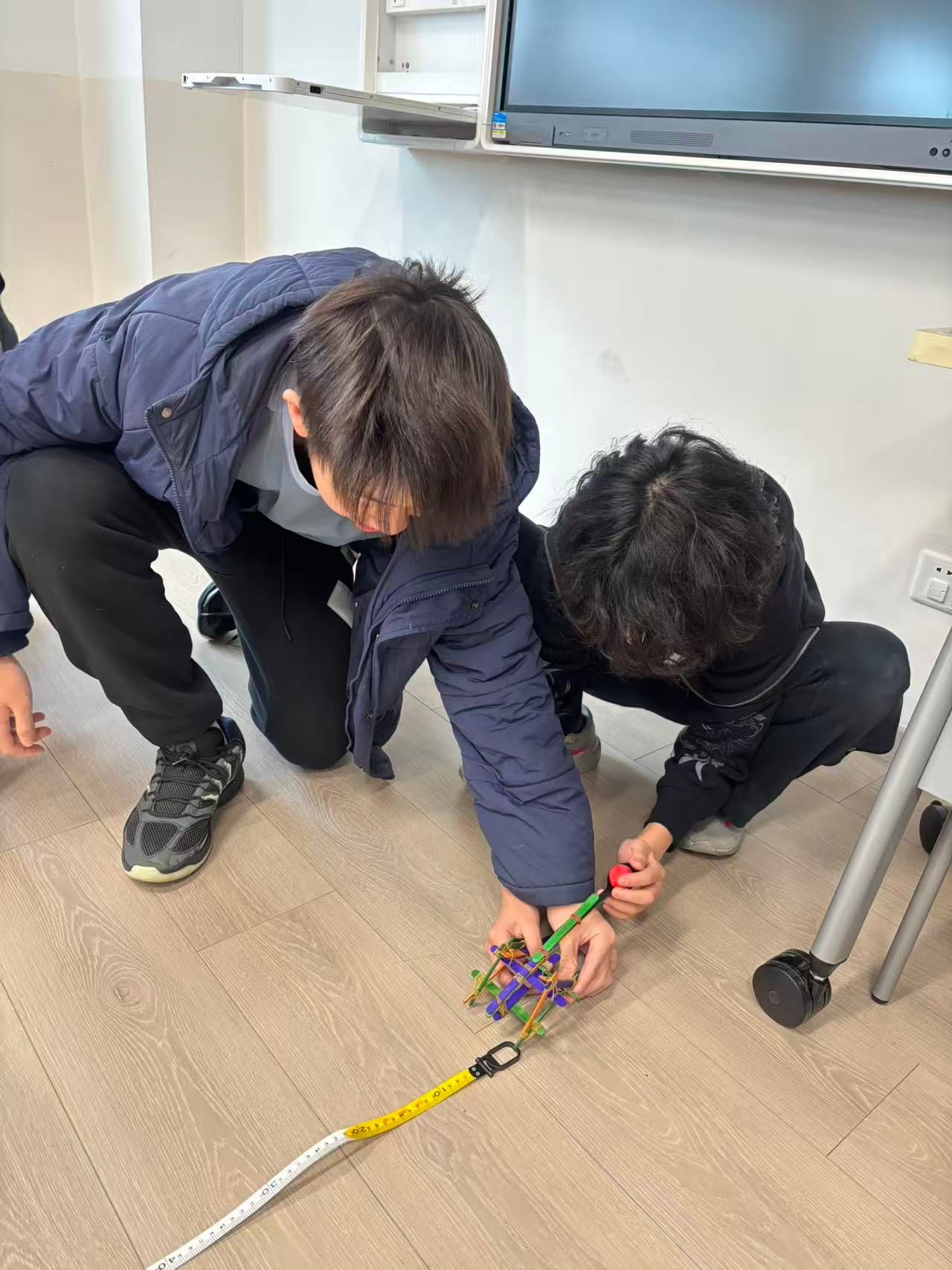
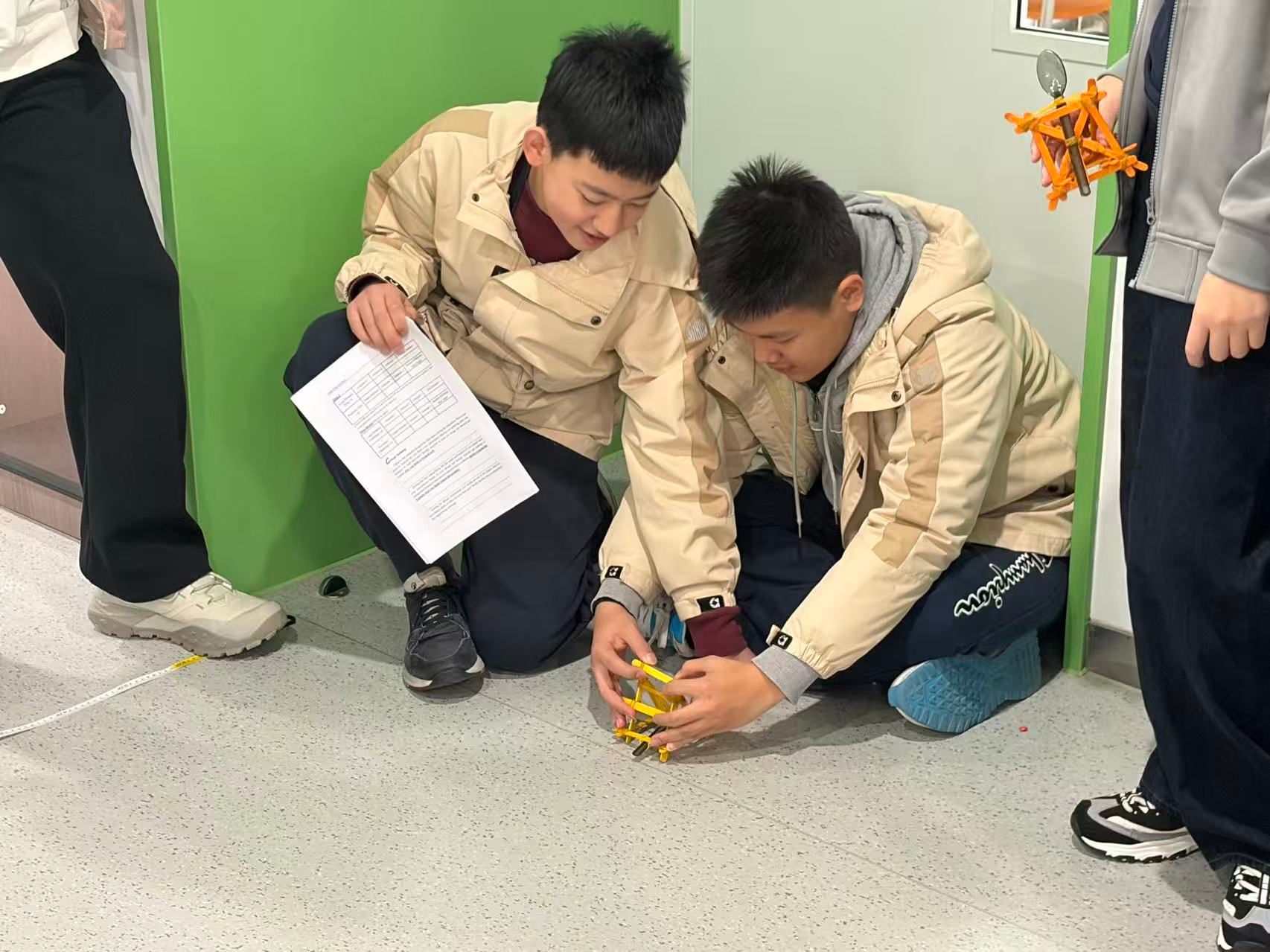
The final competition scene was a spectacular display of ingenuity, with each group's catapult featuring unique design highlights: some optimized the length of the lever launch arm to maximize the use of elastic potential energy; some precisely adjusted the launch angle to make the projectile motion trajectory more in line with the physical optimal solution; others reinforced the fulcrum connection to ensure more stable force transmission and reduce energy loss during launch. In the Long Distance Challenge, clay projectiles streaked across the air in graceful physical arcs, with participating teams taking turns to break the launch record repeatedly, and a maximum launch distance of 6.83 meters was finally achieved for the whole competition. In the Precision Challenge, each group adjusted their catapults calmly, and the best-performing group had a landing point with a deviation of only 0.04 meters from the standard value.
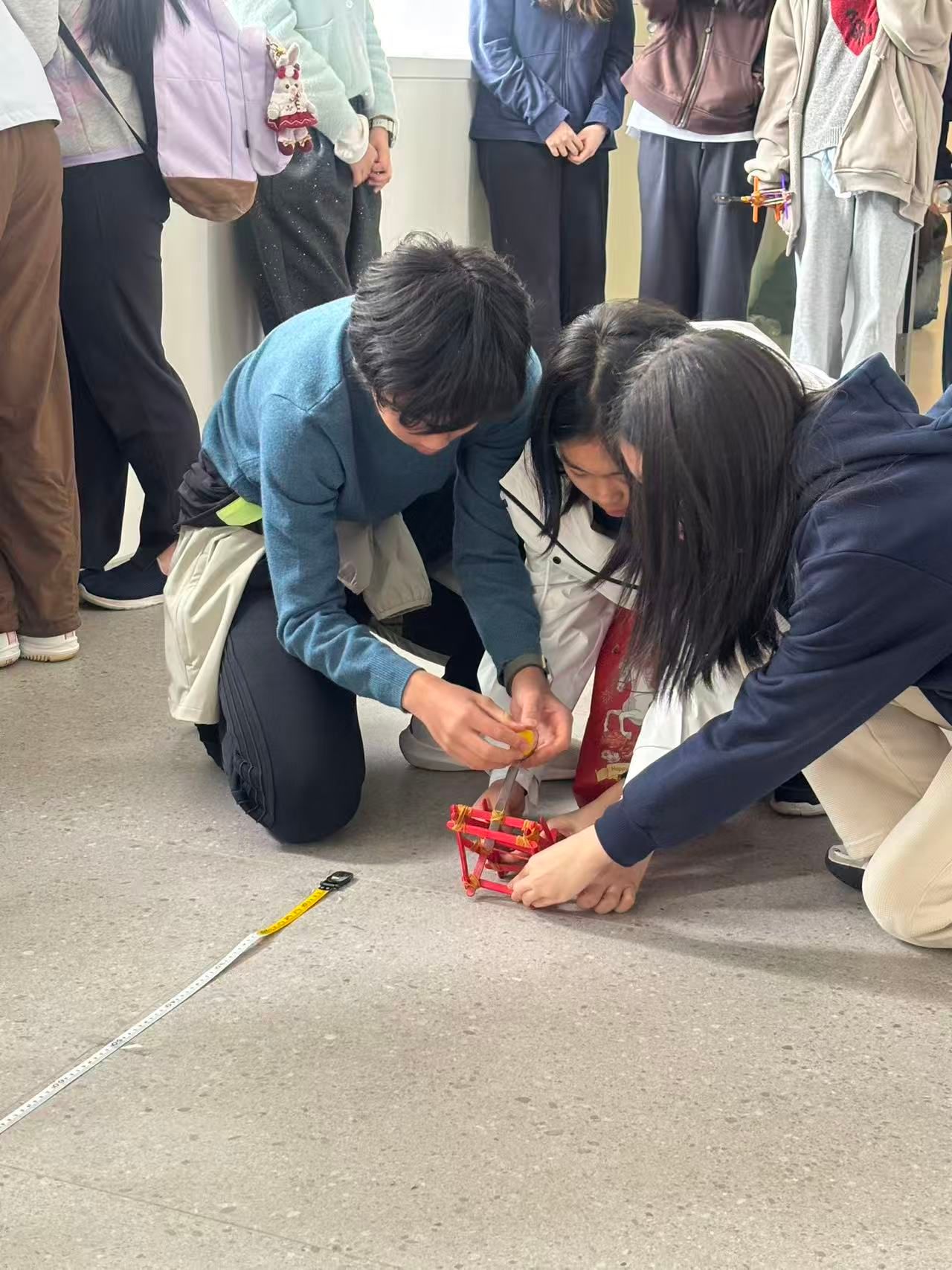
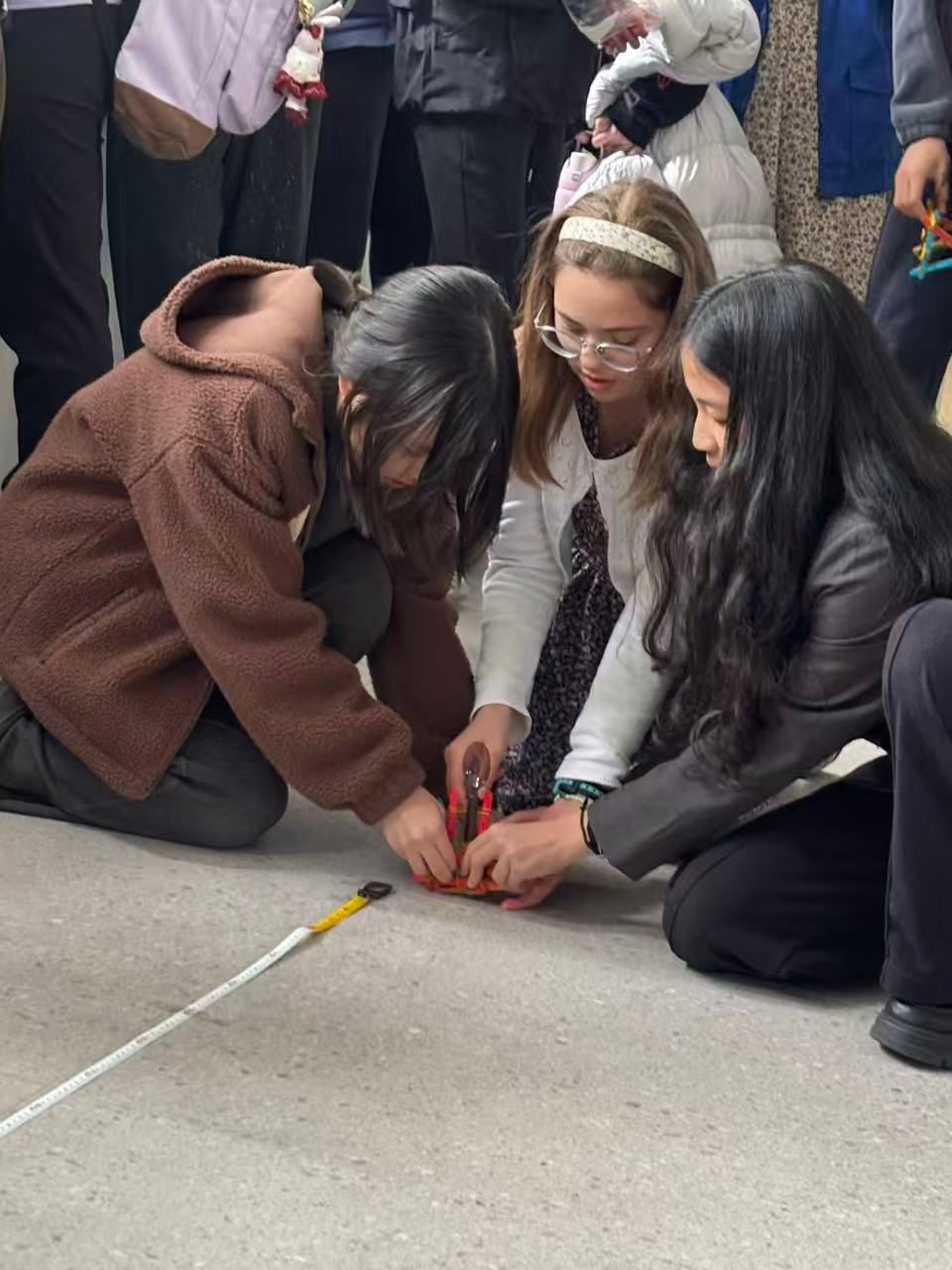
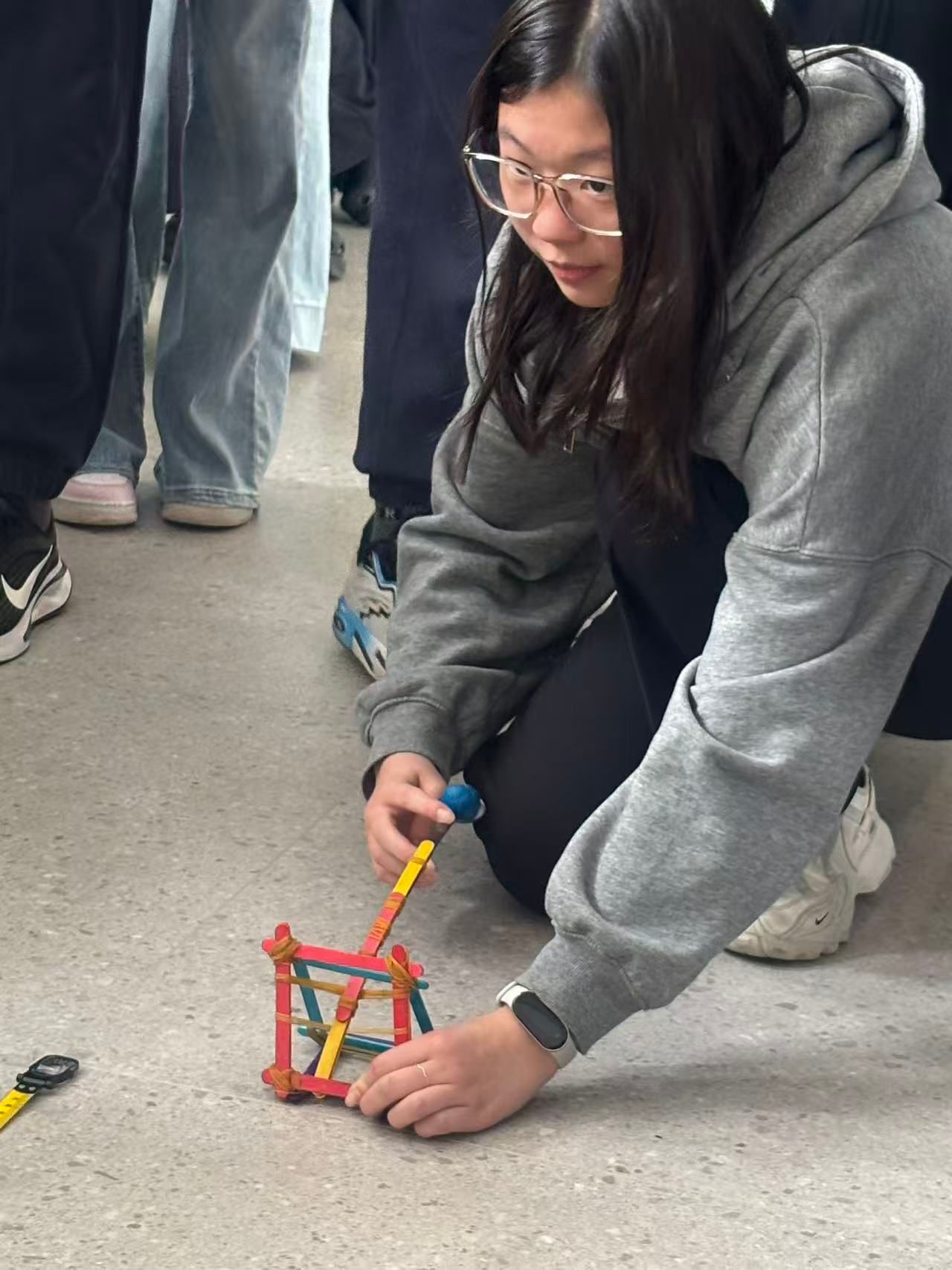
After intense rounds of competition, the awards for both the Long Distance Challenge and the Precision Challenge were determined: the first prize of the Long Distance Challenge was won by 8-3 Felix, 8-1 Rita, 8-1 Eliza; the second prize by 8-1 Max, 8-1 Jake, 8-1 Johnny; the third prize jointly by 8-8 Clothilde, 8-9 Jenny, 8-10 Ellie, and 8-1 Althea, 8-2 Chris, 8-3 Jasmine, 8-11 Chloe. The championship of the Precision Challenge was claimed by 8-5 Lucas, 8-8 Connor, 8-8 Ryan, 8-9 Ray; the second prize by 8-4 Danny, 8-6 Nathan, 8-6 Jeremy, 8-6 Danie; the third prize by 8-11 Ethan, 8-5 Anthony Han, 8-5 Lucas.
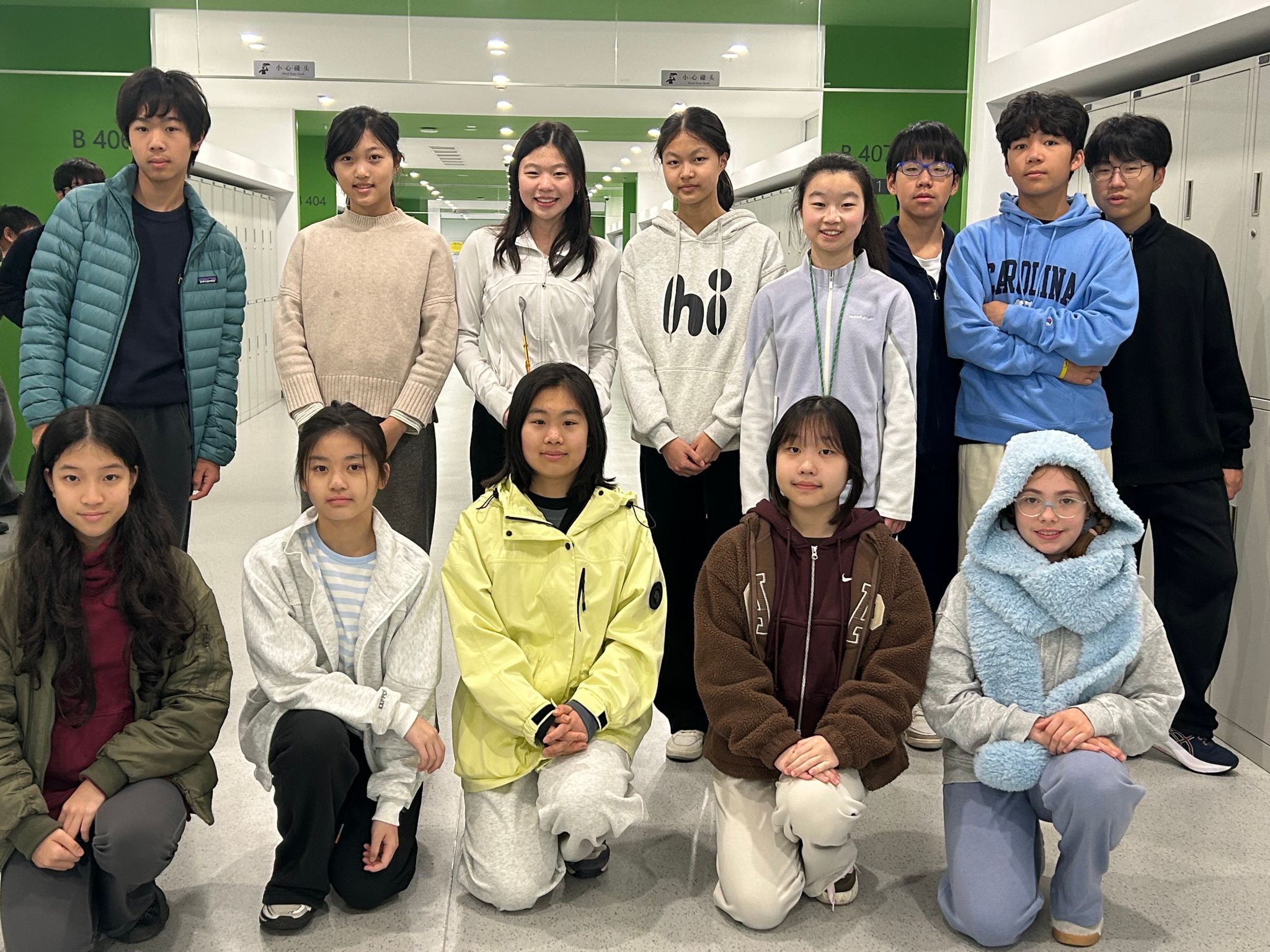
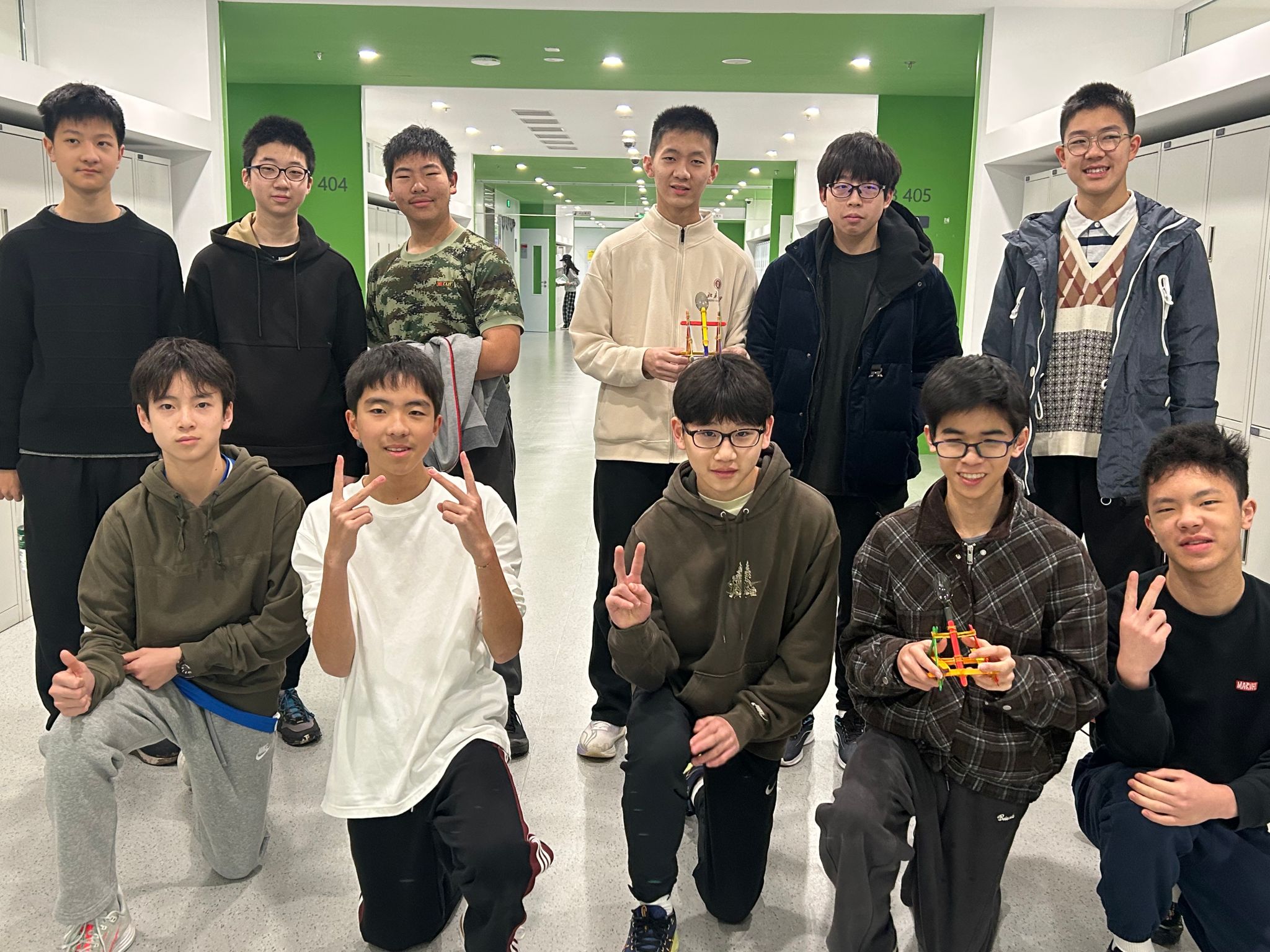
The catapult-making activity is a yearly continuation and innovative upgrade of the practical discipline activities organized by the Eighth-Grade Physics Group, as well as a solid implementation of project-based learning. During the activity, students not only deepened their understanding of physical knowledge, such as the lever principle and elastic potential energy, through hands-on practice, but also forged a rigorous scientific inquiry attitude and improved their comprehensive abilities in problem-solving and collaborative teamwork through group cooperation, repeated testing, and competition. Adhering to the teaching philosophy of "grounding physics learning in practice", the Eighth-Grade Physics Group has been polishing such practical projects for years. In the future, the teaching and research group will design more interesting and innovative discipline activities, build a bridge between theory and practice, let students experience the charm of physics through hands-on exploration, cultivate their scientific literacy and innovative practical abilities, and make the physics classroom a growth stage for exploring science and enhancing competencies.
(Written by Xiaojing Ye
Pictures by Physical Teachers, G8 Teachers, 8-3 Joanna
Reviewed by Lei Guo, Chenli Shen, Shiyu Wu, Hannah Kloeber)