-
ABOUT US
-
ACADEMICS
Curriculum Program
Departments
- English
- High School Chinese
- Primary and Junior School Chinese.
- High School Mathematics
- Middle School Mathematics
- Primary School Mathematics
- Music and Fine Arts
- Physical Education
- Physics
- Chemistry
- History and Geography
- Physical Science and Optional courses Department
- Middle School Biology
- High School Biology
- Social Sciences
- Computer Science
- Courses in Primary School
Achievements and Matriculations
College Counseling
Science & Technology Innovation Contest
Subject Competition
-
ARTS
-
ATHLETICS
-
AT SHSID
SHSID ∣ TIMES
PTSA
Club Exhibition
- 龙吟社
- Live 2 Drama
- Choir
- Hip-pop Dance Club
- The Primary School Dance Troupe
- Symposiums Club
- Biology Workshop
- You Shan
- VEX Robotic
- Peking Opera Club
- Baseball Club
- Model United Nations
- The World Scholar’s Cup
- Future Problem Solving Club
- United States Academic Pentathlon
- OM Club
- AMC Club
- Music for Patients
- SHSID Gazette
- Smile Charity
- Cultural Moments
- SciAcademy
- Stem Doge Alliance
- Chinese Debate Club
- IAA
- Mock Trial Club
- Zhengming Club
- Furry Friends
- GT-Racing
- Village Radio
- IMMC Club
- Creative Design and Intelligent Fabrication
- Future City Research Project
- ECOCAP
- AdvocaSEA
- SPDC
- Medishine
- Floorball Club
- Animusic MTC
- Wings Up
- All Booked
- Cyano
- Birding Community
Health and Wellness
Campus Safety
Cafeteria Service
-
ADMINISTRATION
-
ADMISSIONS
-
ALUMNI
Alumni Information
Honors Students
- Class of 2025
- Class of 2024
- Class of 2023
- Class of 2022
- Class of 2021
- Class of 2020
- Class of 2019
- Class of 2018
- Class of 2017
- Class of 2016
- Class of 2015
- Class of 2014
- Class of 2013
- Class of 2012
- Class of 2011
- Class of 2010
- Class of 2009
- Class of 2008
- Class of 2007
- Class of 2006
Who Studied at SHSID
SHS Foundation
-
DOCUMENTS
Middle School Chinese Department: Appreciating the Elegance of Flowers, Experiencing Chinese Culture ——G6 Non-Native Chinese Language Activity
The spring is warm and the scenery is bright; blooming flowers adorn the branches. Elegant traditions convey emotions, and cultural heritage flows on. When the poetic charm of the Flower Festival meets non-native Chinese language teaching, it sparks a wonderful integration of traditional culture immersion. The Flower Festival, also known as the Flower God Festival or the Birthday of a Hundred Flowers, is a time-honored spring festival in China. Paired with the Mid-Autumn Festival, or "Moon Eve", they are jointly called "Flower Dawn and Moon Eve". Since ancient times, it has been an important occasion for scholars, refined people, and common folks to celebrate the birthday of the Flower God and pray for favorable weather and good harvests. Customs include worshipping the Flower God, hanging red ribbons on flower branches, eating flower cakes, going for spring outings and butterfly chasing, wearing flowers in hair, and composing poems. These customs embody the Chinese cultural genes of respecting nature, loving flowers and trees, and cherishing vitality. To help Grade 6 non-native Chinese language students in the International Department get closer to traditional Chinese festivals and experience the charm of flower culture, the Chinese Language Department of our school has carefully designed two lessons themed on the Flower Festival. Through an immersive experience of "basic learning + hands-on practice", students explored traditional folk customs, created artworks, conducted research, and tasted Flower Festival delicacies, learning Chinese and inheriting culture in a fun way.
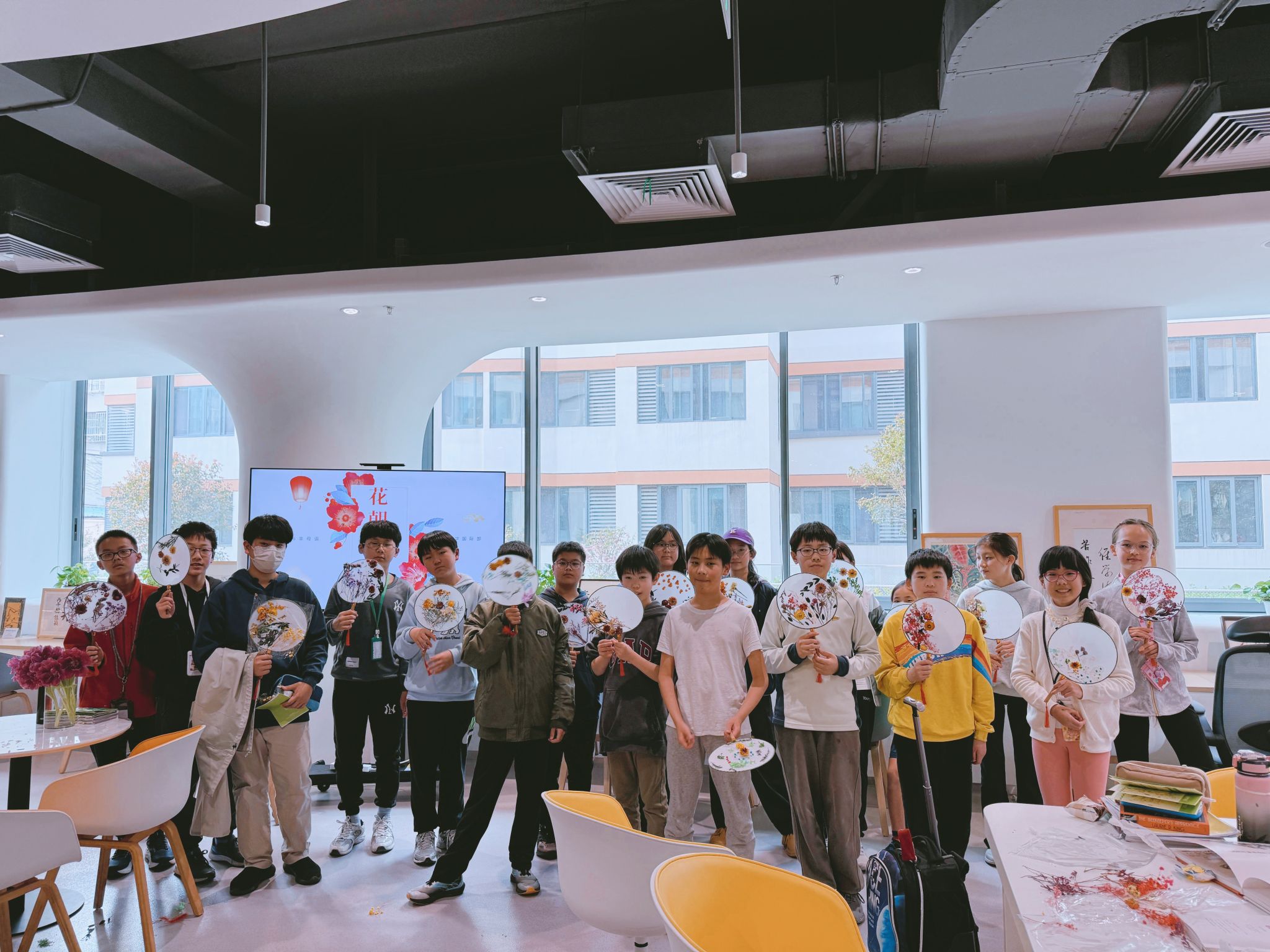
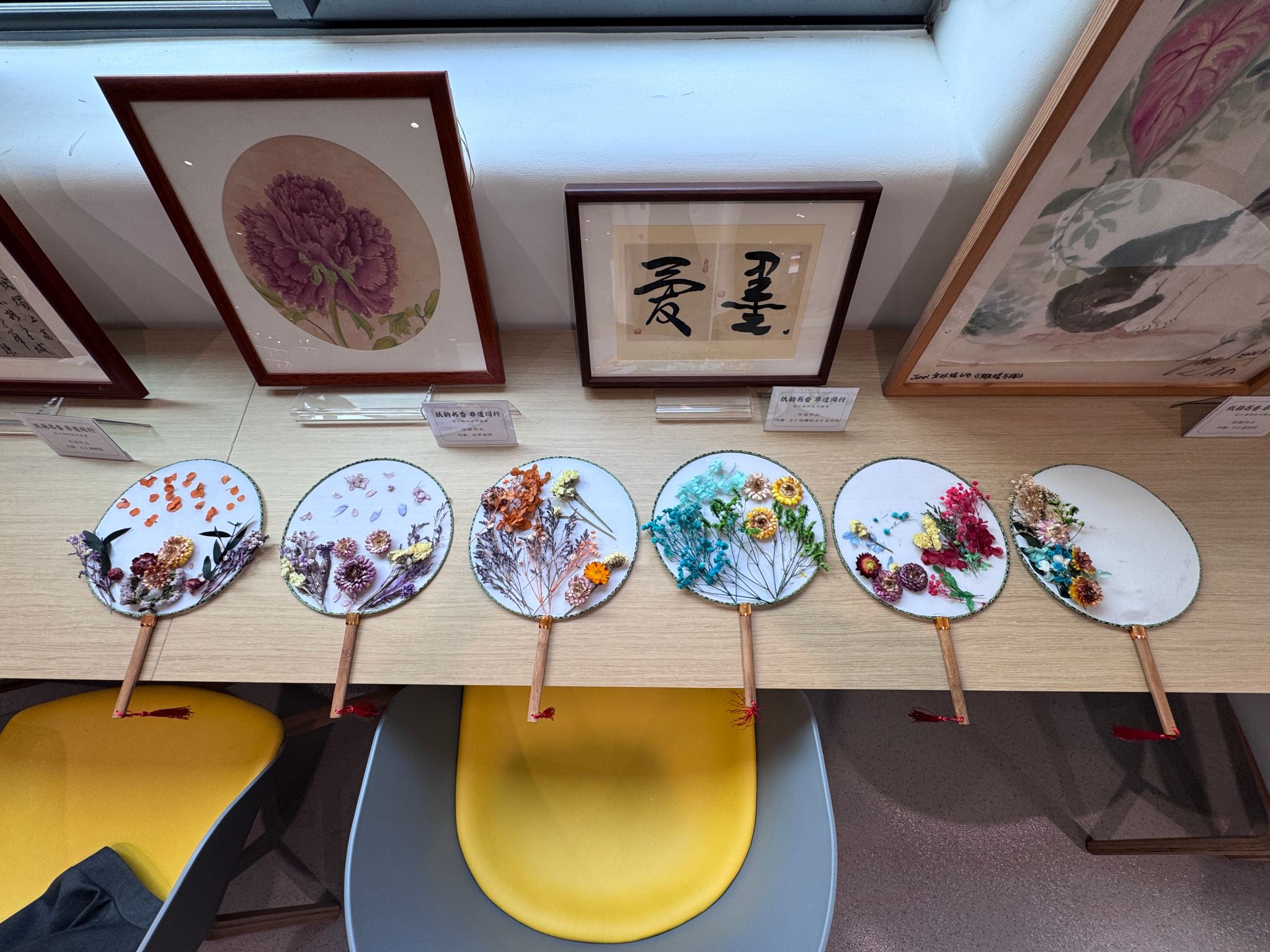
In the first period, they learned about the folk culture of the Flower Festival and made handcrafted round fans. The class began with classic Chinese flower paintings. Students identified peach blossoms, peonies, plum blossoms, and other iconic flowers from high-definition traditional Chinese paintings, directly experiencing the elegance of Chinese floral aesthetics. Then, the teacher explained the origin and customs of the Flower Festival clearly through folk custom videos and interactive quizzes. Students actively participated and gained a wealth of knowledge. The most popular part was the floral round fan craft activity. With blank fans and colorful dried flower materials, students gave full play to their creativity, "freezing" the most beautiful flowers in their minds onto the fan surfaces, creating unique floral fans one after another.
In the second period, students conducted research in the library and compiled a themed booklet. Guided by the teacher, they asked AI questions about flowers, such as the cultural symbolism of flowers, related poems, and historical stories about flowers. They then recorded their findings on task cards and wrote down their understanding and love for flowers in Chinese. During the activity, they also tasted sweet flower cakes, experiencing the fun of folk customs through traditional Flower Festival delicacies. After finishing their research, they captured the wonderful moments.
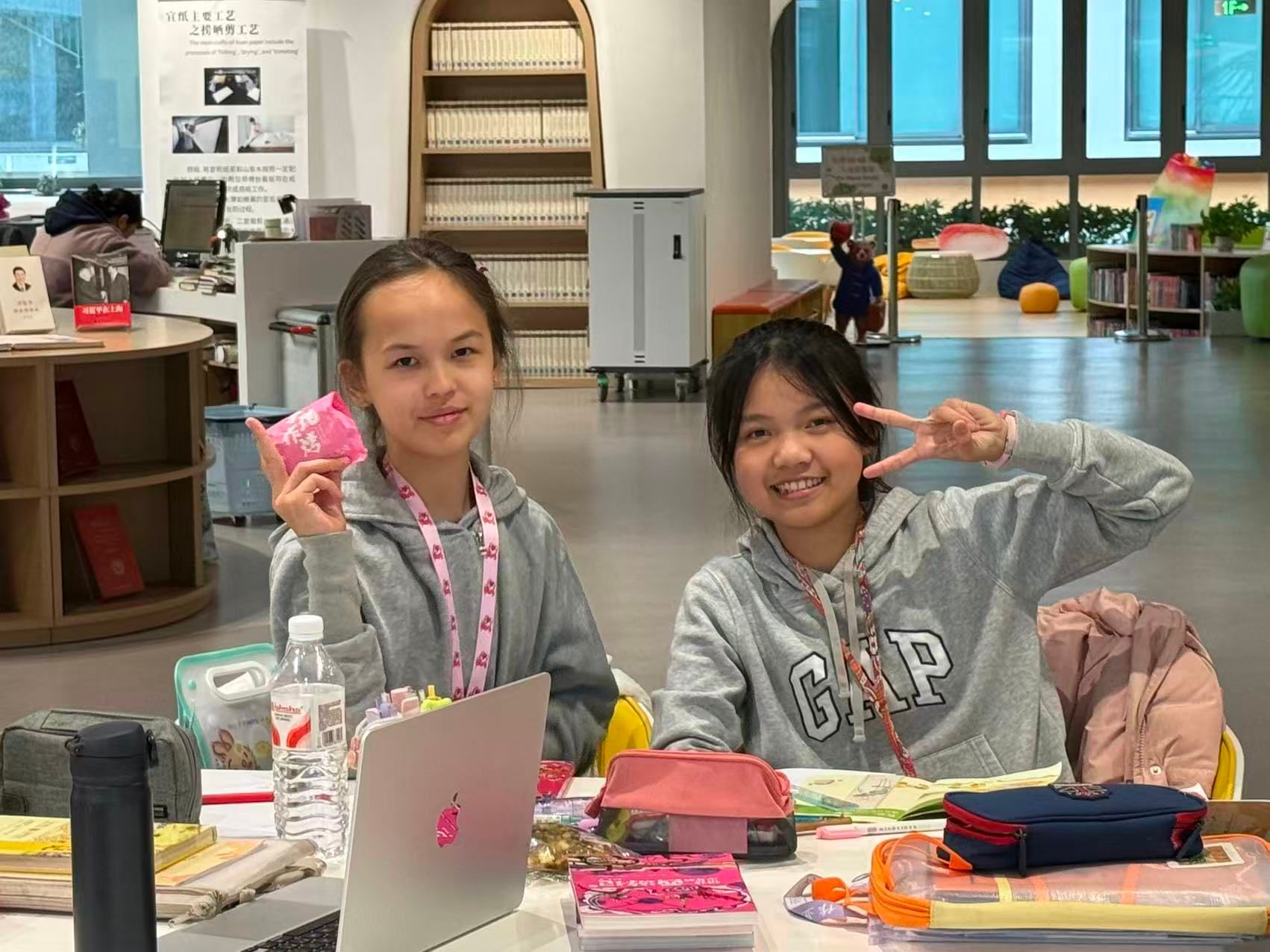
Students shared their feelings about the activity with their teachers. Cassandra from Class 6-11 said that she had learned a lot about the Flower Festival and tasted delicious flower cakes, and she really enjoyed the activity. After the activity, the Grade 6 non-native Chinese teachers expressed that they hoped to help children rediscover a forgotten yet romantic traditional festival. Every student earnestly appreciated paintings, created art, read poems, and wrote characters, stepping into the romantic floral world of ancient people through various interactive activities.
These two special lessons integrated Chinese language learning, traditional culture, handicraft creation and research exploration. The Grade 6 non-native Chinese students not only learned about the Flower Festival and flower culture, but also improved their Chinese language skills through creation, reading, and expression, experiencing the poetry and beauty of traditional Chinese culture. This Flower Festival activity has allowed traditional culture to bloom in the international campus, and planted the seeds of love for the Chinese language and excellent traditional Chinese culture in students' hearts.
(Written by Xinyi Zhang
Pictures by Teachers
Reviewed by Fan Chen , Xinyu Ma, Shiyu Wu, Hannah Kloeber)