-
ABOUT US
-
ACADEMICS
Curriculum Program
Departments
- English
- High School Chinese
- Primary and Junior School Chinese.
- High School Mathematics
- Middle School Mathematics
- Primary School Mathematics
- Music and Fine Arts
- Physical Education
- Physics
- Chemistry
- History and Geography
- Physical Science and Optional courses Department
- Middle School Biology
- High School Biology
- Social Sciences
- Computer Science
- Courses in Primary School
Achievements and Matriculations
College Counseling
Science & Technology Innovation Contest
Subject Competition
-
ARTS
-
ATHLETICS
-
AT SHSID
SHSID ∣ TIMES
PTSA
Club Exhibition
- 龙吟社
- Live 2 Drama
- Choir
- Hip-pop Dance Club
- The Primary School Dance Troupe
- Symposiums Club
- Biology Workshop
- You Shan
- VEX Robotic
- Peking Opera Club
- Baseball Club
- Model United Nations
- The World Scholar’s Cup
- Future Problem Solving Club
- United States Academic Pentathlon
- OM Club
- AMC Club
- Music for Patients
- SHSID Gazette
- Smile Charity
- Cultural Moments
- SciAcademy
- Stem Doge Alliance
- Chinese Debate Club
- IAA
- Mock Trial Club
- Zhengming Club
- Furry Friends
- GT-Racing
- Village Radio
- IMMC Club
- Creative Design and Intelligent Fabrication
- Future City Research Project
- ECOCAP
- AdvocaSEA
- SPDC
- Medishine
- Floorball Club
- Animusic MTC
- Wings Up
- All Booked
- Cyano
- Birding Community
Health and Wellness
Campus Safety
Cafeteria Service
-
ADMINISTRATION
-
ADMISSIONS
-
ALUMNI
Alumni Information
Honors Students
- Class of 2025
- Class of 2024
- Class of 2023
- Class of 2022
- Class of 2021
- Class of 2020
- Class of 2019
- Class of 2018
- Class of 2017
- Class of 2016
- Class of 2015
- Class of 2014
- Class of 2013
- Class of 2012
- Class of 2011
- Class of 2010
- Class of 2009
- Class of 2008
- Class of 2007
- Class of 2006
Who Studied at SHSID
SHS Foundation
-
DOCUMENTS
Puxi Campus G5: Young Scientists Exploring the AI Frontier: Science TED Talk
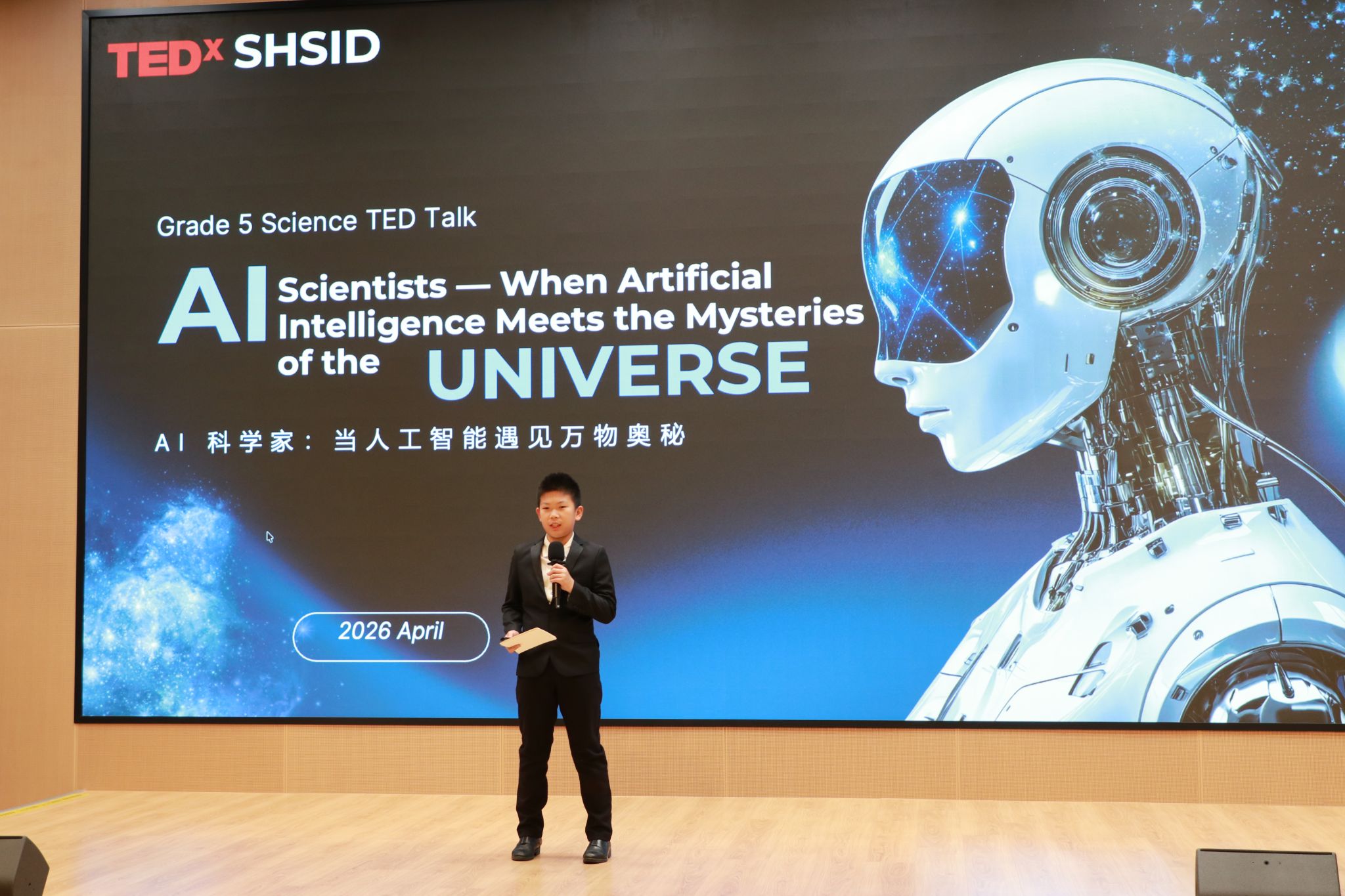
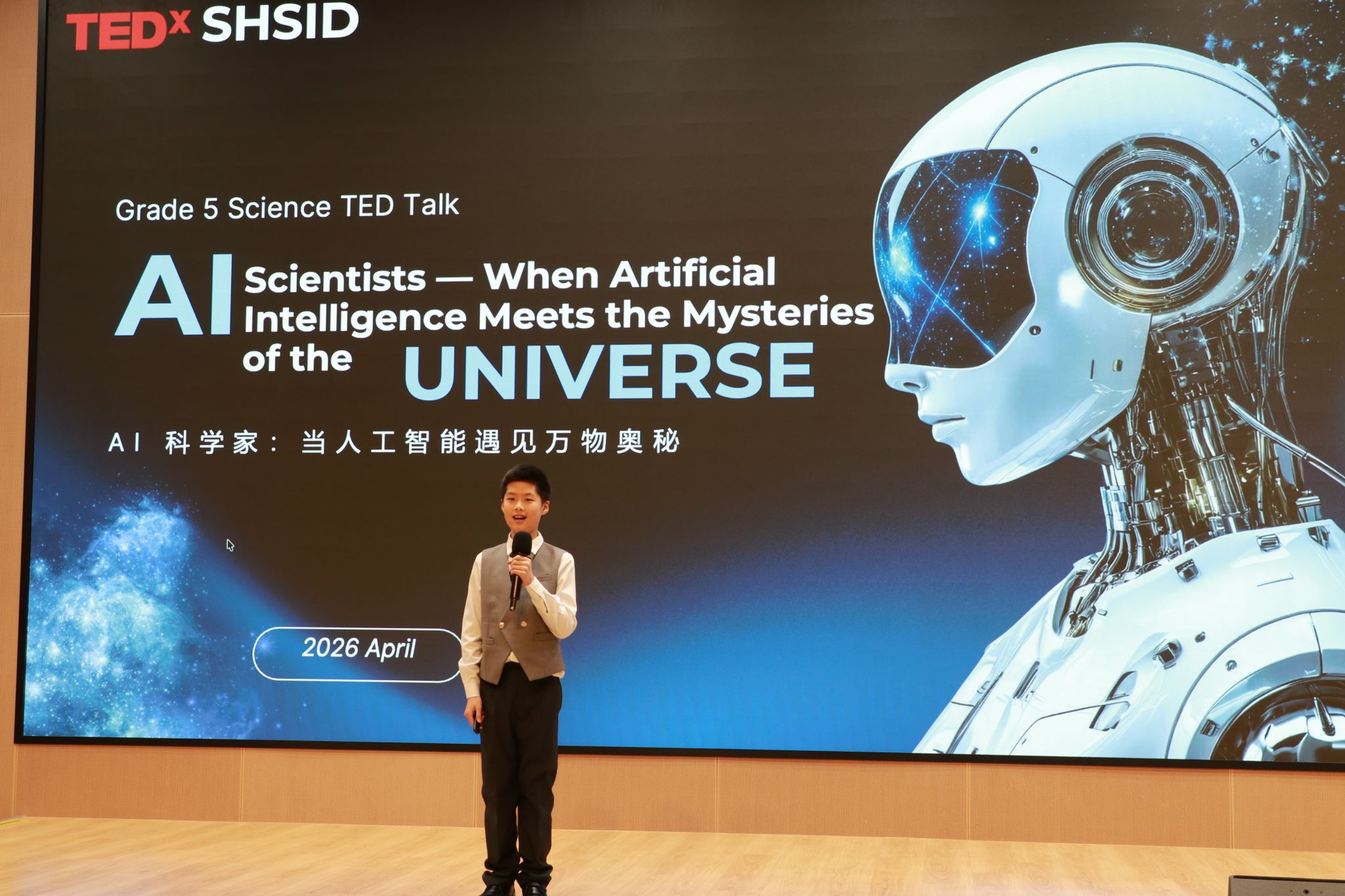
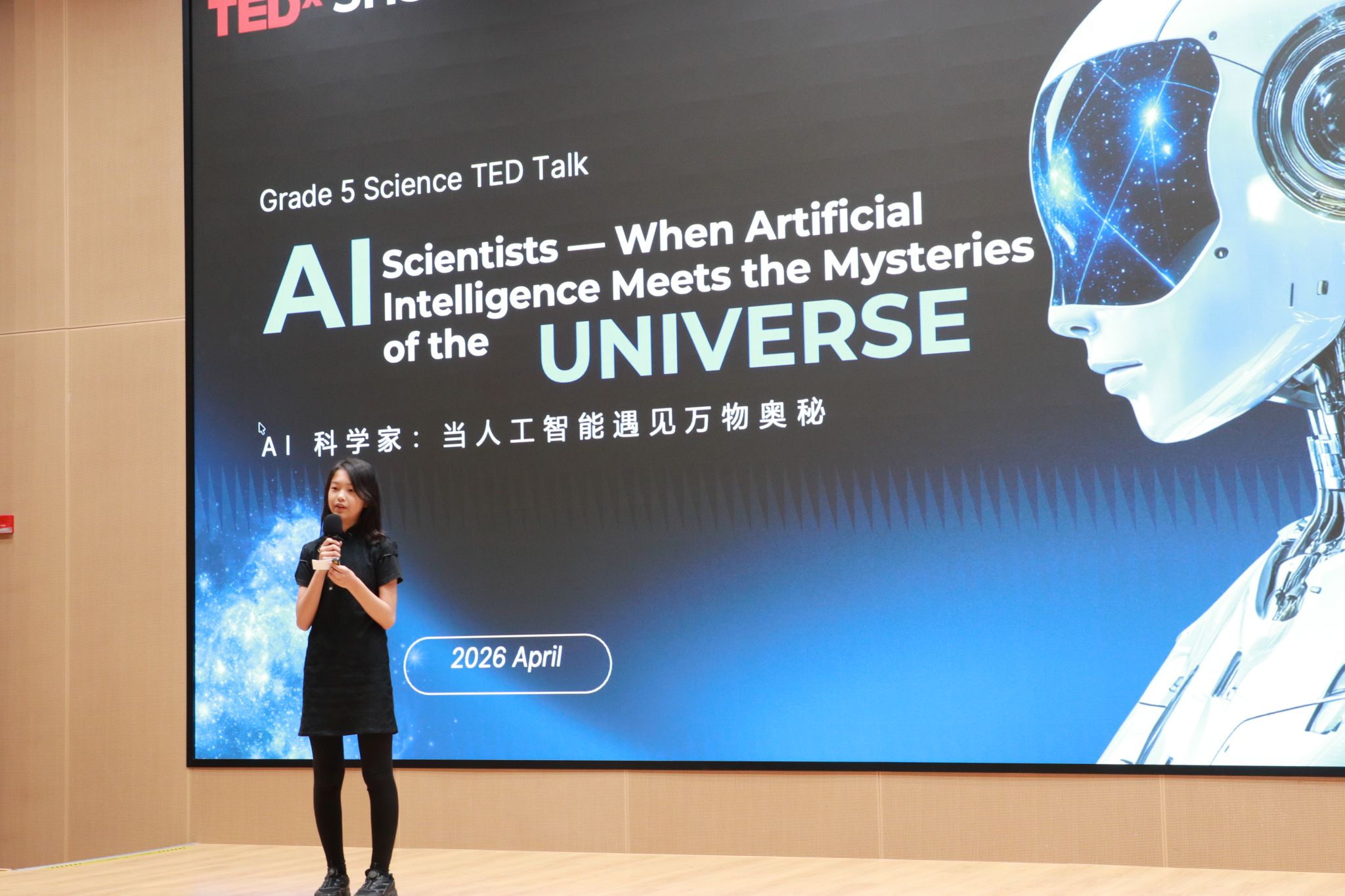
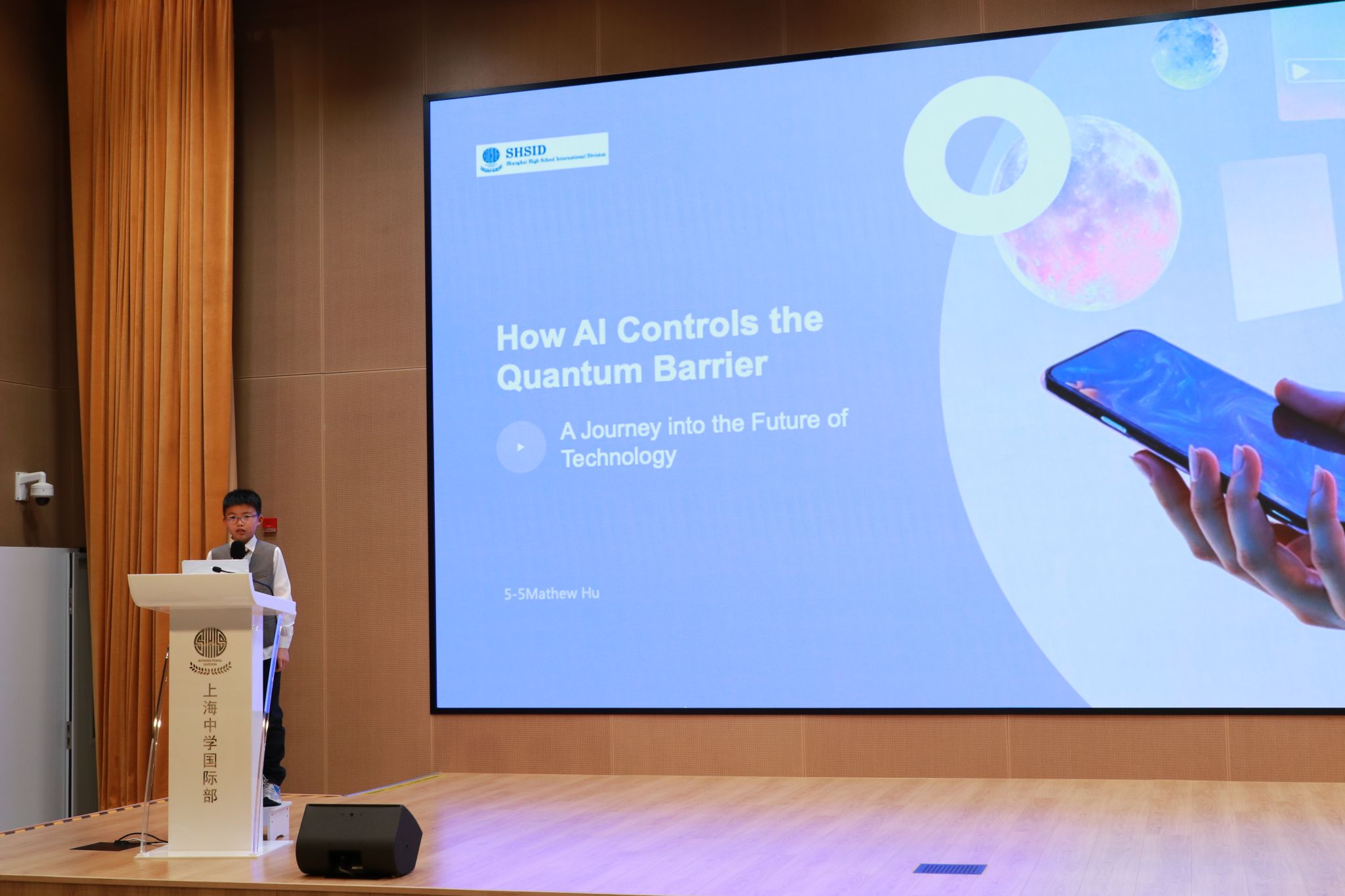
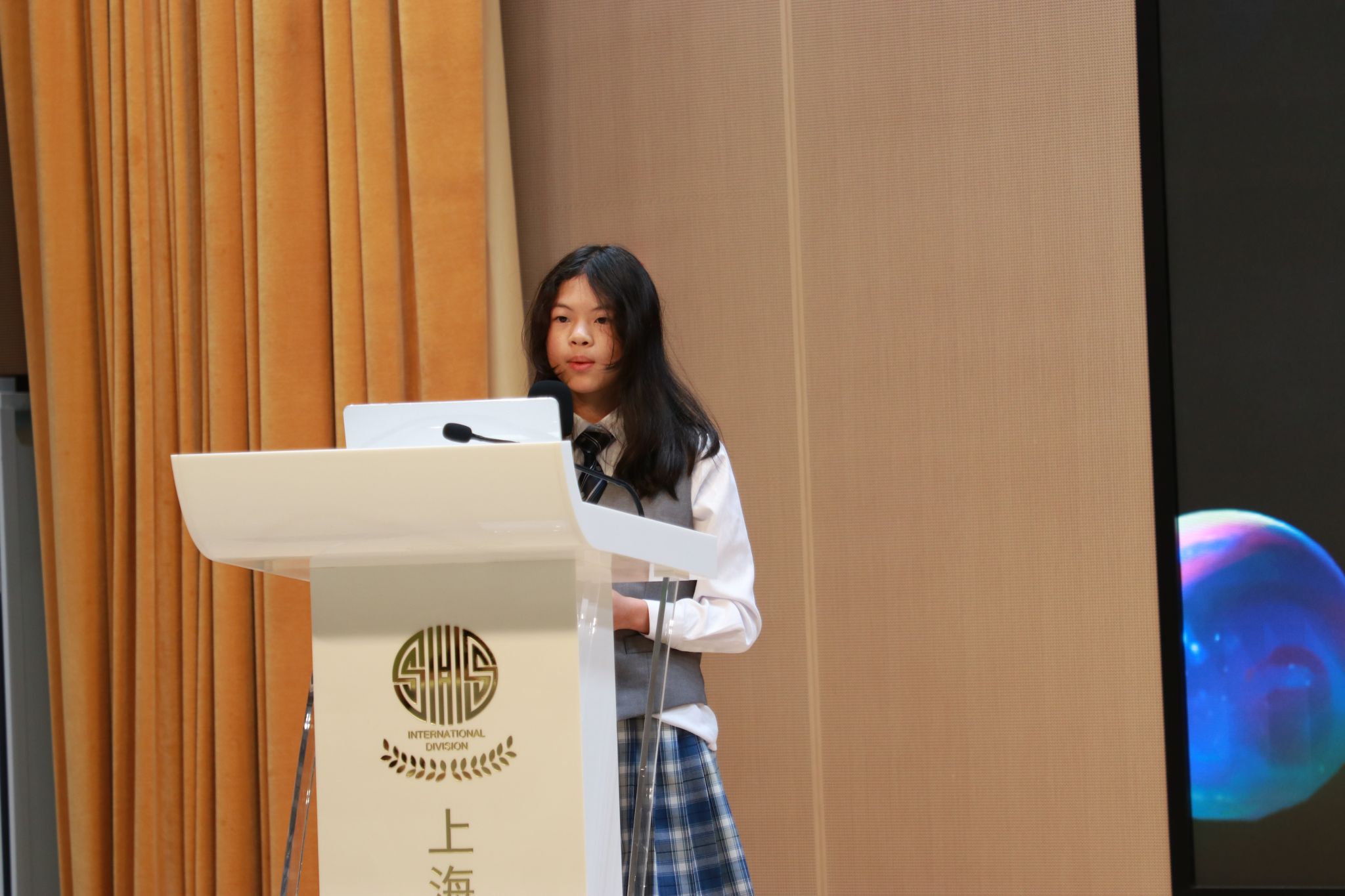
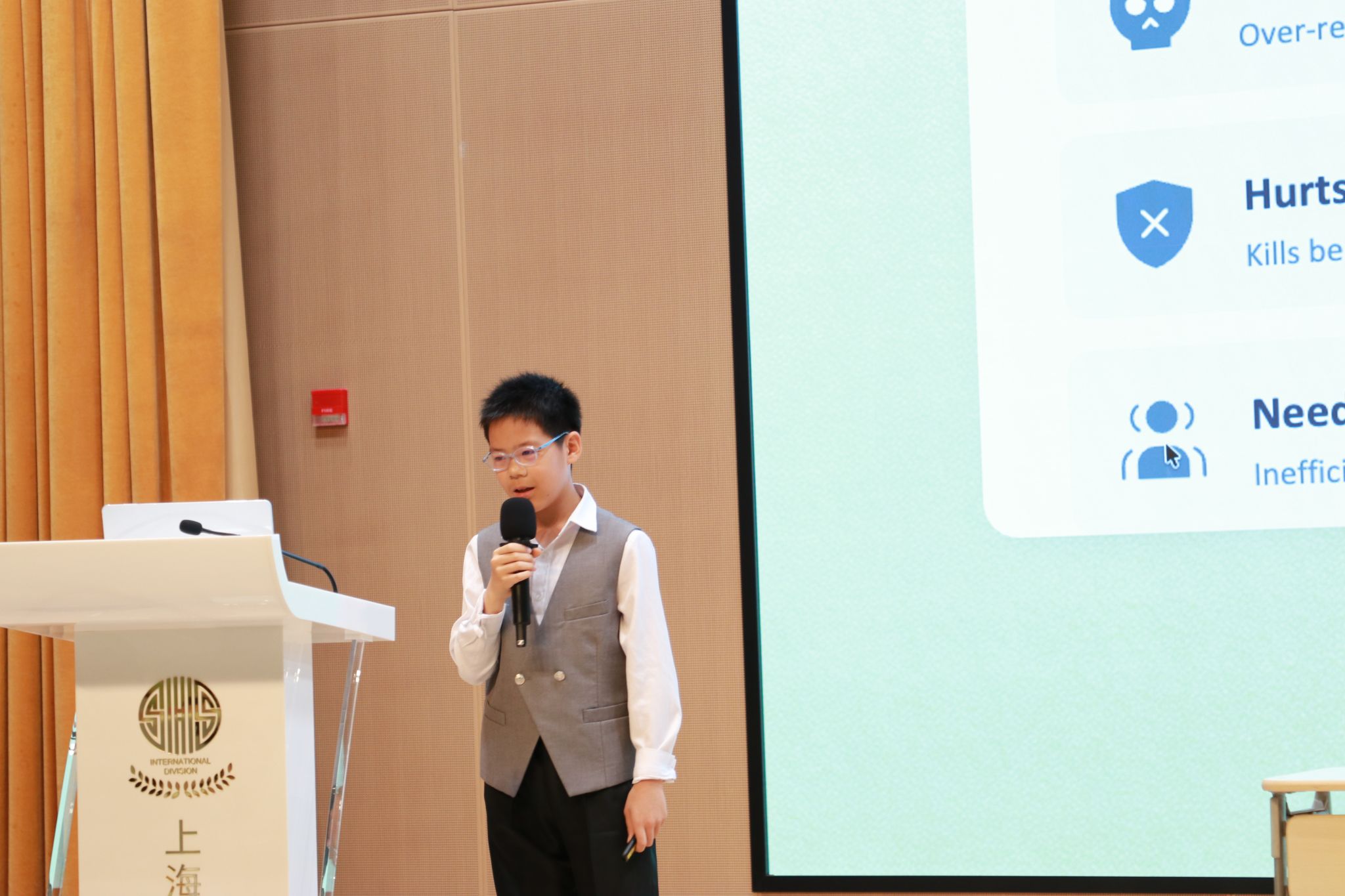
On April 29th and 30th, the Grade 5 students of SHSID successfully held a Science TED Talk event themed "When Artificial Intelligence Meets the Mysteries of the Universe" in the West Building Auditorium. The event aimed to guide students in exploring how AI serves technological transformation and improves life, while enhancing their research skills, eloquence, and critical thinking.
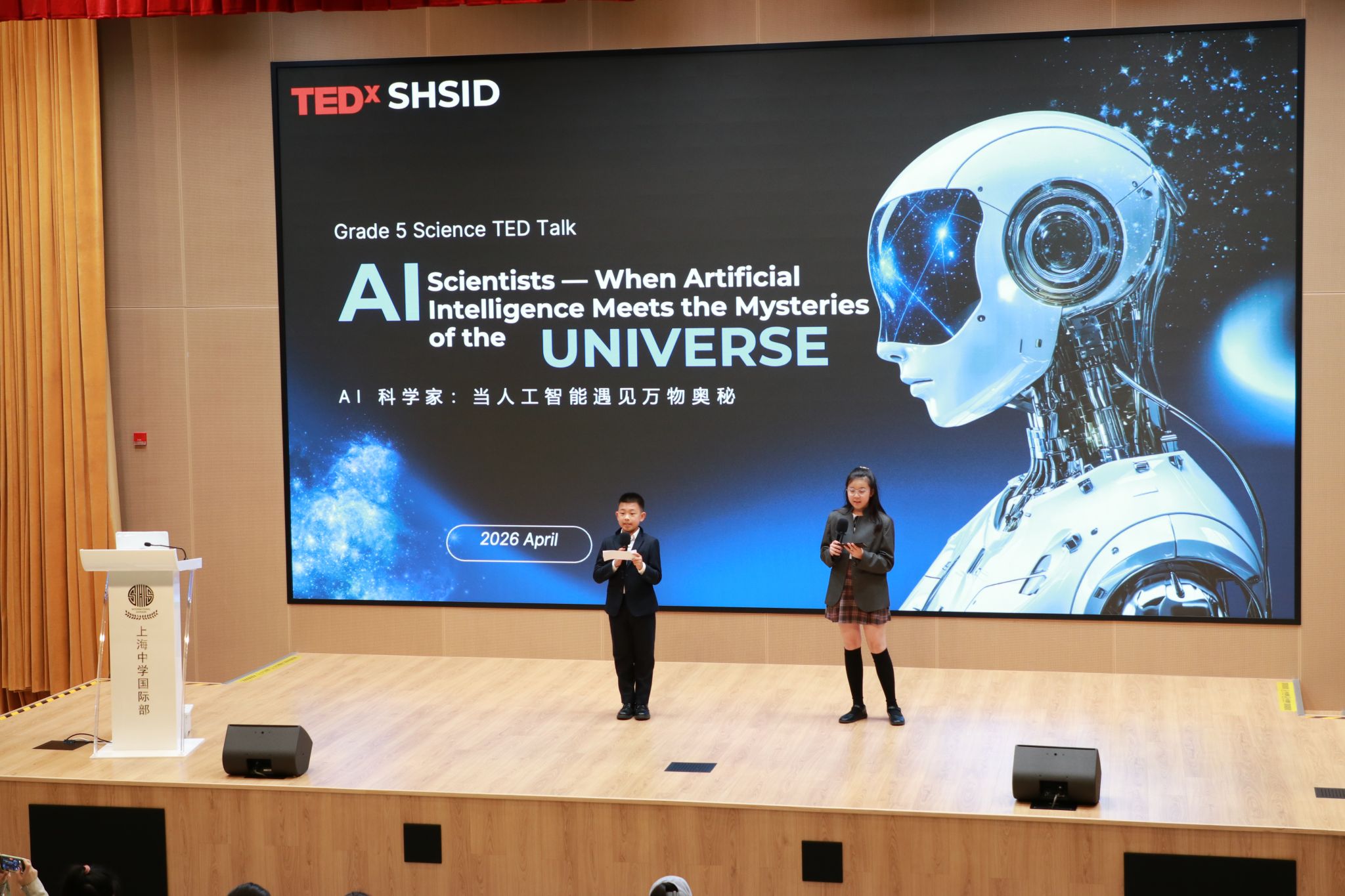
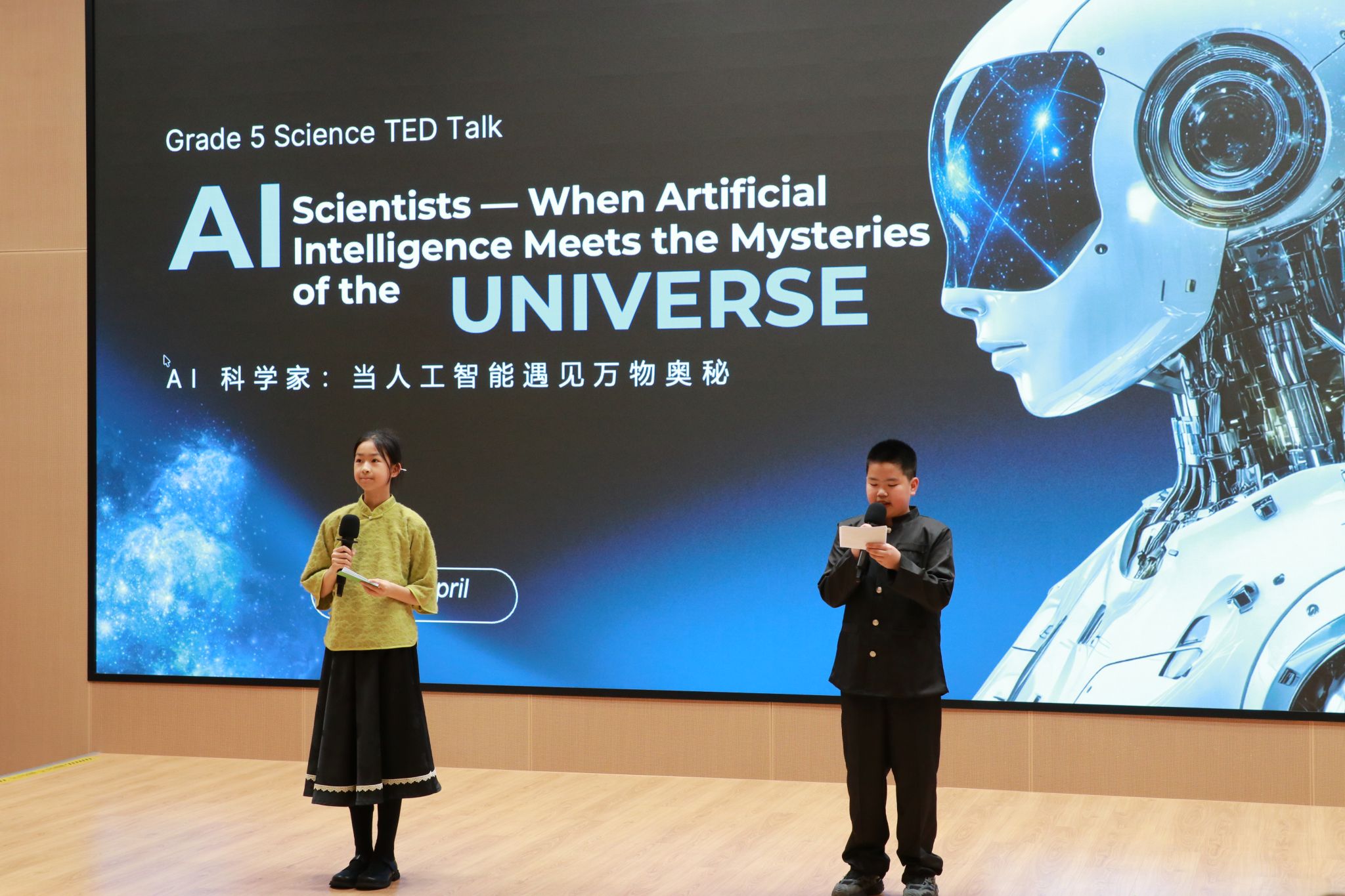
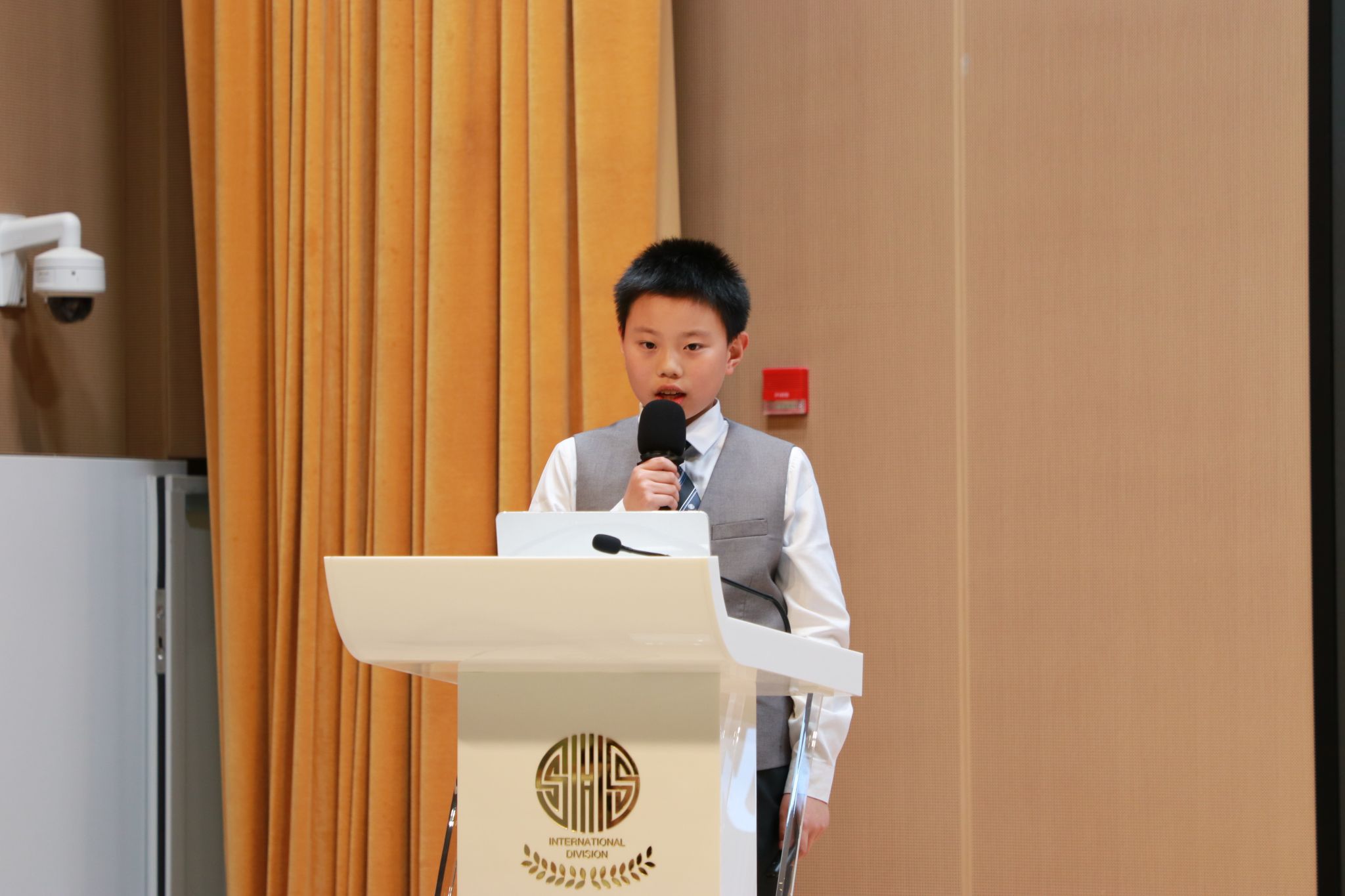
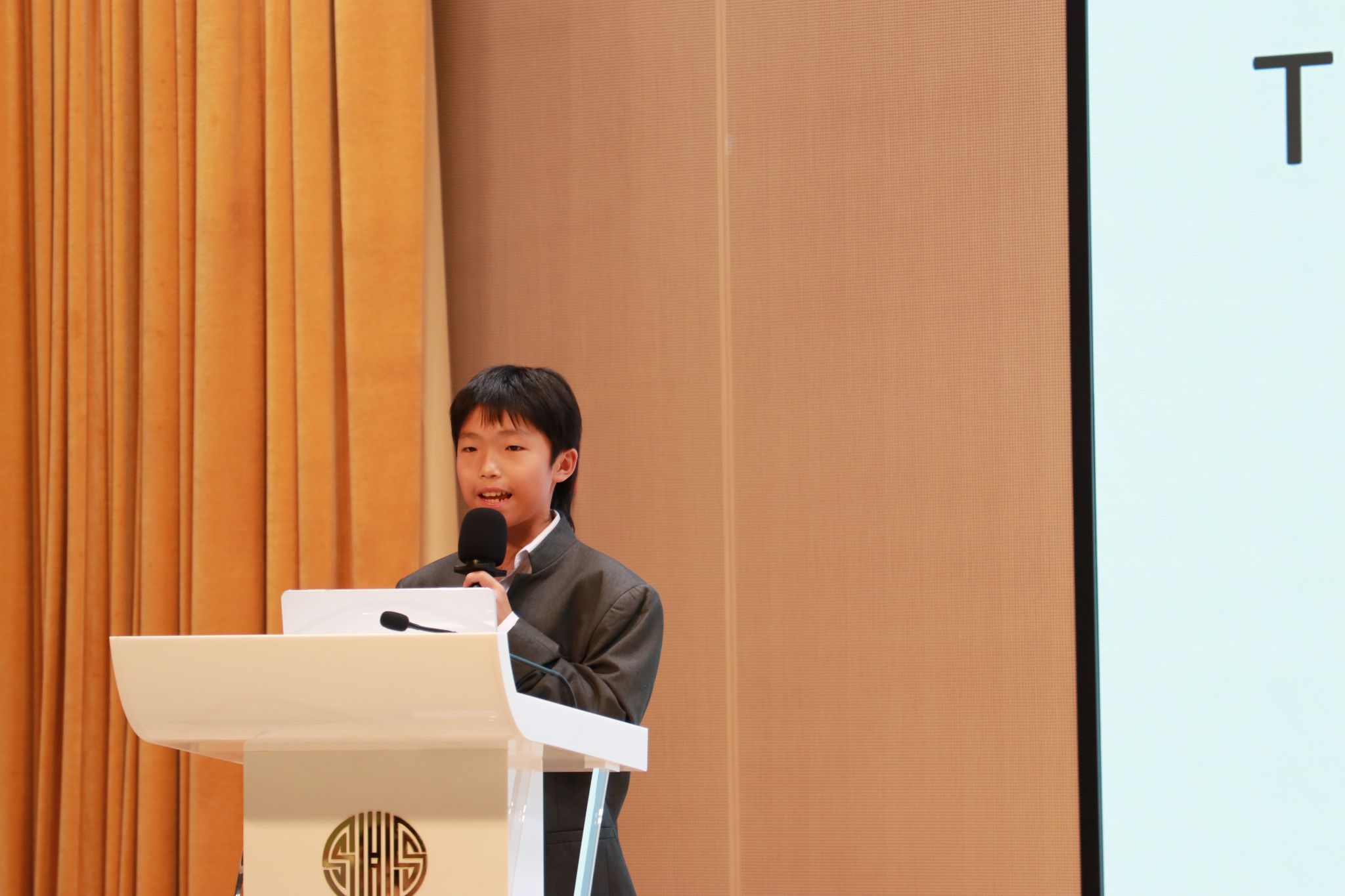
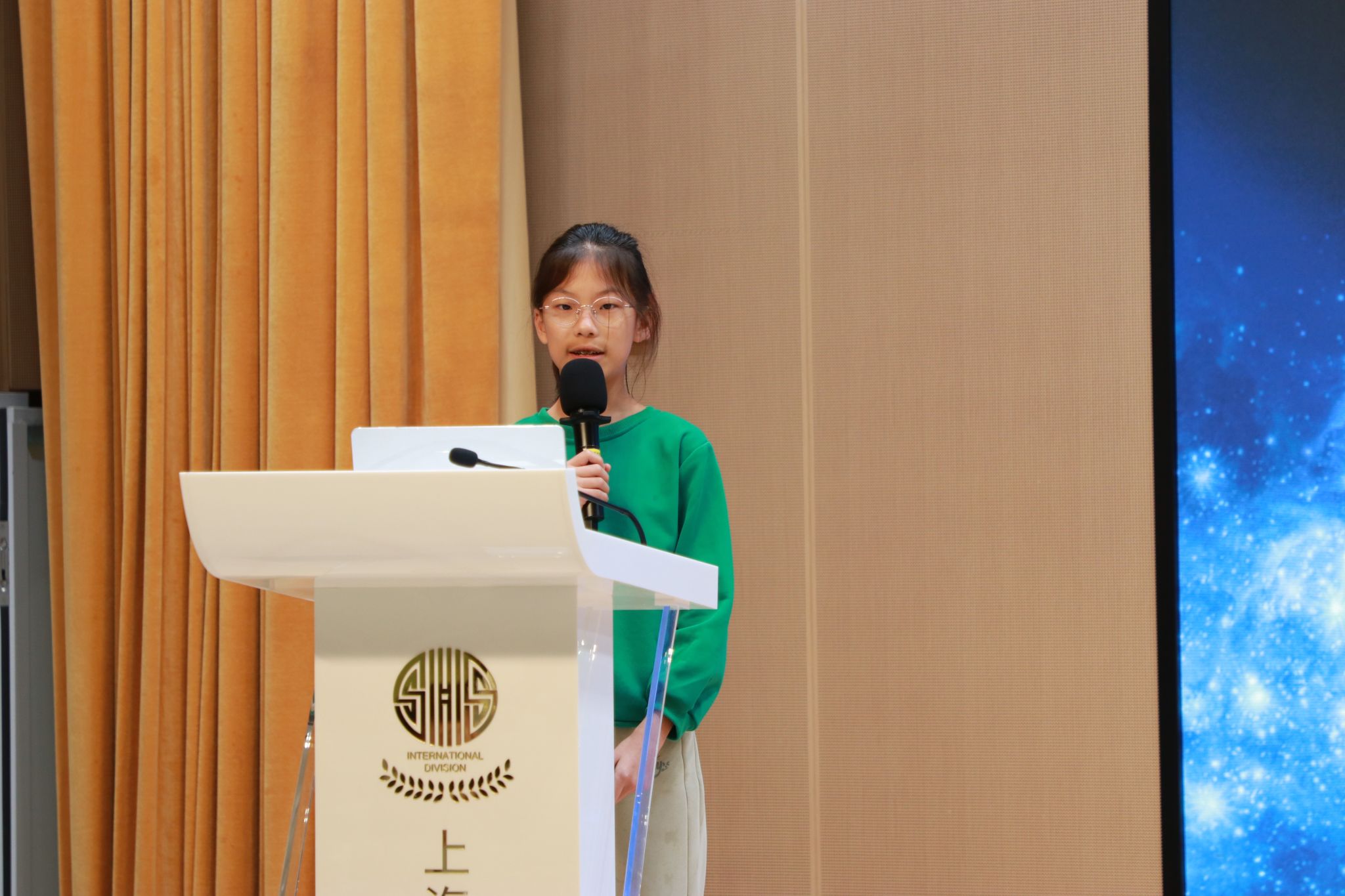
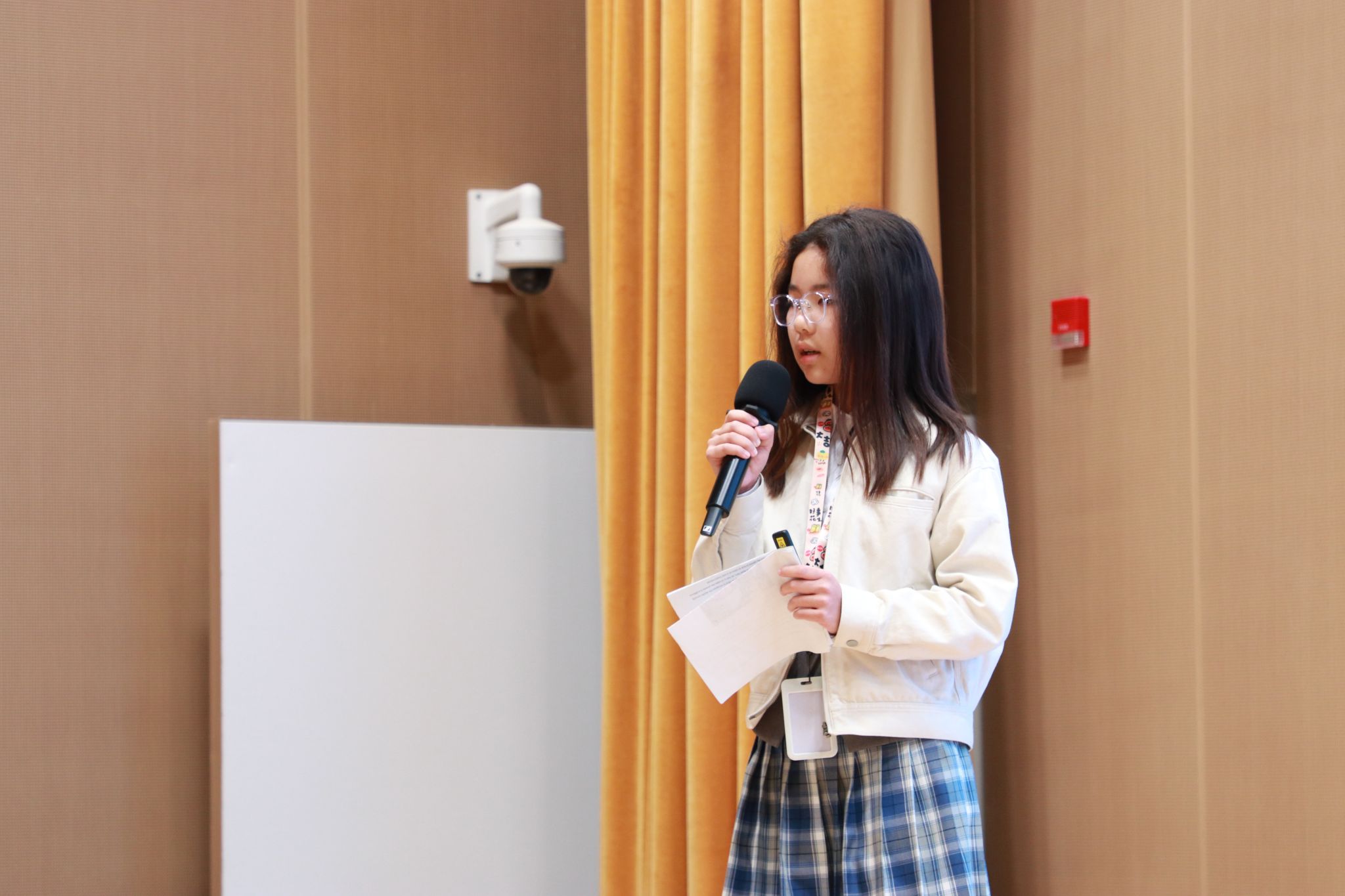
The two-day event was hosted by Ian and Agnes (Day 1) and Amber and Vincent (Day 2). Their fluent and natural hosting style bridged the segments seamlessly, maintaining a balance between a rigorous academic atmosphere and a lively, engaging pace. Throughout the event, 16 "young scientists" delivered profound and diverse presentations. Covering the intersection of AI with natural sciences, medicine, education, animal conservation, and space exploration, the students showcased their excellence through stunning visuals and sophisticated, near-extemporaneous delivery.
AI in Life Sciences and Medicine
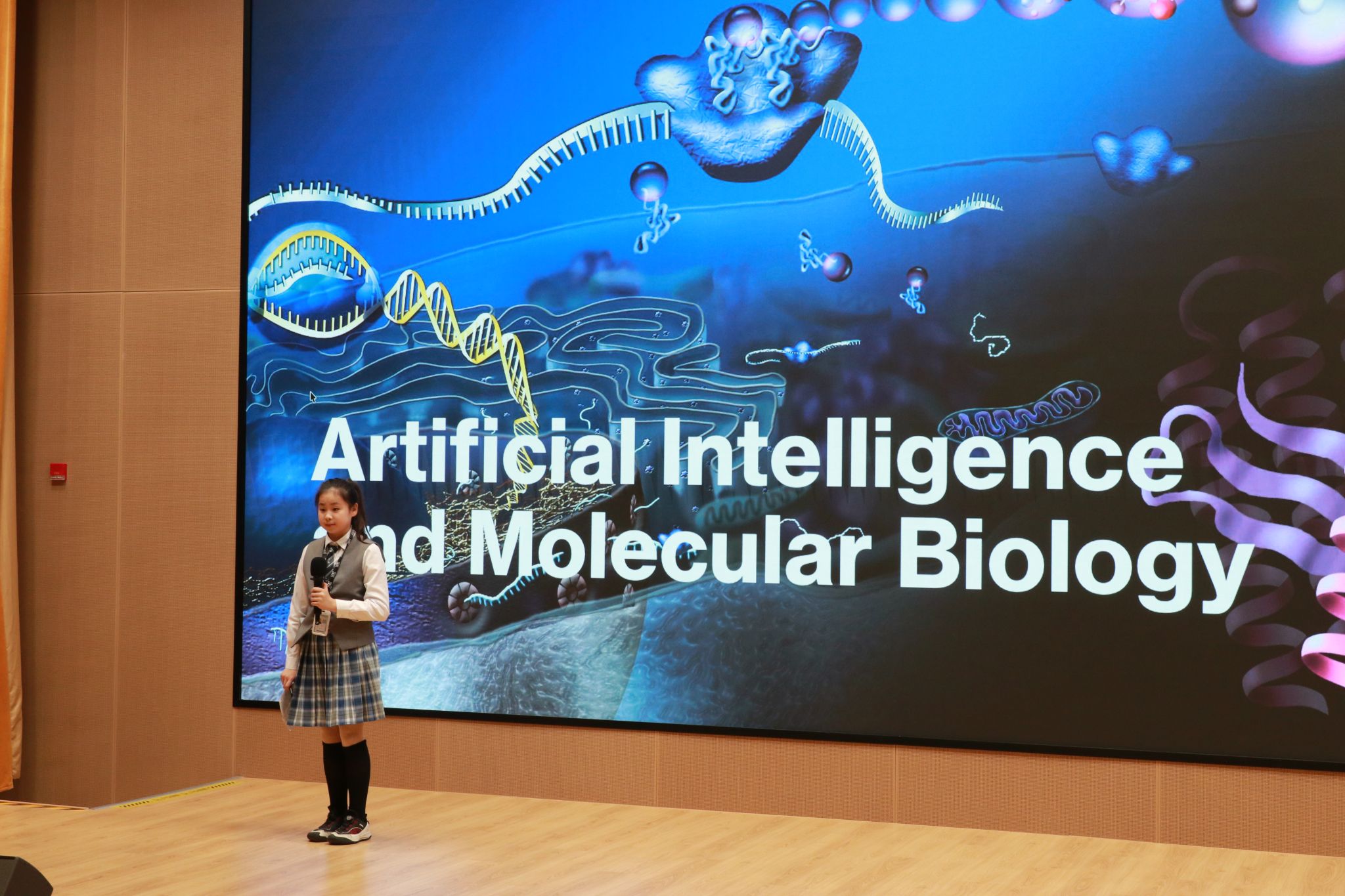
In the realm of life sciences and medicine, Aiden (5-7) used his personal medical experience to introduce AI's role in protein structure prediction and cardiac disease detection, emphasizing that AI is a "lifeboat" rather than a replacement for humans. Kevin (5-7) discussed the significance of AlphaFold in solving protein folding puzzles and its application in developing drugs for cancer and rare diseases, calling AI the "Golden Key" to life sciences. Angelica (5-10) highlighted AI's value as a "doctor's second pair of eyes" in early cancer detection.
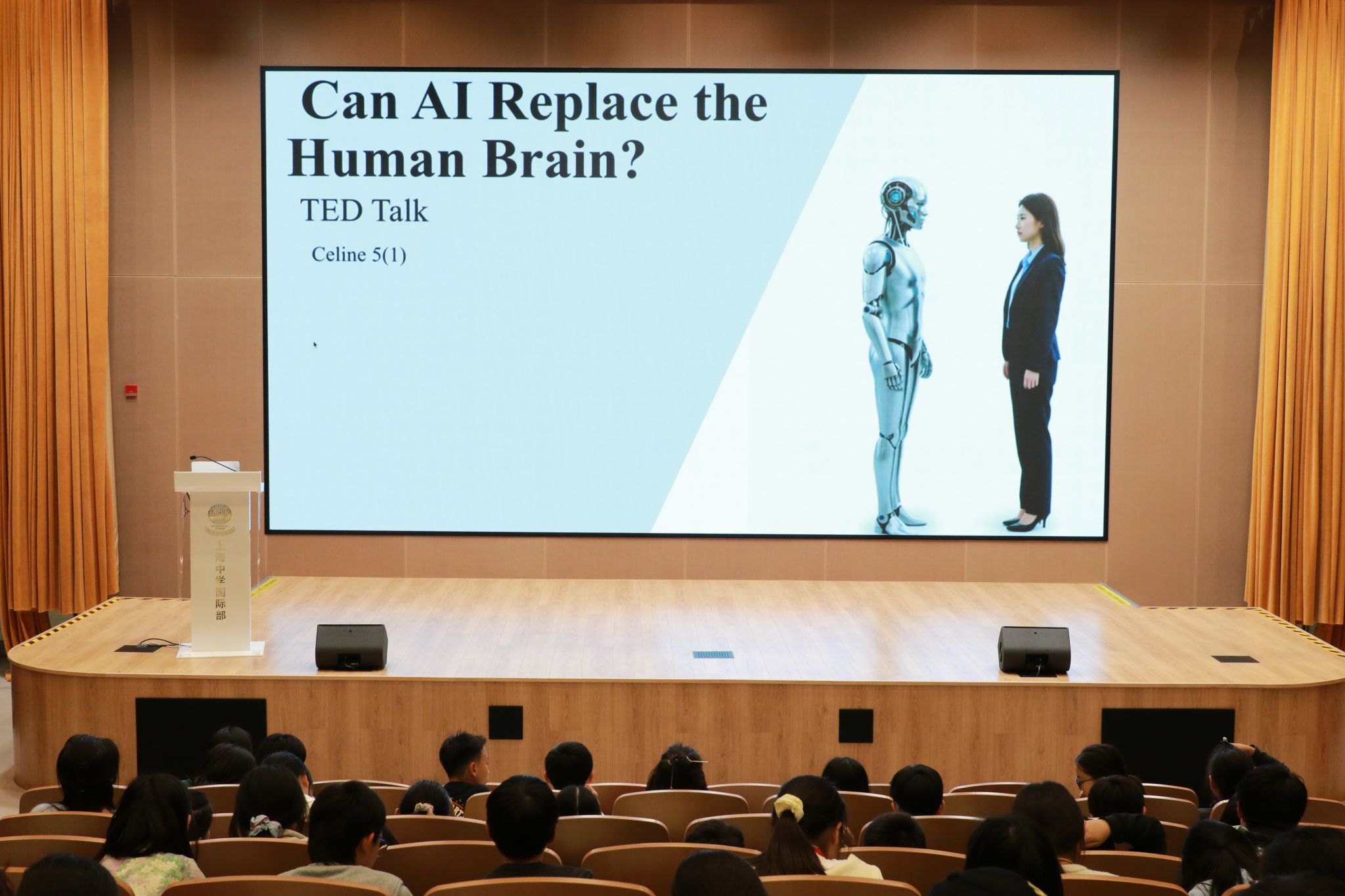
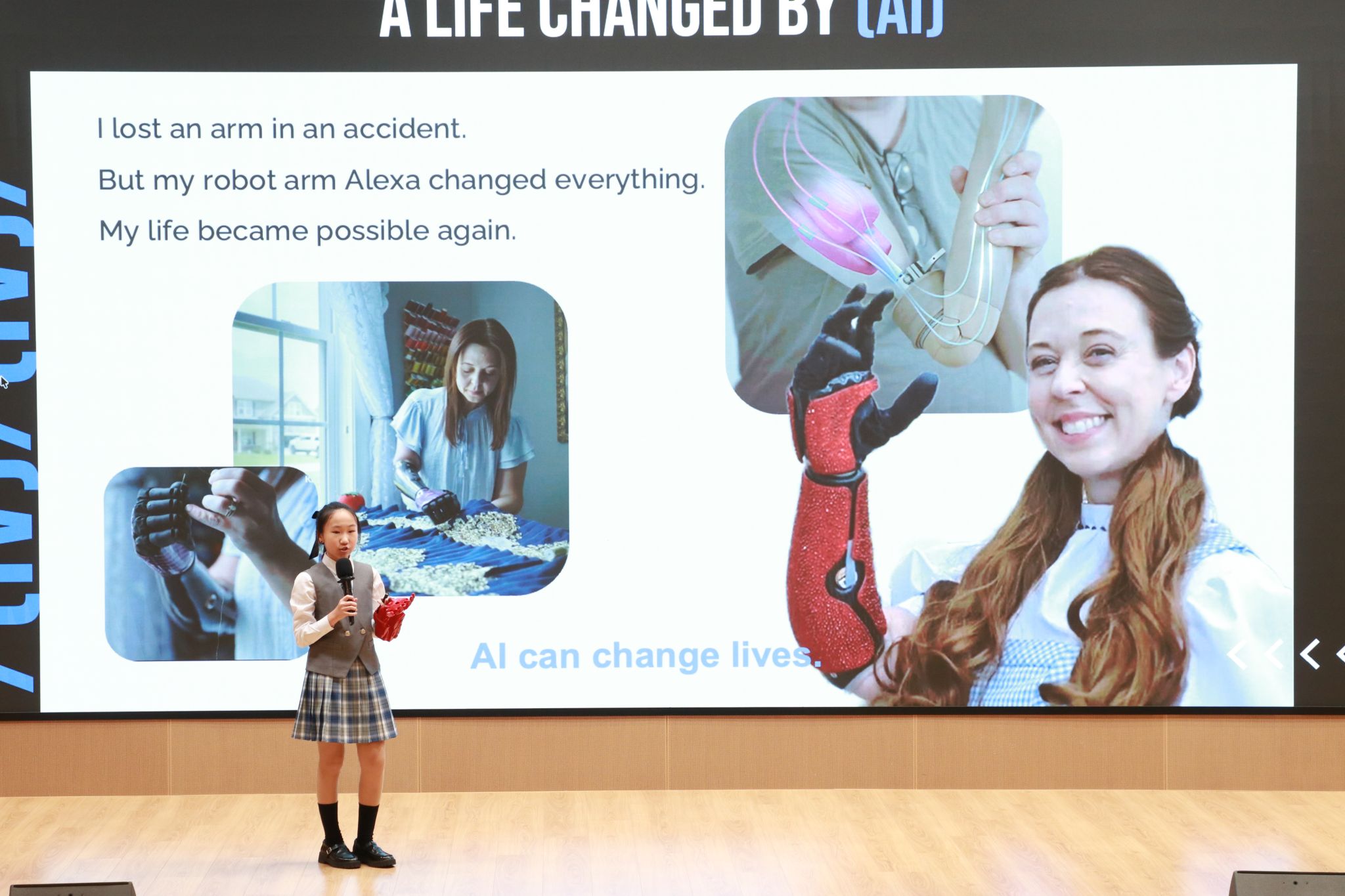
OnLee (5-11) spoke on how AI assistants help amputees reclaim their independence, while also cautioning against biases and a lack of accountability in healthcare. Yanyong (5-11) explained how AI tools like AlphaFold 3 help scientists "crack the scent code" by matching olfactory receptors with odor molecules. Meanwhile, Celine (5-1) explored the fundamental differences between AI and the human brain, focusing on how humans can coexist with technology.
AI in Animal Conservation and Nature Exploration
Chenyu (5-11) explored decoding animal languages to protect endangered species and provide early natural disaster warnings, suggesting AI could be the ultimate bridge between humans and nature. Leonard (5-3) shared how AI acts as a "detective" to track rare animals and combat the illegal wildlife trade. Chelsea (5-11) focused on decoding the acoustic systems of marine life, envisioning a future where humans might "converse" with whales and dolphins.
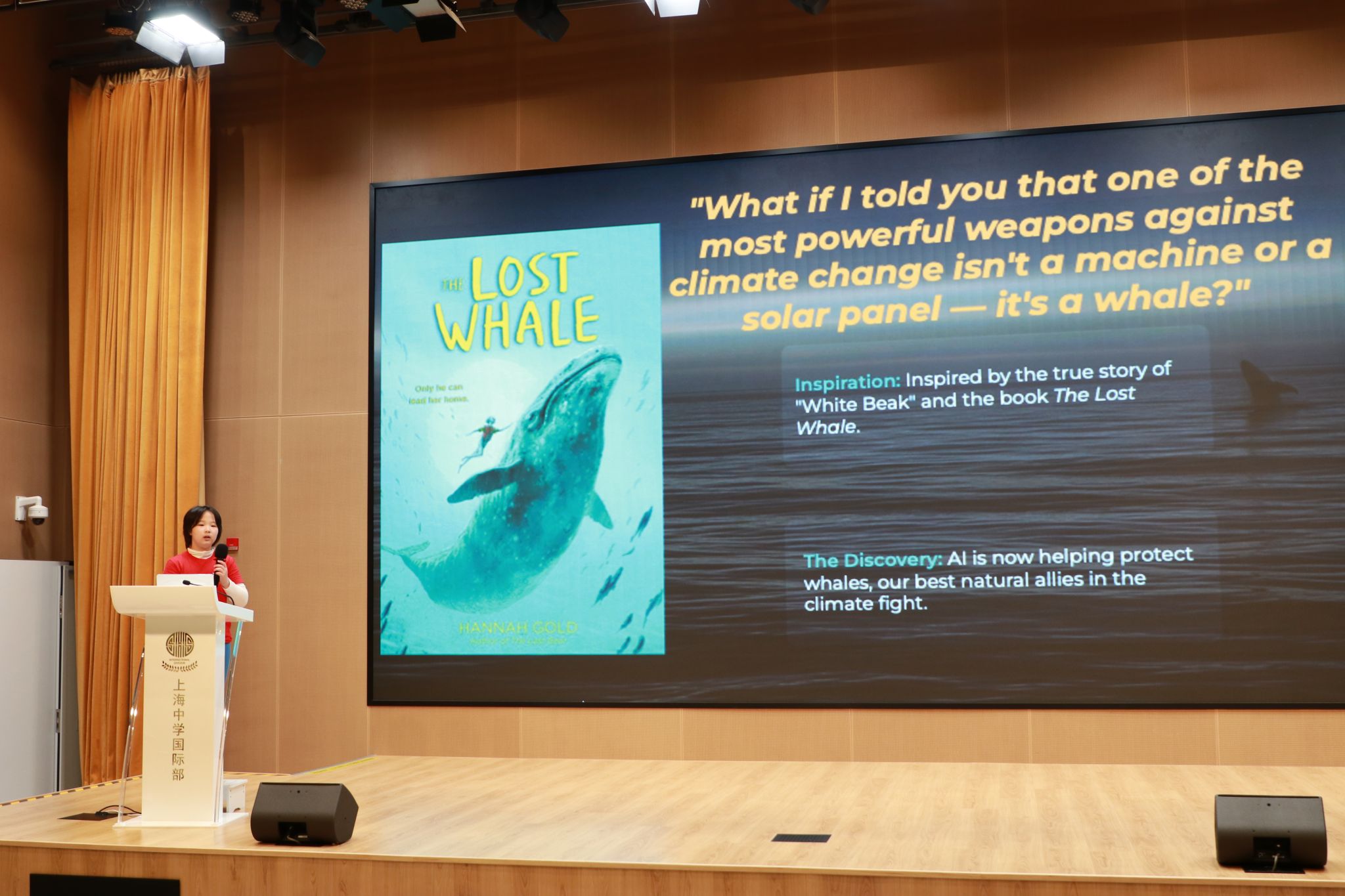
Lexi (5-2) looked at AI through the lens of ethology to better understand wild creatures. Inspired by the book The Lost Whale, Erica (5-6) detailed how smart nets and satellite tracking help protect whales, indirectly addressing climate change. Richard (5-9) used cases like ichthyosaurs and dolphins to explain the genetic mysteries of convergent evolution analyzed through AI.
AI in Space, Tech, and Daily Life
Nicole (5-9) likened AI to humanity's "Super Eye," citing the CIMON space robot and the Perseverance rover. Eve (5-4) focused on AI's role as a "Cosmic Messenger" in autonomous navigation and Mars sample returns. Mathew (5-5) provided an accessible explanation of quantum tunneling and how AI helps scientists predict quantum behavior for fusion reactors.
In education and daily life, Shawn (5-3) shared his practical experience using AI to design sensors for smart pest control. Joy (5-3) demonstrated how AI makes learning "smarter" through her apple-sorting robot project from the Huskylens Club.
Interactive Thinking and Parental Support
The event featured interactive classroom exercises to deepen audience engagement. During the spirited Q&A session, students raised thought-provoking questions regarding AI ethics, technical bottlenecks, and future prospects. Inquiries such as "How should we treat AI if it gains consciousness?" and "How do we prevent the misuse of AI?" reflected a level of social responsibility and depth of thought far beyond their years.
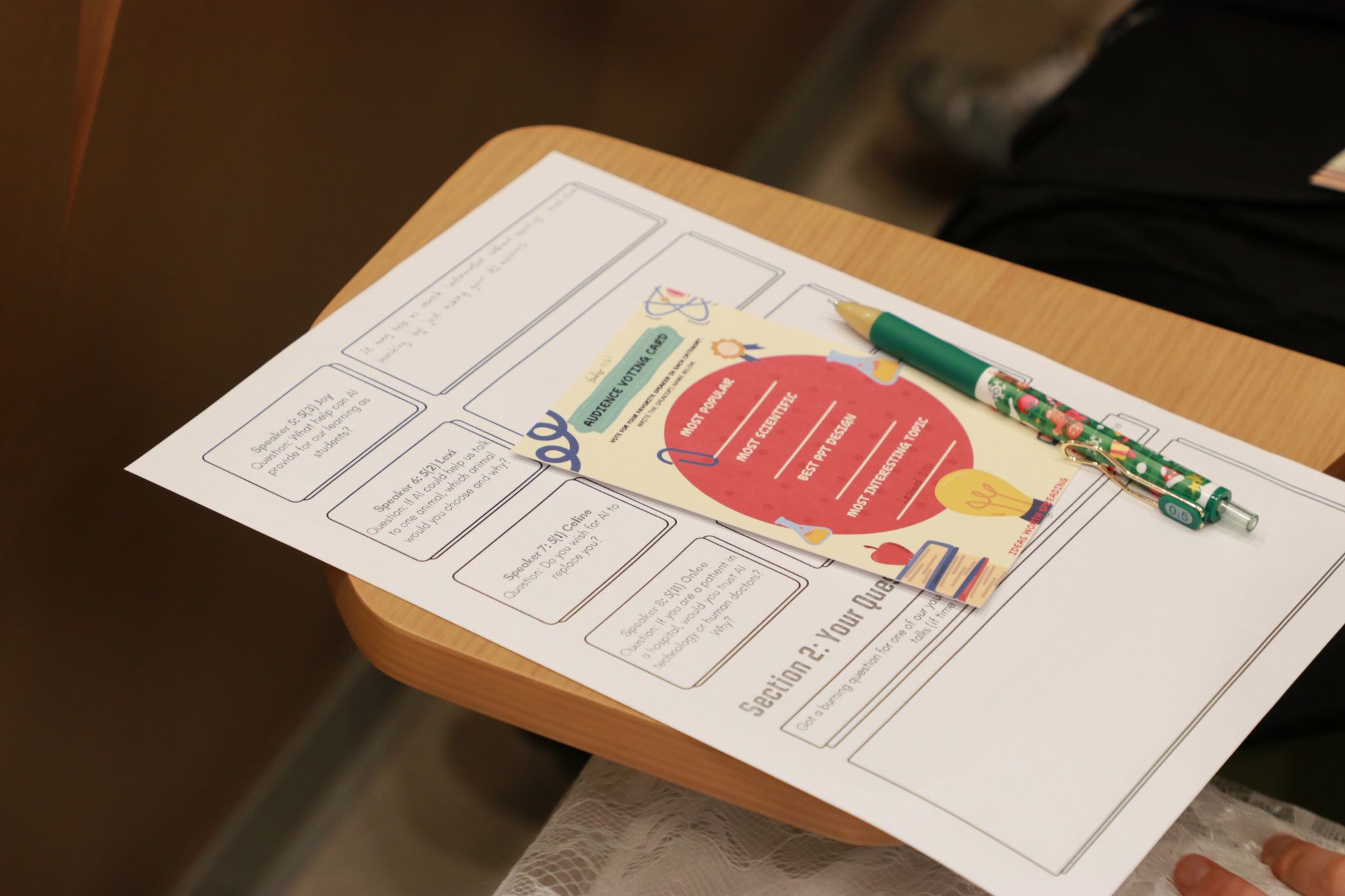
The event also benefited from the incredible support of parents, who provided videos on the latest industry trends. Victoria's father (5-9) explained the principles of supercomputing and the development of the "Shanghai Cube," encouraging students to use AI to benefit humanity. Peijia's father (5-7) shared insights into humanoid robots—the "jewel in the crown of AI"—describing them as embodied intelligence and a new quality productive force driving China's economic transformation.
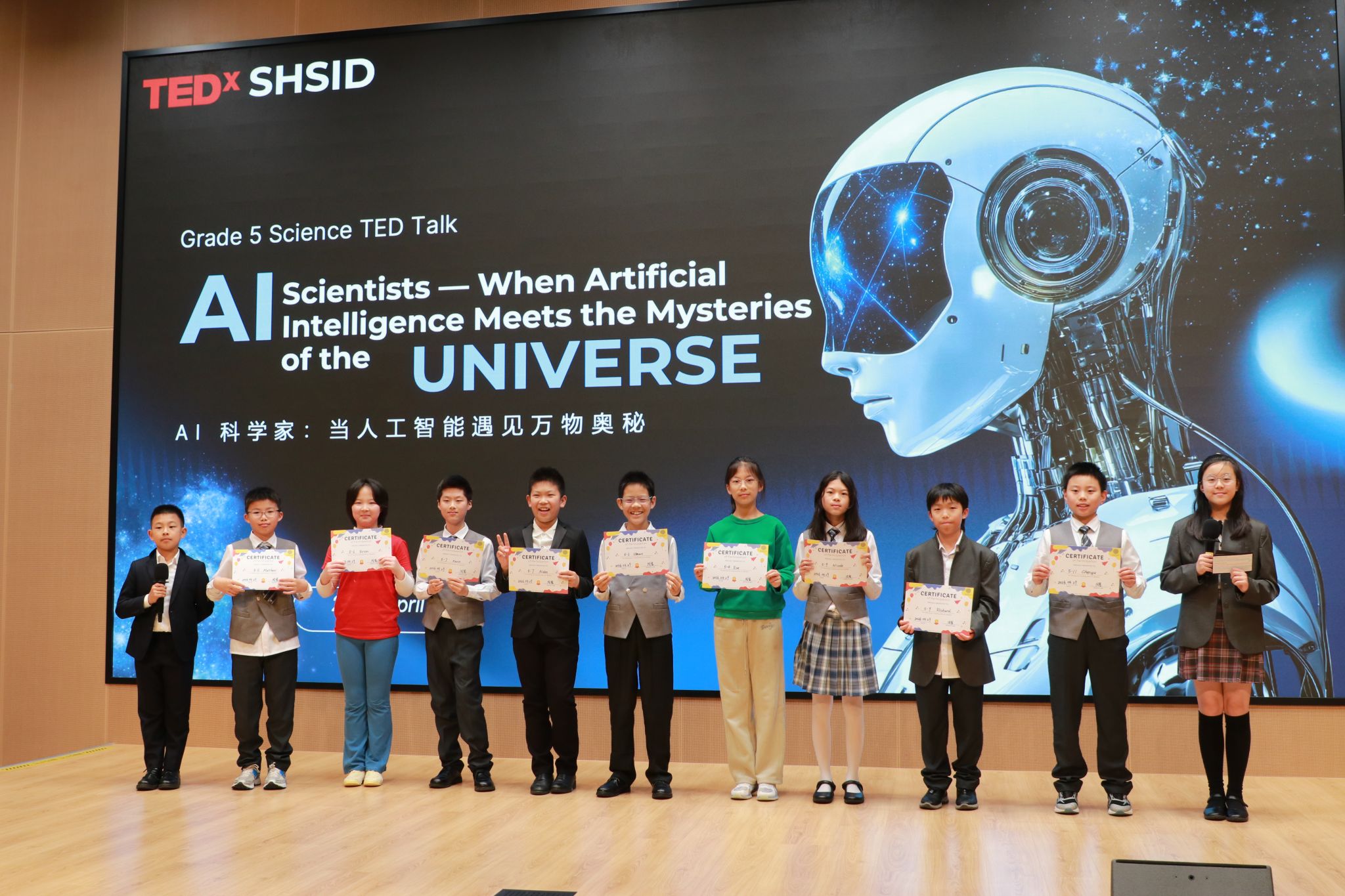
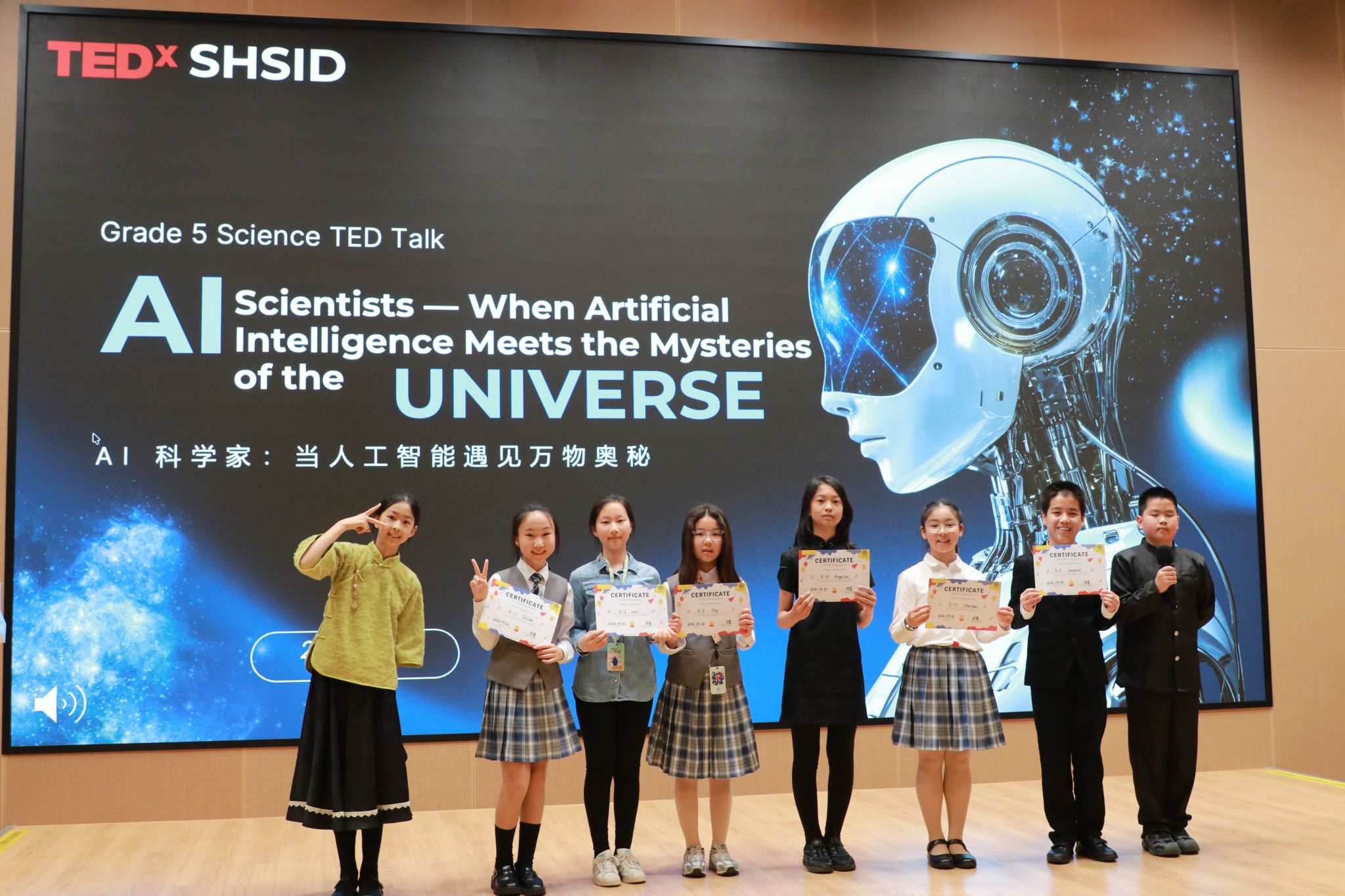
This TED Talk event was more than a feast of knowledge; it was a profound journey of growth. Seeing peers confidently tackle cutting-edge science served as a powerful inspiration. Many students realized that AI is not a distant concept but a tool they can actively research and apply. From topic selection to the final stage, every step embodied the scientific spirit. The event concluded on a high note as science teachers presented honorary certificates to the young scientists, marking a successful end to this inspiring journey.
(Written by Hui Zhou, Stefan Hampson
Pictures/ Video by Minxuan Cao, Jingyi Wang
Reviewed by Ms. Lu Luting, Shiyu Wu)