-
ABOUT US
-
ACADEMICS
Curriculum Program
Departments
- English
- High School Chinese
- Primary and Junior School Chinese.
- High School Mathematics
- Middle School Mathematics
- Primary School Mathematics
- Music and Fine Arts
- Physical Education
- Physics
- Chemistry
- History and Geography
- Physical Science and Optional courses Department
- Middle School Biology
- High School Biology
- Social Sciences
- Computer Science
- Courses in Primary School
Achievements and Matriculations
College Counseling
Science & Technology Innovation Contest
Subject Competition
-
ARTS
-
ATHLETICS
-
AT SHSID
SHSID ∣ TIMES
PTSA
Club Exhibition
- 龙吟社
- Live 2 Drama
- Choir
- Hip-pop Dance Club
- The Primary School Dance Troupe
- Symposiums Club
- Biology Workshop
- You Shan
- VEX Robotic
- Peking Opera Club
- Baseball Club
- Model United Nations
- The World Scholar’s Cup
- Future Problem Solving Club
- United States Academic Pentathlon
- OM Club
- AMC Club
- Music for Patients
- SHSID Gazette
- Smile Charity
- Cultural Moments
- SciAcademy
- Stem Doge Alliance
- Chinese Debate Club
- IAA
- Mock Trial Club
- Zhengming Club
- Furry Friends
- GT-Racing
- Village Radio
- IMMC Club
- Creative Design and Intelligent Fabrication
- Future City Research Project
- ECOCAP
- AdvocaSEA
- SPDC
- Medishine
- Floorball Club
- Animusic MTC
- Wings Up
- All Booked
- Cyano
- Birding Community
Health and Wellness
Campus Safety
Cafeteria Service
-
ADMINISTRATION
-
ADMISSIONS
-
ALUMNI
Alumni Information
Honors Students
- Class of 2025
- Class of 2024
- Class of 2023
- Class of 2022
- Class of 2021
- Class of 2020
- Class of 2019
- Class of 2018
- Class of 2017
- Class of 2016
- Class of 2015
- Class of 2014
- Class of 2013
- Class of 2012
- Class of 2011
- Class of 2010
- Class of 2009
- Class of 2008
- Class of 2007
- Class of 2006
Who Studied at SHSID
SHS Foundation
-
DOCUMENTS
Puxi Campus G4-5: Spring Field Study Trip
On May 28th, teachers and students from Grades 4 and 5 at Puxi Campus of Shanghai High School International Division embarked on a mobile classroom journey that blended culture and nature. They visited the Baoshan International Folk Arts Exposition, where they wandered among folk arts and cultural traditions from around the world, experiencing the warmth of civilization and the power of heritage through exquisite craftsmanship. Later, they strolled through Gucun Park, immersing themselves in the vibrant vitality of the natural world. This field trip connected the profound depth of intangible cultural heritage with the lively essence of nature, not only broadening the students' cultural horizons but also highlighting the irreplaceable value and lasting impact of experiential learning.
Culture takes the Lead
To ensure the efficient and orderly execution of the study tour, the school carried out systematic and meticulous preparatory work before the trip, clearly outlining disciplinary requirements step by step. During morning homeroom sessions, class teachers not only explained safety regulations and environmental guidelines in detail but also emphasized that students should approach cultural experiences with rationality and reverence. Prior to departure, teachers used the study tour handbook to vividly present local intangible cultural heritage items such as "Luodian Dragon Boat" and "Yuepu Drums and Gongs," using images and texts to spark students' curiosity and reflection on folk arts. With these well-laid foundations, students had already established clear learning objectives before setting off, providing them with a solid, effective framework for acquiring knowledge independently.
Discovering Intangible Heritage
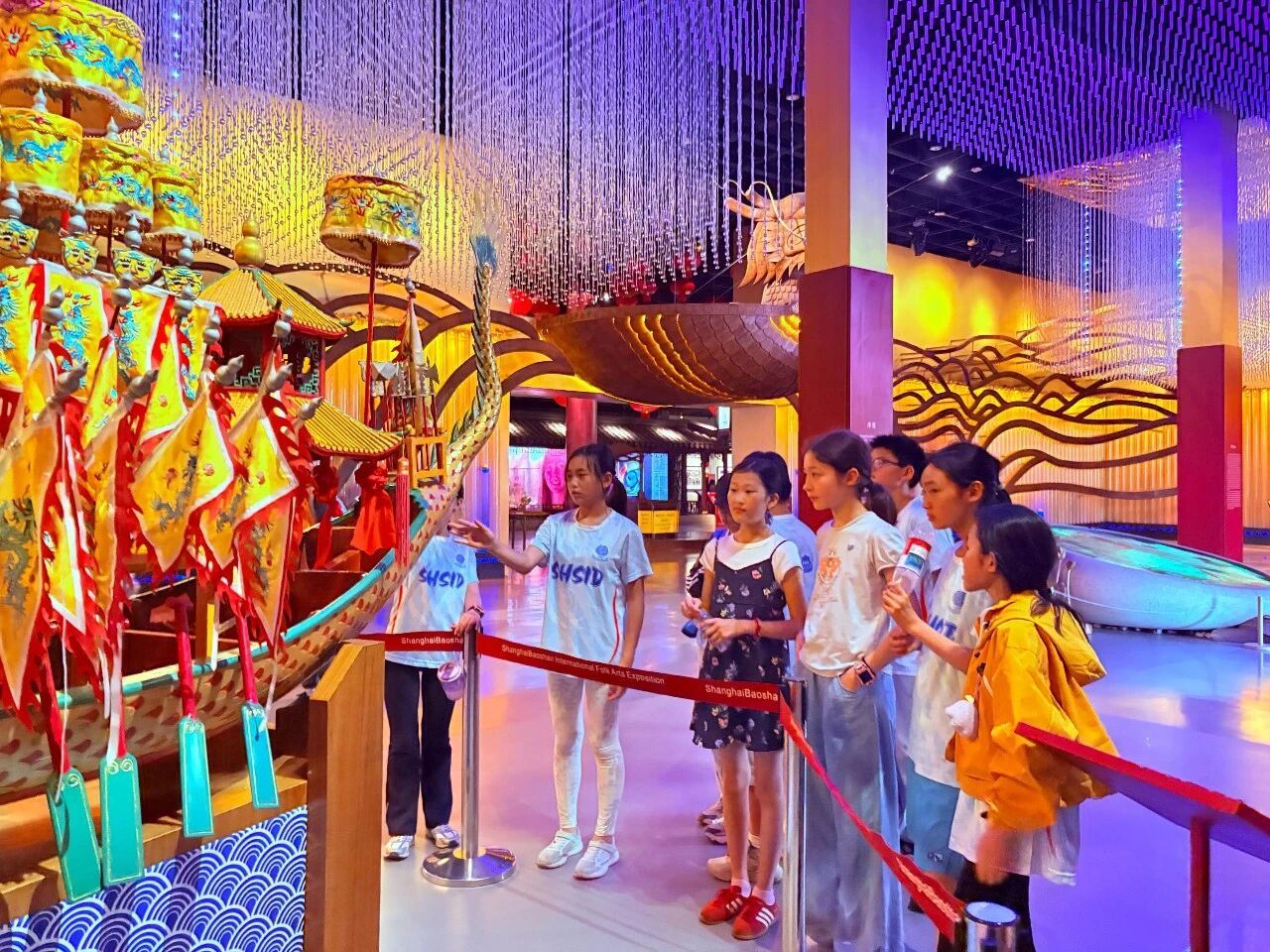
Entering the Shanghai Baoshan International Folk Arts Exposition - a building shaped like a "Chinese knot" - one steps into a treasure trove of intangible cultural heritage from around the world. It is a place that allows you to "travel back" to bygone days while simultaneously "journeying around" the world. In the "Maritime Baoshan" hall, a journey into the memories of old Shanghai begins. The students listened intently to the tour guide of the Luodian Dragon Boat model, observing the dragon head held high, the tail raised, and the golden scales shimmering on the boat's body. One student exclaimed, "Looking at it, I can almost picture the dragon boat races during the Dragon Boat Festival." Moving forward, the "Myriad Lights" section clearly outlines the history of development of Baoshan's folk lantern art. In the "Storytelling Baoshan" area, wooden boxes played animated tales narrated in Shanghai dialect, which were novel and engaging, holding the students' attention for a long time.
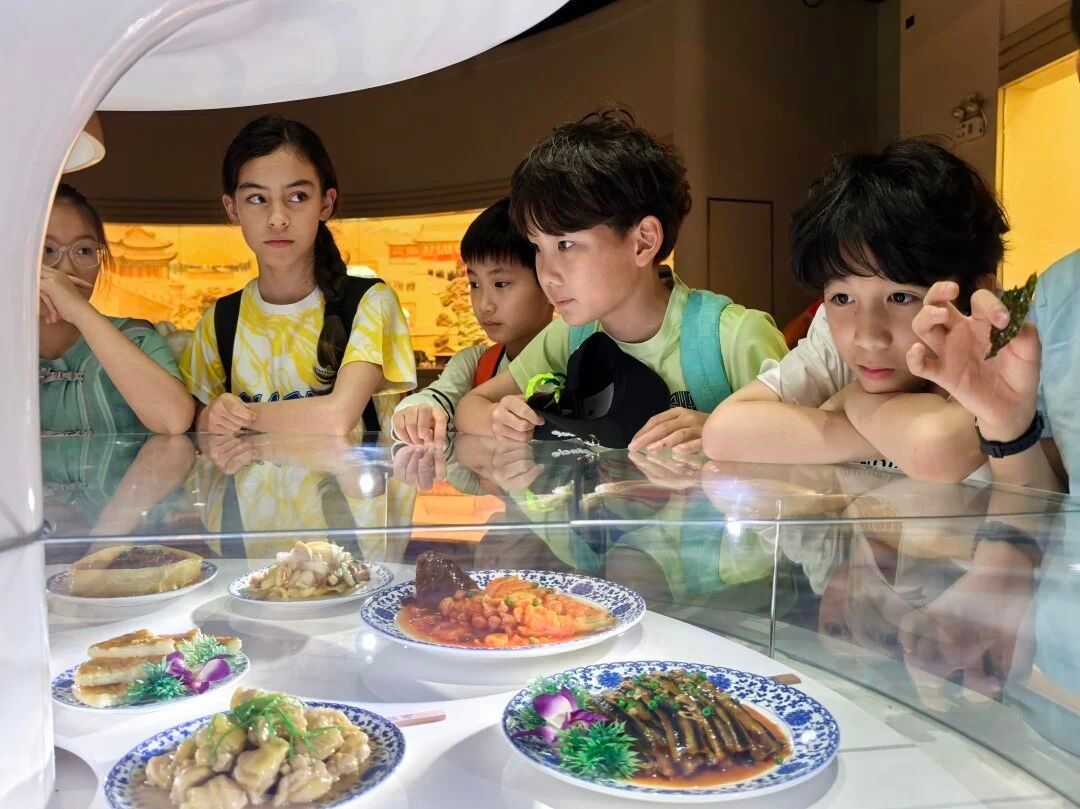
Inside the China Exhibition Hall, students saw the clay sculpture of the "Ten-Mile Dowry". They learned about the detailed process of ancient Chinese weddings, including matchmaking, fortune-telling, betrothal, the wedding procession, and the ceremony itself. The "Opera Interpretation" section used multimedia to present traditional Chinese opera. "Hometown Accents" showcased the diversity of China's regional languages. "Manchu-Han Banquet" followed the solar terms to present traditional Chinese food culture and exquisite culinary craftsmanship. The students exchanged stories about the delicacies they had tasted across different regions of China, their discussions extending from food culture to regional customs.
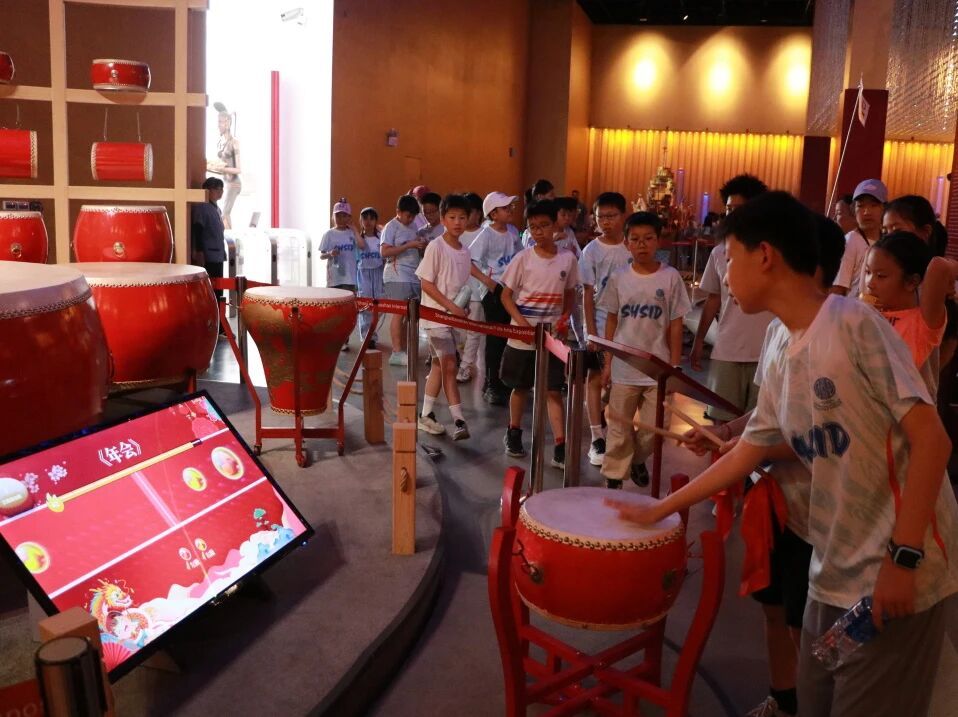
Entering the second-floor international exhibition area brought a sense of awe to both teachers and students. Stepping into the Middle Eastern Hall, dim lights cast an atmosphere of an ancient Arabian marketplace. Accompanied by melodious music, it felt as though one had entered the fairy-tale world of One Thousand and One Nights. One student whispered in amazement, "Which corner might the magic lamp be hiding in?" The African Hall, with its massive wooden carvings and grassland murals, exuded a primal power. Standing within the simulated grassland scene, one could almost smell the grass. The European Hall featured floating clocks and phantom shadows, showcasing Europe's exquisite watchmaking techniques. The Asia-Pacific Hall showcased the region's unique folk traditions across five themes: rice, clothing, tea, music, and ceramics. The color palette of the Latin American Hall immediately conveyed a sense of fiery passion. These exhibition halls vividly brought to life the cultures and customs of five continents and the seas beyond.
Sensing the Pulse of Life
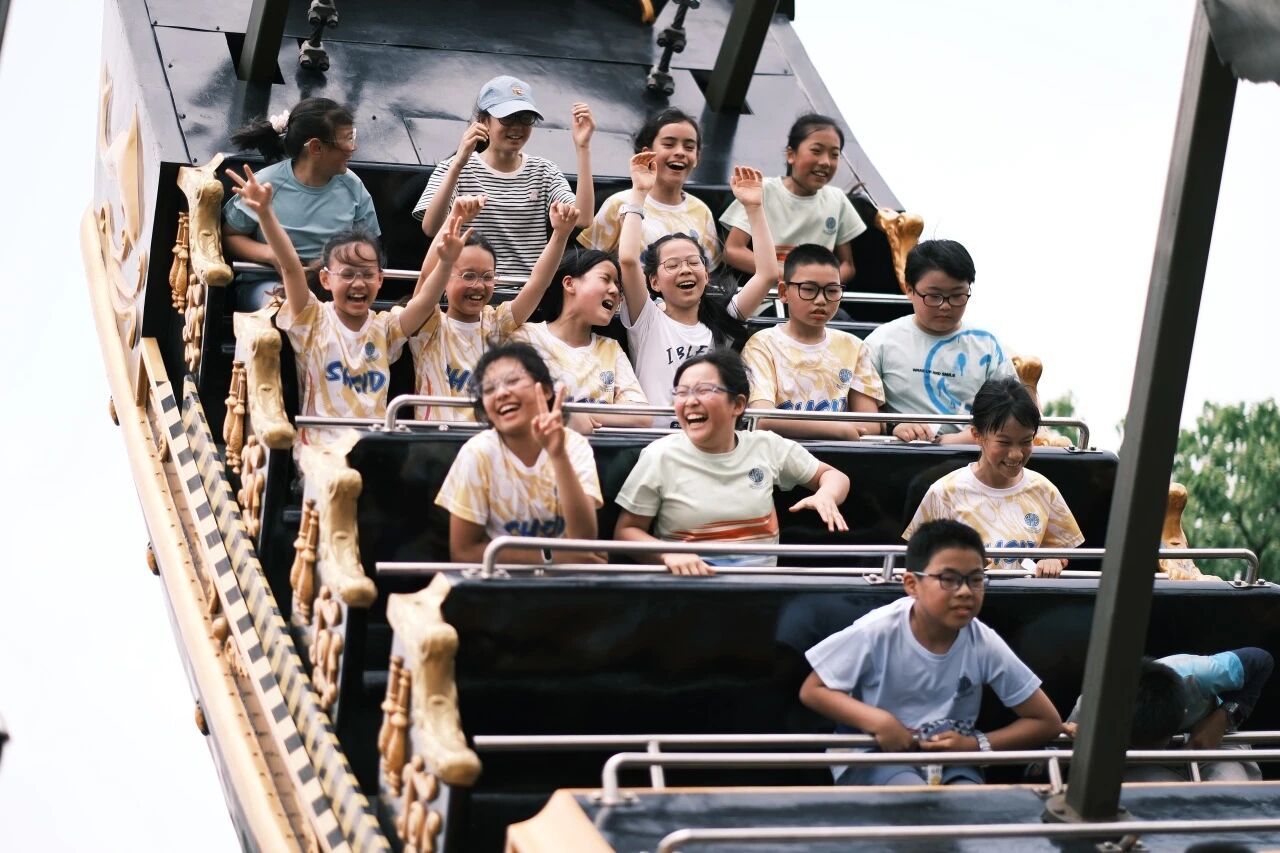
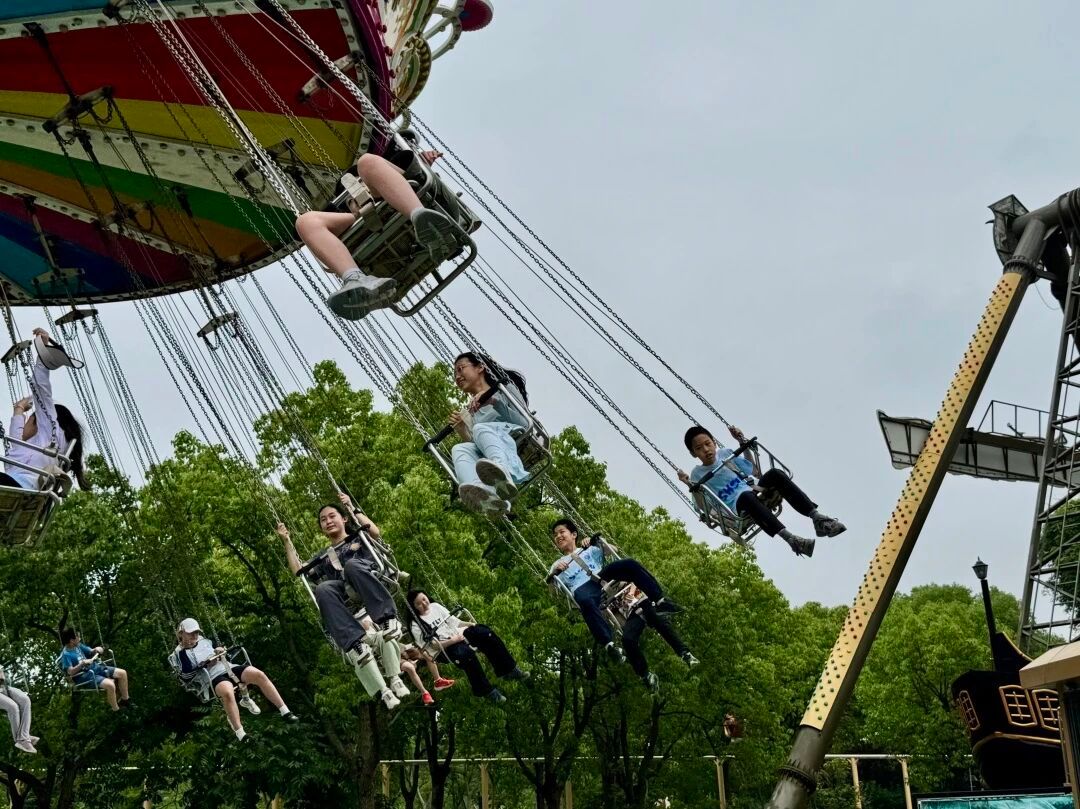
As the largest suburban park in Shanghai, Gucun Park offers a 430-hectare expanse of open space, unfolding a poetic haven close to nature for city dwellers. In early summer, the students stepped into this "urban green lung," experiencing the season's vitality amid the vast expanse of greenery. Along the shaded trails, led by their guides, the students carefully observed the plants on the roadside, identified insects among the grass, and integrated their classroom knowledge into every stroke of their nature journals. The interactive activities within the park were also very popular, adding energy and joy to this study tour. During lunchtime, everyone sat together, spread out picnic mats, shared food, and chatted about everything under the sun. Embraced by nature, the students gained knowledge and cherished a unique memory from this early summer.
A unique and enriching study tour drew to a successful close. In the exposition hall, the students learned about intangible cultural heritage, admired folk art treasures from around the world up close, and immersed themselves in the unique charm of different cultures through multimedia interactive installations, feeling the warmth of craftsmanship passed down through generations. In the urban green lung of Gucun Park, they observed plants and insects, embracing the vitality of nature. From human artistry to the natural world, this journey not only allowed the students to find a poetic classroom within the urban landscape but also taught them to understand and respect diverse cultures, further broadening their international perspective as responsible global citizens.
(Written by Yutong Zhu
Pictures by Minxuan Cao, Homeroom Teachers
Reviewed by Ms. Lu Luting, Shiyu Wu, Hannah Kloebe)