-
ABOUT US
-
ACADEMICS
Curriculum Program
Departments
- English
- High School Chinese
- Primary and Junior School Chinese.
- High School Mathematics
- Middle School Mathematics
- Primary School Mathematics
- Music and Fine Arts
- Physical Education
- Physics
- Chemistry
- History and Geography
- Physical Science and Optional courses Department
- Middle School Biology
- High School Biology
- Social Sciences
- Computer Science
- Courses in Primary School
Achievements and Matriculations
College Counseling
Science & Technology Innovation Contest
Subject Competition
-
ARTS
-
ATHLETICS
-
AT SHSID
SHSID ∣ TIMES
PTSA
Club Exhibition
- 龙吟社
- Live 2 Drama
- Choir
- Hip-pop Dance Club
- The Primary School Dance Troupe
- Symposiums Club
- Biology Workshop
- You Shan
- VEX Robotic
- Peking Opera Club
- Baseball Club
- Model United Nations
- The World Scholar’s Cup
- Future Problem Solving Club
- United States Academic Pentathlon
- OM Club
- AMC Club
- Music for Patients
- SHSID Gazette
- Smile Charity
- Cultural Moments
- SciAcademy
- Stem Doge Alliance
- Chinese Debate Club
- IAA
- Mock Trial Club
- Zhengming Club
- Furry Friends
- GT-Racing
- Village Radio
- IMMC Club
- Creative Design and Intelligent Fabrication
- Future City Research Project
- ECOCAP
- AdvocaSEA
- SPDC
- Medishine
- Floorball Club
- Animusic MTC
- Wings Up
- All Booked
- Cyano
- Birding Community
Health and Wellness
Campus Safety
Cafeteria Service
-
ADMINISTRATION
-
ADMISSIONS
-
ALUMNI
Alumni Information
Honors Students
- Class of 2025
- Class of 2024
- Class of 2023
- Class of 2022
- Class of 2021
- Class of 2020
- Class of 2019
- Class of 2018
- Class of 2017
- Class of 2016
- Class of 2015
- Class of 2014
- Class of 2013
- Class of 2012
- Class of 2011
- Class of 2010
- Class of 2009
- Class of 2008
- Class of 2007
- Class of 2006
Who Studied at SHSID
SHS Foundation
-
DOCUMENTS
Middle School Science Department: From Aging and Regeneration to Daily Dietary Management
Recently, the Middle School Science Department closely integrating cutting-edge science with daily life— tailored two highly valuable biomedical lectures for 7th and 8th graders. Experts from the Chinese Academy of Sciences and the Shanghai Children's Medical Center shared their profound insights, leading students on a journey from the macro-scale of life's evolution to the micro-scale of daily energy metabolism.
8th Grade Session: Unlocking the Ultimate Mysteries of Life—The Codes of Aging and Regeneration
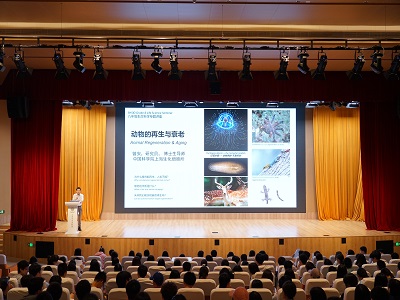
The 8th-grade session featured an in-depth scientific lecture titled "Animal Aging and Regeneration," delivered by Dr. Zeng An, a principal investigator from the Shanghai Institute of Biochemistry and Cell Biology, CAS.
Dr. Zeng began with the classic philosophical paradox, the "Ship of Theseus," cleverly prompting students to think deeply about life's self-renewal. He shared fascinating facts about human cell renewal, explaining the replacement cycles of stomach cells and red blood cells, which proves that the human body is constantly in a state of microscopic self-renewal and reorganization. Meanwhile, he posed a core scientific question to spark curiosity: Why can't humans achieve the ultimate in body regeneration and repair, like planarians? This question thoroughly ignited the students' desire to explore.
Dr. Zeng pointed out that the core of regeneration lies in the dedifferentiation capability of cells. Although humans sacrificed most of their regenerative abilities during evolution to enhance immune defense and reduce cancer risks, modern medicine has made great strides in cutting-edge fields. From Nobel laureate Shinya Yamanaka's successful creation of induced pluripotent stem cells to current cutting-edge technologies like in vitro organoid engineering and precision cell transplantation, these breakthroughs clearly showcase the monumental progress of modern medicine in organ repair and anti-aging. This experience allowed students to truly feel the pulse of frontline life sciences and broaden their scientific horizons.
7th Grade Session: Returning to Healthy Living—The Rules of Adolescent Diet and Weight Management
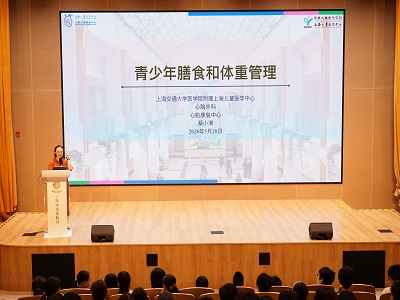
If the 8th-grade lecture was about "looking up at the stars," the 7th-grade lecture on "Adolescent Diet and Weight Management," tied to their curriculum on the human body, was firmly "grounded in reality." Dr. Cai Xiaoman from the Shanghai Children's Medical Center delivered a highly relatable health education lecture for the students.
Dr. Cai first corrected the misconception of blindly focusing solely on weight, guiding students to conduct a comprehensive self-assessment using five core dimensions: Body Mass Index (BMI), body fat percentage, skeletal muscle mass index, waist circumference, and waist-to-height ratio.
She then used the trendy internet term "carb coma" to vividly explain the science behind post-meal drowsiness: consuming large amounts of high-glycemic foods like white rice and steamed buns can cause blood sugar to fluctuate violently, like a roller coaster, leading to sleepiness. She advised students to choose low-glycemic foods like oats and black rice in their daily diets to maintain stable blood sugar and insulin levels.
When explaining the metabolic pathways of the three macronutrients, Dr. Cai revealed a strict biochemical fact: Carbohydrates are easily converted into fat in the body, but it is physiologically extremely difficult for fat to be converted back into carbohydrates. This is the scientific reason why fat loss is much harder than muscle gain.
To tackle this, she demonstrated the golden ratio of a scientifically functional meal plate on-site: 50% vegetables, 25% carbohydrates, and 25% protein. She also recommended supplementing with moderate amounts of high-quality fats from cooking oils, nuts, avocados, or deep-sea fish, while strictly avoiding trans fatty acids.
The special lecture series concluded successfully amidst warm applause and enthusiastic interaction. These two high-caliber lectures transformed profound principles of life science into tangible, practical wisdom for daily life, planting the seeds of exploration in the students' hearts. Understanding the ingenuity of evolution inspires a greater reverence for life; practicing scientific methods paves the way for a healthier lifestyle. This dual enlightenment on life and health is the most precious gift this event has bestowed upon the students.
(Written by Rongzhang Hu, Andrew McGillivray
Pictures by Ginger Xu
Reviewed by Jenny Du, Shiyu Wu, Hannah Kloeber)