-
ABOUT US
-
ACADEMICS
Curriculum Program
Departments
- English
- High School Chinese
- Primary and Junior School Chinese.
- High School Mathematics
- Middle School Mathematics
- Primary School Mathematics
- Music and Fine Arts
- Physical Education
- Physics
- Chemistry
- History and Geography
- Physical Science and Optional courses Department
- Middle School Biology
- High School Biology
- Social Sciences
- Computer Science
- Courses in Primary School
Achievements and Matriculations
College Counseling
Science & Technology Innovation Contest
Subject Competition
-
ARTS
-
ATHLETICS
-
AT SHSID
SHSID ∣ TIMES
PTSA
Club Exhibition
- 龙吟社
- Live 2 Drama
- Choir
- Hip-pop Dance Club
- The Primary School Dance Troupe
- Symposiums Club
- Biology Workshop
- You Shan
- VEX Robotic
- Peking Opera Club
- Baseball Club
- Model United Nations
- The World Scholar’s Cup
- Future Problem Solving Club
- United States Academic Pentathlon
- OM Club
- AMC Club
- Music for Patients
- SHSID Gazette
- Smile Charity
- Cultural Moments
- SciAcademy
- Stem Doge Alliance
- Chinese Debate Club
- IAA
- Mock Trial Club
- Zhengming Club
- Furry Friends
- GT-Racing
- Village Radio
- IMMC Club
- Creative Design and Intelligent Fabrication
- Future City Research Project
- ECOCAP
- AdvocaSEA
- SPDC
- Medishine
- Floorball Club
- Animusic MTC
- Wings Up
- All Booked
- Cyano
- Birding Community
Health and Wellness
Campus Safety
Cafeteria Service
-
ADMINISTRATION
-
ADMISSIONS
-
ALUMNI
Alumni Information
Honors Students
- Class of 2025
- Class of 2024
- Class of 2023
- Class of 2022
- Class of 2021
- Class of 2020
- Class of 2019
- Class of 2018
- Class of 2017
- Class of 2016
- Class of 2015
- Class of 2014
- Class of 2013
- Class of 2012
- Class of 2011
- Class of 2010
- Class of 2009
- Class of 2008
- Class of 2007
- Class of 2006
Who Studied at SHSID
SHS Foundation
-
DOCUMENTS
High School Biology Department: Integrate Chinese Culture into Biology Teaching
The High School Biology Department actively introduces valuable traditional Chinese cultural resources into daily teaching. Recently, four high school Biology teachers held four open classes for Grades 9 to 12 from different perspectives and with different content, attracting many teachers of different disciplines. These classes showed the infinite possibilities of combinations between “biology teaching” and “Chinese civilization”.
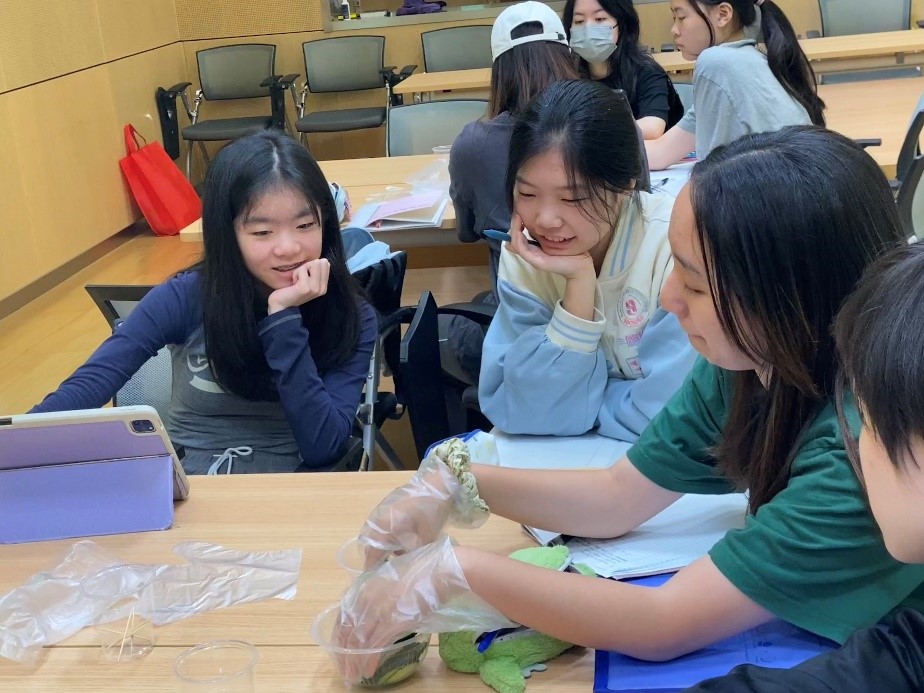
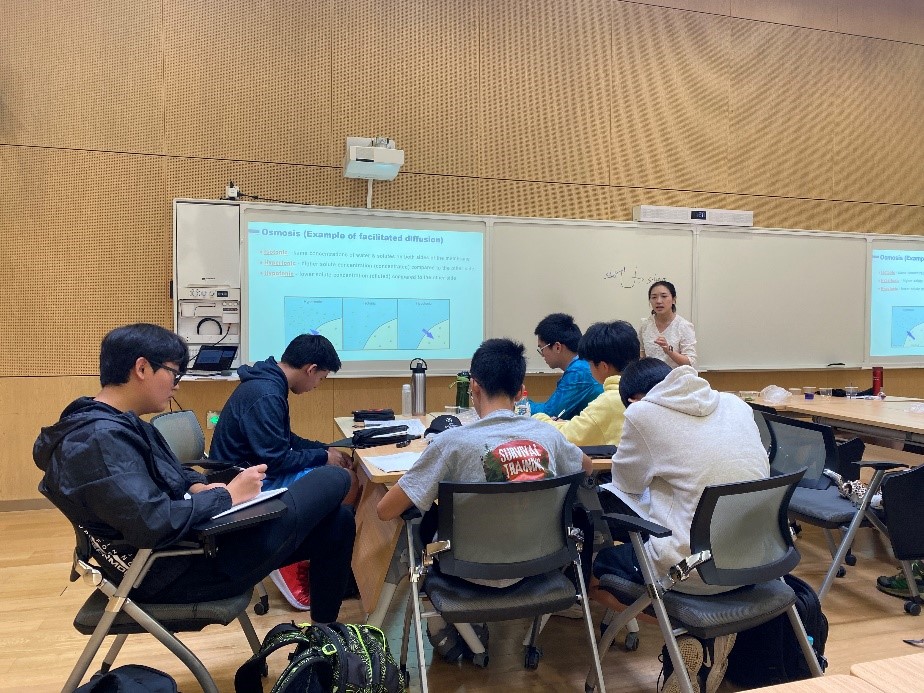
On October 16th, Ms. Wang Mengli opened the 10th-grade Biology open class "Cellular Transport - Passive Transport" in the recording classroom of the Zhentao Building. Using "pickles" as the topic, Ms. Wang led the students in operating the mini lab of "pickling cucumber", thus introducing the phenomenon of water loss from plant cells in a hypertonic environment. And through the real situations of "spraying perfume" and "dripping ink" and being guided by the abstract model, students were guided to think about the pattern of transmembrane transport. On the basis of conceptual learning, Ms. Wang also designed a series of interlocking problems and situations based on real life from the saltypickles to the sterilization function of pickling, and to the withering caused by fertilization. From the saline alkaline soil to the "salt-tolerant sea water rice" cultivated by the Chinese scientist team, by digging out real-life scenarios that are related to the knowledge points, a more challenging and practical learning environment can be brought to the students, helping them better understand biological concepts and apply what they have learned to solve real-life problems, as well as fostering a sense of responsibility for solving global problems.
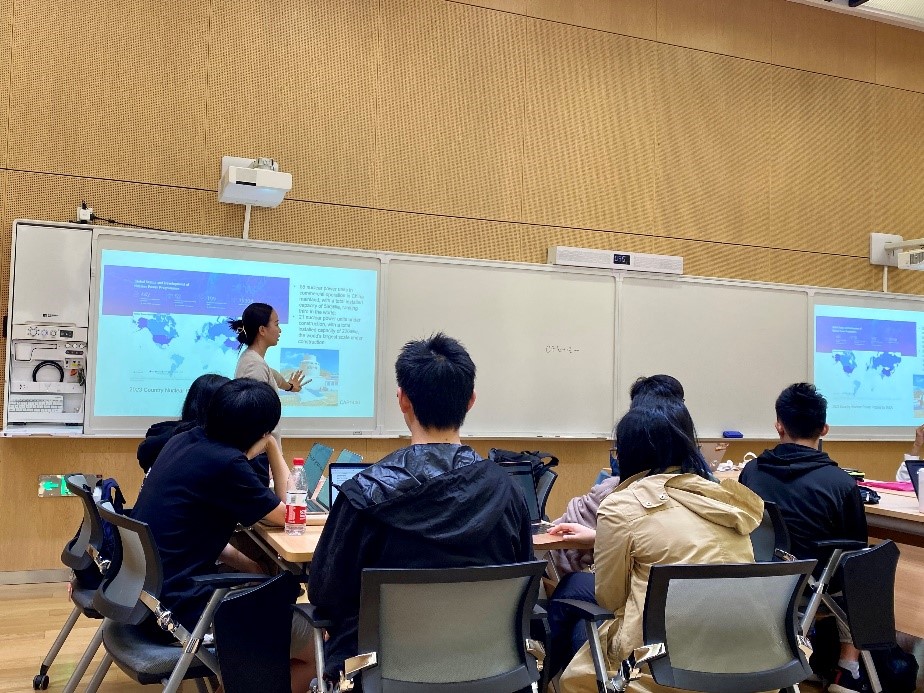
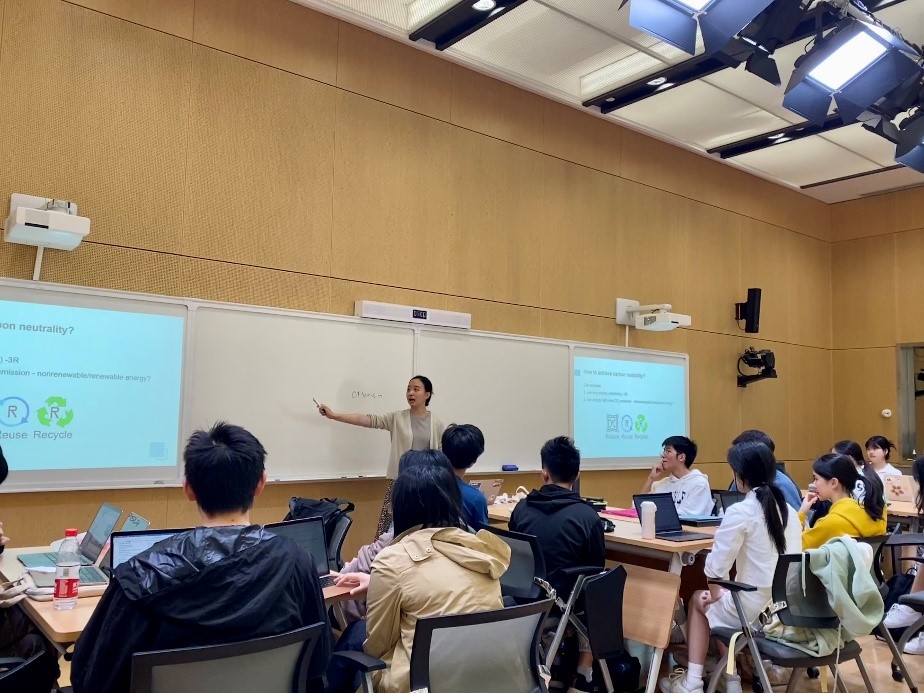
On the morning of October 17th, Ms. Zhang Feifan held an open class to Grade 12 AP Environmental Science students with the theme of "Carbon Neutrality in China" in the ZTB recording classroom. Based on the subject knowledge of environmental science, this open class combined domestic policies and national conditions to lead students in to understanding what carbon neutrality is, and in particular, China's progress and future direction in carbon neutrality. In the teaching process, Ms. Zhang first led the students in reviewing the basic knowledge of the carbon cycle and introduced the concept of carbon neutrality. Then, starting from the two basic principles of reducing carbon sources and increasing carbon sinks, Ms. Zhang introduced and analyzed the methods to achieving carbon neutrality, such as the use of clean energy, the "3R" principle (reduce, reuse, recycle), afforestation, and carbon-capture technology. Then, two students shared their views on carbon neutrality in China. Finally, the students conducted carbon-neutrality analysis on cases with Chinese characteristics in groups and expressed their opinions from different industries such as agriculture, public transportation, and express delivery. Ms. Zhang skillfully integrated China's ecological civilization construction thinking and green and low-carbon development goals into classroom teaching, leading students to apply the knowledge they gained in class to practical problems, and further cultivating students' international vision and Chinese complex.
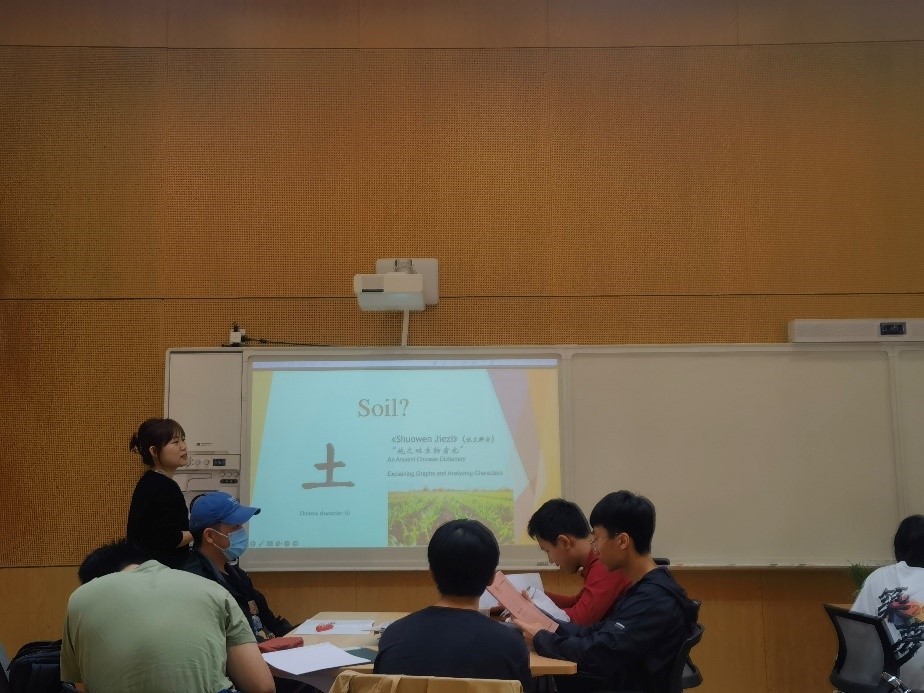
On October 26th, Ms. Ma Yanbo held a 9th-grade Biology open class with the theme of "Soil and Soil Conservation" in the recording classroom of the Zhentao Building. Starting from the concept of "everything comes from the soil", Ms. Ma explained the structure of soil by combining Chinese characters and physical demonstrations, and then led the students to simulate the principles of soil erosion and soil conservation by using a delicate experimental apparatus. As China has a vast land area and diverse soil types, and three groups of students introduced and explained on stage the characteristics of the land properties of the three major regions of China, namely the southwest, northwest, and northeast, as well as the challenges and solutions for the protection of soil resources, demonstrating the wisdom of the Chinese people in the process of soil management, which embodies the concept of "adapting to the local conditions".
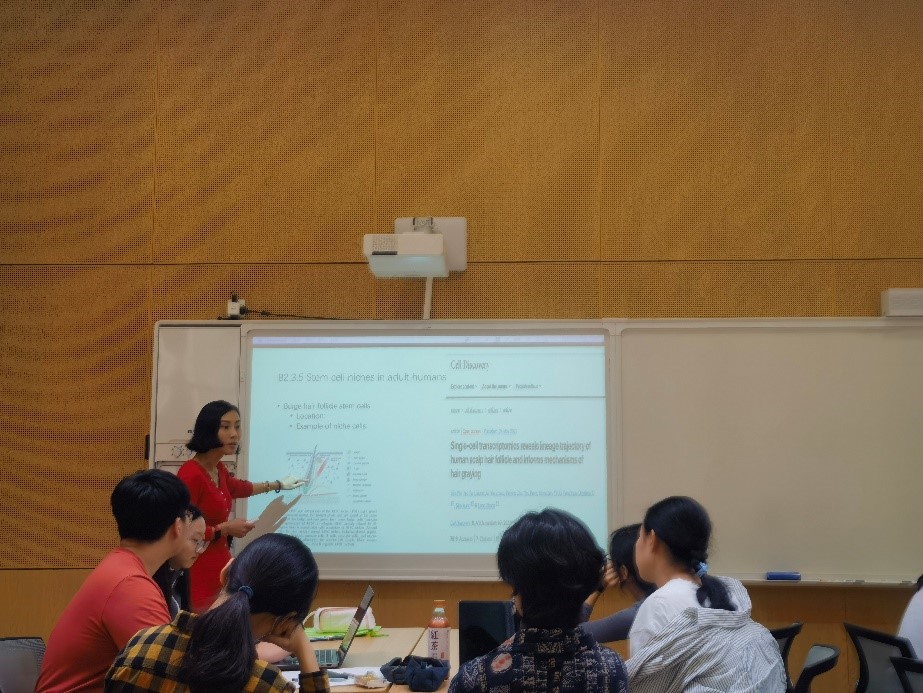
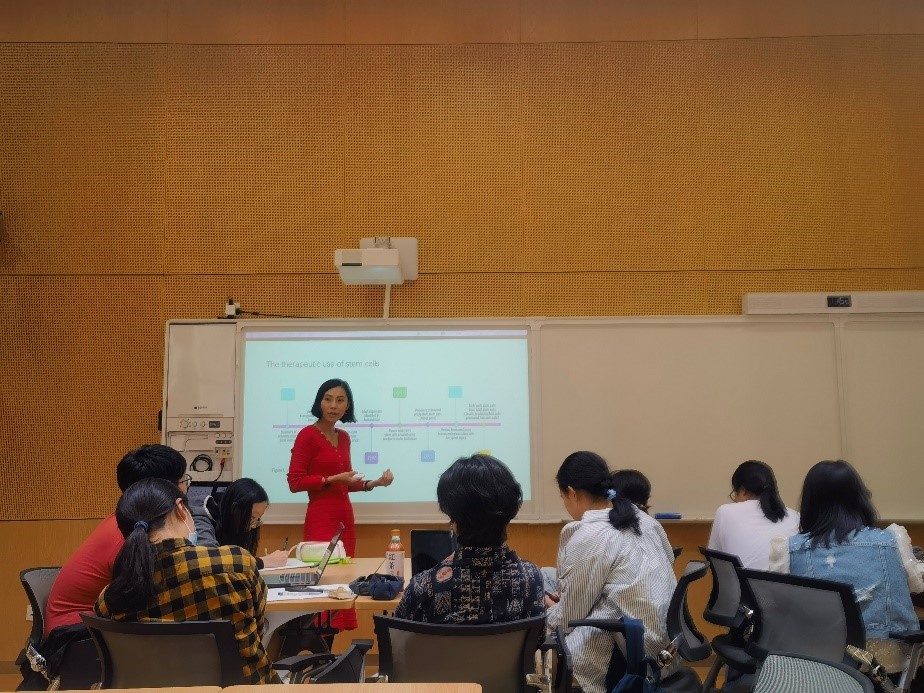
On October 27th, Ms. Gu Ying held an open class on the theme of "Cell Differentiation and Stem Cells" for the 11th-grade IB Biology students. Ms. Gu first designed a series of situations to guide students in to thinking and discussing the concept and process of cell differentiation and explained the key concepts by displaying a diagram of early embryonic development and identifying the different stages of embryonic development. Subsequently, using flow charts and diagrams for comparison, Ms. Gu further stimulated students' thinking about the signals of external environmental factors that regulate cell differentiation. Based on the four publications released before the class on the mechanisms of stem cell regulation by scientists, students have completed the answers to three in-depth questions on the Blackboard platform. Ms. Gu summarized and evaluated the students' answers in conjunction with the scientific paper, and also pointed out that Chinese scientists have made significant and outstanding contributions to the field of stem cell research, thus leading the students to discuss the significance of such research. In the process of applying stem cells, research ethics will inevitably arise, and students were free to also express their views via the Blackboard platform; at the end of the class, Ms. Gu summarized and commented on the views of everyone. Stem cells are a hotspot of cutting-edge research in biology, and there are still many unanswered questions to be revealed. Ms. Gu utilized a variety of teaching media to guide the students to study and discuss the relevant basic concepts and cutting-edge research, and in the lively and open classroom atmosphere, the students not only consolidated their understanding of the knowledge, but also strengthened their ability of critical thinking and independent thinking, thus enhancing their scientific literacy and sense of social responsibility.
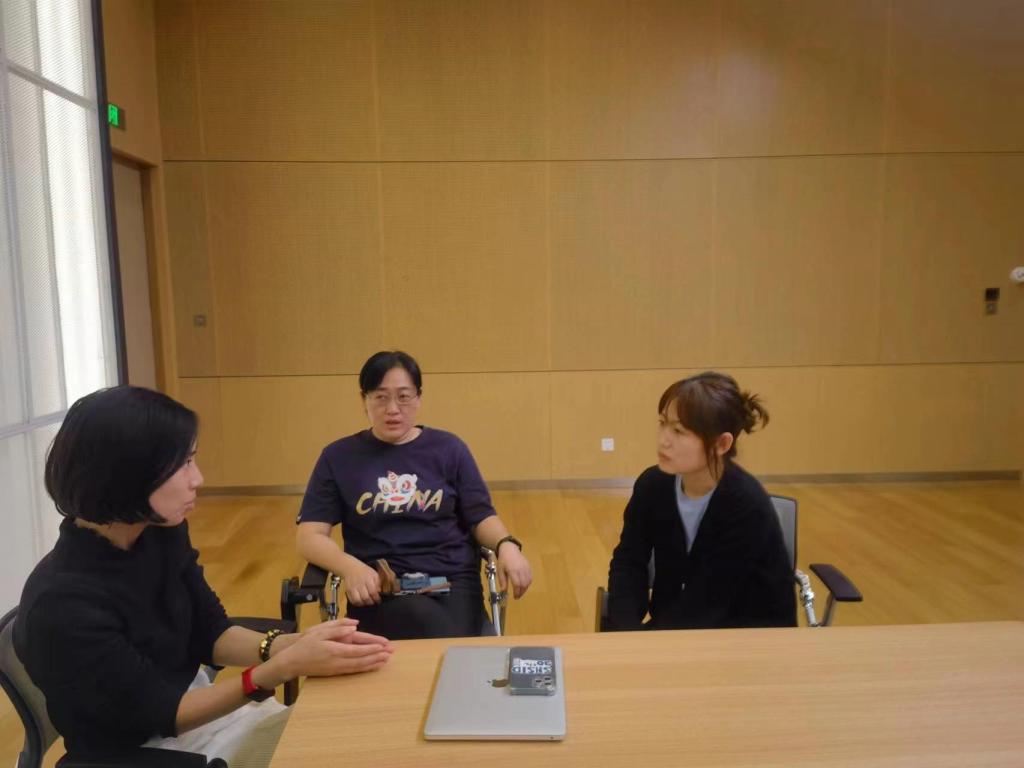
After the classes, the teachers also exchanged views with the lecturers and made pertinent suggestions. The SHSID High School Biology Department will continue to work hard and keep exploring vivid and relevant teaching materials and forums, so as to inject new inspiration and strength for creating excellent international education.
(Written by Mengli Wang, Feifan Zhang Pictures by Manching Wu, Mengli Wang Reviewed by Qian Zuo)