-
ABOUT US
-
ACADEMICS
Curriculum Program
Departments
- English
- High School Chinese
- Primary and Junior School Chinese.
- High School Mathematics
- Middle School Mathematics
- Primary School Mathematics
- Music and Fine Arts
- Physical Education
- Physics
- Chemistry
- History and Geography
- Physical Science and Optional courses Department
- Middle School Biology
- High School Biology
- Social Sciences
- Computer Science
- Courses in Primary School
Achievements and Matriculations
College Counseling
Science & Technology Innovation Contest
Subject Competition
-
ARTS
-
ATHLETICS
-
AT SHSID
SHSID ∣ TIMES
PTSA
Club Exhibition
- 龙吟社
- Live 2 Drama
- Choir
- Hip-pop Dance Club
- The Primary School Dance Troupe
- Symposiums Club
- Biology Workshop
- You Shan
- VEX Robotic
- Peking Opera Club
- Baseball Club
- Model United Nations
- The World Scholar’s Cup
- Future Problem Solving Club
- United States Academic Pentathlon
- OM Club
- AMC Club
- Music for Patients
- SHSID Gazette
- Smile Charity
- Cultural Moments
- SciAcademy
- Stem Doge Alliance
- Chinese Debate Club
- IAA
- Mock Trial Club
- Zhengming Club
- Furry Friends
- GT-Racing
- Village Radio
- IMMC Club
- Creative Design and Intelligent Fabrication
- Future City Research Project
- ECOCAP
- AdvocaSEA
- SPDC
- Medishine
- Floorball Club
- Animusic MTC
- Wings Up
- All Booked
- Cyano
- Birding Community
Health and Wellness
Campus Safety
Cafeteria Service
-
ADMINISTRATION
-
ADMISSIONS
-
ALUMNI
Alumni Information
Honors Students
- Class of 2025
- Class of 2024
- Class of 2023
- Class of 2022
- Class of 2021
- Class of 2020
- Class of 2019
- Class of 2018
- Class of 2017
- Class of 2016
- Class of 2015
- Class of 2014
- Class of 2013
- Class of 2012
- Class of 2011
- Class of 2010
- Class of 2009
- Class of 2008
- Class of 2007
- Class of 2006
Who Studied at SHSID
SHS Foundation
-
DOCUMENTS
Grade 6: Bio-pharmaceutical Company Visit
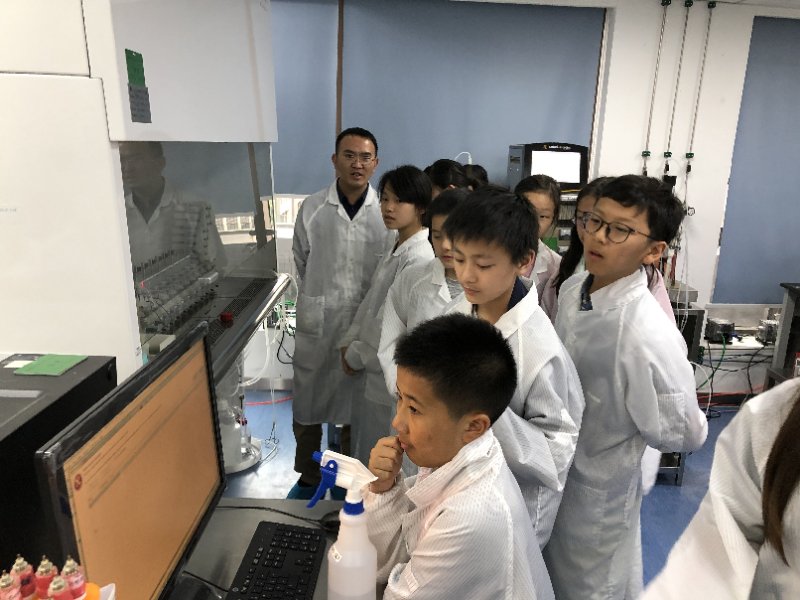
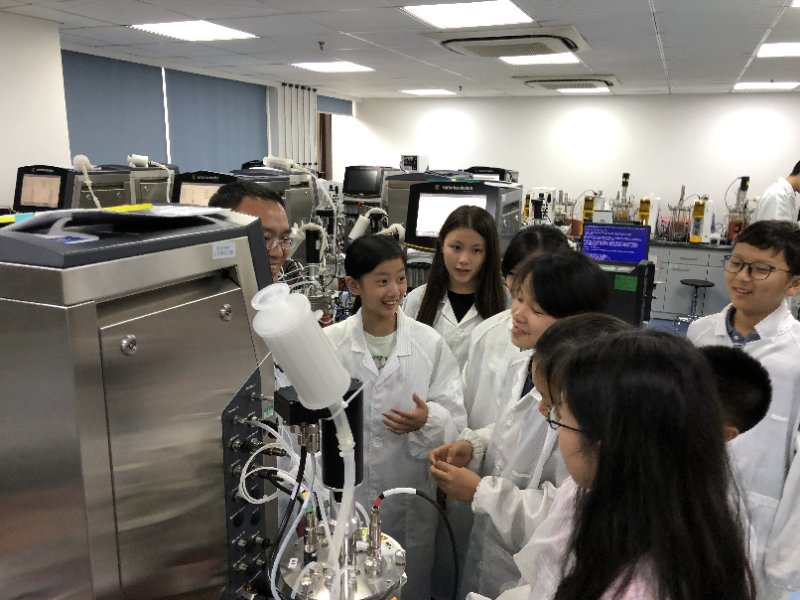
For their Career Day field trip, class 6(11) went to visit Henlius, a bio-pharmaceutical company. They create drugs that are manufactured in, extracted from, or semi-synthesized from biological sources. Antibodies are a type of bio-pharmaceutical. The body creates natural antibodies, which are things that alert the immune system that there is something harmful to be destroyed. There are a variety of antibodies and a specific anti-body fights cancer. It’s a type of white blood cell that finds cancer cells and destroys them but can be “shut off” by a molecule called PD-1. Cancer cells can exploit this and protect themselves by stopping the white blood cells with a counter molecule called PD-L1. However, at Henlius, they create monoclonal antibodies, which can destroy cancer cells with white blood cells. They mass-produce these antibodies to stop cancer. Monoclonal antibodies are only one of the many drugs created at Henlius.
During our visit, the first thing we did was attend a presentation from the vice president of Henlius. He gave us a lot of information through a wonderful speech. Next, we visited the production lab. In order to not contaminate the lab with bacteria from the outside, we had to be extremely clean. First, we passed through an airlock chamber into a changing room. Once inside, we put on single-use caps that prevented our hair from coming loose and spreading bacteria. We also put on white gowns. Then, we entered another changing room, where we had to put on two-piece suits that made us look like astronauts. We also had to wash our hands two times, put on masks, and wear covers over our shoes. Our guide told us that the place we visited is actually a less strict part of the lab because there are other rooms with stricter rules that require researchers to be extremely clean. We watched people in those rooms from a window. We also visited the place where the bio-pharmaceuticals are kept and nourished to grow, since the drugs are made from living things. They were kept in giant metal barrels that reached up to the ceiling. There were also machines that filtered things from the barrels, removing the harmful things created over time and collecting the useful parts. We viewed some machines that gently shook the bio-pharmaceuticals to manufacture them to finally be made into drugs.
When we took off our gowns at the end of the visit, we thought about how hard these scientists work. They devote their time and energy to create these drugs to help the world. Just going to work, putting on the gowns, and sterilizing everything takes a long time, yet they still do it. As the vice president of Henlius said, “A drug bottle may be small, but it carries the heavy weight of lives.”
(Written by Brady Zhang 6(11) Pictures by Ms. Gao Supervised by Mr. Johnson)