-
ABOUT US
-
ACADEMICS
Curriculum Program
Departments
- English
- High School Chinese
- Primary and Junior School Chinese.
- High School Mathematics
- Middle School Mathematics
- Primary School Mathematics
- Music and Fine Arts
- Physical Education
- Physics
- Chemistry
- History and Geography
- Physical Science and Optional courses Department
- Middle School Biology
- High School Biology
- Social Sciences
- Computer Science
- Courses in Primary School
Achievements and Matriculations
College Counseling
Science & Technology Innovation Contest
Subject Competition
-
ARTS
-
ATHLETICS
-
AT SHSID
SHSID ∣ TIMES
PTSA
Club Exhibition
- 龙吟社
- Live 2 Drama
- Choir
- Hip-pop Dance Club
- The Primary School Dance Troupe
- Symposiums Club
- Biology Workshop
- You Shan
- VEX Robotic
- Peking Opera Club
- Baseball Club
- Model United Nations
- The World Scholar’s Cup
- Future Problem Solving Club
- United States Academic Pentathlon
- OM Club
- AMC Club
- Music for Patients
- SHSID Gazette
- Smile Charity
- Cultural Moments
- SciAcademy
- Stem Doge Alliance
- Chinese Debate Club
- IAA
- Mock Trial Club
- Zhengming Club
- Furry Friends
- GT-Racing
- Village Radio
- IMMC Club
- Creative Design and Intelligent Fabrication
- Future City Research Project
- ECOCAP
- AdvocaSEA
- SPDC
- Medishine
- Floorball Club
- Animusic MTC
- Wings Up
- All Booked
- Cyano
- Birding Community
Health and Wellness
Campus Safety
Cafeteria Service
-
ADMINISTRATION
-
ADMISSIONS
-
ALUMNI
Alumni Information
Honors Students
- Class of 2025
- Class of 2024
- Class of 2023
- Class of 2022
- Class of 2021
- Class of 2020
- Class of 2019
- Class of 2018
- Class of 2017
- Class of 2016
- Class of 2015
- Class of 2014
- Class of 2013
- Class of 2012
- Class of 2011
- Class of 2010
- Class of 2009
- Class of 2008
- Class of 2007
- Class of 2006
Who Studied at SHSID
SHS Foundation
-
DOCUMENTS
Grade 10: Personal Growth Portfolio Series Lecture—Cellphone Dependence
Cellphones have become the central objects of our lives. Without them, paying, traveling, socializing, and even eating are less convenient. However, the downsides of using cellphones, though perhaps less known, are prevalent and include poor sleep and a decline in productivity. On May 28th, Mr. Pardy, a psychology teacher, presented information about the very real problem of cellphone dependence to the 10th grade class.
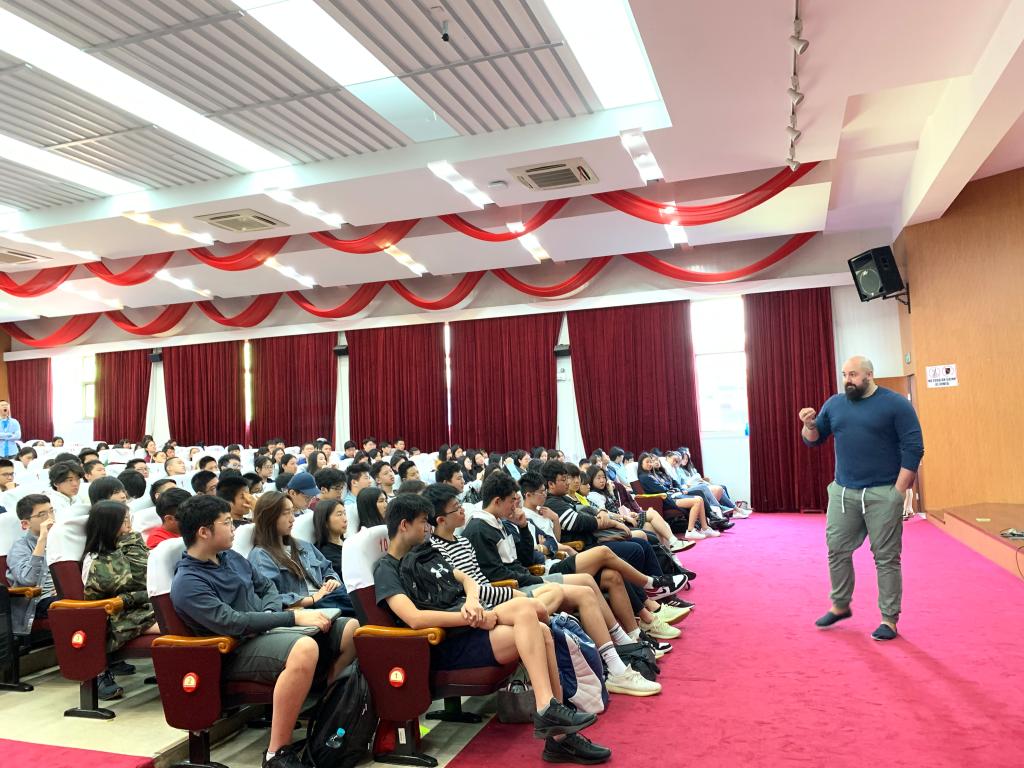
Mr. Pardy started by asking a series of questions: how many students spend three hours on their phone per day? Four? Five? Or even six? By answering these questions, the students realized their increasing dependence on their phones. By including the latest professional psychological research, Mr. Pardy introduced two main downsides of over-using phones: a lack of authenticity and poor sleep hygiene.
Students tend to focus too much on establishing their profile on social media, which in turn decreases their focus on friendships and face-to-face interactions in real life. Without sincere conversations, friends may become more distant and aloof towards each other.
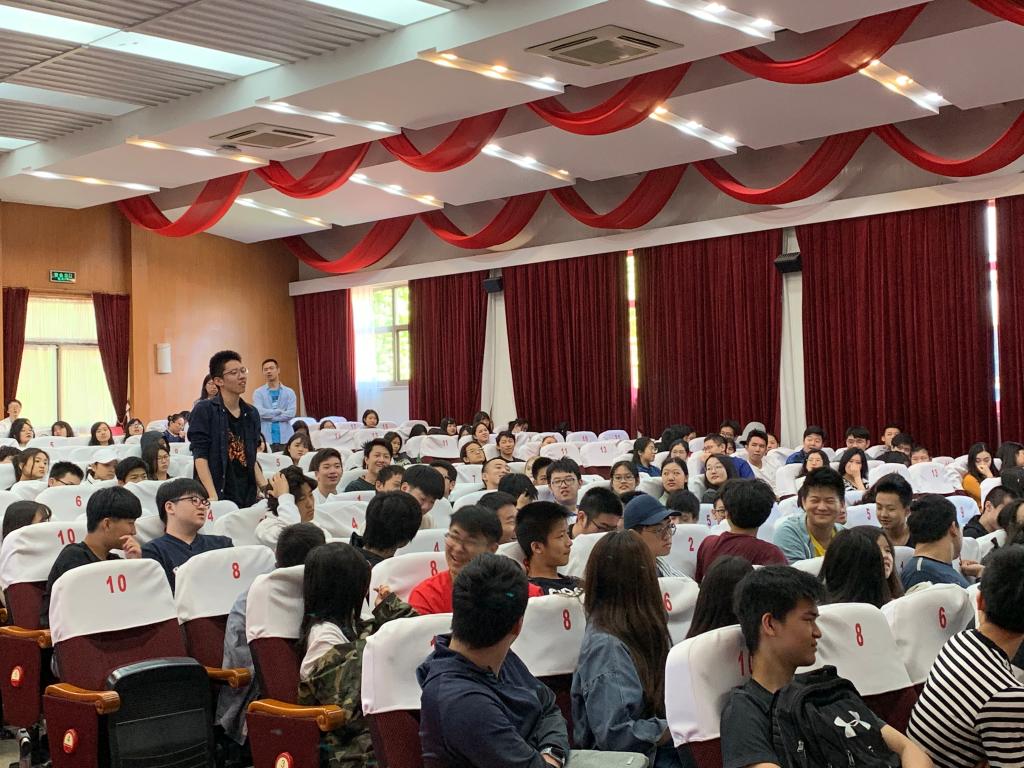
Another harm that phones can cause is poor sleep. Blue light emitted by cellphones influences the release of melatonin, which is a hormone that controls the quality of our sleep. Because surfing the internet on one’s phone is an easy task that often brings instant pleasure, students often tend to focus on their screens before sleep. This, in turn, will dramatically affect the quality of sleep, which will lead to poor performance in school and learning the next day.
Finally, Mr. Pardy compared cellphone dependence to addiction, which prove to be very similar. Mr. Pardy pointed out that although cellphone addiction does not exist, we should all be aware of the increasing dependence that we have towards our phones and take measures to avoid spending hours and hours on meaningless tasks. Starting from today, we should put down our phones, go out, discover the beauty of nature, and capture the passion that we want to pursue.
(Written by 10(3) Wendy Tan Pictures by Dandan Zhou Supervised by Daniel Hartmann and Dandan Zhou)