-
ABOUT US
-
ACADEMICS
Curriculum Program
Departments
- English
- High School Chinese
- Primary and Junior School Chinese.
- High School Mathematics
- Middle School Mathematics
- Primary School Mathematics
- Music and Fine Arts
- Physical Education
- Physics
- Chemistry
- History and Geography
- Physical Science and Optional courses Department
- Middle School Biology
- High School Biology
- Social Sciences
- Computer Science
- Courses in Primary School
Achievements and Matriculations
College Counseling
Science & Technology Innovation Contest
Subject Competition
-
ARTS
-
ATHLETICS
-
AT SHSID
SHSID ∣ TIMES
PTSA
Club Exhibition
- 龙吟社
- Live 2 Drama
- Choir
- Hip-pop Dance Club
- The Primary School Dance Troupe
- Symposiums Club
- Biology Workshop
- You Shan
- VEX Robotic
- Peking Opera Club
- Baseball Club
- Model United Nations
- The World Scholar’s Cup
- Future Problem Solving Club
- United States Academic Pentathlon
- OM Club
- AMC Club
- Music for Patients
- SHSID Gazette
- Smile Charity
- Cultural Moments
- SciAcademy
- Stem Doge Alliance
- Chinese Debate Club
- IAA
- Mock Trial Club
- Zhengming Club
- Furry Friends
- GT-Racing
- Village Radio
- IMMC Club
- Creative Design and Intelligent Fabrication
- Future City Research Project
- ECOCAP
- AdvocaSEA
- SPDC
- Medishine
- Floorball Club
- Animusic MTC
- Wings Up
- All Booked
- Cyano
- Birding Community
Health and Wellness
Campus Safety
Cafeteria Service
-
ADMINISTRATION
-
ADMISSIONS
-
ALUMNI
Alumni Information
Honors Students
- Class of 2025
- Class of 2024
- Class of 2023
- Class of 2022
- Class of 2021
- Class of 2020
- Class of 2019
- Class of 2018
- Class of 2017
- Class of 2016
- Class of 2015
- Class of 2014
- Class of 2013
- Class of 2012
- Class of 2011
- Class of 2010
- Class of 2009
- Class of 2008
- Class of 2007
- Class of 2006
Who Studied at SHSID
SHS Foundation
-
DOCUMENTS
SHSID High School PD Day
Professional development not allows teachers to further develop their skills as educators but also serves as the basis for SHSID’s high-quality teaching services. SHSID always emphasizes the importance of teacher training and makes full use of break time to carry out diversified PD activities. On the morning of April 19th, 2019, the high school carried out an intensive day of Professional Development.
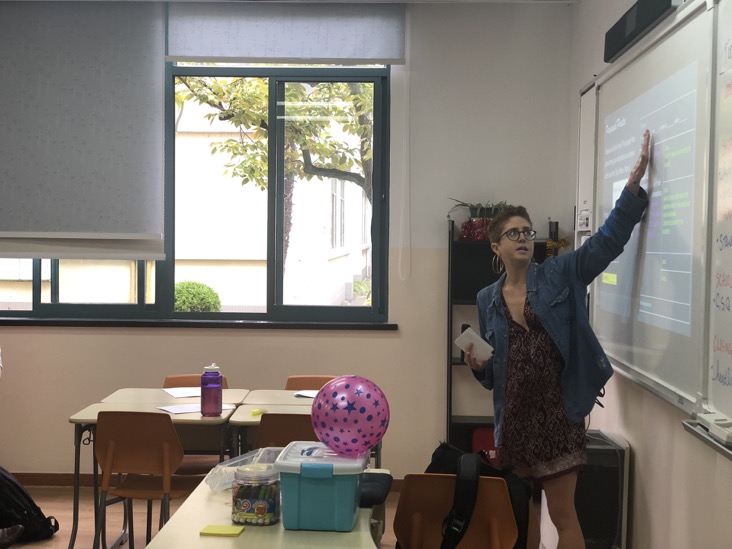
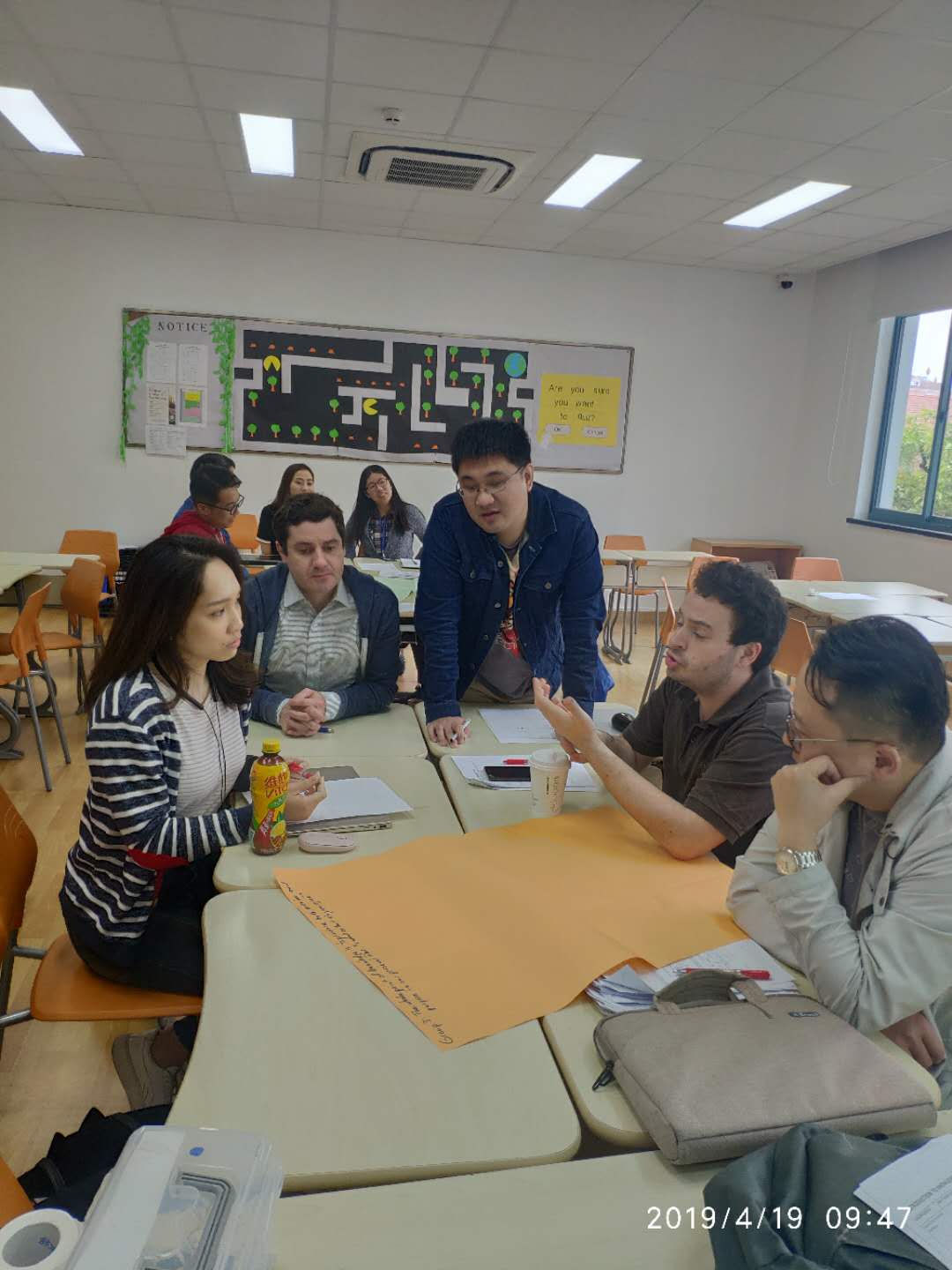
Hand up, Stand up, Pair up
At 8 am on Friday, April 19th, SHSID’s high school English department gathered in the Xianmian building to attend a lively Professional Development seminar. Led by Ms. Jordan Willis, this active workshop not only provided teachers with a wealth of professional resources but guided them towards a deeper understanding of themselves and their teaching practices. In a series of engaging activities, the English teachers participated in a range of collaborative discussions and introspective reasoning that asked them to analyze themselves, as both individuals and educators, their students, and their classrooms. The hour passed by quickly and left each teacher feeling both enlightened and thankful for the refreshing PD experience.
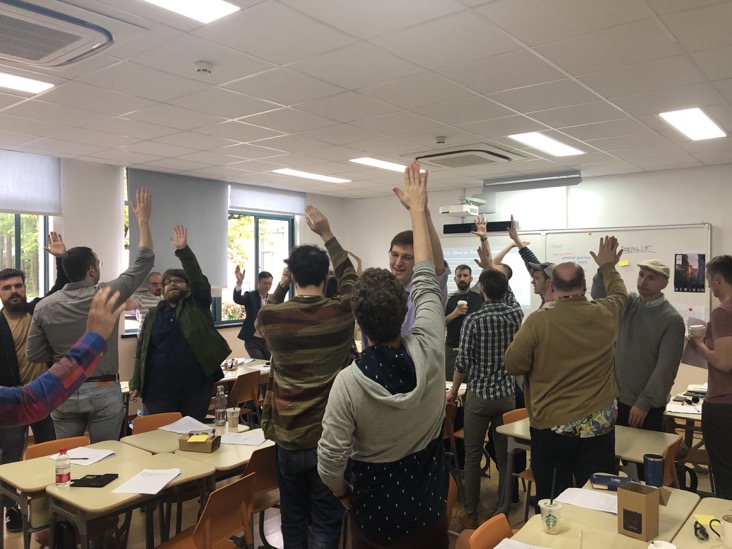
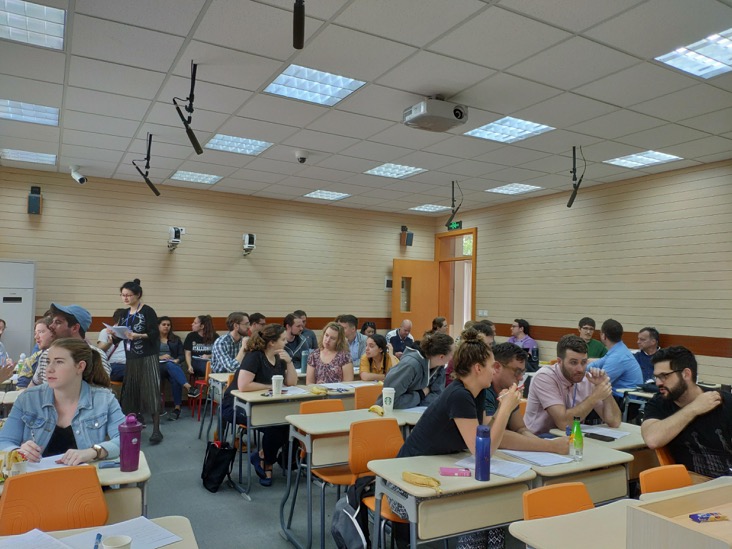
Interdisciplinary Platform
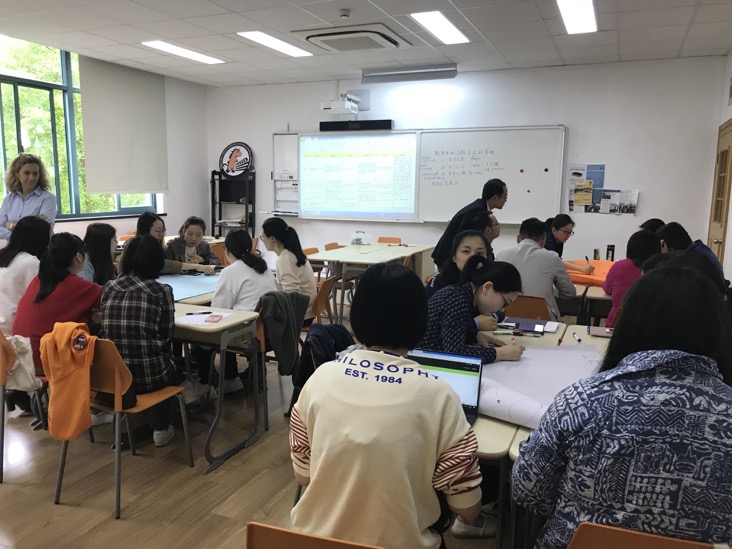
In TOK Professional Development, teachers worked together to reflect on the purpose of TOK and how the course's ideas might be integrated into their own classes. Together, teachers of different disciplines considered what they can claim to know with certainty and how they know what they know. Finally, the teachers considered the nature of the different academic disciplines, the type of knowledge that their disciplines produce, and the methodologies of their disciplines. Ultimately, an increased emphasis on TOK and TOK-style thinking will help educators instill a sense of reflection, creativity, and critical thinking in their students.
The history and chemistry group cooperated to organize an interdisciplinary project in grade 9 to inspire student exploration into the history of chemistry. As the history of chemistry represents a time span from ancient history to the present, by 1000 BC, civilizations used technologies that would eventually form the basis of the various branches of chemistry.
New Ideas, New Sharing
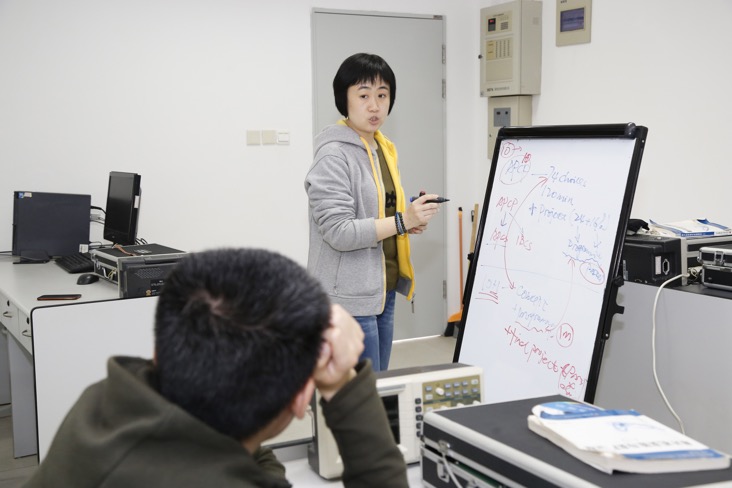
Three engineers from PASCO were invited to the Biology Group meeting. They introduced a series of PASCO products and their applications in teaching, focusing on air quality monitors and various sensors that can be used in biological experiments. A stand-alone data-logger was brought to the classroom for teachers to observe. Through this training, teachers have a better understanding of PASCO products and developed new ideas on how these products can help students apply the process of science.
Starting their PD discussion with problems encountered in teaching, all teachers in the Math Group divided into three groups according to their interests. They discussed three areas: learning attitude, learning methods, and differentiated teaching. They summarized their rich experiences and put forward various teaching methods. In addition, a mysterious guest participated in the discussion: Ms. Dr Valeria Andriano from the famous Italian high school Mathematics and Physics department at Liceo Scientifico Galileo Ferraris. Ms. Andriano shared the training system for high school teachers in Italy.
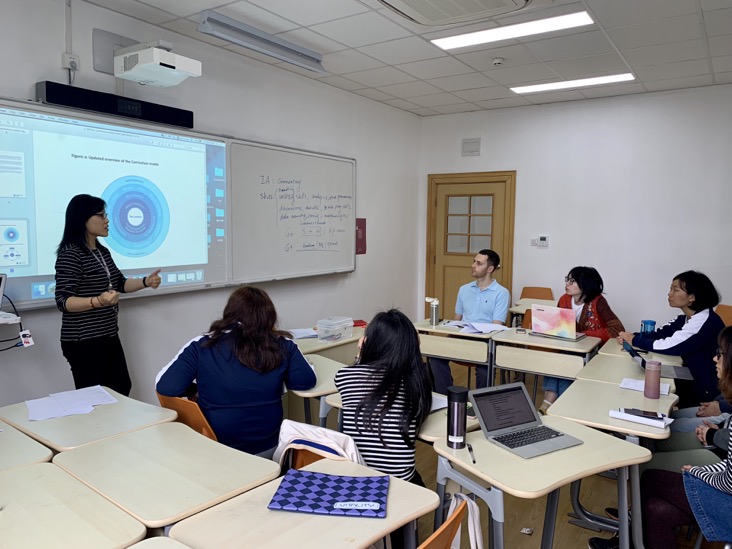
In the Physics group, teachers shared information from “ASDAN & BPhO Physics teacher Forum” and discussed experiment teaching in high school. Similarly, computer science subject head, Ms. Mao, arranged a lecture on reorganization of the computer science curriculum in the near future. In the Economics group, Ms. Gu discussed IB Business, which the department plans to offer in coming years. She discussed its syllabus, internal and external assessment, and its difference from Economics. The economics courses will go through a structural reform in the next school year. The reform is expected to add more diversity and introduce a conceptual learning method to replace the current knowledge-oriented lectures. Students are thus expected to learn the big picture of the issues rather than just detailed information. This sets a higher requirement for the teachers as they will be tasked with improving their teaching methods and making them more skill-oriented.
Academic Writing Ability
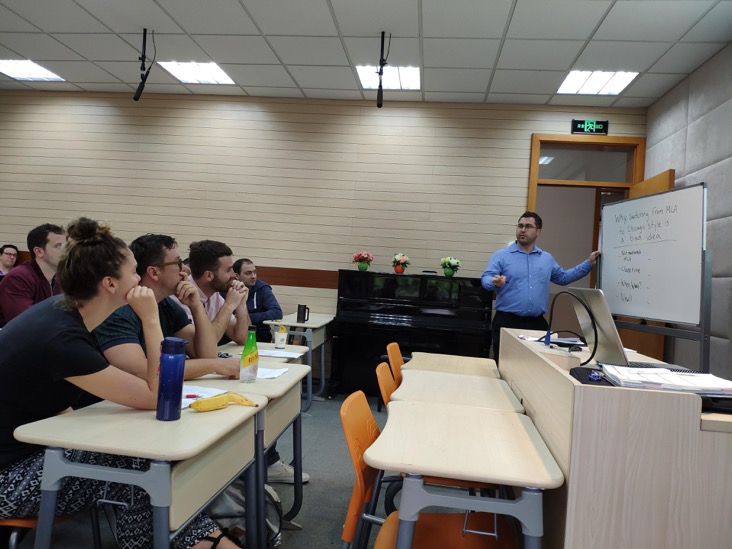
All of the History and Geography teachers met in room 127 of the Zhong Xing Building for their PD meeting. This time, the teachers discussed how to help their students improve in writing academic essays. Firstly, Mr. Bret Marshall proposed using Chicago, or Turabia citation style, which he believes is more appropriate for history groups to use instead of MLA. He briefly introduced the differences between these two methods and used examples to show the advantages of the Chicago method, which included a title page and footnotes. He also tried to respond to all the concerns from teachers about using the new method. He encouraged the teachers to make full use of BB and to design a Chicago style lesson plan for the students. Next, Mr. Josh Pickart shared his own experiences in essay writing as an H level and AP history teacher. He handed out a list of historical reasoning skills, components of an essay, writing process, feedback, and an example of an in-class activity for practice. He sees essay as review. Teachers can start from a simple step, like asking their students (from different grades and levels) to practice writing topic sentences and rewriting them with the help of their teachers. He believes if teachers collaborate with each other and standardize their way of teaching, or even achieve cross-curricular cooperation, students will find it easier to accept and improve their skills in writing historical essays. This meeting helped the teachers to learn more about how to guide the students in their academic writing.
(Written/Pictures by High School Teachers)