-
ABOUT US
-
ACADEMICS
Curriculum Program
Departments
- English
- High School Chinese
- Primary and Junior School Chinese.
- High School Mathematics
- Middle School Mathematics
- Primary School Mathematics
- Music and Fine Arts
- Physical Education
- Physics
- Chemistry
- History and Geography
- Physical Science and Optional courses Department
- Middle School Biology
- High School Biology
- Social Sciences
- Computer Science
- Courses in Primary School
Achievements and Matriculations
College Counseling
Science & Technology Innovation Contest
Subject Competition
-
ARTS
-
ATHLETICS
-
AT SHSID
SHSID ∣ TIMES
PTSA
Club Exhibition
- 龙吟社
- Live 2 Drama
- Choir
- Hip-pop Dance Club
- The Primary School Dance Troupe
- Symposiums Club
- Biology Workshop
- You Shan
- VEX Robotic
- Peking Opera Club
- Baseball Club
- Model United Nations
- The World Scholar’s Cup
- Future Problem Solving Club
- United States Academic Pentathlon
- OM Club
- AMC Club
- Music for Patients
- SHSID Gazette
- Smile Charity
- Cultural Moments
- SciAcademy
- Stem Doge Alliance
- Chinese Debate Club
- IAA
- Mock Trial Club
- Zhengming Club
- Furry Friends
- GT-Racing
- Village Radio
- IMMC Club
- Creative Design and Intelligent Fabrication
- Future City Research Project
- ECOCAP
- AdvocaSEA
- SPDC
- Medishine
- Floorball Club
- Animusic MTC
- Wings Up
- All Booked
- Cyano
- Birding Community
Health and Wellness
Campus Safety
Cafeteria Service
-
ADMINISTRATION
-
ADMISSIONS
-
ALUMNI
Alumni Information
Honors Students
- Class of 2025
- Class of 2024
- Class of 2023
- Class of 2022
- Class of 2021
- Class of 2020
- Class of 2019
- Class of 2018
- Class of 2017
- Class of 2016
- Class of 2015
- Class of 2014
- Class of 2013
- Class of 2012
- Class of 2011
- Class of 2010
- Class of 2009
- Class of 2008
- Class of 2007
- Class of 2006
Who Studied at SHSID
SHS Foundation
-
DOCUMENTS
Grades 9 and 10 Reverse Class: Garbage Classification
During the afternoon of March 18th, 2019, laughter sporadically broke out in the recording room of the Zhongxing Building. Even though it was nearly time for the teachers to go back home, the room was still crowded with people. Surprisingly, there were four high school students giving a lecture filled with excitement and discussion to around 100 teachers.
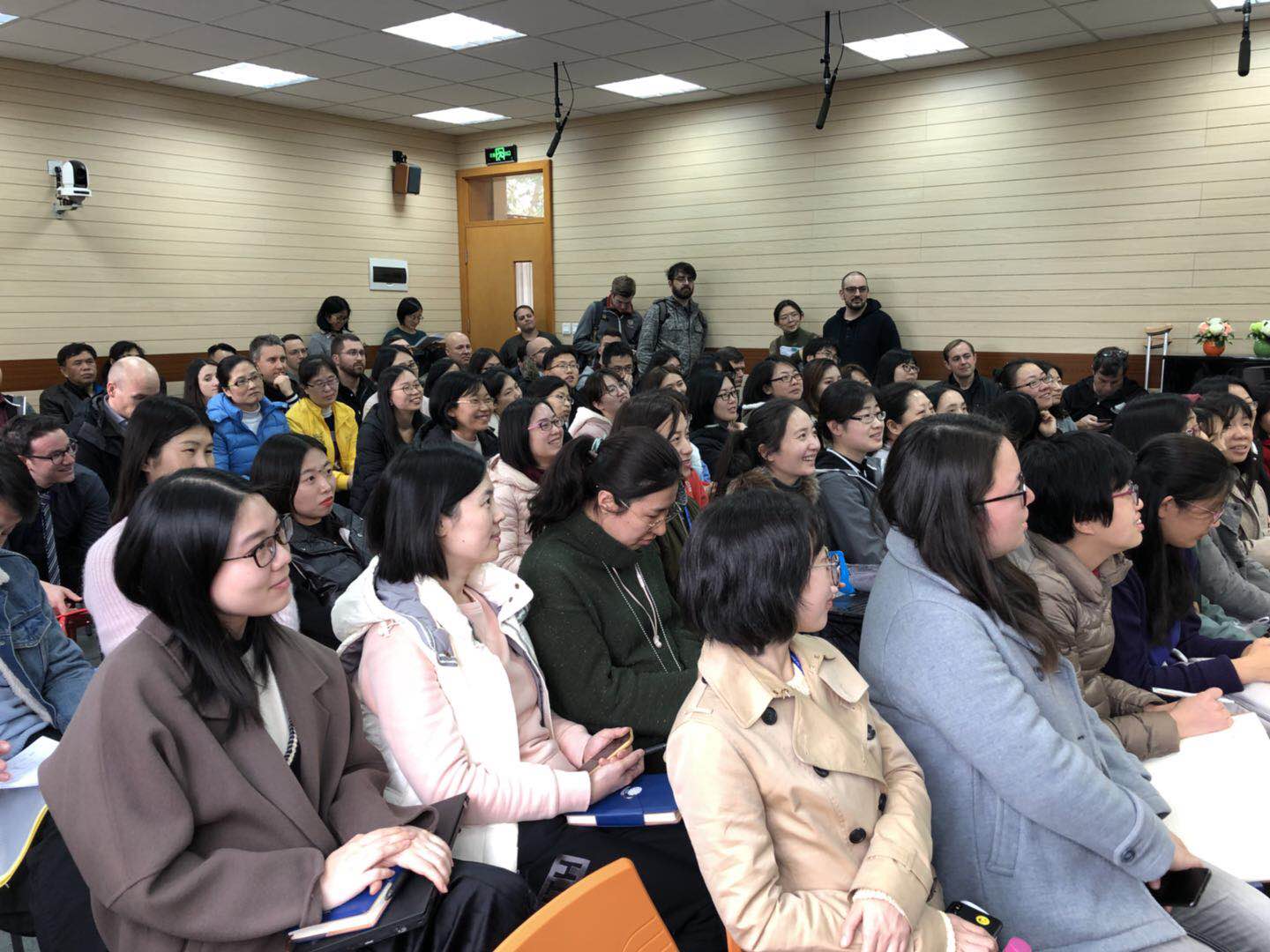
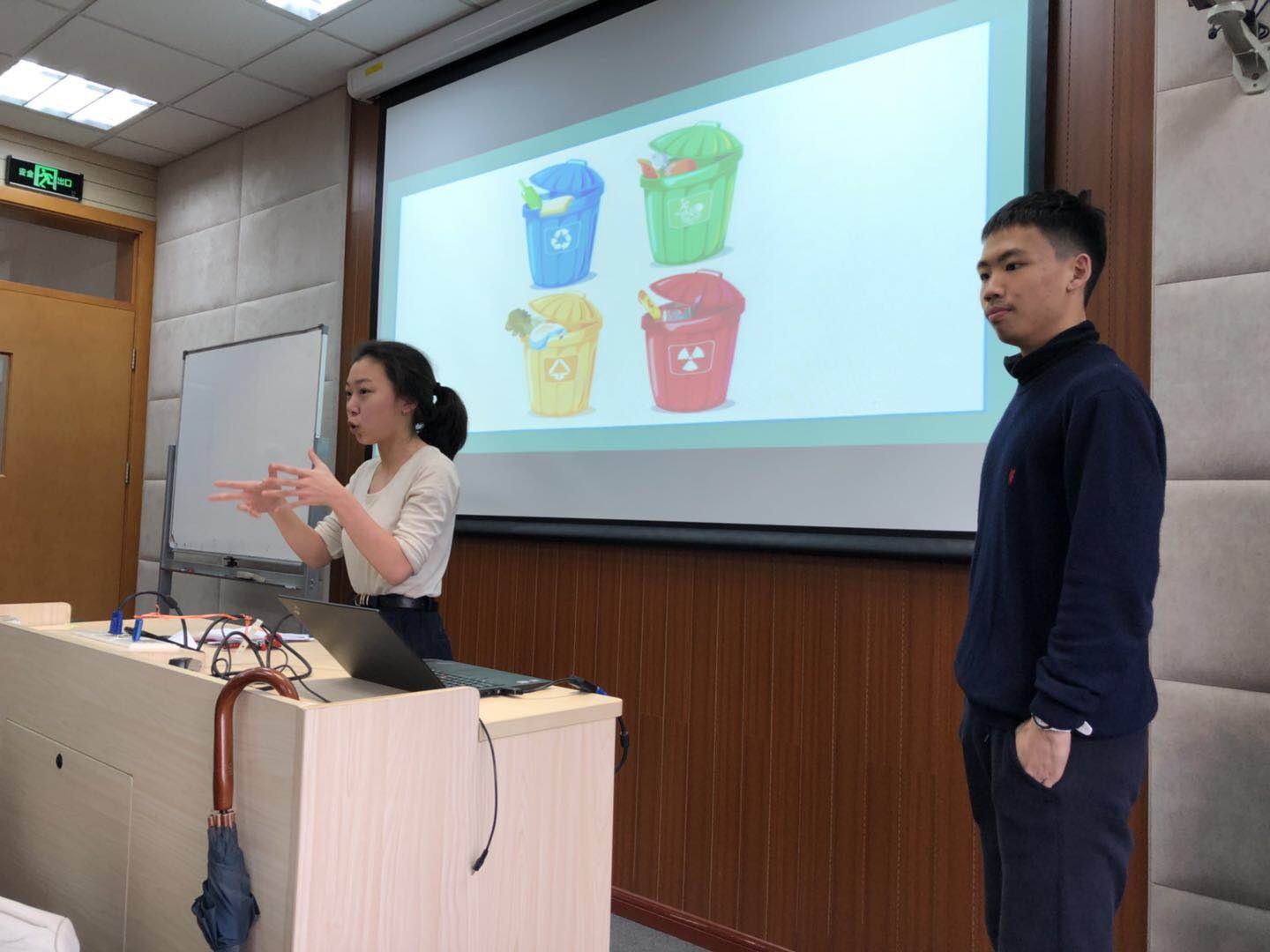
Not only were the swapped positions of the students and teachers interesting, but the topic of the class, garbage classification, was also intriguing. From July 1st, 2019 onwards, Shanghai is going to enforce regulations on mandatory garbage classification. As a citizen of Shanghai, learning how to identify different types of garbage has become increasingly important. Thus, four junior students from our school decided to increase garbage classification awareness through the form of a lecture given to teachers after school.
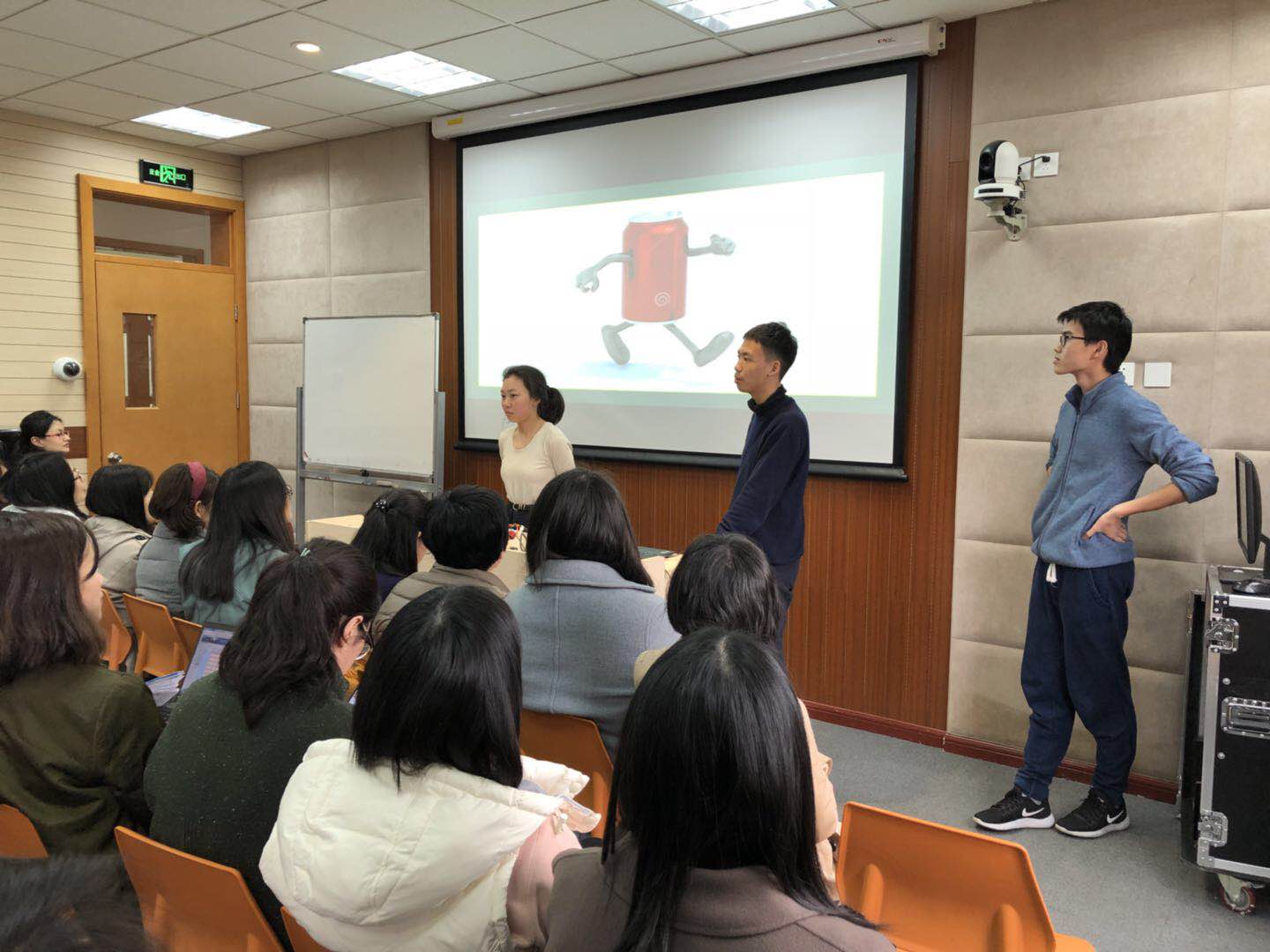
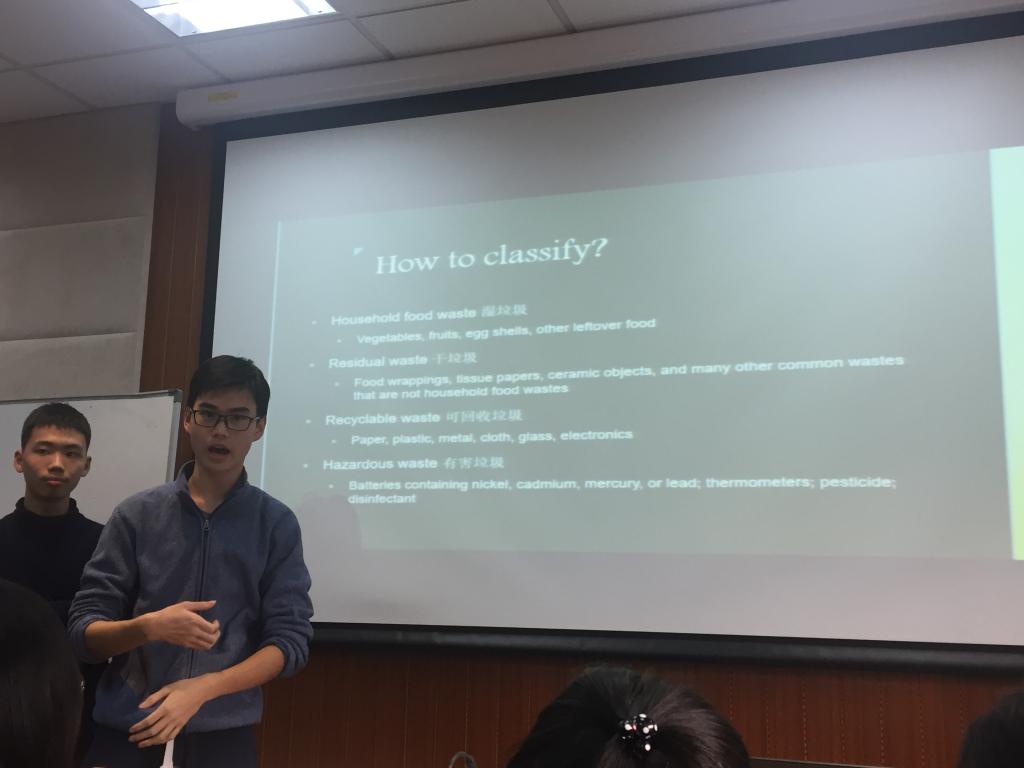
The young “teachers” lectured in an orderly and logical manner. They not only came prepared with sufficient content and a pretty PPT, but they also had props to further enhance the message that they were trying to get through. First, they introduced their “students” to cute Timmy and his tragic ending. The ring-pull can, called Timmy, was produced as merchandise but experienced life-long displacement due to incorrect classification. Vivid images and lively explanations from the young teachers soon caught the eyes of their “students”. Then, the four students carefully discussed the background, reasons, and benefits of garbage classification. In particular, they explained how proper garbage classification can lead to less social costs and even benefits to society as garbage classification is the first step to effective recycling. Last, but definitely not least, the young “teachers” showed the largest prop they had: four real, full-sized trash cans! As a small quiz, the four students took out cards with different icons on them—tissue, leftover food, ink box, etc.—and invited the audience to participate in a game of garbage classification. The teachers participated eagerly. During the process, the teachers debated over the classification of ambiguous garbage, and in the end reached conclusions in a similar manner to how students do in their regular classes. The class then ended with discussions, laughter, and most importantly, the teachers’ pride in what the junior students were able to accomplish.
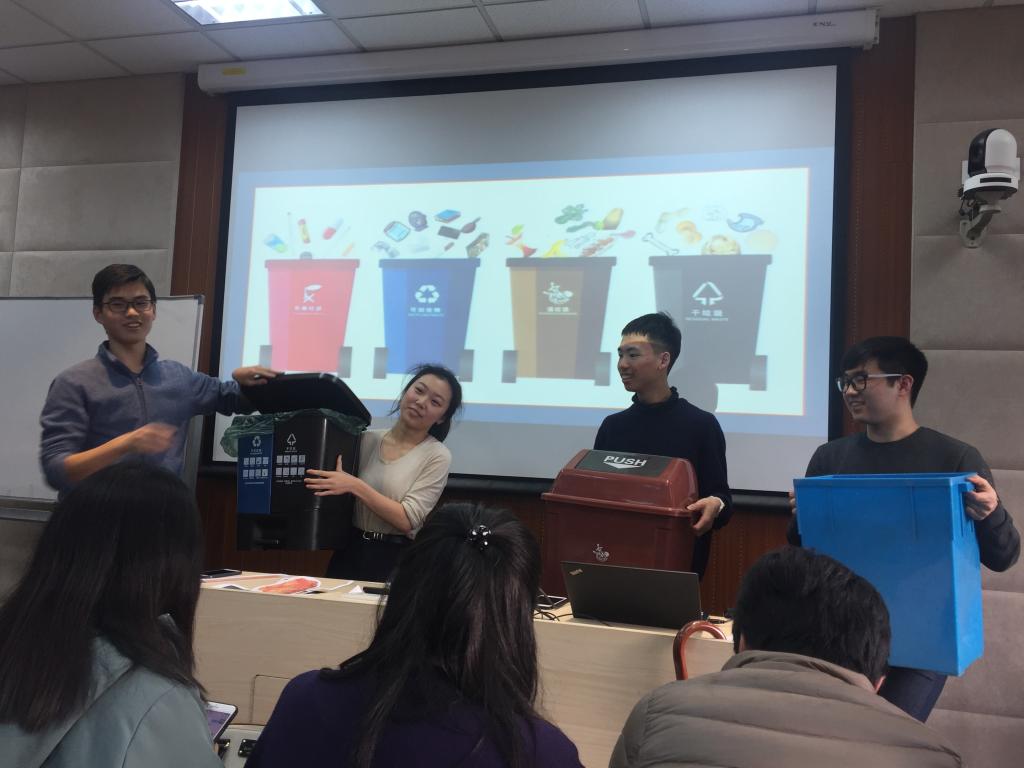
Throughout the next two or three weeks, classes like this will take place on campus multiple times. Different kinds of trash cans will also soon appear in every corner of the campus. One can contribute to garbage classification simply by playing their own part in this trend. We should also thank these students for raising awareness on these seemingly minuscule things that, in fact, have an impact on every one of us.
(Written by 10(5) April Luo Pictures by Dandan Zhou, Yueyue Zhang Supervised by Dandan Zhou)