-
ABOUT US
-
ACADEMICS
Curriculum Program
Departments
- English
- High School Chinese
- Primary and Junior School Chinese.
- High School Mathematics
- Middle School Mathematics
- Primary School Mathematics
- Music and Fine Arts
- Physical Education
- Physics
- Chemistry
- History and Geography
- Physical Science and Optional courses Department
- Middle School Biology
- High School Biology
- Social Sciences
- Computer Science
- Courses in Primary School
Achievements and Matriculations
College Counseling
Science & Technology Innovation Contest
Subject Competition
-
ARTS
-
ATHLETICS
-
AT SHSID
SHSID ∣ TIMES
PTSA
Club Exhibition
- 龙吟社
- Live 2 Drama
- Choir
- Hip-pop Dance Club
- The Primary School Dance Troupe
- Symposiums Club
- Biology Workshop
- You Shan
- VEX Robotic
- Peking Opera Club
- Baseball Club
- Model United Nations
- The World Scholar’s Cup
- Future Problem Solving Club
- United States Academic Pentathlon
- OM Club
- AMC Club
- Music for Patients
- SHSID Gazette
- Smile Charity
- Cultural Moments
- SciAcademy
- Stem Doge Alliance
- Chinese Debate Club
- IAA
- Mock Trial Club
- Zhengming Club
- Furry Friends
- GT-Racing
- Village Radio
- IMMC Club
- Creative Design and Intelligent Fabrication
- Future City Research Project
- ECOCAP
- AdvocaSEA
- SPDC
- Medishine
- Floorball Club
- Animusic MTC
- Wings Up
- All Booked
- Cyano
- Birding Community
Health and Wellness
Campus Safety
Cafeteria Service
-
ADMINISTRATION
-
ADMISSIONS
-
ALUMNI
Alumni Information
Honors Students
- Class of 2025
- Class of 2024
- Class of 2023
- Class of 2022
- Class of 2021
- Class of 2020
- Class of 2019
- Class of 2018
- Class of 2017
- Class of 2016
- Class of 2015
- Class of 2014
- Class of 2013
- Class of 2012
- Class of 2011
- Class of 2010
- Class of 2009
- Class of 2008
- Class of 2007
- Class of 2006
Who Studied at SHSID
SHS Foundation
-
DOCUMENTS
Grade 8: A Special History class
Grade 8: A Special History class
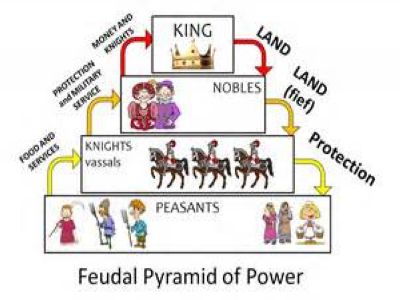
Normally history class is boring to almost every student, however, the history class on February, 25thwe had a very interesting day. Teachers had designed a special activity to help students to well understand the history of the Medieval Europe. In order to make students know more about that period, this game was based on the social system, feudalism. The tools in this game was very simple: a bag of small dry Chinese cookies and some papers. The paper was used to identify the role of students with the role written. There were 4 roles in total: peasants, knights, nobles, and the king. The peasants were at the bottom of the society with largest population. With the higher social level of role, the power with it is bigger. As a result, there is only one king, but the power of King is the highest. Everyone has to listen to King’s order. At the beginning of this activity, each student was chosen their role by randomly luck-drawing the paper. Teachers gave the peasants 4 small cookies. However, because of feudalism, they only got to keep one of them and had to give the rest of cookies to the knights. Since there were less knights than peasants/farmers, one knight usually controlled 2 or 3 peasants. But among all the cookies that knight had gotten from the farmers, he can only kept 2, and gave the rest to the nobles. As to the nobles, they can only keep 3 and gave the others to the king. Finally, the king himself had almost all of the cookies, even the king didn’t do any work. From this game, students had learnt more about the cruelty of the society. They had understood why the farmer had worked really hard with only a little earning, and how the king and the nobles got what they need without any work.
(Written by Grace Liu from 8(1) Picture by Ms. Chen)