-
ABOUT US
-
ACADEMICS
Curriculum Program
Departments
- English
- High School Chinese
- Primary and Junior School Chinese.
- High School Mathematics
- Middle School Mathematics
- Primary School Mathematics
- Music and Fine Arts
- Physical Education
- Physics
- Chemistry
- History and Geography
- Physical Science and Optional courses Department
- Middle School Biology
- High School Biology
- Social Sciences
- Computer Science
- Courses in Primary School
Achievements and Matriculations
College Counseling
Science & Technology Innovation Contest
Subject Competition
-
ARTS
-
ATHLETICS
-
AT SHSID
SHSID ∣ TIMES
PTSA
Club Exhibition
- 龙吟社
- Live 2 Drama
- Choir
- Hip-pop Dance Club
- The Primary School Dance Troupe
- Symposiums Club
- Biology Workshop
- You Shan
- VEX Robotic
- Peking Opera Club
- Baseball Club
- Model United Nations
- The World Scholar’s Cup
- Future Problem Solving Club
- United States Academic Pentathlon
- OM Club
- AMC Club
- Music for Patients
- SHSID Gazette
- Smile Charity
- Cultural Moments
- SciAcademy
- Stem Doge Alliance
- Chinese Debate Club
- IAA
- Mock Trial Club
- Zhengming Club
- Furry Friends
- GT-Racing
- Village Radio
- IMMC Club
- Creative Design and Intelligent Fabrication
- Future City Research Project
- ECOCAP
- AdvocaSEA
- SPDC
- Medishine
- Floorball Club
- Animusic MTC
- Wings Up
- All Booked
- Cyano
- Birding Community
Health and Wellness
Campus Safety
Cafeteria Service
-
ADMINISTRATION
-
ADMISSIONS
-
ALUMNI
Alumni Information
Honors Students
- Class of 2025
- Class of 2024
- Class of 2023
- Class of 2022
- Class of 2021
- Class of 2020
- Class of 2019
- Class of 2018
- Class of 2017
- Class of 2016
- Class of 2015
- Class of 2014
- Class of 2013
- Class of 2012
- Class of 2011
- Class of 2010
- Class of 2009
- Class of 2008
- Class of 2007
- Class of 2006
Who Studied at SHSID
SHS Foundation
-
DOCUMENTS
Moral Education in SHSID
Moral Education in SHSID
In SHSID Primary Section, for all the teachers, the moral education to every primary student is always vital. Every grade has set different moral education key words according to the students’ different ages and development characteristics.
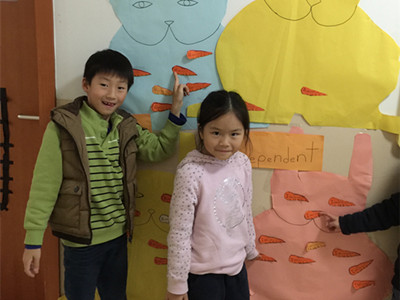
The moral education key word for grade 1 is HABIT rabbit. Every alphabet in HABIT represents an important moral which the teachers hope will help the students to develop. H for Helpful, A for Attitude, B for Behavior, I forIndependenceand T for Teamwork. Every student who has reached a target in any of the five aspects may gain a paper carrot to feed the rabbit on the wall. All the five rabbits are fully covered with the carrots now!
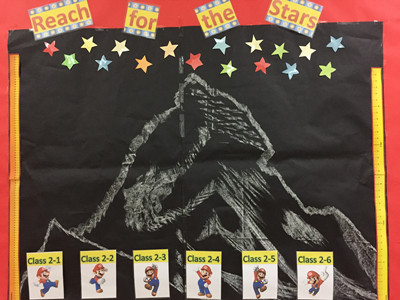
The target for the moral education in grade 2 is R.E.S.P.E.C.T. These seven letters stand for Responsible, Etiquette, Supportive, Polite, Engaged and Creative. The students were required to choose one as their monthly target. After one month, the teachers and students themselves check if the target has been reached. In the second semester, grade 2 students were required to find out the merits from other students and made up all these tiny good behavior of a Rainbow of Respect.
The target for third graders is PATH toIndependence. PATH stands for Personal Responsibility, Attitude, Teamwork and Helpful. To make all the students more impressed on all these moralities, the third grade teachers helped the students making many short plays and performed in front of all of their classmates.
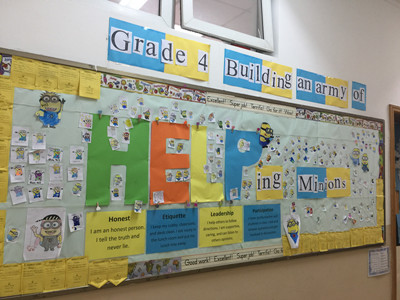
The moral target for fourth graders is HELP. HELP stands for Honesty, Etiquette, Leadership and Participation. Every month has its own monthly topic. For example, in September, an Honesty Box was set up in the class. Whenever any student saw someone doing something honest and trustworthy, they wrote a note and put it into the box. By the end of September, the teachers announced all the notes in the box to encourage and praise these students.
Every teacher agrees that moral education can depend on more than just teachers and school education. Every teacher always put a high premium of the school-parent communication. All the teachers often contact parents very positively in many ways, such as email, phone calls, parent meetings and praising notes. Every parent cooperates with the teacher very actively. All the teachers and parents believe that moral education is particularly vital in someone’s childhood. Hopefully all these school activities may help students building up their good characters in all their lifetime.
(Written by Rebecca Bao Pictureby Rebecca Bao)